Bridging Paradigms
Integrating Functional Programming with Object-Oriented Design for Modern Software Architecture
Master the art of writing cleaner, more maintainable code by combining the best of both functional and object-oriented programming worlds.
300 pages15 chaptersSep 26, 2025Software Architecture
About this book
This comprehensive guide shows you how to leverage functional programming principles within object-oriented systems to create software that is more predictable, testable, and resilient to change. You'll discover practical techniques for incorporating immutability, pure functions, and higher-order functions into your existing object-oriented designs without abandoning the patterns and practices you already know. Through real-world examples and hands-on exercises, you'll learn to identify when and how to apply functional concepts to solve common architectural challenges, from managing state and side effects to designing composable and reusable components. The book provides a systematic approach to hybrid programming, demonstrating how functional reactive programming can revolutionize your approach to asynchronous operations and event handling. You'll explore advanced topics like monads, functors, and algebraic data types, all presented through the lens of practical object-oriented implementation. Whether you're working with Java, C#, Python, or other modern languages that support both paradigms, this guide will transform how you think about software design and give you the tools to build more robust, scalable applications that stand the test of time.
Table of contents
- IntroductionThe Two Paradigms: A Brief Overview, Why Bridge Functional and Object-Oriented Programming, How This Book Approaches Integration, What You'll Learn and How to Use This BookRead below
- Chapter 1: Foundations of Hybrid ProgrammingCore Principles of Each Paradigm, Finding Common Ground, Language Support for Multi-Paradigm Programming, Shifting Mental Models
- Chapter 2: Immutability in Object-Oriented DesignCreating Immutable Objects, Value Objects and Data Transfer Objects, Builder Patterns for Complex Immutable Objects, Performance Considerations and Optimization
- Chapter 3: Pure Functions and Method DesignDesigning Pure Methods in Classes, Isolating Side Effects, Achieving Referential Transparency, Testing Benefits of Pure Functions
- Chapter 4: Higher-Order Functions and Object CompositionFunction Objects and Strategy Pattern, Callbacks and Lambda Expressions, Method Chaining and Fluent Interfaces, Composition Over Inheritance with Functions
- Chapter 5: Functional Operations on CollectionsMap, Filter, and Reduce Operations, Stream Processing and Lazy Evaluation, Building Collection Processing Pipelines, Parallel Processing of Collections
- Chapter 6: Functional Error Handling PatternsOptional Types and Null Safety, Result Types for Error Propagation, Alternatives to Exception Throwing, Composing Operations with Error Handling
- Chapter 7: State Management in Hybrid SystemsIsolating Mutable State, Functional State Machines, Event Sourcing and Immutable History, Managing State Transitions Functionally
- Chapter 8: Functional Design Patterns in OOPCommand Pattern with Functions, Observer Pattern and Reactive Extensions, Decorator Pattern with Function Composition, Template Method with Higher-Order Functions
- Chapter 9: Monads and Functors in Object-Oriented ContextUnderstanding Functors Through Objects, The Monad Pattern in OOP, Implementing Maybe/Optional Monads, IO Monads for Side Effect Management
- Chapter 10: Functional Reactive ProgrammingReactive Streams and Observables, Functional Event Handling, Managing Backpressure and Flow Control, Building Reactive Architectures
- Chapter 11: Concurrency and ParallelismConcurrency with Immutable Data, Asynchronous Programming Functionally, Actor Model and Message Passing, Parallel Algorithms and Data Structures
- Chapter 12: Testing Hybrid ApplicationsProperty-Based Testing, Mocking and Stubbing Functional Code, Integration Testing Strategies, Composing Tests Functionally
- Chapter 13: Performance OptimizationLazy Evaluation and Memoization, Tail Recursion and Loop Optimization, Memory Management in Functional Code, Profiling and Optimization Techniques
- Chapter 14: Architectural Patterns and Best PracticesHexagonal Architecture with Functional Core, CQRS and Event Sourcing Patterns, Functional Approaches to Microservices, Domain Modeling with Algebraic Data Types
- Chapter 15: Migration and Refactoring StrategiesGradual Adoption of Functional Concepts, Integrating with Legacy Object-Oriented Code, Refactoring Techniques for Hybrid Code, Team Adoption and Knowledge Transfer
- ConclusionKey Takeaways and Principles, Future Directions in Hybrid Programming
- Further Reading
- Glossary
Introduction
Software development has long been dominated by the perceived divide between functional programming and object-oriented programming, with developers often viewing these paradigms as mutually exclusive approaches to solving computational problems. This artificial separation has led many talented programmers to limit themselves to one paradigm or the other, missing out on the powerful synergies that emerge when both approaches are thoughtfully combined. The reality is that modern software systems benefit tremendously from the strategic integration of functional programming principles within object-oriented architectures, creating code that is more maintainable, testable, and resilient to change.
The landscape of software development has evolved significantly over the past decade, with increasing complexity in distributed systems, real-time data processing, and concurrent applications. Traditional object-oriented approaches, while excellent for modeling domain concepts and organizing code structure, often struggle with issues like shared mutable state, unpredictable side effects, and complex error handling scenarios. Meanwhile, purely functional approaches, though mathematically elegant and highly predictable, can feel disconnected from the business domain modeling that object-oriented design handles so well. The solution lies not in choosing one over the other, but in understanding how to leverage the strengths of both paradigms within a single, cohesive system.
This book addresses the growing need for developers to master hybrid programming techniques that combine the best aspects of both worlds. You'll discover how immutability and pure functions can coexist beautifully with encapsulation and polymorphism, how higher-order functions can simplify complex object interactions, and how functional error handling patterns can make your object-oriented code more robust. Rather than abandoning the object-oriented patterns and practices you already know, you'll learn to enhance them with functional programming concepts that solve real-world problems more elegantly and efficiently.
The journey ahead will transform how you think about software architecture and design. You'll move beyond the false dichotomy of functional versus object-oriented programming to embrace a more nuanced understanding of when and how to apply each paradigm's strengths. This integration isn't just theoretical—it's a practical necessity for building the kind of sophisticated, scalable applications that modern businesses demand. Whether you're working on microservices architectures, event-driven systems, or traditional enterprise applications, the hybrid approach presented in this book will give you new tools to tackle complex challenges with confidence and clarity.
The Two Paradigms: A Brief Overview
Object-oriented programming emerged as a dominant paradigm because it mirrors how humans naturally think about the world—in terms of objects, their properties, and their interactions. This paradigm excels at modeling complex business domains through concepts like encapsulation, inheritance, and polymorphism. When you create a Customer class with methods like placeOrder() and updateProfile(), you're creating a direct mapping between real-world concepts and code structures. This approach makes code intuitive to read and maintain, especially for large teams working on complex business applications where domain modeling is crucial.
The strength of object-oriented design lies in its ability to organize code around data and the operations that act upon that data. Consider a typical e-commerce system where you might have classes representing Product, ShoppingCart, Order, and Payment. Each class encapsulates both the data it manages and the behaviors that operate on that data, creating clear boundaries and responsibilities. This organization makes it easier to understand how different parts of the system interact and evolve over time. However, object-oriented programming can struggle with certain types of problems, particularly those involving complex data transformations, concurrent operations, or scenarios where shared mutable state leads to unpredictable behavior.
Functional programming takes a fundamentally different approach, treating computation as the evaluation of mathematical functions and emphasizing immutability, pure functions, and function composition. In functional programming, you don't modify existing data structures; instead, you create new ones with the desired changes. Functions are first-class citizens that can be passed as arguments, returned from other functions, and composed together to build complex operations from simple building blocks. This approach excels at data transformation, parallel processing, and creating predictable, testable code that's easier to reason about mathematically.
The functional approach shines when dealing with data processing pipelines, where you might transform a collection of raw data through a series of operations like filtering, mapping, and reducing. For example, processing a stream of user events to generate analytics reports becomes elegant when expressed as a composition of pure functions:
- Filter events by type and time range
- Map events to standardized data structures
- Group events by user or session
- Reduce groups to summary statistics
- Format results for presentation
The key insight is that these paradigms address different aspects of software complexity. Object-oriented programming excels at managing structural complexity—organizing code, modeling domains, and defining clear interfaces between components. Functional programming excels at managing computational complexity—transforming data, handling concurrency, and ensuring predictable behavior. Modern applications face both types of complexity simultaneously, which is why a hybrid approach that leverages both paradigms strategically can be so powerful.
Consider a modern web application that needs to handle user authentication, process real-time data streams, manage complex business rules, and provide responsive user interfaces. The user authentication system benefits from object-oriented modeling with classes like User, AuthenticationService, and SecurityPolicy. The real-time data processing benefits from functional approaches with immutable data structures and pure transformation functions. The business rules engine can combine both approaches, using objects to model domain concepts while applying functional techniques for rule evaluation and composition.
Understanding the strengths and limitations of each paradigm is crucial for making informed decisions about when and how to apply them. Object-oriented programming provides excellent tools for managing complexity through abstraction and encapsulation, but can become unwieldy when dealing with complex state management or data transformation scenarios. Functional programming offers powerful tools for creating predictable, composable operations, but can feel abstract when modeling rich domain concepts. The hybrid approach allows you to choose the right tool for each specific problem within your application.
Modern programming languages increasingly support both paradigms, recognizing that developers need flexibility to address different types of problems effectively. Languages like Java, C#, Python, and JavaScript have all evolved to include functional programming features like lambda expressions, higher-order functions, and immutable data structures, while maintaining their object-oriented foundations. This evolution reflects the industry's recognition that paradigm integration, rather than paradigm purity, leads to more practical and maintainable software solutions.
Why Bridge Functional and Object-Oriented Programming
The primary motivation for bridging functional and object-oriented programming stems from the limitations that emerge when either paradigm is used in isolation. Pure object-oriented systems often suffer from issues related to shared mutable state, where multiple objects can modify the same data concurrently, leading to race conditions, inconsistent state, and bugs that are difficult to reproduce and debug. These problems become particularly acute in modern applications that need to handle high concurrency, real-time data processing, or complex asynchronous operations. By incorporating functional programming principles like immutability and pure functions, you can eliminate entire categories of bugs while making your object-oriented code more predictable and easier to test.
Consider a typical scenario in an object-oriented system where multiple threads need to access and modify a shared UserSession object. Traditional approaches might use locks, synchronized methods, or other concurrency control mechanisms, but these solutions add complexity and can create performance bottlenecks. A hybrid approach would make the UserSession immutable and use functional techniques to create new session instances with updated state, eliminating the need for complex synchronization while making the code more predictable and easier to reason about. This approach doesn't abandon object-oriented design—it enhances it with functional principles that solve specific problems more elegantly.
Another compelling reason for paradigm integration is the improved testability that emerges when functional programming principles are applied to object-oriented code. Pure functions, which produce the same output for the same input without side effects, are inherently easier to test than methods that depend on or modify external state. When you design your object methods to be as pure as possible, isolating side effects to specific boundaries, you create code that can be tested in isolation without complex setup or mocking. This leads to faster test execution, more reliable test suites, and better overall code quality.
The benefits extend beyond technical considerations to include improved code maintainability and developer productivity. Functional programming's emphasis on composition and higher-order functions provides powerful tools for reducing code duplication and creating reusable abstractions. Instead of inheriting behavior through class hierarchies, you can compose behavior through function composition, leading to more flexible and maintainable designs. For example, rather than creating multiple subclasses to handle different validation rules, you can compose validation functions that can be easily combined, reused, and tested independently:
- Create small, focused validation functions for specific rules
- Compose these functions to create complex validation logic
- Reuse validation functions across different domain objects
- Test each validation rule in isolation
- Easily modify or extend validation logic without affecting other parts of the system
Modern software systems increasingly need to handle complex data transformations, real-time event processing, and sophisticated error handling scenarios that are naturally suited to functional programming approaches. However, these same systems also need to model rich business domains, provide clear APIs, and integrate with existing object-oriented frameworks and libraries. A hybrid approach allows you to use functional techniques for data processing and transformation while maintaining object-oriented structures for domain modeling and system organization. This combination provides the best of both worlds without forcing you to abandon existing investments in object-oriented design patterns and frameworks.
The rise of reactive programming, microservices architectures, and event-driven systems has made functional programming concepts increasingly relevant to mainstream software development. These architectural patterns benefit tremendously from functional approaches to handling asynchronous operations, managing state transitions, and composing complex data processing pipelines. However, implementing these patterns within existing object-oriented systems requires a bridge between paradigms rather than a complete paradigm shift. By learning to integrate functional concepts into object-oriented designs, you can adopt these modern architectural patterns incrementally without disrupting existing systems.
Performance considerations also favor a hybrid approach in many scenarios. Immutable data structures, while sometimes requiring more memory, can enable significant optimizations in concurrent systems by eliminating the need for locks and synchronization. Pure functions can be easily parallelized, memoized, and optimized by compilers and runtime systems. Functional approaches to collection processing can take advantage of lazy evaluation and streaming to handle large datasets efficiently. When combined with object-oriented design patterns that provide clear interfaces and abstractions, these performance benefits can be realized without sacrificing code organization or maintainability.
Perhaps most importantly, bridging these paradigms prepares you for the future of software development. As systems become more distributed, concurrent, and data-intensive, the ability to apply functional programming principles within object-oriented frameworks becomes increasingly valuable. Languages and frameworks continue to evolve to support hybrid approaches, and developers who can effectively combine both paradigms will be better positioned to build the next generation of software systems. This isn't about following trends—it's about developing a more complete toolkit for solving complex software problems effectively.
How This Book Approaches Integration
This book takes a pragmatic, hands-on approach to integrating functional programming concepts with object-oriented design, focusing on practical techniques that you can apply immediately in your current projects. Rather than starting with abstract mathematical concepts or theoretical foundations, each chapter begins with real-world problems that you've likely encountered in your development work, then demonstrates how functional programming principles can solve these problems more effectively when applied within object-oriented systems. The examples progress from simple, focused scenarios to complex, real-world applications, ensuring that you can follow along regardless of your current experience level with functional programming.
The integration strategy presented here is evolutionary rather than revolutionary. You won't be asked to abandon your existing object-oriented knowledge or rewrite entire systems from scratch. Instead, you'll learn to identify specific areas where functional programming concepts can improve your existing code, then apply these concepts incrementally. For example, you might start by making a few key data classes immutable, then gradually introduce pure functions for data transformation, and eventually adopt functional error handling patterns. This approach allows you to gain experience and confidence with hybrid techniques while delivering immediate value to your projects.
Each concept is presented through multiple lenses to accommodate different learning styles and use cases. You'll see theoretical explanations that help you understand the underlying principles, practical code examples that demonstrate implementation techniques, and architectural discussions that show how these concepts fit into larger system designs. The code examples span multiple programming languages, including Java, C#, Python, and JavaScript, but the focus is always on the underlying concepts rather than language-specific syntax. This approach ensures that you can apply the techniques regardless of your primary programming language.
The book emphasizes pattern recognition and decision-making frameworks that help you determine when and how to apply functional programming concepts in object-oriented contexts. You'll learn to recognize code smells that indicate opportunities for functional improvements, understand the trade-offs involved in different approaches, and develop intuition for choosing the right technique for each situation. For instance, you'll learn to identify when immutability can solve concurrency problems, when pure functions can improve testability, and when higher-order functions can reduce code duplication:
- Recognize patterns that benefit from functional approaches
- Evaluate trade-offs between different implementation strategies
- Choose appropriate functional techniques for specific problems
- Integrate functional concepts without disrupting existing architectures
- Measure and validate the benefits of hybrid approaches
A key aspect of this book's approach is its focus on gradual adoption and team integration. Introducing functional programming concepts into an object-oriented team and codebase requires careful consideration of team dynamics, existing conventions, and migration strategies. You'll learn techniques for introducing these concepts gradually, building team consensus around hybrid approaches, and establishing coding standards that support both paradigms effectively. This includes practical advice on code reviews, refactoring strategies, and knowledge transfer techniques that help entire teams benefit from hybrid programming approaches.
The book also addresses the ecosystem considerations that are crucial for successful paradigm integration. Modern software development involves complex toolchains, frameworks, testing strategies, and deployment pipelines that must all work together effectively. You'll learn how functional programming concepts interact with popular object-oriented frameworks, how to test hybrid code effectively, and how to optimize performance in systems that combine both paradigms. This ecosystem focus ensures that the techniques you learn can be applied in real-world development environments rather than just theoretical examples.
Throughout the book, there's a strong emphasis on measuring and validating the benefits of hybrid approaches. You'll learn to identify metrics that demonstrate the value of functional programming integration, such as reduced bug rates, improved test coverage, better performance characteristics, and increased developer productivity. This measurement focus is crucial for building organizational support for hybrid programming approaches and for making informed decisions about when and where to apply these techniques in your own projects.
The progression through the book is carefully structured to build your understanding incrementally while providing immediate practical value. Early chapters focus on foundational concepts like immutability and pure functions that can be applied immediately to improve existing code. Middle chapters explore more advanced topics like monads, reactive programming, and architectural patterns that require deeper understanding but provide significant benefits for complex systems. Later chapters address migration strategies, performance optimization, and team adoption techniques that help you scale hybrid programming approaches across larger projects and organizations.
What You'll Learn and How to Use This Book
Your journey through this book will transform your understanding of software design and provide you with a comprehensive toolkit for building more robust, maintainable applications. By the end of this book, you'll have mastered the art of strategic paradigm integration, knowing not just how to apply functional programming concepts within object-oriented systems, but when and why to do so. You'll develop an intuitive understanding of the trade-offs involved in different approaches and the confidence to make architectural decisions that leverage the strengths of both paradigms effectively.
The learning progression is designed to build your skills incrementally while providing immediate practical benefits. In the early chapters, you'll master foundational concepts like creating immutable objects, designing pure methods, and using higher-order functions to simplify complex object interactions. These techniques can be applied immediately to improve the reliability and testability of your existing code. You'll learn to identify common object-oriented code smells that indicate opportunities for functional improvements and develop the skills to refactor existing code using hybrid approaches that maintain backward compatibility while improving overall quality.
As you progress through the middle chapters, you'll explore more sophisticated concepts like functional error handling patterns, state management techniques, and the integration of functional design patterns with traditional object-oriented patterns. You'll discover how concepts like monads and functors, often considered abstract and theoretical, can be implemented using familiar object-oriented patterns to solve real-world problems like error propagation, optional value handling, and side effect management. These chapters will expand your architectural vocabulary and provide you with powerful tools for handling complex scenarios that are difficult to address with purely object-oriented approaches.
The advanced chapters will introduce you to cutting-edge topics like functional reactive programming, advanced concurrency patterns, and architectural approaches that leverage both paradigms strategically. You'll learn to build systems that can handle real-time data streams, manage complex asynchronous operations, and scale effectively across multiple cores and distributed environments. These topics represent the future of software architecture and will prepare you to build the next generation of high-performance, scalable applications:
- Master reactive programming patterns for handling asynchronous data streams
- Implement advanced concurrency patterns using immutable data structures
- Design microservices architectures that leverage functional principles
- Build event-sourced systems with functional state management
- Create domain models using algebraic data types and functional composition
To maximize your learning experience, each chapter includes hands-on exercises and real-world case studies that reinforce the concepts presented. These exercises are designed to be completed using your preferred programming language and development environment, allowing you to practice the techniques in a familiar context. The case studies demonstrate how the concepts apply to common scenarios like web application development, data processing systems, and enterprise software architectures. You're encouraged to work through these exercises and adapt them to your own projects and use cases.
The book is structured to support different reading approaches depending on your current needs and experience level. If you're new to functional programming, you should read the chapters sequentially to build your understanding progressively. If you have some functional programming experience but want to learn integration techniques, you might focus on the middle chapters that deal with hybrid patterns and architectural approaches. If you're primarily interested in specific topics like reactive programming or performance optimization, you can jump directly to those chapters, though you may want to review the foundational concepts first.
Throughout your journey, you'll develop practical skills that extend beyond programming techniques to include team leadership, architectural decision-making, and system design capabilities. You'll learn to evaluate existing codebases for opportunities to apply hybrid programming techniques, plan migration strategies that minimize risk while maximizing benefits, and build consensus within development teams around new approaches and practices. These skills are crucial for successfully implementing hybrid programming approaches in real-world development environments.
The knowledge you gain from this book will prepare you for the evolving landscape of software development, where the ability to combine multiple programming paradigms effectively is becoming increasingly valuable. You'll be equipped to work with modern frameworks and libraries that embrace hybrid approaches, contribute to open-source projects that leverage both functional and object-oriented techniques, and lead development teams in adopting more sophisticated architectural patterns. Most importantly, you'll have the tools and understanding needed to build software that is more reliable, maintainable, and adaptable to changing requirements.
As you apply these concepts in your own work, you'll discover that the integration of functional and object-oriented programming is not just a technical skill—it's a new way of thinking about software design that opens up possibilities for creating more elegant, robust, and scalable solutions. The journey ahead will challenge your existing assumptions about programming paradigms and provide you with a more nuanced, powerful approach to solving complex software problems. Whether you're building web applications, data processing systems, or enterprise software, the hybrid programming techniques presented in this book will enhance your ability to create software that stands the test of time.
This is the end of the free sample. The full book has 15 chapters.
Want this book written for you?
Tell us your goals and background, and get your own version of this book, tailored by AI to you.


Benefits of AI-tailored books
- Read one book, not ten:
- all the Software Architecture knowledge you need, gathered into a single book.
- Save days of learning:
- tell us your goals, choose your topics, and the whole book is built around them.
- Learn effortlessly:
- Software Architecture book written for your specific background and expertise.
- Understand at a glance:
- includes charts, tables, timelines, checklists, decision trees, and more.
- Stay current:
- written the day you order it, not years ago.
- Trust what you read:
- every book is checked for accuracy, with real research when your subject needs it.
Create your unique book in 3 steps
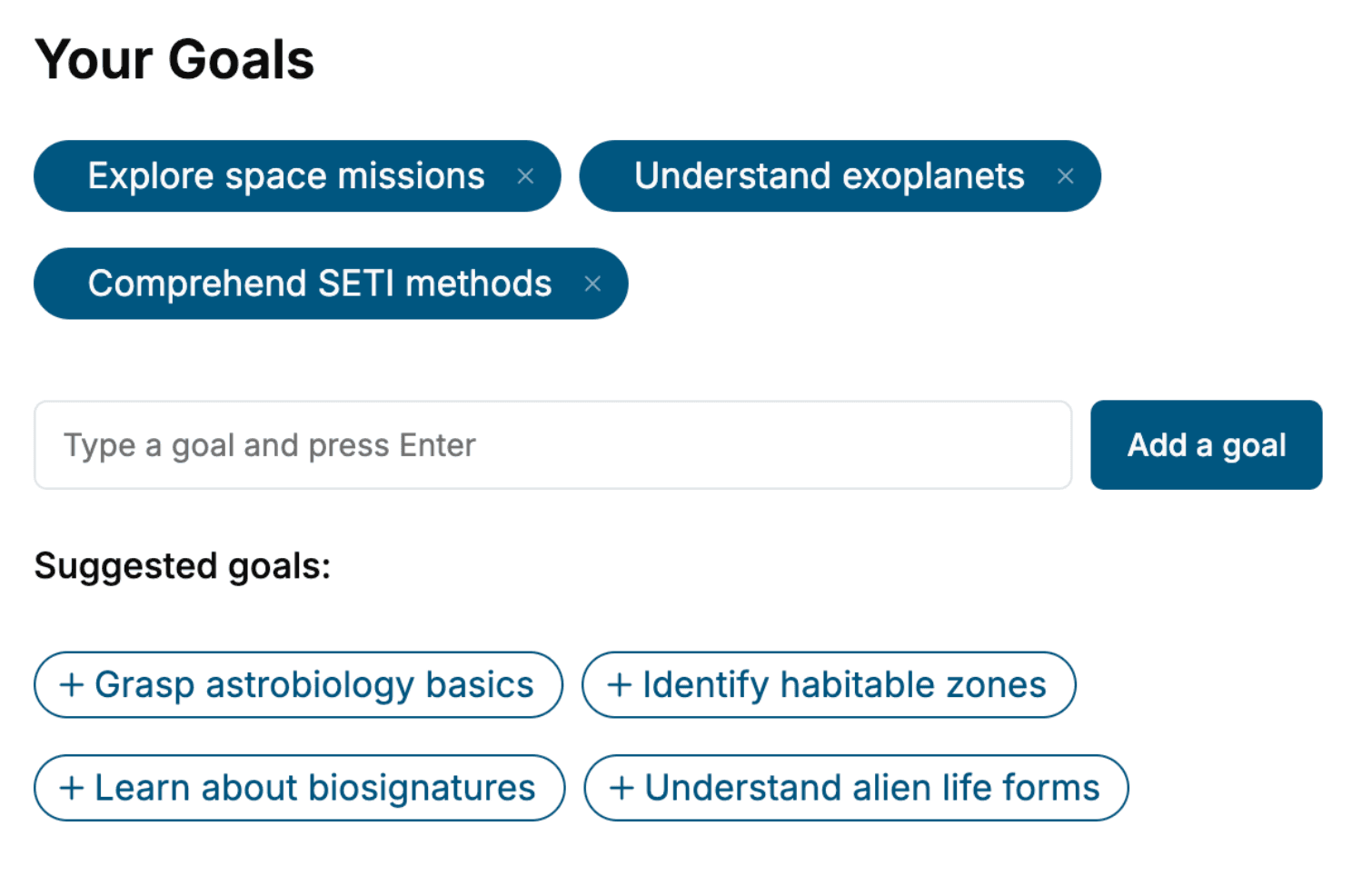
- 1. Select your focus
Select the focus of your Software Architecture book and share your background
- 2. Personalize your book
Specify your goals and choose sub-topics to include
- 3. Get your tailored book
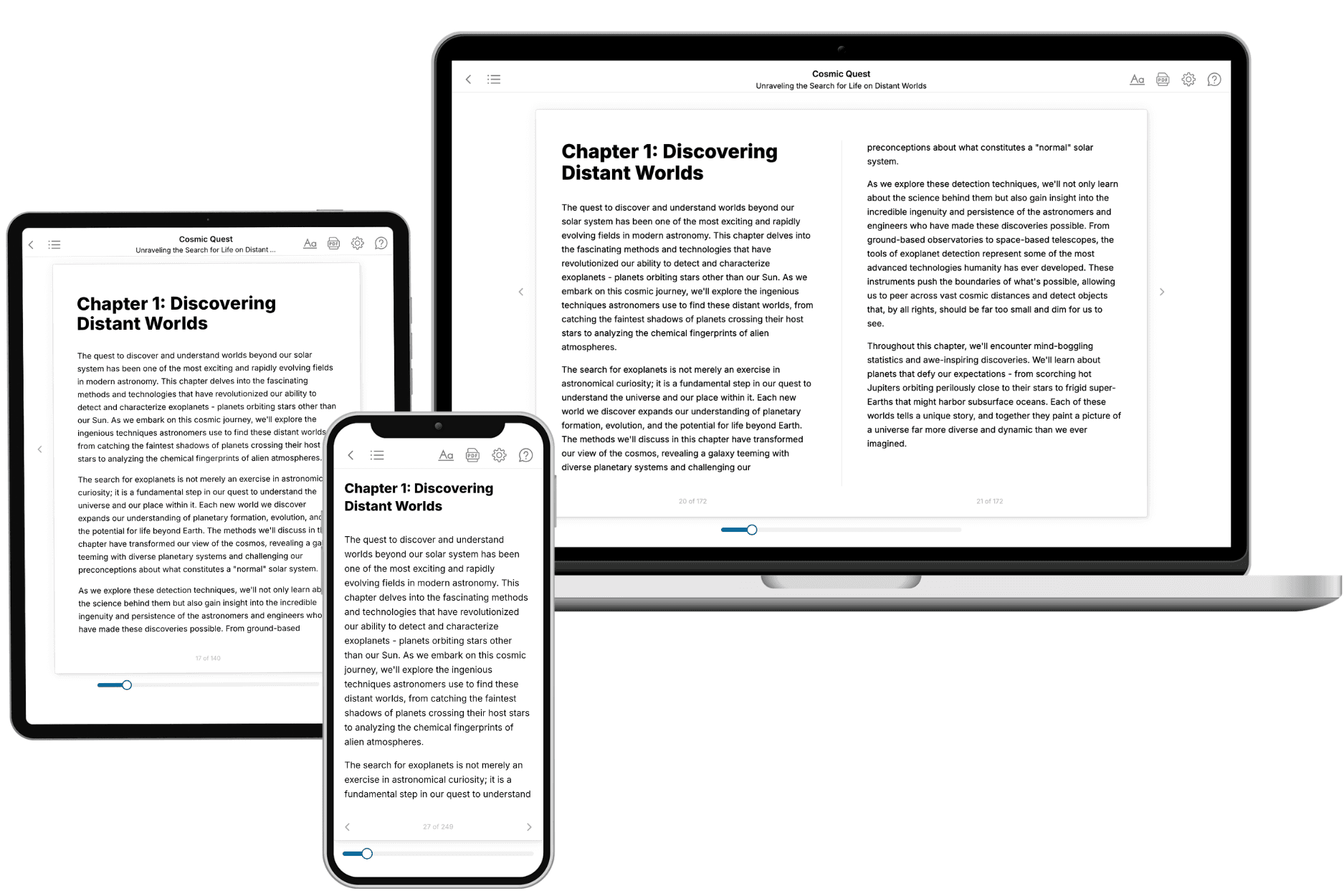
Your book is ready in 10 minutes. Read it online, download as EPUB or PDF, or send to Kindle.

Frequently asked questions
- What is TailoredRead?
TailoredRead creates complete, full-length nonfiction ebooks, written specifically for you. Tell us what you want to learn and why, and TailoredRead writes you a complete ebook on it, with charts, tables, and diagrams throughout. Read it online, on Kindle, or on any e-reader, or download it as a PDF or EPUB. Every book is written fresh the day you order it.
- How is the book tailored to me?
Before anything is written, you answer a few short questions about your goals, your background, and the topics you care about. Your book is then planned around your answers: written at your level, focused on your goals, and covering the topics you chose, instead of the one-size-fits-all book a store sells everyone.
- Will it read like generic AI content?
No. Your book isn't a chat transcript: it's planned chapter by chapter before a single word is written, told in a clear book voice, and explains ideas visually with charts, tables, and diagrams. After writing, every book goes through an editorial pass that polishes chapters so the book reads consistent from start to finish. Judge for yourself: browse thousands of sample books on our Explore Books page.
- How accurate is the content?
Our AI first checks whether your subject needs live research. Niche and fast-moving subjects are researched before writing, and the book plan and chapters are grounded in what it finds. After writing, every book goes through a quality pass that checks its facts and consistency, and researched books list their sources in a Notes section at the back.
- How long is the book?
You choose the length: Comprehensive (250-300 pages), Detailed (150-200 pages), Essential (70-100 pages), or Short (30-50 pages).
- Does the book include visuals?
Yes. Every book includes visual elements such as timelines, checklists, step-by-step guides, decision trees, comparison tables, and matrices, and many include bar charts. A typical book includes dozens of these visual elements.
- Can I read it on Kindle? What formats can I download?
Yes. Every book can be read in our online reader or downloaded as a PDF or EPUB. The EPUB can be opened with Kindle, Apple Books, Kobo, and any e-reader. The Commercial and Author licenses also include an editable Word (DOCX) and Markdown download.
- How much does it cost?
About the price of a regular ebook. The exact price depends on your book's length and complexity, from $2 for the shortest books to $35 for the most comprehensive, and it's shown when you review your book, before you commit to anything. Each book is a one-time purchase, yours to keep, no subscription. Licenses that let you share, teach, or publish your book range from $35.99 to $49.99.
- Can I preview the book before purchasing?
Before you pay, you'll see what your book will cover: the title, a detailed description, the estimated length, and the complete chapter-by-chapter table of contents, so you know what you're getting before you decide. The full text itself is written after you purchase.
- How long does it take to create a book?
About 10 minutes. You can start reading the opening chapters while the rest is still being written.