The Brunch Cocktail Playbook
Master the Art of Crafting Signature Drinks for Every Brunch Occasion
What if the difference between a forgettable brunch and an unforgettable one came down to the drinks you serve?
207 pages10 chaptersJun 16, 2026Cocktails
About this book
Brunch cocktails are more than just morning alcohol—they're an art form that combines refreshing flavors, elegant presentation, and the perfect balance of sophistication and fun. This guide walks you through everything you need to know to become a confident brunch bartender in your own home. From understanding the unique flavor profiles that work best during daytime entertaining to mastering essential techniques and building your home bar, you'll discover how to craft drinks that taste as good as they look. Learn the secrets behind classic brunch favorites like Mimosas and Bloody Marys, then explore creative variations and original recipes that will set your brunches apart. Whether you're hosting an intimate gathering or a larger celebration, this book provides the knowledge, techniques, and recipes you need to serve cocktails that impress.
Table of contents
- IntroductionWhy Brunch Cocktails Matter, How Brunch Drinks Differ from Evening Cocktails, What You'll Master in This BookRead below
- Chapter 1: The Brunch Cocktail MindsetUnderstanding Daytime Drinking Culture, Flavor Principles for Brunch Drinks, Setting the Tone for Your Brunch
- Chapter 2: Building Your Brunch BarEssential Spirits and Liqueurs, Mixers, Juices, and Fresh Ingredients, Tools and Equipment You'll Need
- Chapter 3: Mastering Brunch Cocktail TechniquesShaking vs. Stirring: When and Why, Proper Measurements and Consistency, Temperature and Dilution Mastery
- Chapter 4: The Five Core Brunch Cocktail CategoriesSparkling Cocktails: Champagne and Prosecco Drinks, Citrus-Forward Refreshers, Creamy and Indulgent Options, Herbal and Botanical Infusions
- Chapter 5: Classic Brunch Cocktails ReimaginedMimosa Variations and Twists, Bloody Mary: The Ultimate Guide, Bellini and Other Fruit-Based Classics
- Chapter 6: Savory and Unexpected Brunch CocktailsBuilding Savory Flavor Profiles, Umami Ingredients and Garnishes, Adventurous Recipes to Surprise Guests
- Chapter 7: Garnishing and PresentationEssential Garnish Techniques, Citrus Preparation and Twists, Creating Visual Impact and Instagram Appeal
- Chapter 8: Hosting and Batch CocktailsBatch Cocktail Basics and Scaling, Make-Ahead Strategies and Prep Work, Serving Cocktails to Large Groups
- Chapter 9: Pairing Cocktails with Brunch FoodFlavor Pairing Principles, Menu Planning and Coordination, Specific Food and Cocktail Pairings
- Chapter 10: Seasonal and Themed Brunch CocktailsSpring and Summer Refreshers, Fall and Winter Warmth, Themed Brunch Cocktails for Special Occasions
- ConclusionYour Brunch Cocktail Journey Begins
- Appendix: Quick Reference Recipes
Introduction
There is something genuinely special about a well-made brunch cocktail. It arrives at the table with a kind of effortless charm that a dinner drink rarely matches. Maybe it's the morning light catching the bubbles in a flute of Champagne, or the satisfying crunch of a celery stalk resting against the rim of a Bloody Mary. Whatever the specific detail, a great brunch cocktail signals something important to your guests: this is a meal worth savoring, and the person who made it actually cares. That signal, small as it seems, transforms an ordinary Sunday gathering into something people talk about for weeks.
Brunch has evolved dramatically over the past two decades. What once meant a casual late-morning meal squeezed between breakfast and lunch has become one of the most celebrated social rituals in modern entertaining culture. Restaurants compete fiercely for weekend brunch reservations, and home hosts have followed suit, investing real thought and creativity into their menus. Yet for many home entertainers, the drinks remain an afterthought. A bottle of orange juice gets placed next to a bottle of Prosecco, and that's considered the cocktail program. The food gets hours of preparation, but the drinks get five minutes. This book exists to change that dynamic entirely.
The good news is that crafting impressive brunch cocktails does not require professional bartending experience or an expensive home bar setup. What it requires is the right knowledge, a handful of quality ingredients, and a clear framework for understanding what makes a brunch drink work. Once you understand the principles behind flavor balance, ingredient selection, and presentation, you can apply them to dozens of different recipes and even invent your own. The skills build on each other in a logical, satisfying way. By the time you finish this book, you will approach your brunch bar with the same confidence you bring to your kitchen.
This introduction lays the groundwork for everything that follows. It explains why brunch cocktails deserve serious attention, how they differ fundamentally from the drinks you might serve at a dinner party or evening gathering, and what specific skills and knowledge you will develop as you work through each chapter. Think of it as the orientation before the adventure begins. The recipes, techniques, and strategies ahead are practical and immediately usable. But understanding the "why" behind them makes every technique stick and every recipe more adaptable.
Why Brunch Cocktails Matter
Brunch occupies a unique emotional space in social life. It is relaxed in a way that dinner rarely is. There is no pressure to dress formally, no expectation of a multi-course meal, and no hard end time. People linger, conversations stretch, and the mood stays light. A thoughtfully crafted cocktail fits perfectly into that atmosphere because it signals celebration without formality. It says "this is a special occasion" while simultaneously saying "we're keeping things easy." That combination is surprisingly hard to achieve, and a great brunch drink does it effortlessly.
The social function of a brunch cocktail goes beyond taste. Research on hospitality and guest experience consistently shows that the first drink a guest receives sets the emotional tone for the entire gathering.[1] When someone walks through your door and is handed a beautiful, well-made drink within the first few minutes, their brain registers care and intentionality. That positive first impression colors everything that follows, from how they perceive the food to how freely they engage in conversation. A warm glass of mediocre orange juice creates a very different opening impression than a chilled, garnished Aperol Spritz with a fresh orange wheel.
Brunch cocktails also serve a practical function in the flow of hosting. A well-designed drink menu gives guests something to do with their hands during the awkward early minutes of a gathering, before the food is ready and before conversations have fully warmed up. It creates a natural focal point and conversation starter. When guests can see a beautiful Bloody Mary bar or a pitcher of house-made sangria on the table, they immediately have something to engage with and talk about. That social lubrication is genuinely valuable for any host.
From a culinary perspective, brunch cocktails are one of the most creative spaces in home entertaining. The flavor combinations available during brunch hours are remarkably diverse. You can work with fresh citrus, stone fruits, herbs, sparkling wines, light spirits, savory vegetables, and even spices. The daytime context actually encourages more adventurous flavor exploration than evening cocktails, because the lighter, food-friendly nature of brunch drinks invites experimentation. A Cucumber Basil Gin Fizz that might feel out of place at a dinner party feels completely natural at brunch.
Consider what separates a memorable brunch from a forgettable one. Most people, when asked to recall their best brunch experiences, describe a combination of great food, good company, and a relaxed atmosphere. But when you dig deeper, the details that stick in memory are almost always sensory and specific. The color of a drink. The smell of fresh mint. The sound of ice being shaken. These sensory details are the building blocks of memorable experiences, and cocktails deliver them in concentrated form. A single well-crafted drink can anchor an entire afternoon in someone's memory.
Finally, brunch cocktails matter because they are genuinely fun to make. Unlike some cooking techniques that require years of practice to execute well, cocktail-making rewards effort quickly. You can learn a new technique on a Saturday morning and serve a noticeably better drink by noon. That fast feedback loop is motivating and enjoyable. This book is designed to give you that kind of immediate, satisfying progress at every stage.
A great brunch cocktail is not just a drink. It is the first impression your gathering makes, the sensory detail your guests will remember, and the signal that you took the time to make something worth experiencing.
How Brunch Drinks Differ from Evening Cocktails
Understanding the difference between brunch cocktails and evening cocktails is not just academic. It has direct, practical consequences for every drink you make. The most important difference is context. Evening cocktails are typically consumed after a full day of activity, often alongside rich food, and in a social setting where the night is just beginning. Brunch cocktails are consumed in the morning or early afternoon, often before or alongside a meal, and in a context where guests may have plans for the rest of the day. That context shapes everything from alcohol content to flavor intensity.
Alcohol content is the most obvious practical difference. A classic Old Fashioned contains roughly 2 ounces of whiskey, which translates to about 1.5 standard drinks in a single glass. That is perfectly appropriate at 8 PM. At 11 AM, it can derail the rest of someone's day. Brunch cocktails are generally designed to be lower in alcohol by volume, either through smaller spirit portions, the addition of sparkling wine or juice, or the use of lighter base spirits like Prosecco, light rum, or gin. The goal is a drink that enhances the experience without overwhelming it.
Flavor profiles shift significantly between morning and evening. Evening cocktails often lean toward rich, complex, and warming flavors. Think aged spirits, bitter amaro, dark chocolate, and smoke. Brunch cocktails favor brightness, freshness, and lift. Citrus is the dominant flavor category at brunch for good reason: it wakes up the palate, pairs beautifully with food, and feels appropriate to the time of day. Herbs like mint, basil, and tarragon add freshness without heaviness. Even savory brunch cocktails like the Bloody Mary are built around bright, acidic tomato rather than deep, roasted flavors.
The relationship between the drink and the food is also fundamentally different. Evening cocktails are often served as aperitifs or digestifs, consumed before or after the main meal rather than alongside it. Brunch cocktails are almost always consumed with food, which means they need to complement rather than compete with what is on the plate. A drink that is too sweet will clash with savory eggs. A drink that is too bitter will overwhelm delicate pastries. Brunch cocktails need to be food-friendly in a way that many evening drinks do not.
Presentation expectations differ as well. Evening cocktails often embrace a certain moody elegance: dark glassware, minimal garnish, sophisticated simplicity. Brunch cocktails are expected to be visually vibrant and celebratory. Color matters enormously. A pale gold Mimosa, a deep red Bloody Mary, a bright pink Aperol Spritz: these colors communicate joy and abundance in a way that feels right for a daytime gathering. Garnishes at brunch tend to be more elaborate and food-adjacent, featuring fresh herbs, citrus wheels, edible flowers, and even small skewers of fruit or vegetables.
The pace of consumption is another key difference. At a dinner party, cocktails are often consumed quickly before guests move to the table. At brunch, drinks are sipped slowly over the course of a long, leisurely meal. This means brunch cocktails need to hold up over time. A drink that tastes perfect in the first sip but becomes watery and flat after fifteen minutes is a problem. Understanding dilution, carbonation, and ice management becomes especially important in the brunch context, and these topics are covered in detail in Chapter 3.
Temperature sensitivity also plays a larger role at brunch. Morning gatherings often involve outdoor settings, warm kitchens, and guests who are not yet fully awake. A drink that is served too warm feels unpleasant in a way that a room-temperature evening cocktail might not. Brunch cocktails almost universally benefit from being served very cold, and the techniques for achieving and maintaining proper temperature are worth mastering early. The difference between a properly chilled Mimosa and a lukewarm one is not subtle.
Here is a quick comparison to make these differences concrete:
- Alcohol content: Evening cocktails often 1.5–2.5 oz of base spirit; brunch cocktails typically 0.75–1.5 oz, often diluted with juice or sparkling wine
- Flavor direction: Evening leans rich, warming, and complex; brunch leans bright, fresh, and citrus-forward
- Food relationship: Evening drinks often standalone; brunch drinks are designed to pair with food
- Visual style: Evening favors elegant simplicity; brunch favors vibrant color and elaborate garnish
- Consumption pace: Evening drinks consumed quickly; brunch drinks sipped slowly over 1–2 hours
- Temperature priority: Both benefit from proper chilling, but brunch drinks are especially sensitive to warmth
What You'll Master in This Book
This book is organized as a progressive learning journey. Each chapter builds on the one before it, moving from foundational concepts to specific techniques to recipes to hosting strategies. You do not need to read it cover to cover before making your first drink, but the chapters are designed to reward sequential reading. The knowledge compounds as you go, and the later chapters will make much more sense once the earlier foundations are in place.
The journey begins with mindset. Chapter 1 explores the culture and philosophy of daytime drinking, the flavor principles that make brunch drinks work, and how to set the right tone for your gathering before a single drink is poured. This might sound abstract, but it has very practical implications. Understanding why certain flavors work at brunch helps you make better decisions when you are improvising or substituting ingredients. It also helps you design a drink menu that feels cohesive rather than random.
From there, the book moves into the practical foundations of your home brunch bar. Chapter 2 covers the essential spirits, liqueurs, mixers, and fresh ingredients you need to stock, along with guidance on what to prioritize if you are building your bar on a budget. Chapter 3 dives into technique: shaking versus stirring, proper measurements, temperature management, and dilution control. These are the skills that separate a good cocktail from a great one, and they are more learnable than most people assume.
The heart of the book is Chapters 4 through 6, which cover the five core brunch cocktail categories and a wide range of specific recipes. You will learn:
- Sparkling cocktails built on Champagne, Prosecco, and sparkling wine
- Citrus-forward refreshers that showcase fresh juice and bright acidity
- Creamy and indulgent options for guests who want something richer
- Herbal and botanical infusions that use fresh herbs and floral ingredients
- Savory cocktails that push into unexpected, memorable territory
Chapter 5 takes the classics, including the Mimosa, Bloody Mary, and Bellini, and shows you how to master them properly before exploring creative variations. This approach is intentional. Understanding the original recipe deeply makes every variation more successful, because you know exactly what you are changing and why. A Mango Habanero Mimosa is more impressive when you understand what makes a classic Mimosa work in the first place.
Chapters 7 and 8 shift focus to presentation and hosting. You will learn garnishing techniques that transform a good drink into a visually stunning one, along with strategies for batch-making cocktails and serving large groups without stress. These chapters are especially valuable if you host regularly or plan to scale up your brunch gatherings. Batch cocktails in particular are a game-changer for hosts: they allow you to prepare drinks in advance, maintain consistency across every glass, and spend more time with your guests instead of behind the bar.
Chapter 9 covers food and cocktail pairing, which is one of the most underexplored areas of home entertaining. Most people think about wine pairing with dinner but never consider how their cocktails interact with their brunch menu. The principles here are straightforward and immediately applicable. Knowing that a bright, acidic cocktail cuts through the richness of eggs Benedict, or that a lightly sweet sparkling drink complements the saltiness of smoked salmon, gives you a powerful tool for designing menus that feel intentional and cohesive.
The book closes with Chapter 10, which explores seasonal and themed brunch cocktails. Seasonality matters in cocktail-making just as it does in cooking. Spring and summer call for lighter, more floral and fruity drinks. Fall and winter invite warmer spices and richer flavors. Themed brunches, from holiday gatherings to garden parties to bridal showers, benefit from drinks that reinforce the occasion's mood and aesthetic. This chapter gives you the frameworks to design seasonal and themed menus with confidence.
Throughout every chapter, you will find specific, actionable guidance rather than vague theory. Recipes include precise measurements and clear instructions. Techniques are explained with the reasoning behind them, not just the steps. Common mistakes are identified so you can avoid them. And where relevant, you will find practical frameworks and checklists that make the information easy to apply in real hosting situations.
By the end of this book, you will not just know more recipes. You will think differently about brunch drinks entirely, approaching every gathering with a clear strategy and the skills to execute it beautifully.
One final note before diving in: the goal here is not perfection. The goal is confidence and enjoyment. The best brunch cocktails are made by hosts who are relaxed, curious, and genuinely having fun with the process. The techniques and recipes in this book are tools, not rules. Use them as a foundation, then adapt them to your own taste, your guests' preferences, and the ingredients available to you. The most memorable brunch drinks are often the ones that reflect the personality of the person who made them. This book gives you the knowledge to make that happen.
Notes
Introduction
- 1. Brian Wansink, Mindless Eating, Bantam Books, 2006
This is the end of the free sample. The full book has 10 chapters.
Want this book written for you?
Tell us your goals and background, and get your own version of this book, tailored by AI to you.


Benefits of AI-tailored books
- Read one book, not ten:
- all the Cocktails knowledge you need, gathered into a single book.
- Save days of learning:
- tell us your goals, choose your topics, and the whole book is built around them.
- Learn effortlessly:
- Cocktails book written for your specific background and expertise.
- Understand at a glance:
- includes charts, tables, timelines, checklists, decision trees, and more.
- Stay current:
- written the day you order it, not years ago.
- Trust what you read:
- every book is checked for accuracy, with real research when your subject needs it.
Create your unique book in 3 steps
- 1. Select your focus
Select the focus of your Cocktails book and share your background
- 2. Personalize your book
Specify your goals and choose sub-topics to include
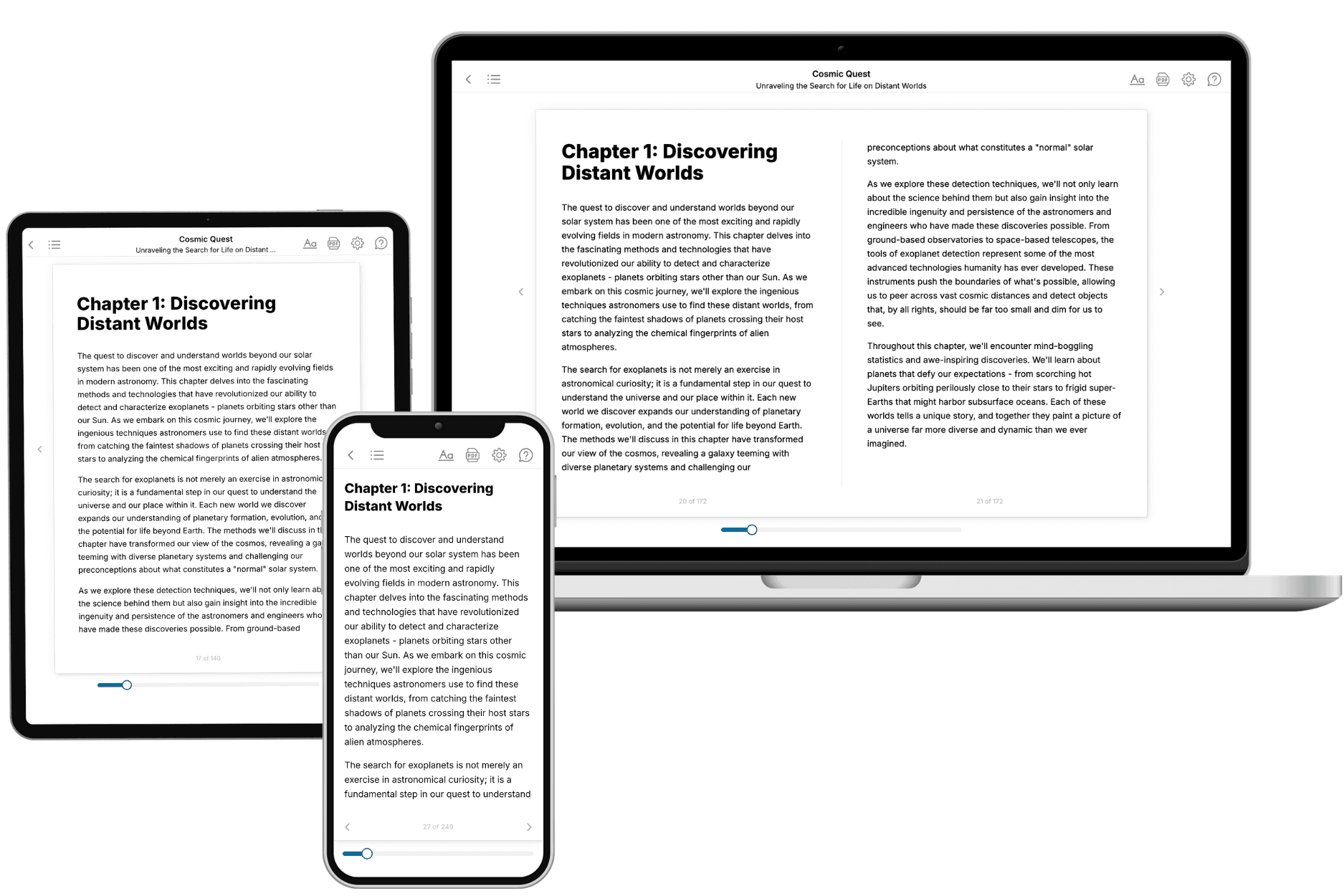
- 3. Get your tailored book
Your book is ready in 10 minutes. Read it online, download as EPUB or PDF, or send to Kindle.
Frequently asked questions
- What is TailoredRead?
TailoredRead creates complete, full-length nonfiction ebooks, written specifically for you. Tell us what you want to learn and why, and TailoredRead writes you a complete ebook on it, with charts, tables, and diagrams throughout. Read it online, on Kindle, or on any e-reader, or download it as a PDF or EPUB. Every book is written fresh the day you order it.
- How is the book tailored to me?
Before anything is written, you answer a few short questions about your goals, your background, and the topics you care about. Your book is then planned around your answers: written at your level, focused on your goals, and covering the topics you chose, instead of the one-size-fits-all book a store sells everyone.
- Will it read like generic AI content?
No. Your book isn't a chat transcript: it's planned chapter by chapter before a single word is written, told in a clear book voice, and explains ideas visually with charts, tables, and diagrams. After writing, every book goes through an editorial pass that polishes chapters so the book reads consistent from start to finish. Judge for yourself: browse thousands of sample books on our Explore Books page.
- How accurate is the content?
Our AI first checks whether your subject needs live research. Niche and fast-moving subjects are researched before writing, and the book plan and chapters are grounded in what it finds. After writing, every book goes through a quality pass that checks its facts and consistency, and researched books list their sources in a Notes section at the back.
- How long is the book?
You choose the length: Comprehensive (250-300 pages), Detailed (150-200 pages), Essential (70-100 pages), or Short (30-50 pages).
- Does the book include visuals?
Yes. Every book includes charts, tables, and diagrams: timelines, checklists, step-by-step guides, decision trees, comparison tables, matrices, and bar charts. A typical book includes dozens of these visual elements.
- Can I read it on Kindle? What formats can I download?
Yes. Every book can be read in our online reader or downloaded as a PDF or EPUB. The EPUB can be opened with Kindle, Apple Books, Kobo, and any e-reader. The Commercial and Author licenses also include an editable Word (DOCX) and Markdown download.
- How much does it cost?
About the price of a regular ebook. The exact price depends on your book's length and complexity, from $2 for the shortest books to $35 for the most comprehensive, and it's shown when you review your book, before you commit to anything. Each book is a one-time purchase, yours to keep, no subscription. Licenses that let you share, teach, or publish your book range from $35.99 to $49.99.
- Can I preview the book before purchasing?
Before you pay, you'll see what your book will cover: the title, a detailed description, the estimated length, and the complete chapter-by-chapter table of contents, so you know what you're getting before you decide. The full text itself is written after you purchase.
- How long does it take to create a book?
About 10 minutes. You can start reading the opening chapters while the rest is still being written.