Building Blocks: A Coloring Guide to Construction Materials
Discover the Materials That Shape Our Built Environment Through Art and Learning
Discover the fascinating world of construction materials through a unique blend of education and creativity.
207 pages9 chaptersMay 26, 2026Coloring Books
About this book
This coloring book takes you on a visual journey through the materials that build our cities, homes, and infrastructure. Each page combines detailed illustrations with accessible explanations of how materials work, why they're chosen for specific applications, and how they've evolved over time. You'll explore concrete's versatility, steel's strength, wood's warmth, glass's transparency, and emerging sustainable alternatives—all while engaging your artistic side. Whether you're an architecture enthusiast, a student, or simply curious about the built environment, this book transforms learning into a meditative, enjoyable experience. The act of coloring reinforces your understanding of material properties, textures, and applications, making complex concepts memorable and intuitive. Perfect for those seeking to deepen their knowledge while enjoying a creative outlet.
Table of contents
- IntroductionWhy Materials Matter in Architecture, How to Use This Coloring Book, Learning Through Art and CreativityRead below
- Chapter 1: Concrete: The Modern FoundationWhat Makes Concrete Strong, From Foundations to Skyscrapers, Concrete and Environmental Impact
- Chapter 2: Steel: Strength and FlexibilityThe Properties That Define Steel, Building Tall and Strong, Modern Steel Innovations
- Chapter 3: Wood: Timeless and RenewableUnderstanding Different Wood Types, Durability and Treatment, Sustainable Forestry and Modern Wood
- Chapter 4: Glass: Transparency and StrengthHow Glass is Made and Composed, Tempered, Laminated, and Smart Glass, From Windows to Facades
- Chapter 5: Masonry: Brick, Stone, and TileThe Enduring Appeal of Brick, Natural Stone in Construction, Traditional and Modern Masonry Methods
- Chapter 6: Metals Beyond Steel: Aluminum and CopperLightweight Aluminum Advantages, Copper's Durability and Beauty, Roofing, Framing, and Finishes
- Chapter 7: Composite and Engineered MaterialsWhat Are Composite Materials, Engineered Wood Products, Fiber-Reinforced and High-Performance Composites
- Chapter 8: Sustainable and Eco-Friendly MaterialsEmerging Sustainable Alternatives, Recycled and Reclaimed Materials, The Future of Green Building
- Chapter 9: Choosing the Right MaterialPerformance, Cost, and Aesthetics, Climate and Environmental Factors, How Materials Work Together
- ConclusionThe Future of Building Materials, Your Journey in Material Discovery
- Glossary of Construction Material Terms
- Further Reading and Resources
Introduction
Look around you right now. Every wall, floor, ceiling, window, and roof you can see was built from a deliberate choice. Someone, at some point, decided that this material and not another one would go right here. Those decisions shape how a building feels, how long it lasts, how much it costs to heat, and whether it will still be standing a century from now. Construction materials are not just the raw stuff of buildings. They are the vocabulary of the built environment, and once you learn to read them, the world around you becomes a completely different place.
This book was designed for people who want to understand that vocabulary in a way that actually sticks. Reading a technical manual about compressive strength or thermal conductivity can feel dry and forgettable. But when you pick up a pencil or a marker and start filling in the texture of a brick wall or the smooth surface of a glass curtain wall, something different happens. Your brain engages in a way that passive reading simply cannot match. The act of coloring slows you down, focuses your attention, and gives your hands something to do while your mind absorbs new ideas.
Each chapter in this book pairs detailed illustrations with clear, accessible explanations of a specific material category. You will move through concrete, steel, wood, glass, masonry, metals, composites, and sustainable alternatives. Along the way, you will pick up real knowledge about why engineers and architects make the choices they do, how materials behave under stress, and how the construction industry is evolving to meet the environmental challenges of the twenty-first century. By the time you reach the final page, you will not just have a collection of colored illustrations. You will have a genuinely richer understanding of the world that surrounds you every single day.
Why Materials Matter in Architecture
Every structure tells a story through its materials. The ancient Romans built the Pantheon using a form of concrete that has survived more than two thousand years, partly because of volcanic ash in the mix that modern engineers are still studying today.[1] The Eiffel Tower, built in 1889 from wrought iron, was considered an eyesore by many Parisians at the time, yet it demonstrated that metal could be used at a scale and elegance that nobody had imagined before. These are not just historical curiosities. They are examples of how material choices define what is possible in architecture and engineering.
Materials determine far more than just appearance. They govern a building's structural performance, its energy efficiency, its acoustic properties, and its maintenance requirements over decades. A concrete wall and a timber-framed wall might look similar from the outside, but they behave completely differently in an earthquake, a fire, or a cold climate. Understanding these differences is not just useful for professionals. It helps anyone who owns, rents, renovates, or simply lives inside a building make better decisions and ask better questions.
The relationship between materials and architecture is also deeply cultural. Timber-framed houses in Scandinavia reflect centuries of forest management and cold-climate building wisdom. Adobe structures in the American Southwest use earth itself as a building block, creating thick walls that stay cool in summer and warm in winter. Bamboo construction across Southeast Asia demonstrates that a fast-growing grass can be stronger per unit weight than many conventional materials.[2] Every material carries with it a history, a geography, and a set of human values.
Material selection also has enormous economic consequences. In a typical residential construction project, materials account for roughly 50 to 60 percent of total construction costs.[3] Choosing the wrong material for a given application can mean expensive repairs, premature replacement, or even structural failure. Choosing the right one can mean a building that performs beautifully for generations with minimal intervention. This is why architects, engineers, and contractors spend so much time thinking carefully about what goes into every part of a structure.
There is also a growing urgency around the environmental dimension of material choices. The construction industry accounts for approximately 39 percent of global carbon dioxide emissions when you include both the energy used to operate buildings and the emissions from manufacturing building materials.[4] That is a staggering figure, and it means that the materials we choose to build with have a direct impact on climate change. Understanding the environmental footprint of concrete versus timber versus recycled steel is no longer just an academic exercise. It is one of the most important conversations happening in construction today.
Finally, materials matter because they shape human experience in ways that are hard to quantify but impossible to ignore. The warmth of exposed wood in a living room, the cool solidity of polished stone underfoot, the way light filters through a frosted glass partition: these sensory qualities affect how people feel in a space. Good architecture uses materials not just for their structural properties but for their ability to create environments where people feel comfortable, inspired, or at peace. That is the art side of a discipline that is also deeply scientific, and it is exactly the intersection that this book explores.
Key takeaway: Materials are not just the physical substance of buildings. They are the medium through which architects and engineers express structural logic, cultural values, environmental responsibility, and human experience all at once.
How to Use This Coloring Book
This book is designed to be flexible. There is no single correct way to move through it, and you do not need to follow the chapters in order unless you want to. Each chapter is self-contained, which means you can jump straight to the material that interests you most right now. If you are renovating a kitchen and suddenly curious about tile and stone, flip to the masonry chapter. If you just walked past a striking glass skyscraper and want to understand how it works, start with glass. Follow your curiosity, because that is when learning happens most naturally.
Each chapter follows a consistent structure that makes it easy to navigate. You will find:
- Educational text that explains the material's composition, properties, and applications in plain language
- Coloring illustrations that show the material in real-world contexts, from close-up texture studies to full architectural scenes
- Callout boxes that highlight key facts, historical notes, or interesting comparisons
- Practical examples that connect the material to buildings and structures you may already know
For the coloring sections, you can use whatever medium you prefer. Colored pencils give you the most control and work well for detailed texture work, such as the grain of wood or the aggregate in exposed concrete. Markers produce bolder, more graphic results and are great for architectural elevations and structural diagrams. Watercolor pencils offer a softer, more blended effect that works beautifully for natural materials like stone and timber. There is no wrong choice. The goal is engagement, not perfection.
A practical tip worth keeping in mind: before you start coloring any illustration, read the accompanying text first. This gives you context that will actually influence how you color. When you know that weathered copper turns a distinctive blue-green color called patina because of oxidation, you will make different color choices than if you just see a blank outline of a copper roof. That moment of informed decision-making is where the learning really happens. The text and the illustration are designed to work together, not separately.
You might also find it useful to keep a few reference images nearby while you color. A quick search for "exposed concrete texture," "weathered brick wall," or "laminated glass cross-section" will give you real-world visual references that can guide your color choices and deepen your understanding of what the illustration is showing. This is not cheating. It is exactly the kind of active, curious engagement that makes this format so effective for learning.
Some people prefer to work through this book alone as a quiet, meditative activity. Others enjoy using it in a group setting, such as a study group, a design class, or even a casual gathering with friends who share an interest in architecture or construction. Both approaches work well. In a group setting, the illustrations become conversation starters. Why did the architect choose steel here instead of concrete? What would this building look like if it were built from timber instead? These are genuinely interesting questions, and the book gives you enough background to explore them meaningfully.
Do not worry about staying inside the lines or achieving photographic accuracy. The illustrations are designed to be interpreted, not copied. If you want to experiment with unusual color combinations or explore what a material might look like in a different context, go for it. Some of the most interesting learning happens when you ask "what if?" and then try to answer it visually. This book gives you permission to be both a student and an artist at the same time, and those two roles reinforce each other more than you might expect.
Getting started checklist: Gather your coloring tools (pencils, markers, or watercolors), find a comfortable, well-lit space, read the chapter text before coloring, and keep a device nearby for reference images if you want them. That is genuinely all you need.
At the back of the book, you will find a glossary of construction material terms and a list of further reading resources. The glossary is worth bookmarking. When you encounter a technical term in the text, such as compressive strength, thermal mass, or embodied carbon, the glossary gives you a clear, concise definition without requiring you to search elsewhere. The further reading section points you toward books, websites, and organizations where you can go deeper on any topic that captures your interest.
Learning Through Art and Creativity
There is solid science behind the idea that creative activity enhances learning. Research in cognitive psychology has consistently shown that engaging multiple senses and motor systems during learning improves both retention and comprehension.[5] When you read about a material and then immediately engage your hands and eyes in representing it visually, you are processing that information through multiple cognitive channels at once. This is sometimes called dual coding theory, and it explains why illustrated textbooks are more effective than text-only ones, and why active note-taking beats passive reading.
Coloring, specifically, has some additional advantages that are worth understanding. The repetitive, focused nature of the activity puts many people into a state of relaxed concentration that psychologists sometimes compare to mindfulness meditation.[6] In this state, the mind is calm but alert, which turns out to be an excellent condition for absorbing and retaining new information. You are not distracted by your phone or your to-do list. You are present with the page in front of you, and that presence makes a real difference to how much you take in.
There is also something specific about coloring architectural and material illustrations that connects to how construction professionals actually think. Architects and engineers spend enormous amounts of time working with visual representations of materials: drawings, renderings, material samples, and physical models. Developing your own visual literacy around materials, even through something as accessible as a coloring book, builds a kind of intuitive understanding that is hard to get from text alone. When you have spent time carefully coloring the cross-section of a reinforced concrete beam, you will find it much easier to visualize what that beam is doing inside a real building.
Consider how this works in practice. Imagine reading the following sentence: Brick is a fired clay unit with a characteristic warm reddish-brown color that varies depending on the mineral content of the clay and the temperature of the kiln.
Now imagine spending fifteen minutes coloring a detailed illustration of a brick wall, choosing between warm reds, cool browns, and sandy yellows, noticing how the mortar joints create a regular pattern, and observing how the color varies slightly from brick to brick. After that second experience, the concept of brick is no longer just a sentence in your memory. It is a visual, tactile, and creative experience that has been encoded in a much richer way.
This approach also works particularly well for understanding material properties that are inherently visual. The way light passes through different types of glass, the texture difference between rough-sawn timber and smooth-planed timber, the color change that happens when copper weathers over time: these are things that words can describe but illustrations can show. And when you are the one making the illustration come to life, you are not just observing those properties. You are actively interpreting and representing them, which is a much deeper form of engagement.
It is also worth noting that creativity and technical knowledge are not opposites. Some of the most innovative developments in construction materials have come from people who were willing to think visually and experimentally about problems that others approached purely analytically. The development of cross-laminated timber (CLT), for example, required engineers to think creatively about how wood grain orientation affects structural performance, and to visualize solutions that had never been tried before. The habit of thinking visually about materials, which this book actively encourages, is genuinely useful beyond the pages themselves.
You do not need any artistic background or training to get value from this book. The illustrations are designed to be accessible to people who have never picked up a colored pencil since elementary school, as well as to people who draw and paint regularly. The point is not to produce gallery-worthy artwork. The point is to engage actively with the material, to slow down and look carefully, and to let the creative process do what it does best: make ideas memorable, personal, and real. Every page you color is a small act of learning that compounds over time into a genuinely deeper understanding of the built world.
A note on process over product: The value of this book is in the doing, not the result. A page colored quickly and imperfectly while thinking hard about the material it depicts is worth far more, educationally speaking, than a perfectly colored page produced without much thought. Engage with the ideas, and let the art take care of itself.
As you work through the chapters ahead, try to bring a spirit of genuine curiosity to each material you encounter. Ask yourself why a particular material is used in a particular way. Wonder about what would happen if it were replaced with something else. Notice the materials in the buildings around you and see if you can identify them and understand their role. This book is a starting point, not a destination. The real learning happens when you carry these ideas out into the world and start seeing construction materials not as background noise, but as the fascinating, carefully chosen, endlessly varied building blocks of everything around you.
Notes
Introduction
- 1. M. D. Jackson and others, "Phillipsite and Al-tobermorite mineral cements produced through low-temperature water-rock reactions in Roman marine concrete," American Mineralogist, 2017
- 2. J. J. A. Janssen, "Designing and Building with Bamboo," International Network for Bamboo and Rattan (INBAR), Technical Report, 2000
- 3. National Association of Home Builders, Cost of Constructing a Home, NAHB Economics, 2022
- 4. World Green Building Council, Bringing Embodied Carbon Upfront, WorldGBC, 2019
- 5. R. E. Mayer, Multimedia Learning (2nd ed.), Cambridge University Press, 2009
- 6. N. A. Curry and T. Kasser, "Can Coloring Mandalas Reduce Anxiety?," Art Therapy: Journal of the American Art Therapy Association, 2005
This is the end of the free sample. The full book has 9 chapters.
Want this book written for you?
Tell us your goals and background, and get your own version of this book, tailored by AI to you.


Benefits of AI-tailored books
- Read one book, not ten:
- all the Coloring Books knowledge you need, gathered into a single book.
- Save days of learning:
- tell us your goals, choose your topics, and the whole book is built around them.
- Learn effortlessly:
- Coloring Books book written for your specific background and expertise.
- Understand at a glance:
- includes charts, tables, timelines, checklists, decision trees, and more.
- Stay current:
- written the day you order it, not years ago.
- Trust what you read:
- every book is checked for accuracy, with real research when your subject needs it.
Create your unique book in 3 steps
- 1. Select your focus
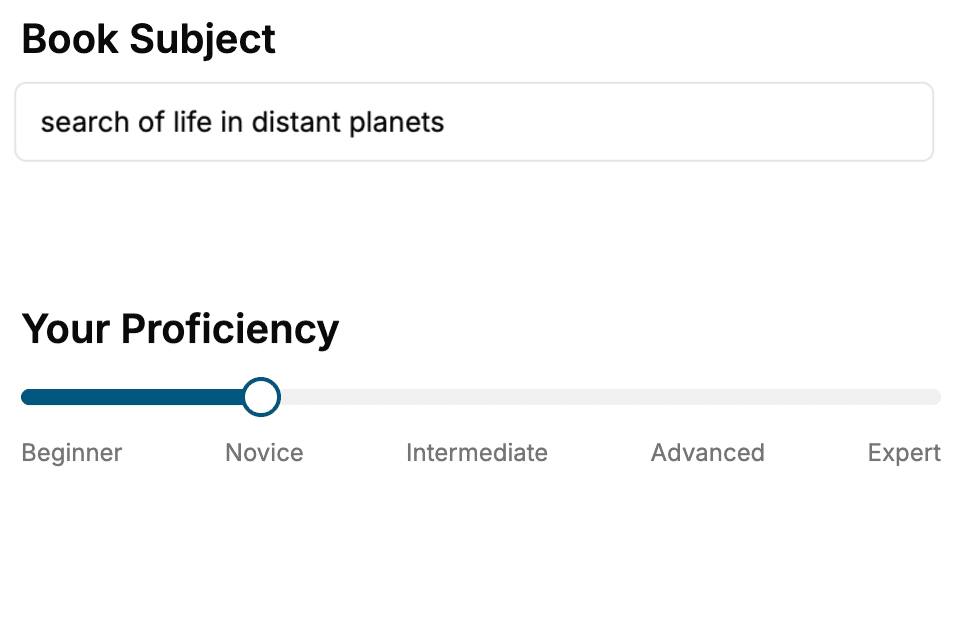
Select the focus of your Coloring Books book and share your background
- 2. Personalize your book
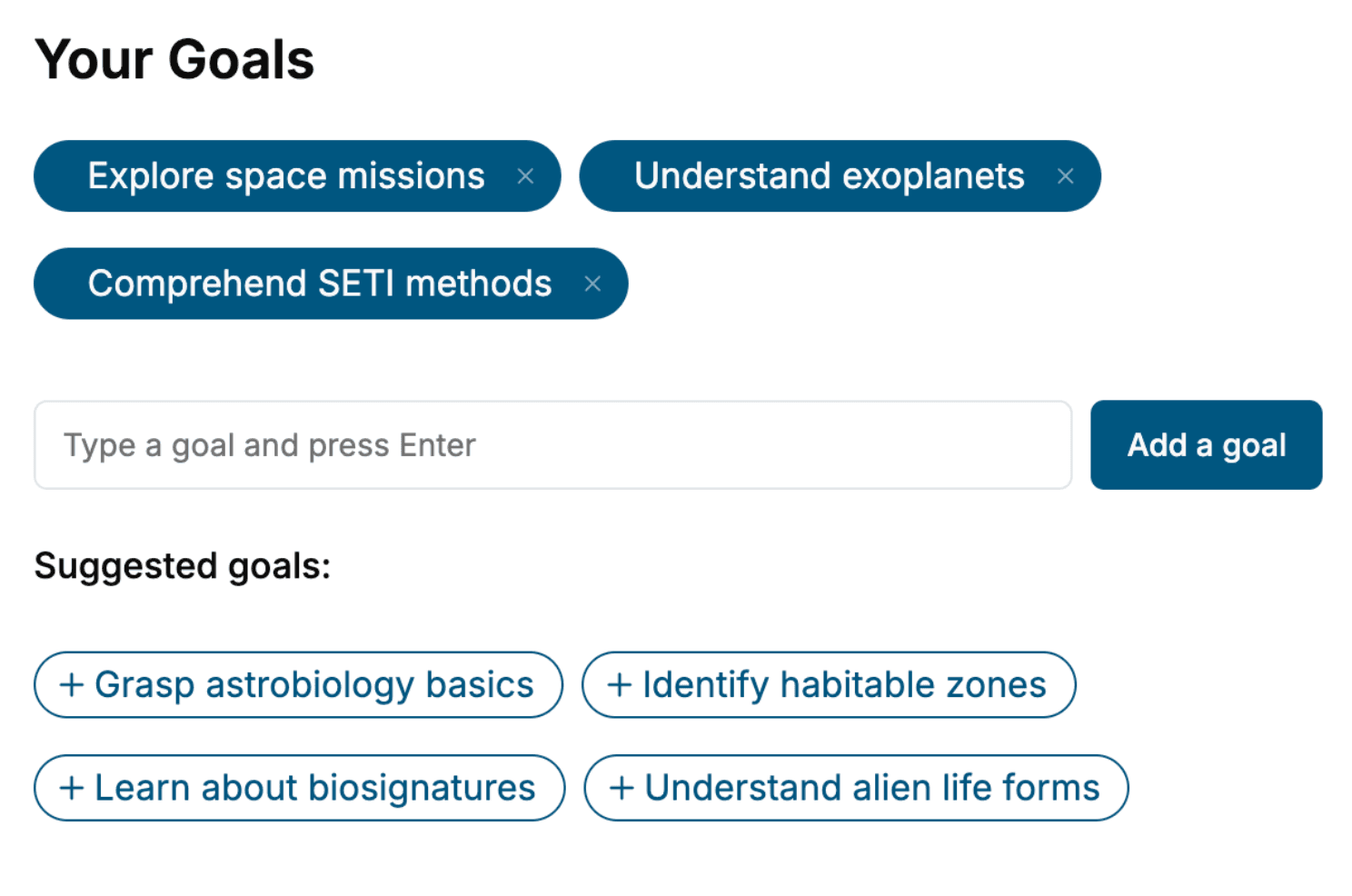
Specify your goals and choose sub-topics to include
- 3. Get your tailored book
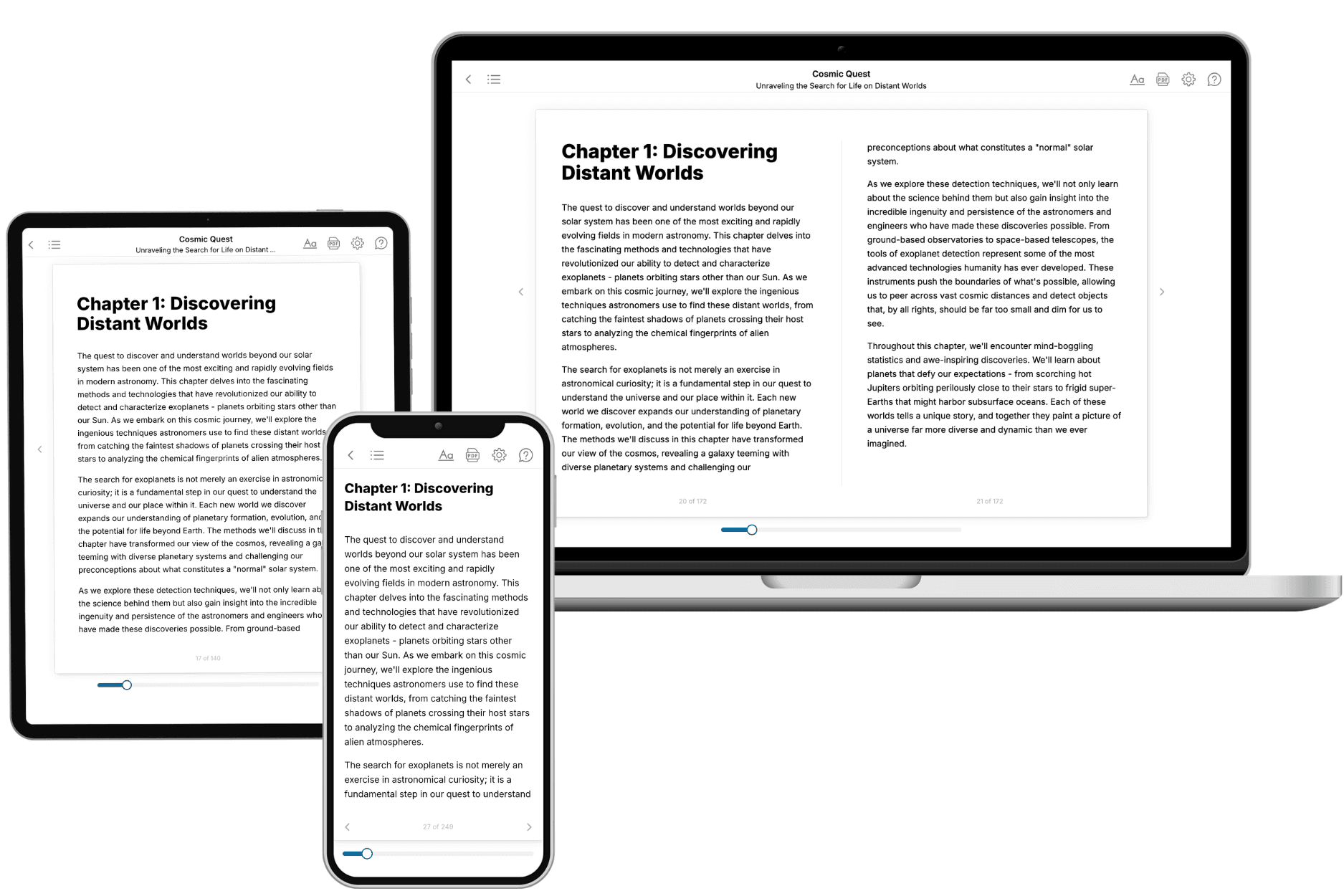
Your book is ready in 10 minutes. Read it online, download as EPUB or PDF, or send to Kindle.
Frequently asked questions
- What is TailoredRead?
TailoredRead creates complete, full-length nonfiction ebooks, written specifically for you. Tell us what you want to learn and why, and TailoredRead writes you a complete ebook on it, with charts, tables, and diagrams throughout. Read it online, on Kindle, or on any e-reader, or download it as a PDF or EPUB. Every book is written fresh the day you order it.
- How is the book tailored to me?
Before anything is written, you answer a few short questions about your goals, your background, and the topics you care about. Your book is then planned around your answers: written at your level, focused on your goals, and covering the topics you chose, instead of the one-size-fits-all book a store sells everyone.
- Will it read like generic AI content?
No. Your book isn't a chat transcript: it's planned chapter by chapter before a single word is written, told in a clear book voice, and explains ideas visually with charts, tables, and diagrams. After writing, every book goes through an editorial pass that polishes chapters so the book reads consistent from start to finish. Judge for yourself: browse thousands of sample books on our Explore Books page.
- How accurate is the content?
Our AI first checks whether your subject needs live research. Niche and fast-moving subjects are researched before writing, and the book plan and chapters are grounded in what it finds. After writing, every book goes through a quality pass that checks its facts and consistency, and researched books list their sources in a Notes section at the back.
- How long is the book?
You choose the length: Comprehensive (250-300 pages), Detailed (150-200 pages), Essential (70-100 pages), or Short (30-50 pages).
- Does the book include visuals?
Yes. Every book includes charts, tables, and diagrams: timelines, checklists, step-by-step guides, decision trees, comparison tables, matrices, and bar charts. A typical book includes dozens of these visual elements.
- Can I read it on Kindle? What formats can I download?
Yes. Every book can be read in our online reader or downloaded as a PDF or EPUB. The EPUB can be opened with Kindle, Apple Books, Kobo, and any e-reader. The Commercial and Author licenses also include an editable Word (DOCX) and Markdown download.
- How much does it cost?
About the price of a regular ebook. The exact price depends on your book's length and complexity, from $2 for the shortest books to $35 for the most comprehensive, and it's shown when you review your book, before you commit to anything. Each book is a one-time purchase, yours to keep, no subscription. Licenses that let you share, teach, or publish your book range from $35.99 to $49.99.
- Can I preview the book before purchasing?
Before you pay, you'll see what your book will cover: the title, a detailed description, the estimated length, and the complete chapter-by-chapter table of contents, so you know what you're getting before you decide. The full text itself is written after you purchase.
- How long does it take to create a book?
About 10 minutes. You can start reading the opening chapters while the rest is still being written.