The Business Case for Natural Language Processing
How to Leverage AI-Powered Text Understanding to Drive Growth and Innovation
What if your business could automatically understand customer sentiment, extract insights from thousands of documents, and respond to inquiries at scale—all without human intervention?
238 pages11 chaptersFeb 22, 2026Natural Language Processing
About this book
Natural Language Processing makes this possible, yet many organizations struggle to move beyond pilot projects to real business impact. This book bridges the gap between NLP theory and practical business application. You'll discover how leading companies are using language AI to streamline operations, enhance customer experiences, and unlock competitive advantages. Learn the business fundamentals of NLP without getting lost in complex mathematics, understand which problems NLP can actually solve, and develop a roadmap for implementing NLP solutions in your organization. Whether you're evaluating NLP vendors, building internal capabilities, or scaling existing projects, this guide provides the frameworks, case studies, and practical strategies you need to succeed.
Table of contents
- IntroductionWhy Natural Language Processing Matters Now, How to Use This Book, What You'll Learn and AccomplishRead below
- Chapter 1: Understanding Natural Language Processing FundamentalsWhat Is Natural Language Processing?, How NLP Systems Understand Text, NLP vs. Other AI Technologies, Common Misconceptions About NLP
- Chapter 2: Core NLP Capabilities and What They EnableText Classification and Categorization, Sentiment Analysis and Opinion Mining, Named Entity Recognition and Information Extraction, Natural Language Generation and Summarization
- Chapter 3: NLP Applications Across Business FunctionsCustomer Service and Support Automation, Marketing, Sales, and Customer Insights, Operations, Compliance, and Risk Management, Product Development and Innovation
- Chapter 4: Identifying and Evaluating NLP OpportunitiesThe Problem-First Approach to NLP, Assessing Your Organization's NLP Readiness, Evaluating Technical and Business Feasibility, Prioritizing NLP Projects for Maximum Impact
- Chapter 5: Building a Data Strategy for NLP SuccessUnderstanding NLP Data Requirements, Collecting and Organizing Training Data, Ensuring Data Quality and Labeling, Data Governance and Privacy Considerations
- Chapter 6: Implementing NLP Solutions in Your OrganizationBuild vs. Buy: Choosing Your Implementation Path, Selecting NLP Vendors and Platforms, Running Successful Pilot Projects, Scaling from Pilot to Production
- Chapter 7: Measuring ROI and Business ImpactDefining Success Metrics Before Implementation, Quantifying Cost Savings and Revenue Impact, Measuring Qualitative Outcomes and Customer Impact, Continuous Monitoring and Improvement
- Chapter 8: Managing Organizational Change and Building CapabilitiesLeading Change in Your Organization, Building and Hiring NLP Teams, Training and Adoption Strategies, Creating a Data-Driven, AI-Ready Culture
- Chapter 9: Ethics, Bias, and Responsible AI in NLPUnderstanding Bias in NLP Systems, Ethical Frameworks for Responsible NLP, Transparency and Explainability in NLP, Regulatory Compliance and Legal Considerations
- Chapter 10: Real-World Case Studies and Success StoriesCase Study 1: Customer Service Transformation, Case Study 2: Market Intelligence and Competitive Analysis, Case Study 3: Compliance and Risk Automation
- Chapter 11: The Future of NLP and Emerging OpportunitiesEmerging NLP Technologies and Trends, Multimodal AI and Beyond Text, Preparing Your Organization for the Future
- ConclusionKey Takeaways and Action Items, Your Next Steps
- Glossary of NLP and AI Terms
- Further Reading and Resources
Introduction
Every day, your customers are telling you exactly what they want, what frustrates them, and what would make them stay. They're writing it in support tickets, typing it into chat windows, posting it in reviews, and sending it in emails. The problem isn't a lack of information. The problem is that there's far too much of it for any team to read, analyze, and act on at human speed. That gap between the data you have and the insights you can actually use is where most businesses quietly lose ground to competitors who've figured out how to close it.
Natural Language Processing, or NLP, is the branch of artificial intelligence that teaches computers to read, understand, and work with human language. It's the technology behind the chatbot that resolves your customer's billing question at 2 a.m., the system that flags a compliance risk buried in a 200-page contract, and the tool that tells your marketing team which product features customers are actually talking about. NLP has moved from research labs into real business operations, and the organizations using it well are seeing measurable results in efficiency, revenue, and customer satisfaction.
Yet for every company running a successful NLP deployment, there are several more stuck in pilot purgatory. They've run a proof of concept, seen promising results, and then watched the project stall before it ever reached production. Others have invested in NLP tools that never quite delivered on the vendor's promises. The gap between NLP's potential and its actual business impact isn't usually a technology problem. It's a strategy problem. Most organizations don't fail at NLP because the technology doesn't work. They fail because they started with the technology instead of the business problem, underestimated the importance of data quality, or didn't build the organizational support needed to sustain the change.
This book was written to close that gap. It's a practical guide for business professionals and decision-makers who want to understand NLP well enough to use it effectively, without needing a PhD in machine learning to do so. You'll find clear explanations of how NLP works, honest assessments of what it can and can't do, and concrete frameworks for identifying opportunities, building a business case, selecting the right approach, and measuring real results. Every chapter is grounded in how NLP actually gets deployed in organizations, not just how it works in theory.
The goal here is not to make you an NLP engineer. The goal is to make you a sharper decision-maker when it comes to language AI. Whether you're evaluating a vendor pitch, sponsoring an internal NLP project, or trying to figure out where to start, this book gives you the knowledge and tools to move forward with confidence. The organizations that will win with NLP over the next decade won't necessarily be the ones with the most sophisticated models. They'll be the ones with the clearest thinking about which problems to solve and the discipline to execute well.
Why Natural Language Processing Matters Now
The timing of this conversation matters. NLP has existed as an academic discipline since the 1950s, but the technology available to businesses today is categorically different from what existed even five years ago. The arrival of large language models, transformer-based architectures, and pre-trained foundation models has dramatically lowered the barrier to building useful NLP applications. What once required months of custom model development and millions of labeled examples can now be accomplished in weeks using pre-built APIs and fine-tuning techniques. The cost curve has shifted in favor of adoption.[1]
At the same time, the volume of text data that businesses generate and receive has exploded. Consider a mid-sized e-commerce company. It might receive 10,000 customer support messages per week, collect thousands of product reviews per month, monitor dozens of social media channels, and process hundreds of supplier contracts per year. Each of those text sources contains actionable intelligence. Without NLP, most of that intelligence goes unread or gets sampled at best. With NLP, it becomes a continuous stream of structured insight that feeds directly into business decisions.
The competitive stakes are rising quickly. According to research from Gartner, by 2025 more than 80% of enterprises will have used generative AI APIs or deployed generative AI-enabled applications in production environments, up from less than 5% in 2023.[2] NLP is a core component of that shift. Companies that build NLP capabilities now are developing institutional knowledge, data assets, and operational workflows that will be difficult for late movers to replicate quickly. The window for building a meaningful head start is open, but it won't stay open indefinitely.
NLP also matters because customer expectations have changed. People now expect instant, accurate, personalized responses from the businesses they interact with. They expect search tools that understand what they mean, not just what they typed. They expect support systems that remember context and resolve issues without requiring them to repeat themselves. Meeting those expectations at scale is nearly impossible without language AI. The companies that are consistently delivering those experiences are almost always doing it with NLP working behind the scenes.
Beyond customer-facing applications, NLP is quietly transforming back-office operations. Legal teams are using it to review contracts in hours instead of weeks. Compliance departments are using it to monitor communications for regulatory risk. Finance teams are using it to extract data from unstructured documents and feed it into reporting systems. These applications don't make headlines the way consumer chatbots do, but they often deliver some of the clearest and most measurable ROI of any NLP investment. The breadth of NLP's applicability across business functions is one of its most underappreciated qualities.
Perhaps most importantly, NLP matters now because the technology has become accessible. You no longer need a team of research scientists to build a useful NLP application. Cloud platforms from Google, Amazon, Microsoft, and a growing ecosystem of specialized vendors offer pre-built NLP capabilities that can be integrated into existing systems with relatively modest technical effort. The question for most organizations is no longer whether they can afford to use NLP. It's whether they can afford not to, and whether they have the strategic clarity to use it well.
A concrete example of the stakes: A large telecommunications company deployed an NLP-based system to analyze customer support call transcripts. Within six months, the system had identified the top five root causes of repeat calls, which human analysts had missed because the volume of transcripts was too large to review manually. Fixing those root causes reduced repeat call rates by 23% and saved the company an estimated $14 million annually in support costs. The NLP system didn't replace the analysts. It gave them the leverage to do work that was previously impossible.
The bottom line is straightforward. Language is the primary medium through which your customers communicate with you, your employees communicate with each other, and your business communicates with the world. Any technology that helps you understand and act on language more effectively is a technology worth taking seriously. NLP is that technology, and it's ready for serious business use right now.
How to Use This Book
This book is designed to be read cover to cover, but it's also structured so you can navigate directly to the chapters most relevant to your current situation. If you're brand new to NLP, starting from Chapter 1 will give you the conceptual foundation that makes everything else easier to understand. If you already have a working knowledge of NLP basics and want to jump straight into business applications or implementation strategy, you can start with Chapter 3 or Chapter 6 without losing the thread.
Here's a quick map of what each part of the book covers, so you can orient yourself before diving in:
- Chapters 1 and 2 cover the fundamentals: what NLP is, how it works at a conceptual level, and what the core capabilities are. These chapters are written for business readers, not engineers. The goal is to give you enough technical literacy to ask the right questions and evaluate claims critically.
- Chapter 3 maps NLP capabilities to specific business functions, from customer service and marketing to operations and product development. This is a good chapter to share with colleagues who are trying to understand where NLP might apply in their area.
- Chapters 4 and 5 focus on strategy: how to identify the right NLP opportunities, assess your organization's readiness, and build the data foundation that NLP projects require. These chapters are especially useful if you're in the early stages of planning.
- Chapters 6 and 7 cover implementation and measurement: how to choose between building and buying, how to run a successful pilot, how to scale to production, and how to measure ROI in a way that holds up to scrutiny.
- Chapters 8 and 9 address the human side of NLP: organizational change management, team building, ethics, bias, and responsible AI practices. These are often the chapters that determine whether an NLP project succeeds or fails in the long run.
- Chapters 10 and 11 bring everything together through real-world case studies and a look at where NLP is headed next.
Throughout the book, you'll find several recurring elements designed to make the content more actionable. Business case examples illustrate how real organizations have applied specific NLP capabilities. Frameworks and checklists give you structured tools you can apply directly to your own situation. Common pitfalls highlight the mistakes that most frequently derail NLP projects, so you can avoid them. And key questions at the end of major sections help you translate concepts into decisions relevant to your organization.
One important note about how this book handles technical depth. NLP is a mathematically rich field, and there are entire textbooks dedicated to the algorithms and architectures that power modern language AI. This book deliberately stays at the conceptual level when it comes to the math. The goal is not to teach you how to build an NLP model. The goal is to teach you how to think about NLP as a business tool, how to evaluate it, how to deploy it, and how to get value from it. Where technical concepts are introduced, they're explained in plain language with business-relevant examples.
If you're a business leader who sponsors or oversees NLP projects, this book will help you ask better questions, set more realistic expectations, and make more informed decisions about investment and direction. If you're a product manager, analyst, or strategist who works alongside technical teams, it will help you bridge the gap between business requirements and technical implementation. If you're an entrepreneur or startup founder evaluating whether NLP belongs in your product roadmap, it will help you assess the opportunity clearly and avoid the most common early mistakes.
The most effective way to use this book is actively. As you read, think about the specific business problems in your organization that involve language data. Keep a running list of potential NLP opportunities, questions to investigate, and decisions that need to be made. The frameworks in this book are most valuable when they're applied to real situations, not just read in the abstract. By the time you finish, you should have a clearer picture of where NLP fits in your organization and a concrete set of next steps to pursue.
What You'll Learn and Accomplish
By the end of this book, you'll have a working understanding of NLP that goes well beyond the surface-level familiarity most business professionals have with the technology. More importantly, you'll have practical tools and frameworks that you can apply immediately. Here's a specific breakdown of what you'll be able to do after working through each major area of the book.
Understanding NLP capabilities and limitations. One of the most common and costly mistakes in NLP adoption is misunderstanding what the technology can actually do. Vendors often oversell. Internal champions sometimes overpromise. The result is projects that fail to meet expectations, not because the technology is bad, but because the expectations were wrong. After reading Chapters 1 and 2, you'll be able to evaluate NLP claims critically, distinguish between what's genuinely possible today and what's still aspirational, and have informed conversations with both technical teams and vendors.
Identifying high-value NLP opportunities in your organization. Not every business problem that involves text is a good NLP problem. Some are better solved with simpler tools. Others require data or infrastructure that most organizations don't have. Chapter 4 gives you a structured framework for evaluating NLP opportunities across three dimensions:
- Business value: How significant is the problem? What's the potential impact on revenue, cost, or customer experience?
- Technical feasibility: Does the problem have the characteristics that make NLP likely to work well?
- Organizational readiness: Does your organization have the data, talent, and processes needed to execute?
Using this framework, you'll be able to build a prioritized pipeline of NLP opportunities rather than chasing the most exciting-sounding use case or the one that got the most attention at a conference.
Building a credible business case for NLP investment. Getting budget and organizational support for NLP projects requires more than enthusiasm about the technology. It requires a clear articulation of the problem being solved, a realistic estimate of costs and benefits, and a credible plan for execution. Chapters 5 through 7 give you the building blocks for that business case, including how to estimate ROI, how to structure a pilot project that generates convincing evidence, and how to define success metrics that will hold up to scrutiny from finance and leadership.
Navigating the build vs. buy decision. One of the most consequential decisions in any NLP project is whether to build a custom solution, buy a pre-built product, or use a platform that sits somewhere in between. Each approach has different cost profiles, capability trade-offs, and organizational implications. Chapter 6 walks through a structured decision framework for making this choice, including the questions you should ask vendors, the red flags to watch for in vendor pitches, and the conditions under which building custom makes sense versus when it's an expensive mistake.
Managing the human side of NLP adoption. Technology is rarely the hardest part of an NLP implementation. The harder challenges are usually organizational: getting teams to trust the system, redesigning workflows to take advantage of NLP outputs, managing the concerns of employees who worry about automation, and building the internal capabilities needed to sustain and improve the system over time. Chapter 8 addresses these challenges directly, with practical guidance on change management, team building, and creating the kind of organizational culture where AI tools actually get used.
Applying responsible AI practices to NLP. NLP systems can and do reflect biases present in their training data. They can produce outputs that are unfair, inaccurate, or harmful if not designed and monitored carefully. For businesses, this isn't just an ethical concern. It's a legal and reputational risk. Chapter 9 gives you a practical framework for identifying and mitigating bias in NLP systems, understanding your obligations under emerging AI regulations, and building transparency and accountability into your NLP deployments from the start.
What success looks like: A financial services firm used the frameworks in this book's equivalent approach to evaluate 14 potential NLP use cases across their organization. They narrowed the list to three high-priority projects based on business value and feasibility scoring, built a business case that secured $2.3 million in funding, and ran a 90-day pilot on their highest-priority use case (automated contract review) that demonstrated a 67% reduction in review time. The pilot results gave them the evidence needed to scale the project across the entire legal department. The key wasn't the technology. It was the structured approach to identifying the right problem and building the right case.
Beyond the specific skills and frameworks, this book aims to shift how you think about language data in your organization. Most businesses treat text as a byproduct of operations: something that gets stored, maybe searched occasionally, but rarely analyzed systematically. The organizations that are winning with NLP have made a different choice. They treat language data as a strategic asset, something to be collected deliberately, maintained carefully, and mined continuously for insight. That shift in perspective is often the most valuable thing that comes from engaging seriously with NLP, and it's something this book will help you develop.
Finally, it's worth being honest about what this book won't do. It won't turn you into an NLP engineer or data scientist. It won't give you a one-size-fits-all solution that works for every organization. And it won't promise that NLP is easy or that success is guaranteed. What it will do is give you the knowledge, frameworks, and practical tools to make better decisions about NLP in your specific context. The rest depends on the quality of your thinking, the rigor of your execution, and the organizational commitment you bring to the work. Those are things no book can provide for you, but this one will help you use them more effectively.
Notes
Introduction
This is the end of the free sample. The full book has 11 chapters.
Want this book written for you?
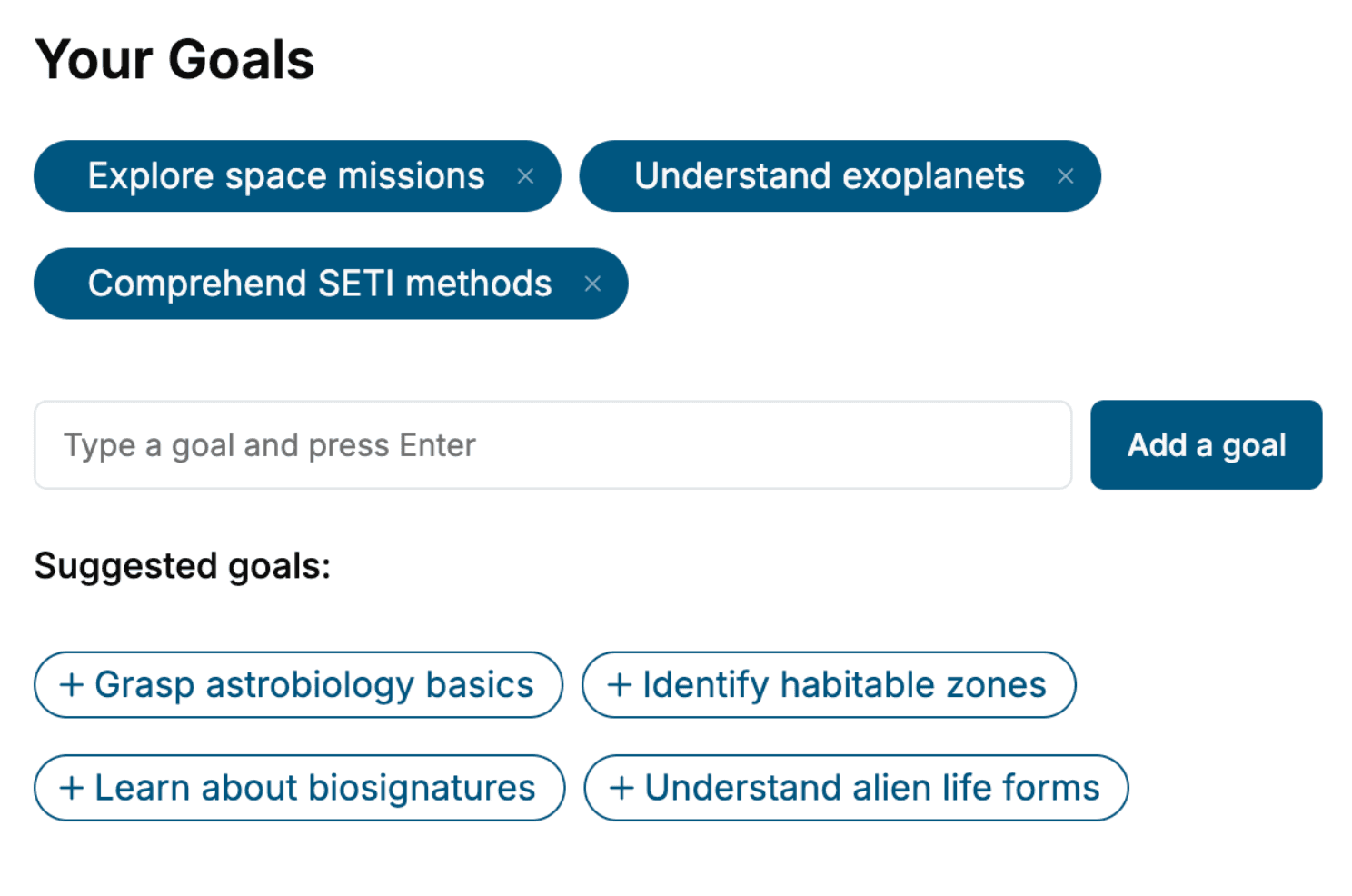
Tell us your goals and background, and get your own version of this book, tailored by AI to you.


Benefits of AI-tailored books
- Read one book, not ten:
- all the Natural Language Processing knowledge you need, gathered into a single book.
- Save days of learning:
- tell us your goals, choose your topics, and the whole book is built around them.
- Learn effortlessly:
- Natural Language Processing book written for your specific background and expertise.
- Understand at a glance:
- includes charts, tables, timelines, checklists, decision trees, and more.
- Stay current:
- written the day you order it, not years ago.
- Trust what you read:
- every book is checked for accuracy, with real research when your subject needs it.
Create your unique book in 3 steps
- 1. Select your focus
Select the focus of your Natural Language Processing book and share your background
- 2. Personalize your book
Specify your goals and choose sub-topics to include
- 3. Get your tailored book
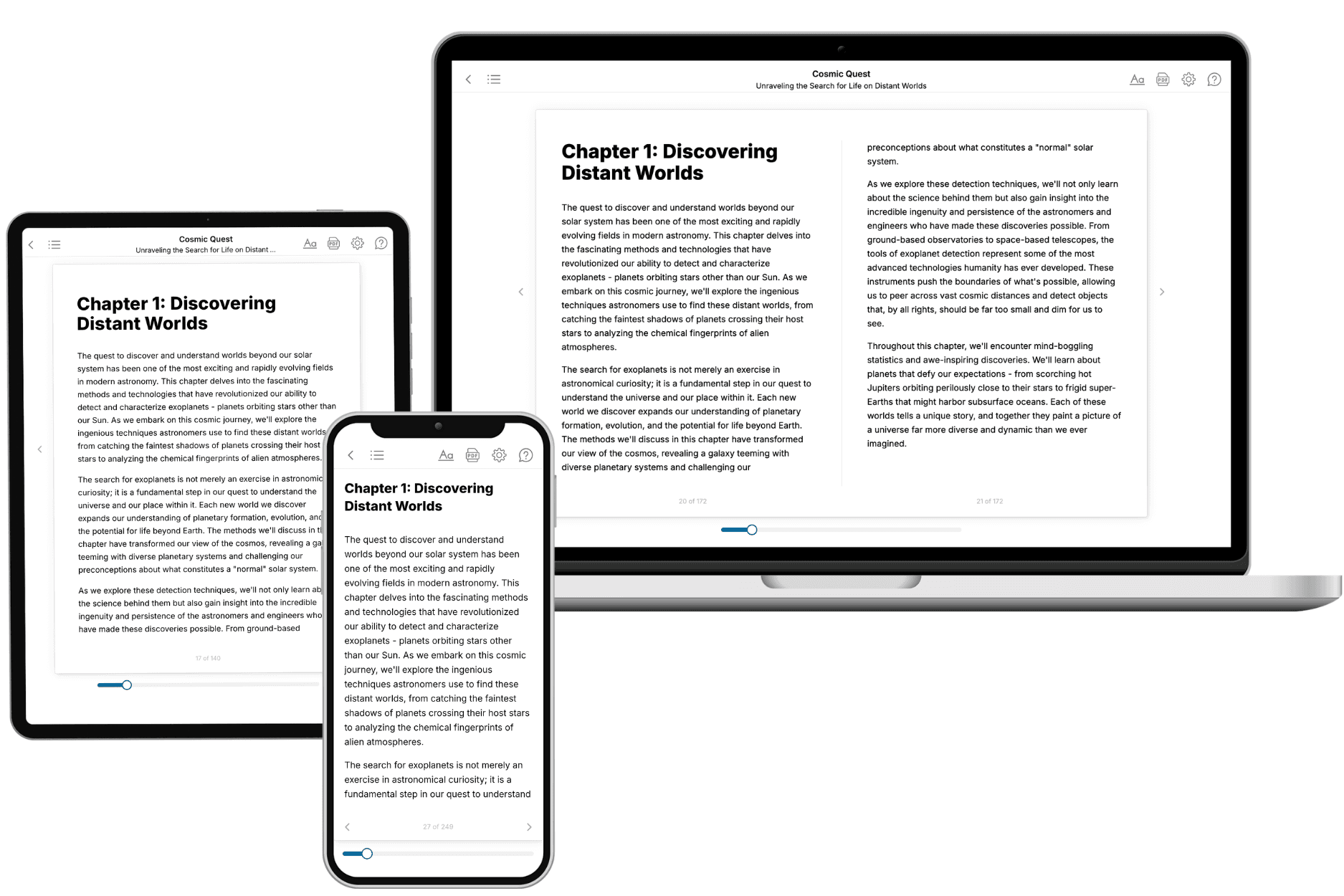
Your book is ready in 10 minutes. Read it online, download as EPUB or PDF, or send to Kindle.

Frequently asked questions
- What is TailoredRead?
TailoredRead creates complete, full-length nonfiction ebooks, written specifically for you. Tell us what you want to learn and why, and TailoredRead writes you a complete ebook on it, with charts, tables, and diagrams throughout. Read it online, on Kindle, or on any e-reader, or download it as a PDF or EPUB. Every book is written fresh the day you order it.
- How is the book tailored to me?
Before anything is written, you answer a few short questions about your goals, your background, and the topics you care about. Your book is then planned around your answers: written at your level, focused on your goals, and covering the topics you chose, instead of the one-size-fits-all book a store sells everyone.
- Will it read like generic AI content?
No. Your book isn't a chat transcript: it's planned chapter by chapter before a single word is written, told in a clear book voice, and explains ideas visually with charts, tables, and diagrams. After writing, every book goes through an editorial pass that polishes chapters so the book reads consistent from start to finish. Judge for yourself: browse thousands of sample books on our Explore Books page.
- How accurate is the content?
Our AI first checks whether your subject needs live research. Niche and fast-moving subjects are researched before writing, and the book plan and chapters are grounded in what it finds. After writing, every book goes through a quality pass that checks its facts and consistency, and researched books list their sources in a Notes section at the back.
- How long is the book?
You choose the length: Comprehensive (250-300 pages), Detailed (150-200 pages), Essential (70-100 pages), or Short (30-50 pages).
- Does the book include visuals?
Yes. Every book includes charts, tables, and diagrams: timelines, checklists, step-by-step guides, decision trees, comparison tables, matrices, and bar charts. A typical book includes dozens of these visual elements.
- Can I read it on Kindle? What formats can I download?
Yes. Every book can be read in our online reader or downloaded as a PDF or EPUB. The EPUB can be opened with Kindle, Apple Books, Kobo, and any e-reader. The Commercial and Author licenses also include an editable Word (DOCX) and Markdown download.
- How much does it cost?
About the price of a regular ebook. The exact price depends on your book's length and complexity, from $2 for the shortest books to $35 for the most comprehensive, and it's shown when you review your book, before you commit to anything. Each book is a one-time purchase, yours to keep, no subscription. Licenses that let you share, teach, or publish your book range from $35.99 to $49.99.
- Can I preview the book before purchasing?
Before you pay, you'll see what your book will cover: the title, a detailed description, the estimated length, and the complete chapter-by-chapter table of contents, so you know what you're getting before you decide. The full text itself is written after you purchase.
- How long does it take to create a book?
About 10 minutes. You can start reading the opening chapters while the rest is still being written.