Calm in the Storm
Practical Relaxation Strategies to Overcome Anxiety and Build Lasting Resilience
Many people believe that anxiety requires willpower to overcome or that relaxation means doing nothing.
207 pages10 chaptersApr 15, 2026Anxiety
About this book
In reality, anxiety management is a skill you can develop through targeted, evidence-based techniques that work with your nervous system rather than against it. This book provides a comprehensive guide to relaxation strategies specifically designed to reduce anxiety and build genuine resilience. You'll discover how breathing techniques, progressive muscle relaxation, mindfulness practices, and cognitive strategies work together to calm your nervous system and strengthen your emotional foundation. Each chapter builds practical skills you can implement immediately, with clear explanations of why these techniques work and how to adapt them to your unique situation. Whether you're dealing with everyday stress or more persistent anxiety, you'll find actionable tools to regain control, reduce physical tension, and develop the mental clarity to face challenges with confidence. This is not about eliminating anxiety entirely—it's about managing it effectively so it doesn't manage you.
Table of contents
- IntroductionWhy Anxiety Management Matters Now, How to Use This Book for Maximum Benefit, What You'll Learn and AccomplishRead below
- Chapter 1: Understanding Anxiety and Your Nervous SystemWhat Anxiety Really Is, How Your Nervous System Controls Stress Response, The Difference Between Anxiety and Fear, Recognizing Anxiety in Your Body
- Chapter 2: The Foundations of Effective RelaxationThe Science Behind Relaxation Techniques, Activating Your Parasympathetic Nervous System, Building a Sustainable Relaxation Practice
- Chapter 3: Mastering Breath Work for Immediate CalmHow Breathing Controls Your Nervous System, Essential Breathing Techniques You Can Use Anywhere, Advanced Breathing Patterns for Deeper Relaxation, Creating Your Personal Breathing Practice
- Chapter 4: Progressive Muscle Relaxation and Body AwarenessUnderstanding Muscle Tension and Release, Step-by-Step Progressive Muscle Relaxation, Body Scan Meditation for Deep Awareness
- Chapter 5: Mindfulness and Present-Moment AwarenessWhat Mindfulness Actually Means, How Mindfulness Breaks the Anxiety Cycle, Starting Your Mindfulness Practice, Integrating Mindfulness Into Daily Life
- Chapter 6: Cognitive Strategies for Anxiety ManagementIdentifying Unhelpful Thought Patterns, Reframing Anxious Thoughts, Reality Testing and Evidence-Based Thinking
- Chapter 7: Lifestyle Foundations for Lasting ResilienceSleep Quality and Its Impact on Anxiety, Movement and Exercise as Anxiety Relief, Nutrition and Hydration for Nervous System Health, Social Connection and Support Systems
- Chapter 8: Building Long-Term Resilience and Emotional StrengthWhat Resilience Really Means, Stress Inoculation: Strengthening Through Challenge, Recovery Practices and Self-Compassion
- Chapter 9: Creating Your Personalized Relaxation ToolkitAssessing Your Relaxation Preferences, Situation-Specific Strategies for Different Anxiety Triggers, Building Your Daily Relaxation Routine, Tracking Progress and Adjusting Your Approach
- Chapter 10: Overcoming Common Obstacles and SetbacksMaintaining Consistency When Life Gets Busy, Navigating Plateaus and Breakthrough Moments, Knowing When to Seek Professional Support
- ConclusionYour Path Forward, Final Thoughts on Anxiety and Resilience
- Quick Reference Guide
Introduction
There is a particular kind of exhaustion that comes from living with anxiety. It is not the tiredness you feel after a long day of physical work. It is the bone-deep weariness of a mind that never fully switches off, a body that stays braced for impact even when nothing is coming, and a nervous system that has forgotten what calm actually feels like. If you have picked up this book, there is a good chance you know exactly what that feels like. You may have tried to push through it, reason your way out of it, or simply wait for it to pass. And yet, here you are, still searching for something that actually works.
The good news is that anxiety is not a character flaw, a sign of weakness, or a permanent condition you are stuck with. It is a biological response, one that evolved to protect you, and like any response, it can be regulated. The techniques in this book are not based on wishful thinking or vague self-help advice. They are grounded in decades of research in neuroscience, psychology, and behavioral medicine. They work because they target the actual mechanisms that drive anxiety, specifically your nervous system, your breathing patterns, your thought processes, and your physical tension. Understanding why they work makes it far easier to use them consistently.
This book is built around a single core idea: relaxation is a skill, not a state. You do not stumble into lasting calm the way you might stumble into a good mood. You build it, practice it, and strengthen it over time, the same way you would build any other skill. That means the strategies here require some effort and consistency. But it also means that progress is entirely within your reach, regardless of how long you have been struggling with anxiety or how intense it feels right now. Every chapter in this book gives you something concrete to practice, not just something interesting to read about.
What you will find in these pages is a comprehensive, layered approach to anxiety management. You will start by understanding what anxiety actually is and how your nervous system drives it. From there, you will move through breathing techniques, body-based relaxation methods, mindfulness practices, and cognitive strategies. Later chapters address the lifestyle factors that either fuel or reduce anxiety, and the final chapters help you pull everything together into a personalized plan that fits your life. Each layer builds on the one before it, so by the time you finish, you will have a full toolkit rather than a single trick.
Why Anxiety Management Matters Now
Anxiety is not a niche problem. According to the World Health Organization, anxiety disorders are the most common mental health conditions globally, affecting an estimated 301 million people worldwide.[1] In the United States alone, the Anxiety and Depression Association of America reports that anxiety disorders affect roughly 40 million adults every year, making them the most prevalent mental health issue in the country. And those figures only capture diagnosed disorders. The number of people experiencing subclinical anxiety, the kind that does not meet a clinical threshold but still significantly disrupts daily life, is far higher.
The past several years have accelerated this trend in ways that are hard to overstate. A global pandemic, economic instability, political polarization, and the relentless pace of digital information have created a cultural environment that is almost perfectly designed to keep the human stress response in a state of chronic activation. The human nervous system was built to handle short, intense bursts of stress followed by recovery. What it was not built for is the low-grade, never-ending stream of uncertainty and threat that modern life delivers around the clock. The result is a population that is, in many ways, collectively burned out.
Beyond the emotional toll, chronic anxiety carries serious physical consequences. Research consistently links prolonged anxiety and stress to elevated cortisol levels, which over time contribute to cardiovascular disease, immune suppression, digestive problems, and disrupted sleep.[2] This is not a minor side effect. It means that unmanaged anxiety is not just a mental health issue; it is a whole-body health issue. Learning to regulate your stress response is one of the most impactful things you can do for your long-term physical health, not just your emotional wellbeing.
There is also a significant economic dimension to this problem. The American Institute of Stress estimates that workplace stress costs U.S. employers over $300 billion annually through absenteeism, reduced productivity, and healthcare costs.[3] Anxiety is not something that stays neatly contained in your personal life. It follows you into your work, your relationships, your decision-making, and your ability to show up fully in any area of your life. Managing it effectively is not a luxury; it is a practical necessity.
Despite how widespread anxiety is, many people still do not have access to effective tools for managing it. Therapy is valuable but not always accessible due to cost, availability, or stigma. Medication can be helpful for some people but is not the right fit for everyone and does not teach the underlying skills needed for long-term management. What fills the gap is exactly what this book offers: practical, evidence-based techniques that you can learn, practice, and apply on your own, in your own time, in your own way.
The timing of this book matters because the need has never been greater. But more importantly, the science has never been clearer. Researchers now understand with remarkable precision how relaxation techniques affect the nervous system, the brain, and the body. That knowledge makes it possible to design a practical program that is not just intuitively appealing but genuinely effective. You are not being asked to take anything on faith here. The techniques in this book have been tested, studied, and validated across thousands of research participants. They work, and understanding why they work will help you trust the process even on the days when it feels difficult.
Anxiety is not the enemy. It is a signal. The goal is not to silence it permanently but to learn how to respond to it skillfully, so it informs you without overwhelming you.
One more thing worth saying clearly: this book is not a replacement for professional mental health care. If your anxiety is severe, significantly impairing your ability to function, or accompanied by other mental health concerns, please reach out to a qualified mental health professional. The strategies here are designed for people with moderate anxiety who want practical tools to manage it more effectively. They can also be a valuable complement to professional treatment. But they are not a substitute for it when professional support is genuinely needed.
How to Use This Book for Maximum Benefit
This book is designed to be read in order, at least the first time through. Each chapter builds on the concepts and skills introduced in the previous ones. Starting with Chapter 1 gives you the foundational understanding of anxiety and the nervous system that makes everything else make sense. Jumping straight to the breathing techniques or mindfulness practices without that context is a bit like trying to fix a car without knowing how the engine works. You might get lucky, but you will not really understand what you are doing or why it is helping.
That said, this is your book and your practice. Once you have read through it once, feel free to return to specific chapters based on what you need in a given moment. The chapters on breathing techniques, progressive muscle relaxation, and mindfulness are all designed to be revisited regularly. Chapter 9, which helps you build a personalized toolkit, is particularly worth returning to as your practice evolves and your understanding deepens. Think of the book as a reference guide you will come back to, not just a one-time read.
Each chapter includes practical exercises and techniques. The most important thing you can do is actually try them, not just read about them. Reading about diaphragmatic breathing will not calm your nervous system. Practicing it will. This distinction sounds obvious, but it is easy to fall into the trap of consuming information without applying it, especially when the information is interesting and the application requires effort. Make a commitment to yourself before you start: you will practice, not just read.
Here is a suggested approach for getting the most out of each chapter:
- Read the chapter fully before trying any techniques, so you understand the context and rationale.
- Try each technique at least three times before deciding whether it works for you. First attempts are often awkward and uncomfortable, which is normal.
- Keep a simple journal or notes app entry after each practice session. Write down what you tried, how it felt, and any observations. This does not need to be elaborate; even two or three sentences is enough.
- Give each major technique at least one to two weeks of consistent practice before evaluating its effectiveness. Nervous system change takes time.
- Be patient with yourself. Some techniques will click immediately. Others will take longer. Neither outcome tells you anything about your ability to manage anxiety.
You will notice that this book does not ask you to spend hours each day on relaxation practices. The research on habit formation and nervous system regulation consistently shows that short, consistent practice outperforms long, irregular practice.[4] Ten minutes of daily breathing practice will do more for your anxiety over three months than a two-hour relaxation session once a week. The goal is to weave these practices into your existing life, not to add a burdensome new schedule on top of everything else you are already managing.
Some chapters include techniques that are designed for immediate use during acute anxiety, and others focus on building long-term resilience through regular practice. Both types matter. The immediate techniques give you tools for the moments when anxiety spikes unexpectedly. The long-term practices gradually shift your baseline, making those spikes less frequent and less intense over time. Think of it as two parallel tracks: crisis management and capacity building. You need both.
Finally, approach this process with curiosity rather than judgment. Anxiety management is not a pass-or-fail test. There will be days when the techniques work beautifully and days when nothing seems to help. There will be weeks of real progress followed by a difficult stretch that makes you wonder if you have lost all the ground you gained. This is completely normal and does not mean the approach is failing. It means you are human, and human nervous systems are complex. The setbacks are part of the process, not evidence that the process is broken.
What You'll Learn and Accomplish
By the time you finish this book and have spent some time practicing its techniques, you will have developed a genuinely different relationship with anxiety. Not a perfect one, and not one that is free of difficult moments. But a relationship built on understanding, skill, and confidence rather than fear, avoidance, or helplessness. That shift is more significant than it might sound. When you stop being afraid of your anxiety and start knowing how to respond to it, the anxiety itself loses much of its power over you.
Here is a concrete overview of what each section of the book will give you:
- Chapters 1 and 2 give you a clear, accurate understanding of what anxiety is, how your nervous system drives it, and what relaxation actually does at a biological level. This knowledge is not just interesting; it is practically useful because it helps you choose the right technique for the right situation.
- Chapter 3 teaches you breathing techniques that you can use anywhere, anytime, with no equipment and no preparation. These are your most portable and immediately accessible tools for managing acute anxiety.
- Chapter 4 introduces progressive muscle relaxation and body scan meditation, which address the physical tension that anxiety creates in your body. Many people carry chronic tension without realizing it, and these techniques are remarkably effective at releasing it.
- Chapters 5 and 6 cover mindfulness and cognitive strategies, which work at the level of thought and perception. These techniques help you interrupt the mental loops that keep anxiety going long after the original trigger has passed.
- Chapter 7 addresses the lifestyle factors that most directly affect anxiety: sleep, movement, nutrition, and social connection. These are not optional extras; they are the foundation that makes everything else work better.
- Chapter 8 focuses on building genuine resilience, which is the capacity to face stress and recover from it without being derailed. This is the long game, and it is where the real transformation happens.
- Chapters 9 and 10 help you pull everything together into a personalized plan, troubleshoot common obstacles, and know when to seek additional support.
Beyond the specific techniques, you will develop several broader capacities that will serve you well beyond anxiety management. You will become more attuned to your body's signals, which means you will catch anxiety earlier, before it escalates. You will develop greater emotional regulation, which benefits every relationship and every high-stakes situation in your life. You will build a more flexible, adaptive response to stress, which is the core of what researchers mean when they talk about resilience.
It is worth being honest about what this book will not do. It will not eliminate anxiety from your life entirely, and that is actually not the goal. A certain amount of anxiety is healthy, useful, and even necessary. It motivates preparation, sharpens focus, and signals when something genuinely needs your attention. The goal is not to become someone who never feels anxious. The goal is to become someone who can feel anxious without being controlled by it, who can recognize the signal, respond appropriately, and then return to a state of calm. That is a realistic, achievable outcome, and it is far more valuable than the impossible promise of a completely anxiety-free life.
You will also notice that this book takes a whole-person approach. Anxiety is not just a mental event. It lives in your body, it is shaped by your habits, it is influenced by your relationships, and it is connected to your sense of meaning and purpose. Techniques that only address one dimension of this complex picture will always be limited. The approach here is deliberately integrative, drawing on physical, cognitive, behavioral, and lifestyle strategies because that is what the evidence supports and what real, lasting change requires.
Consider what a realistic three-month outcome might look like for someone who reads this book and practices its techniques consistently. Research on mindfulness-based stress reduction programs, which share many elements with the approach in this book, shows that participants typically report a 30 to 40 percent reduction in anxiety symptoms after eight weeks of consistent practice.[5] They also report improvements in sleep quality, emotional regulation, and overall wellbeing. These are not dramatic, overnight transformations. They are steady, meaningful improvements that compound over time.
The path forward is not complicated, but it does require commitment. You do not need to be perfect. You do not need to practice every technique in this book every day. You do not need to have everything figured out before you start. What you need is a willingness to show up, try things, notice what happens, and keep going even when it feels slow or difficult. That willingness, combined with the evidence-based tools in these pages, is genuinely enough to create real change. The storm does not have to define you. Calm is a skill you can build, and this book is where you start.
Notes
Introduction
- 1. World Health Organization, "Mental disorders," WHO Fact Sheets, 2023
- 2. B. S. McEwen, "Central effects of stress hormones in health and disease," European Journal of Pharmacology, 2008
- 3. The American Institute of Stress, "Workplace Stress," 2022
- 4. P. Lally and others, "How are habits formed," European Journal of Social Psychology, 2010
- 5. S. G. Hofmann and others, "The effect of mindfulness-based therapy on anxiety and depression," Journal of Consulting and Clinical Psychology, 2010
This is the end of the free sample. The full book has 10 chapters.
Want this book written for you?
Tell us your goals and background, and get your own version of this book, tailored by AI to you.


Benefits of AI-tailored books
- Read one book, not ten:
- all the Anxiety knowledge you need, gathered into a single book.
- Save days of learning:
- tell us your goals, choose your topics, and the whole book is built around them.
- Learn effortlessly:
- Anxiety book written for your specific background and expertise.
- Understand at a glance:
- includes charts, tables, timelines, checklists, decision trees, and more.
- Stay current:
- written the day you order it, not years ago.
- Trust what you read:
- every book is checked for accuracy, with real research when your subject needs it.
Create your unique book in 3 steps
- 1. Select your focus
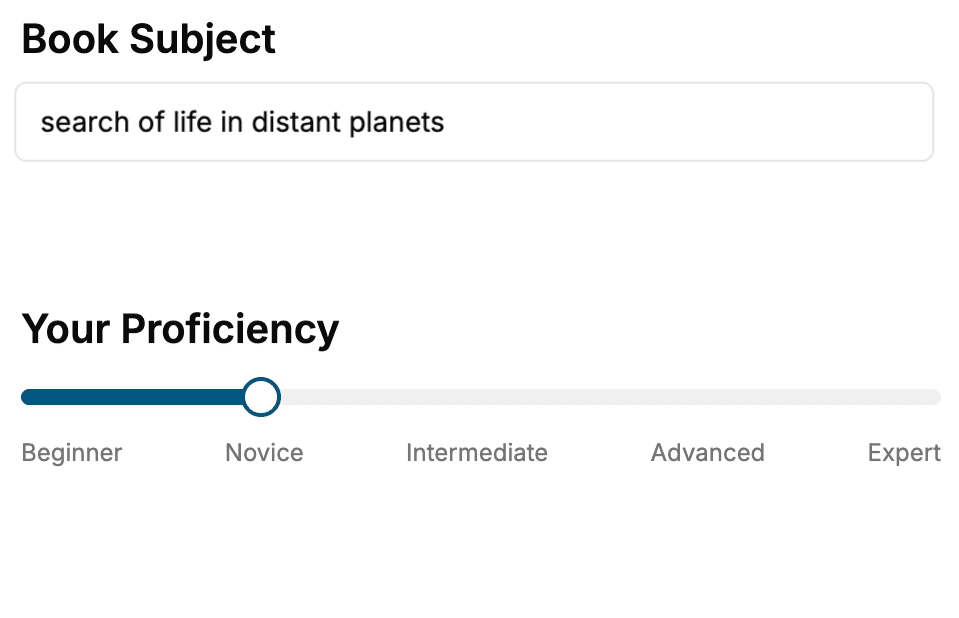
Select the focus of your Anxiety book and share your background
- 2. Personalize your book
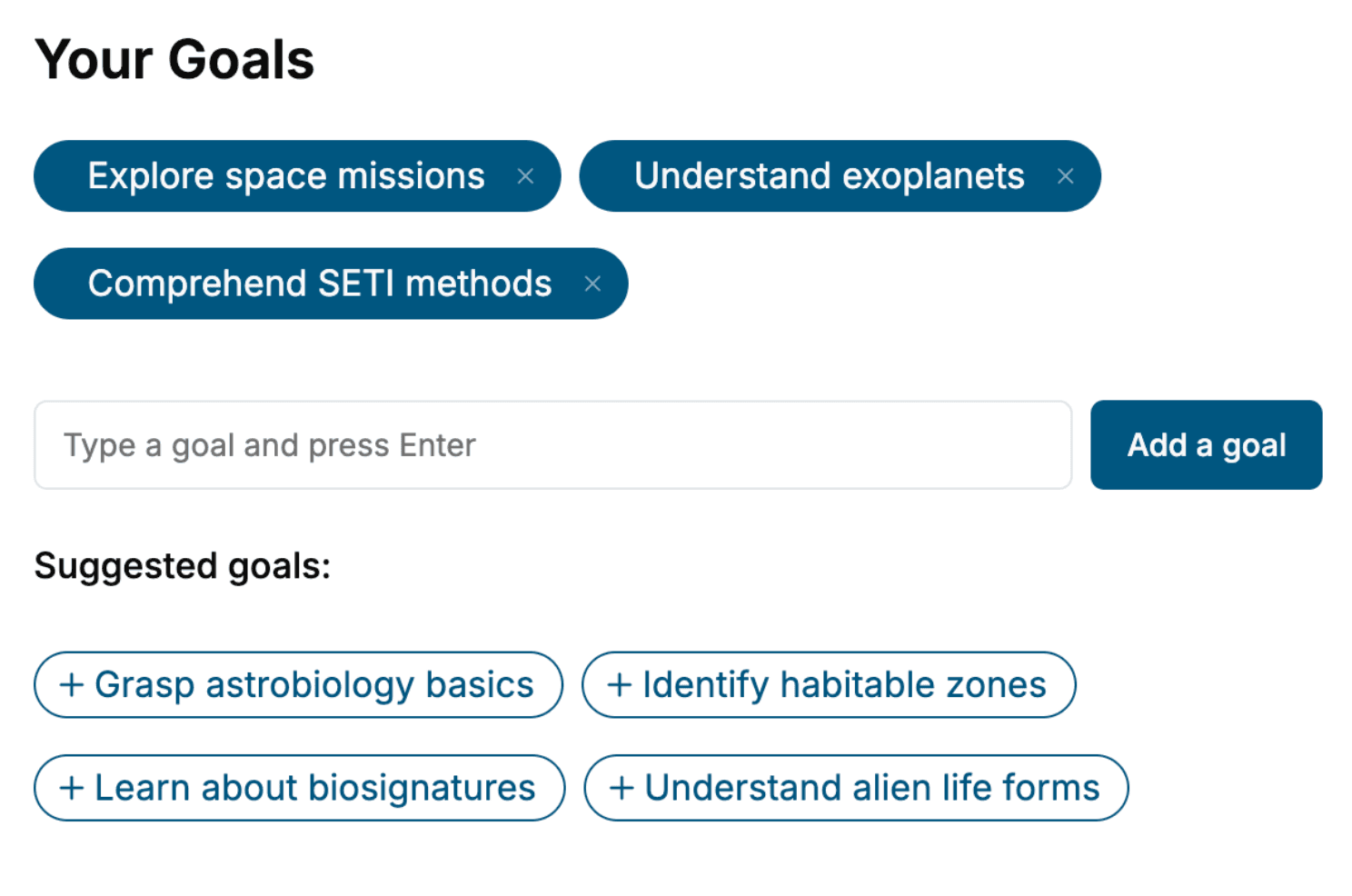
Specify your goals and choose sub-topics to include
- 3. Get your tailored book
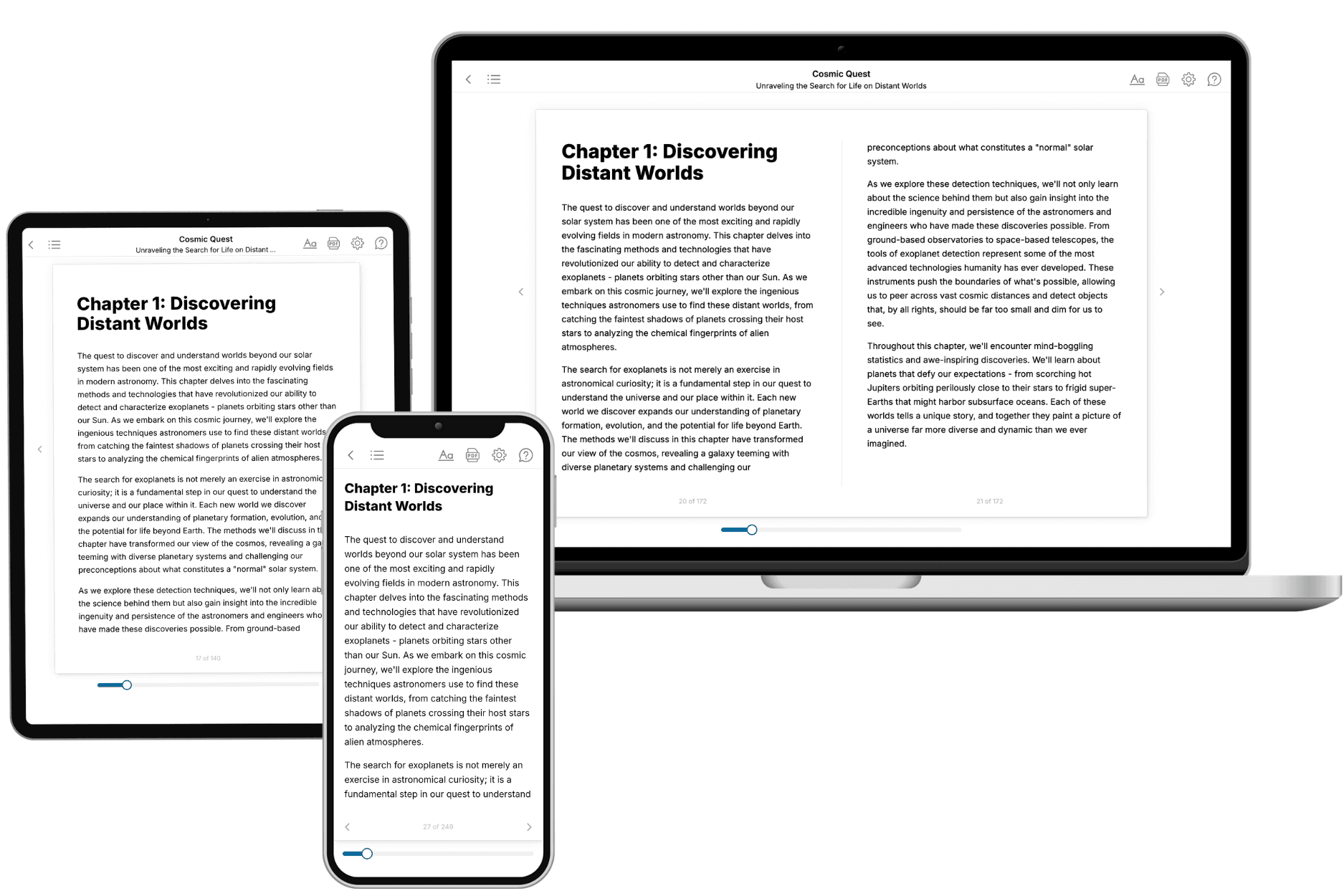
Your book is ready in 10 minutes. Read it online, download as EPUB or PDF, or send to Kindle.
Frequently asked questions
- What is TailoredRead?
TailoredRead creates complete, full-length nonfiction ebooks, written specifically for you. Tell us what you want to learn and why, and TailoredRead writes you a complete ebook on it, with charts, tables, and diagrams throughout. Read it online, on Kindle, or on any e-reader, or download it as a PDF or EPUB. Every book is written fresh the day you order it.
- How is the book tailored to me?
Before anything is written, you answer a few short questions about your goals, your background, and the topics you care about. Your book is then planned around your answers: written at your level, focused on your goals, and covering the topics you chose, instead of the one-size-fits-all book a store sells everyone.
- Will it read like generic AI content?
No. Your book isn't a chat transcript: it's planned chapter by chapter before a single word is written, told in a clear book voice, and explains ideas visually with charts, tables, and diagrams. After writing, every book goes through an editorial pass that polishes chapters so the book reads consistent from start to finish. Judge for yourself: browse thousands of sample books on our Explore Books page.
- How accurate is the content?
Our AI first checks whether your subject needs live research. Niche and fast-moving subjects are researched before writing, and the book plan and chapters are grounded in what it finds. After writing, every book goes through a quality pass that checks its facts and consistency, and researched books list their sources in a Notes section at the back.
- How long is the book?
You choose the length: Comprehensive (250-300 pages), Detailed (150-200 pages), Essential (70-100 pages), or Short (30-50 pages).
- Does the book include visuals?
Yes. Every book includes charts, tables, and diagrams: timelines, checklists, step-by-step guides, decision trees, comparison tables, matrices, and bar charts. A typical book includes dozens of these visual elements.
- Can I read it on Kindle? What formats can I download?
Yes. Every book can be read in our online reader or downloaded as a PDF or EPUB. The EPUB can be opened with Kindle, Apple Books, Kobo, and any e-reader. The Commercial and Author licenses also include an editable Word (DOCX) and Markdown download.
- How much does it cost?
About the price of a regular ebook. The exact price depends on your book's length and complexity, from $2 for the shortest books to $35 for the most comprehensive, and it's shown when you review your book, before you commit to anything. Each book is a one-time purchase, yours to keep, no subscription. Licenses that let you share, teach, or publish your book range from $35.99 to $49.99.
- Can I preview the book before purchasing?
Before you pay, you'll see what your book will cover: the title, a detailed description, the estimated length, and the complete chapter-by-chapter table of contents, so you know what you're getting before you decide. The full text itself is written after you purchase.
- How long does it take to create a book?
About 10 minutes. You can start reading the opening chapters while the rest is still being written.