The Canadian Pacific Railway
Building a Nation Across the Continent
Discover how a single railway transformed Canada from a fragmented collection of provinces into a cohesive nation spanning an entire continent.
191 pages10 chaptersJan 25, 2026Canadian History
About this book
This comprehensive exploration reveals the Canadian Pacific Railway's pivotal role in Canadian history, from its ambitious conception through its construction challenges to its enduring legacy. You'll understand how engineering breakthroughs conquered the Rocky Mountains, how diverse immigrant workers built the line under harsh conditions, and how the CPR's operations reshaped settlement patterns, economic development, and regional identities across Canada. Through detailed accounts of key figures, technological innovations, and the railway's profound impact on Indigenous communities and the broader Canadian landscape, you'll gain insight into how infrastructure shapes national destiny. This book illuminates the human stories, economic forces, and historical decisions that made the CPR one of the most significant achievements in Canadian history.
Table of contents
- IntroductionWhy the CPR Matters to Canadian History, What This Book Covers, How to Use This BookRead below
- Chapter 1: The Vision: Canada Before the RailwayThe Challenge of Confederation, Early Transportation Networks and Their Limitations, Why a Transcontinental Railway Became Political Necessity
- Chapter 2: The Dream Takes Shape: Planning and PoliticsEarly Railway Proposals and Debates, Government Subsidies and Political Negotiations, The CPR Charter and Corporate Formation, Key Visionaries and Business Leaders
- Chapter 3: Engineering the Impossible: Construction ChallengesSelecting the Route Across the Continent, Conquering the Rocky Mountains, Building Across the Prairies, Technological Innovations and Solutions
- Chapter 4: The Workforce: Labor, Immigration, and SacrificeRecruiting Workers from Around the World, Chinese Laborers and Their Contributions, Harsh Conditions and Worker Struggles, The Immigrant Legacy in Canadian Society
- Chapter 5: Indigenous Peoples and the Railway's ImpactIndigenous Territories Before the Railway, Displacement and Disruption of Traditional Ways, Economic and Social Changes for Indigenous Communities
- Chapter 6: From Dream to Reality: The Completion and OpeningThe Final Push to Completion, The Golden Spike and Ceremonial Opening, Early Operations and Initial Challenges
- Chapter 7: Transforming the Economy: Trade, Resources, and GrowthEnabling Resource Extraction and Mining, Agricultural Production and Grain Export, Industrial Development and Manufacturing, Creating an Integrated National Economy
- Chapter 8: Shaping the Landscape: Settlement and Urban DevelopmentRailway-Driven Settlement Patterns, The Rise of Railway Towns and Cities, How the Railway Shaped Regional Identities
- Chapter 9: Beyond Rails: The CPR's Expanding EmpireSteamship Lines and Ocean Transportation, Hotel Development and Tourism, Diversification into Other Industries
- Chapter 10: The Modern Era: Evolution and ChallengesAdapting to Twentieth-Century Transportation Changes, Competition from Automobiles and Airlines, The CPR in the Contemporary Era
- ConclusionThe Lasting Legacy of the Canadian Pacific Railway, Lessons for Understanding Canadian History and Development
Introduction
The Canadian Pacific Railway stands as one of the most ambitious infrastructure projects ever undertaken in North America. When the last spike was driven at Craigellachie, British Columbia, on November 7, 1885, it marked more than the completion of a railway line. It represented the physical realization of a nation's dream to unite a vast and diverse territory stretching from the Atlantic to the Pacific Ocean. Without this ribbon of steel crossing mountains, prairies, and wilderness, Canada as we know it today might never have existed as a unified country.
The story of the CPR is fundamentally a story about nation-building through infrastructure. In the 1870s and early 1880s, Canada was a fragile confederation of provinces separated by thousands of miles of wilderness, with no practical means of moving people, goods, or military forces across the continent. British Columbia had joined Confederation in 1871 only on the promise of a transcontinental railway, and without it, the young nation faced the real possibility of disintegration. The railway became the physical manifestation of Canadian sovereignty, a declaration that this northern territory would develop as an independent nation rather than be absorbed piecemeal by the expanding United States.
Yet the CPR's significance extends far beyond its political necessity. The railway fundamentally transformed every aspect of Canadian life—economic, social, cultural, and geographic. It enabled the settlement of the prairies, turning what had been considered an uninhabitable wilderness into one of the world's great agricultural regions. It facilitated resource extraction from remote areas, connecting mines, forests, and fisheries to global markets. It created cities where none had existed and determined which small settlements would flourish and which would fade into obscurity. The railway brought waves of immigrants to populate the West, forever changing the demographic composition of the nation. For Indigenous peoples, the railway represented a catastrophic disruption to traditional territories and ways of life, the effects of which continue to resonate today.
Understanding the Canadian Pacific Railway means understanding how infrastructure shapes national destiny. The decisions made by politicians, financiers, engineers, and workers in the 1870s and 1880s created patterns of settlement, economic development, and regional identity that persist more than a century later. The railway's construction required unprecedented engineering innovation, financial risk-taking, and human sacrifice. Thousands of workers, including Chinese laborers who faced discrimination and dangerous conditions, built the line through some of the most challenging terrain on Earth. The project nearly bankrupted its backers multiple times and required massive government subsidies that shaped Canadian economic policy for generations.
This book examines the CPR from multiple perspectives—political, economic, technological, social, and human. You'll discover how the railway was conceived as a solution to political fragmentation, how it was financed through complex arrangements between government and private enterprise, and how engineers overcame seemingly impossible obstacles to push the line through the Rocky Mountains. You'll learn about the diverse workforce that built the railway, the profound impact on Indigenous communities, and how the completed line transformed Canada's economy and settlement patterns. You'll also explore how the CPR evolved from a railway company into a vast business empire encompassing steamships, hotels, telecommunications, and real estate, and how it adapted to twentieth-century challenges from competing forms of transportation.
The Canadian Pacific Railway's story is ultimately a human story—of vision and greed, innovation and exploitation, triumph and tragedy. It reveals how great infrastructure projects reflect the values, ambitions, and contradictions of the societies that create them. By understanding the CPR's history, you gain insight into the forces that shaped modern Canada and the complex legacy of nation-building through industrial development. This railway didn't just connect existing communities; it created new ones and fundamentally altered the trajectory of an entire nation.
Why the CPR Matters to Canadian History
The Canadian Pacific Railway occupies a unique position in Canadian history as both a practical necessity and a powerful symbol of national unity. When British Columbia joined Confederation in 1871, the province was separated from the rest of Canada by over 3,000 miles of largely unsettled territory. The promise of a transcontinental railway within ten years was the essential condition for British Columbia's entry into the young nation. Without this commitment, the Pacific province would likely have remained separate or potentially joined the United States, fundamentally altering the geographic and political reality of North America. The railway thus became a constitutional obligation, a promise that had to be fulfilled to preserve the territorial integrity of the new nation.
Beyond its role in preventing national disintegration, the CPR served as the essential infrastructure for Canada's economic development. Before the railway, the vast resources of the Canadian interior—minerals, timber, agricultural land, and furs—remained largely inaccessible to commercial exploitation. Transportation costs were prohibitively expensive, and the journey from central Canada to the Pacific coast could take months by existing routes through the United States or by arduous overland travel. The railway reduced this journey to days, making it economically viable to extract resources from remote regions and transport them to markets in eastern Canada, the United States, and overseas. This transformation enabled Canada to develop as a resource-based economy, a characteristic that continues to define the nation's economic structure today.
The railway's impact on settlement patterns cannot be overstated. The CPR didn't simply connect existing communities; it determined where communities would exist. The company received massive land grants from the government—25 million acres in total—giving it the power to shape settlement across the prairies. Towns sprang up at railway stations, while communities bypassed by the line often withered and disappeared. The railway company actively recruited immigrants from Europe, the United States, and Asia to settle along the line, fundamentally changing Canada's demographic composition. Between 1896 and 1914, over three million immigrants arrived in Canada, many settling in the prairie provinces opened up by the railway. This wave of immigration created the multicultural character that would eventually become a defining feature of Canadian identity.
For Indigenous peoples, the CPR represented a catastrophic disruption to traditional territories and ways of life. The railway bisected hunting grounds, disrupted migration patterns of buffalo and other game animals, and brought waves of settlers who displaced Indigenous communities from their ancestral lands. The construction of the railway coincided with the negotiation of numbered treaties that confined Indigenous peoples to reserves, often far from the railway line and the economic opportunities it created. The railway thus became a physical manifestation of colonialism, a tool for asserting Canadian sovereignty over territories that had been Indigenous homelands for thousands of years. Understanding this impact is essential to comprehending the full historical significance of the CPR and its role in shaping relationships between Indigenous peoples and the Canadian state.
The technological and engineering achievements of the CPR set standards that influenced railway construction worldwide. The challenges of building through the Rocky Mountains required innovations in surveying, tunneling, bridge construction, and track laying that pushed the boundaries of nineteenth-century engineering. The construction of the railway through Rogers Pass, with its steep grades, avalanche risks, and harsh winter conditions, demonstrated that determined engineers could overcome obstacles previously considered insurmountable. These achievements inspired similar projects in other mountainous regions and contributed to Canada's reputation for engineering expertise. The Spiral Tunnels in Kicking Horse Pass, completed in 1909 to reduce dangerous grades, remain engineering marvels that continue to function today.
The CPR also matters because it established patterns of government-business relationships that shaped Canadian economic policy for generations. The railway required unprecedented government subsidies, including cash grants, land grants, and monopoly privileges, creating a model of state support for private enterprise that became characteristic of Canadian capitalism. This approach differed from both the purely private model common in the United States and the state-owned model prevalent in Europe. The CPR demonstrated that major infrastructure projects in Canada would typically involve partnerships between government and private capital, a pattern that continues in contemporary projects. Understanding this relationship is essential to comprehending how Canada's economy developed and how it differs from other capitalist nations.
Finally, the CPR matters because it shaped Canadian cultural identity and national mythology. The railway became a symbol of Canadian determination, ingenuity, and unity—a narrative of overcoming natural obstacles to build a nation. This mythology, while celebrating genuine achievements, often obscured the human costs of construction, the exploitation of workers, and the devastating impact on Indigenous peoples. The story of the CPR thus reveals how national narratives are constructed, which voices are included and excluded, and how infrastructure projects become invested with symbolic meaning beyond their practical function. By examining the CPR critically, you gain insight into how Canadians have understood their own history and national identity, and how those understandings have evolved over time to include previously marginalized perspectives.
What This Book Covers
This book provides a comprehensive examination of the Canadian Pacific Railway from its conception through its evolution into the modern era. The narrative begins with the political and economic context of pre-railway Canada, exploring why a transcontinental railway became essential to the survival of the young nation. You'll understand the transportation challenges facing Canada in the 1860s and 1870s, the political negotiations surrounding Confederation, and the specific promises made to British Columbia that made the railway a constitutional obligation. This foundation is essential for understanding why the CPR was built when and how it was, despite the enormous financial and engineering challenges involved.
The book then examines the planning and political processes that transformed the railway from an idea into a concrete project. You'll learn about the early proposals for transcontinental railways, the debates over routes and financing, and the complex negotiations between government and private interests that eventually led to the CPR charter in 1881. This section introduces the key figures who shaped the railway's development, including:
- Sir John A. Macdonald, Canada's first Prime Minister, who made the railway central to his National Policy
- George Stephen, the financier who organized the syndicate that built the railway
- Donald Smith, the Hudson's Bay Company factor who became a major investor
- William Cornelius Van Horne, the American railway manager who oversaw construction
- Sandford Fleming, the engineer who surveyed potential routes across the continent
A substantial portion of the book focuses on the construction phase, examining the engineering challenges and solutions that made the railway possible. You'll discover how surveyors mapped routes through unmapped wilderness, how engineers designed bridges to span deep gorges, and how workers blasted tunnels through solid rock in the mountains. The book provides detailed accounts of construction in different geographic regions—the relatively straightforward building across the prairies, the immense challenges of the Rocky Mountains, and the difficult terrain of the Canadian Shield north of Lake Superior. These chapters reveal the technological innovations required, from new explosives and drilling techniques to innovative bridge designs and track-laying methods that accelerated construction.
The human dimension of the railway's construction receives extensive attention. You'll learn about the diverse workforce that built the line, including Chinese laborers who performed the most dangerous work in the mountains, often for lower wages than other workers. The book examines working conditions, labor recruitment practices, and the experiences of different ethnic groups who contributed to construction. This section also addresses the human costs of construction, including the thousands of workers who died from accidents, disease, and harsh conditions. By focusing on the workers' experiences, the book provides a counterpoint to narratives that emphasize only the achievements of engineers and financiers, revealing the human sacrifice required to complete the project.
The book dedicates significant attention to the railway's impact on Indigenous peoples, examining how construction disrupted traditional territories and ways of life. You'll understand the relationship between railway construction and the negotiation of numbered treaties, the displacement of Indigenous communities from their lands, and the economic and social changes that followed the railway's completion. This section addresses both the immediate impacts during construction and the longer-term consequences for Indigenous communities, including loss of access to traditional hunting grounds, disruption of cultural practices, and marginalization from the economic opportunities the railway created. This critical examination is essential for understanding the full historical significance of the CPR and its role in Canadian colonialism.
After examining construction, the book explores how the completed railway transformed Canadian society and economy. You'll learn how the CPR enabled resource extraction from remote regions, facilitated agricultural development on the prairies, and created an integrated national economy. The book examines settlement patterns, showing how the railway determined where communities developed and how it shaped regional identities that persist today. You'll also discover how the CPR evolved beyond a railway company into a vast business empire, developing steamship lines to connect with Asia, building grand hotels to promote tourism, and diversifying into telecommunications, real estate, and other industries. This expansion reveals how infrastructure companies can leverage their initial advantages to dominate multiple sectors of an economy.
The final sections examine the CPR's evolution through the twentieth century and into the contemporary era. You'll understand how the railway adapted to competition from automobiles, trucks, and airlines, how it responded to changing economic conditions and government regulations, and how it continues to function today as a major freight railway. The book concludes by assessing the CPR's lasting legacy, examining how this nineteenth-century infrastructure project continues to shape Canadian geography, economy, and society. Throughout, the book maintains a critical perspective, acknowledging both the genuine achievements of the railway and the significant costs borne by workers, Indigenous peoples, and Canadian taxpayers. This balanced approach provides a comprehensive understanding of the CPR's complex role in Canadian history.
How to Use This Book
This book is designed to be read either sequentially from beginning to end or consulted selectively based on your particular interests. If you're new to Canadian railway history or want a comprehensive understanding of the CPR's role in nation-building, reading the chapters in order provides a chronological narrative that builds from the railway's conception through its modern legacy. Each chapter builds on previous ones, with later sections assuming familiarity with the political context, key figures, and construction challenges introduced earlier. This sequential approach allows you to understand how the railway's impact unfolded over time and how earlier decisions shaped later developments.
However, the book's structure also supports selective reading for those with specific interests or research needs. Each chapter functions as a relatively self-contained unit, with sufficient context provided to understand the material without having read previous chapters. If you're particularly interested in engineering challenges, you can focus on Chapter 3, which examines construction techniques and technological innovations. If your interest centers on labor history and immigration, Chapter 4 provides detailed coverage of the workforce and working conditions. Those concerned with Indigenous history can turn directly to Chapter 5, which examines the railway's impact on Indigenous peoples and territories. This flexibility makes the book useful as both a comprehensive narrative and a reference work on specific aspects of CPR history.
Throughout the book, you'll encounter several types of supplementary material designed to enhance understanding and provide additional context:
- Specific examples and case studies that illustrate broader patterns with concrete details
- Footnotes with citations directing you to primary sources and scholarly research for further investigation
- Technical explanations of engineering solutions and construction methods
- Biographical information about key figures who shaped the railway's development
- Statistical data on construction costs, timelines, immigration patterns, and economic impacts
- Comparative analysis showing how the CPR differed from other railway projects
The book assumes you have intermediate knowledge of Canadian history, including basic familiarity with Confederation, the structure of Canadian government, and the general geography of the country. However, essential context is provided where necessary to ensure accessibility. Technical terms related to railway engineering and construction are explained when first introduced, and you don't need specialized knowledge of transportation history or engineering to understand the material. The writing aims for clarity and accessibility while maintaining analytical rigor, avoiding unnecessary jargon while not oversimplifying complex historical processes.
As you read, consider the multiple perspectives from which the CPR's history can be understood. The railway represents different things to different groups: a nation-building achievement to political leaders, a profitable investment to financiers, a source of employment to workers, a catastrophic disruption to Indigenous peoples, and an engineering triumph to technical professionals. The book attempts to present these multiple perspectives, acknowledging that the CPR's significance cannot be reduced to a single narrative. This multiperspectival approach encourages critical thinking about how infrastructure projects affect different communities and how historical narratives are constructed to emphasize certain viewpoints while marginalizing others.
Pay particular attention to the connections between different aspects of the railway's history. The engineering challenges discussed in Chapter 3 directly relate to the labor practices examined in Chapter 4—difficult terrain required large workforces willing to accept dangerous conditions. The political negotiations covered in Chapter 2 shaped the land grants that determined settlement patterns discussed in Chapter 8. The railway's economic impact examined in Chapter 7 cannot be separated from its effects on Indigenous peoples covered in Chapter 5. Understanding these interconnections provides a more sophisticated comprehension of how the CPR functioned as a complex system with wide-ranging effects across Canadian society.
The book includes footnotes with citations to primary sources, government documents, scholarly monographs, and academic articles. These citations serve multiple purposes: they allow you to verify claims made in the text, they direct you to sources for further research on topics of particular interest, and they demonstrate the evidence base supporting the book's interpretations. If you're using this book for academic purposes, these citations provide starting points for deeper investigation. If you're reading for general interest, you can safely ignore the footnotes without losing the thread of the narrative, but they're available if you want to explore specific topics in greater depth.
Finally, approach this book with an awareness that historical understanding evolves over time. Earlier accounts of the CPR, particularly those written in the decades immediately following construction, often celebrated the railway as an unambiguous triumph while ignoring or minimizing the costs borne by workers and Indigenous peoples. More recent scholarship has provided a more balanced and critical assessment, incorporating perspectives that were previously excluded from the historical record. This book reflects contemporary historical understanding while acknowledging that future research may further refine or challenge current interpretations. History is not a fixed set of facts but an ongoing conversation about the past, and the CPR's story continues to be reinterpreted as new evidence emerges and as Canadian society's values and priorities evolve.
This is the end of the free sample. The full book has 10 chapters.
Want this book written for you?
Tell us your goals and background, and get your own version of this book, tailored by AI to you.


Benefits of AI-tailored books
- Read one book, not ten:
- all the Canadian History knowledge you need, gathered into a single book.
- Save days of learning:
- tell us your goals, choose your topics, and the whole book is built around them.
- Learn effortlessly:
- Canadian History book written for your specific background and expertise.
- Understand at a glance:
- includes charts, tables, timelines, checklists, decision trees, and more.
- Stay current:
- written the day you order it, not years ago.
- Trust what you read:
- every book is checked for accuracy, with real research when your subject needs it.
Create your unique book in 3 steps
- 1. Select your focus
Select the focus of your Canadian History book and share your background
- 2. Personalize your book
Specify your goals and choose sub-topics to include
- 3. Get your tailored book
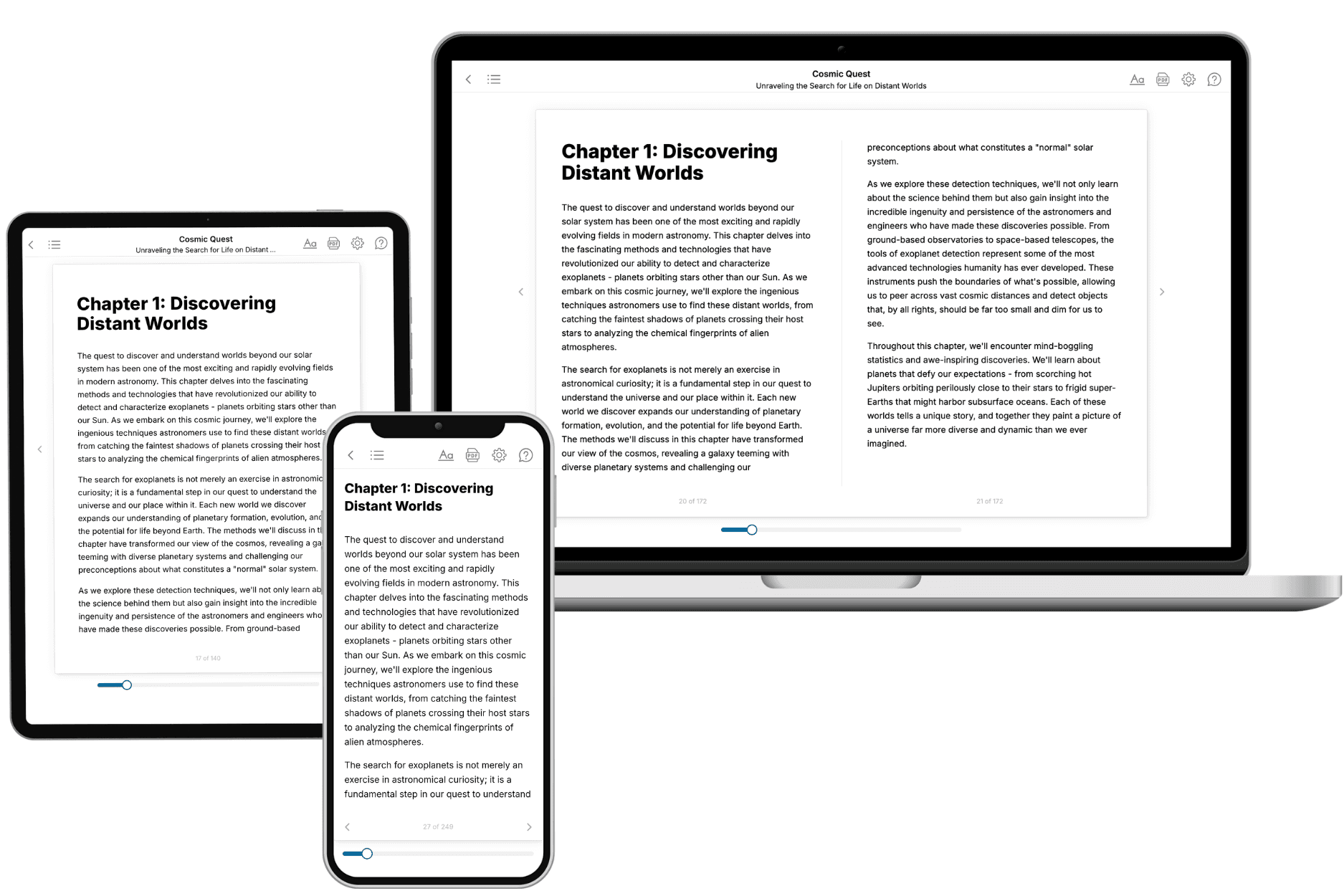
Your book is ready in 10 minutes. Read it online, download as EPUB or PDF, or send to Kindle.

Frequently asked questions
- What is TailoredRead?
TailoredRead creates complete, full-length nonfiction ebooks, written specifically for you. Tell us what you want to learn and why, and TailoredRead writes you a complete ebook on it, with charts, tables, and diagrams throughout. Read it online, on Kindle, or on any e-reader, or download it as a PDF or EPUB. Every book is written fresh the day you order it.
- How is the book tailored to me?
Before anything is written, you answer a few short questions about your goals, your background, and the topics you care about. Your book is then planned around your answers: written at your level, focused on your goals, and covering the topics you chose, instead of the one-size-fits-all book a store sells everyone.
- Will it read like generic AI content?
No. Your book isn't a chat transcript: it's planned chapter by chapter before a single word is written, told in a clear book voice, and explains ideas visually with charts, tables, and diagrams. After writing, every book goes through an editorial pass that polishes chapters so the book reads consistent from start to finish. Judge for yourself: browse thousands of sample books on our Explore Books page.
- How accurate is the content?
Our AI first checks whether your subject needs live research. Niche and fast-moving subjects are researched before writing, and the book plan and chapters are grounded in what it finds. After writing, every book goes through a quality pass that checks its facts and consistency, and researched books list their sources in a Notes section at the back.
- How long is the book?
You choose the length: Comprehensive (250-300 pages), Detailed (150-200 pages), Essential (70-100 pages), or Short (30-50 pages).
- Does the book include visuals?
Yes. Every book includes charts, tables, and diagrams: timelines, checklists, step-by-step guides, decision trees, comparison tables, matrices, and bar charts. A typical book includes dozens of these visual elements.
- Can I read it on Kindle? What formats can I download?
Yes. Every book can be read in our online reader or downloaded as a PDF or EPUB. The EPUB can be opened with Kindle, Apple Books, Kobo, and any e-reader. The Commercial and Author licenses also include an editable Word (DOCX) and Markdown download.
- How much does it cost?
About the price of a regular ebook. The exact price depends on your book's length and complexity, from $2 for the shortest books to $35 for the most comprehensive, and it's shown when you review your book, before you commit to anything. Each book is a one-time purchase, yours to keep, no subscription. Licenses that let you share, teach, or publish your book range from $35.99 to $49.99.
- Can I preview the book before purchasing?
Before you pay, you'll see what your book will cover: the title, a detailed description, the estimated length, and the complete chapter-by-chapter table of contents, so you know what you're getting before you decide. The full text itself is written after you purchase.
- How long does it take to create a book?
About 10 minutes. You can start reading the opening chapters while the rest is still being written.