The Capitalization Handbook
Master the Rules of Proper Capitalization in Modern English
Imagine writing with complete confidence, never second-guessing whether a word should be capitalized.
238 pages11 chaptersMay 8, 2026English Grammar
About this book
Whether you're crafting professional emails, publishing articles, or managing social media, proper capitalization signals competence and respect for your audience. This handbook cuts through the confusion by breaking capitalization into manageable principles you can apply immediately. You'll learn when to capitalize titles, how to handle proper nouns in different contexts, and why style guides sometimes disagree. Rather than memorizing endless rules, you'll understand the logic behind capitalization so you can make smart decisions even in unfamiliar situations. From basic sentence structure to complex brand names and digital communication, this guide covers the real-world scenarios you actually encounter. With practical examples, quick-reference charts, and clear explanations, you'll develop the skills to write with authority and consistency.
Table of contents
- IntroductionWhy Capitalization Matters, How to Use This Book, Understanding Different Style GuidesRead below
- Chapter 1: Capitalization FundamentalsStarting Sentences and Proper Capitalization, What Are Proper Nouns?, Distinguishing Common Nouns from Proper Nouns
- Chapter 2: Proper Nouns and Personal NamesCapitalizing Personal Names and Titles, Family Relationships and Kinship Terms, Nicknames, Pseudonyms, and Alternate Names
- Chapter 3: Geographic Names and PlacesCountries, Cities, and Geographic Locations, Regions, Directions, and Directional Words, Landmarks, Mountains, and Natural Features
- Chapter 4: Titles and HeadingsJob Titles and Professional Designations, Capitalizing Titles of Works, Headings and Subheadings in Documents
- Chapter 5: Organizations, Institutions, and BrandsCompany Names and Business Entities, Schools, Universities, and Institutions, Brand Names and Trademark Capitalization
- Chapter 6: Dates, Time, and Historical ReferencesMonths, Days, and Seasons, Historical Periods and Events, Holidays and Special Celebrations
- Chapter 7: Religious and Cultural ReferencesReligious Terms and Deity References, Sacred Texts and Religious Documents, Cultural Movements and Philosophies
- Chapter 8: Style Guide Differences and VariationsAP Style Capitalization Rules, Chicago Manual of Style Conventions, APA and MLA Style Approaches
- Chapter 9: Digital Communication and Modern ChallengesCapitalization in Social Media and Hashtags, Email and Instant Messaging Conventions, Capitalization in Web Content and URLs
- Chapter 10: Common Capitalization Mistakes and How to Avoid ThemOvercapitalization and Unnecessary Capitals, Undercapitalization and Missed Opportunities, Context-Dependent Errors and Edge Cases
- Chapter 11: Practical Application and Decision-MakingChoosing and Applying a Style Guide, Maintaining Consistency Across Documents, Capitalization Editing and Proofreading
- ConclusionMastering Capitalization for Professional Writing
- Quick Reference Guide
- Frequently Asked Questions
Introduction
There is a moment most writers know well. You are midway through a sentence, and you pause over a single word, unsure whether it deserves a capital letter. Is it the President or the president? Is it the South or the south? Is it Mom or mom? The word sits there, waiting, while you second-guess yourself. You make a choice, move on, and quietly wonder if you got it right. That moment of hesitation is exactly what this handbook is designed to eliminate.
Capitalization is one of those grammar topics that looks simple on the surface but turns out to be surprisingly layered. Most people learn the basics early: capitalize the first word of a sentence, capitalize proper names, capitalize the word "I." But the real world of writing throws far more complicated situations at you. What happens when a job title appears before a name versus after it? How do you handle a brand that deliberately uses lowercase letters? What does the Associated Press say about religious terms, and does the Chicago Manual of Style agree? These are the kinds of questions that trip up even experienced writers.
The good news is that capitalization is not arbitrary. It follows patterns rooted in logic, and once you understand those patterns, the rules become much easier to apply. The goal of this handbook is not to hand you a list of rules to memorize. It is to help you understand why those rules exist, so that when you encounter an unfamiliar situation, you can reason your way to the right answer. That kind of understanding is far more durable than rote memorization, and it will serve you across every type of writing you do.
Whether you write professional emails, publish blog posts, draft academic papers, or manage content for a brand, capitalization choices affect how your writing is received. Readers notice inconsistency, even when they cannot name exactly what feels off. A document that capitalizes job titles in one paragraph and ignores them in the next signals carelessness. A social media post that randomly capitalizes common nouns for emphasis can read as unprofessional or confusing. On the other hand, writing that handles capitalization with confidence and consistency signals that the writer knows their craft. That signal matters more than most people realize.
This introduction will walk you through three foundational ideas before the main chapters begin. First, you will see why capitalization matters in practical, real-world terms. Second, you will get a clear picture of how to use this book most effectively, depending on your goals and your current skill level. Third, you will get a brief orientation to the major style guides referenced throughout the book, so you understand why different sources sometimes give different answers to the same question. With that foundation in place, the rest of the handbook will make a great deal more sense.
Why Capitalization Matters
Capitalization is a form of communication. Every capital letter sends a signal to the reader: this word is special, this word is a name, this word begins a new thought. When those signals are used correctly, they guide the reader through your text smoothly and efficiently. When they are used incorrectly or inconsistently, they create friction. The reader stumbles, even briefly, and that stumble costs you credibility.
Consider a simple example. Imagine reading a company's website and seeing this sentence: Our ceo, james hartwell, will speak at the annual conference in new york.
Every missing capital letter chips away at the reader's confidence in the organization. Now read the corrected version: Our CEO, James Hartwell, will speak at the annual conference in New York.
The content is identical, but the second version reads as professional and trustworthy. Capitalization did that work silently, in the background, without the reader consciously noticing it.
Research on writing quality consistently shows that surface-level errors, including capitalization mistakes, affect how readers judge the credibility of the author and the content.[1] In professional contexts, this effect is amplified. A resume with inconsistent capitalization of job titles may cause a hiring manager to question the applicant's attention to detail. A legal document with improperly capitalized terms can create genuine ambiguity. An academic paper that ignores the style guide's capitalization conventions may be returned for revision before it is even reviewed for content.
Beyond professionalism, capitalization also affects readability. Capital letters act as visual anchors in a block of text. They mark the start of sentences, highlight proper names, and help readers orient themselves on the page. When capitalization is used correctly, readers process text faster because the visual cues match their expectations. When it is used incorrectly, those cues mislead the reader, and comprehension slows down. This is especially important in longer documents, where readers are already working harder to track information.
There is also a dimension of respect embedded in capitalization. Capitalizing someone's name correctly, including unusual or non-English names, shows that you took the time to get it right. Capitalizing the name of an organization the way that organization capitalizes it shows that you respect their identity. Failing to do so, even accidentally, can come across as dismissive or careless. In multicultural and international writing contexts, this kind of attention matters enormously.
Finally, capitalization matters because it is one of the clearest markers of writing register. Register refers to the level of formality in a piece of writing. Casual text messages between friends can get away with minimal capitalization. A formal business proposal cannot. Understanding when to apply strict capitalization rules and when a more relaxed approach is acceptable is itself a skill, and one that this handbook will help you develop. The goal is not rigid rule-following for its own sake. The goal is making deliberate, informed choices that serve your writing and your audience.
A practical test: Before submitting any important document, read it specifically for capitalization. Ask yourself: Are all proper names capitalized? Are job titles handled consistently? Does every sentence begin with a capital letter? This single-focus review catches errors that a general proofread often misses.
The stakes of capitalization vary by context, but they are never zero. Even in informal writing, consistent capitalization signals that you are a careful communicator. That reputation, built one well-capitalized sentence at a time, is worth protecting.
How to Use This Book
This handbook is designed to work for you in multiple ways, depending on what you need at any given moment. You can read it straight through from beginning to end to build a comprehensive understanding of capitalization. You can also use it as a reference guide, jumping directly to the chapter that addresses your current question. Both approaches are valid, and the book is structured to support either one.
If you are reading the book from start to finish, the chapters follow a logical progression. The early chapters cover foundational concepts: what capitalization is, how it works at the sentence level, and how to distinguish proper nouns from common nouns. The middle chapters move into specific categories, including personal names, geographic locations, titles, organizations, dates, and religious references. The later chapters address style guide differences, digital communication challenges, and common mistakes. The final chapter brings everything together with practical strategies for applying what you have learned.
If you are using the book as a reference, the table of contents and the Quick Reference Guide at the back are your best starting points. Each chapter is organized around a specific topic, and each subchapter addresses a focused question within that topic. For example, if you are unsure whether to capitalize a family relationship term like "aunt" or "uncle," you can go directly to Chapter 2 and find the answer there, along with examples and the reasoning behind the rule.
Throughout the book, you will find several recurring features designed to make the content more useful and easier to apply:
- Concrete examples: Every rule is illustrated with real sentences showing both correct and incorrect usage.
- Style guide comparisons: Where major style guides disagree, those differences are clearly noted so you can follow the one that applies to your work.
- Common mistake alerts: Patterns that trip up even experienced writers are flagged so you can watch for them in your own writing.
- Quick-reference summaries: Key rules are summarized in concise, scannable formats at the end of relevant sections.
- Edge cases and gray areas: The book does not pretend that every situation has a clean answer. Where genuine ambiguity exists, it is acknowledged and practical guidance is offered.
One important note about how to approach the rules in this book: capitalization is not a single unified system. Different style guides have different conventions, and those conventions exist for good reasons. The Associated Press Stylebook, used primarily by journalists, makes different choices than the Chicago Manual of Style, used primarily by book publishers and academics. Neither is wrong. They serve different writing communities with different needs. This book will help you understand those differences so you can apply the right conventions for your specific context.
If you are new to thinking carefully about capitalization, start with Chapters 1 through 3. These chapters build the conceptual foundation that makes everything else easier to understand. If you already have a solid grasp of the basics and are looking to refine your skills in specific areas, feel free to skip ahead to the chapters most relevant to your work. If you write primarily for digital platforms, Chapter 9 on digital communication will be especially useful. If you work in academic writing, Chapter 8 on style guide differences deserves close attention.
The Quick Reference Guide at the back of the book is designed for moments when you need a fast answer. It summarizes the most commonly needed rules in a compact, easy-to-scan format. Think of it as a cheat sheet you can consult during editing without having to re-read entire chapters. The Frequently Asked Questions section addresses the specific questions that writers ask most often, including several that do not fit neatly into any single chapter.
Above all, approach this book as a practical tool rather than a theoretical text. The goal is not to make you an expert in the linguistics of capitalization. The goal is to make you a more confident, consistent, and professional writer. Every chapter is written with that practical aim in mind, and every example is drawn from the kinds of writing situations you are likely to encounter in real life.
Understanding Different Style Guides
One of the most common sources of confusion about capitalization is the fact that different authorities give different answers to the same question. Ask whether to capitalize the word "federal" in "federal government," and the answer depends on which style guide you consult. This is not a flaw in the system. It reflects the reality that different writing communities have developed different conventions to serve their specific needs. Understanding the major style guides, and knowing which one applies to your work, is one of the most practical skills a writer can develop.
The four style guides referenced most frequently in this handbook are:
- The Associated Press Stylebook (AP Style): The standard for journalism, news writing, and much of the public relations industry. AP Style tends to use fewer capitals than other guides, favoring lowercase in many situations where other guides would capitalize.
- The Chicago Manual of Style (Chicago or CMOS): The standard for book publishing, academic writing in the humanities, and many professional publications. Chicago Style is more detailed and comprehensive than AP, and it tends to capitalize more terms in formal contexts.
- The Publication Manual of the American Psychological Association (APA Style): The standard for academic writing in psychology, social sciences, education, and related fields. APA has specific capitalization rules for headings, titles, and technical terms that differ from both AP and Chicago.
- The MLA Handbook (MLA Style): Published by the Modern Language Association, this guide is used primarily in humanities academic writing, especially literature and language studies. MLA has its own conventions for titles and citations that differ from APA and Chicago.
Each of these guides is updated periodically, and their rules evolve over time to reflect changes in language and writing practice. The AP Stylebook, for example, releases annual updates that address new terms and changing conventions in digital media.[2] The Chicago Manual of Style is currently in its 17th edition, with each edition refining and expanding its guidance.[3] Staying current with the edition your field uses is part of professional writing practice.
Beyond these four major guides, many organizations and publications maintain their own in-house style guides. The New York Times has its own style manual. The federal government publishes the United States Government Publishing Office Style Manual. Many universities have style guides for their official communications. Large corporations often have brand style guides that specify exactly how their name, products, and terminology should be capitalized. When you write for a specific organization or publication, their in-house guide takes precedence over any general style guide.
A common question is: what do you do when you are not writing for a specific publication or organization? In that case, the choice of style guide is yours to make, but you should make it deliberately and apply it consistently. For general professional writing, Chicago Style is a reliable default. For anything that will appear in a news or media context, AP Style is the better choice. For academic writing, follow the guide specified by your institution or the journal you are submitting to. The key principle is consistency: pick one guide and stick to it throughout a given document.
It is also worth understanding that style guides do not cover every possible situation. They address the most common cases and provide principles for reasoning through the rest. When a style guide is silent on a specific question, you apply the underlying logic of that guide's approach and make a judgment call. This handbook will help you develop that judgment by explaining not just what the rules are, but why they exist and how they were derived.
Here is a quick illustration of how the same situation can be handled differently across style guides. Consider the capitalization of job titles when they appear after a name:
- AP Style: Lowercase. Jane Smith, director of communications, will attend.
- Chicago Style: Lowercase in most cases, but capitalized when used as a formal title in certain contexts. Jane Smith, Director of Communications, will attend. (in a formal program or official document)
- APA Style: Lowercase in running text. Jane Smith, director of communications, will attend.
One more thing worth noting at the outset: style guides are tools, not laws. They exist to help writers make consistent, informed choices. When a rule from a style guide conflicts with clarity or common sense in a specific situation, good writers know how to adapt. This handbook will give you the knowledge to follow the rules confidently and the judgment to know when a thoughtful exception is warranted. That combination of knowledge and judgment is what separates a competent writer from a truly skilled one.
Style guide quick reference: If you are unsure which style guide to use, ask yourself where your writing will appear. Journalism and PR: use AP. Books and humanities: use Chicago. Psychology and social sciences: use APA. Literature and language studies: use MLA. General professional writing with no specified guide: default to Chicago.
With this orientation in place, you are ready to move into the main content of the handbook. The chapters ahead will take you through every major category of capitalization, from the most basic rules to the most nuanced edge cases. By the time you reach the final chapter, you will have a complete, practical toolkit for handling capitalization with confidence in any writing situation you encounter.
Notes
Introduction
- 1. J. A. Vignovic and L. F. Thompson, "Computer-mediated cross-cultural collaboration," Journal of Applied Psychology, 2010
- 2. Associated Press, The Associated Press Stylebook and Briefing on Media Law, Associated Press, 2023
- 3. University of Chicago Press, The Chicago Manual of Style (17th ed.), University of Chicago Press, 2017
This is the end of the free sample. The full book has 11 chapters.
Want this book written for you?
Tell us your goals and background, and get your own version of this book, tailored by AI to you.


Benefits of AI-tailored books
- Read one book, not ten:
- all the English Grammar knowledge you need, gathered into a single book.
- Save days of learning:
- tell us your goals, choose your topics, and the whole book is built around them.
- Learn effortlessly:
- English Grammar book written for your specific background and expertise.
- Understand at a glance:
- includes charts, tables, timelines, checklists, decision trees, and more.
- Stay current:
- written the day you order it, not years ago.
- Trust what you read:
- every book is checked for accuracy, with real research when your subject needs it.
Create your unique book in 3 steps
- 1. Select your focus
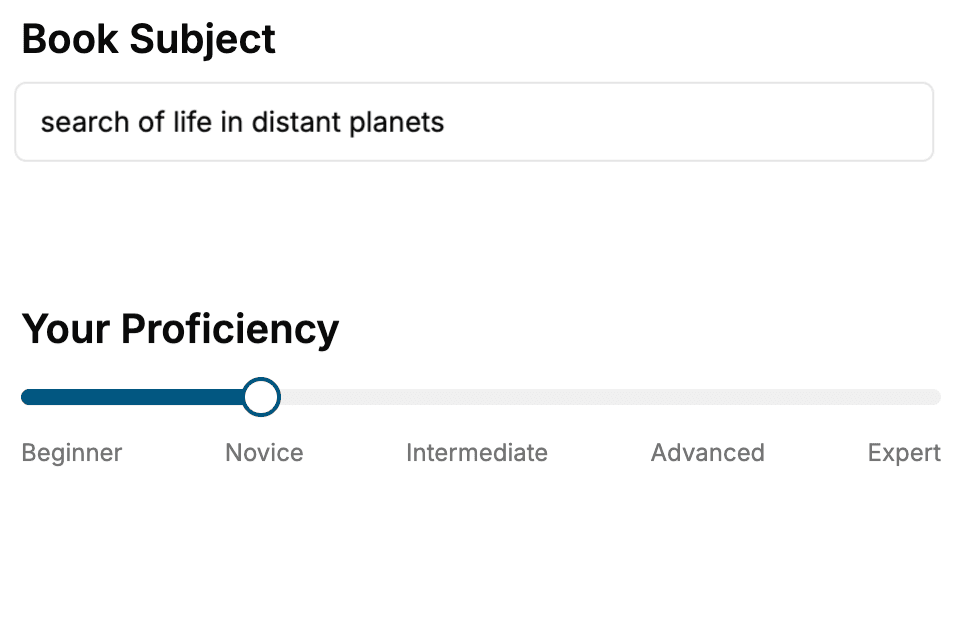
Select the focus of your English Grammar book and share your background
- 2. Personalize your book
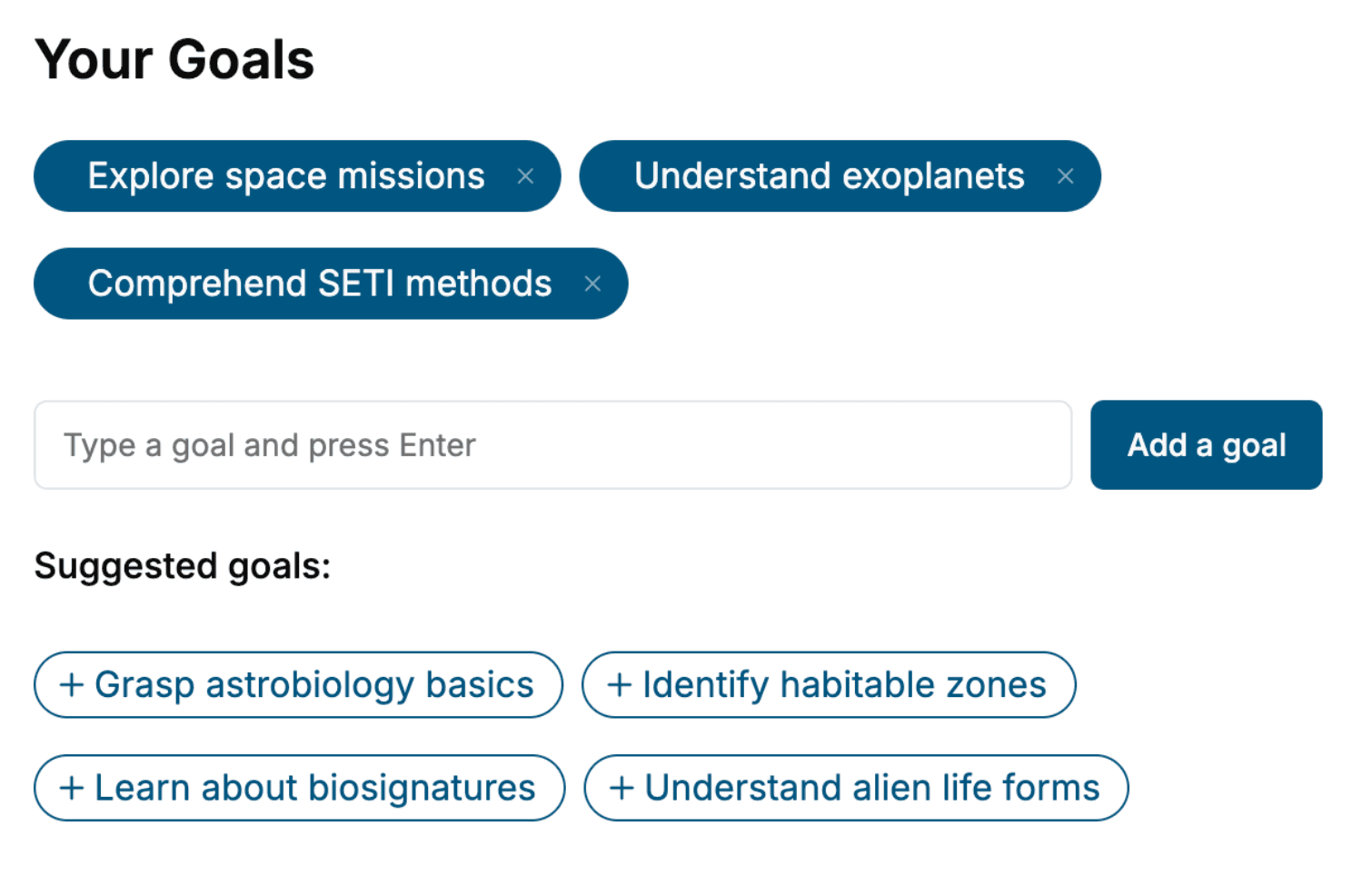
Specify your goals and choose sub-topics to include
- 3. Get your tailored book
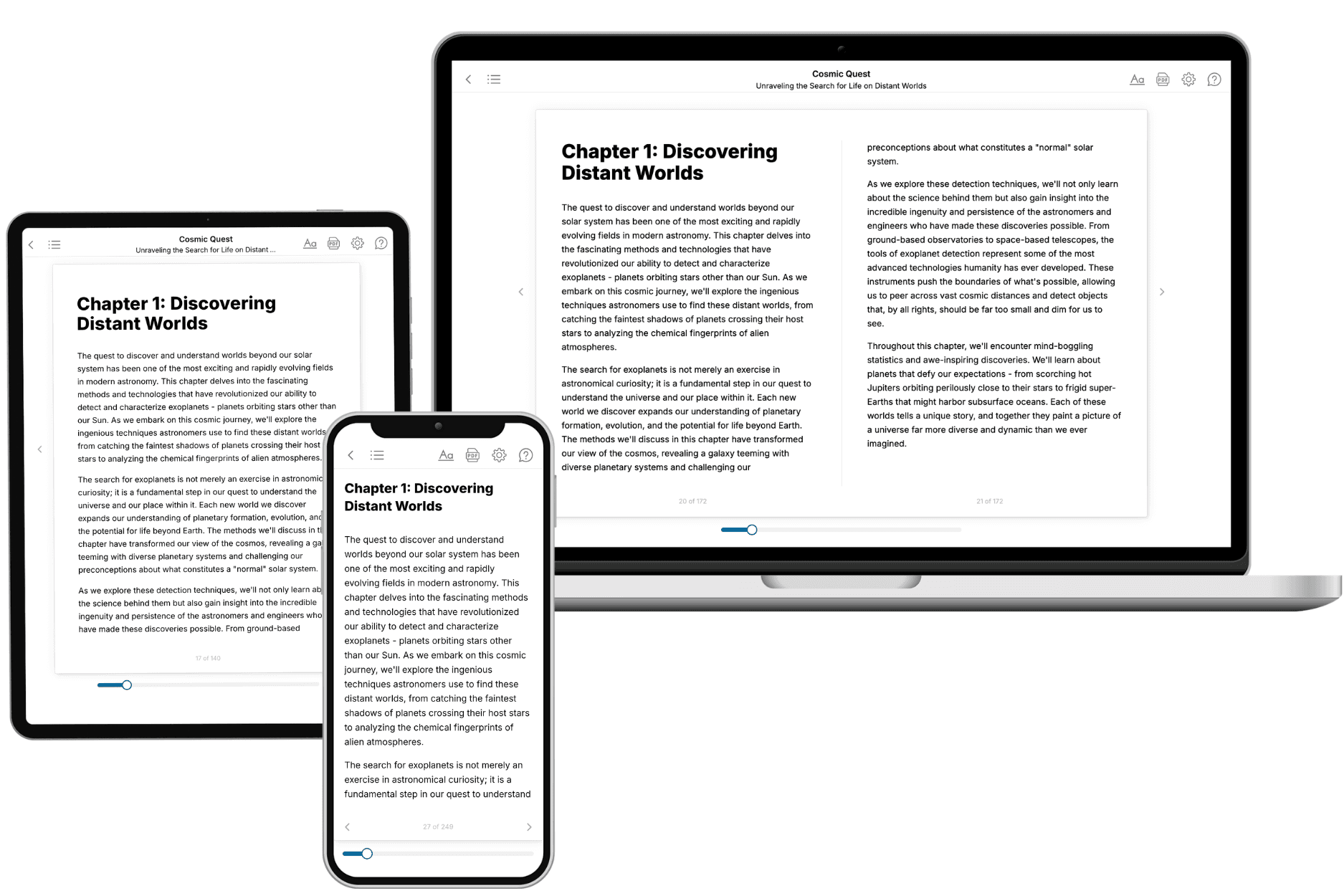
Your book is ready in 10 minutes. Read it online, download as EPUB or PDF, or send to Kindle.
Frequently asked questions
- What is TailoredRead?
TailoredRead creates complete, full-length nonfiction ebooks, written specifically for you. Tell us what you want to learn and why, and TailoredRead writes you a complete ebook on it, with charts, tables, and diagrams throughout. Read it online, on Kindle, or on any e-reader, or download it as a PDF or EPUB. Every book is written fresh the day you order it.
- How is the book tailored to me?
Before anything is written, you answer a few short questions about your goals, your background, and the topics you care about. Your book is then planned around your answers: written at your level, focused on your goals, and covering the topics you chose, instead of the one-size-fits-all book a store sells everyone.
- Will it read like generic AI content?
No. Your book isn't a chat transcript: it's planned chapter by chapter before a single word is written, told in a clear book voice, and explains ideas visually with charts, tables, and diagrams. After writing, every book goes through an editorial pass that polishes chapters so the book reads consistent from start to finish. Judge for yourself: browse thousands of sample books on our Explore Books page.
- How accurate is the content?
Our AI first checks whether your subject needs live research. Niche and fast-moving subjects are researched before writing, and the book plan and chapters are grounded in what it finds. After writing, every book goes through a quality pass that checks its facts and consistency, and researched books list their sources in a Notes section at the back.
- How long is the book?
You choose the length: Comprehensive (250-300 pages), Detailed (150-200 pages), Essential (70-100 pages), or Short (30-50 pages).
- Does the book include visuals?
Yes. Every book includes charts, tables, and diagrams: timelines, checklists, step-by-step guides, decision trees, comparison tables, matrices, and bar charts. A typical book includes dozens of these visual elements.
- Can I read it on Kindle? What formats can I download?
Yes. Every book can be read in our online reader or downloaded as a PDF or EPUB. The EPUB can be opened with Kindle, Apple Books, Kobo, and any e-reader. The Commercial and Author licenses also include an editable Word (DOCX) and Markdown download.
- How much does it cost?
About the price of a regular ebook. The exact price depends on your book's length and complexity, from $2 for the shortest books to $35 for the most comprehensive, and it's shown when you review your book, before you commit to anything. Each book is a one-time purchase, yours to keep, no subscription. Licenses that let you share, teach, or publish your book range from $35.99 to $49.99.
- Can I preview the book before purchasing?
Before you pay, you'll see what your book will cover: the title, a detailed description, the estimated length, and the complete chapter-by-chapter table of contents, so you know what you're getting before you decide. The full text itself is written after you purchase.
- How long does it take to create a book?
About 10 minutes. You can start reading the opening chapters while the rest is still being written.