Carbohydrate Chemistry Essentials
Understanding How Your Body Processes Energy at the Molecular Level
Most people consume carbohydrates daily without understanding what happens to them at the molecular level.
222 pages10 chaptersJun 2, 2026Biochemistry
About this book
This gap in knowledge makes it difficult to truly grasp nutrition science, metabolic health, and biochemical processes. This book bridges that gap by explaining carbohydrate metabolism in clear, scientifically rigorous terms that build progressively from basic chemistry to complex metabolic pathways. You'll discover how carbohydrates are structured as macromolecules, how your cells break them down for energy, and how your body regulates these processes. Whether you're studying biochemistry, pursuing a health-related career, or simply want to understand the chemistry behind your diet, this guide provides the essential knowledge you need. Each chapter combines molecular structures, metabolic diagrams, and real-world applications to make abstract concepts concrete and memorable.
Table of contents
- IntroductionWhy Carbohydrate Chemistry Matters, What You'll Learn in This Book, How to Use This Guide, Chemistry Foundations You'll NeedRead below
- Chapter 1: The Basics of Carbohydrate StructureWhat Are Carbohydrates?, Atomic Composition and Chemical Bonds, Functional Groups in Carbohydrates
- Chapter 2: Monosaccharides: The Building BlocksGlucose: The Most Important Monosaccharide, Fructose, Galactose, and Other Monosaccharides, Isomers and Ring Forms, Chemical Properties and Reactivity
- Chapter 3: Disaccharides and PolysaccharidesGlycosidic Bonds: Linking Sugars Together, Common Disaccharides: Sucrose, Lactose, and Maltose, Starch: Plant Energy Storage, Glycogen, Cellulose, and Other Polysaccharides
- Chapter 4: Carbohydrate Digestion and AbsorptionDigestion Begins: Mouth and Stomach, Small Intestine: Where Breakdown Completes, Absorption and Transport into Bloodstream, Blood Glucose Levels and Initial Regulation
- Chapter 5: Glycolysis: Breaking Down GlucoseOverview of the Glycolytic Pathway, The Energy Investment Phase, The Energy Payoff Phase, What Happens to Pyruvate
- Chapter 6: The Citric Acid Cycle and Electron TransportIntroduction to the Citric Acid Cycle, Step-by-Step Through the Cycle, The Electron Transport Chain, Total ATP Production from One Glucose Molecule
- Chapter 7: Gluconeogenesis and Glucose RegulationWhen and Why Gluconeogenesis Occurs, The Gluconeogenesis Pathway, Maintaining Blood Glucose Homeostasis, Fed and Fasted Metabolic States
- Chapter 8: Hormonal Control of Carbohydrate MetabolismInsulin: The Storage Hormone, Glucagon: The Mobilization Hormone, Cortisol, Epinephrine, and Other Regulatory Hormones, How Hormones Work Together
- Chapter 9: Carbohydrate Metabolism in Different TissuesThe Liver: Central Metabolic Hub, Muscle Tissue: Energy Demands and Storage, The Brain: Glucose Dependency, Red Blood Cells, Adipose Tissue, and Other Organs
- Chapter 10: Metabolic Disorders and Clinical ApplicationsDiabetes: Type 1, Type 2, and Gestational, Hypoglycemia and Hyperglycemia, Glycogen Storage Diseases, Clinical Testing and Metabolic Assessment
- ConclusionKey Takeaways, Where to Go From Here
- Glossary of Terms
- Further Reading and Resources
Introduction
Every time you eat a piece of bread, drink a glass of orange juice, or reach for a handful of rice, you are setting off a remarkable chain of molecular events inside your body. Carbohydrates are broken apart, transported through your bloodstream, converted into usable energy, and stored for later use, all within minutes. Yet most people who study nutrition or health sciences have only a surface-level understanding of what is actually happening at the chemical level. This book exists to change that.
Carbohydrate chemistry sits at the intersection of organic chemistry, biochemistry, and physiology. It is the kind of subject that rewards careful study because once you understand it, everything else in metabolism starts to make sense. You begin to see why blood sugar regulation matters so deeply, why certain enzymes are critical to life, and why disruptions in these pathways lead to serious diseases like diabetes. The molecular logic of carbohydrates is elegant, and understanding it gives you a powerful lens for interpreting both basic science and clinical medicine.
This book is designed for learners who already have some grounding in chemistry. You do not need to be an expert, but familiarity with concepts like covalent bonds, functional groups, and basic organic structures will help you get the most out of each chapter. If some of those ideas feel a little rusty, the final subchapter of this introduction offers a quick refresher on the chemistry foundations you will need. From there, the book builds progressively, starting with molecular structure and moving all the way through complex metabolic regulation and clinical applications.
What makes carbohydrate chemistry particularly fascinating is how tightly structure and function are linked. A tiny difference in how two glucose molecules are bonded together can mean the difference between a digestible starch and an indigestible fiber. A single enzyme deficiency can cause a glycogen storage disease that affects an entire organ system. These are not abstract ideas. They are real consequences of molecular-level chemistry, and understanding them gives you genuine insight into how living systems work. That is the promise of this book: not just facts to memorize, but a framework for understanding.
Why Carbohydrate Chemistry Matters
Carbohydrates are the most abundant organic molecules on Earth. They make up the cell walls of plants, the structural scaffolding of bacterial biofilms, and the primary fuel source for nearly every living organism. In the human body alone, carbohydrates play roles that range from immediate energy supply to long-term structural support. Understanding their chemistry is not a niche academic exercise. It is foundational knowledge for anyone working in health, nutrition, medicine, or biological science.
From a purely energetic standpoint, glucose is the molecule that keeps your cells alive. Your brain consumes roughly 120 grams of glucose per day, accounting for about 60% of the body's total glucose use at rest.[1] Red blood cells rely almost entirely on glucose because they lack mitochondria and cannot use other fuel sources. Muscle cells draw on glucose during intense exercise when oxygen delivery cannot keep pace with energy demand. The centrality of glucose to human physiology makes its chemistry worth understanding in precise detail.
Beyond energy, carbohydrates serve as critical signaling molecules. Glycoproteins, which are proteins decorated with carbohydrate chains, sit on the surface of nearly every cell in your body. They act as identification tags that allow cells to recognize each other, mediate immune responses, and facilitate communication between tissues. The ABO blood group system, for example, is determined entirely by which carbohydrate structures are attached to proteins on the surface of red blood cells. This is carbohydrate chemistry with direct clinical consequences.
The global burden of metabolic disease makes carbohydrate chemistry even more relevant today. As of 2023, approximately 537 million adults worldwide live with diabetes, a condition fundamentally rooted in disrupted carbohydrate metabolism.[2] Obesity, metabolic syndrome, and non-alcoholic fatty liver disease are all connected to how the body handles carbohydrates. Health professionals who understand the underlying biochemistry are far better equipped to interpret lab results, explain disease mechanisms to patients, and evaluate emerging treatments.
For students of biochemistry and nutrition science, carbohydrate metabolism is also a gateway to understanding broader metabolic integration. The pathways you will learn in this book, including glycolysis, the citric acid cycle, and gluconeogenesis, do not operate in isolation. They connect to fat metabolism, amino acid catabolism, and nucleotide synthesis. Mastering carbohydrate chemistry gives you the conceptual scaffolding to understand how all of these systems interact and how the body maintains metabolic balance under constantly changing conditions.
Finally, carbohydrate chemistry matters because it is genuinely interesting. The way a six-carbon sugar can be systematically dismantled to release stored chemical energy, with each step catalyzed by a specific enzyme and regulated by feedback signals, is a remarkable example of molecular engineering refined over billions of years of evolution. Appreciating that elegance is part of what makes biochemistry rewarding to study. This book aims to make that appreciation accessible, not just to specialists, but to anyone willing to engage with the material seriously.
What You'll Learn in This Book
This book covers carbohydrate chemistry from the ground up, moving in a logical sequence from molecular structure to metabolic pathways to clinical relevance. Each chapter builds on the one before it, so by the time you reach the later chapters on hormonal regulation and metabolic disorders, you will have the structural and biochemical vocabulary to understand them fully. Here is a brief map of the journey ahead.
The first three chapters focus on structure. You will learn what carbohydrates are at the atomic level, how monosaccharides like glucose and fructose are built, and how these simple sugars link together to form disaccharides and polysaccharides. You will encounter concepts like glycosidic bonds, ring conformations, and the structural differences between starch, glycogen, and cellulose. These chapters give you the molecular vocabulary you need for everything that follows.
Chapters four through six shift the focus to metabolism. You will trace the journey of a carbohydrate from the moment it enters your mouth through digestion and absorption, then follow glucose into the cell where glycolysis begins. From there, you will explore how pyruvate enters the citric acid cycle and how the electron transport chain extracts the maximum possible energy from a single glucose molecule. These chapters are the biochemical core of the book.
Chapters seven and eight address regulation. Gluconeogenesis explains how the body manufactures glucose when dietary carbohydrates are unavailable. The chapter on hormonal control covers how insulin, glucagon, cortisol, and epinephrine coordinate carbohydrate metabolism across different tissues and metabolic states. Understanding regulation is what transforms isolated pathway knowledge into a coherent picture of how the body manages energy.
Chapter nine examines how carbohydrate metabolism differs across specific tissues, including the liver, muscle, brain, and red blood cells. Each tissue has unique metabolic priorities, and understanding these differences explains a great deal about how the body responds to exercise, fasting, and feeding. Chapter ten then applies everything you have learned to clinical contexts, covering diabetes, hypoglycemia, glycogen storage diseases, and the laboratory tests used to assess metabolic health.
By the end of this book, you will be able to:
- Describe the molecular structure of monosaccharides, disaccharides, and polysaccharides
- Explain the step-by-step reactions of glycolysis, the citric acid cycle, and gluconeogenesis
- Identify how hormones regulate blood glucose and coordinate metabolic responses
- Distinguish how different tissues use and store carbohydrates based on their metabolic needs
- Connect molecular-level chemistry to clinical conditions like diabetes and glycogen storage diseases
These are not just academic goals. They represent a genuine shift in how you understand the biology of energy, nutrition, and disease. Whether you are preparing for an exam, deepening your professional knowledge, or satisfying intellectual curiosity, the content in this book is designed to be both rigorous and genuinely useful.
How to Use This Guide
This book is structured to be read sequentially, and that approach is strongly recommended for first-time readers. The early chapters on molecular structure are not just background material. They establish the precise vocabulary and conceptual framework that later chapters depend on. Jumping ahead to glycolysis without understanding what glucose actually looks like at the molecular level will make the pathway steps harder to follow and easier to forget.
That said, if you already have solid knowledge of carbohydrate structure from prior coursework, you can use the first three chapters as a review and move more quickly through them. Each chapter opens with a brief overview of what it covers, which makes it easy to assess how much of the material is already familiar. If you find yourself nodding along confidently, skim the chapter and focus on any sections that introduce new nuance or detail.
Throughout the book, key terms are introduced in bold the first time they appear. These terms are also collected in the glossary at the back of the book, which you can use as a quick reference when reviewing material or when a term from an earlier chapter comes up again in a later one. Building a working vocabulary is one of the most important parts of learning biochemistry, and the glossary is there to support that process.
Each chapter includes concrete examples, molecular comparisons, and real-world applications. Do not skip these. The examples are not decorative. They are carefully chosen to make abstract concepts tangible and to show you why the chemistry matters beyond the textbook. When a chapter discusses how a specific enzyme deficiency leads to a glycogen storage disease, for instance, that example is reinforcing the structural and metabolic concepts from earlier chapters in a clinically meaningful way.
If you are using this book as a study resource alongside a course, consider the following approach for each chapter:
- Read the chapter once through without stopping to take notes, just to get the overall picture
- Go back and read it a second time, this time writing down key terms, reactions, and concepts in your own words
- Draw out any pathways or structures from memory, then check your drawings against the text
- Use the glossary to confirm your understanding of any terms that felt uncertain
- Connect the chapter's content to what came before by asking yourself how the new material builds on earlier concepts
Footnotes throughout the book point to primary sources, textbooks, and research studies. These are included for two reasons: to give credit to the scientific literature that underpins the content, and to give you a clear path for deeper reading if a particular topic captures your interest. The further reading section at the back of the book also provides curated recommendations organized by topic area.
Finally, approach this material with patience. Biochemistry rewards repeated exposure. Some concepts, particularly the multi-step metabolic pathways, will not feel fully clear after a single reading. That is completely normal. Return to difficult sections, draw diagrams, talk through the concepts with others if you can, and trust that the understanding will deepen with each pass through the material.
Chemistry Foundations You'll Need
Before diving into carbohydrate structure and metabolism, it helps to have a few core chemistry concepts firmly in place. This section is not a comprehensive chemistry review. It is a targeted refresher on the specific ideas that will come up repeatedly throughout this book. If any of these concepts feel unfamiliar, it is worth spending a little time reviewing them before moving on to Chapter 1.
Covalent bonds and molecular structure are the starting point. Carbohydrates are organic molecules, meaning they are built primarily from carbon atoms bonded to hydrogen, oxygen, and sometimes other elements. Carbon is uniquely suited to building complex molecules because it can form four covalent bonds simultaneously, allowing it to create chains, rings, and branched structures. The backbone of every carbohydrate molecule is a carbon chain, and understanding how carbon bonds work is essential for reading molecular structures throughout this book.
Functional groups are specific clusters of atoms that give organic molecules their chemical properties. In carbohydrates, the two most important functional groups are the hydroxyl group (-OH) and the carbonyl group (C=O). The carbonyl group appears either as an aldehyde (at the end of a carbon chain) or a ketone (in the middle of a chain), and this distinction is what separates aldoses from ketoses, a classification you will encounter in Chapter 2. Hydroxyl groups are responsible for the water solubility of sugars and play a central role in forming the bonds that link sugar molecules together.
Isomers are molecules that share the same molecular formula but differ in how their atoms are arranged. This concept is critically important in carbohydrate chemistry because many sugars, including glucose, fructose, and galactose, all have the formula C₆H₁₂O₆ but behave very differently in the body. Two specific types of isomerism matter most here:
- Structural isomers have the same atoms arranged in different connectivity patterns (for example, glucose versus fructose)
- Stereoisomers have the same connectivity but differ in the three-dimensional orientation of atoms around a carbon center (for example, glucose versus galactose)
Condensation and hydrolysis reactions are the two chemical reactions that build and break apart carbohydrate chains. In a condensation reaction (also called a dehydration synthesis), two molecules join together and release a water molecule in the process. This is how glycosidic bonds form between sugar units. In a hydrolysis reaction, water is added to break a bond apart. This is what digestive enzymes do when they break down starch or sucrose into their component monosaccharides. These two reactions are the molecular basis of carbohydrate digestion and biosynthesis.
Oxidation and reduction are concepts that appear throughout the metabolic chapters of this book. In biochemistry, oxidation generally means losing electrons (or hydrogen atoms), while reduction means gaining them. When glucose is broken down through glycolysis and the citric acid cycle, it is progressively oxidized, and the electrons released are captured by carrier molecules like NAD⁺ and FAD. These carriers then deliver the electrons to the electron transport chain, where they drive the production of ATP. Understanding that metabolism is fundamentally about controlled electron transfer will make the energy-generating pathways much easier to follow.
Enzymes are biological catalysts, proteins that speed up chemical reactions without being consumed in the process. Every step in glycolysis, the citric acid cycle, and gluconeogenesis is catalyzed by a specific enzyme. Enzymes work by binding to their substrates at a region called the active site, lowering the activation energy needed for the reaction to proceed. Many enzymes require cofactors, which are small molecules or metal ions that assist with catalysis. Throughout this book, you will encounter specific enzymes by name, and knowing that each one performs a precise, regulated chemical transformation will help you follow the logic of each pathway.
ATP (adenosine triphosphate) is the universal energy currency of the cell. When cells need energy to do work, whether that is contracting a muscle, pumping ions across a membrane, or synthesizing a new molecule, they use ATP. ATP releases energy when one of its phosphate bonds is broken, converting it to ADP (adenosine diphosphate). The metabolic pathways in this book are largely about how cells generate ATP from glucose. Keeping that goal in mind, that every pathway step is ultimately in service of producing usable cellular energy, will help you stay oriented as the biochemistry becomes more detailed.
Quick reference: Key chemistry terms used in this book
Covalent bond: A chemical bond formed by sharing electrons between atoms.
Hydroxyl group (-OH): A functional group consisting of oxygen bonded to hydrogen, common in all carbohydrates.
Carbonyl group (C=O): A functional group with a carbon double-bonded to oxygen; appears as aldehyde or ketone in sugars.
Isomer: A molecule with the same molecular formula as another but a different structural arrangement.
Condensation reaction: A reaction that joins two molecules together by releasing water.
Hydrolysis: A reaction that breaks a bond by adding water.
Oxidation: Loss of electrons (or hydrogen); what happens to glucose during catabolism.
Reduction: Gain of electrons (or hydrogen); what happens to electron carriers like NAD⁺.
Enzyme: A protein catalyst that speeds up a specific biochemical reaction.
ATP: The primary energy currency of the cell, produced during carbohydrate metabolism.
With these foundations in place, you are ready to begin. Chapter 1 starts at the most fundamental level, examining what carbohydrates are, how they are classified, and what their atomic composition tells us about their chemical behavior. The concepts introduced there will carry through every subsequent chapter, so take your time with them. The investment in understanding structure will pay dividends when you reach the metabolic pathways later in the book.
This is the end of the free sample. The full book has 10 chapters.
Want this book written for you?
Tell us your goals and background, and get your own version of this book, tailored by AI to you.


Benefits of AI-tailored books
- Read one book, not ten:
- all the Biochemistry knowledge you need, gathered into a single book.
- Save days of learning:
- tell us your goals, choose your topics, and the whole book is built around them.
- Learn effortlessly:
- Biochemistry book written for your specific background and expertise.
- Understand at a glance:
- includes charts, tables, timelines, checklists, decision trees, and more.
- Stay current:
- written the day you order it, not years ago.
- Trust what you read:
- every book is checked for accuracy, with real research when your subject needs it.
Create your unique book in 3 steps
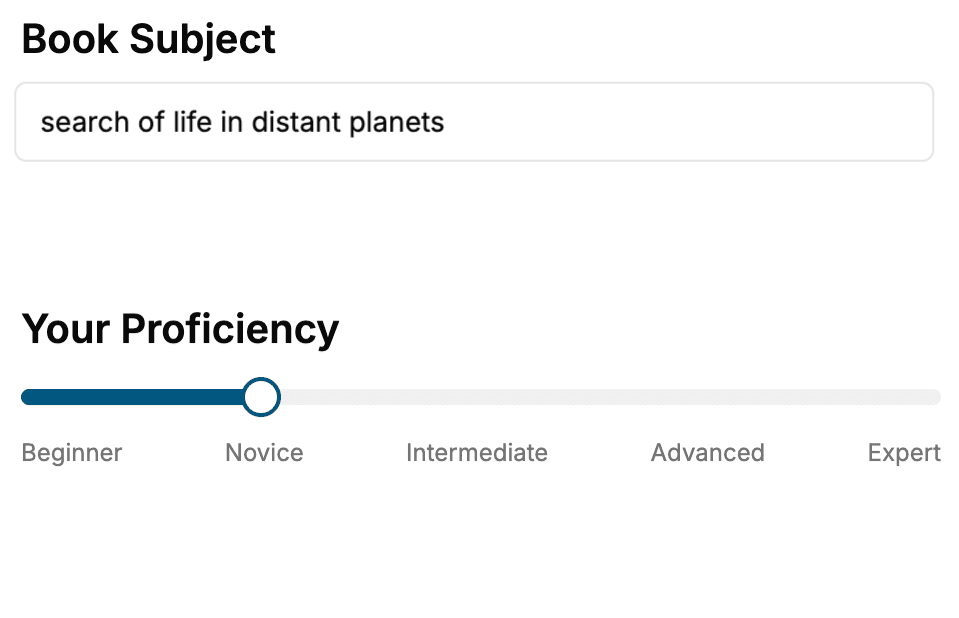
- 1. Select your focus
Select the focus of your Biochemistry book and share your background
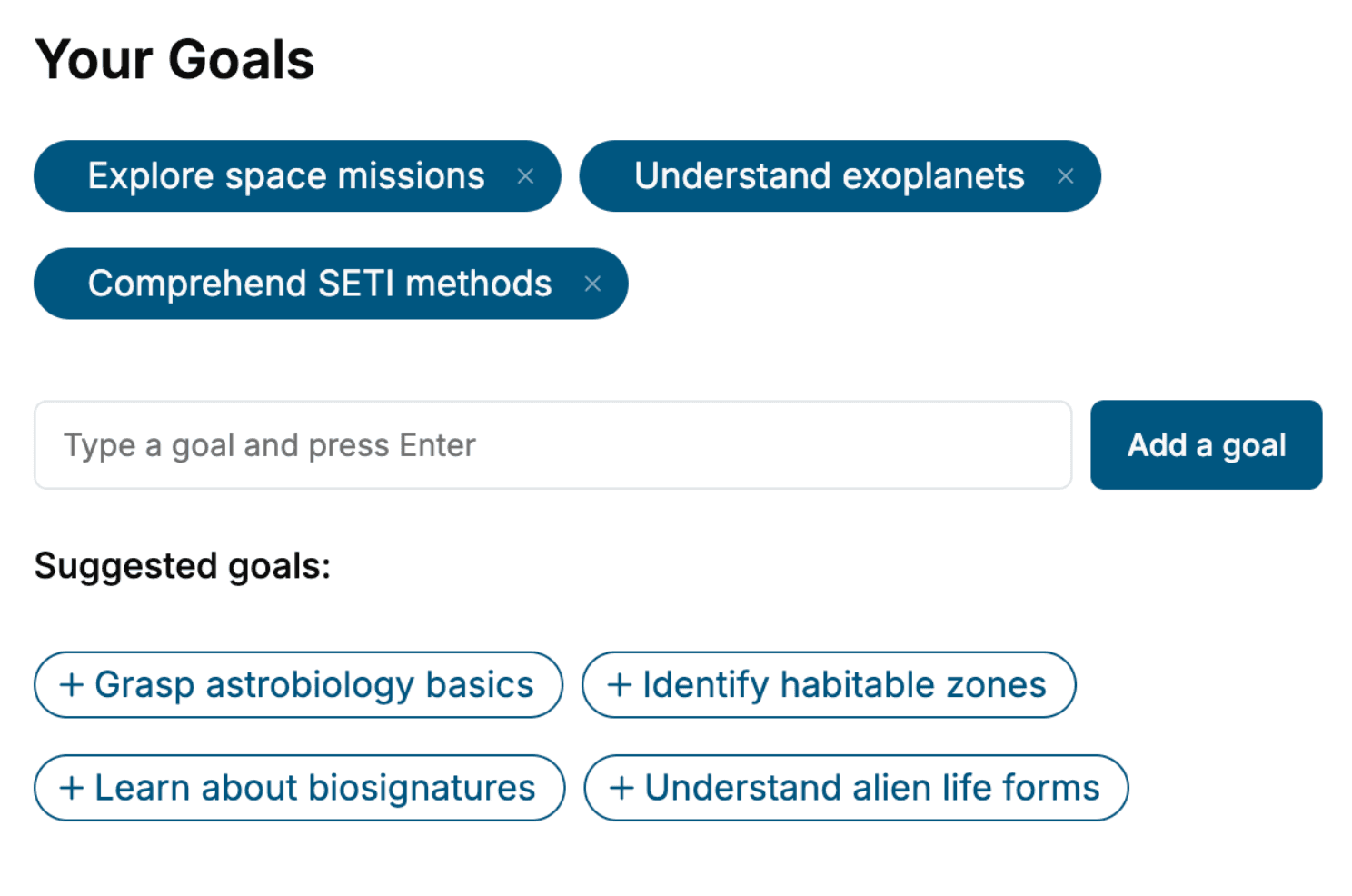
- 2. Personalize your book
Specify your goals and choose sub-topics to include
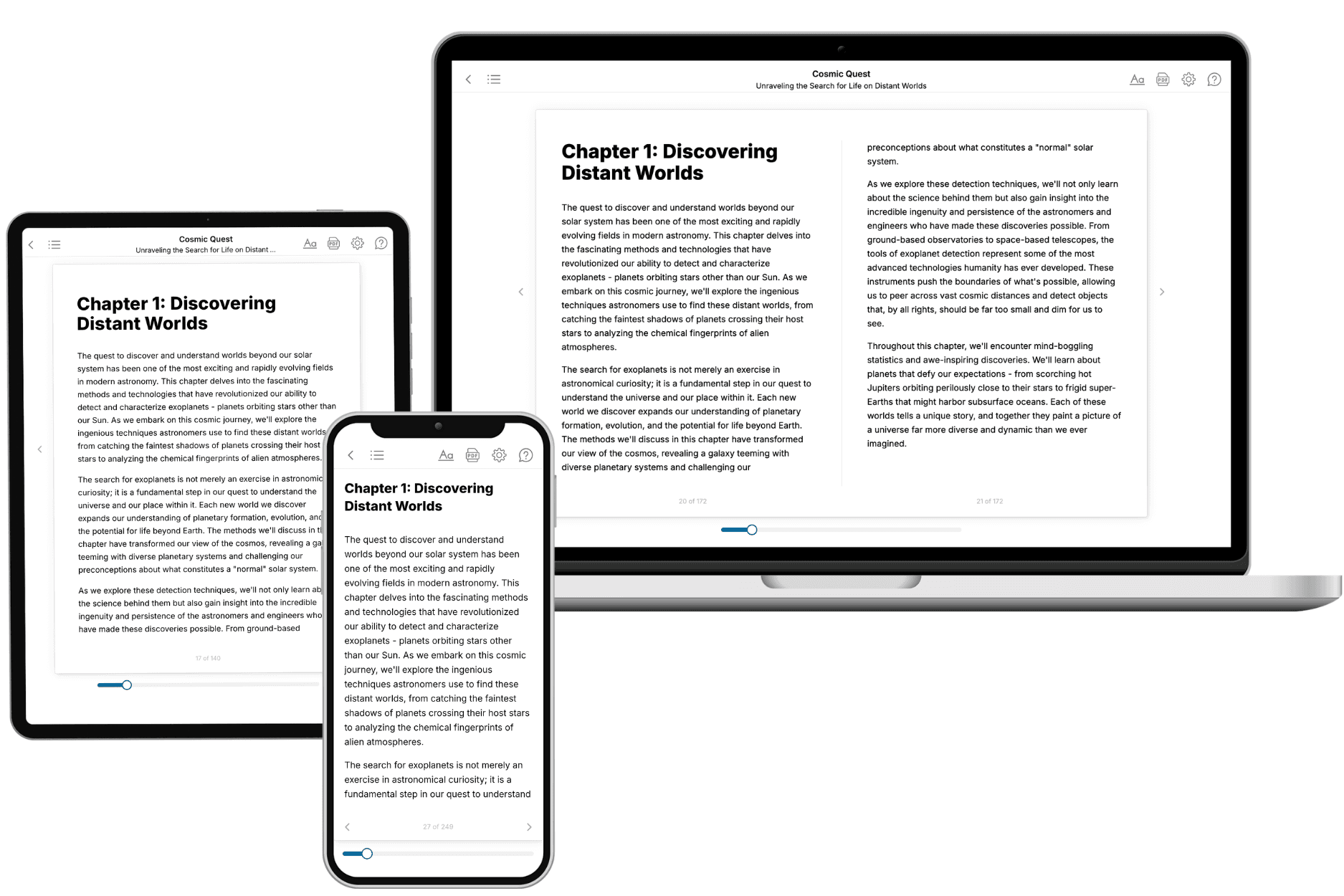
- 3. Get your tailored book
Your book is ready in 10 minutes. Read it online, download as EPUB or PDF, or send to Kindle.
Frequently asked questions
- What is TailoredRead?
TailoredRead creates complete, full-length nonfiction ebooks, written specifically for you. Tell us what you want to learn and why, and TailoredRead writes you a complete ebook on it, with charts, tables, and diagrams throughout. Read it online, on Kindle, or on any e-reader, or download it as a PDF or EPUB. Every book is written fresh the day you order it.
- How is the book tailored to me?
Before anything is written, you answer a few short questions about your goals, your background, and the topics you care about. Your book is then planned around your answers: written at your level, focused on your goals, and covering the topics you chose, instead of the one-size-fits-all book a store sells everyone.
- Will it read like generic AI content?
No. Your book isn't a chat transcript: it's planned chapter by chapter before a single word is written, told in a clear book voice, and explains ideas visually with charts, tables, and diagrams. After writing, every book goes through an editorial pass that polishes chapters so the book reads consistent from start to finish. Judge for yourself: browse thousands of sample books on our Explore Books page.
- How accurate is the content?
Our AI first checks whether your subject needs live research. Niche and fast-moving subjects are researched before writing, and the book plan and chapters are grounded in what it finds. After writing, every book goes through a quality pass that checks its facts and consistency, and researched books list their sources in a Notes section at the back.
- How long is the book?
You choose the length: Comprehensive (250-300 pages), Detailed (150-200 pages), Essential (70-100 pages), or Short (30-50 pages).
- Does the book include visuals?
Yes. Every book includes charts, tables, and diagrams: timelines, checklists, step-by-step guides, decision trees, comparison tables, matrices, and bar charts. A typical book includes dozens of these visual elements.
- Can I read it on Kindle? What formats can I download?
Yes. Every book can be read in our online reader or downloaded as a PDF or EPUB. The EPUB can be opened with Kindle, Apple Books, Kobo, and any e-reader. The Commercial and Author licenses also include an editable Word (DOCX) and Markdown download.
- How much does it cost?
About the price of a regular ebook. The exact price depends on your book's length and complexity, from $2 for the shortest books to $35 for the most comprehensive, and it's shown when you review your book, before you commit to anything. Each book is a one-time purchase, yours to keep, no subscription. Licenses that let you share, teach, or publish your book range from $35.99 to $49.99.
- Can I preview the book before purchasing?
Before you pay, you'll see what your book will cover: the title, a detailed description, the estimated length, and the complete chapter-by-chapter table of contents, so you know what you're getting before you decide. The full text itself is written after you purchase.
- How long does it take to create a book?
About 10 minutes. You can start reading the opening chapters while the rest is still being written.