Carnival in Uruguay
Your Complete Guide to Experiencing South America's Most Vibrant Festival
Discover how to experience Uruguay's Carnival like a true insider rather than a casual observer.
207 pages9 chaptersNov 26, 2025Uruguay History
About this book
This comprehensive guide takes you beyond the surface-level parades to reveal the rich cultural tapestry, strategic planning essentials, and authentic experiences that make Uruguayan Carnival unforgettable. You'll learn the distinct phases of the 40+ day celebration, understand the satirical murga tradition that defines local culture, and navigate practical considerations from accommodation to safety. Whether you're seeking vibrant street parties, competitive parade events, or intimate neighborhood celebrations, this guide provides the knowledge and confidence to engage respectfully with this living cultural treasure. Packed with insider tips, historical context, and practical logistics, you'll understand not just what to see, but why Carnival matters to Uruguayans and how to participate authentically. Transform your Carnival experience from tourist spectacle to meaningful cultural immersion.
Table of contents
- IntroductionWhy Carnival Matters: More Than Just a Party, What You'll Discover in This Guide, How to Use This Book for Maximum ImpactRead below
- Chapter 1: The History and Cultural Roots of Uruguayan CarnivalAfrican Heritage and the Candombe Tradition, Spanish Colonial Influences and European Traditions, Evolution into Modern Uruguayan Carnival
- Chapter 2: The Phases of Carnival: A 40+ Day JourneyOpening Week: Building Momentum and Energy, Main Parade Season: The Official Competitions, Closing Celebrations: The Grand Finale, Street Parties and Neighborhood Events Between Official Events
- Chapter 3: Murga: The Soul of Uruguayan CarnivalWhat Is Murga? Understanding the Tradition, Performance Style, Satire, and Social Commentary, Legendary Murga Groups and Their Impact
- Chapter 4: Planning Your Carnival Visit: Timing and LogisticsBest Time to Visit: Dates and Seasonal Considerations, Accommodation Strategies: Booking Early and Finding Value, Transportation: Getting Around During Peak Season, Budget Planning: Understanding Costs and Value
- Chapter 5: Official Carnival Events and CompetitionsDesfile de Llamadas: The Candombe Parade, Murga Competitions: Where to Watch and What to Expect, Other Official Events and Venues
- Chapter 6: Authentic Street Celebrations and Neighborhood ExperiencesNeighborhood Parties: Finding Local Celebrations, Street Dancing, Music, and Spontaneous Gatherings, Cultural Etiquette: Participating Respectfully as a Visitor
- Chapter 7: What to Wear, See, and ExperienceCarnival Costumes and Dress Codes, Must-See Performances and Iconic Moments, Photography Tips and Capturing Memories Respectfully
- Chapter 8: Safety, Health, and Practical EssentialsStaying Safe During Carnival Celebrations, Health Considerations and Preparation, Currency, Language, and Essential Practical Information
- Chapter 9: The Economic and Social Impact of CarnivalHow Carnival Drives Uruguay's Tourism and Local Economy, Carnival as a Reflection of Uruguayan National Identity, Community Impact and Social Significance
- Conclusion: Making Your Carnival Experience UnforgettableKey Takeaways for Your Visit, Final Thoughts and Inspiration
- Frequently Asked QuestionsCommon Questions About Carnival in Uruguay
- Further Reading and ResourcesRecommended Resources for Deeper Exploration
Introduction
Uruguay's Carnival is not what most travelers expect. While Rio de Janeiro captures global headlines with its glittering samba parades and elaborate floats, Uruguay's celebration unfolds as something altogether different—a sprawling, 40-plus-day cultural phenomenon that weaves through neighborhoods, theaters, and streets with a distinctly local character. This is the longest Carnival celebration in the world, yet it remains relatively unknown outside South America. What makes it remarkable isn't just its duration, but its depth: the satirical murga performances that blend music with biting social commentary, the thundering candombe drums that echo African heritage through Montevideo's streets, and the neighborhood gatherings where locals celebrate with an authenticity that commercial tourism hasn't diluted. If you're seeking an experience that goes beyond spectacle to touch something genuinely cultural, Uruguay's Carnival offers exactly that opportunity.
Most travel guides treat Carnival as a simple event—show up, watch parades, take photos, leave. This approach misses the essence entirely. Uruguay's Carnival operates on multiple levels simultaneously: official competitions judged by experts, spontaneous street parties that erupt without warning, intimate neighborhood celebrations where families gather, and theatrical performances that require cultural context to fully appreciate. The murga tradition alone—with its elaborate makeup, distinctive singing style, and lyrics packed with local political references—demands understanding to truly enjoy. Without preparation, you might find yourself standing in a crowd watching something spectacular yet incomprehensible, unable to distinguish between a legendary performance and a mediocre one, missing the jokes that make locals roar with laughter, or worse, inadvertently disrespecting traditions you didn't know existed.
This guide exists to bridge that gap between casual tourism and meaningful cultural immersion. You'll learn not just where to go and what to see, but why these celebrations matter to Uruguayans, how to navigate the complex schedule of events, and what distinguishes authentic experiences from tourist-oriented spectacles. Whether you're planning your first visit or returning to deepen your understanding, the following chapters provide the practical knowledge and cultural context necessary to transform your Carnival experience from confusing to unforgettable. You'll discover how to time your visit for maximum impact, where to find the best performances, how to participate respectfully in neighborhood celebrations, and what logistical preparations will save you from common pitfalls that trap unprepared visitors. By the time you finish this book, you'll approach Uruguay's Carnival with the confidence of someone who understands what they're witnessing and why it matters.
Why Carnival Matters: More Than Just a Party
Uruguay's Carnival represents far more than entertainment or tourism revenue—it functions as a living repository of national identity, cultural memory, and social expression. The celebration's roots stretch back to the colonial era, when enslaved Africans brought candombe drumming traditions that would eventually become recognized by UNESCO as Intangible Cultural Heritage of Humanity[1]. These rhythms survived centuries of oppression, evolved through independence movements, and ultimately became central to Uruguay's cultural identity. When you hear candombe drums during Carnival, you're not just hearing music—you're hearing history, resistance, and cultural survival expressed through rhythm. This isn't background entertainment; it's a profound statement about who Uruguayans are and where they came from.
The murga tradition adds another essential layer to Carnival's cultural significance. Unlike the samba schools of Brazil or the masked balls of Venice, murga groups function as social commentators, using satire, humor, and theatrical performance to critique politicians, mock social absurdities, and give voice to popular frustrations. Each year, murga groups spend months crafting new performances that reflect current events, political scandals, and social issues affecting ordinary Uruguayans. The best murga performances achieve something remarkable: they make people laugh while simultaneously making them think critically about their society. This tradition of using Carnival as a platform for social commentary has deep historical roots, providing a sanctioned space where criticism that might otherwise be censored becomes not just acceptable but celebrated.
For Uruguayans, Carnival participation often begins in childhood and continues throughout life, creating intergenerational bonds and community cohesion that transcend economic class. Families pass down involvement in specific murga groups or candombe comparsas across generations. Neighborhoods organize their own celebrations, creating local traditions that residents anticipate all year. The economic impact extends beyond tourism—costume makers, musicians, venue operators, and countless small businesses depend on Carnival season for significant portions of their annual income. According to Uruguay's Ministry of Tourism, Carnival generates approximately $50 million USD in economic activity annually, supporting thousands of jobs directly and indirectly[2]. This economic dimension means Carnival isn't just culturally important; it's economically vital to communities throughout the country.
Understanding why Carnival matters to Uruguayans changes how you experience it as a visitor. When you recognize that the elderly woman dancing in the street has probably attended Carnival for seventy years, that the murga performer's satirical lyrics reference a political scandal from last month's news, or that the candombe drummers are maintaining a tradition their ancestors fought to preserve, the celebration transforms from exotic spectacle to meaningful cultural expression. This perspective shift—from tourist to informed witness—represents the difference between seeing and understanding. You begin to appreciate why locals take Carnival so seriously, why competitions are judged with intense scrutiny, and why certain performances receive standing ovations while others face polite applause. The cultural literacy you gain from understanding Carnival's significance allows you to participate more fully and respectfully in celebrations that welcome visitors but weren't created for them.
Carnival also serves as a rare democratic space where social hierarchies temporarily dissolve. During celebrations, wealthy professionals dance alongside working-class families, politicians become targets of public mockery rather than distant authorities, and neighborhood streets transform into stages where anyone can perform. This temporary inversion of normal social order—a classic function of carnival celebrations worldwide—takes on particular significance in Uruguay's relatively egalitarian society. The country prides itself on social mobility and democratic values, and Carnival embodies these ideals by creating spaces where participation matters more than social status. Street parties don't require tickets or exclusive access; they simply happen, and anyone present can join. This accessibility distinguishes Uruguayan Carnival from more commercialized celebrations elsewhere, preserving an authenticity that makes the experience genuinely special.
The political dimension of Carnival deserves particular attention. Murga performances regularly address controversial topics—government corruption, economic inequality, environmental issues, human rights concerns—with a directness that would be remarkable in any context. This tradition of political satire during Carnival has historical precedent dating back to periods of military dictatorship, when murga groups found creative ways to criticize authoritarian rule despite censorship. Today, even in democratic times, Carnival maintains this function as a pressure valve for social tensions and a platform for popular expression. When you watch a murga performance and notice the audience erupting in laughter or applause at specific moments, you're often witnessing recognition of a particularly sharp political observation. These moments reveal Carnival's ongoing relevance as more than nostalgia or tradition—it remains a vital space for social and political discourse.
Finally, Carnival matters because it represents cultural resistance against homogenization. In an era when global tourism often flattens local traditions into easily consumable experiences, Uruguay's Carnival has largely resisted this pressure. The celebrations remain primarily oriented toward local participants rather than international visitors. Murga lyrics are in Spanish, packed with local references that don't translate easily. Candombe rhythms follow complex patterns that require years to master. Neighborhood celebrations operate on local schedules without concern for tourist convenience. This resistance to commercialization—whether intentional or simply the result of limited international awareness—has preserved Carnival's authenticity in ways that benefit both locals and informed visitors. When you experience Uruguay's Carnival, you're encountering something real, not a performance staged for your benefit. This authenticity is precisely what makes the celebration worth experiencing and why understanding its cultural significance enhances rather than diminishes your enjoyment.
What You'll Discover in This Guide
This guide is structured to build your understanding progressively, starting with essential cultural and historical context before moving into practical planning and specific experiences. The first chapters establish the foundation you need to appreciate what you'll witness: the African, Spanish, and indigenous influences that shaped Carnival's development, the evolution of murga and candombe traditions, and the social significance these celebrations hold for Uruguayans. Without this context, you might enjoy Carnival as colorful entertainment, but you'll miss the deeper meanings that make it culturally significant. Understanding the history of candombe as a tradition preserved by enslaved Africans and their descendants, for example, transforms your experience of the Desfile de Llamadas from a parade into a powerful statement of cultural survival and pride.
The middle chapters shift focus to practical planning and logistics—the information you need to actually attend Carnival successfully. You'll learn about the celebration's distinct phases, from opening week through the main competition season to closing celebrations, helping you decide when to visit based on your interests and schedule. Accommodation strategies address the challenge of finding good lodging during peak season without overpaying or settling for poor locations. Transportation guidance covers everything from navigating Montevideo's public transit during crowded Carnival nights to understanding which neighborhoods are walkable and which require planning. Budget planning sections break down costs realistically, distinguishing between expensive official events and free street celebrations, helping you allocate resources effectively based on your priorities and financial constraints.
Detailed chapters on specific Carnival elements provide the depth necessary to make informed choices about what to attend and how to experience it. The murga chapter explains performance structure, helps you identify different styles, introduces legendary groups worth seeking out, and teaches you how to recognize quality performances even if you don't understand every lyric. The candombe chapter prepares you for the Desfile de Llamadas, explaining the significance of different drum roles, the meaning of traditional costumes, and what judges look for in competitions. These chapters include practical details like:
- Which venues host the best murga performances and how to obtain tickets
- What time events actually start versus official schedules (often significantly different)
- How to position yourself for optimal viewing at parades and street celebrations
- What to listen for in performances to distinguish exceptional from mediocre
- Which neighborhoods host the most authentic versus tourist-oriented celebrations
The guide addresses the crucial distinction between official events and authentic street celebrations—a difference many visitors fail to recognize until they've wasted time and money on the wrong experiences. Official competitions at venues like Teatro de Verano offer polished performances with comfortable seating and predictable schedules, but they lack the spontaneous energy of neighborhood celebrations. Street parties in barrios like Palermo or Cordón provide authentic local atmosphere but require different preparation regarding safety, timing, and cultural etiquette. You'll learn how to balance both types of experiences, understanding when formal events are worth the ticket price and when street celebrations offer more rewarding encounters. This knowledge prevents the common mistake of spending your entire visit at official venues while missing the neighborhood celebrations where Carnival's spirit truly lives.
Practical chapters on what to wear, how to photograph respectfully, and essential safety considerations address concerns that significantly impact your experience but often receive inadequate attention in general travel guides. Carnival dress codes vary dramatically between contexts—what's appropriate for street parties differs from official venues, and certain neighborhoods have unwritten rules about costume participation by visitors. Photography guidance helps you capture memories without being intrusive, explaining when asking permission is essential, which moments are too sacred to photograph, and how to balance documentation with present-moment experience. Safety sections provide realistic assessments of risks without fearmongering, offering specific strategies for protecting belongings in crowds, navigating late-night transportation, and recognizing situations to avoid.
The final chapters examine Carnival's broader impact and significance, exploring economic effects on local communities, the celebration's role in national identity formation, and ongoing debates about commercialization versus tradition preservation. These sections help you understand the complex dynamics surrounding Carnival—it's not simply a beloved tradition everyone celebrates uniformly, but rather a contested cultural space where different stakeholders have competing interests. Tourism organizations want to attract international visitors and revenue. Traditional participants want to preserve authentic practices. Neighborhood residents balance pride in their celebrations with concerns about disruption and commercialization. Understanding these tensions makes you a more thoughtful visitor, aware that your presence and spending have impacts beyond your individual experience.
Throughout the guide, you'll find specific, actionable information rather than vague generalities. Instead of "arrive early for good viewing spots," you'll learn "arrive 90 minutes before the scheduled start time for the Desfile de Llamadas and position yourself between Isla de Flores and Cuareim streets for optimal viewing angles and crowd density." Rather than "try local food," you'll discover which specific dishes are traditional during Carnival, where to find them, and what they cost. This specificity reflects the guide's core purpose: providing information detailed enough to actually use when planning and experiencing Carnival, not just general inspiration that leaves you unprepared when you arrive. Every chapter includes concrete examples, specific recommendations, and practical details you can reference while planning your trip or navigating celebrations in real-time.
How to Use This Book for Maximum Impact
This guide is designed for flexible use depending on your timeline, interests, and existing knowledge. If you're planning your first visit and have several months before departure, read the book sequentially from beginning to end. This approach builds your understanding systematically, starting with cultural context that makes later practical information more meaningful. You'll understand why certain recommendations matter, not just what to do. The historical and cultural chapters might seem less immediately practical than logistics sections, but they provide essential context that transforms your experience from tourism to cultural engagement. Resist the temptation to skip directly to "what to do" chapters—the background information significantly enhances your ability to make good decisions and appreciate what you witness.
For travelers with limited preparation time or those already familiar with Carnival basics, the guide's structure allows targeted reading. Each chapter functions independently, so you can focus on specific topics without reading everything. If you've already booked accommodation and transportation, skip directly to chapters on specific events, what to wear, and cultural etiquette. If you're primarily interested in murga performances, the dedicated murga chapter provides comprehensive information without requiring you to read about candombe or other Carnival elements first. The table of contents and chapter introductions help you identify which sections address your specific questions or concerns. However, even experienced travelers should review the cultural etiquette and safety chapters—these contain nuanced information that general Uruguay travel experience doesn't necessarily provide.
Use the guide actively during your planning process, not just as pre-trip reading. As you research accommodation options, refer back to the logistics chapter's neighborhood recommendations. When you're deciding which dates to visit, consult the chapter on Carnival phases to understand what events occur when. While booking tickets for official events, review the sections on what to expect at different venues. This active engagement with the guide during planning ensures you're making informed decisions rather than discovering important information too late to act on it. Consider marking or highlighting sections particularly relevant to your interests, creating a personalized reference you can quickly consult as questions arise during planning.
Bring relevant sections with you during your visit, either digitally or as notes. While you won't want to carry the entire book through crowded celebrations, having key information accessible proves invaluable. Create a simplified reference document with:
- Addresses and directions for venues you plan to visit
- Schedules for specific events you want to attend (with realistic timing adjustments)
- Neighborhood names and characteristics for areas you'll explore
- Key Spanish phrases for Carnival-specific situations
- Emergency contacts and safety information
- Notes on cultural etiquette reminders for different contexts
The guide's value extends beyond your first Carnival visit. Many travelers return to Uruguay's Carnival multiple times, each visit revealing new layers and deeper appreciation. On subsequent visits, you'll use the guide differently—perhaps focusing on specific murga groups you want to follow, exploring neighborhoods you missed previously, or attending events you skipped the first time. The cultural and historical chapters gain new relevance as you recognize references in performances, understand inside jokes, and notice details you missed initially. Consider annotating your copy with personal observations and discoveries, creating a customized resource that combines the guide's information with your own experience. This personalized version becomes increasingly valuable for planning return visits or advising friends who want to experience Carnival themselves.
Pay particular attention to sections that challenge your assumptions or contradict information from other sources. Uruguay's Carnival is poorly documented in English-language travel resources, and much available information is outdated, oversimplified, or simply incorrect. This guide prioritizes accuracy over convenience, sometimes providing information that complicates rather than simplifies planning. For example, you'll learn that "official" start times for events are often unreliable, that some highly-promoted tourist experiences offer poor value, and that the "best" celebrations aren't always the most accessible or comfortable. These honest assessments help you make realistic plans rather than experiencing disappointment when reality doesn't match promotional materials or outdated guidebook descriptions.
Consider the guide a starting point for deeper exploration rather than a comprehensive encyclopedia. Uruguay's Carnival is too complex, too dynamic, and too locally-rooted to be fully captured in any single book. Use this guide to build foundational knowledge, then supplement it with current information from local sources, conversations with Uruguayans, and your own observations. The guide teaches you what questions to ask, what to look for, and how to interpret what you experience—skills that enable ongoing learning throughout your visit. When you encounter something unexpected or confusing during Carnival, you'll have the framework to understand it rather than simply being bewildered. This combination of prepared knowledge and openness to discovery creates the optimal mindset for meaningful cultural engagement.
Finally, approach the guide with realistic expectations about what any book can accomplish. No amount of reading fully prepares you for the sensory intensity of standing in a crowd of thousands while candombe drums thunder around you, or the emotional impact of a murga performance that moves locals to tears even though you understand only fragments of the lyrics. The guide provides knowledge and preparation, but the actual experience will surprise, overwhelm, and move you in ways no description can capture. That's exactly as it should be. Use this book to prepare yourself intellectually and practically, then allow yourself to be fully present for the experience itself. The goal isn't to eliminate surprise or uncertainty, but to provide enough understanding that you can engage with Carnival confidently and respectfully, open to whatever the celebration offers.
This is the end of the free sample. The full book has 9 chapters.
Want this book written for you?
Tell us your goals and background, and get your own version of this book, tailored by AI to you.


Benefits of AI-tailored books
- Read one book, not ten:
- all the Uruguay History knowledge you need, gathered into a single book.
- Save days of learning:
- tell us your goals, choose your topics, and the whole book is built around them.
- Learn effortlessly:
- Uruguay History book written for your specific background and expertise.
- Understand at a glance:
- includes charts, tables, timelines, checklists, decision trees, and more.
- Stay current:
- written the day you order it, not years ago.
- Trust what you read:
- every book is checked for accuracy, with real research when your subject needs it.
Create your unique book in 3 steps
- 1. Select your focus
Select the focus of your Uruguay History book and share your background
- 2. Personalize your book
Specify your goals and choose sub-topics to include
- 3. Get your tailored book
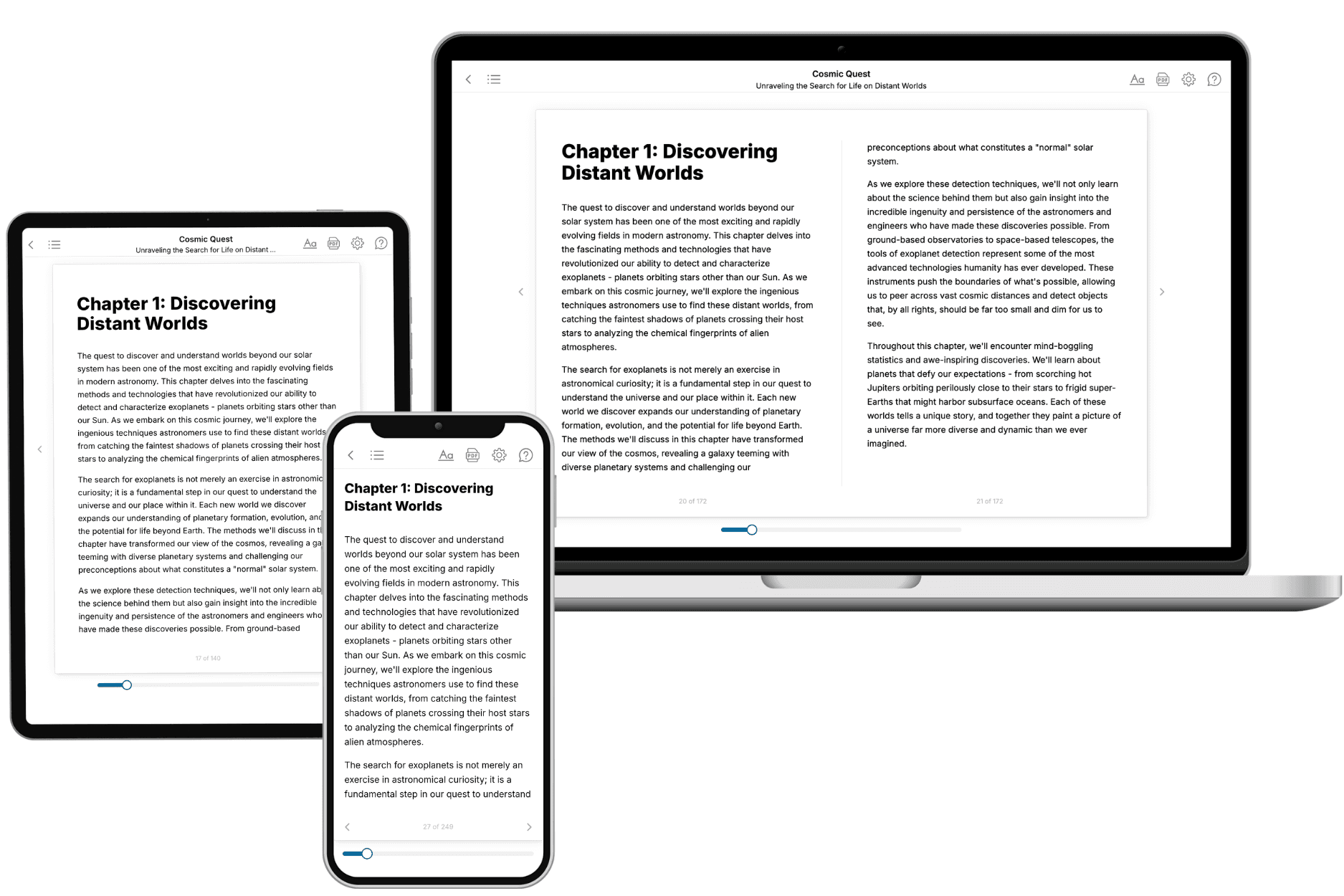
Your book is ready in 10 minutes. Read it online, download as EPUB or PDF, or send to Kindle.

Frequently asked questions
- What is TailoredRead?
TailoredRead creates complete, full-length nonfiction ebooks, written specifically for you. Tell us what you want to learn and why, and TailoredRead writes you a complete ebook on it, with charts, tables, and diagrams throughout. Read it online, on Kindle, or on any e-reader, or download it as a PDF or EPUB. Every book is written fresh the day you order it.
- How is the book tailored to me?
Before anything is written, you answer a few short questions about your goals, your background, and the topics you care about. Your book is then planned around your answers: written at your level, focused on your goals, and covering the topics you chose, instead of the one-size-fits-all book a store sells everyone.
- Will it read like generic AI content?
No. Your book isn't a chat transcript: it's planned chapter by chapter before a single word is written, told in a clear book voice, and explains ideas visually with charts, tables, and diagrams. After writing, every book goes through an editorial pass that polishes chapters so the book reads consistent from start to finish. Judge for yourself: browse thousands of sample books on our Explore Books page.
- How accurate is the content?
Our AI first checks whether your subject needs live research. Niche and fast-moving subjects are researched before writing, and the book plan and chapters are grounded in what it finds. After writing, every book goes through a quality pass that checks its facts and consistency, and researched books list their sources in a Notes section at the back.
- How long is the book?
You choose the length: Comprehensive (250-300 pages), Detailed (150-200 pages), Essential (70-100 pages), or Short (30-50 pages).
- Does the book include visuals?
Yes. Every book includes charts, tables, and diagrams: timelines, checklists, step-by-step guides, decision trees, comparison tables, matrices, and bar charts. A typical book includes dozens of these visual elements.
- Can I read it on Kindle? What formats can I download?
Yes. Every book can be read in our online reader or downloaded as a PDF or EPUB. The EPUB can be opened with Kindle, Apple Books, Kobo, and any e-reader. The Commercial and Author licenses also include an editable Word (DOCX) and Markdown download.
- How much does it cost?
About the price of a regular ebook. The exact price depends on your book's length and complexity, from $2 for the shortest books to $35 for the most comprehensive, and it's shown when you review your book, before you commit to anything. Each book is a one-time purchase, yours to keep, no subscription. Licenses that let you share, teach, or publish your book range from $35.99 to $49.99.
- Can I preview the book before purchasing?
Before you pay, you'll see what your book will cover: the title, a detailed description, the estimated length, and the complete chapter-by-chapter table of contents, so you know what you're getting before you decide. The full text itself is written after you purchase.
- How long does it take to create a book?
About 10 minutes. You can start reading the opening chapters while the rest is still being written.