Chemistry Mastery
A Student's Guide to Acing Exams and Excelling in the Lab
Embark on a transformative journey through the world of chemistry with "Chemistry Mastery: A Student's Guide to Acing Exams and Excelling in the Lab." This comprehensive guide is tailored specifically for undergraduate students looking to build a rock-solid foundation in chemistry and excel in their coursework.
315 pages15 chaptersSep 18, 2024ChemistryCreated by Deanna
About this book
From the basics of atomic structure to the intricacies of organic nomenclature, this book covers a wide range of essential topics with clarity and depth. Each chapter breaks down complex concepts into easily digestible segments, making even the most challenging aspects of chemistry accessible to beginners. Packed with practical examples, problem-solving strategies, and tips for succeeding in laboratory experiments, "Chemistry Mastery" goes beyond mere theory. It equips you with the tools and confidence needed to tackle exams, understand chemical reactions, and apply your knowledge in real-world scenarios. Whether you're struggling with balancing equations, grappling with molecular shapes, or trying to understand reaction mechanisms, this book has you covered. With its engaging, conversational tone and focus on visual learning, "Chemistry Mastery" transforms chemistry from a daunting subject into an exciting journey of discovery. By the time you finish this book, you'll not only be prepared to ace your exams but also possess a deep, intuitive understanding of the chemical world around you. Get ready to unlock your potential and become a true master of chemistry!
Table of contents
- IntroductionThe Importance of Chemistry in Our World, Overview of the Book, How to Use This Book Effectively, Strategies for Success in ChemistryRead below
- Chapter 1: Atomic Structure and the Periodic TableComponents of an Atom, Atomic Orbitals and Electron Configuration, Valence Electrons and Their Significance, Organization of the Periodic Table, Periodic Trends and Their Implications
- Chapter 2: Chemical Bonding and Molecular StructureCovalent Bonding: Sharing Electrons, Ionic Bonding: Electron Transfer, Lewis Structures and Octet Rule, VSEPR Theory and Molecular Geometry, Molecular Polarity and Intermolecular Forces
- Chapter 3: Stoichiometry: The Language of Chemical ReactionsThe Mole Concept and Avogadro's Number, Balancing Chemical Equations, Limiting Reagents and Percent Yield, Empirical and Molecular Formulas, Solution Stoichiometry and Concentrations
- Chapter 4: Gases and Their BehaviorProperties of Gases, The Ideal Gas Law, Other Gas Laws: Boyle's, Charles', and Gay-Lussac's, Kinetic Molecular Theory, Real Gases and Deviations from Ideal Behavior
- Chapter 5: Thermochemistry: Energy in Chemical SystemsTypes of Energy and Their Interconversions, Enthalpy and Heat of Reaction, Calorimetry and Heat Capacity, Hess's Law and Enthalpy Calculations, Bond Energies and Enthalpy Estimation
- Chapter 6: Chemical Kinetics: Rates and Mechanisms of ReactionsReaction Rates and Rate Laws, Factors Affecting Reaction Rates, Reaction Mechanisms and Elementary Steps, Rate-Determining Step, Catalysis and Its Applications
- Chapter 7: Chemical Equilibrium: Balancing Act of ReactionsThe Concept of Chemical Equilibrium, Equilibrium Constants and Their Significance, Le Chatelier's Principle, Equilibrium Calculations, Solubility Equilibria and Precipitation Reactions
- Chapter 8: Acids and Bases: Proton Donors and AcceptorsTheories of Acids and Bases, The pH Scale and pOH, Strong vs. Weak Acids and Bases, Buffer Solutions and Their Importance, Acid-Base Titrations and Indicators
- Chapter 9: Redox Reactions and ElectrochemistryOxidation and Reduction Concepts, Balancing Redox Equations, Electrochemical Cells and Cell Potentials, Electrolysis and Faraday's Laws, Applications of Redox Reactions in Daily Life
- Chapter 10: Introduction to Organic ChemistryThe Unique Chemistry of Carbon, Organic Nomenclature: Naming Organic Compounds, Isomerism in Organic Compounds, Functional Groups and Their Properties, Basic Organic Reactions and Mechanisms
- Chapter 11: Advanced Molecular Structure and BondingHybridization of Atomic Orbitals, Molecular Orbital Theory, Resonance Structures and Their Significance, Aromaticity and Hückel's Rule, Introduction to Stereochemistry
- Chapter 12: Analytical Techniques in ChemistryBasics of Spectroscopy, UV-Visible Spectroscopy, Infrared (IR) Spectroscopy, Nuclear Magnetic Resonance (NMR) Spectroscopy, Mass Spectrometry
- Chapter 13: Essential Laboratory TechniquesLaboratory Safety and Best Practices, Titration Techniques and Calculations, Chromatography Methods, Distillation and Extraction Techniques, Spectroscopic Analysis in the Lab
- Chapter 14: Problem-Solving Strategies in ChemistryDimensional Analysis and Unit Conversions, Estimation Techniques and Order of Magnitude, Graphical Analysis of Chemical Data, Error Analysis and Significant Figures, Step-by-Step Approach to Solving Complex Problems
- Chapter 15: Chemistry in the Real WorldEnvironmental Chemistry and Sustainability, Materials Science and Nanotechnology, Food Chemistry and Nutrition, Chemistry of Energy Production and Storage, Future Frontiers in Chemistry Research
- ConclusionKey Takeaways from the Book, Suggestions for Further Learning, Chemistry in Your Future Career
- Glossary of Key Terms
- AppendixDetailed Periodic Table, Common Constants and Formulas, Additional Practice Problems
- Frequently Asked Questions
Introduction
Welcome to "Chemistry Mastery: A Student's Guide to Acing Exams and Excelling in the Lab." This comprehensive guide is designed to empower undergraduate students with limited chemistry knowledge to build a strong foundation in the subject, excel in their coursework, and develop practical problem-solving skills for laboratory work. As you embark on this journey through the fascinating world of chemistry, you'll discover that this science is not just about memorizing facts and formulas, but about understanding the fundamental principles that govern the behavior of matter and energy in our universe.
Chemistry is often called the central science because it bridges other natural sciences like physics, biology, and geology. It plays a crucial role in our daily lives, from the food we eat and the air we breathe to the materials we use and the medicines that keep us healthy. By mastering the concepts presented in this book, you'll gain a deeper appreciation for the world around you and develop critical thinking skills that will serve you well in any future career path, whether in science or beyond.
Throughout this book, we'll break down complex topics into easily digestible segments, provide clear explanations, and offer practical examples to illustrate key concepts. We'll also equip you with problem-solving strategies, study tips, and insights into laboratory techniques that will help you succeed in your chemistry courses and beyond. Whether you're struggling with balancing equations, grappling with molecular shapes, or trying to understand reaction mechanisms, this book has you covered.
As we begin this journey together, remember that learning chemistry is a process. It requires patience, practice, and persistence. But with the right approach and mindset, you'll find that chemistry can be not only manageable but also deeply rewarding and even exciting. So, let's dive in and start exploring the fundamental building blocks of our universe!
The Importance of Chemistry in Our World
Chemistry is often referred to as the "central science" because it serves as a bridge between various scientific disciplines and plays a crucial role in our understanding of the natural world. At its core, chemistry is the study of matter - its properties, structure, composition, and the changes it undergoes. This fundamental science touches every aspect of our lives, often in ways we might not immediately recognize. From the air we breathe to the food we eat, from the clothes we wear to the medicines that heal us, chemistry is omnipresent and indispensable.
One of the most significant contributions of chemistry to our world is in the field of materials science. The development of new materials has revolutionized industries and transformed our daily lives. For instance, the discovery and synthesis of polymers have led to the creation of plastics, which are now ubiquitous in our modern world. These materials have properties that make them ideal for a wide range of applications, from packaging and construction to medical devices and electronics. The ongoing research in materials chemistry continues to push the boundaries of what's possible, with innovations like self-healing materials, smart fabrics, and advanced composites shaping the future of technology[1].
In the realm of environmental science, chemistry plays a pivotal role in understanding and addressing some of the most pressing challenges of our time. Climate change, pollution, and resource depletion are all issues that require a deep understanding of chemical processes. Chemists are at the forefront of developing cleaner energy sources, more efficient recycling methods, and strategies for reducing harmful emissions. For example, the development of catalytic converters, which use chemical reactions to reduce harmful emissions from vehicles, has significantly improved air quality in urban areas. Similarly, advancements in green chemistry are leading to more sustainable industrial processes and environmentally friendly products[2].
The field of medicine and pharmaceuticals is another area where chemistry has made profound contributions. The discovery and synthesis of new drugs have revolutionized healthcare, allowing us to treat diseases that were once considered incurable. From antibiotics that fight bacterial infections to targeted therapies for cancer, chemistry is at the heart of modern medicine. Moreover, the development of diagnostic tools like MRI and PET scans, which rely on principles of physical chemistry, has greatly enhanced our ability to detect and diagnose diseases at early stages. As we continue to unravel the complexities of human biology at the molecular level, chemistry will undoubtedly play an even more crucial role in advancing medical treatments and improving human health[3].
In the food industry, chemistry is essential for understanding the composition of foods, developing new food products, and ensuring food safety. Food chemists analyze the nutritional content of foods, develop methods for preserving freshness, and create new flavors and textures. They also play a crucial role in quality control, developing tests to detect contaminants and ensure that food products meet safety standards. The field of molecular gastronomy, which applies scientific principles to culinary practice, is an exciting example of how chemistry can even transform the way we experience food[4].
Chemistry also underpins many of the technologies we rely on in our daily lives. The semiconductors that power our electronic devices, the batteries that store energy for our smartphones and electric vehicles, and the LED lights that illuminate our homes all rely on principles of chemistry. As we look to the future, chemistry will be crucial in developing technologies to address global challenges. For instance, the development of more efficient solar cells and advanced energy storage systems will be key to transitioning to renewable energy sources. Similarly, innovations in water purification technologies will be essential for addressing global water scarcity[5].
Beyond its practical applications, chemistry provides us with a deeper understanding of the world around us. It helps us appreciate the complexity and beauty of nature at the molecular level. From the intricate structures of snowflakes to the vibrant colors of a sunset, chemistry offers explanations for many of nature's wonders. This understanding not only satisfies our innate curiosity but also inspires new discoveries and innovations. As you delve deeper into your study of chemistry, you'll find that it offers a unique lens through which to view and interpret the world.
In conclusion, the importance of chemistry in our world cannot be overstated. It is a science that touches every aspect of our lives, from the air we breathe to the technologies we use. As we face global challenges like climate change, resource depletion, and emerging diseases, the insights and innovations provided by chemistry will be more crucial than ever. By studying chemistry, you're not just learning about atoms and molecules; you're gaining the knowledge and skills to make a real difference in the world. Whether you're interested in developing new materials, creating life-saving drugs, or finding solutions to environmental problems, a strong foundation in chemistry will be invaluable. As you progress through this book, keep in mind the broader context of how chemistry shapes our world - it will make your learning journey all the more meaningful and exciting.
Overview of the Book
"Chemistry Mastery: A Student's Guide to Acing Exams and Excelling in the Lab" is designed to provide a comprehensive and accessible introduction to fundamental chemistry concepts. The book is structured to build your knowledge progressively, starting with the basic building blocks of matter and moving on to more complex topics. Each chapter is carefully crafted to ensure that you not only understand the concepts but also learn how to apply them in problem-solving and laboratory settings. Let's take a closer look at what you can expect from each section of the book.
We begin our journey with Chapter 1: Atomic Structure and the Periodic Table. This foundational chapter introduces you to the basic components of atoms, the arrangement of electrons in atomic orbitals, and the organization of elements in the periodic table. Understanding these concepts is crucial as they form the basis for much of what follows in chemistry. You'll learn about periodic trends and how they can be used to predict the properties and behavior of elements. This knowledge will be invaluable as you progress to more advanced topics[6].
Chapter 2 delves into Chemical Bonding and Molecular Structure. Here, you'll explore how atoms combine to form molecules and compounds. You'll learn about different types of chemical bonds, including covalent and ionic bonds, and how to represent molecules using Lewis structures. The chapter also covers VSEPR theory, which allows you to predict the three-dimensional shapes of molecules. Understanding molecular geometry is crucial for predicting a compound's properties and reactivity. By the end of this chapter, you'll be able to draw molecular structures and understand how they relate to a compound's physical and chemical properties[7].
Chapter 3 focuses on Stoichiometry: The Language of Chemical Reactions. This chapter is essential for quantitative analysis in chemistry. You'll learn about the mole concept, how to balance chemical equations, and how to perform calculations involving chemical reactions. Topics like limiting reagents, percent yield, and solution stoichiometry are covered in depth. These skills are crucial for success in both theoretical and practical chemistry, forming the basis for much of the quantitative work you'll do in the laboratory[8].
In Chapter 4, we explore Gases and Their Behavior. You'll learn about the properties of gases, the ideal gas law, and other gas laws that describe the relationships between pressure, volume, temperature, and amount of gas. The chapter also covers kinetic molecular theory, which explains gas behavior at the molecular level. Understanding gas laws is crucial for many areas of chemistry and has practical applications in fields like meteorology and engineering[9].
Chapter 5 introduces Thermochemistry: Energy in Chemical Systems. This chapter explores the energy changes that accompany chemical reactions. You'll learn about different types of energy, enthalpy, and how to use calorimetry to measure heat flow in chemical processes. The chapter also covers Hess's Law and how to use bond energies to estimate enthalpy changes. These concepts are fundamental to understanding why some reactions occur spontaneously while others do not, and they have important applications in fields like materials science and chemical engineering[10].
Chapter 6 covers Chemical Kinetics: Rates and Mechanisms of Reactions. Here, you'll learn about factors that affect reaction rates, how to determine rate laws, and the concept of reaction mechanisms. Understanding kinetics is crucial for controlling chemical processes and has important applications in areas like drug delivery and industrial chemistry. By the end of this chapter, you'll be able to analyze and predict the speed of chemical reactions under various conditions[11].
In Chapter 7, we explore Chemical Equilibrium: Balancing Act of Reactions. This chapter introduces the concept of dynamic equilibrium in chemical reactions. You'll learn about equilibrium constants, Le Chatelier's principle, and how to perform equilibrium calculations. Understanding equilibrium is essential for predicting the extent of chemical reactions and has important applications in areas like environmental chemistry and industrial processes[12].
Chapter 8 focuses on Acids and Bases: Proton Donors and Acceptors. This chapter covers various theories of acids and bases, the pH scale, and the concept of buffers. You'll learn how to perform calculations involving acid-base equilibria and titrations. Understanding acid-base chemistry is crucial for many biological processes and has important applications in areas like environmental science and medicine[13].
Chapter 9 explores Redox Reactions and Electrochemistry. You'll learn about oxidation and reduction processes, how to balance redox equations, and the principles of electrochemical cells. This chapter also covers electrolysis and its applications. Understanding redox reactions is essential for many areas of chemistry and has important applications in fields like battery technology and corrosion prevention[14].
Chapter 10 provides an Introduction to Organic Chemistry. This chapter covers the basics of carbon chemistry, including organic nomenclature, isomerism, and functional groups. You'll also learn about basic organic reactions and mechanisms. This introduction to organic chemistry will prepare you for more advanced study in this area, which is crucial for understanding biological processes and has numerous applications in the pharmaceutical and materials industries[15].
The book concludes with chapters on Advanced Molecular Structure and Bonding, Analytical Techniques in Chemistry, Essential Laboratory Techniques, Problem-Solving Strategies in Chemistry, and Chemistry in the Real World. These final chapters will deepen your understanding of chemical concepts, introduce you to important analytical and laboratory techniques, and help you develop problem-solving skills that are essential for success in chemistry. The book also includes a comprehensive glossary, an appendix with useful reference information, and a FAQ section to address common questions and misconceptions.
By working through this book, you'll gain a solid foundation in chemistry that will serve you well in your undergraduate studies and beyond. Remember, chemistry is a subject that rewards curiosity and practice. Don't hesitate to explore topics that interest you in more depth, and always strive to connect what you're learning to real-world applications. With dedication and the right approach, you'll find that chemistry can be not only manageable but also deeply fascinating and rewarding.
How to Use This Book Effectively
To get the most out of "Chemistry Mastery: A Student's Guide to Acing Exams and Excelling in the Lab," it's important to approach your study with a strategic and active mindset. This book is designed not just as a source of information, but as a comprehensive learning tool to help you develop a deep understanding of chemistry concepts and build practical problem-solving skills. Here are some tips and strategies to help you use this book effectively and maximize your learning:
First and foremost, adopt an active reading approach. Don't simply skim through the text or passively highlight passages. Instead, engage with the material actively. As you read each chapter, try to summarize the main points in your own words. This process, known as elaborative rehearsal, helps to transfer information from short-term to long-term memory. It also helps you identify areas where your understanding might be lacking. Consider using the Cornell note-taking system or creating mind maps to organize the information visually. These techniques can help you see connections between different concepts and create a more comprehensive understanding of the material[16].
Take advantage of the problem-solving examples provided throughout the book. These examples are designed to illustrate how to apply theoretical concepts to practical problems. Don't just read through these examples passively. Instead, try to solve the problem on your own before looking at the solution. This approach, known as productive failure, can lead to deeper learning and better retention of problem-solving strategies. Even if you don't arrive at the correct answer, the process of grappling with the problem will enhance your understanding and prepare you for similar challenges in the future[17].
Practice regularly with the end-of-chapter problems and additional exercises provided in the book. Consistent practice is key to mastering chemistry concepts and developing problem-solving skills. Try to work on problems every day, even if it's just for a short period. This spaced practice approach is more effective for long-term retention than cramming before exams. When working on problems, resist the urge to look up the answers immediately. Instead, make a genuine effort to solve the problem on your own. If you get stuck, try to identify the specific concept or step that's giving you trouble before seeking help[18].
Make use of the multimedia resources associated with the book. Many chemistry concepts are highly visual, and seeing them illustrated through animations, videos, or interactive simulations can greatly enhance your understanding. If your book comes with access to online resources, make sure to explore these thoroughly. They can provide alternative explanations, additional practice problems, and visual aids that complement the text. Visual learning can be particularly effective for understanding complex molecular structures, reaction mechanisms, and laboratory techniques[19].
Connect the concepts you're learning to real-world applications. The "Chemistry in the Real World" chapter and various examples throughout the book are designed to help you see how chemistry principles apply in everyday life and various industries. Try to think of additional examples from your own experiences or current events. This approach not only makes the material more engaging but also helps you develop a deeper, more contextual understanding of chemistry concepts. Consider keeping a "chemistry journal" where you note interesting applications or connections you discover[20].
Don't hesitate to seek clarification when you encounter difficult concepts. While the book strives to explain topics clearly, everyone learns differently, and you may sometimes need additional explanations. Consult your instructor, attend office hours, or seek help from tutoring services if available. Online resources like Khan Academy or chemistry forums can also be valuable sources of alternative explanations. Remember, asking questions is a sign of engagement, not weakness, and can lead to deeper understanding[21].
Regularly review and summarize what you've learned. At the end of each chapter, take some time to summarize the main points, key equations, and important concepts. This review process helps reinforce your learning and identifies areas that may need further study. Consider creating summary sheets or flashcards for key terms, formulas, and concepts. These can be valuable tools for quick review before exams. The process of creating these summaries is itself a valuable learning activity[22].
Pay special attention to the laboratory techniques and safety information provided in the book. Chemistry is an experimental science, and understanding proper lab procedures is crucial for success in your coursework and future career. Take time to familiarize yourself with the equipment and techniques described in the book before you encounter them in the lab. This preparation will help you work more confidently and safely in practical sessions[23].
Finally, be patient with yourself and maintain a growth mindset. Learning chemistry is a process that takes time and effort. You may encounter concepts that are challenging at first, but with persistence and practice, you can master them. Remember that struggle is a normal part of the learning process and can lead to deeper understanding. Celebrate your progress and don't be discouraged by setbacks. Each challenge you overcome is building your skills and preparing you for future success[24].
By following these strategies and actively engaging with the material in "Chemistry Mastery," you'll be well on your way to developing a strong foundation in chemistry. Remember, the goal is not just to memorize facts and formulas, but to develop a deep understanding of chemical principles and the ability to apply them in various contexts. With dedication and the right approach, you'll find that chemistry can be not only manageable but also deeply rewarding and exciting. Good luck on your chemistry journey!
Strategies for Success in Chemistry
Succeeding in chemistry requires more than just memorizing facts and formulas. It demands a strategic approach to learning, problem-solving skills, and the ability to apply theoretical concepts to practical situations. Here are some key strategies that will help you excel in your chemistry studies and beyond:
Develop a strong foundation in mathematics. Chemistry often involves complex calculations, and a solid grasp of algebra, logarithms, and basic calculus can significantly enhance your problem-solving abilities. If you find your math skills need improvement, consider reviewing these topics or seeking additional resources. Many universities offer math support services that can be invaluable for chemistry students. Remember, mathematics is the language of science, and fluency in this language will make your chemistry journey much smoother[25].
Master the art of dimensional analysis. This problem-solving technique, also known as the factor-label method or unit-factor method, is a powerful tool in chemistry. It allows you to convert between units and solve complex problems by setting up a series of conversion factors. Practice using dimensional analysis not just for simple unit conversions, but also for more complex stoichiometry and gas law problems. This skill will serve you well throughout your chemistry studies and in many other scientific disciplines[26].
Develop effective problem-solving strategies. When approaching chemistry problems, use a systematic method. Start by clearly identifying the given information and what you need to find. Then, determine which concepts or equations are relevant to the problem. Plan your solution before you start calculating, and always check your answer for reasonableness. Remember to include units in your calculations and final answer. This structured approach not only helps you solve problems more efficiently but also prepares you for the complex, multi-step problems you'll encounter in advanced chemistry courses and real-world applications[27].
Visualize molecular-level processes. Many chemistry concepts involve processes occurring at the molecular level, which can be challenging to grasp. Develop the habit of drawing diagrams or sketches to represent these processes. For example, when studying chemical reactions, try to visualize and draw the rearrangement of atoms. When learning about intermolecular forces, sketch the molecules and their interactions. This visual approach can help you understand and remember complex concepts more effectively. Many textbooks and online resources provide molecular visualizations and simulations that can further enhance your understanding[28].
Practice explaining concepts to others. Teaching or explaining a concept to someone else is one of the most effective ways to solidify your own understanding. This technique, known as the "protégé effect," can help you identify gaps in your knowledge and deepen your comprehension. Consider forming a study group where you can take turns explaining different topics to each other. If you don't have a study group, try explaining concepts out loud to yourself or writing explanations as if you were teaching someone else. This practice not only reinforces your learning but also improves your ability to communicate scientific ideas clearly - a valuable skill in any scientific career[29].
Embrace laboratory work as a learning opportunity. Chemistry is an experimental science, and laboratory sessions are crucial for developing practical skills and deepening your understanding of theoretical concepts. Prepare thoroughly for each lab session by reading the procedure in advance and understanding the underlying principles. During the lab, focus on understanding why you're performing each step, not just following instructions. Take careful notes and pay attention to unexpected results - they often lead to the most valuable learning experiences. After each lab, reflect on how the practical work relates to the theoretical concepts you've learned. This integration of theory and practice is key to developing a comprehensive understanding of chemistry[30].
Stay current with chemistry news and applications. Chemistry is a dynamic field with new discoveries and applications emerging constantly. Make a habit of reading scientific news or following reputable science blogs. This not only keeps you informed about the latest developments but also helps you see the relevance of what you're learning to real-world issues. It can be particularly motivating to see how chemical principles are applied in fields like materials science, environmental protection, or drug development. Consider subscribing to publications like Chemical & Engineering News or following chemistry-focused social media accounts for regular updates[31].
Develop strong time management and study habits. Chemistry courses often cover a large amount of material, and it's easy to fall behind if you're not organized. Create a study schedule that allows for regular, spaced practice rather than cramming before exams. Break large tasks into smaller, manageable chunks. For example, instead of trying to review an entire chapter in one sitting, break it down into sections and tackle them over several days. Use techniques like the Pomodoro method (25-minute focused work sessions followed by short breaks) to maintain concentration during study sessions. Remember to include time for review and practice problems in your schedule[32].
Cultivate a growth mindset. Remember that struggling with difficult concepts is a normal and necessary part of the learning process. Instead of getting discouraged when you encounter challenges, view them as opportunities to grow and improve your understanding. Celebrate your progress and learn from your mistakes. If you perform poorly on an assignment or exam, use it as feedback to identify areas that need more work, rather than seeing it as a failure. This resilient attitude will serve you well not just in your chemistry studies, but in all areas of life[33].
Seek help when you need it. Don't hesitate to ask questions or seek clarification when you're struggling with a concept. Take advantage of your instructor's office hours, tutoring services, or online resources. Many universities also offer peer-led team learning or supplemental instruction programs for chemistry courses, which can be excellent resources. Remember, seeking help is a sign of commitment to your learning, not a weakness. The ability to recognize when you need assistance and to effectively use available resources is a valuable skill in itself[34].
By implementing these strategies, you'll be well-equipped to tackle the challenges of your chemistry courses and develop a deep, lasting understanding of chemical principles. Remember, success in chemistry, as in any field, comes from consistent effort, strategic learning, and a willingness to embrace challenges. With persistence and the right approach, you can not only succeed in your chemistry studies but also develop valuable skills that will serve you well in any future scientific endeavor. Chemistry is a fascinating field that offers insights into the fundamental workings of our world - approach it with curiosity and enthusiasm, and you'll find it to be a rewarding and exciting journey.
Notes
Introduction
- 1. G. M. Whitesides and B. Grzybowski, "Self-assembly at all scales," Science, 2002
- 2. P. T. Anastas and J. C. Warner, Green chemistry, Oxford University Press, 1998
- 3. J. Drews, "Drug discovery," Science, 2000
- 4. H. This, Molecular gastronomy, Columbia University Press, 2006
- 5. M. Grätzel, "Photoelectrochemical cells," Nature, 2001
- 6. E. R. Scerri, The periodic table, Oxford University Press, 2007
- 7. R. J. Gillespie and P. L. Popelier, Chemical bonding and molecular geometry, Oxford University Press, 2001
- 8. S. S. Zumdahl and D. J. DeCoste, Chemical principles, Cengage Learning, 2012
- 9. P. Atkins and J. de Paula, Atkins' Physical Chemistry, Oxford University Press, 2014
- 10. R. Chang and J. Overby, General chemistry, McGraw-Hill, 2011
- 11. K. J. Laidler, Chemical Kinetics, Harper & Row, 1987
- 12. M. S. Silberberg and P. Amateis, Chemistry: The molecular nature of matter and change, McGraw-Hill Education, 2015
- 13. T. L. Brown and others, Chemistry: The central science, Pearson, 2017
- 14. A. J. Bard and L. R. Faulkner, Electrochemical methods, John Wiley & Sons, 2001
- 15. J. Clayden and others, Organic Chemistry, Oxford University Press, 2012
- 16. J. Dunlosky and others, "Improving students' learning with effective learning techniques," Psychological Science in the Public Interest, 2013
- 17. M. Kapur, "Productive failure," Cognition and instruction, 2008
- 18. D. Rohrer and H. Pashler, "Recent research on human learning challenges conventional instructional strategies," Educational Researcher, 2010
- 19. R. E. Mayer, Multimedia learning (2nd ed.), Cambridge University Press, 2009
- 20. J. Osborne and others, "Attitudes towards science," International journal of science education, 2003
- 21. C. Chin and J. Osborne, "Students' questions," Studies in science education, 2008
- 22. J. D. Karpicke and J. R. Blunt, "Retrieval practice produces more learning than elaborative studying with concept mapping," Science, 2011
- 23. National Research Council, Prudent practices in the laboratory, National Academies Press, 2011
- 24. C. S. Dweck, Mindset: The new psychology of success, Random House Digital, Inc, 2008
- 25. M. Potgieter and others, "Transfer of algebraic and graphical thinking between mathematics and chemistry," Journal of Research in Science Teaching, 2008
- 26. R. DeLorenzo, "Dimensional analysis," Journal of Nursing Education, 1994
- 27. G. M. Bodner and J. D. Herron, "Problem-solving in chemistry," Chemical education: Towards research-based practice (). Springer, Dordrecht, 2002
- 28. H. K. Wu and others, "Promoting understanding of chemical representations," Journal of research in science teaching, 2001
- 29. J. F. Nestojko and others, "Expecting to teach enhances learning and organization of knowledge in free recall of text passages," Memory & Cognition, 2014
- 30. A. Hofstein and V. N. Lunetta, "The laboratory in science education," Science education, 2004
- 31. I. Eilks and A. Hofstein, Relevant chemistry education, Sense Publishers, 2015
- 32. M. Credé and N. R. Kuncel, "Study habits, skills, and attitudes," Perspectives on psychological science, 2008
- 33. C. S. Dweck, Mindset: The new psychology of success, Random House Digital, Inc, 2008
- 34. L. T. Tien and others, "Implementation of a peer-led team learning instructional approach in an undergraduate organic chemistry course," Journal of research in science teaching, 2002
This is the end of the free sample. The full book has 15 chapters.
Want this book written for you?
Tell us your goals and background, and get your own version of this book, tailored by AI to you.


Benefits of AI-tailored books
- Read one book, not ten:
- all the Chemistry knowledge you need, gathered into a single book.
- Save days of learning:
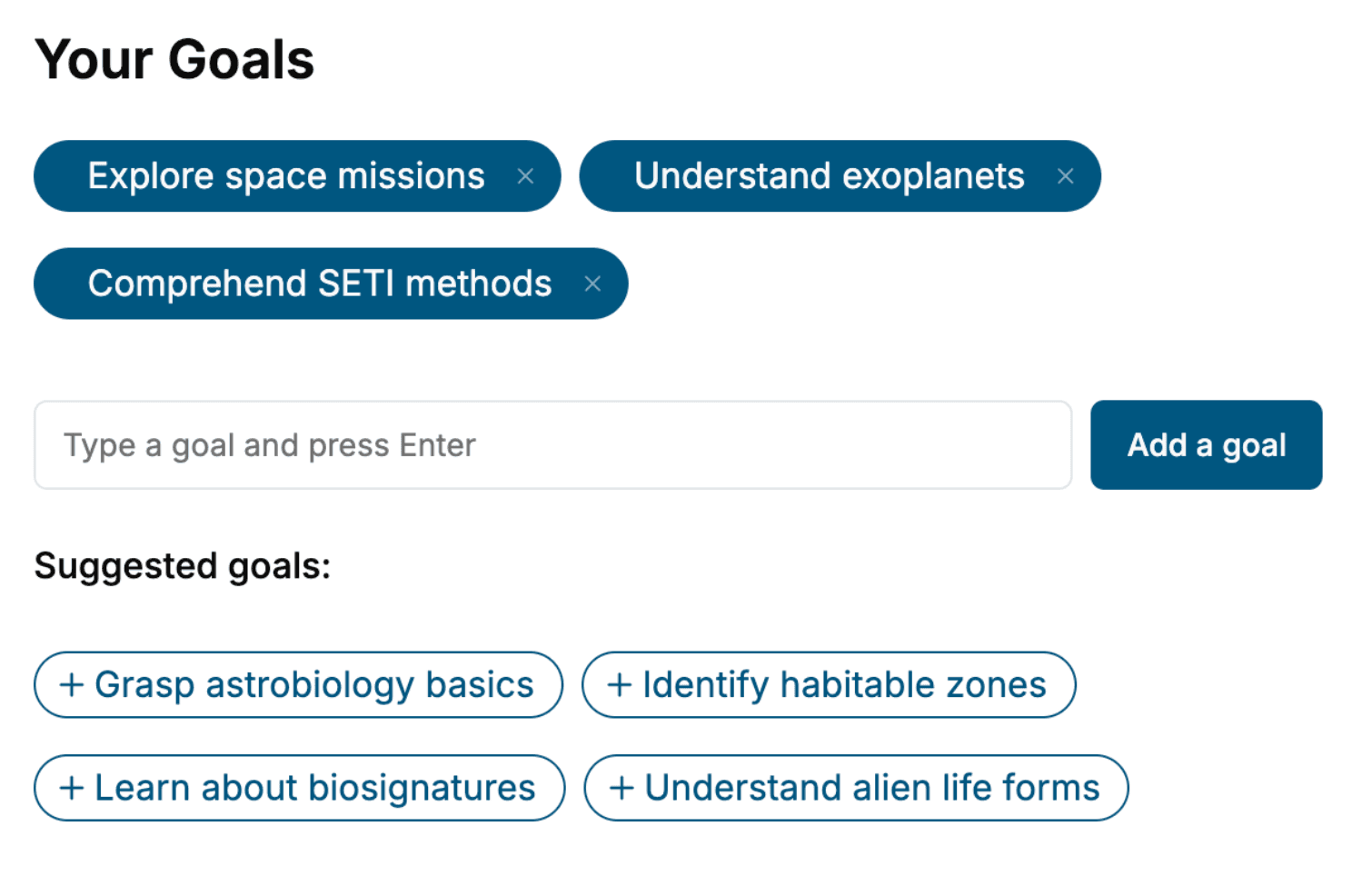
- tell us your goals, choose your topics, and the whole book is built around them.
- Learn effortlessly:
- Chemistry book written for your specific background and expertise.
- Understand at a glance:
- includes charts, tables, timelines, checklists, decision trees, and more.
- Stay current:
- written the day you order it, not years ago.
- Trust what you read:
- every book is checked for accuracy, with real research when your subject needs it.
Create your unique book in 3 steps
- 1. Select your focus
Select the focus of your Chemistry book and share your background
- 2. Personalize your book
Specify your goals and choose sub-topics to include
- 3. Get your tailored book
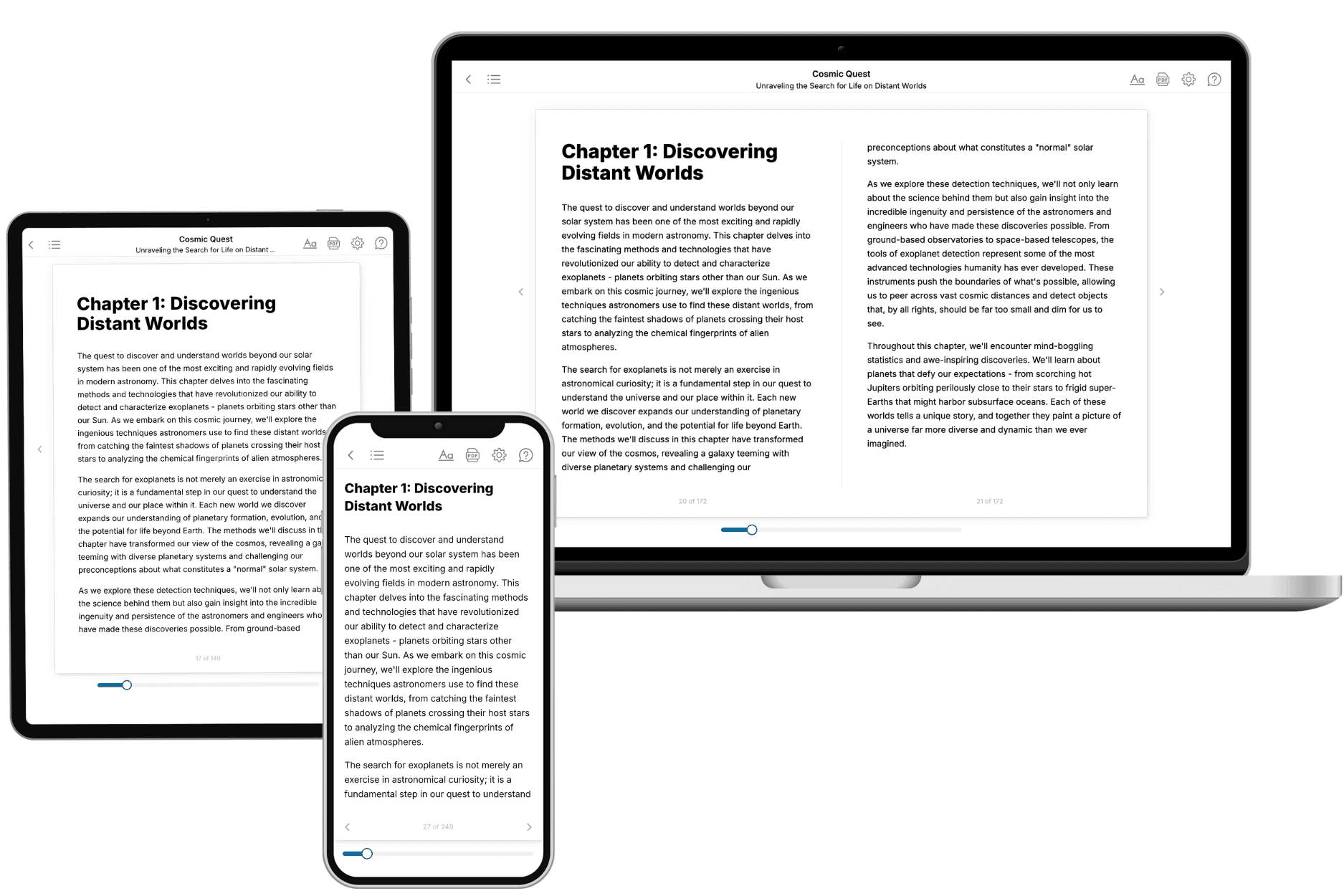
Your book is ready in 10 minutes. Read it online, download as EPUB or PDF, or send to Kindle.

Frequently asked questions
- What is TailoredRead?
TailoredRead creates complete, full-length nonfiction ebooks, written specifically for you. Tell us what you want to learn and why, and TailoredRead writes you a complete ebook on it, with charts, tables, and diagrams throughout. Read it online, on Kindle, or on any e-reader, or download it as a PDF or EPUB. Every book is written fresh the day you order it.
- How is the book tailored to me?
Before anything is written, you answer a few short questions about your goals, your background, and the topics you care about. Your book is then planned around your answers: written at your level, focused on your goals, and covering the topics you chose, instead of the one-size-fits-all book a store sells everyone.
- Will it read like generic AI content?
No. Your book isn't a chat transcript: it's planned chapter by chapter before a single word is written, told in a clear book voice, and explains ideas visually with charts, tables, and diagrams. After writing, every book goes through an editorial pass that polishes chapters so the book reads consistent from start to finish. Judge for yourself: browse thousands of sample books on our Explore Books page.
- How accurate is the content?
Our AI first checks whether your subject needs live research. Niche and fast-moving subjects are researched before writing, and the book plan and chapters are grounded in what it finds. After writing, every book goes through a quality pass that checks its facts and consistency, and researched books list their sources in a Notes section at the back.
- How long is the book?
You choose the length: Comprehensive (250-300 pages), Detailed (150-200 pages), Essential (70-100 pages), or Short (30-50 pages).
- Does the book include visuals?
Yes. Every book includes charts, tables, and diagrams: timelines, checklists, step-by-step guides, decision trees, comparison tables, matrices, and bar charts. A typical book includes dozens of these visual elements.
- Can I read it on Kindle? What formats can I download?
Yes. Every book can be read in our online reader or downloaded as a PDF or EPUB. The EPUB can be opened with Kindle, Apple Books, Kobo, and any e-reader. The Commercial and Author licenses also include an editable Word (DOCX) and Markdown download.
- How much does it cost?
About the price of a regular ebook. The exact price depends on your book's length and complexity, from $2 for the shortest books to $35 for the most comprehensive, and it's shown when you review your book, before you commit to anything. Each book is a one-time purchase, yours to keep, no subscription. Licenses that let you share, teach, or publish your book range from $35.99 to $49.99.
- Can I preview the book before purchasing?
Before you pay, you'll see what your book will cover: the title, a detailed description, the estimated length, and the complete chapter-by-chapter table of contents, so you know what you're getting before you decide. The full text itself is written after you purchase.
- How long does it take to create a book?
About 10 minutes. You can start reading the opening chapters while the rest is still being written.