Chickamauga
The Bloody Tide That Turned the Civil War
Many believe the Battle of Gettysburg was the definitive turning point of the American Civil War, but the Battle of Chickamauga tells a different story.
269 pages13 chaptersJan 29, 2025Civil War History
About this book
This often-overlooked engagement in the Western Theater had far-reaching consequences that shaped the course of the conflict. In "Chickamauga: The Bloody Tide That Turned the Civil War," you'll discover the intricate details and profound impact of this crucial battle. Through vivid narratives and expert analysis, you'll gain a deep understanding of the strategies, personalities, and pivotal moments that defined this bloody confrontation. From the initial maneuvering to the aftermath, this book brings the Battle of Chickamauga to life, offering fresh perspectives on its place in Civil War history. You'll explore the decision-making processes of key figures, the experiences of soldiers on both sides, and the battle's lasting effects on the war's progression. By the end, you'll have a newfound appreciation for this significant yet underappreciated chapter in American history.
Table of contents
- IntroductionThe Importance of Chickamauga, Overview of the Battle, Structure of the BookRead below
- Chapter 1: Prelude to BattleThe Civil War in Context, The Western Theater, The Importance of Chattanooga, Union and Confederate Objectives
- Chapter 2: The CommandersUnion Leadership, Confederate Leadership, Command Structures, Key Personalities
- Chapter 3: The Opposing ArmiesUnion Forces, Confederate Forces, Troop Strengths and Compositions, Equipment and Supplies
- Chapter 4: The BattlefieldGeography of the Area, Key Terrain Features, Strategic Points, Impact on Civilian Population
- Chapter 5: Opening MovesThe Union Advance, Confederate Response, Initial Skirmishes, Battle Positions
- Chapter 6: The First Day of BattleMorning Engagements, Afternoon Fighting, Key Actions and Decisions, Nightfall and Assessment
- Chapter 7: The Second Day: Tide TurnsLongstreet's Arrival, The Confederate Breakthrough, Thomas's Stand on Snodgrass Hill, The Union Retreat
- Chapter 8: Tactics and StrategyUnion Strategy, Confederate Strategy, Tactical Innovations, Critical Command Decisions
- Chapter 9: Technology and WeaponryInfantry Weapons, Artillery, Communications and Logistics, Medical Technology
- Chapter 10: The AftermathCasualties and Losses, Immediate Consequences, The Siege of Chattanooga, Leadership Changes
- Chapter 11: Battle AnalysisKey Turning Points, Missed Opportunities, Leadership Assessment, What-If Scenarios
- Chapter 12: Impact on the Civil WarStrategic Implications, Effects on Morale, Political Consequences, Influence on Future Campaigns
- Chapter 13: The Legacy of ChickamaugaBattlefield Preservation, Memorials and Monuments, Historical Interpretations, Lessons Learned
- Conclusion
- Appendix
- Glossary
Introduction
The American Civil War, a defining moment in the nation's history, was shaped by numerous battles and campaigns that collectively determined the course and outcome of the conflict. While many are familiar with the Battle of Gettysburg as a turning point in the war, another crucial engagement often overlooked is the Battle of Chickamauga. This bloody confrontation in the Western Theater had far-reaching consequences that profoundly influenced the trajectory of the Civil War. In this introduction, you will gain an overview of the battle's significance, its key events, and the structure of this book, which aims to provide a comprehensive exploration of this pivotal moment in American history.
The Importance of Chickamauga
The Battle of Chickamauga, fought on September 19-20, 1863, stands as one of the most significant engagements of the American Civil War. Its importance cannot be overstated, as it marked a crucial turning point in the Western Theater and had far-reaching implications for the overall course of the conflict. To truly appreciate the battle's significance, it is essential to understand its context within the broader strategic landscape of the Civil War and its impact on both Union and Confederate objectives.
Chickamauga was the culmination of a months-long campaign by Union forces to capture the vital Confederate stronghold of Chattanooga, Tennessee. Chattanooga's strategic importance lay in its position as a key railroad hub and gateway to the Deep South. Control of this city would provide the Union with a launching pad for future operations into the heart of the Confederacy, potentially splitting the rebel nation in two. The Confederate high command recognized this threat and was determined to prevent the loss of such a crucial position.
The battle itself was a massive engagement, involving over 120,000 soldiers from both sides. It resulted in the second-highest number of casualties in the Civil War, surpassed only by the Battle of Gettysburg. The scale and intensity of the fighting at Chickamauga underscored its importance to both sides and the desperate nature of the struggle for control of the Western Theater. The battle's outcome would have significant ramifications for the morale and strategic positioning of both armies.
One of the most critical aspects of Chickamauga was its role in shaping the careers and reputations of several key military leaders. On the Union side, the steadfast defense of Major General George H. Thomas earned him the nickname "Rock of Chickamauga" and cemented his reputation as one of the North's most reliable commanders. Conversely, the battle marked a low point for Union General William S. Rosecrans, whose confused orders contributed to a near-disastrous rout of the Union army. For the Confederates, General Braxton Bragg's victory at Chickamauga temporarily silenced his critics, while the arrival and performance of General James Longstreet's corps from the Eastern Theater demonstrated the interconnectedness of the war's various fronts.
The Confederate victory at Chickamauga had significant strategic implications. It halted the Union advance into Georgia and forced the Federal army to retreat to Chattanooga, where it would soon find itself besieged. This turn of events necessitated a major Union response, leading to the eventual relief of Chattanooga and setting the stage for Sherman's Atlanta Campaign in 1864. Thus, Chickamauga can be seen as a pivotal moment that influenced the subsequent direction of the war in the Western Theater.
Furthermore, the Battle of Chickamauga highlighted the importance of the Western Theater in the overall Civil War strategy. While much attention is often focused on the Eastern Theater and the clashes between the Army of the Potomac and the Army of Northern Virginia, Chickamauga demonstrated that the war could be won or lost in the West. The battle's outcome forced the Union high command to devote significant resources to stabilize the situation in Tennessee, affecting operations in other theaters.
The battle also showcased tactical innovations and their impact on warfare. The use of railroads for rapid troop deployment, as demonstrated by Longstreet's timely arrival, foreshadowed the increasing importance of logistics and transportation in modern warfare. Additionally, the battle highlighted the evolving nature of Civil War combat, with the deadly effectiveness of rifled muskets and artillery leading to high casualty rates and influencing tactical decisions on both sides.
Chickamauga's importance extends beyond its immediate military consequences. The battle had a profound effect on soldier morale and civilian populations in both the North and South. For the Confederacy, the victory provided a much-needed boost in morale after the twin defeats at Gettysburg and Vicksburg earlier in the year. In the North, the defeat at Chickamauga tempered the optimism generated by those earlier Union victories and underscored the continuing challenges faced in bringing the war to a successful conclusion.
Lastly, the Battle of Chickamauga serves as a poignant reminder of the human cost of the Civil War. The staggering casualties inflicted during the two days of fighting – over 34,000 men killed, wounded, or missing – represent individual stories of sacrifice, bravery, and tragedy. Understanding the importance of Chickamauga means not only grasping its strategic significance but also acknowledging the profound human impact of the battle on soldiers, families, and communities.
As you delve deeper into the pages of this book, the full importance of the Battle of Chickamauga will become increasingly apparent. From its role in shaping military careers to its influence on subsequent campaigns, from its tactical innovations to its human drama, Chickamauga stands as a crucial chapter in the story of the American Civil War. By exploring this battle in detail, you will gain a richer understanding of the complexities and consequences of this pivotal moment in American history.
Overview of the Battle
The Battle of Chickamauga, fought on September 19-20, 1863, was a complex and intense engagement that unfolded over two days of fierce combat. To fully appreciate the battle's significance and the detailed analysis that follows in this book, it is essential to have a clear overview of the key events and movements that characterized this crucial confrontation. This overview will provide you with a foundational understanding of the battle's progression, setting the stage for the more in-depth exploration in subsequent chapters.
The prelude to the battle began in the summer of 1863, as Union Major General William S. Rosecrans led his Army of the Cumberland in a series of skillful maneuvers that forced Confederate General Braxton Bragg's Army of Tennessee to abandon Chattanooga without a fight. Bragg withdrew his forces into northern Georgia, but soon received reinforcements and decided to turn and fight. The stage was set for a major confrontation as both armies maneuvered for position along Chickamauga Creek, a name derived from a Cherokee word meaning "River of Death" – an ominous foreshadowing of the bloodshed to come.
On September 18, skirmishing broke out as advance elements of both armies clashed near Chickamauga Creek. The following day, September 19, marked the first full day of battle. The fighting began in earnest as Confederate forces attempted to cross Chickamauga Creek and turn the Union left flank. Throughout the day, the battle was characterized by a series of uncoordinated but fierce attacks and counterattacks. Both sides committed more and more troops to the fight as it spread southward along the battle line. By nightfall, the Union army had managed to hold its ground, but the stage was set for an even more intense struggle on the following day.
The second day of battle, September 20, would prove to be the decisive engagement. The morning began with a massive Confederate assault on the Union left, but the attack was poorly coordinated and largely repulsed. The turning point of the battle came later in the morning when a fateful miscommunication in the Union command led to a gap opening in the Federal line. Confederate General James Longstreet, who had recently arrived with reinforcements from Virginia, recognized the opportunity and launched a powerful attack into this weakness. The assault shattered the Union right and center, sending much of Rosecrans' army into a chaotic retreat.
In the midst of this disaster, Union General George H. Thomas earned his famous sobriquet "The Rock of Chickamauga" by rallying troops on Snodgrass Hill and organizing a determined rear-guard action. Thomas's stand allowed much of the Union army to escape and retreat to Chattanooga, preventing a total rout. Despite repeated Confederate attacks, Thomas held his position until nightfall, when he finally withdrew under the cover of darkness to join the rest of the army in Chattanooga.
The aftermath of the battle saw the Union army besieged in Chattanooga, while the victorious Confederates occupied the surrounding heights. However, Bragg's failure to immediately pursue and destroy the retreating Union forces would prove to be a missed opportunity. The siege of Chattanooga would soon become a focal point of the war, leading to further operations that would ultimately see the Union regain the initiative in the Western Theater.
Several key factors contributed to the outcome of the Battle of Chickamauga. The arrival of Longstreet's corps from Virginia provided the Confederates with a crucial numerical advantage and experienced leadership at a critical moment. The confusion in the Union command, exemplified by Rosecrans' mistaken order that created the fatal gap in the line, played a significant role in the Federal defeat. Conversely, the steady leadership of General Thomas in organizing the defense of Snodgrass Hill prevented a complete Union disaster.
The battle was also characterized by the difficult terrain of the battlefield. The dense forests and underbrush of the Chickamauga area made coordination and communication challenging for both sides. This contributed to the piecemeal nature of many of the attacks and counterattacks, as commanders struggled to maintain control of their units in the confusing environment.
The human cost of the Battle of Chickamauga was staggering. With over 34,000 casualties, it stands as one of the bloodiest engagements of the Civil War. The Confederate victory came at a heavy price, with Bragg's army suffering over 18,000 casualties. The Union losses were similarly severe, with Rosecrans' army losing more than 16,000 men. These numbers represent not just statistics, but individual stories of sacrifice, bravery, and tragedy that would have lasting impacts on families and communities throughout the nation.
In terms of its immediate strategic impact, the Battle of Chickamauga was a significant Confederate victory. It halted the Union advance into Georgia and forced Rosecrans' army back into a precarious position in Chattanooga. However, the long-term consequences of the battle would prove more complex. The siege of Chattanooga that followed would eventually lead to a decisive Union counteroffensive, setting the stage for Sherman's Atlanta Campaign and the deep penetration of Union forces into the Confederate heartland.
This overview of the Battle of Chickamauga provides a foundation for understanding the complex series of events that unfolded over those two fateful days in September 1863. As you progress through this book, you will explore each aspect of the battle in greater detail, from the strategic context and the decisions of key commanders to the experiences of individual soldiers on the battlefield. This comprehensive examination will allow you to fully appreciate the significance of Chickamauga in the broader context of the Civil War and its place in American history.
Structure of the Book
This book is designed to provide you with a comprehensive and engaging exploration of the Battle of Chickamauga, its context, and its consequences. The structure of the book is carefully crafted to guide you through a logical progression of topics, allowing for a deep and nuanced understanding of this crucial Civil War engagement. By outlining the book's structure, this section aims to give you a clear roadmap of what to expect in the following chapters and how they contribute to a holistic view of the battle.
The book begins with a thorough examination of the prelude to the battle in Chapter 1, "Prelude to Battle." This chapter sets the stage by providing essential context about the Civil War up to that point, with a particular focus on the Western Theater. You will gain insights into the strategic importance of Chattanooga and the objectives of both Union and Confederate forces. This background is crucial for understanding why the Battle of Chickamauga was fought and its significance in the broader context of the war.
Chapters 2 and 3 introduce you to the key players and forces involved in the battle. "The Commanders" (Chapter 2) provides detailed profiles of the leadership on both sides, exploring their backgrounds, strengths, and weaknesses. This chapter also delves into the command structures of the opposing armies, offering insights into how decisions were made and orders communicated. "The Opposing Armies" (Chapter 3) examines the composition, strengths, and conditions of the Union and Confederate forces that would clash at Chickamauga. This includes an analysis of troop numbers, equipment, and supplies, providing a clear picture of the relative capabilities of each side.
Chapter 4, "The Battlefield," takes you on a detailed tour of the geographical and topographical features that would play a crucial role in shaping the battle. This chapter explores how the terrain influenced tactical decisions and troop movements, as well as the impact of the battle on the local civilian population. Understanding the battlefield's layout is essential for following the complex movements and engagements that would unfold over the two days of fighting.
The next three chapters (5, 6, and 7) provide a chronological narrative of the battle itself. "Opening Moves" (Chapter 5) covers the initial maneuvers and skirmishes that set the stage for the main engagement. "The First Day of Battle" (Chapter 6) offers a detailed account of the fighting on September 19, 1863, analyzing key actions and decisions that shaped the course of the battle. "The Second Day: Tide Turns" (Chapter 7) focuses on the crucial events of September 20, including Longstreet's decisive attack and Thomas's famous stand on Snodgrass Hill.
Chapters 8 and 9 delve into the tactical and technological aspects of the battle. "Tactics and Strategy" (Chapter 8) examines the overall strategic plans of both sides, as well as the tactical decisions made during the heat of battle. This chapter also explores innovations in military tactics that were employed at Chickamauga. "Technology and Weaponry" (Chapter 9) provides an in-depth look at the arms, equipment, and technological advancements that influenced the course of the battle, including developments in infantry weapons, artillery, communications, and medical care.
The immediate aftermath and consequences of the battle are covered in Chapter 10, "The Aftermath." This chapter examines the casualties and losses suffered by both sides, the immediate strategic and tactical consequences of the Confederate victory, and the subsequent siege of Chattanooga. It also explores the leadership changes that resulted from the battle's outcome.
Chapter 11, "Battle Analysis," offers a critical examination of the engagement, identifying key turning points, missed opportunities, and providing an assessment of leadership performance on both sides. This chapter also explores intriguing "what-if" scenarios, considering how alternative decisions or events might have changed the battle's outcome.
The broader implications of Chickamauga are explored in Chapter 12, "Impact on the Civil War." This chapter examines how the battle influenced subsequent military campaigns, affected morale on both sides, and shaped political developments in both the Union and the Confederacy. It provides a crucial link between the specific events of Chickamauga and the larger narrative of the Civil War.
Chapter 13, "The Legacy of Chickamauga," brings the story into the present day, examining how the battle has been remembered, commemorated, and studied in the years since. This includes discussions of battlefield preservation efforts, the establishment of memorials and monuments, and evolving historical interpretations of the battle's significance. The chapter also considers the enduring lessons that can be drawn from the study of Chickamauga.
The book concludes with a final reflection on the Battle of Chickamauga's place in Civil War history and its continued relevance to our understanding of American history. This conclusion synthesizes the key themes and insights developed throughout the book, offering a comprehensive perspective on the battle's significance.
Supplementary materials are provided to enhance your understanding and facilitate further study. These include an appendix with additional details such as order of battle information and casualty statistics, a glossary of key terms and concepts, and an extensive bibliography for those interested in exploring specific aspects of the battle in greater depth.
By structuring the book in this manner, you are guided through a comprehensive exploration of the Battle of Chickamauga, from its strategic context to its long-term legacy. Each chapter builds upon the previous ones, allowing for a progressively deeper understanding of the battle's complexities and significance. Whether you are a Civil War enthusiast or a general reader of history, this structure is designed to provide a clear, engaging, and informative journey through one of the most crucial battles of the American Civil War.
This is the end of the free sample. The full book has 13 chapters.
Want this book written for you?
Tell us your goals and background, and get your own version of this book, tailored by AI to you.


Benefits of AI-tailored books
- Read one book, not ten:
- all the Civil War History knowledge you need, gathered into a single book.
- Save days of learning:
- tell us your goals, choose your topics, and the whole book is built around them.
- Learn effortlessly:
- Civil War History book written for your specific background and expertise.
- Understand at a glance:
- includes charts, tables, timelines, checklists, decision trees, and more.
- Stay current:
- written the day you order it, not years ago.
- Trust what you read:
- every book is checked for accuracy, with real research when your subject needs it.
Create your unique book in 3 steps
- 1. Select your focus
Select the focus of your Civil War History book and share your background
- 2. Personalize your book
Specify your goals and choose sub-topics to include
- 3. Get your tailored book
Your book is ready in 10 minutes. Read it online, download as EPUB or PDF, or send to Kindle.


Frequently asked questions
- What is TailoredRead?
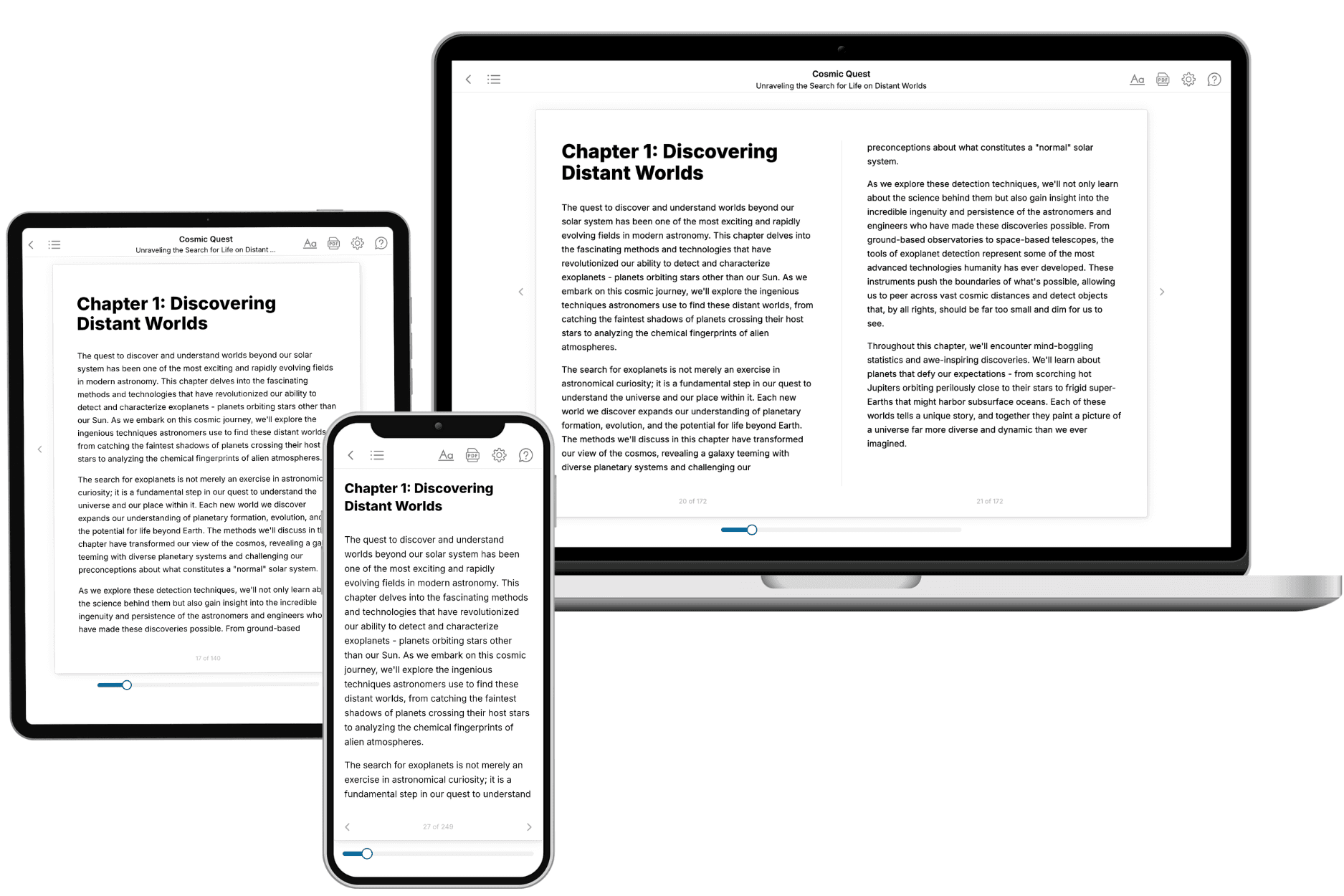
TailoredRead creates complete, full-length nonfiction ebooks, written specifically for you. Tell us what you want to learn and why, and TailoredRead writes you a complete ebook on it, with charts, tables, and diagrams throughout. Read it online, on Kindle, or on any e-reader, or download it as a PDF or EPUB. Every book is written fresh the day you order it.
- How is the book tailored to me?
Before anything is written, you answer a few short questions about your goals, your background, and the topics you care about. Your book is then planned around your answers: written at your level, focused on your goals, and covering the topics you chose, instead of the one-size-fits-all book a store sells everyone.
- Will it read like generic AI content?
No. Your book isn't a chat transcript: it's planned chapter by chapter before a single word is written, told in a clear book voice, and explains ideas visually with charts, tables, and diagrams. After writing, every book goes through an editorial pass that polishes chapters so the book reads consistent from start to finish. Judge for yourself: browse thousands of sample books on our Explore Books page.
- How accurate is the content?
Our AI first checks whether your subject needs live research. Niche and fast-moving subjects are researched before writing, and the book plan and chapters are grounded in what it finds. After writing, every book goes through a quality pass that checks its facts and consistency, and researched books list their sources in a Notes section at the back.
- How long is the book?
You choose the length: Comprehensive (250-300 pages), Detailed (150-200 pages), Essential (70-100 pages), or Short (30-50 pages).
- Does the book include visuals?
Yes. Every book includes charts, tables, and diagrams: timelines, checklists, step-by-step guides, decision trees, comparison tables, matrices, and bar charts. A typical book includes dozens of these visual elements.
- Can I read it on Kindle? What formats can I download?
Yes. Every book can be read in our online reader or downloaded as a PDF or EPUB. The EPUB can be opened with Kindle, Apple Books, Kobo, and any e-reader. The Commercial and Author licenses also include an editable Word (DOCX) and Markdown download.
- How much does it cost?
About the price of a regular ebook. The exact price depends on your book's length and complexity, from $2 for the shortest books to $35 for the most comprehensive, and it's shown when you review your book, before you commit to anything. Each book is a one-time purchase, yours to keep, no subscription. Licenses that let you share, teach, or publish your book range from $35.99 to $49.99.
- Can I preview the book before purchasing?
Before you pay, you'll see what your book will cover: the title, a detailed description, the estimated length, and the complete chapter-by-chapter table of contents, so you know what you're getting before you decide. The full text itself is written after you purchase.
- How long does it take to create a book?
About 10 minutes. You can start reading the opening chapters while the rest is still being written.