About this book
The truth is more interesting. Across the Kalahari edge and in the Tuli Block, growers are learning to grow sweet oranges, mandarins, lemons, and grapefruit with careful water management, healthy soil, and disciplined plant-health practices. This book is written for readers who are new to the subject and want a clear picture of how the work actually happens. It walks through citrus tree biology and the seasonal rhythm of Botswana's climate, then moves into irrigation, drip systems, and mulching for water conservation. You will find practical guidance on recognizing common pests and disease symptoms, improving orchard soil, and choosing rootstocks and fertilization plans. The later chapters address harvest timing, post-harvest handling, cold storage, phytosanitary certification, and export markets, alongside the realities of smallholder income, financing, and farm economic planning. Throughout, the Selebi Phikwe Citrus project serves as a living case study of scale, expansion, and change.
Table of contents
- IntroductionWhy Citrus Matters in Botswana, How to Read This Book, A Note on Sources and FiguresRead below
- Chapter 1: Citrus Tree BiologyAnatomy of a Citrus Tree, Growth and Flowering Cycle, Main Citrus Types Grown in Botswana
- Chapter 2: Botswana Climate and SeasonsRainfall and Temperature Patterns Across the Year, How Seasons Shape Citrus Growth, Growing Citrus in an Arid Region
- Chapter 3: Orchard Water and IrrigationIrrigation Basics for Citrus Orchards, Drip Irrigation Systems Explained, Farm Water Conservation and Mulching
- Chapter 4: Soil Health and NutritionMaintaining Orchard Soil Health, Citrus Fertilization Basics, Choosing the Right Citrus Rootstock
- Chapter 5: Pests and DiseasesIdentifying Common Citrus Pests, Recognizing Citrus Disease Symptoms, Citrus Black Spot and Its Regulation
- Chapter 6: Organic Pest and Disease ManagementOrganic Citrus Pest Control Methods, Crop Disease Surveillance in the Orchard, Integrated Plant Health Practices
- Chapter 7: Harvest and Post-Harvest HandlingDeciding When to Harvest Citrus, Post-Harvest Handling and Fruit Quality Grading, Cold Storage and Cold Chain Logistics
- Chapter 8: Markets, Certification, and TradePhytosanitary Certification and Plant Health Rules, Understanding Citrus Export Markets, Citrus Growers' Associations and Collective Action
- Chapter 9: Farm Economics and FinancingSmallholder Fruit Income and Its Limits, Agribusiness Financing Options, Planning Farm Economics and Orchard Expansion
- Chapter 10: The Selebi Phikwe Citrus ProjectOrigins and Growth of the Project, Harvests, Exports, and What They Reveal, Lessons for Future Growers
- ConclusionLooking Ahead for Citrus in Botswana
- Glossary
Introduction
Picture a medical officer stationed in a district near the Tuli Block, driving past rows of glossy green trees heavy with orange fruit, in a country most people associate with sand, cattle, and diamonds rather than citrus groves. That image is not an illusion or a curiosity. It reflects a real and growing part of Botswana's agricultural landscape, built by smallholders tending a few hundred trees and by large commercial operations spanning hundreds of hectares. This book exists for someone exactly like that reader: curious, analytical, without a farming background, who wants to understand how citrus actually gets grown, protected, and sold in a country where rain is scarce and heat is constant.
Citrus is an unusual crop to associate with an arid country, and that tension sits at the center of everything this book explains. Oranges, lemons, and grapefruit originated in wet, humid parts of Asia, yet they now thrive in Mediterranean climates and desert-adjacent regions wherever growers can supply water on their own terms. Botswana belongs to that second category. The success stories here are not accidents of favorable weather, but the product of deliberate choices about irrigation, soil, and tree genetics made before a single seedling goes into the ground.
The chapters ahead move through the subject in a sequence that mirrors how an orchard actually comes together and functions over time. Early chapters build the biological and climatic foundation: how a citrus tree grows and flowers, and what Botswana's rainfall and temperature patterns mean for that biology. Middle chapters address the practical systems a grower must master, from irrigation and soil fertility to pest and disease management. Later chapters follow the fruit itself, from the moment of harvest through grading, cold storage, certification, and export, before turning to the financial realities smallholders face and the large-scale case study of Selebi Phikwe Citrus.
None of this requires prior agricultural knowledge. Technical terms are introduced plainly, with explanations built into the sentence rather than assumed in advance. The goal is a working understanding, the kind that lets a reader follow a conversation with a farmer, interpret a government report on crop surveillance, or make sense of why a shipment of fruit might be rejected at a border post. That kind of literacy matters increasingly in Botswana, as citrus shifts from a backyard curiosity to a recognized agricultural sector with its own regulatory apparatus and export ambitions.
Why Citrus Matters in Botswana
Botswana's economy has long rested on diamonds and cattle, two industries that dominate public attention and government policy. Citrus occupies a much smaller footprint today, but it carries outsized significance for a country trying to diversify its agricultural base beyond drought-sensitive grain farming and livestock. A tree crop that produces fruit for decades, once established, offers a different kind of economic stability than annual crops that rise and fall with a single season's rain. That durability is part of why citrus has attracted both smallholder interest and government-backed commercial investment.
Water scarcity defines nearly every agricultural decision in Botswana, and citrus trees are comparatively well suited to that constraint when managed correctly. Unlike many fruit trees, citrus can tolerate irregular watering better than it tolerates waterlogged roots, which makes it compatible with the kind of careful, metered irrigation that arid farming demands. This is not the same as saying citrus is a drought-tolerant crop requiring no water. It means the crop rewards precise water management rather than punishing a region for lacking abundant rainfall, a distinction explored in full in the chapters on orchard water and irrigation.
Employment and rural income are another reason citrus has drawn attention beyond the farm gate. Smallholder orchards scattered across the country provide a source of cash income for families who might otherwise depend entirely on subsistence farming or remittances. Commercial projects, meanwhile, create jobs in planting, irrigation maintenance, harvesting, and packing, concentrated in areas that have sometimes struggled with other forms of formal employment. The chapter on smallholder fruit income examines how modest that income can be in practice, and what determines whether a grower earns a meaningful living or merely breaks even.
Export potential gives citrus a dimension that few other crops grown in Botswana currently match. Citrus fruit, when grown and handled to international standards, can reach buyers well beyond the region, provided growers meet the plant-health requirements that importing countries demand. This connects Botswana's orchards to a global system of certification bodies, grower associations, and trade rules that might seem remote from a smallholder's daily work but directly shapes what price that fruit eventually commands. The chapters on phytosanitary certification and export markets unpack exactly how that connection works.
The rise of Selebi Phikwe Citrus illustrates how quickly the scale of this sector can shift. A project of that size, built around an expanding orchard and a growing harvest, signals that citrus is no longer treated as a marginal or experimental crop in Botswana but as a candidate for serious national investment. Understanding why that project emerged where it did, and what its early results suggest about the limits and promise of commercial citrus, is the task of the dedicated chapter near the end of this book. For now, it is enough to recognize that citrus sits at an inflection point, no longer purely a smallholder activity but not yet a mature export industry either.
None of this potential is guaranteed, and the book does not treat citrus as a simple success story. Plant diseases, water constraints, financing gaps, and market access barriers all shape whether a grower's investment pays off. Citrus black spot, a regulated fungal disease covered in its own chapter, shows how a single plant-health issue can affect export eligibility even when it poses no threat to human health or food safety. Holding both the promise and the constraints in view at once is the honest way to understand why citrus matters here, and why it deserves more attention than its current scale might suggest.
How to Read This Book
The chapters are arranged to build understanding in layers, starting with the tree itself and ending with the economics and politics that surround it. Reading from front to back gives the most coherent picture, because later chapters assume familiarity with terms and concepts introduced earlier. The chapter on rootstock selection, for instance, makes far more sense after absorbing the basics of citrus tree biology and Botswana's climate, since rootstock choice is fundamentally a response to local soil and water conditions.
That said, the book is also designed to work as a reference for a reader who wants to jump directly to a specific concern. Someone preparing to visit Selebi Phikwe Citrus or read a news report about it can go straight to that case study chapter without first working through orchard biology. A reader puzzling over a term encountered elsewhere, such as integrated pest management or maturity index, can turn to the glossary at the back for a quick, plain-language definition before returning to the main text.
Each chapter follows a similar internal logic, moving from foundational explanation toward practical application. A chapter on irrigation, for example, does not stop at describing how water moves through soil. It proceeds to concrete systems like drip irrigation and conservation practices like mulching, explaining not just what these methods are but why a grower would choose one over another given Botswana's specific water constraints. This pattern repeats across the book: concept first, then mechanism, then practical decision.
Several recurring tools appear throughout to make dense material easier to absorb. Tables compare options side by side, such as different rootstocks or irrigation methods, letting a reader see tradeoffs at a glance rather than piecing them together from paragraphs. Checklists and step-by-step sequences appear where a process has a clear order, such as grading fruit for export or preparing documentation for phytosanitary certification. These are meant as study aids, not as substitutes for the surrounding explanation, which supplies the reasoning behind each item.
Cross-references between chapters are frequent and deliberate, because citrus farming does not separate neatly into isolated topics. A decision about rootstock selection affects water needs, which affects irrigation design, which affects soil fertility, which affects disease resistance. When a chapter touches on a topic owned by another chapter, such as mulching inside a discussion of irrigation, it references that other chapter by its subject rather than repeating the full explanation. Following those references when curiosity strikes will reveal how tightly interconnected these decisions really are.
Readers without any agricultural background should not feel at a disadvantage. Technical vocabulary is introduced gradually and defined in context the first time it appears, with heavier use of specialized terms reserved for chapters where that precision matters most, such as plant-health regulation and export certification. A medical officer's existing comfort with technical systems, evidence, and procedural rigor translates well to following how certification bodies, surveillance systems, and financing structures operate in this agricultural context. The unfamiliar vocabulary is the main barrier, and this book is built to lower it steadily, chapter by chapter.
Finally, approach the book expecting nuance rather than simple verdicts. Few questions in Botswana's citrus sector have a single right answer that applies everywhere. Whether drip irrigation makes sense depends on farm size and water access. Whether a smallholder should pursue export certification depends on scale, capital, and risk tolerance. The chapters lay out the factors that drive these decisions rather than prescribing one path, because the honest picture of citrus farming here is one of tradeoffs weighed differently by different growers in different places.
A Note on Sources and Figures
Agricultural statistics in a developing sector like Botswana's citrus industry change quickly, and figures reported at one point in time can become outdated within a growing season or two. Where this book cites specific numbers, such as hectares planted or tonnes harvested at a particular project, those figures come from identifiable government or institutional reports and are footnoted accordingly at the point they are discussed in detail. The introduction itself avoids repeating those figures, since the chapters that own each topic, particularly the one devoted to Selebi Phikwe Citrus, present and contextualize them properly.
A particular caution applies to any numbers describing project targets or forecasts. A stated goal for future hectares developed, trees planted, or export volume is not the same as a completed, verified outcome, even when government or bank sources describe the project in confident terms. This book tries to distinguish consistently between what has been reported as achieved and what remains a plan or projection, a distinction that matters enormously for anyone trying to gauge how far Botswana's citrus sector has actually come.
National production estimates deserve similar caution, especially when comparing figures drawn from different years or different data-collection methods. A harvest total reported for one year is not automatically comparable to a total reported for another year if the underlying survey methods, farm coverage, or reporting standards differ. Rather than stitch together a tidy growth narrative from numbers that may not be directly comparable, this book treats each figure as belonging to its own specific source and moment, flagging uncertainty rather than smoothing over it.
Citrus black spot deserves a particular clarification here because it is easy to misread as a crisis rather than a managed concern. Official reporting describes the disease as not widely distributed across Botswana and as currently under control through surveillance and regulatory measures, not as an uncontained threat sweeping through the country's orchards. The dedicated chapter on citrus black spot explains the biology of the disease and the certification systems built around it, but this introduction flags the distinction early because the disease's name alone can sound more alarming than the documented reality warrants.
Institutional names recur throughout the book and are worth noting here as a map of who does what in this sector. The Citrus Growers' Association of Southern Africa represents commercial grower interests and plays a role in standards and market access across the region. The International Plant Protection Convention sets the international framework that underpins phytosanitary certification, the paperwork system that allows fruit to cross borders legally. Research and training connected to Botswana's own agricultural capacity run through institutions such as the Botswana University of Agriculture and Natural Resources. Each of these bodies reappears in later chapters where its specific role becomes relevant.
Where evidence is thin or specific to a single season, a farm, or an unverified claim, this book says so plainly rather than presenting a confident number that cannot be checked. That approach may feel less satisfying than a tidy statistic, but it better serves a reader who wants to understand a developing sector honestly rather than memorize figures that may already be out of date by the time they are read. Treat every number in the chapters ahead as a snapshot from a specific source and moment, not a permanent fact about Botswana's citrus industry.
With that caution in place, the chapters that follow can move forward confidently into the details of tree biology, climate, water, soil, pests, harvest, markets, and the Selebi Phikwe project itself, building the kind of grounded, specific understanding that a snapshot in time deserves.
This is the end of the free sample. The full book has 10 chapters.
Want this book written for you?
Tell us your goals and background, and get your own version of this book, tailored by AI to you.


Benefits of AI-tailored books
- Read one book, not ten:
- all the knowledge you need, gathered into a single book.
- Save days of learning:
- tell us your goals, choose your topics, and the whole book is built around them.
- Learn effortlessly:
- a book written for your specific background and expertise.
- Understand at a glance:
- includes charts, tables, timelines, checklists, decision trees, and more.
- Stay current:
- written the day you order it, not years ago.
- Trust what you read:
- every book is checked for accuracy, with real research when your subject needs it.
Create your unique book in 3 steps
- 1. Pick a subject
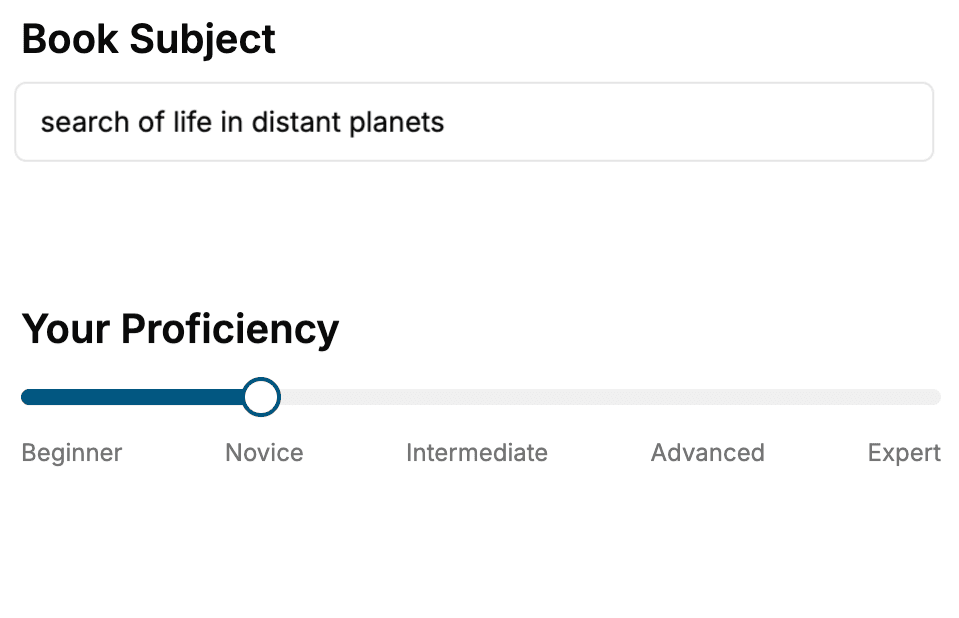
Select what you want to learn and share your background
- 2. Personalize your book
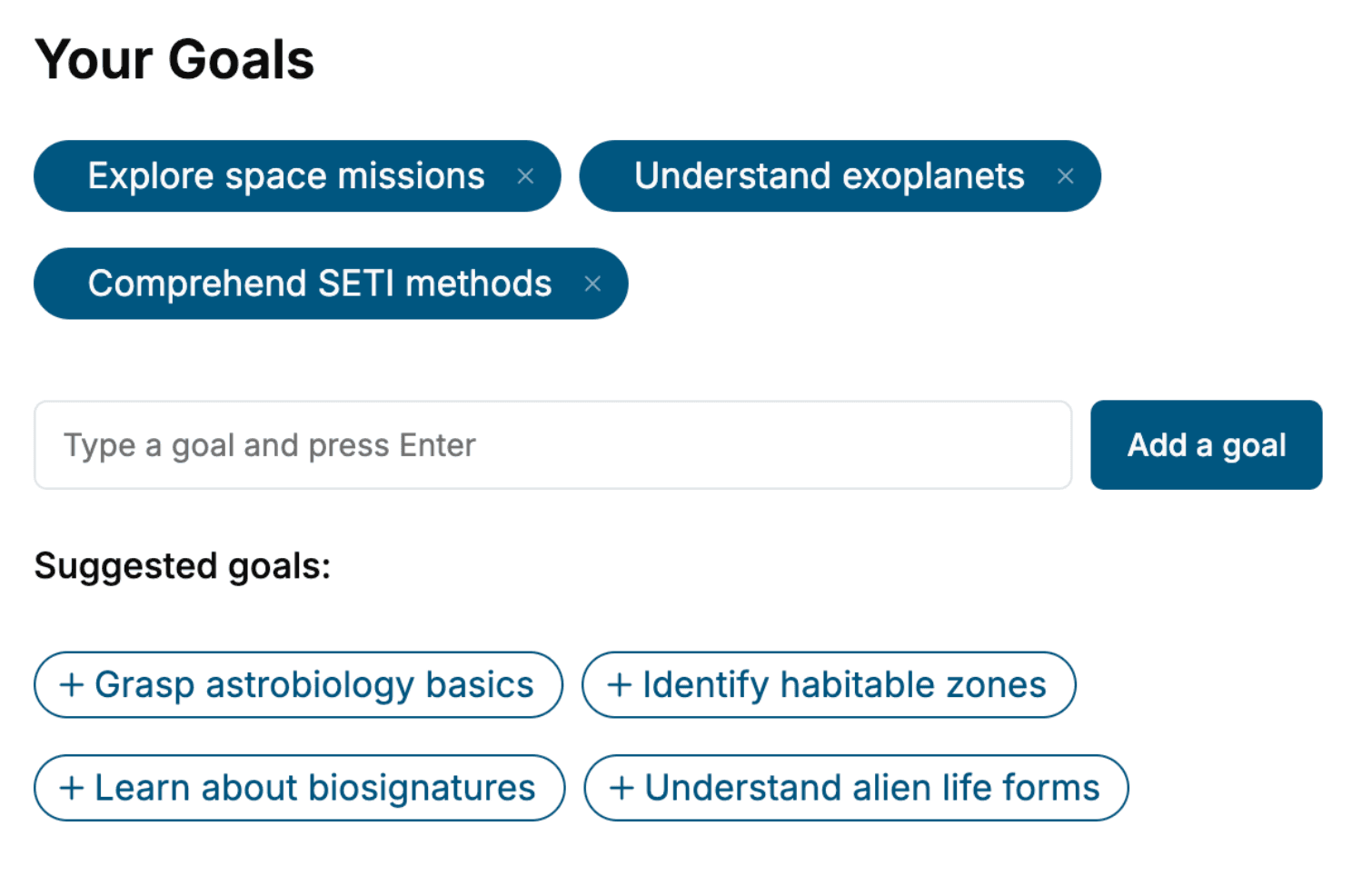
Specify your goals and choose sub-topics to include
- 3. Get your tailored book
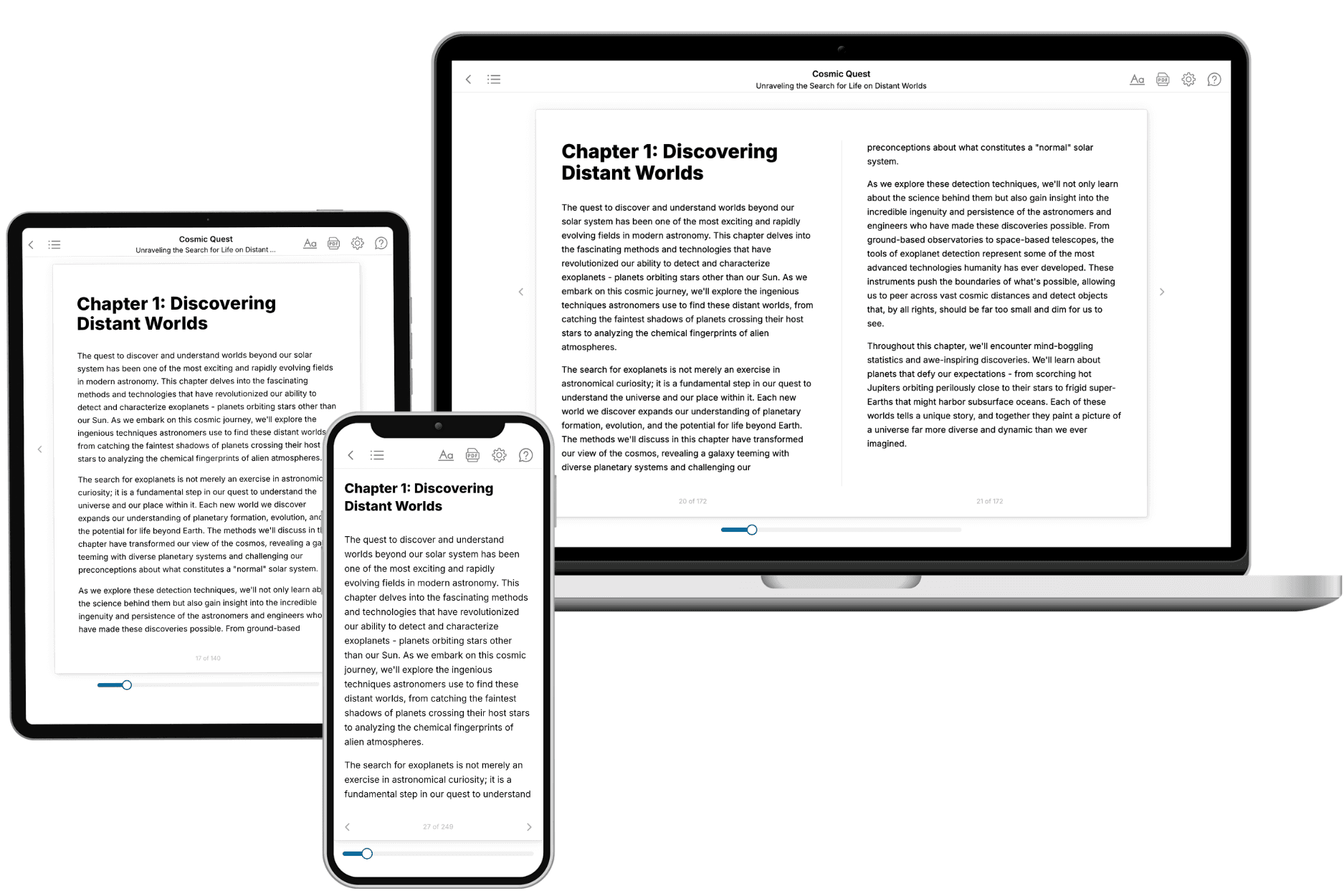
Your book is ready in 10 minutes. Read it online, download as EPUB or PDF, or send to Kindle.
Frequently asked questions
- What is TailoredRead?
TailoredRead creates complete, full-length nonfiction ebooks, written specifically for you. Tell us what you want to learn and why, and TailoredRead writes you a complete ebook on it, with charts, tables, and diagrams throughout. Read it online, on Kindle, or on any e-reader, or download it as a PDF or EPUB. Every book is written fresh the day you order it.
- How is the book tailored to me?
Before anything is written, you answer a few short questions about your goals, your background, and the topics you care about. Your book is then planned around your answers: written at your level, focused on your goals, and covering the topics you chose, instead of the one-size-fits-all book a store sells everyone.
- Will it read like generic AI content?
No. Your book isn't a chat transcript: it's planned chapter by chapter before a single word is written, told in a clear book voice, and explains ideas visually with charts, tables, and diagrams. After writing, every book goes through an editorial pass that polishes chapters so the book reads consistent from start to finish. Judge for yourself: browse thousands of sample books on our Explore Books page.
- How accurate is the content?
Our AI first checks whether your subject needs live research. Niche and fast-moving subjects are researched before writing, and the book plan and chapters are grounded in what it finds. After writing, every book goes through a quality pass that checks its facts and consistency, and researched books list their sources in a Notes section at the back.
- How long is the book?
You choose the length: Comprehensive (250-300 pages), Detailed (150-200 pages), Essential (70-100 pages), or Short (30-50 pages).
- Does the book include visuals?
Yes. Every book includes visual elements such as timelines, checklists, step-by-step guides, decision trees, comparison tables, and matrices, and many include bar charts. A typical book includes dozens of these visual elements.
- Can I read it on Kindle? What formats can I download?
Yes. Every book can be read in our online reader or downloaded as a PDF or EPUB. The EPUB can be opened with Kindle, Apple Books, Kobo, and any e-reader. The Commercial and Author licenses also include an editable Word (DOCX) and Markdown download.
- How much does it cost?
About the price of a regular ebook. The exact price depends on your book's length and complexity, from $2 for the shortest books to $35 for the most comprehensive, and it's shown when you review your book, before you commit to anything. Each book is a one-time purchase, yours to keep, no subscription. Licenses that let you share, teach, or publish your book range from $35.99 to $49.99.
- Can I preview the book before purchasing?
Before you pay, you'll see what your book will cover: the title, a detailed description, the estimated length, and the complete chapter-by-chapter table of contents, so you know what you're getting before you decide. The full text itself is written after you purchase.
- How long does it take to create a book?
About 10 minutes. You can start reading the opening chapters while the rest is still being written.