Click-Worthy Thumbnails
The Complete Guide to Designing YouTube Thumbnails That Stop Scrolls and Boost Views
Your YouTube thumbnail is the gateway to your content.
207 pages10 chaptersAug 21, 2026YouTube Marketing
About this book
In a sea of thousands of videos competing for attention, a compelling thumbnail can be the difference between a viewer clicking play or scrolling past. This guide teaches you the proven principles and practical techniques to design thumbnails that stop scrolls and drive clicks. You'll discover how color psychology influences viewer behavior, why facial expressions matter more than you think, and how to structure visual elements for maximum impact. Learn the specific design rules that work across different content categories—from gaming and education to vlogs and tutorials. Through real-world examples and actionable strategies, you'll understand how to balance aesthetics with psychology to create thumbnails that perform. Whether you're just starting your channel or looking to optimize existing content, this book provides the frameworks, tools, and techniques to design thumbnails that increase your click-through rate, improve video discoverability, and ultimately grow your audience. Master the fundamentals, avoid costly mistakes, and start creating thumbnails that work.
Table of contents
- IntroductionWhy Thumbnails Matter More Than You Think, How Thumbnails Impact Click-Through Rates and Views, What You'll Learn in This BookRead below
- Chapter 1: The Psychology of YouTube ThumbnailsThe One-Second Rule: Making Your First Impression Count, Understanding Viewer Behavior and Decision-Making, Emotional Triggers That Drive Clicks
- Chapter 2: Color Theory and Visual ImpactColor Psychology: What Each Color Communicates, Contrast and Saturation for Maximum Visibility, Effective Color Combinations That Stand Out
- Chapter 3: Faces, Expressions, and Human ConnectionWhy Faces Increase Click-Through Rates, Expressions and Emotions That Resonate, Eye Contact, Gaze Direction, and Framing
- Chapter 4: Text, Typography, and ReadabilityText Hierarchy and Information Architecture, Font Selection and Legibility at Small Sizes, Strategic Text Placement and Spacing
- Chapter 5: Design Principles and Visual HierarchyComposition, Layout, and Balance, Creating Clear Focal Points and Visual Flow, Minimalism vs. Complexity: Finding Your Balance
- Chapter 6: Thumbnails by Content CategoryGaming and Streaming Thumbnails, Educational and Tutorial Thumbnails, Vlogs, Entertainment, and Lifestyle Thumbnails
- Chapter 7: Branding and ConsistencyBuilding a Consistent Visual Identity, Logo, Color Palette, and Design Elements, Creating Recognition and Building Viewer Trust
- Chapter 8: Tools, Software, and WorkflowChoosing the Right Design Tools and Software, Using Templates and Streamlining Your Workflow, Technical Specifications and File Formats
- Chapter 9: Testing, Analytics, and OptimizationA/B Testing Thumbnail Designs, Measuring Performance with YouTube Analytics, Iterating and Improving Based on Data
- Chapter 10: Common Mistakes and How to Avoid ThemDesign Mistakes That Hurt Performance, Misleading Thumbnails and Viewer Trust, Algorithm Considerations and Best Practices
- ConclusionKey Takeaways and Your Next Steps, Staying Current in a Changing Platform
- Resources and Further Learning
Introduction
A viewer scrolling through YouTube's homepage sees dozens of videos in a single screen. Most of them get about half a second of attention before the eye moves on. Somewhere in that half second, a decision gets made about whether to stop, read a title, and press play, or keep scrolling toward something else. That decision rarely comes from the video's content, its length, or even its title alone. It comes from a small rectangular image measuring 1280 by 720 pixels: the thumbnail.
Many creators spend weeks planning a video, hours editing it, and then five minutes slapping together a thumbnail at the very end. That order of priorities is backwards. The thumbnail is not a decoration attached to a video. It is the advertisement, the movie poster, and the storefront window all at once. A brilliant video hidden behind a weak thumbnail may never get watched at all, no matter how good the content turns out to be once someone actually presses play.
This book treats thumbnail design as a discipline with its own rules, grounded in psychology, color theory, typography, and data. It draws on how the human eye and brain process images, how YouTube's recommendation systems respond to viewer behavior, and how successful creators across different niches have turned thumbnail design into a repeatable skill rather than a guessing game. None of this requires expensive software or professional design training. It requires understanding a handful of principles and applying them consistently.
The introduction lays the groundwork before diving into specific techniques in later chapters. It explains why thumbnails carry so much weight in a platform built around visual browsing, how they connect directly to the metrics that determine a video's reach, and what the rest of the book will teach in the chapters that follow. By the end of this introduction, the goal is a clear picture of why thumbnail design deserves as much attention as scripting, filming, and editing.
Why Thumbnails Matter More Than You Think
Consider two creators who upload nearly identical videos about the same topic, on the same day, with similar subscriber counts. One creator uses a cluttered thumbnail with a small, blurry photo and text that is hard to read on a phone screen. The other uses a sharp, well-lit photo of a face showing surprise, paired with three bold words that hint at the video's payoff. All else being equal, the second video will almost always earn more clicks. The content might be identical in quality, but the presentation determines whether anyone finds out.
YouTube is fundamentally a visual browsing platform. Unlike a podcast app or a blog, where text descriptions or audio previews can carry weight, YouTube presents its entire catalog as a wall of images. The homepage, the search results page, the suggested videos sidebar, and the mobile app all rely on thumbnails as the primary unit of information before a click happens. A title matters, but it sits below or beside the image, often in smaller and less prominent text. The image does the heavy lifting.
Many new creators assume that if the content is good enough, it will find an audience through word of mouth or algorithmic luck. That assumption underestimates how much competition exists on the platform. Hundreds of hours of video get uploaded every minute[1]. A thumbnail is the only tool available to cut through that volume and earn a fraction of a second of attention before a viewer's eye moves elsewhere.
Thumbnails also carry weight because they set expectations. A well-designed thumbnail does more than attract a click. It communicates what kind of video is waiting on the other side, whether it is a fast-paced highlight reel, a calm tutorial, or an emotional vlog. When the thumbnail matches the content's tone, viewers settle in and watch longer. When it does not, viewers click away within seconds, which hurts retention metrics and signals to the platform that the content underdelivered on its promise.
Think of a thumbnail as a promise made in a fraction of a second. A cooking channel that shows a beautifully plated dish with a confident chef's face is promising a satisfying, well-produced recipe video. A gaming channel that shows an exaggerated reaction next to a dramatic in-game moment is promising excitement and a payoff. Viewers hold creators to these promises, consciously or not, and that promise starts and ends with the image they saw before clicking.
Beyond individual videos, thumbnails shape how an entire channel gets perceived over time. A channel with visually consistent, high-quality thumbnails looks more professional and trustworthy than one with mismatched, low-effort images, even if both channels produce similar content. New visitors browsing a channel page or searching a topic will judge the whole operation based on the visual pattern they see across multiple videos, forming an impression before watching a single second of footage.
How Thumbnails Impact Click-Through Rates and Views
Click-through rate, often abbreviated CTR, measures the percentage of people who click a video after seeing its thumbnail and title. If a thumbnail appears to 1,000 people and 50 of them click, the click-through rate is 5 percent. This single number sits at the center of how well a thumbnail performs, and it directly connects design choices to measurable outcomes rather than vague impressions of what looks nice.
YouTube's recommendation system uses click-through rate as one of several signals to decide how widely to distribute a video[2]. A video with a strong click-through rate in its first hours of release tends to get shown to more people, which creates more opportunities for further clicks, more watch time, and more subscribers. A video with a weak click-through rate gets shown to fewer people, and the cycle works in reverse. In this way, the thumbnail does not just affect one video's performance in isolation. It affects the platform's willingness to promote that video at all.
Consider a concrete comparison. Two videos on the same channel, both about a laptop review, get uploaded a month apart. The first uses a stock photo of the laptop against a plain background, with the title as the only source of information. It earns a 2 percent click-through rate and gets recommended to a small fraction of the channel's subscribers. The second uses a photo of the creator holding the laptop with a surprised expression, next to bold text reading "Don't Buy Before Watching," and earns a 7 percent click-through rate. That difference alone could mean the second video reaches three or four times as many total viewers, purely because more people clicked in the critical early hours.
Click-through rate does not exist in a vacuum. It works alongside average view duration and audience retention to determine whether a video gets rewarded with continued distribution. A thumbnail that earns clicks but sets false expectations can actually hurt a video in the long run, because viewers who feel misled tend to click away quickly, which drags down retention numbers. This is why the best thumbnails balance attention-grabbing design with honesty about what the video actually delivers.
Thumbnail testing has become a normal part of a serious creator's workflow rather than an afterthought. Some creators change a thumbnail's design if the click-through rate underperforms during the first day or two after upload, before the video's distribution pattern gets fully established. This kind of responsiveness treats thumbnail design as an ongoing process, not a one-time decision made before hitting publish. The chapter on testing and analytics later in this book covers exactly how to run these comparisons and read the resulting data.
It helps to see click-through rate as a multiplier applied to every other effort a creator makes. Scripting, filming, and editing determine how good a video is once someone watches it. The thumbnail determines how many people ever get that far. A five percentage point improvement in click-through rate, sustained across dozens of uploads, can compound into a channel that grows several times faster than one stuck with mediocre thumbnails, even if the underlying video quality stays the same.
What You'll Learn in This Book
This book moves from foundational psychology toward practical execution, building each chapter on the concepts introduced before it. It starts with why the human brain reacts the way it does to certain images, then works through color, faces, text, and composition as the building blocks of design, before addressing category-specific norms, branding, tools, and measurement. The structure mirrors the actual process of designing a thumbnail from a blank canvas to a published, tested image.
The chapter on the psychology of thumbnails introduces the one-second rule, a concept describing how little time a thumbnail has to register with a scrolling viewer before it gets ignored. It also explains how viewers make snap decisions and which emotional triggers, such as curiosity, surprise, or urgency, tend to prompt a click rather than a scroll past.
From there, the book covers color theory and visual impact, explaining how color psychology shapes the mood a thumbnail communicates, and how contrast and saturation make an image stand out against the mostly white and gray background of YouTube's interface. A chapter on faces and expressions follows, since human faces process differently in the brain than any other visual element and tend to drive stronger engagement across nearly every content category[3].
Typography gets its own chapter because text on a thumbnail behaves differently than text on a printed page or a website. It has to communicate value almost instantly, often on a small phone screen, which means font selection, text hierarchy, and placement all follow specific rules distinct from typical graphic design. After that, a chapter on composition and visual hierarchy ties these individual elements together, covering how focal points and visual flow determine where a viewer's eye travels first.
Later chapters shift from universal principles to applied context. One chapter breaks down how thumbnail conventions differ across categories like gaming, education, and vlogging, since a thumbnail that works for a tutorial channel might fail for a comedy sketch channel. Another chapter addresses branding and visual identity, showing how consistent design elements across all of a channel's thumbnails build recognition and trust over repeated viewings.
The book also covers the practical side of production: which tools and software fit different budgets and skill levels, how templates speed up a repetitive workflow, and what technical specifications YouTube requires for a thumbnail to display correctly across devices. A chapter on A/B testing and analytics shows how to move from guessing what works to measuring it directly, using YouTube's own data tools to compare thumbnail variants and iterate based on real results rather than assumption.
The final full chapter addresses the mistakes that quietly undermine otherwise solid thumbnail strategies, including clutter, misleading imagery that damages viewer trust, and design choices that work against how the platform's algorithm evaluates content. Each of these chapters includes specific, applicable techniques rather than abstract theory, so that by the end of the book, designing an effective thumbnail becomes a repeatable process rather than a matter of guesswork or luck.
This is the end of the free sample. The full book has 10 chapters.
Want this book written for you?
Tell us your goals and background, and get your own version of this book, tailored by AI to you.


Benefits of AI-tailored books
- Read one book, not ten:
- all the YouTube Marketing knowledge you need, gathered into a single book.
- Save days of learning:
- tell us your goals, choose your topics, and the whole book is built around them.
- Learn effortlessly:
- YouTube Marketing book written for your specific background and expertise.
- Understand at a glance:
- includes charts, tables, timelines, checklists, decision trees, and more.
- Stay current:
- written the day you order it, not years ago.
- Trust what you read:
- every book is checked for accuracy, with real research when your subject needs it.
Create your unique book in 3 steps
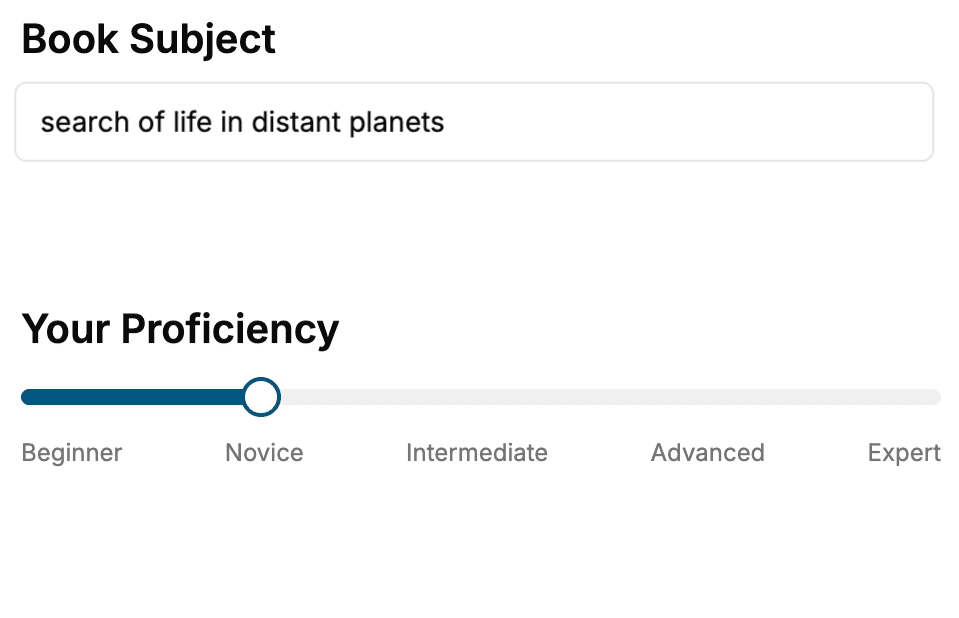
- 1. Select your focus
Select the focus of your YouTube Marketing book and share your background
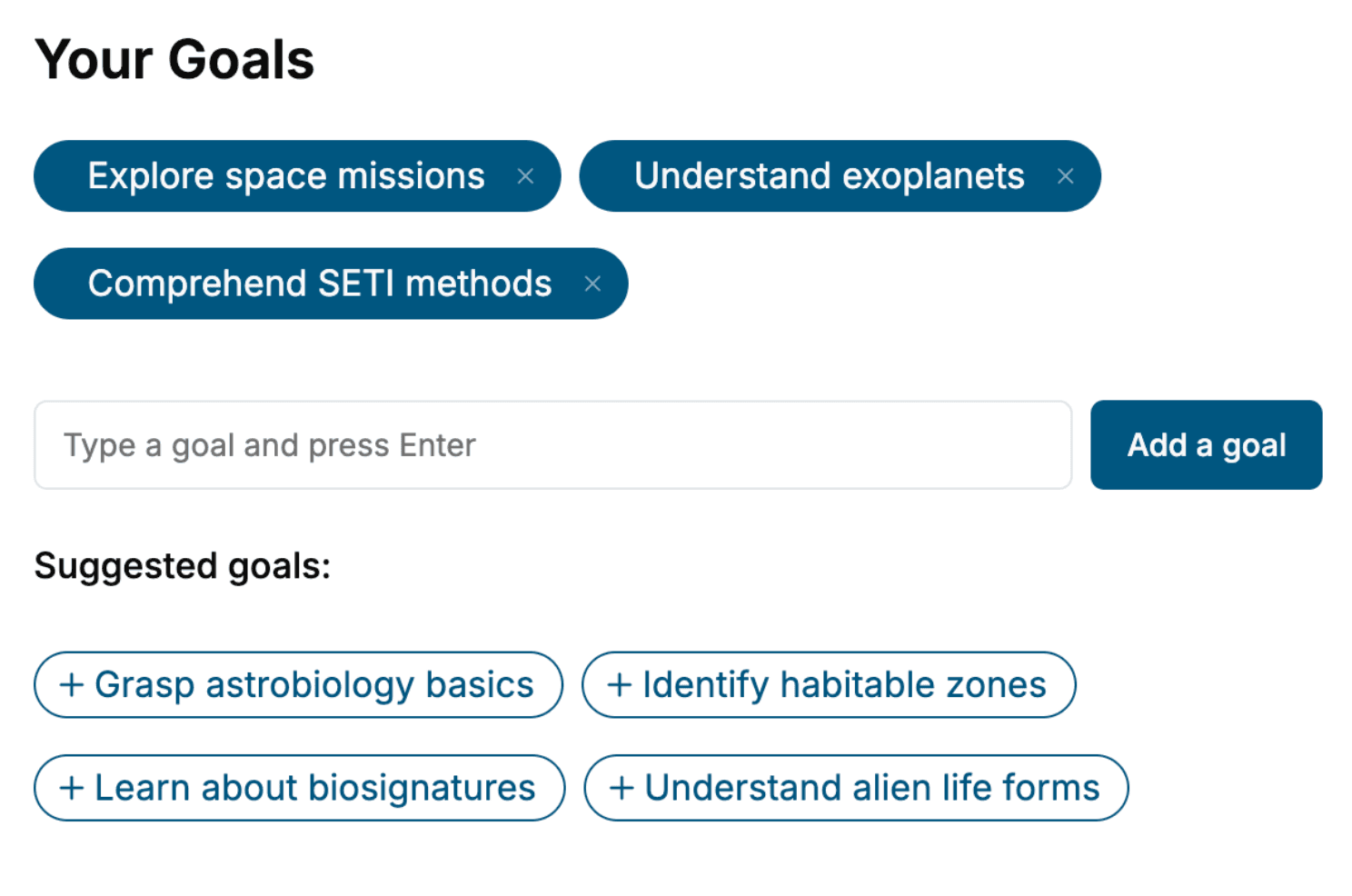
- 2. Personalize your book
Specify your goals and choose sub-topics to include
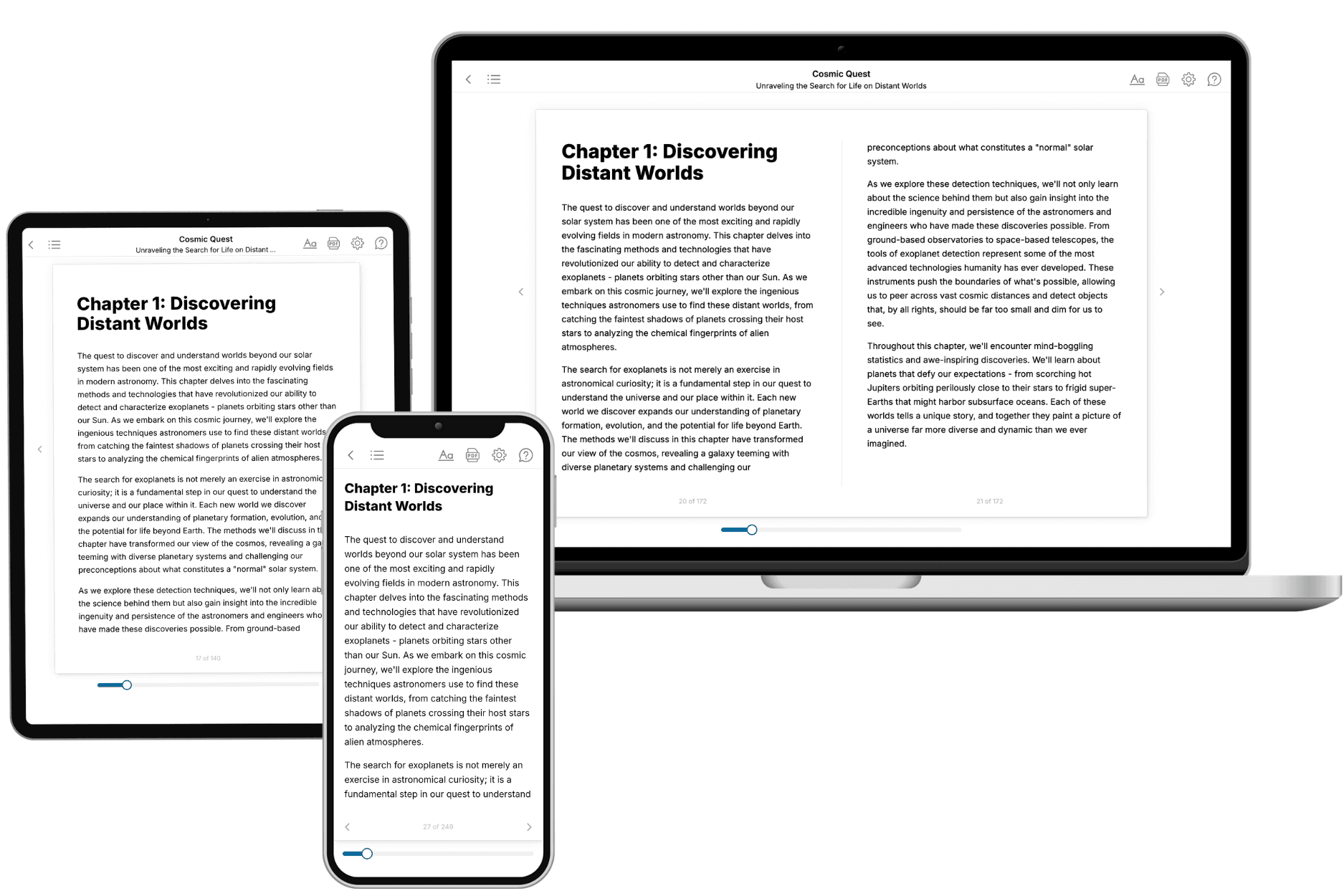
- 3. Get your tailored book
Your book is ready in 10 minutes. Read it online, download as EPUB or PDF, or send to Kindle.
Frequently asked questions
- What is TailoredRead?
TailoredRead creates complete, full-length nonfiction ebooks, written specifically for you. Tell us what you want to learn and why, and TailoredRead writes you a complete ebook on it, with charts, tables, and diagrams throughout. Read it online, on Kindle, or on any e-reader, or download it as a PDF or EPUB. Every book is written fresh the day you order it.
- How is the book tailored to me?
Before anything is written, you answer a few short questions about your goals, your background, and the topics you care about. Your book is then planned around your answers: written at your level, focused on your goals, and covering the topics you chose, instead of the one-size-fits-all book a store sells everyone.
- Will it read like generic AI content?
No. Your book isn't a chat transcript: it's planned chapter by chapter before a single word is written, told in a clear book voice, and explains ideas visually with charts, tables, and diagrams. After writing, every book goes through an editorial pass that polishes chapters so the book reads consistent from start to finish. Judge for yourself: browse thousands of sample books on our Explore Books page.
- How accurate is the content?
Our AI first checks whether your subject needs live research. Niche and fast-moving subjects are researched before writing, and the book plan and chapters are grounded in what it finds. After writing, every book goes through a quality pass that checks its facts and consistency, and researched books list their sources in a Notes section at the back.
- How long is the book?
You choose the length: Comprehensive (250-300 pages), Detailed (150-200 pages), Essential (70-100 pages), or Short (30-50 pages).
- Does the book include visuals?
Yes. Every book includes charts, tables, and diagrams: timelines, checklists, step-by-step guides, decision trees, comparison tables, matrices, and bar charts. A typical book includes dozens of these visual elements.
- Can I read it on Kindle? What formats can I download?
Yes. Every book can be read in our online reader or downloaded as a PDF or EPUB. The EPUB can be opened with Kindle, Apple Books, Kobo, and any e-reader. The Commercial and Author licenses also include an editable Word (DOCX) and Markdown download.
- How much does it cost?
About the price of a regular ebook. The exact price depends on your book's length and complexity, from $2 for the shortest books to $35 for the most comprehensive, and it's shown when you review your book, before you commit to anything. Each book is a one-time purchase, yours to keep, no subscription. Licenses that let you share, teach, or publish your book range from $35.99 to $49.99.
- Can I preview the book before purchasing?
Before you pay, you'll see what your book will cover: the title, a detailed description, the estimated length, and the complete chapter-by-chapter table of contents, so you know what you're getting before you decide. The full text itself is written after you purchase.
- How long does it take to create a book?
About 10 minutes. You can start reading the opening chapters while the rest is still being written.