Cloud Gaming Mastery
How CDNs Power the Future of Gaming and What You Need to Know
What if the games you play could run on servers thousands of miles away, yet feel as responsive as if they were running on your local machine?
238 pages11 chaptersMay 7, 2026Cloud Gaming
About this book
This is the promise of cloud gaming, and it's powered entirely by Content Delivery Networks (CDNs). But how do these networks actually work, and what makes some cloud gaming experiences seamless while others lag and stutter? This book demystifies the technology behind CDN-enabled cloud gaming, exploring how data flows from distant servers to your device in milliseconds. You'll discover the architectural decisions that separate premium gaming experiences from mediocre ones, learn how major providers optimize performance across continents, and understand the technical challenges that still need solving. Whether you're a developer, IT professional, or gaming enthusiast, this guide provides the knowledge you need to understand, evaluate, and work with CDN technology in cloud gaming environments.
Table of contents
- IntroductionWhy CDNs Matter in Modern Gaming, The Cloud Gaming Revolution, What You'll Learn in This BookRead below
- Chapter 1: CDN FundamentalsWhat Is a Content Delivery Network?, The Evolution of CDN Technology, Core Components of a CDN, CDNs vs. Traditional Server Architecture
- Chapter 2: Cloud Gaming BasicsUnderstanding Cloud Gaming, Streaming Games vs. Local Execution, Major Cloud Gaming Platforms Today, Technical Requirements for Cloud Gaming
- Chapter 3: Latency and Performance OptimizationUnderstanding Latency in Cloud Gaming, How Latency Affects Gameplay, Strategies for Reducing Latency, Measuring and Monitoring Performance
- Chapter 4: CDN Architecture for GamingNetwork Topology and Edge Locations, Caching Strategies for Game Content, Load Balancing and Traffic Distribution, Redundancy and Failover Mechanisms
- Chapter 5: Bandwidth and Data OptimizationBandwidth Challenges in Cloud Gaming, Compression and Encoding Techniques, Adaptive Bitrate Streaming, Maximizing Data Efficiency
- Chapter 6: Major CDN Providers and SolutionsAkamai, Cloudflare, and Traditional CDNs, AWS, Azure, and Google Cloud CDN Solutions, Gaming-Specific CDN Solutions, Comparing CDN Providers for Gaming
- Chapter 7: Edge Computing and GamingWhat Is Edge Computing?, Benefits of Edge Computing for Gaming, Implementing Edge Computing in CDNs, 5G Networks and Edge Gaming
- Chapter 8: Security and Privacy in CDN GamingSecurity Challenges in Cloud Gaming, Protecting User Data and Game Content, DDoS Protection and Attack Mitigation, Compliance and Industry Standards
- Chapter 9: AI and Machine Learning in CDN GamingAI-Driven Performance Optimization, Predictive Analytics for Network Management, Machine Learning for Intelligent Caching, The Future of AI in Cloud Gaming
- Chapter 10: Practical Implementation and Best PracticesChoosing the Right CDN for Your Needs, Deployment Strategies and Configuration, Monitoring, Troubleshooting, and Optimization, Managing Costs and ROI
- Chapter 11: The Future of CDN GamingEmerging Technologies and Innovations, Evolution of Network Infrastructure, Gaming Industry Trends and Implications
- ConclusionKey Takeaways, Your Next Steps
- Glossary
- Further Reading and Resources
Introduction
Picture this: you're playing a fast-paced shooter game where every millisecond counts. Your character needs to react the instant you press a button. The game's graphics are stunning, the world is massive, and the action is relentless. Now imagine that none of that game is actually running on your device. The processing, the rendering, the physics calculations — all of it is happening on a server that might be hundreds or even thousands of miles away. Yet somehow, it feels instant. That is not magic. That is a Content Delivery Network doing its job.
Cloud gaming has moved from a niche experiment to a genuine mainstream contender in just a few years. Services like NVIDIA GeForce NOW, Xbox Cloud Gaming, and PlayStation Now have demonstrated that high-quality gaming experiences can be delivered over the internet without requiring expensive local hardware. But behind every smooth frame and responsive button press is a complex web of infrastructure decisions, network optimizations, and engineering trade-offs. The CDN sits at the center of all of it, quietly routing data, managing traffic, and shaving precious milliseconds off every interaction.
This book is for people who want to understand how that infrastructure actually works. Whether you're a developer building a cloud gaming product, an IT professional evaluating CDN solutions, or a technology enthusiast who wants to go deeper than the marketing brochures, this guide will give you a clear, practical, and honest picture of the technology. You'll come away with a solid understanding of CDN architecture, how it applies specifically to gaming, and what the real-world challenges and opportunities look like in this fast-moving space.
The chapters ahead cover everything from foundational CDN concepts to cutting-edge topics like AI-driven optimization and 5G integration. Each section builds on the last, so by the time you reach the final chapters, you'll have a complete mental model of how cloud gaming infrastructure fits together. Along the way, you'll find concrete examples, real-world scenarios, and practical frameworks you can apply immediately. The goal is not just to inform but to equip you with knowledge that's genuinely useful in the field.
Why CDNs Matter in Modern Gaming
For most of gaming's history, the relationship between a player and their game was simple and direct. The game ran on local hardware, and performance depended almost entirely on the quality of that hardware. Network connections mattered for multiplayer, but the core experience was local. Cloud gaming breaks that model entirely. When the game runs on a remote server, the network connection becomes the most critical component in the entire system. And managing that connection at scale, across millions of users in dozens of countries, is exactly what CDNs are built to do.
A CDN is essentially a globally distributed network of servers designed to deliver content to users as quickly and reliably as possible. Instead of routing every request back to a single central server, a CDN places copies of content (and increasingly, processing power) at locations close to end users. For gaming, this means that game assets, updates, and streaming data can be served from a server that might be just a few dozen miles away rather than thousands. The difference in response time is dramatic and directly affects whether a game feels playable or frustrating.
Consider what happens during a typical cloud gaming session. Your inputs (button presses, mouse movements, controller tilts) need to travel to the server, be processed, and then the resulting video frame needs to travel back to your screen. This round trip needs to happen dozens of times per second. If the server is far away, the round-trip time (called latency or ping) grows, and the game starts to feel sluggish and unresponsive. Research from Nvidia suggests that latency above 80 milliseconds begins to noticeably degrade the experience for most players, and competitive gamers often demand under 20 milliseconds.[1] CDNs are the primary tool for keeping latency within acceptable ranges.
Beyond latency, CDNs also handle the enormous bandwidth demands of cloud gaming. Streaming a game at 1080p and 60 frames per second requires roughly 15 to 25 Mbps of sustained bandwidth. At 4K, that number climbs to 35 Mbps or higher. Multiply that by millions of simultaneous users, and you're dealing with data volumes that would overwhelm any single data center. CDNs distribute this load across their global infrastructure, preventing bottlenecks and ensuring consistent quality even during peak usage periods like weekend evenings or major game launches.
CDNs also play a critical role in game distribution itself, separate from the streaming experience. When a major game releases an update, millions of players try to download it simultaneously. Without a CDN, that traffic would hammer the game publisher's servers and cause hours-long download queues. With a CDN, the update is pre-distributed to edge servers around the world, and each player downloads from a nearby node. This is why a 50 GB game update can download in minutes rather than hours for most players on a decent connection.
The importance of CDNs in gaming extends to reliability as well. A CDN with hundreds of edge locations provides natural redundancy. If one server goes down, traffic automatically reroutes to the next closest node. For a live gaming service where downtime means lost revenue and frustrated players, this kind of built-in resilience is not optional. It's a fundamental requirement. Understanding how CDNs provide this resilience, and where their limits are, is one of the core skills this book will help you develop.
Real-world example: During the launch of a major AAA title in 2023, a well-known publisher used Akamai's CDN to distribute a day-one patch to over 10 million players within a six-hour window. Without CDN distribution, that same patch would have required the publisher to provision roughly 40 times more origin server capacity to handle the simultaneous download requests. The CDN absorbed the spike entirely, and most players reported download speeds at or near their connection's maximum throughput.
The bottom line is that CDNs are not a nice-to-have feature in modern gaming. They are the foundational infrastructure layer that makes cloud gaming viable at scale. Every major gaming platform, from console ecosystems to PC storefronts to dedicated cloud gaming services, relies on CDN technology to deliver content reliably and quickly. Understanding how that technology works gives you a significant advantage, whether you're building, evaluating, or simply trying to make sense of the cloud gaming landscape.
The Cloud Gaming Revolution
Cloud gaming is not a new idea. The concept of running games on remote servers and streaming the output to a thin client has been explored since at least the early 2000s. But for most of that time, the technology simply wasn't ready. Network speeds were too slow, latency was too high, and video compression wasn't good enough to make the experience feel acceptable. The idea kept getting shelved, only to be revived a few years later when the technology had improved a little more. What's different now is that the technology has finally caught up with the vision.
Several converging trends have made cloud gaming genuinely viable in the 2020s. Broadband penetration has expanded dramatically, with average global internet speeds increasing by over 30% between 2019 and 2023.[2] Video codec technology has advanced significantly, with formats like H.265 (HEVC) and AV1 delivering much better quality at lower bitrates than their predecessors. Cloud computing costs have dropped, making it economically feasible to run GPU-intensive workloads at scale. And CDN infrastructure has expanded to the point where edge servers are now within low-latency reach of the majority of the world's internet users.
The market has responded to these improvements with significant investment. Microsoft acquired Activision Blizzard partly to strengthen its Xbox Cloud Gaming content library. Sony has invested heavily in PlayStation Now and its successor services. NVIDIA has built GeForce NOW into a platform that lets players stream games they already own from PC storefronts. Amazon entered the space with Luna. Google launched Stadia, learned hard lessons about what the market needs, and eventually shut it down in 2023, providing the industry with a valuable case study in what not to do.[3]
The Stadia story is worth pausing on because it illustrates how even a well-funded, technically capable cloud gaming service can fail if the surrounding ecosystem isn't right. Google had excellent CDN infrastructure through its global network. The streaming quality was genuinely impressive. But the service struggled with game library depth, pricing model confusion, and a lack of trust from players who worried about investing in a platform that might disappear. When it did disappear, those fears were validated. The technical infrastructure was solid; the product and business model were not. This distinction matters because it shows that CDN excellence is necessary but not sufficient for cloud gaming success.
What the successful platforms have in common is a thoughtful integration of CDN capabilities with the specific demands of interactive gaming. Streaming a movie and streaming a game are fundamentally different problems. A movie can buffer ahead; a game cannot. A movie doesn't care if a frame arrives 200 milliseconds late; a game absolutely does. The platforms that have thrived understand this distinction and have built their CDN strategies around the unique requirements of interactive, real-time content delivery. This book will help you understand exactly what those requirements are and how leading platforms address them.
The cloud gaming market is projected to reach $21.9 billion by 2030, growing at a compound annual growth rate of over 45%.[4] That growth will be driven by improvements in mobile networks (particularly 5G), continued expansion of CDN edge infrastructure, and the increasing cost of gaming hardware making cloud alternatives more attractive. The companies and professionals who understand the CDN layer of this ecosystem will be well-positioned to contribute to and benefit from that growth.
It's also worth acknowledging that cloud gaming is not going to replace local gaming entirely, at least not in the near term. There will always be players who want the absolute lowest latency and highest performance that only local hardware can provide. Competitive esports, in particular, will likely remain local for the foreseeable future. But cloud gaming doesn't need to replace local gaming to be transformative. It just needs to expand access, lower barriers to entry, and create new categories of gaming experiences that weren't possible before. CDNs are the infrastructure that makes all of that possible.
The revolution in cloud gaming is, at its core, a revolution in network infrastructure. The games themselves haven't changed that much. What has changed is the ability to deliver those games reliably, quickly, and at scale to anyone with a decent internet connection. That delivery infrastructure is what this book is about. Understanding it means understanding the future of gaming itself.
What You'll Learn in This Book
This book is organized to take you from foundational concepts to advanced implementation knowledge in a logical progression. Each chapter builds on the ones before it, so even if you're already familiar with some of the material, reading in order will give you the most complete picture. That said, each chapter is also designed to stand on its own if you need to jump to a specific topic. Here's a clear map of what's ahead and why each section matters.
The first two chapters establish the foundational knowledge you'll need for everything that follows. Chapter 1: CDN Fundamentals covers what a CDN actually is, how it evolved from simple content caching to the sophisticated distributed systems of today, and what the core components look like under the hood. Chapter 2: Cloud Gaming Basics then explains how cloud gaming works as a technology, how it differs from local gaming, and what the major platforms are doing today. If you're already deeply familiar with either of these topics, you can skim these chapters and use them as reference material.
Chapters 3 through 5 dive into the three critical performance pillars that determine cloud gaming quality:
- Chapter 3: Latency and Performance Optimization explains what latency is, why it matters so much for gaming specifically, and what strategies CDNs and game developers use to minimize it.
- Chapter 4: CDN Architecture for Gaming goes deep on network topology, caching strategies, load balancing, and redundancy mechanisms that keep gaming services running smoothly.
- Chapter 5: Bandwidth and Data Optimization covers the compression techniques, adaptive bitrate streaming, and data efficiency strategies that make high-quality game streaming possible within real-world bandwidth constraints.
Chapters 6 and 7 shift focus to the providers and technologies that power the ecosystem. Chapter 6 gives you a practical comparison of major CDN providers including Akamai, Cloudflare, AWS CloudFront, Azure CDN, and gaming-specific solutions, with guidance on how to evaluate them for different use cases. Chapter 7 covers edge computing, which is arguably the most important emerging technology in cloud gaming infrastructure, and explains how 5G networks are changing what's possible at the edge.
Chapters 8 and 9 address two topics that are increasingly critical but often underexplored in gaming infrastructure discussions. Chapter 8: Security and Privacy covers the specific security challenges of CDN-based gaming systems, including DDoS protection, data privacy, and compliance requirements. Chapter 9: AI and Machine Learning in CDN Gaming explores how artificial intelligence is being applied to optimize CDN performance, predict network conditions, and enable smarter caching strategies. These aren't future-looking speculations; they're capabilities that leading providers are deploying today.
Chapter 10: Practical Implementation and Best Practices is where the book gets most directly actionable. This chapter walks through how to choose a CDN for a specific gaming use case, how to configure and deploy it effectively, how to monitor and troubleshoot performance issues, and how to manage costs without sacrificing quality. This chapter is particularly valuable if you're working on or planning a cloud gaming project in a professional context.
The book closes with Chapter 11: The Future of CDN Gaming, which examines emerging technologies and trends that will shape the next five to ten years of cloud gaming infrastructure. This includes network slicing, WebRTC advances, spatial computing, and the continued evolution of AI-driven optimization. Rather than speculating wildly, this chapter focuses on technologies that are already in development or early deployment and traces their likely trajectory.
Throughout the book, you'll find several recurring elements designed to make the content as useful as possible:
- Concrete examples drawn from real platforms and real-world deployments, with specific numbers and outcomes where available.
- Technical frameworks you can apply when evaluating CDN solutions or diagnosing performance problems.
- Common pitfalls and how to avoid them, based on lessons learned from both successful and failed cloud gaming deployments.
- Comparison tables and decision guides to help you navigate choices between providers, architectures, and strategies.
One thing this book deliberately avoids is vendor advocacy. The CDN market is competitive, and different providers genuinely excel in different scenarios. Rather than declaring a winner, the goal is to give you the analytical tools to evaluate options based on your specific requirements. The best CDN for a mobile-first cloud gaming startup in Southeast Asia is not the same as the best CDN for a AAA publisher launching a global title. Context matters enormously, and this book will help you understand why.
By the time you finish this book, you should be able to do several things you couldn't do before. You'll be able to explain how a CDN reduces latency in a cloud gaming context, not just in general terms but with specific reference to network topology, edge placement, and protocol optimization. You'll be able to evaluate CDN providers against a set of gaming-specific criteria. You'll understand the trade-offs between different caching strategies, compression techniques, and load balancing approaches. And you'll have a clear picture of where the technology is heading and what that means for the products and services being built on top of it.
Cloud gaming is one of the most technically interesting spaces in the entire technology industry right now. It sits at the intersection of networking, distributed systems, video encoding, real-time computing, and consumer product design. CDNs are the connective tissue that holds all of those pieces together. Understanding them deeply is not just an academic exercise. It's a practical skill that will serve you well as this industry continues to grow and evolve. Let's get started.
Notes
Introduction
- 1. NVIDIA GeForce NOW Technical Overview, NVIDIA Corporation, 2021. Discusses latency thresholds for acceptable cloud gaming performance.
- 2. Ookla Speedtest Global Index, 2023. Tracks global average download and upload speeds over time.
- 3. Google Stadia Shutdown Announcement, Google Blog, September 2022. Google announced the closure of Stadia effective January 2023.
- 4. Grand View Research, Cloud Gaming Market Size Report, 2023. Projects global cloud gaming market growth through 2030.
This is the end of the free sample. The full book has 11 chapters.
Want this book written for you?
Tell us your goals and background, and get your own version of this book, tailored by AI to you.


Benefits of AI-tailored books
- Read one book, not ten:
- all the Cloud Gaming knowledge you need, gathered into a single book.
- Save days of learning:
- tell us your goals, choose your topics, and the whole book is built around them.
- Learn effortlessly:
- Cloud Gaming book written for your specific background and expertise.
- Understand at a glance:
- includes charts, tables, timelines, checklists, decision trees, and more.
- Stay current:
- written the day you order it, not years ago.
- Trust what you read:
- every book is checked for accuracy, with real research when your subject needs it.
Create your unique book in 3 steps
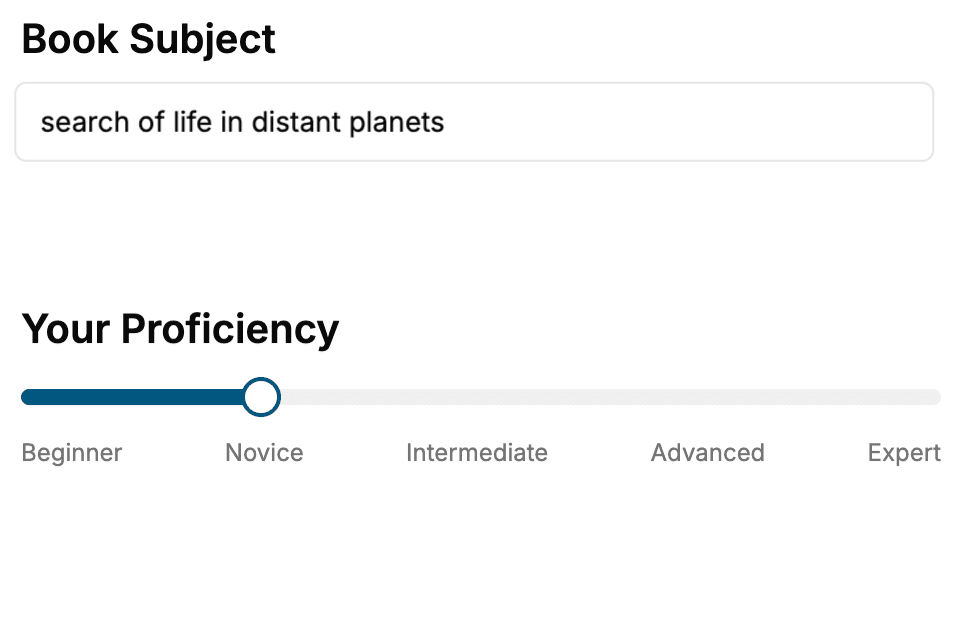
- 1. Select your focus
Select the focus of your Cloud Gaming book and share your background
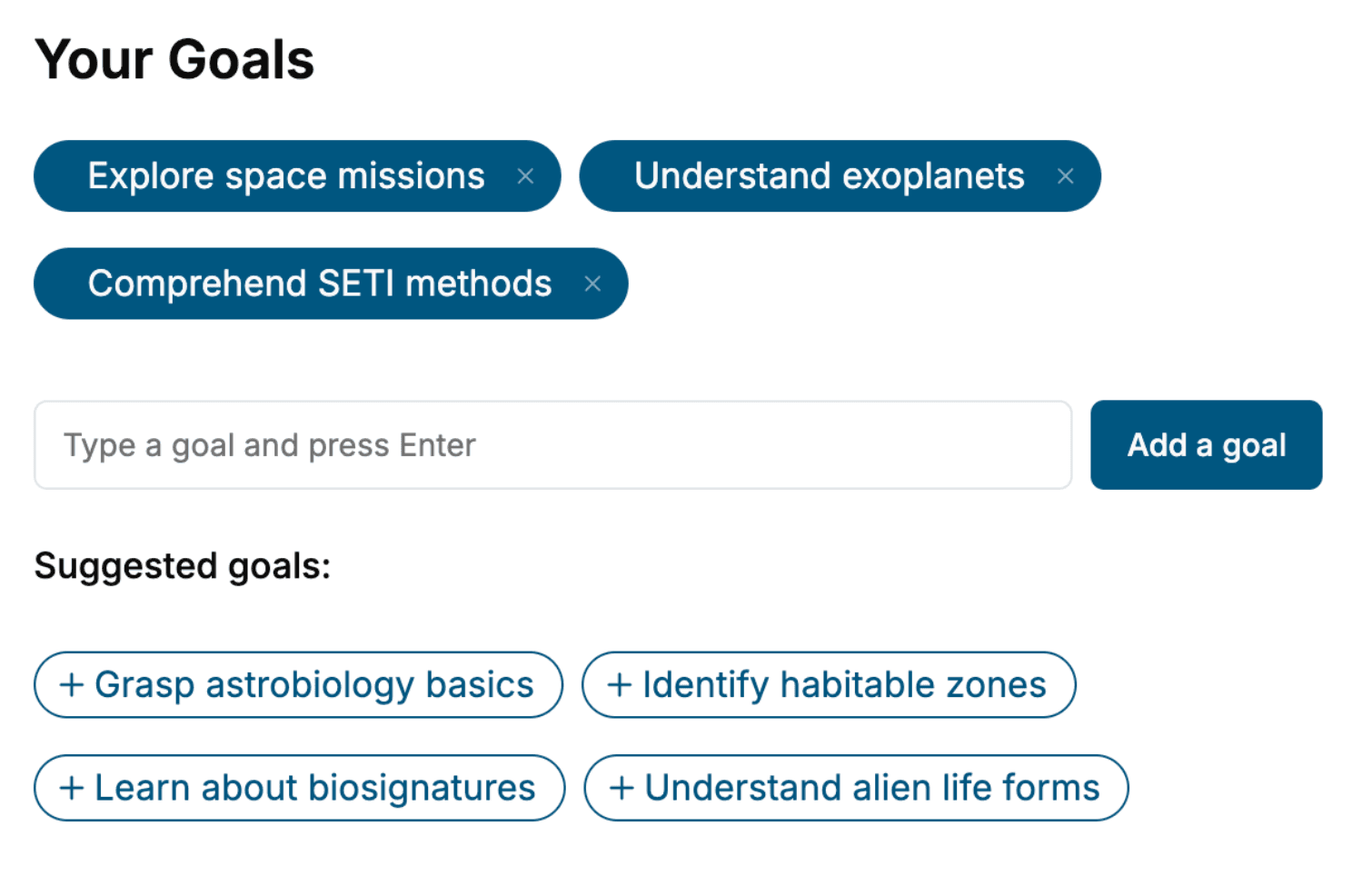
- 2. Personalize your book
Specify your goals and choose sub-topics to include
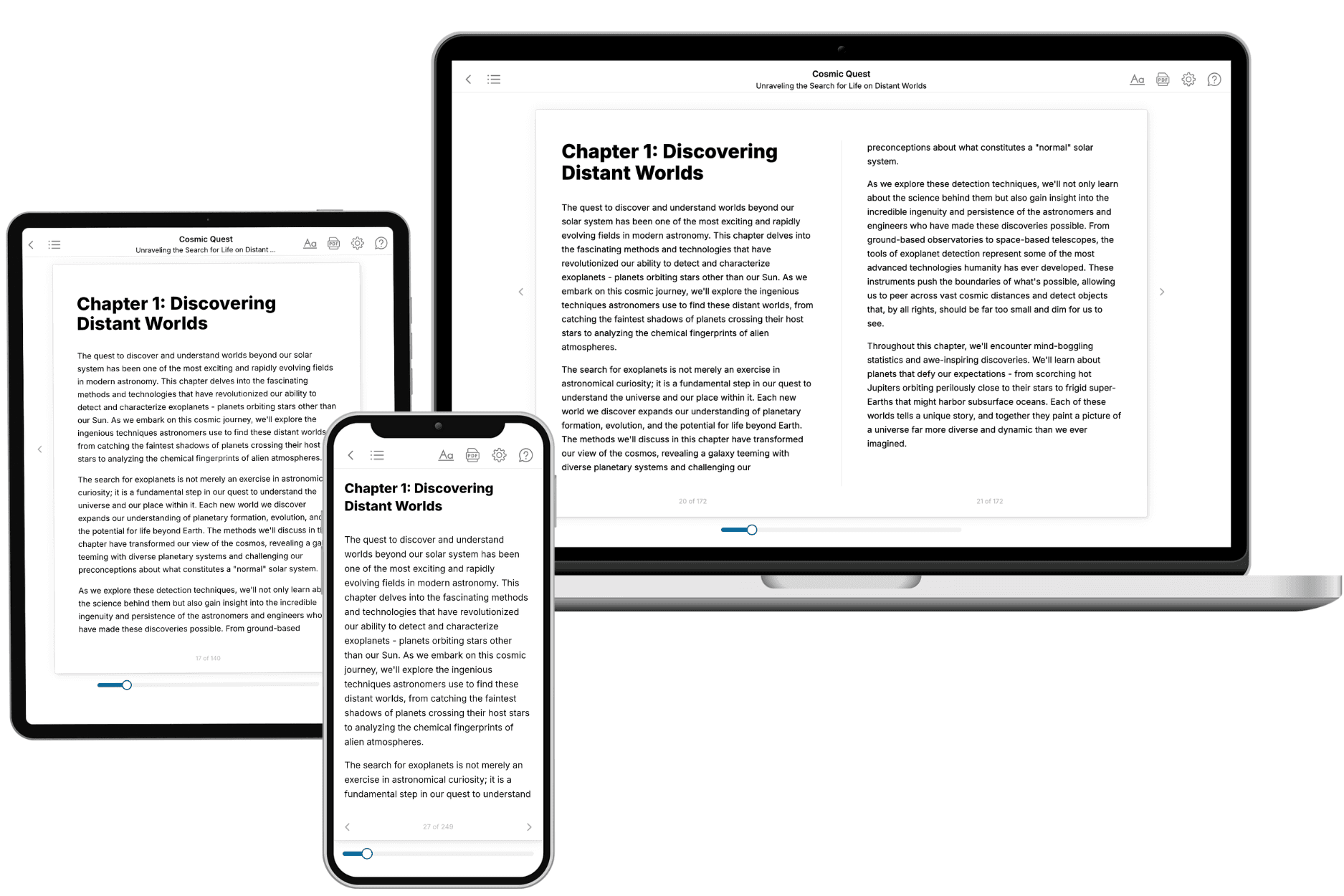
- 3. Get your tailored book
Your book is ready in 10 minutes. Read it online, download as EPUB or PDF, or send to Kindle.
Frequently asked questions
- What is TailoredRead?
TailoredRead creates complete, full-length nonfiction ebooks, written specifically for you. Tell us what you want to learn and why, and TailoredRead writes you a complete ebook on it, with charts, tables, and diagrams throughout. Read it online, on Kindle, or on any e-reader, or download it as a PDF or EPUB. Every book is written fresh the day you order it.
- How is the book tailored to me?
Before anything is written, you answer a few short questions about your goals, your background, and the topics you care about. Your book is then planned around your answers: written at your level, focused on your goals, and covering the topics you chose, instead of the one-size-fits-all book a store sells everyone.
- Will it read like generic AI content?
No. Your book isn't a chat transcript: it's planned chapter by chapter before a single word is written, told in a clear book voice, and explains ideas visually with charts, tables, and diagrams. After writing, every book goes through an editorial pass that polishes chapters so the book reads consistent from start to finish. Judge for yourself: browse thousands of sample books on our Explore Books page.
- How accurate is the content?
Our AI first checks whether your subject needs live research. Niche and fast-moving subjects are researched before writing, and the book plan and chapters are grounded in what it finds. After writing, every book goes through a quality pass that checks its facts and consistency, and researched books list their sources in a Notes section at the back.
- How long is the book?
You choose the length: Comprehensive (250-300 pages), Detailed (150-200 pages), Essential (70-100 pages), or Short (30-50 pages).
- Does the book include visuals?
Yes. Every book includes charts, tables, and diagrams: timelines, checklists, step-by-step guides, decision trees, comparison tables, matrices, and bar charts. A typical book includes dozens of these visual elements.
- Can I read it on Kindle? What formats can I download?
Yes. Every book can be read in our online reader or downloaded as a PDF or EPUB. The EPUB can be opened with Kindle, Apple Books, Kobo, and any e-reader. The Commercial and Author licenses also include an editable Word (DOCX) and Markdown download.
- How much does it cost?
About the price of a regular ebook. The exact price depends on your book's length and complexity, from $2 for the shortest books to $35 for the most comprehensive, and it's shown when you review your book, before you commit to anything. Each book is a one-time purchase, yours to keep, no subscription. Licenses that let you share, teach, or publish your book range from $35.99 to $49.99.
- Can I preview the book before purchasing?
Before you pay, you'll see what your book will cover: the title, a detailed description, the estimated length, and the complete chapter-by-chapter table of contents, so you know what you're getting before you decide. The full text itself is written after you purchase.
- How long does it take to create a book?
About 10 minutes. You can start reading the opening chapters while the rest is still being written.