Code Clarity
Mastering Declarative and Imperative Paradigms for Readable, Efficient Software
Dive into the world of programming paradigms and discover how to elevate your coding prowess.
284 pages14 chaptersFeb 9, 2025Software Development
About this book
"Code Clarity" takes you on an enlightening exploration of declarative and imperative programming approaches, unraveling their intricacies and applications in modern software development. As you progress through this comprehensive guide, you'll gain a deep understanding of how these paradigms shape code readability, maintainability, and efficiency. You'll learn to discern when to leverage each approach, enabling you to craft elegant solutions to complex problems. By the time you finish this book, you'll have acquired the skills to write cleaner, more expressive code. You'll be equipped with practical techniques to enhance your software architecture, optimize performance, and collaborate more effectively with your team. "Code Clarity" is your roadmap to becoming a more versatile and proficient developer, capable of tackling diverse programming challenges with confidence and finesse.
Table of contents
- IntroductionOverview of Programming Paradigms, The Importance of Code Readability, How This Book Is Structured, Learning Objectives and OutcomesRead below
- Chapter 1: Fundamentals of Declarative and Imperative ProgrammingDefining Declarative Programming, Understanding Imperative Programming, Key Differences Between the Two Paradigms, Historical Context and Evolution
- Chapter 2: Deep Dive into Declarative ProgrammingCore Principles of Declarative Programming, Real-world Examples of Declarative Code, Popular Declarative Programming Languages, Advantages of the Declarative Approach
- Chapter 3: Exploring Imperative ProgrammingFundamental Concepts of Imperative Programming, Practical Examples of Imperative Code, Common Imperative Programming Languages, Strengths of the Imperative Paradigm
- Chapter 4: Code Readability: A Comparative AnalysisWhy Code Readability Matters, Readability in Declarative Code, Readability in Imperative Code, Best Practices for Improving Code Readability
- Chapter 5: Performance ConsiderationsPerformance Characteristics of Declarative Code, Performance Aspects of Imperative Code, Optimization Techniques for Both Paradigms, Benchmarking and Performance Analysis
- Chapter 6: Ideal Use Cases for Each ParadigmScenarios Where Declarative Shines, When to Choose Imperative Programming, Hybrid Approaches: Combining Paradigms, Real-world Case Studies and Examples
- Chapter 7: Functional Programming: A Declarative SubsetBasic Concepts of Functional Programming, How Functional Programming Relates to Declarative Programming, Benefits of Functional Programming in Software Development, Popular Functional Programming Languages
- Chapter 8: Object-Oriented Programming: Blending ParadigmsFundamentals of Object-Oriented Programming, Declarative Aspects of OOP, Imperative Elements in OOP, Best Practices for OOP Design
- Chapter 9: Design Patterns in Declarative ProgrammingIntroduction to Declarative Design Patterns, Common Declarative Design Patterns, Implementing Declarative Patterns, Benefits of Using Declarative Patterns
- Chapter 10: Design Patterns in Imperative ProgrammingOverview of Imperative Design Patterns, Frequently Used Imperative Design Patterns, Applying Imperative Patterns in Practice, Tradeoffs in Using Imperative Patterns
- Chapter 11: Testing Strategies for Different ParadigmsTesting Declarative Code, Approaches to Testing Imperative Code, Test-Driven Development in Both Paradigms, Tools and Frameworks for Effective Testing
- Chapter 12: Refactoring TechniquesThe Importance of Code Refactoring, Refactoring Declarative Code, Strategies for Refactoring Imperative Code, Tools and Techniques for Efficient Refactoring
- Chapter 13: Choosing the Right Paradigm for Your ProjectAnalyzing Project Requirements, Considering Team Expertise and Preferences, Scalability and Maintenance Factors, A Framework for Paradigm Selection, When to Use a Mixed Paradigm Approach
- Chapter 14: Future Trends in Programming ParadigmsEmerging Programming Paradigms, The Impact of AI on Programming Approaches, Shifting Trends in Industry Adoption, Preparing for Future Paradigm Shifts
- ConclusionKey Takeaways, The Path to Paradigm Mastery, Embracing Continuous Learning in Programming
- Glossary
- Further Reading
Introduction
Welcome to "Code Clarity: Mastering Declarative and Imperative Paradigms for Readable, Efficient Software." This book is your comprehensive guide to understanding and effectively applying two fundamental programming paradigms that shape the landscape of modern software development. As you embark on this journey, you'll discover how mastering these approaches can dramatically enhance your coding skills, improve the quality of your software, and make you a more versatile and valuable developer in today's rapidly evolving tech industry.
In the world of software development, the ability to write clean, efficient, and maintainable code is a hallmark of expertise. It's not just about making your programs work; it's about crafting solutions that are elegant, scalable, and easy for others (including your future self) to understand and modify. This is where the power of programming paradigms comes into play. By understanding and skillfully applying different paradigms, you can elevate your code from merely functional to truly exceptional.
Throughout this book, we'll delve deep into the realms of declarative and imperative programming. These two paradigms represent distinct approaches to solving problems and expressing logic in code. Each has its strengths, ideal use cases, and unique ways of improving code readability and efficiency. By the time you finish this book, you'll not only understand the theoretical underpinnings of these paradigms but also know how to apply them practically in your day-to-day coding tasks.
Whether you're working on a small personal project or contributing to a large-scale enterprise application, the insights you gain from this book will empower you to make informed decisions about which paradigm to use and when. You'll learn to leverage the strengths of each approach to write code that is not only functional but also maintainable, scalable, and a joy for other developers to work with.
So, prepare to expand your programming horizons, challenge your existing coding habits, and discover new ways to approach problem-solving in software development. Let's begin our exploration of declarative and imperative programming paradigms, and unlock the potential to write clearer, more efficient code.
Overview of Programming Paradigms
Programming paradigms are fundamental styles of programming that provide guidelines on how to structure and organize code. They represent different approaches to solving problems and implementing solutions in software development. Understanding these paradigms is crucial for any developer looking to write efficient, maintainable, and scalable code. In this section, we'll provide an overview of programming paradigms, with a particular focus on declarative and imperative programming, which form the core of this book.
At its core, a programming paradigm is a way of thinking about programming and structuring code to solve problems. It's a conceptual model that shapes how we approach software design and implementation. Different paradigms can lead to vastly different code structures and behaviors, even when solving the same problem. This diversity in approaches allows developers to choose the most suitable paradigm for their specific needs, whether it's optimizing for performance, readability, maintainability, or a combination of these factors.
While there are numerous programming paradigms, they can broadly be categorized into two main types: imperative and declarative. Imperative programming focuses on describing how a program operates, step by step. It's characterized by sequences of commands that change a program's state. On the other hand, declarative programming emphasizes what the program should accomplish, without explicitly specifying the steps to achieve it. This distinction forms the foundation of our exploration in this book.
Imperative programming, which includes procedural and object-oriented programming, is perhaps the most familiar paradigm to many developers. In imperative programming, you write code that explicitly states how to achieve a desired result. It's like giving a detailed set of instructions to a computer, specifying each step of the process. Languages like C, Java, and Python, when used in their traditional sense, often follow this paradigm. Imperative programming gives developers fine-grained control over program execution and is often praised for its straightforward nature and efficiency in certain scenarios.
Declarative programming, on the other hand, focuses on describing what you want to achieve, rather than how to achieve it. This paradigm includes functional programming, logic programming, and database query languages. In declarative programming, you define the desired outcome and let the underlying system figure out how to accomplish it. Languages like SQL, Haskell, and HTML are prime examples of declarative programming. This approach often leads to more concise and readable code, as it abstracts away the implementation details and focuses on the problem domain.
It's important to note that these paradigms are not mutually exclusive. Many modern programming languages support multiple paradigms, allowing developers to choose the most appropriate approach for different parts of their application. For instance, JavaScript can be used for both imperative and declarative programming, and even within a single project, you might find a mix of paradigms being used.
As we delve deeper into declarative and imperative programming in the subsequent chapters, you'll gain a thorough understanding of their characteristics, strengths, and ideal use cases. You'll learn how to leverage the power of declarative programming to write more expressive and maintainable code, while also mastering the control and efficiency that imperative programming offers. This knowledge will empower you to make informed decisions about which paradigm to use in different scenarios, ultimately leading to more robust and efficient software solutions.
Throughout this book, we'll explore these paradigms not just in theory, but through practical examples and real-world applications. You'll see how choosing the right paradigm can significantly impact code readability, maintainability, and performance. We'll also discuss how these paradigms have evolved over time and how they continue to shape modern software development practices.
By the end of this book, you'll have a comprehensive understanding of declarative and imperative programming paradigms. You'll be equipped with the knowledge to choose the most appropriate paradigm for different programming tasks, and you'll have the skills to effectively implement solutions using both approaches. This versatility will make you a more effective programmer, capable of adapting to various programming challenges and contributing valuable insights to any development team.
As we proceed, keep in mind that mastering these paradigms is not about choosing one over the other, but about understanding when and how to use each to its full potential. The true power lies in knowing how to blend these approaches to create elegant, efficient, and maintainable code. So, let's embark on this journey to explore the fascinating world of programming paradigms and unlock new levels of coding proficiency.
The Importance of Code Readability
Code readability is a fundamental aspect of software development that often doesn't receive the attention it deserves. While functional code that accomplishes its intended task is crucial, the ability to write code that is easily understood by others (including your future self) is equally important. In this section, we'll explore why code readability matters and how it relates to the declarative and imperative programming paradigms we'll be discussing throughout this book.
At its core, code readability refers to how easily other programmers can understand the purpose, structure, and function of a piece of code. It's about writing code that communicates its intent clearly, not just to computers, but to human readers as well. The importance of this cannot be overstated. In the professional world of software development, code is rarely written once and forgotten. Instead, it's continually read, reviewed, modified, and maintained, often by multiple developers over extended periods.
One of the primary reasons code readability is crucial is its impact on maintainability. Maintainable code is code that can be easily understood, modified, and extended without introducing new bugs or breaking existing functionality. When code is readable, developers can quickly grasp its purpose and structure, making it easier to fix bugs, add new features, or refactor as needed. This efficiency translates directly into reduced development time and costs, as well as improved software quality[1].
Moreover, readable code facilitates collaboration among team members. In most professional settings, multiple developers work on the same codebase. When code is clear and self-explanatory, it becomes easier for team members to understand each other's work, review code effectively, and contribute to shared projects. This collaborative efficiency is especially crucial in agile development environments where rapid iterations and frequent code reviews are the norm.
Code readability also plays a significant role in reducing technical debt. Technical debt refers to the implied cost of additional rework caused by choosing an easy (limited) solution now instead of using a better approach that would take longer. When code is difficult to read and understand, it becomes more likely that future modifications will introduce bugs or inconsistencies. Over time, this can lead to a codebase that's increasingly difficult and expensive to maintain. By prioritizing readability from the start, you can mitigate this risk and create a more sustainable codebase.
From a learning perspective, readable code serves as an excellent educational tool. For junior developers or those new to a project, well-written, readable code can be a valuable resource for understanding best practices, coding standards, and the overall architecture of a system. It sets a positive example and helps propagate good coding habits throughout a team or organization.
When it comes to debugging, the value of readable code becomes even more apparent. Debugging is an inevitable part of software development, and the ease with which issues can be identified and resolved is often directly related to code readability. Clear, well-structured code makes it easier to trace program execution, understand data flow, and pinpoint the source of problems. This can significantly reduce the time and frustration associated with debugging tasks.
It's important to note that code readability is not just about following a set of rigid rules or conventions. While coding standards and style guides play a role, true readability comes from a deeper understanding of how to structure code in a way that clearly communicates its intent. This is where the choice of programming paradigm can have a significant impact.
Declarative and imperative programming paradigms each have their own implications for code readability. Declarative code, with its focus on describing what should be done rather than how to do it, often results in more concise and expressive code. It can lead to solutions that more closely resemble the problem domain, making it easier for both developers and domain experts to understand the code's purpose. For example, a declarative approach using SQL to query a database can often be more readable than an imperative approach that manually iterates over data structures.
On the other hand, imperative programming, with its step-by-step approach, can provide a clear sequence of operations that can be easy to follow, especially for more procedural tasks. When used appropriately, imperative code can offer a straightforward representation of an algorithm or process. However, as complexity increases, imperative code can become more difficult to read and maintain if not carefully structured.
Throughout this book, we'll explore how to leverage the strengths of both paradigms to write code that is not only functional but also highly readable. You'll learn techniques for structuring your code, choosing appropriate abstractions, and expressing your intent clearly, regardless of the paradigm you're using. By mastering these skills, you'll be able to write code that is a pleasure to read, maintain, and work with.
Remember, code readability is not just a nice-to-have feature; it's a critical aspect of professional software development. As you progress through this book and enhance your understanding of declarative and imperative programming, always keep in mind the importance of writing code that communicates clearly. Your future self, your colleagues, and anyone else who interacts with your code will thank you for it.
How This Book Is Structured
"Code Clarity: Mastering Declarative and Imperative Paradigms for Readable, Efficient Software" is designed to provide you with a comprehensive understanding of declarative and imperative programming paradigms, their applications, and their impact on code readability and efficiency. The book is structured to guide you through a logical progression of concepts, starting from the fundamentals and building up to advanced topics and practical applications. This section will give you an overview of how the book is organized, helping you navigate its contents and make the most of your learning journey.
The book begins with this introduction, which sets the stage for your exploration of programming paradigms. Following this, Chapter 1 delves into the fundamentals of declarative and imperative programming. This chapter provides you with a solid foundation, defining each paradigm, exploring their key differences, and placing them in a historical context. This background knowledge is crucial for understanding the more advanced concepts that follow.
Chapters 2 and 3 offer deep dives into declarative and imperative programming, respectively. In these chapters, you'll explore the core principles of each paradigm, examine real-world examples, and learn about popular languages associated with each approach. These chapters also highlight the advantages and strengths of each paradigm, giving you a clear understanding of when and why you might choose one over the other.
Chapter 4 focuses on one of the central themes of this book: code readability. This chapter provides a comparative analysis of how declarative and imperative approaches impact code readability. You'll learn best practices for improving readability in both paradigms, equipping you with practical skills to enhance the clarity of your code.
Performance considerations are addressed in Chapter 5, where you'll explore how declarative and imperative approaches affect code performance. This chapter includes optimization techniques for both paradigms and introduces you to benchmarking and performance analysis tools.
Chapter 6 is dedicated to exploring ideal use cases for each paradigm. Through real-world case studies and examples, you'll gain insights into scenarios where declarative or imperative approaches shine, as well as situations where a hybrid approach might be beneficial.
The book then explores related programming concepts in Chapters 7 and 8. Chapter 7 delves into functional programming as a subset of declarative programming, while Chapter 8 examines object-oriented programming and how it blends aspects of both paradigms.
Chapters 9 and 10 focus on design patterns in declarative and imperative programming, respectively. These chapters introduce you to common patterns, their implementations, and the benefits and trade-offs of using them in your code.
Testing strategies for different paradigms are covered in Chapter 11, providing you with approaches to ensure the reliability and correctness of your code, regardless of the paradigm you're using.
Chapter 12 is dedicated to refactoring techniques, equipping you with strategies to improve existing code while maintaining its functionality. This chapter covers refactoring in both declarative and imperative contexts, as well as tools to aid in the refactoring process.
As you near the end of the book, Chapter 13 provides guidance on choosing the right paradigm for your projects. This chapter offers a framework for paradigm selection, considering factors such as project requirements, team expertise, and scalability needs.
The final chapter, Chapter 14, looks towards the future, exploring emerging trends in programming paradigms and how they might shape the future of software development. This forward-looking perspective will help you prepare for future shifts in the programming landscape.
Throughout the book, you'll find practical examples, code snippets, and exercises that reinforce the concepts being discussed. These hands-on elements are designed to help you apply what you're learning and gain practical experience with both declarative and imperative programming techniques.
The book concludes with a summary of key takeaways, guidance on continuing your journey towards paradigm mastery, and encouragement to embrace continuous learning in programming. Additionally, you'll find a glossary of important terms and a list of recommended further reading to support your ongoing learning.
By structuring the book in this way, we aim to provide you with a comprehensive, practical, and engaging learning experience. Whether you're reading the book from cover to cover or using it as a reference for specific topics, this structure allows you to easily navigate the content and focus on the areas most relevant to your needs.
As you progress through the book, remember that mastering programming paradigms is an ongoing journey. Take the time to experiment with the concepts you learn, apply them to your own projects, and reflect on how they impact your coding practices. By actively engaging with the material, you'll not only gain knowledge but also develop the skills and intuition needed to write clearer, more efficient code in your day-to-day work.
Learning Objectives and Outcomes
As you embark on your journey through "Code Clarity: Mastering Declarative and Imperative Paradigms for Readable, Efficient Software," it's important to have a clear understanding of what you can expect to learn and achieve. This section outlines the key learning objectives and outcomes of the book, providing you with a roadmap for your learning journey and helping you set clear goals for your study.
By the end of this book, you will have gained a comprehensive understanding of declarative and imperative programming paradigms. This knowledge will not only enhance your coding skills but also broaden your perspective on software development as a whole. Here are the primary learning objectives and outcomes you can expect to achieve:
1. Understand the fundamental concepts of declarative and imperative programming:
- Clearly define and distinguish between declarative and imperative programming paradigms
- Recognize the historical context and evolution of these paradigms in software development
- Identify the key characteristics and principles of each paradigm
2. Master the application of declarative programming:
- Grasp the core principles and techniques of declarative programming
- Recognize scenarios where declarative approaches are most effective
- Implement declarative solutions to common programming problems
- Utilize popular declarative programming languages and frameworks effectively
3. Develop proficiency in imperative programming:
- Comprehend the fundamental concepts and methodologies of imperative programming
- Identify situations where imperative approaches offer advantages
- Create efficient imperative solutions for various programming challenges
- Leverage common imperative programming languages and tools effectively
4. Enhance code readability and maintainability:
- Recognize the importance of code readability in software development
- Apply techniques to improve code clarity in both declarative and imperative contexts
- Implement best practices for writing maintainable code across different paradigms
- Develop the ability to write self-documenting code that clearly communicates its intent
5. Optimize code performance:
- Understand the performance implications of declarative and imperative approaches
- Apply optimization techniques specific to each paradigm
- Conduct effective benchmarking and performance analysis
- Make informed decisions about performance trade-offs in different scenarios
6. Select appropriate paradigms for different scenarios:
- Analyze project requirements to determine the most suitable programming paradigm
- Consider factors such as team expertise, scalability, and maintenance when choosing a paradigm
- Implement hybrid approaches that leverage the strengths of both paradigms
- Adapt programming styles to suit different problem domains and project contexts
7. Apply design patterns effectively:
- Understand common design patterns in both declarative and imperative programming
- Implement design patterns to solve recurring design problems
- Recognize the benefits and trade-offs of using specific patterns
- Adapt and combine patterns to create robust software architectures
8. Implement effective testing strategies:
- Develop testing approaches suitable for declarative and imperative code
- Apply test-driven development principles across different paradigms
- Utilize appropriate testing tools and frameworks
- Ensure code reliability and correctness through comprehensive testing
9. Master refactoring techniques:
- Recognize code that requires refactoring
- Apply refactoring strategies specific to declarative and imperative code
- Use refactoring tools effectively to improve code quality
- Maintain functionality while enhancing code structure and readability
10. Stay informed about future trends:
- Understand emerging programming paradigms and their potential impact
- Recognize the influence of AI and other technologies on programming approaches
- Adapt to shifting trends in industry adoption of different paradigms
- Develop strategies for continuous learning and skill development in programming
By achieving these learning objectives, you will significantly enhance your capabilities as a software developer. You'll be equipped with the knowledge and skills to write clearer, more efficient code, make informed decisions about programming approaches, and adapt to various development scenarios. This expertise will not only improve your individual performance but also increase your value as a team member in any software development project.
Remember, learning is an active process. As you progress through the book, engage with the material by trying out code examples, completing exercises, and applying the concepts to your own projects. Reflect on how these paradigms relate to your current work and consider how you can incorporate new approaches to improve your coding practices.
By the end of this book, you'll have gained a powerful set of tools and perspectives that will enhance your problem-solving abilities and make you a more versatile and effective programmer. You'll be well-prepared to tackle a wide range of programming challenges and contribute to the creation of high-quality, maintainable software solutions.
Notes
Introduction
- 1. R. C. Martin, Clean Code: A Handbook of Agile Software Craftsmanship, Prentice Hall, 2008
This is the end of the free sample. The full book has 14 chapters.
Want this book written for you?
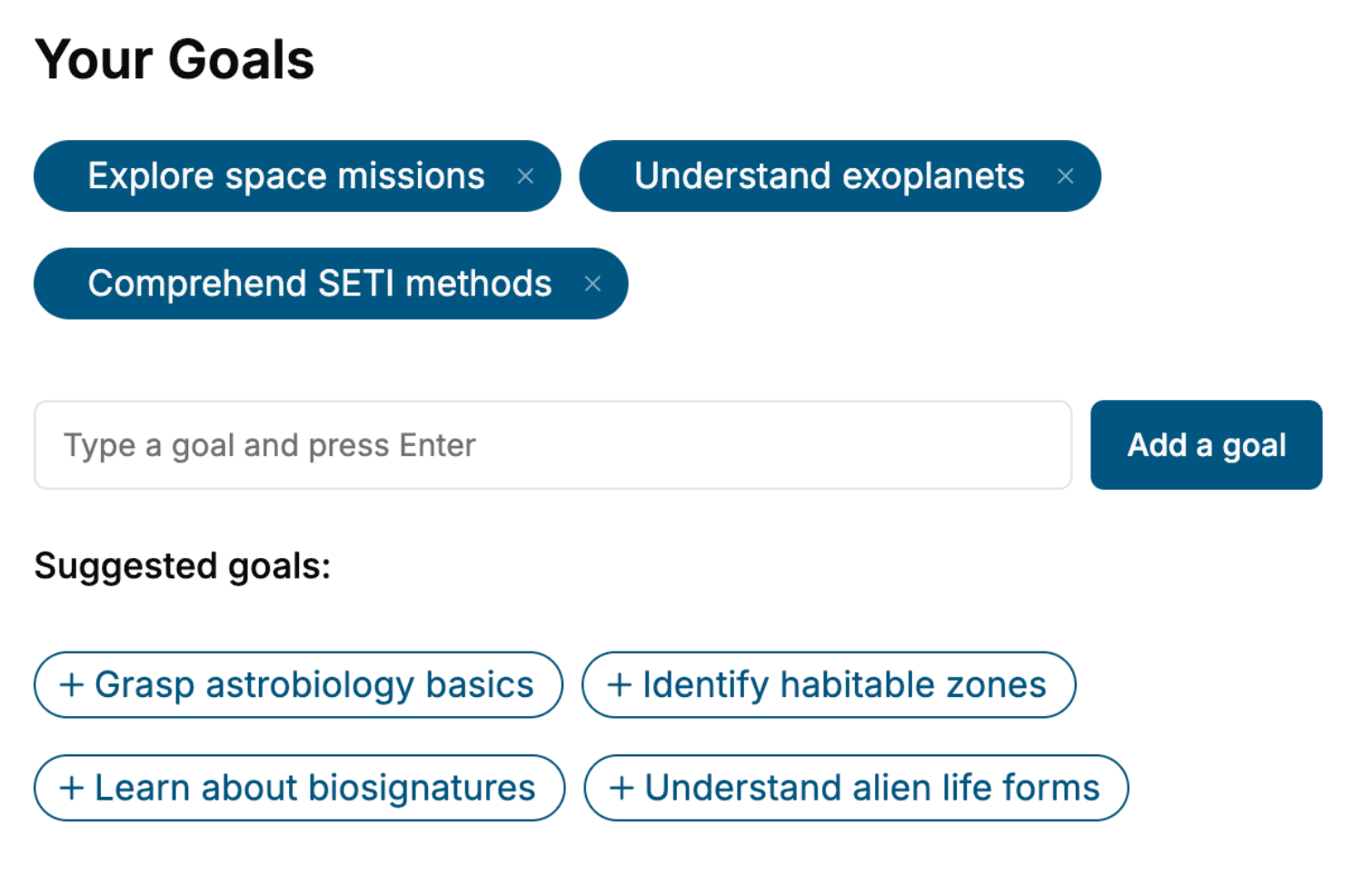
Tell us your goals and background, and get your own version of this book, tailored by AI to you.


Benefits of AI-tailored books
- Read one book, not ten:
- all the Software Development knowledge you need, gathered into a single book.
- Save days of learning:
- tell us your goals, choose your topics, and the whole book is built around them.
- Learn effortlessly:
- Software Development book written for your specific background and expertise.
- Understand at a glance:
- includes charts, tables, timelines, checklists, decision trees, and more.
- Stay current:
- written the day you order it, not years ago.
- Trust what you read:
- every book is checked for accuracy, with real research when your subject needs it.
Create your unique book in 3 steps
- 1. Select your focus
Select the focus of your Software Development book and share your background
- 2. Personalize your book
Specify your goals and choose sub-topics to include
- 3. Get your tailored book
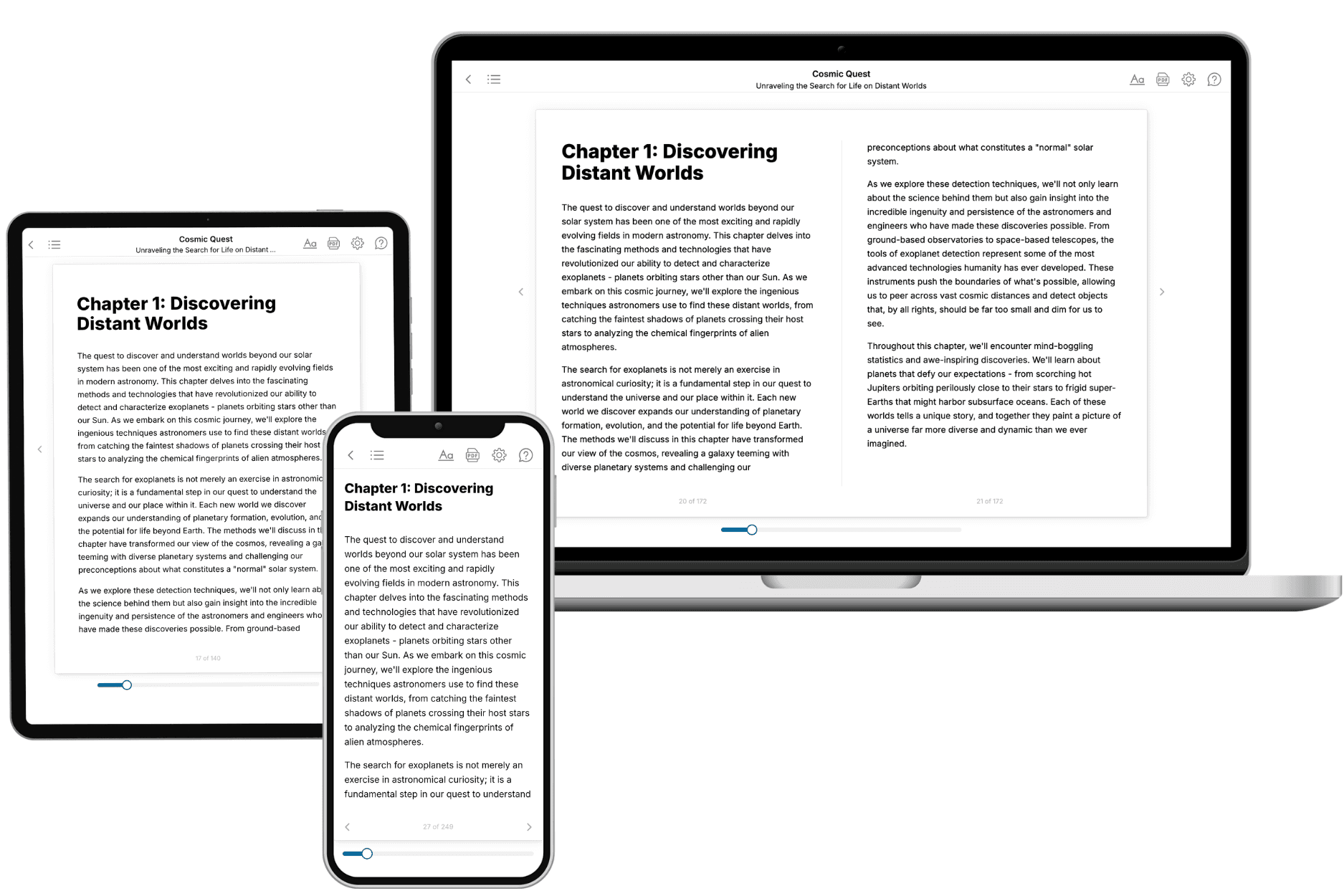
Your book is ready in 10 minutes. Read it online, download as EPUB or PDF, or send to Kindle.

Frequently asked questions
- What is TailoredRead?
TailoredRead creates complete, full-length nonfiction ebooks, written specifically for you. Tell us what you want to learn and why, and TailoredRead writes you a complete ebook on it, with charts, tables, and diagrams throughout. Read it online, on Kindle, or on any e-reader, or download it as a PDF or EPUB. Every book is written fresh the day you order it.
- How is the book tailored to me?
Before anything is written, you answer a few short questions about your goals, your background, and the topics you care about. Your book is then planned around your answers: written at your level, focused on your goals, and covering the topics you chose, instead of the one-size-fits-all book a store sells everyone.
- Will it read like generic AI content?
No. Your book isn't a chat transcript: it's planned chapter by chapter before a single word is written, told in a clear book voice, and explains ideas visually with charts, tables, and diagrams. After writing, every book goes through an editorial pass that polishes chapters so the book reads consistent from start to finish. Judge for yourself: browse thousands of sample books on our Explore Books page.
- How accurate is the content?
Our AI first checks whether your subject needs live research. Niche and fast-moving subjects are researched before writing, and the book plan and chapters are grounded in what it finds. After writing, every book goes through a quality pass that checks its facts and consistency, and researched books list their sources in a Notes section at the back.
- How long is the book?
You choose the length: Comprehensive (250-300 pages), Detailed (150-200 pages), Essential (70-100 pages), or Short (30-50 pages).
- Does the book include visuals?
Yes. Every book includes visual elements such as timelines, checklists, step-by-step guides, decision trees, comparison tables, and matrices, and many include bar charts. A typical book includes dozens of these visual elements.
- Can I read it on Kindle? What formats can I download?
Yes. Every book can be read in our online reader or downloaded as a PDF or EPUB. The EPUB can be opened with Kindle, Apple Books, Kobo, and any e-reader. The Commercial and Author licenses also include an editable Word (DOCX) and Markdown download.
- How much does it cost?
About the price of a regular ebook. The exact price depends on your book's length and complexity, from $2 for the shortest books to $35 for the most comprehensive, and it's shown when you review your book, before you commit to anything. Each book is a one-time purchase, yours to keep, no subscription. Licenses that let you share, teach, or publish your book range from $35.99 to $49.99.
- Can I preview the book before purchasing?
Before you pay, you'll see what your book will cover: the title, a detailed description, the estimated length, and the complete chapter-by-chapter table of contents, so you know what you're getting before you decide. The full text itself is written after you purchase.
- How long does it take to create a book?
About 10 minutes. You can start reading the opening chapters while the rest is still being written.