Code Clarity
Mastering Object-Oriented Principles for Robust Software Design
Imagine crafting software that's not just functional, but elegant, maintainable, and scalable.
253 pages13 chaptersJan 26, 2025Software Development
About this book
Picture yourself confidently tackling complex coding challenges, armed with a deep understanding of object-oriented principles that elevate your work above the ordinary. This is the reality that awaits you with "Code Clarity: Mastering Object-Oriented Principles for Robust Software Design." This comprehensive guide is your key to unlocking the full potential of object-oriented programming. You'll dive deep into the core principles that form the backbone of successful software architecture. From encapsulation and inheritance to polymorphism and abstraction, you'll gain a thorough understanding of how these concepts interplay to create powerful, flexible code. But this book goes beyond mere theory. You'll learn how to apply these principles in real-world scenarios, with practical examples and hands-on exercises that reinforce your learning. Discover how to design classes that are both reusable and extensible, create interfaces that provide clear contracts, and develop systems that are easy to maintain and evolve over time. Whether you're building small applications or large-scale enterprise systems, the principles you'll master in this book will transform your approach to software development. You'll write cleaner, more efficient code, reduce bugs, and create solutions that stand the test of time. Get ready to elevate your coding skills and become the go-to expert for robust, object-oriented design in your development team.
Table of contents
- IntroductionThe Importance of Object-Oriented Programming, Overview of the Book, How to Use This Book, Prerequisites and ExpectationsRead below
- Chapter 1: Fundamentals of Object-Oriented ProgrammingWhat is Object-Oriented Programming?, Objects and Classes, Attributes and Methods, Benefits of OOP
- Chapter 2: Encapsulation: Protecting Data and BehaviorUnderstanding Encapsulation, Access Modifiers and Their Importance, Getters and Setters, Benefits of Proper Encapsulation
- Chapter 3: Inheritance: Building on Existing CodeBasics of Inheritance, Types of Inheritance, Method Overriding and the 'super' Keyword, Pitfalls and Best Practices
- Chapter 4: Polymorphism: Flexibility in CodeThe Concept of Polymorphism, Runtime Polymorphism, Compile-time Polymorphism, Practical Applications of Polymorphism
- Chapter 5: Abstraction: Simplifying Complex SystemsUnderstanding Abstraction, Abstract Classes, Interfaces and Their Role, Abstraction in Real-World Scenarios
- Chapter 6: SOLID Principles: Building Robust SoftwareSingle Responsibility Principle, Open-Closed Principle, Liskov Substitution Principle, Interface Segregation Principle, Dependency Inversion Principle
- Chapter 7: Design Patterns: Proven OOP SolutionsIntroduction to Design Patterns, Creational Patterns, Structural Patterns, Behavioral Patterns
- Chapter 8: Composition vs InheritanceUnderstanding Composition, Composition vs Inheritance: When to Use Each, The 'Has-A' vs 'Is-A' Relationship, Flexibility and Maintainability with Composition
- Chapter 9: Coupling and Cohesion in OOPUnderstanding Coupling, Understanding Cohesion, Achieving Low Coupling, Striving for High Cohesion
- Chapter 10: Testing Object-Oriented CodeUnit Testing in OOP, Mocking and Stubbing Objects, Test-Driven Development (TDD), Integration Testing for OOP Systems
- Chapter 11: Refactoring Object-Oriented CodeThe Importance of Refactoring, Identifying Code Smells, Common Refactoring Techniques, Tools for Refactoring
- Chapter 12: Advanced OOP ConceptsGenerics and Type Parameters, Reflection and Metaprogramming, Aspect-Oriented Programming, Functional Programming in OOP
- Chapter 13: Applying OOP in Real-World ProjectsStructuring Large-Scale OOP Projects, Making Design Decisions, Performance Considerations in OOP, Case Studies and Best Practices
- ConclusionThe Future of Object-Oriented Programming, Continuous Learning in OOP
- AppendixGlossary of OOP Terms, Additional Resources and References
Introduction
Welcome to "Code Clarity: Mastering Object-Oriented Principles for Robust Software Design." This book is your comprehensive guide to understanding and applying object-oriented programming (OOP) principles in your software development journey. As you embark on this exploration of OOP, you'll discover how these fundamental concepts can transform your approach to coding, leading to more maintainable, scalable, and elegant software solutions.
In today's rapidly evolving technological landscape, the ability to design and implement robust, flexible software systems is more crucial than ever. Object-oriented programming has stood the test of time as a paradigm that enables developers to create complex applications with clarity and structure. Whether you're building small-scale projects or enterprise-level systems, the principles you'll learn in this book will serve as a solid foundation for your development practices.
Throughout this book, we'll delve deep into the core concepts of OOP, exploring how they interplay to create powerful, adaptable code. From the fundamental pillars of encapsulation, inheritance, polymorphism, and abstraction to advanced topics like SOLID principles and design patterns, you'll gain a comprehensive understanding of object-oriented design. But more than just theory, this book is designed to provide you with practical, actionable knowledge that you can apply immediately in your projects.
As we progress through the chapters, you'll find that each concept is explained with clarity, backed by real-world examples and scenarios that illustrate how these principles solve common development challenges. By the end of this journey, you'll not only understand the 'what' and 'why' of object-oriented programming but also the 'how' - equipping you with the skills to implement these concepts effectively in your own work.
So, whether you're looking to solidify your understanding of OOP, improve your coding practices, or take your software design skills to the next level, you're in the right place. Let's begin this exciting journey into the world of object-oriented programming and discover how it can elevate your software development expertise.
The Importance of Object-Oriented Programming
Object-Oriented Programming (OOP) has revolutionized the way we approach software development. Its importance in modern programming cannot be overstated, as it provides a structured approach to designing and implementing complex software systems. At its core, OOP is about creating code that is organized, reusable, and maintainable - qualities that are essential in today's fast-paced, ever-evolving tech landscape.
One of the primary reasons for OOP's significance is its ability to model real-world entities and relationships in code. By representing data and functionality as objects, OOP allows developers to create intuitive, logical structures that mirror the problems they're trying to solve. This natural mapping between code and real-world concepts makes it easier to understand, develop, and maintain complex systems over time.
Modularity is another key advantage of OOP. By encapsulating data and behavior within objects, OOP promotes a modular approach to software design. This modularity leads to several benefits:
- Improved code organization: Related functionality is grouped together, making it easier to navigate and understand large codebases.
- Enhanced maintainability: Changes to one part of the system are less likely to affect other parts, reducing the risk of unintended side effects.
- Increased reusability: Well-designed objects can be reused across different projects, saving time and reducing redundancy.
- Better collaboration: Modular code allows multiple developers to work on different parts of a system simultaneously without interfering with each other's work.
OOP's emphasis on abstraction is another crucial aspect of its importance. Abstraction allows developers to hide complex implementation details behind simple interfaces, making it easier to use and understand different parts of a system. This principle is particularly valuable in large-scale projects where managing complexity is a significant challenge.
The concept of inheritance in OOP provides a powerful mechanism for code reuse and the creation of hierarchical relationships between classes. This not only reduces code duplication but also allows for the creation of more specialized classes based on existing ones, promoting a hierarchical organization of code that can mirror real-world relationships.
Polymorphism, another cornerstone of OOP, offers flexibility and extensibility in software design. It allows objects of different types to be treated uniformly, enabling more generic and adaptable code. This flexibility is particularly valuable when designing systems that need to accommodate future changes or extensions.
In the context of software development methodologies, OOP aligns well with modern practices such as Agile and Test-Driven Development (TDD). The modular nature of OOP makes it easier to write unit tests, refactor code, and iterate on designs - all crucial aspects of these methodologies.
From an industry perspective, OOP has become the dominant paradigm in many sectors of software development. Many popular programming languages, including Java, C++, Python, and C#, are designed with OOP principles in mind. As a result, proficiency in OOP is often a key requirement for software development roles across various industries.
Moreover, OOP principles form the foundation for many advanced software design concepts and patterns. Design patterns, which are reusable solutions to common problems in software design, are typically expressed in terms of objects and classes. Understanding OOP is therefore crucial for leveraging these powerful design tools effectively.
In the realm of large-scale system design, OOP provides a solid foundation for creating scalable and maintainable architectures. Concepts like dependency injection, inversion of control, and aspect-oriented programming - all of which are important in enterprise-level software - build upon the principles of OOP.
As software systems continue to grow in complexity, the principles of OOP become even more crucial. They provide a structured approach to managing this complexity, allowing developers to create systems that are not only functional but also adaptable to changing requirements. In an era where software needs to be constantly updated and evolved, the flexibility and maintainability offered by OOP are invaluable.
In conclusion, the importance of Object-Oriented Programming lies in its ability to provide a structured, intuitive approach to software design that promotes code reuse, maintainability, and scalability. By mastering OOP principles, you equip yourself with a powerful set of tools and concepts that will serve you well throughout your career in software development. As we delve deeper into these principles in the following chapters, you'll gain a thorough understanding of how to leverage OOP to create robust, efficient, and elegant software solutions.
Overview of the Book
"Code Clarity: Mastering Object-Oriented Principles for Robust Software Design" is structured to provide a comprehensive journey through the world of object-oriented programming. This book is designed to take you from the fundamental concepts of OOP to advanced techniques and real-world applications. Each chapter builds upon the knowledge from previous ones, creating a cohesive learning experience that will deepen your understanding of OOP principles and practices.
We begin our exploration with the fundamentals of object-oriented programming in Chapter 1. This chapter lays the groundwork for the rest of the book, introducing you to the core concepts of objects, classes, and the benefits of the OOP paradigm. It's designed to ensure that all readers, regardless of their prior experience with OOP, have a solid foundation to build upon.
Chapters 2 through 5 delve into the four pillars of object-oriented programming: encapsulation, inheritance, polymorphism, and abstraction. Each of these chapters provides an in-depth look at one of these fundamental principles:
- Chapter 2 focuses on encapsulation, exploring how to protect data and behavior within objects.
- Chapter 3 covers inheritance, demonstrating how to build upon existing code to create specialized classes.
- Chapter 4 examines polymorphism, showing how to create flexible and extensible code.
- Chapter 5 explores abstraction, teaching you how to simplify complex systems and improve code readability.
With the core principles established, Chapter 6 introduces the SOLID principles of object-oriented design. This chapter is crucial for understanding how to create robust, maintainable software architectures. You'll learn about each of the five SOLID principles and how they contribute to creating flexible, scalable code.
Chapter 7 builds upon your knowledge of OOP principles by introducing design patterns. This chapter covers creational, structural, and behavioral patterns, providing you with a toolkit of proven solutions to common software design problems. You'll learn how to recognize situations where these patterns can be applied and how to implement them effectively.
In Chapter 8, we explore the concept of composition and how it relates to inheritance. This chapter provides a nuanced look at when to use composition versus inheritance, helping you make informed design decisions in your projects.
Chapter 9 delves into the important concepts of coupling and cohesion in OOP. You'll learn strategies for achieving low coupling and high cohesion, which are crucial for creating maintainable and flexible software systems.
Testing is a critical aspect of software development, and Chapter 10 focuses specifically on testing object-oriented code. This chapter covers unit testing, mocking objects, test-driven development (TDD), and integration testing in the context of OOP systems.
Chapter 11 is dedicated to the art of refactoring object-oriented code. You'll learn how to identify code smells, apply common refactoring techniques, and use tools to improve the quality of your OOP code over time.
As we near the end of the book, Chapter 12 introduces advanced OOP concepts such as generics, reflection, aspect-oriented programming, and the intersection of functional programming with OOP. This chapter is designed to expand your horizons and introduce you to cutting-edge techniques in object-oriented design.
Chapter 13 brings everything together by focusing on applying OOP in real-world projects. This practical chapter covers structuring large-scale OOP projects, making design decisions, considering performance implications, and presents case studies of OOP in action.
The book concludes with a look at the future of object-oriented programming and the importance of continuous learning in this field. Additionally, the appendix provides a glossary of OOP terms and additional resources for further study.
Throughout the book, you'll find:
- Clear explanations of concepts, backed by research and industry best practices
- Practical examples and code snippets to illustrate key points
- Case studies that demonstrate how OOP principles are applied in real-world scenarios
- Exercises and challenges to reinforce your learning
- Tips and best practices from experienced developers
By the time you complete this book, you'll have a comprehensive understanding of object-oriented programming principles and practices. You'll be equipped with the knowledge and skills to design and implement robust, maintainable, and scalable software systems using OOP. Whether you're working on small projects or large-scale applications, the concepts you learn here will be invaluable throughout your career as a software developer.
How to Use This Book
"Code Clarity: Mastering Object-Oriented Principles for Robust Software Design" is designed to be a comprehensive resource for learning and mastering object-oriented programming. To get the most out of this book, it's important to approach it with a strategy that aligns with your learning style and goals. Here are some recommendations on how to effectively use this book to enhance your understanding and application of OOP principles.
First and foremost, while the book is structured in a logical sequence, feel free to adapt your reading approach to your needs. If you're new to OOP, it's recommended to start from the beginning and work your way through sequentially. This will ensure you build a solid foundation before tackling more advanced concepts. However, if you're already familiar with basic OOP principles, you might choose to focus on specific chapters that address areas you want to strengthen or explore in more depth.
As you read through each chapter, take an active learning approach. This means:
- Engaging with the material by taking notes on key concepts and insights
- Reflecting on how the principles discussed relate to your own coding experiences
- Attempting to explain concepts in your own words to reinforce understanding
- Regularly pausing to consider how you might apply what you've learned in your current or future projects
Each chapter contains code examples and practical scenarios. It's crucial to not just read these examples, but to actively work through them. Consider setting up a development environment where you can experiment with the code provided. Try modifying the examples, expanding on them, or creating your own variations. This hands-on practice is invaluable for truly internalizing the concepts and seeing how they work in real coding situations.
The exercises and challenges presented throughout the book are not mere afterthoughts - they are integral to the learning process. Make a commitment to complete these exercises. They are designed to reinforce your understanding and help you apply the concepts in practical ways. Don't worry if you struggle with some of them; the process of working through challenges is often where the deepest learning occurs.
As you progress through the book, it's beneficial to relate the concepts you're learning to real-world projects or codebases you're familiar with. Try to identify examples of the principles being discussed in software you use or have worked on. This connection between theory and practice can significantly enhance your understanding and retention of the material.
Don't hesitate to revisit earlier chapters as you progress. Object-oriented programming concepts are interconnected, and you may find that advanced topics shed new light on fundamental principles. This iterative approach to learning can deepen your understanding and help you see the bigger picture of OOP.
The case studies and real-world applications discussed in the book are particularly valuable. Pay close attention to these sections, as they demonstrate how OOP principles are applied in practical scenarios. Try to analyze these cases critically, considering how you might approach similar situations in your own work.
Throughout the book, you'll find references to additional resources and further reading. While it's not necessary to explore all of these immediately, make note of topics that particularly interest you or areas where you feel you need more practice. These resources can be valuable for deeper dives after you've completed the relevant chapters.
Consider forming a study group or finding a coding partner to discuss the concepts as you work through the book. Explaining ideas to others and engaging in discussions can significantly enhance your understanding and retention of the material. It also provides an opportunity to hear different perspectives and learn from others' experiences.
As you near the end of each chapter, take some time to reflect on what you've learned. Try to summarize the key points and consider how they fit into the broader context of OOP. This reflection can help consolidate your learning and make it easier to apply these concepts in your work.
Finally, remember that mastering object-oriented programming is an ongoing journey. This book provides a comprehensive foundation, but the real learning comes from applying these principles in your day-to-day coding practices. After completing the book, challenge yourself to consciously apply OOP principles in your projects. Regularly revisit the book as a reference as you encounter new challenges in your development work.
By approaching this book with an active, engaged learning style and committing to practical application of the concepts, you'll be well on your way to mastering object-oriented programming. Remember, the goal is not just to understand OOP theoretically, but to develop the skills to apply these principles effectively in your software development career.
Prerequisites and Expectations
"Code Clarity: Mastering Object-Oriented Principles for Robust Software Design" is designed to be accessible to a wide range of readers, from those with basic programming knowledge looking to deepen their understanding of OOP, to experienced developers seeking to refine their object-oriented design skills. However, to get the most out of this book, there are certain prerequisites and expectations that will help ensure a smooth and productive learning experience.
First and foremost, this book assumes a basic understanding of programming concepts. You should be comfortable with:
- Fundamental programming constructs such as variables, data types, control structures (if statements, loops), and functions/methods
- Basic syntax of at least one programming language (preferably an object-oriented language like Java, C++, Python, or C#)
- Simple data structures like arrays and lists
- Basic problem-solving skills and logical thinking
While not strictly necessary, some exposure to object-oriented concepts will be helpful. If you've worked with classes and objects before, even at a basic level, you'll have a head start. However, don't worry if your OOP experience is limited; the book is structured to build your understanding from the ground up.
In terms of technical setup, you'll get the most out of this book if you have access to a development environment where you can write and run code. The examples in the book are generally language-agnostic, focusing on concepts rather than specific syntax, but being able to experiment with code in your preferred OOP language will greatly enhance your learning experience.
As for expectations, here's what you can anticipate from this book and what will be expected of you as a reader:
- Comprehensive Coverage: The book covers a wide range of OOP topics, from basic principles to advanced concepts. Expect to engage with challenging ideas that may require time and practice to fully grasp.
- Practical Focus: While theoretical concepts are thoroughly explained, there's a strong emphasis on practical application. You'll be expected to work through examples and exercises to reinforce your learning.
- Progressive Complexity: The book starts with fundamental concepts and progressively moves to more complex topics. Each chapter builds on the knowledge from previous ones, so it's important to have a good understanding of earlier material before moving on.
- Active Learning: To get the most out of this book, you'll need to take an active approach to learning. This means not just reading, but coding, experimenting, and applying concepts to your own projects.
- Time Commitment: Mastering OOP principles requires dedication. While you can read the book at your own pace, expect to spend significant time on each chapter, especially if you're new to OOP.
- Critical Thinking: You'll be encouraged to think critically about design decisions and to consider the pros and cons of different approaches. There's often no single "right" answer in OOP design, so developing your ability to reason about code is crucial.
It's important to note that while this book covers a broad range of OOP concepts, it's not tied to any specific programming language. The principles discussed are applicable across various OOP languages, but you may need to refer to language-specific resources for exact syntax and implementation details.
If you're coming from a primarily procedural programming background, be prepared for a shift in thinking. Object-oriented programming introduces new ways of structuring code and solving problems, which may feel unfamiliar at first. Patience and practice are key as you adapt to this paradigm.
For more experienced developers, while you may be familiar with many of the concepts, the book offers deeper insights, best practices, and advanced techniques that can help refine your OOP skills. You're encouraged to critically evaluate the ideas presented against your own experiences and to explore how these concepts can be applied to improve your current development practices.
Regardless of your experience level, maintaining an open and curious mindset will be crucial. OOP is a vast field with evolving best practices, and even experienced developers can gain new insights from revisiting fundamental principles.
Finally, remember that learning OOP is not just about understanding individual concepts, but about developing a holistic view of how these principles work together to create robust, maintainable software systems. As you progress through the book, try to connect new ideas with what you've already learned and consider how they fit into the bigger picture of software design.
By meeting these prerequisites and aligning your expectations with the book's approach, you'll be well-prepared to embark on this journey of mastering object-oriented programming principles. Whether you're looking to enhance your current skills or build a strong foundation in OOP, this book is designed to guide you towards becoming a more proficient and thoughtful object-oriented programmer.
This is the end of the free sample. The full book has 13 chapters.
Want this book written for you?
Tell us your goals and background, and get your own version of this book, tailored by AI to you.


Benefits of AI-tailored books
- Read one book, not ten:
- all the Software Development knowledge you need, gathered into a single book.
- Save days of learning:
- tell us your goals, choose your topics, and the whole book is built around them.
- Learn effortlessly:
- Software Development book written for your specific background and expertise.
- Understand at a glance:
- includes charts, tables, timelines, checklists, decision trees, and more.
- Stay current:
- written the day you order it, not years ago.
- Trust what you read:
- every book is checked for accuracy, with real research when your subject needs it.
Create your unique book in 3 steps
- 1. Select your focus
Select the focus of your Software Development book and share your background
- 2. Personalize your book
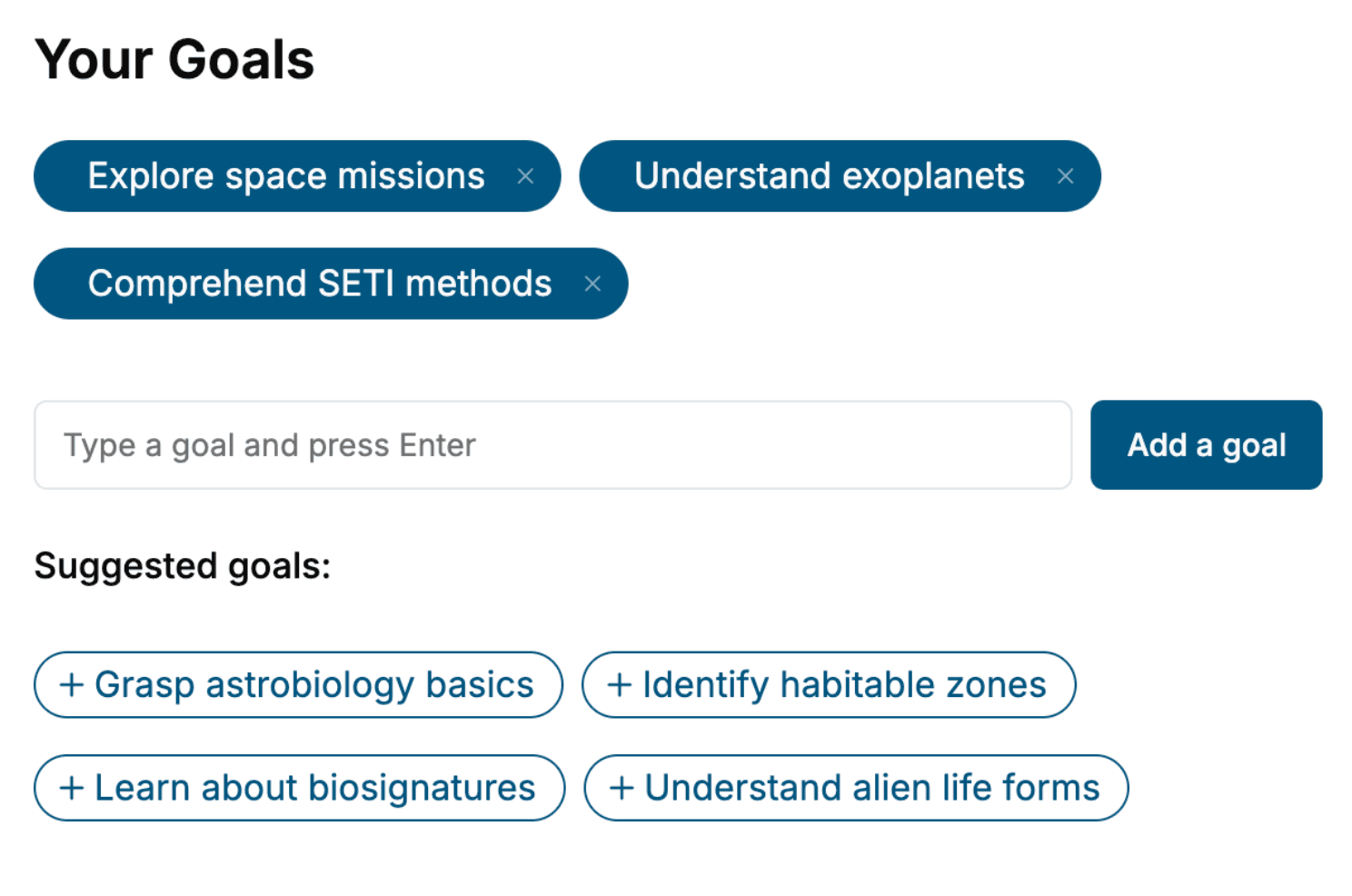
Specify your goals and choose sub-topics to include
- 3. Get your tailored book
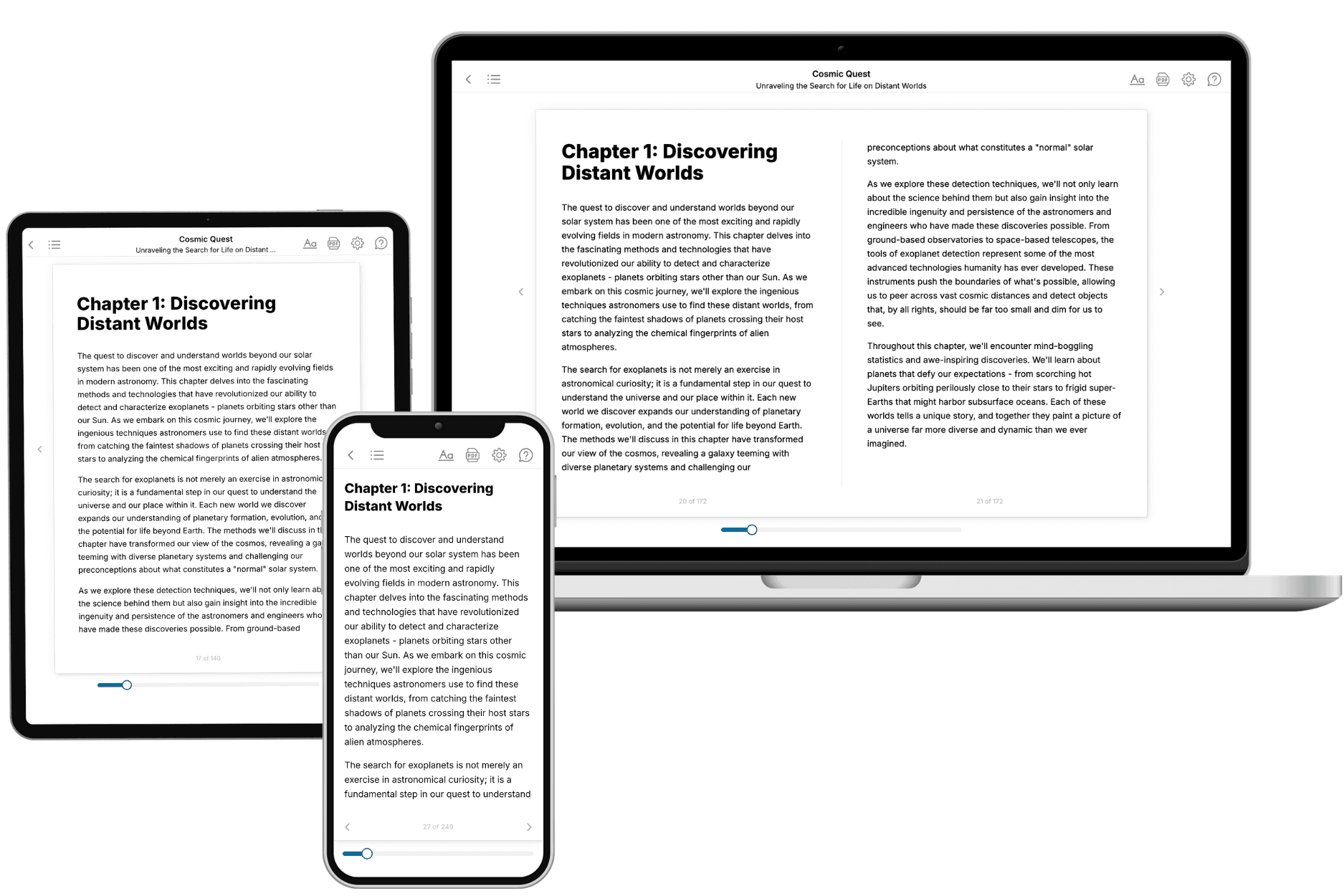
Your book is ready in 10 minutes. Read it online, download as EPUB or PDF, or send to Kindle.

Frequently asked questions
- What is TailoredRead?
TailoredRead creates complete, full-length nonfiction ebooks, written specifically for you. Tell us what you want to learn and why, and TailoredRead writes you a complete ebook on it, with charts, tables, and diagrams throughout. Read it online, on Kindle, or on any e-reader, or download it as a PDF or EPUB. Every book is written fresh the day you order it.
- How is the book tailored to me?
Before anything is written, you answer a few short questions about your goals, your background, and the topics you care about. Your book is then planned around your answers: written at your level, focused on your goals, and covering the topics you chose, instead of the one-size-fits-all book a store sells everyone.
- Will it read like generic AI content?
No. Your book isn't a chat transcript: it's planned chapter by chapter before a single word is written, told in a clear book voice, and explains ideas visually with charts, tables, and diagrams. After writing, every book goes through an editorial pass that polishes chapters so the book reads consistent from start to finish. Judge for yourself: browse thousands of sample books on our Explore Books page.
- How accurate is the content?
Our AI first checks whether your subject needs live research. Niche and fast-moving subjects are researched before writing, and the book plan and chapters are grounded in what it finds. After writing, every book goes through a quality pass that checks its facts and consistency, and researched books list their sources in a Notes section at the back.
- How long is the book?
You choose the length: Comprehensive (250-300 pages), Detailed (150-200 pages), Essential (70-100 pages), or Short (30-50 pages).
- Does the book include visuals?
Yes. Every book includes charts, tables, and diagrams: timelines, checklists, step-by-step guides, decision trees, comparison tables, matrices, and bar charts. A typical book includes dozens of these visual elements.
- Can I read it on Kindle? What formats can I download?
Yes. Every book can be read in our online reader or downloaded as a PDF or EPUB. The EPUB can be opened with Kindle, Apple Books, Kobo, and any e-reader. The Commercial and Author licenses also include an editable Word (DOCX) and Markdown download.
- How much does it cost?
About the price of a regular ebook. The exact price depends on your book's length and complexity, from $2 for the shortest books to $35 for the most comprehensive, and it's shown when you review your book, before you commit to anything. Each book is a one-time purchase, yours to keep, no subscription. Licenses that let you share, teach, or publish your book range from $35.99 to $49.99.
- Can I preview the book before purchasing?
Before you pay, you'll see what your book will cover: the title, a detailed description, the estimated length, and the complete chapter-by-chapter table of contents, so you know what you're getting before you decide. The full text itself is written after you purchase.
- How long does it take to create a book?
About 10 minutes. You can start reading the opening chapters while the rest is still being written.