Combinatorial Chemistry Essentials
Building Molecules Systematically to Accelerate Discovery
Imagine accelerating your research timeline by months or even years—discovering promising drug candidates or novel materials in weeks instead of years of sequential synthesis.
222 pages10 chaptersMay 8, 2026Chemistry
About this book
Combinatorial chemistry makes this possible by enabling you to create and test thousands of molecular variations simultaneously. This book demystifies the field, taking you from foundational concepts through advanced applications. You'll learn how to design efficient molecular libraries, master solid-phase synthesis techniques, and integrate high-throughput screening into your workflow. Whether you're optimizing lead compounds, exploring new chemical space, or building materials with specific properties, this guide provides the practical knowledge and strategic frameworks you need. Discover how combinatorial approaches have revolutionized drug discovery and materials science, and learn to apply these powerful techniques to your own research challenges.
Table of contents
- IntroductionWhy Combinatorial Chemistry Matters Today, From Traditional Synthesis to Combinatorial Approaches, How to Use This BookRead below
- Chapter 1: Foundations of Combinatorial ChemistryDefining Combinatorial Chemistry, Core Principles and Philosophy, Advantages and Limitations
- Chapter 2: Chemical Space and Library DesignExploring Chemical Space, Diversity Metrics and Measurement, Designing Effective Molecular Libraries, Scaffold Selection and Variation
- Chapter 3: Solid-Phase Synthesis FundamentalsSolid-Phase Synthesis Basics, Resin Selection and Preparation, Linker Chemistry and Cleavage Strategies, Protecting Groups in Solid-Phase Synthesis
- Chapter 4: Synthesis Strategies and MethodologiesParallel Synthesis Approaches, Split-Pool and Iterative Methods, Encoding and Tagging Strategies, Automation and Robotic Synthesis
- Chapter 5: High-Throughput Screening and AnalysisScreening Fundamentals and Assay Design, Analytical Techniques: MS and HPLC, Data Management and Analysis, Hit Identification and Validation
- Chapter 6: Deconvolution and Lead OptimizationDeconvolution Strategies, Structure-Activity Relationship Analysis, Iterative Refinement and Optimization
- Chapter 7: Applications in Drug DiscoveryLead Compound Discovery, Pharmacophore Development, Selectivity and Potency Optimization, Case Studies in Drug Development
- Chapter 8: Combinatorial Approaches in Materials ScienceCreating Materials Libraries, Property Screening and Characterization, Applications in Polymers and Catalysts
- Chapter 9: Computational Integration and InformaticsComputational Library Design, Predictive Modeling and Machine Learning, Informatics Platforms and Software Tools
- Chapter 10: Practical Considerations and Best PracticesLaboratory Setup and Equipment, Quality Control and Reproducibility, Troubleshooting Common Challenges
- ConclusionFuture Directions in Combinatorial Chemistry, Your Next Steps
- Glossary
- Further Reading and Resources
Introduction
There is a moment familiar to many chemists: you have a promising molecular scaffold, a biological target you want to hit, and a list of possible modifications that could make your compound more potent, more selective, or more drug-like. The traditional path forward is to synthesize each variation one at a time, test it, analyze the result, and then decide what to make next. That process can take months for a handful of compounds. Combinatorial chemistry offers a fundamentally different answer. Instead of working sequentially, you design a system that produces hundreds or thousands of compounds in parallel, testing them all at once and letting the data guide your next move.
This shift in approach is not just a technical convenience. It represents a change in how chemists think about discovery itself. Rather than betting everything on a single hypothesis, combinatorial chemistry lets you explore a broad region of chemical space simultaneously. You cast a wide net, gather information quickly, and then focus your resources on the most promising leads. This strategy has reshaped drug discovery, materials science, and catalysis research over the past three decades, and its influence continues to grow as automation and computational tools become more powerful.
This book is designed to give you a thorough, practical understanding of combinatorial chemistry from the ground up. Whether you are a graduate student encountering the field for the first time, a researcher looking to add new tools to your workflow, or a professional seeking to understand how modern high-throughput discovery programs are structured, you will find clear explanations, concrete examples, and actionable guidance throughout these pages. The goal is not just to describe what combinatorial chemistry is, but to show you how to think about it and how to use it effectively in your own work.
The chapters ahead cover everything from the foundational principles of library design and solid-phase synthesis to advanced topics like computational integration, deconvolution strategies, and applications in materials science. Each topic builds on the last, so by the time you reach the later chapters, you will have the conceptual framework needed to understand even the most sophisticated combinatorial workflows. Along the way, real-world examples and case studies illustrate how these techniques play out in practice, not just in theory.
Why Combinatorial Chemistry Matters Today
The scale of the challenge facing modern drug discovery is staggering. Estimates suggest that the number of drug-like molecules that could theoretically be synthesized runs into the range of 1060 compounds, a figure so large it dwarfs the number of atoms in the observable universe.[1] No research program, no matter how well funded, can explore that space one compound at a time. Combinatorial chemistry does not solve this problem completely, but it dramatically changes the odds by allowing researchers to synthesize and test thousands of compounds in the time it would traditionally take to make a few dozen.
The practical impact of this acceleration is measurable. In the early days of pharmaceutical research, identifying a viable lead compound could take three to five years of painstaking sequential synthesis and testing. Combinatorial approaches, combined with high-throughput screening, compressed that timeline significantly. Many programs now move from initial library synthesis to lead identification in a matter of months. That time savings translates directly into reduced costs and faster delivery of potential therapies to patients who need them.
Beyond drug discovery, combinatorial chemistry has proven its value in materials science and catalysis. Researchers developing new polymers, semiconductors, or heterogeneous catalysts face the same fundamental challenge: a vast space of possible compositions and structures, with no reliable way to predict which ones will have the desired properties. Combinatorial approaches allow teams to screen large arrays of material compositions simultaneously, identifying promising candidates that would never have been found through intuition alone. The discovery of new phosphorescent materials for organic light-emitting diodes (OLEDs) is one well-documented example of this approach paying off in a commercially significant field.[2]
Combinatorial chemistry also matters because it generates data at a scale that enables a different kind of scientific reasoning. When you synthesize and test a thousand compounds, you are not just looking for hits. You are building a dataset that reveals patterns in structure-activity relationships, identifies chemical features that correlate with toxicity or poor solubility, and informs the design of the next generation of compounds. This data-driven approach to chemistry is increasingly central to how modern research programs operate, and it connects naturally to the growing role of machine learning and computational modeling in the field.
It is also worth noting that combinatorial chemistry has become more accessible over time. Early programs required significant capital investment in robotic synthesis platforms and specialized analytical equipment. While large-scale automation still demands substantial resources, many combinatorial techniques can now be implemented in a well-equipped academic or industrial laboratory without a dedicated high-throughput facility. Advances in miniaturization, microfluidics, and open-source informatics tools have lowered the barrier to entry considerably, making these approaches relevant to a wider range of researchers than ever before.
Understanding combinatorial chemistry is therefore not just useful for specialists working in dedicated discovery programs. It is increasingly relevant to any chemist who wants to work efficiently, generate meaningful data, and contribute to research programs that operate at the pace demanded by modern science. The concepts and techniques covered in this book are tools that belong in every serious researcher's toolkit.
A concrete illustration: Consider a research team developing inhibitors for a kinase target implicated in cancer. Using traditional sequential synthesis, they might test 50 compounds in a year. Using a combinatorial approach with a well-designed scaffold and 10 variable positions, each with 5 building block options, they could generate a library of up to 5010 theoretical compounds. Even a carefully curated subset of 500 to 1,000 synthesized compounds, screened in parallel, would provide far richer SAR data in the same timeframe, dramatically improving the odds of finding a potent, selective lead.
The relevance of combinatorial chemistry is not diminishing as the field matures. If anything, its integration with computational tools, artificial intelligence, and automated synthesis platforms is making it more powerful. The researchers who understand its principles deeply will be better positioned to take advantage of these emerging capabilities as they continue to develop.
From Traditional Synthesis to Combinatorial Approaches
To appreciate what combinatorial chemistry changed, it helps to understand what came before it. Classical organic synthesis is a craft built on precision and sequential logic. A chemist designs a route to a target molecule, executes each step carefully, purifies the product at each stage, and characterizes the final compound before moving on. This approach produces well-defined, thoroughly characterized compounds, and it remains essential for many purposes. But it is inherently slow when the goal is to explore a large number of structural variations.
The intellectual roots of combinatorial chemistry reach back to the 1960s, when Bruce Merrifield developed solid-phase peptide synthesis (SPPS). Merrifield's key insight was that if you anchor a growing peptide chain to an insoluble polymer bead, you can add amino acids one at a time, washing away excess reagents between each step without losing your product. This made it possible to automate peptide synthesis and dramatically reduced the time needed to make complex sequences. Merrifield received the Nobel Prize in Chemistry in 1984 for this work, which laid the technical foundation for everything that followed in combinatorial chemistry.[3]
The combinatorial revolution proper began in the late 1980s and accelerated through the 1990s. Several groups recognized that Merrifield's solid-phase approach could be extended beyond peptides to small organic molecules, and that the real power came from making many compounds simultaneously rather than one at a time. Árpád Furka's development of the split-and-pool method in the late 1980s was a pivotal moment. By splitting resin beads into groups, reacting each group with a different building block, and then recombining and re-splitting the beads, Furka showed that you could generate enormous numbers of compounds with a relatively small number of synthetic operations.[4]
Around the same time, researchers at pharmaceutical companies began developing parallel synthesis platforms that could produce arrays of discrete compounds in separate reaction vessels. Companies like Affymax and Pharmacopeia built early combinatorial chemistry programs that generated libraries of tens of thousands of compounds for biological screening. The pharmaceutical industry invested heavily in these approaches throughout the 1990s, driven by the promise of dramatically accelerating the early stages of drug discovery.
The initial enthusiasm was followed by a period of more sober assessment. Early combinatorial libraries often suffered from poor quality control, limited chemical diversity, and compounds with unfavorable physical properties. Many libraries were biased toward easily accessible chemical space rather than the regions most likely to yield drug-like molecules. The field learned important lessons during this period about the importance of library design, quality control, and the need to balance diversity with drug-likeness criteria such as Lipinski's Rule of Five.[5]
The field matured significantly in the 2000s and 2010s. Researchers developed better methods for assessing and maximizing chemical diversity, more reliable solid-phase chemistries, improved analytical tools for quality control, and more sophisticated computational approaches to library design. The focus shifted from generating the largest possible libraries to generating the most informative ones. Smaller, well-designed focused libraries often outperformed massive but poorly curated collections in terms of hit rates and lead quality.
Today, combinatorial chemistry exists in a more integrated form than its early practitioners might have imagined. It is no longer a standalone discipline but a set of principles and techniques woven into broader discovery workflows that also incorporate computational modeling, machine learning, automated synthesis, and miniaturized screening. The core ideas, systematic variation of molecular structure, parallel synthesis, and high-throughput testing, remain as relevant as ever, even as the specific tools and platforms continue to evolve.
Understanding this history is not just an academic exercise. It explains why certain practices exist, why some early approaches were abandoned, and why the field developed the quality standards and design principles it now uses. The lessons learned from the combinatorial chemistry boom and its subsequent refinement are embedded in the best practices described throughout this book.
How to Use This Book
This book is organized to take you from foundational concepts to advanced applications in a logical sequence. Each chapter builds on the knowledge established in the ones before it, so reading from beginning to end will give you the most complete understanding of the field. That said, if you already have a solid grounding in certain areas, the chapters are written to be reasonably self-contained, and you can navigate to the topics most relevant to your current needs without losing the thread.
Here is a brief overview of what each part of the book covers, so you can orient yourself before diving in:
- Chapter 1 (Foundations of Combinatorial Chemistry) defines the field precisely, establishes its core principles, and gives an honest assessment of both its strengths and its limitations. This is the conceptual bedrock for everything that follows.
- Chapter 2 (Chemical Space and Library Design) introduces the concept of chemical space and explains how to design libraries that explore it effectively. You will learn about diversity metrics, scaffold selection, and the strategic decisions that determine whether a library will be useful or not.
- Chapter 3 (Solid-Phase Synthesis Fundamentals) covers the technical foundation of most combinatorial synthesis: how solid-phase methods work, how to choose and prepare resins, how linker chemistry controls product release, and how protecting groups are managed in this context.
- Chapter 4 (Synthesis Strategies and Methodologies) goes deeper into the practical approaches used to make libraries, including parallel synthesis, split-pool methods, encoding strategies, and the role of automation and robotics.
- Chapter 5 (High-Throughput Screening and Analysis) explains how combinatorial libraries are tested and characterized, covering assay design, mass spectrometry, HPLC, data management, and the process of identifying genuine hits from screening data.
- Chapter 6 (Deconvolution and Lead Optimization) addresses what happens after you find a hit: how to identify the active compound in a mixture, how to analyze structure-activity relationships, and how to iteratively refine compounds toward a development candidate.
- Chapter 7 (Applications in Drug Discovery) applies all of the preceding concepts to the pharmaceutical context, with case studies illustrating how combinatorial approaches have contributed to real drug discovery programs.
- Chapter 8 (Combinatorial Approaches in Materials Science) extends the principles to non-pharmaceutical applications, showing how the same logic applies to discovering new polymers, catalysts, and functional materials.
- Chapter 9 (Computational Integration and Informatics) covers the growing role of computational tools in library design, predictive modeling, and data analysis, including an introduction to machine learning applications in the field.
- Chapter 10 (Practical Considerations and Best Practices) addresses the real-world challenges of running a combinatorial chemistry program, including laboratory setup, quality control, and troubleshooting common problems.
Throughout the book, you will find several recurring features designed to make the content as useful as possible. Concrete examples and case studies appear in every chapter, grounding abstract concepts in real research scenarios. Key terms are introduced in bold when they first appear and are collected in the glossary at the back of the book for easy reference. Footnotes point to primary literature and review articles for readers who want to explore specific topics in greater depth.
If you are approaching this book as a student encountering combinatorial chemistry for the first time, the recommended path is straightforward: read the chapters in order, pay close attention to the examples, and do not skip Chapter 1 even if you feel you already understand the basics. The conceptual framework established there will make everything else easier to absorb. If you are a researcher or professional with existing experience in the field, you may find it more efficient to start with the chapters most directly relevant to your current work and use the earlier chapters as reference material when you need to revisit foundational concepts.
One important note about scope: this book focuses on the principles and practice of combinatorial chemistry as applied to small molecule synthesis and screening. It does not cover combinatorial approaches in biology, such as phage display or DNA-encoded libraries, except where those methods intersect directly with small molecule chemistry. Those are rich and important fields in their own right, but they deserve dedicated treatment that falls outside the scope of this volume.
The field of combinatorial chemistry rewards those who engage with it actively rather than passively. As you read, think about how the concepts apply to research problems you are familiar with. Consider what kinds of libraries you might design for a target you care about, what analytical challenges you would face, and how you would interpret the data you collected. The more concretely you engage with the material, the more useful it will become. This book is designed to be a working reference, not just a text to read once and set aside.
Finally, it is worth saying clearly that combinatorial chemistry is not a magic solution to the challenges of chemical discovery. It is a powerful set of tools that, when applied thoughtfully, can dramatically accelerate and improve the quality of research. Used carelessly, it can generate large amounts of data that are difficult to interpret and compounds that are hard to work with. The difference between those two outcomes lies in the quality of the thinking that goes into library design, synthesis planning, and data analysis. That is precisely what this book aims to develop in you: not just familiarity with the techniques, but the judgment to use them well.
A practical suggestion before you begin: Keep a notebook or digital document open as you read. When you encounter a concept that connects to your own research, write it down. When an example sparks an idea, capture it. Combinatorial chemistry is fundamentally about generating and managing ideas systematically, and that habit of systematic thinking is worth cultivating from the very first page.
Notes
Introduction
- 1. R. S. Bohacek and others, "The art and practice of structure-based drug design," Medicinal Research Reviews, 1996
- 2. B. Jandeleit and others, "Combinatorial materials science and catalysis," Angewandte Chemie International Edition, 1999
- 3. R. B. Merrifield, "Solid phase peptide synthesis," I. The synthesis of a tetrapeptide. Journal of the American Chemical Society, 1963
- 4. Furka and others, "General method for rapid synthesis of multicomponent peptide mixtures," International Journal of Peptide and Protein Research, 1991
- 5. C. A. Lipinski and others, "Experimental and computational approaches to estimate solubility and permeability in drug discovery and development settings," Advanced Drug Delivery Reviews, 1997
This is the end of the free sample. The full book has 10 chapters.
Want this book written for you?
Tell us your goals and background, and get your own version of this book, tailored by AI to you.


Benefits of AI-tailored books
- Read one book, not ten:
- all the Chemistry knowledge you need, gathered into a single book.
- Save days of learning:
- tell us your goals, choose your topics, and the whole book is built around them.
- Learn effortlessly:
- Chemistry book written for your specific background and expertise.
- Understand at a glance:
- includes charts, tables, timelines, checklists, decision trees, and more.
- Stay current:
- written the day you order it, not years ago.
- Trust what you read:
- every book is checked for accuracy, with real research when your subject needs it.
Create your unique book in 3 steps
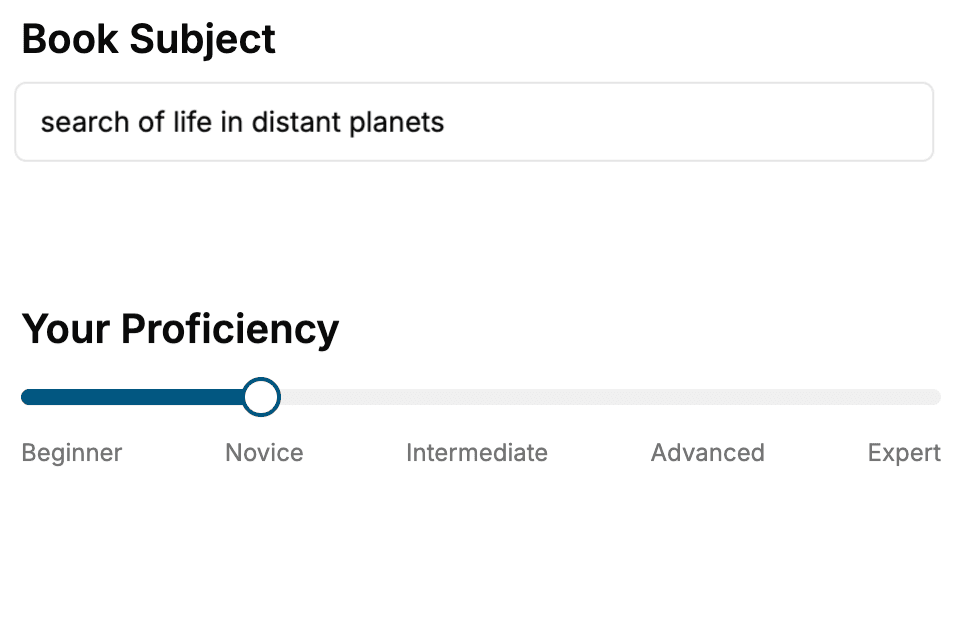
- 1. Select your focus
Select the focus of your Chemistry book and share your background
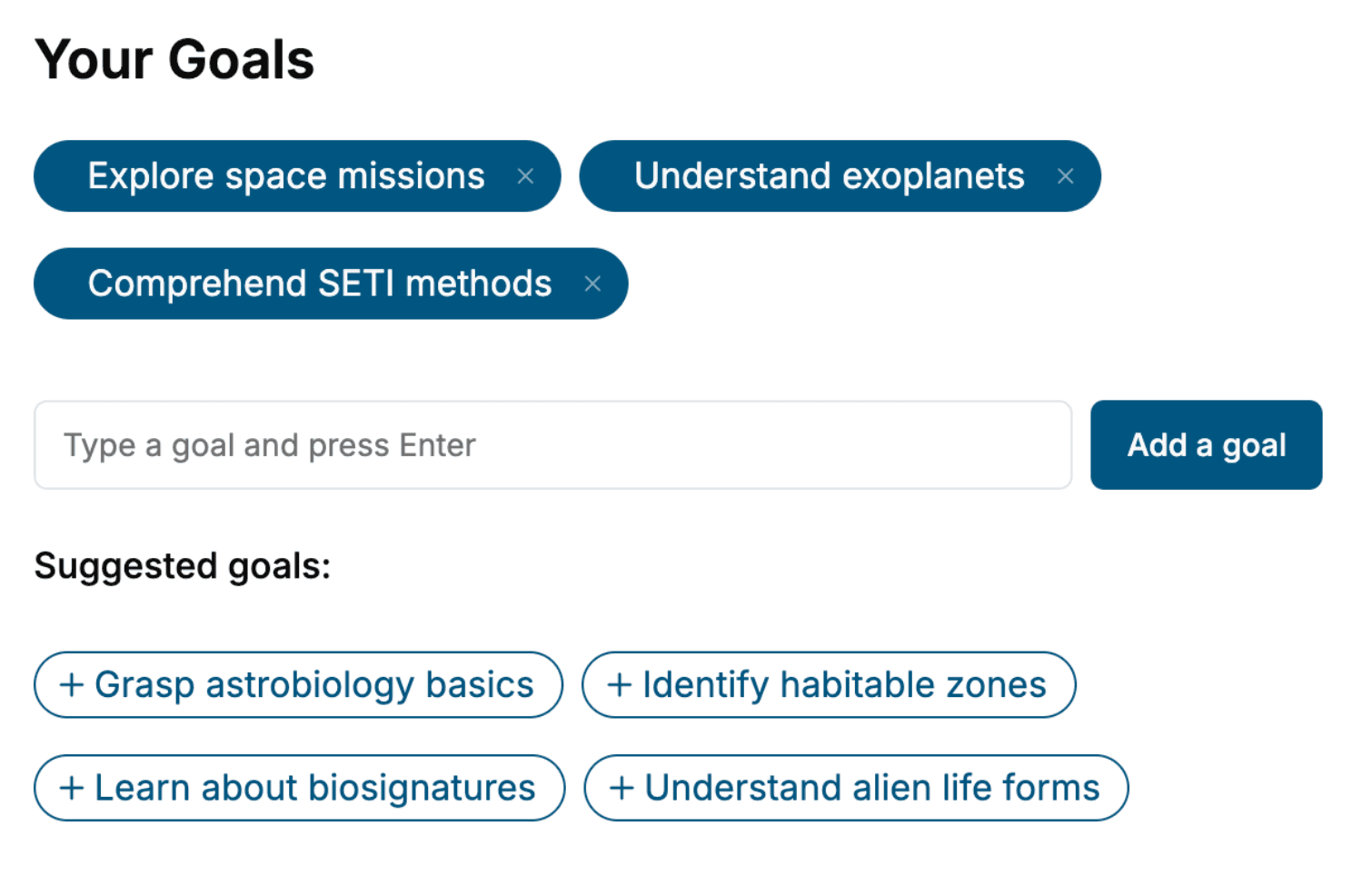
- 2. Personalize your book
Specify your goals and choose sub-topics to include
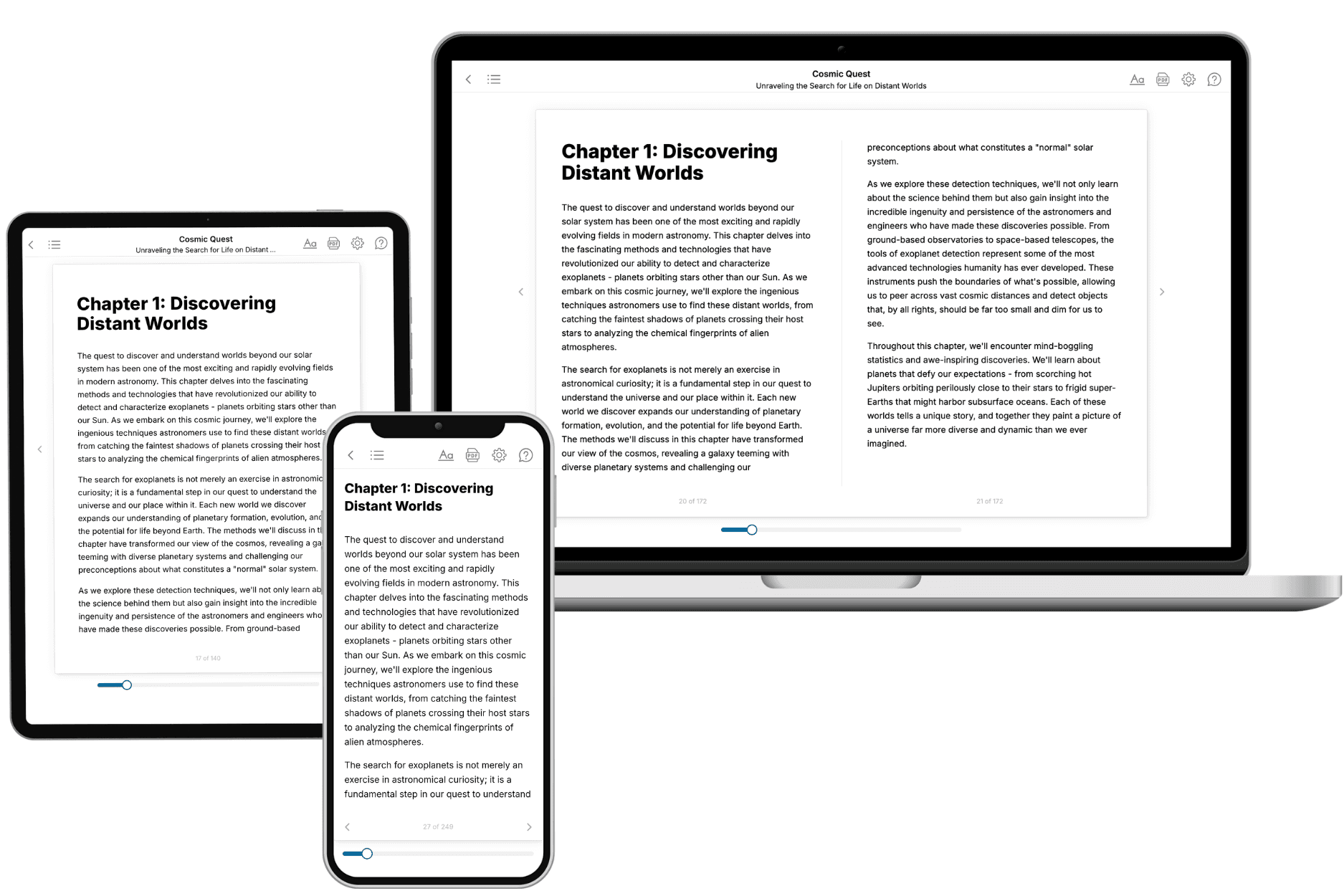
- 3. Get your tailored book
Your book is ready in 10 minutes. Read it online, download as EPUB or PDF, or send to Kindle.
Frequently asked questions
- What is TailoredRead?
TailoredRead creates complete, full-length nonfiction ebooks, written specifically for you. Tell us what you want to learn and why, and TailoredRead writes you a complete ebook on it, with charts, tables, and diagrams throughout. Read it online, on Kindle, or on any e-reader, or download it as a PDF or EPUB. Every book is written fresh the day you order it.
- How is the book tailored to me?
Before anything is written, you answer a few short questions about your goals, your background, and the topics you care about. Your book is then planned around your answers: written at your level, focused on your goals, and covering the topics you chose, instead of the one-size-fits-all book a store sells everyone.
- Will it read like generic AI content?
No. Your book isn't a chat transcript: it's planned chapter by chapter before a single word is written, told in a clear book voice, and explains ideas visually with charts, tables, and diagrams. After writing, every book goes through an editorial pass that polishes chapters so the book reads consistent from start to finish. Judge for yourself: browse thousands of sample books on our Explore Books page.
- How accurate is the content?
Our AI first checks whether your subject needs live research. Niche and fast-moving subjects are researched before writing, and the book plan and chapters are grounded in what it finds. After writing, every book goes through a quality pass that checks its facts and consistency, and researched books list their sources in a Notes section at the back.
- How long is the book?
You choose the length: Comprehensive (250-300 pages), Detailed (150-200 pages), Essential (70-100 pages), or Short (30-50 pages).
- Does the book include visuals?
Yes. Every book includes charts, tables, and diagrams: timelines, checklists, step-by-step guides, decision trees, comparison tables, matrices, and bar charts. A typical book includes dozens of these visual elements.
- Can I read it on Kindle? What formats can I download?
Yes. Every book can be read in our online reader or downloaded as a PDF or EPUB. The EPUB can be opened with Kindle, Apple Books, Kobo, and any e-reader. The Commercial and Author licenses also include an editable Word (DOCX) and Markdown download.
- How much does it cost?
About the price of a regular ebook. The exact price depends on your book's length and complexity, from $2 for the shortest books to $35 for the most comprehensive, and it's shown when you review your book, before you commit to anything. Each book is a one-time purchase, yours to keep, no subscription. Licenses that let you share, teach, or publish your book range from $35.99 to $49.99.
- Can I preview the book before purchasing?
Before you pay, you'll see what your book will cover: the title, a detailed description, the estimated length, and the complete chapter-by-chapter table of contents, so you know what you're getting before you decide. The full text itself is written after you purchase.
- How long does it take to create a book?
About 10 minutes. You can start reading the opening chapters while the rest is still being written.