The Complete Guide to Massively Multiplayer Online Games
Master the Worlds, Communities, and Strategies That Define Modern Gaming
Dive into the vast and intricate world of Massively Multiplayer Online Games, where millions of players converge in persistent virtual worlds.
222 pages10 chaptersMay 11, 2026Gaming
About this book
This guide walks you through everything you need to know to not just participate, but truly thrive in these complex gaming ecosystems. You'll discover how to select an MMO that matches your playstyle, understand the mechanics that drive progression and engagement, and navigate the social dynamics that make these games come alive. Learn the strategies that separate casual players from dedicated adventurers, master the economic systems that reward smart decision-making, and build the skills needed for both cooperative and competitive gameplay. Whether you're interested in raiding with guilds, dominating in PvP, or simply exploring richly detailed worlds, this book provides the knowledge and frameworks you need to maximize your experience and achieve your gaming goals.
Table of contents
- IntroductionWhat Are MMOs and Why They Matter, The Modern MMO Landscape, How to Use This Guide, Your MMO Journey Starts HereRead below
- Chapter 1: Choosing Your First or Next MMOUnderstanding Different MMO Types and Genres, Evaluating Game Fit for Your Playstyle, Server Selection and Community Considerations
- Chapter 2: Core Mechanics and Character ProgressionCharacter Creation and Class Selection, Leveling Systems and Experience Mechanics, Gear Progression and Equipment Systems, Skill Development and Specialization Paths
- Chapter 3: Guilds, Groups, and Community DynamicsFinding the Right Guild for Your Goals, Guild Roles, Responsibilities, and Leadership, Group Dynamics and Team Communication
- Chapter 4: PvE Content: Dungeons, Raids, and BossesDungeon Fundamentals and Role Specialization, Raid Mechanics and Encounter Strategies, Boss Tactics and Damage Optimization, Loot Distribution Systems and Fairness
- Chapter 5: PvP Combat and Competitive GameplayPvP Fundamentals and Combat Mechanics, Different PvP Modes and Formats, Competitive Strategy and Skill Development
- Chapter 6: Economy, Trading, and Wealth BuildingUnderstanding In-Game Economy Principles, Trading, Markets, and Price Dynamics, Wealth Building Strategies and Investment, Crafting, Professions, and Production
- Chapter 7: Technical Infrastructure and PerformanceServer Architecture and Game Infrastructure, Network Optimization and Latency Management, Client Performance and Graphics Settings
- Chapter 8: Monetization Models and Spending WiselyTypes of Monetization Models in MMOs, Cosmetics, Battle Passes, and Optional Purchases, Making Smart Spending Decisions
- Chapter 9: Safety, Security, and Avoiding PitfallsAccount Security and Password Protection, Common Scams, Fraud, and How to Avoid Them, Recognizing and Handling Toxic Behavior, Maintaining Healthy Gaming Habits
- Chapter 10: The Future of MMOs and Emerging TechnologiesCloud Gaming and Accessibility Revolution, AI, NPCs, and Dynamic World Systems, Blockchain, NFTs, and Metaverse Integration
- ConclusionYour Path Forward in the MMO Universe
- Glossary of MMO Terms
- Further Reading and Resources
Introduction
There is a moment that almost every MMO player remembers. It might be the first time you stepped out of a starting village and realized the world stretched on for what felt like forever. It might be the night your guild finally cleared a raid boss after weeks of failed attempts, and the whole group erupted in voice chat. Or maybe it was a quiet evening spent trading at a market stall, slowly building wealth one transaction at a time. Whatever that moment was, it changed how you thought about games. MMOs do not just entertain you. They pull you in, give you a role, and make you part of something much larger than yourself.
Massively Multiplayer Online Games represent one of the most complex and rewarding categories in all of gaming. They are not just games in the traditional sense. They are living, breathing digital worlds where thousands or even millions of players interact simultaneously, forming economies, communities, rivalries, and friendships that can last for years. The systems that power these worlds, from character progression to guild politics to server infrastructure, are layered and interconnected in ways that take real time and effort to understand. That complexity is exactly what makes them so compelling, and also what makes a guide like this one genuinely useful.
This guide was built for players who already have some experience with MMOs but want to go deeper. You know the basics. You have probably leveled a character, joined a group, and maybe dipped your toes into a dungeon or two. But there is a significant gap between playing an MMO and truly understanding one. This book is designed to close that gap. It covers everything from choosing the right game for your goals, to mastering combat and economy systems, to protecting your account and staying safe online. Each chapter builds on the last, giving you a complete picture of how these worlds work and how to thrive inside them.
The chapters ahead are organized to take you from foundational knowledge through to advanced strategy and future trends. Whether you want to become a top-tier raider, a dominant PvP competitor, a savvy in-game trader, or simply a more informed and confident player, the frameworks and insights in this guide will help you get there. Think of it as a map for a world that rarely comes with one.
What Are MMOs and Why They Matter
At their core, Massively Multiplayer Online Games are persistent virtual worlds where large numbers of players coexist and interact in real time. Unlike single-player games that pause when you close the app, MMO worlds keep running whether you are logged in or not. Economies shift, guilds recruit, and events unfold continuously. This persistence is one of the defining features that separates MMOs from every other game genre. The world does not wait for you, and that creates a sense of stakes that few other entertainment formats can match.
The genre traces its roots back to text-based Multi-User Dungeons (MUDs) in the late 1970s and early 1980s, where players typed commands to explore shared virtual spaces.[1] From those humble beginnings, the genre evolved through graphical online games in the 1990s and exploded into mainstream culture with titles like EverQuest (1999) and World of Warcraft (2004). At its peak, World of Warcraft alone had over 12 million active subscribers, a number that demonstrated just how powerful the MMO format could be when executed well.[2]
What makes MMOs matter beyond their entertainment value is the depth of human experience they facilitate. Research in social psychology has consistently shown that the relationships formed inside MMOs can be just as meaningful as those formed in physical spaces. A 2007 study published in CyberPsychology and Behavior found that a significant portion of MMO players reported their in-game friendships as among the most important social connections in their lives.[3] These are not trivial connections. They are communities built around shared goals, mutual support, and genuine investment in each other's success.
MMOs also matter from an economic perspective. The global MMO market was valued at approximately $23.9 billion in 2022 and is projected to continue growing through the decade.[4] This is not just money spent on subscriptions. It includes in-game purchases, esports events, streaming revenue, merchandise, and an entire ecosystem of content creation built around these games. Understanding MMOs means understanding one of the most economically significant entertainment sectors in the world.
On a personal level, MMOs develop real skills. Strategic thinking, resource management, team coordination, leadership, and even basic economics are all practiced constantly inside these games. Many players have reported that skills developed in MMO guild leadership translated directly into professional management roles. The games are not just escapism. They are complex systems that reward intelligence, adaptability, and social competence in measurable ways.
Finally, MMOs matter because they represent a genuinely new kind of cultural space. They have their own histories, mythologies, economies, and social norms. Events that happen inside these worlds, like the famous Corrupted Blood incident in World of Warcraft where a virtual plague spread uncontrollably across the game world, have been studied by epidemiologists as models for real-world disease spread.[5] These are not just games. They are laboratories for human behavior at scale.
The Modern MMO Landscape
The MMO landscape in the 2020s looks very different from what it was even a decade ago. The genre has diversified enormously, branching into subgenres that cater to wildly different player preferences. Understanding this landscape is the first step toward finding your place within it. The days when MMO
simply meant a fantasy role-playing game with elves and dungeons are long gone. Today the genre spans science fiction, survival, sandbox, battle royale hybrids, and even social simulation experiences.
The major categories you will encounter today include:
- MMORPG (Massively Multiplayer Online Role-Playing Game): The classic format. Games like World of Warcraft, Final Fantasy XIV, and Guild Wars 2 fall here. These emphasize character progression, storytelling, and cooperative content like dungeons and raids.
- MMOFPS (Massively Multiplayer Online First-Person Shooter): Games like PlanetSide 2 blend large-scale multiplayer combat with persistent world elements.
- MMORTS (Massively Multiplayer Online Real-Time Strategy): Browser-based and mobile titles like Travian or Forge of Empires focus on base building and large-scale territorial conflict.
- Sandbox MMOs: Games like EVE Online and Albion Online give players enormous freedom to shape the world, economy, and political landscape themselves.
- Social MMOs: Platforms like Second Life and newer entrants prioritize social interaction, creativity, and user-generated content over combat.
The competitive landscape has also shifted significantly. Where once a handful of Western studios dominated the market, today some of the most popular and technically impressive MMOs come from South Korean and Chinese developers. Games like Lost Ark, Black Desert Online, and Lineage W have massive global player bases and introduce design philosophies that differ meaningfully from Western titles. Understanding these differences, particularly around monetization and grind intensity, is increasingly important for any serious MMO player.
Monetization models have transformed the landscape perhaps more than any other single factor. The subscription model that once dominated the genre has largely given way to free-to-play with optional purchases. This shift has lowered the barrier to entry dramatically, bringing in millions of new players who would never have paid a monthly fee. However, it has also introduced new complexities around fairness, pay-to-win mechanics, and the psychology of microtransactions. Navigating these systems wisely is a skill in itself, and one that Chapter 8 covers in depth.
Live service design has become the dominant development philosophy for modern MMOs. Rather than shipping a complete game and moving on, studios now treat their games as ongoing platforms, releasing regular content updates, seasonal events, and expansion packs that keep the world evolving. Final Fantasy XIV is a remarkable example of this approach. After a disastrous initial launch in 2010, the game was completely rebuilt and relaunched as A Realm Reborn in 2013, and has since grown into one of the most beloved MMOs ever made through consistent, high-quality updates.[6] This live service model means the game you start playing today will be meaningfully different in six months, which is both exciting and demanding.
Player communities have also evolved alongside the games themselves. Platforms like Discord, Reddit, Twitch, and YouTube have created rich ecosystems around every major MMO. Dedicated wikis, theorycrafting forums, and content creator communities now form an essential layer of the MMO experience. Many players spend almost as much time engaging with these external communities as they do playing the game itself. Knowing how to use these resources effectively can dramatically accelerate your learning curve and deepen your enjoyment of any title you choose to play.
The technical infrastructure powering modern MMOs has also advanced considerably. Cloud computing, improved netcode, and more sophisticated server architectures have made large-scale persistent worlds more stable and accessible than ever before. At the same time, new challenges around latency, server population management, and cross-platform play have emerged. Chapter 7 digs into these technical realities in detail, giving you the knowledge to optimize your own setup and understand why the game sometimes behaves the way it does.
How to Use This Guide
This guide is structured to work both as a cover-to-cover read and as a reference you return to when specific questions come up. The chapters follow a logical progression, starting with game selection and foundational mechanics, moving through social systems and content strategies, and finishing with technical, economic, and safety topics. If you are relatively new to a particular aspect of MMOs, reading straight through will give you the most complete picture. If you already have strong knowledge in certain areas, feel free to jump directly to the chapters most relevant to your current goals.
Here is a quick map of what each chapter covers and who will benefit most from it:
- Chapter 1 (Choosing Your MMO): Best for players evaluating new games or feeling stuck in a title that does not suit them.
- Chapter 2 (Core Mechanics and Progression): Essential for anyone who wants to understand why games are designed the way they are and how to progress more efficiently.
- Chapter 3 (Guilds and Communities): Critical reading for anyone who wants to get more out of the social side of MMOs.
- Chapter 4 (PvE Content): Focused on dungeon and raid players who want to improve their performance and coordination.
- Chapter 5 (PvP Combat): For competitive players who want to sharpen their skills and understand the strategic depth of player-versus-player content.
- Chapter 6 (Economy and Trading): Valuable for anyone interested in the market side of MMOs, from casual crafters to dedicated traders.
- Chapter 7 (Technical Infrastructure): Useful for players who want to optimize their setup or simply understand what is happening under the hood.
- Chapter 8 (Monetization): Important for every player who spends any money on MMOs, which is most of us.
- Chapter 9 (Safety and Security): Essential reading for all players, regardless of experience level.
- Chapter 10 (Future of MMOs): For players curious about where the genre is heading and how to position themselves for what comes next.
Throughout the guide, you will find concrete examples drawn from real games and real situations. These examples are not just illustrations. They are meant to give you mental models you can apply directly to your own gameplay. When a concept is explained using EVE Online's player-driven economy or World of Warcraft's raid encounter design, the underlying principle applies broadly across the genre. The specific game is the vehicle; the lesson is the destination.
You will also find practical frameworks and checklists embedded throughout the chapters. These are designed to be immediately actionable. For example, Chapter 3 includes a framework for evaluating whether a guild is a good fit before you commit to joining. Chapter 9 provides a security checklist you can run through in under ten minutes to significantly improve your account protection. These tools are meant to be used, not just read. Consider bookmarking the sections most relevant to your current situation so you can return to them easily.
One important note about game-specific information: the MMO genre moves fast. Patches, expansions, and balance changes can alter specific mechanics in any given game within weeks of publication. Where this guide references specific numbers, systems, or features from particular games, treat those details as illustrative examples rather than current documentation. The principles behind those examples, however, are durable. Understanding why a loot system works a certain way will serve you far longer than memorizing the exact drop rates of any specific item.
Finally, this guide assumes you are playing MMOs because you genuinely enjoy them or want to enjoy them more. The goal is never to turn gaming into homework. Every framework and strategy presented here is in service of one outcome: helping you have a better, richer, more rewarding experience in the games you love. If a particular section feels overly technical or not relevant to how you play, skip it and come back later. The guide will still be here when you need it.
Your MMO Journey Starts Here
Every experienced MMO player started somewhere. Some started with a free trial that turned into hundreds of hours. Others were pulled in by a friend who insisted they try just one dungeon.
A few stumbled into the genre by accident and never looked back. Wherever your entry point was, the journey from curious newcomer to confident, capable player follows a recognizable path. Understanding that path, and knowing what to expect at each stage, makes the whole experience less frustrating and far more enjoyable.
The early stages of any MMO are characterized by what game designers call the onboarding experience. This is the period where the game introduces its core systems, teaches you the basic controls, and gives you a sense of the world's tone and story. Many players quit during this phase, not because the game is bad, but because the onboarding does not adequately communicate what makes the game special. Knowing this in advance helps you push through the initial learning curve with patience. Almost every great MMO has a slow start. The payoff comes later.
As you move past the early game, you will encounter what is often called the mid-game plateau. This is where the training wheels come off and the game's true depth begins to reveal itself. You will start making meaningful choices about your character's specialization, your guild affiliation, and how you want to spend your in-game time. This is also where many players first experience frustration, because the gap between casual play and optimized play becomes visible. This guide is specifically designed to help you navigate that gap without burning out.
The endgame is where MMOs truly differentiate themselves. Some games offer deep raid content that requires months of practice and coordination to master. Others offer open-world PvP that rewards political maneuvering as much as combat skill. Still others have rich crafting and economic systems that become their own full-time pursuit. Understanding what kind of endgame a game offers, and whether it aligns with what you actually enjoy, is one of the most important decisions you will make as an MMO player. Chapter 1 will help you think through this clearly before you invest significant time in any title.
Your MMO journey is also shaped by the people you meet along the way. The social dimension of these games is not a side feature. It is central to the experience. Research consistently shows that social connection is the primary driver of long-term retention in MMOs.[7] Players who find a good guild or a reliable group of friends stay engaged far longer than those who play in isolation, even if the solo players are technically more skilled. Building those connections intentionally, rather than leaving them to chance, is one of the highest-leverage things you can do to improve your MMO experience.
It is also worth acknowledging that MMO journeys are not always linear. You will have periods of intense engagement followed by breaks. You might switch games, return to old favorites, or try something completely outside your usual genre. All of that is normal and healthy. The knowledge and skills you build in one MMO transfer more than you might expect. Understanding how an auction house works in World of Warcraft gives you a head start in Final Fantasy XIV's market board. Raid leadership skills developed in one game apply directly in another. Your experience compounds over time, even across different titles.
What follows in this guide is the result of synthesizing years of player experience, game design research, and community knowledge into a single, coherent resource. The goal is not to tell you how to play. It is to give you the understanding you need to make your own informed decisions, develop your own strategies, and build your own path through these extraordinary digital worlds. The adventure is yours. This guide just helps you make the most of it.
The best MMO players are not necessarily the ones who play the most hours. They are the ones who understand the systems they are playing within, make deliberate choices about how they spend their time, and invest genuinely in the communities around them. That combination of knowledge, intention, and connection is what this guide is designed to help you build.
Turn the page, and let's get started.
Notes
Introduction
- 1. Richard Bartle, Designing Virtual Worlds, New Riders Publishing, 2003
- 2. Blizzard Entertainment, World of Warcraft Subscriber Numbers Press Release, 2010
- 3. Helena Cole and Mark D. Griffiths, "Social Interactions in Massively Multiplayer Online Role-Playing Gamers," CyberPsychology & Behavior, 2007
- 4. Grand View Research, Massively Multiplayer Online (MMO) Games Market Size Report, 2023
- 5. Eric T. Lofgren and Nina H. Fefferman, "The untapped potential of virtual game worlds to shed light on real world epidemics," The Lancet Infectious Diseases, 2007
- 6. Kris Graft, "How Final Fantasy XIV's Naoki Yoshida Saved a Doomed MMO," Game Developer Magazine, 2021
- 7. Nick Yee, "Motivations for Play in Online Games," CyberPsychology & Behavior, 2006
This is the end of the free sample. The full book has 10 chapters.
Want this book written for you?
Tell us your goals and background, and get your own version of this book, tailored by AI to you.


Benefits of AI-tailored books
- Read one book, not ten:
- all the Gaming knowledge you need, gathered into a single book.
- Save days of learning:
- tell us your goals, choose your topics, and the whole book is built around them.
- Learn effortlessly:
- Gaming book written for your specific background and expertise.
- Understand at a glance:
- includes charts, tables, timelines, checklists, decision trees, and more.
- Stay current:
- written the day you order it, not years ago.
- Trust what you read:
- every book is checked for accuracy, with real research when your subject needs it.
Create your unique book in 3 steps
- 1. Select your focus
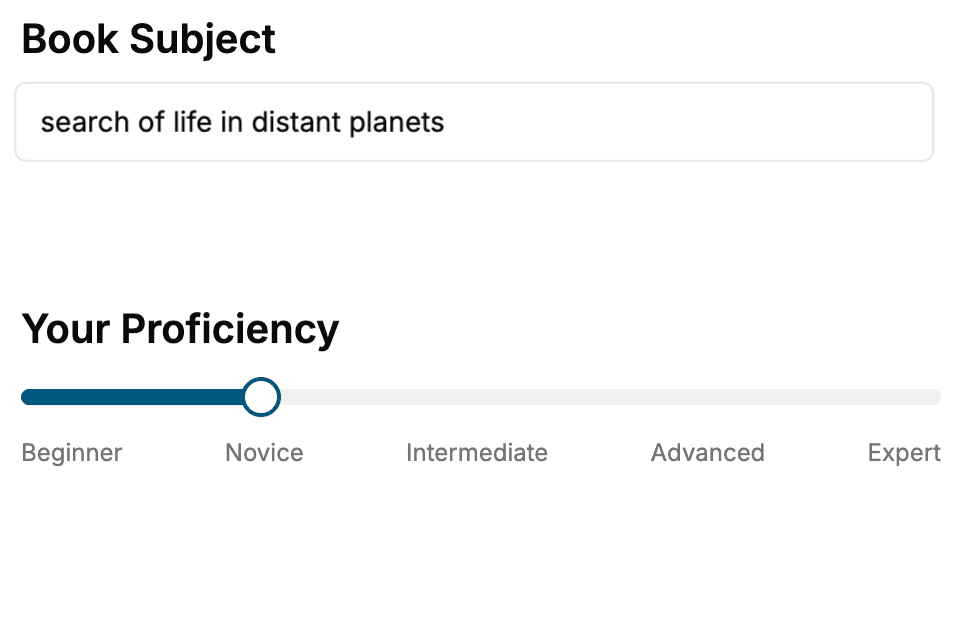
Select the focus of your Gaming book and share your background
- 2. Personalize your book
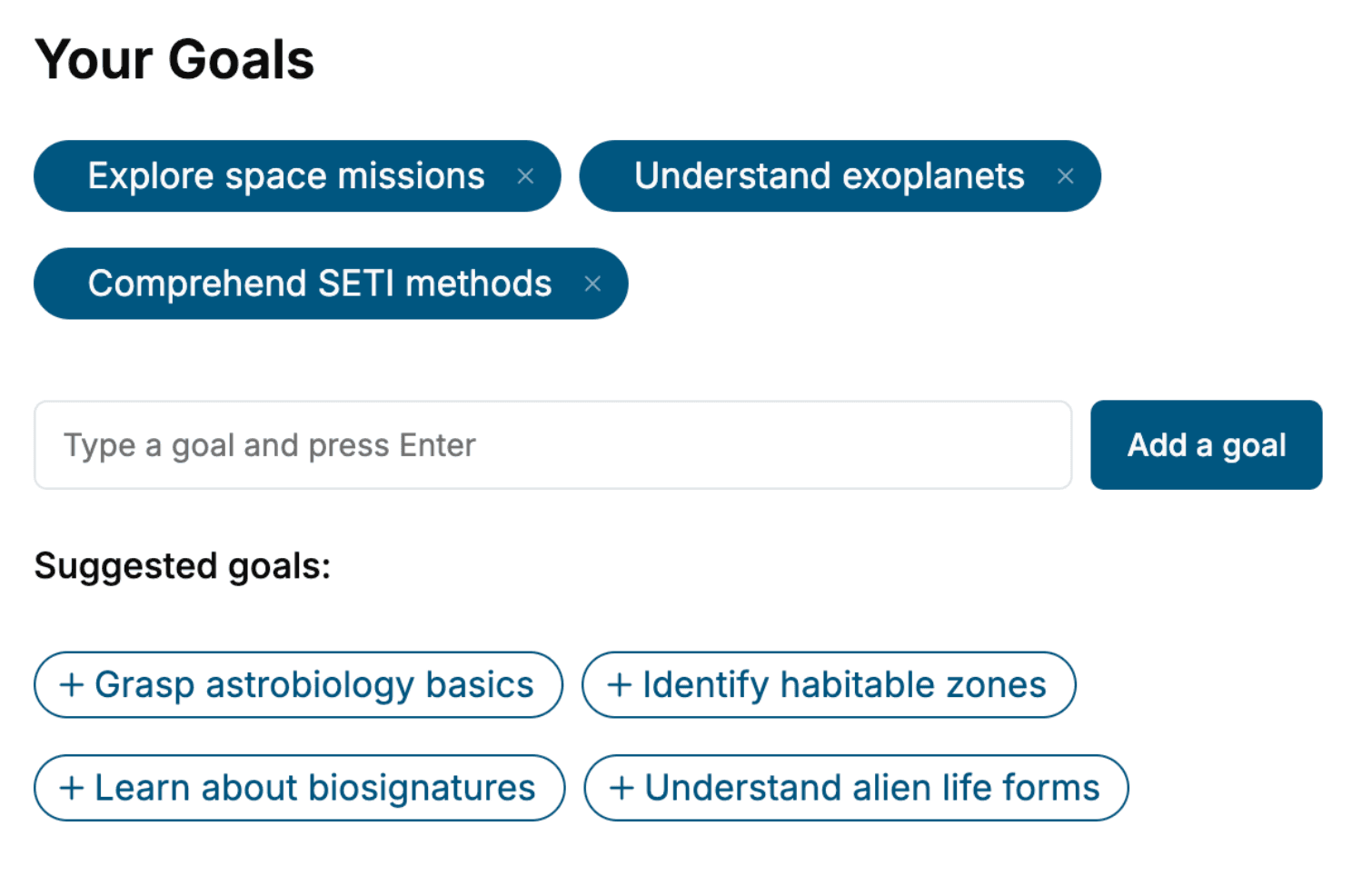
Specify your goals and choose sub-topics to include
- 3. Get your tailored book
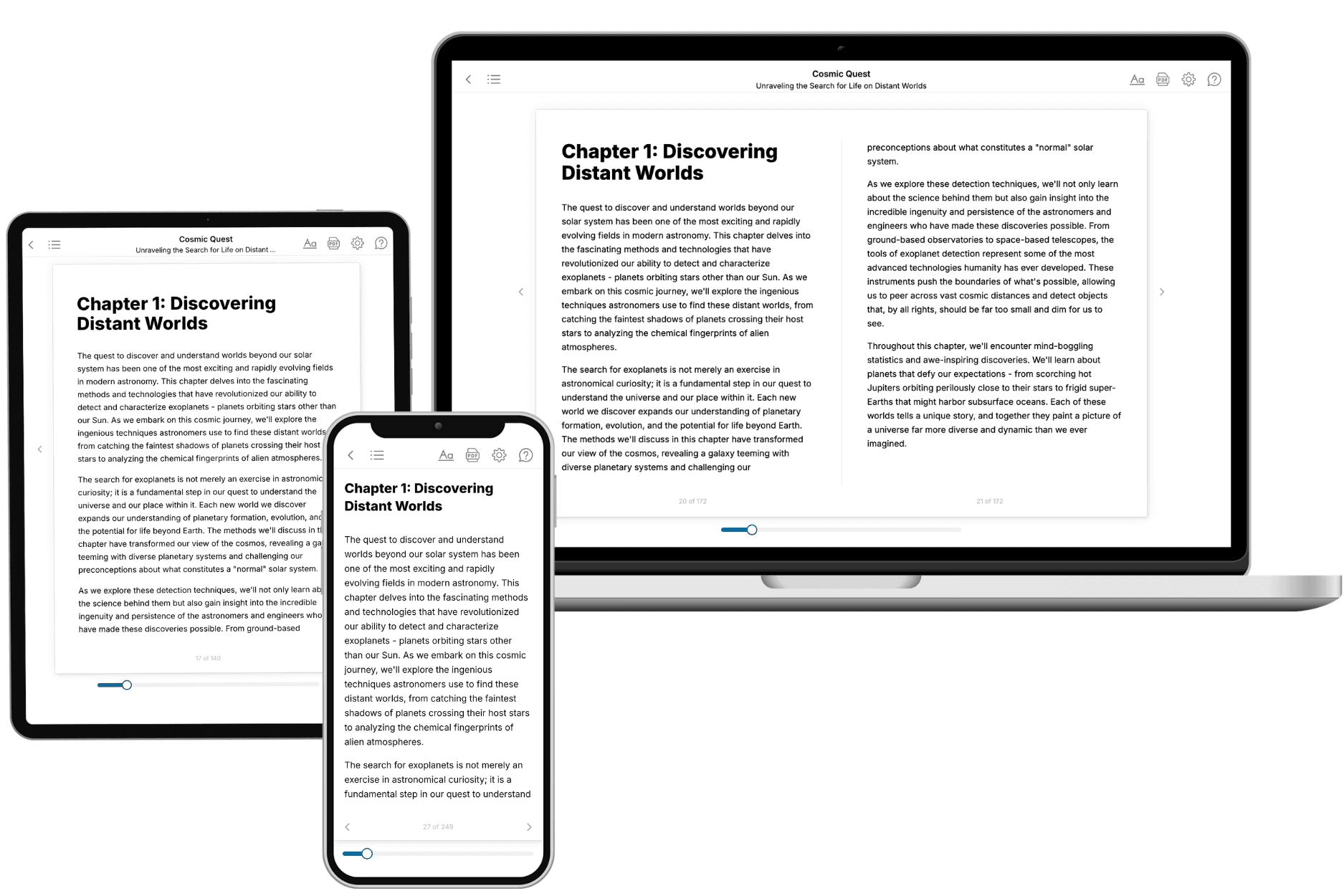
Your book is ready in 10 minutes. Read it online, download as EPUB or PDF, or send to Kindle.
Frequently asked questions
- What is TailoredRead?
TailoredRead creates complete, full-length nonfiction ebooks, written specifically for you. Tell us what you want to learn and why, and TailoredRead writes you a complete ebook on it, with charts, tables, and diagrams throughout. Read it online, on Kindle, or on any e-reader, or download it as a PDF or EPUB. Every book is written fresh the day you order it.
- How is the book tailored to me?
Before anything is written, you answer a few short questions about your goals, your background, and the topics you care about. Your book is then planned around your answers: written at your level, focused on your goals, and covering the topics you chose, instead of the one-size-fits-all book a store sells everyone.
- Will it read like generic AI content?
No. Your book isn't a chat transcript: it's planned chapter by chapter before a single word is written, told in a clear book voice, and explains ideas visually with charts, tables, and diagrams. After writing, every book goes through an editorial pass that polishes chapters so the book reads consistent from start to finish. Judge for yourself: browse thousands of sample books on our Explore Books page.
- How accurate is the content?
Our AI first checks whether your subject needs live research. Niche and fast-moving subjects are researched before writing, and the book plan and chapters are grounded in what it finds. After writing, every book goes through a quality pass that checks its facts and consistency, and researched books list their sources in a Notes section at the back.
- How long is the book?
You choose the length: Comprehensive (250-300 pages), Detailed (150-200 pages), Essential (70-100 pages), or Short (30-50 pages).
- Does the book include visuals?
Yes. Every book includes charts, tables, and diagrams: timelines, checklists, step-by-step guides, decision trees, comparison tables, matrices, and bar charts. A typical book includes dozens of these visual elements.
- Can I read it on Kindle? What formats can I download?
Yes. Every book can be read in our online reader or downloaded as a PDF or EPUB. The EPUB can be opened with Kindle, Apple Books, Kobo, and any e-reader. The Commercial and Author licenses also include an editable Word (DOCX) and Markdown download.
- How much does it cost?
About the price of a regular ebook. The exact price depends on your book's length and complexity, from $2 for the shortest books to $35 for the most comprehensive, and it's shown when you review your book, before you commit to anything. Each book is a one-time purchase, yours to keep, no subscription. Licenses that let you share, teach, or publish your book range from $35.99 to $49.99.
- Can I preview the book before purchasing?
Before you pay, you'll see what your book will cover: the title, a detailed description, the estimated length, and the complete chapter-by-chapter table of contents, so you know what you're getting before you decide. The full text itself is written after you purchase.
- How long does it take to create a book?
About 10 minutes. You can start reading the opening chapters while the rest is still being written.