The Complete Guide to the National Museum of the United States Air Force
Discover Aviation History, Iconic Aircraft, and Insider Tips for Your Washington DC Visit
Imagine walking through the halls of one of the world's most impressive aviation museums, confidently navigating from the Wright Flyer to cutting-edge military aircraft, understanding the stories and significance of each iconic plane you encounter.
176 pages9 chaptersMay 15, 2026Aviation History
About this book
This guide transforms your visit to the National Museum of the United States Air Force from a casual tourist experience into a deeply engaging educational adventure. Whether you're a history buff, aviation enthusiast, or curious traveler, you'll discover how to maximize every moment of your visit. Learn the best times to go, which exhibits demand your attention, how to navigate the sprawling campus efficiently, and what hidden gems most visitors miss. Packed with practical logistics, fascinating historical context, and insider recommendations, this book ensures you'll leave with a profound appreciation for American aviation achievement and the innovations that changed the world. Perfect for solo travelers, families, and anyone seeking to understand the remarkable history of flight and military aviation.
Table of contents
- IntroductionWhy the National Museum of the United States Air Force Matters, How to Use This Guide, What to Expect During Your VisitRead below
- Chapter 1: Planning Your VisitLocation, Hours, and Admission, Best Times to Visit: Seasons and Crowds, How Long You'll Need: Time Management Strategies, Getting There: Transportation Options
- Chapter 2: Understanding the Museum LayoutThe Four Main Hangars: What's Inside Each, Outdoor Exhibits and Missile Park, Navigation Tips and Walking Routes
- Chapter 3: Iconic Aircraft You Must SeeEarly Aviation: From Wright Flyer to Golden Age, World War II Legends: B-17, P-51, and More, Cold War Innovations: SR-71, U-2, and Spy Planes, Modern Military Jets and Space Exploration
- Chapter 4: Hangar One: Early Aviation and World War IThe Wright Flyer and the Birth of Flight, World War I Aircraft and Aviation Innovation, The Golden Age of Aviation
- Chapter 5: Hangar Two: World War II and BeyondStrategic Bombers: B-17 Flying Fortress and B-29 Superfortress, Fighter Aircraft: P-51 Mustang and P-47 Thunderbolt, Post-War Aviation and the Jet Age Begins
- Chapter 6: Hangar Three: Cold War and ReconnaissanceSpy Planes: U-2 and SR-71 Blackbird, Cold War Fighter Jets and Interceptors, Space Race and Experimental Aircraft
- Chapter 7: Hangar Four: Modern Aviation and Space ShuttleSpace Shuttle Discovery: The Crown Jewel, Modern Military Aircraft and Stealth Technology, The Future of Aviation and Aerospace
- Chapter 8: Interactive Experiences and Hands-On LearningFlight Simulators and Virtual Experiences, Hands-On Exhibits and Educational Displays, IMAX Theater and Special Presentations
- Chapter 9: Practical Logistics and Visitor InformationDining Options and Refreshment Facilities, Accessibility Services and Special Accommodations, Photography Rules, Gift Shop, and Amenities
- ConclusionThe Lasting Impact of Aviation History, Final Tips for an Unforgettable Visit
Introduction
There are museums you visit, and then there are museums that stay with you. The National Museum of the United States Air Force, located at Wright-Patterson Air Force Base near Dayton, Ohio, belongs firmly in the second category. This is not a place where you shuffle past glass cases of old artifacts and read small plaques. This is a place where you stand beneath the belly of a B-17 Flying Fortress, look up at the nose art painted by young men who flew into combat, and feel the weight of history pressing down on you in the best possible way. It is enormous, it is extraordinary, and it rewards every visitor who comes prepared.
With more than 360 aircraft and missiles on display across four massive hangars and an outdoor missile park, this museum is one of the largest aviation museums in the world.[1] The collection spans the entire arc of powered flight, from the fragile wood-and-fabric machines of the Wright Brothers era to the sleek, radar-absorbing surfaces of modern stealth aircraft. Somewhere in between, you will find presidential aircraft, spy planes that flew higher than any enemy could reach, rockets that carried astronauts toward the stars, and fighters that defined the Cold War. No single day can do it all justice, but the right preparation gets you remarkably close.
This guide exists because a museum this large and this rich deserves more than a casual walk-through. Without a plan, it is easy to spend three hours in the first two hangars, realize your feet are aching, and miss the Space Shuttle entirely. With a plan, you move through the collection with purpose, you know which aircraft carry the most compelling stories, and you leave feeling like you genuinely understood what you saw. That is the difference this book is designed to make. Whether you are visiting for a single afternoon or dedicating a full day to the experience, the chapters ahead will help you make every minute count.
Why the National Museum of the United States Air Force Matters
Most people know that Dayton, Ohio has a connection to aviation history. The Wright Brothers were from Dayton, and their bicycle shop is a short drive from the museum. But the National Museum of the United States Air Force is not simply a local landmark honoring hometown heroes. It is the official museum of the United States Air Force, and its collection represents the full story of American military aviation from the earliest days of powered flight through the present era of advanced aerospace technology. That scope is genuinely rare in the museum world.
The museum is free to visit, which makes it one of the most accessible world-class institutions in the country.[2] There is no admission fee for the main galleries, no charge to walk through hangars filled with aircraft that would cost hundreds of millions of dollars to replace. This open-access philosophy reflects the museum's mission: to preserve and present the heritage of the United States Air Force for the American public and for visitors from around the world. It is a public trust, and the collection is treated accordingly.
What makes this museum matter beyond its size and its price tag is the depth of the stories it tells. Aviation history is, at its core, human history. The aircraft on display here were flown by real people in real conflicts, on real missions that changed the outcome of wars and shaped the modern world. The Memphis Belle, one of the most famous B-17 bombers of World War II, is here. The SR-71 Blackbird, the fastest air-breathing aircraft ever built, is here. The Apollo 15 command module is here. Each of these objects carries a story that connects directly to the larger sweep of twentieth-century history.
For aviation enthusiasts, the museum is essentially a pilgrimage site. Nowhere else in the world can you walk around a complete collection of American military aircraft spanning more than a century of development in a single location. For history buffs, it offers a tangible, three-dimensional encounter with events that are often reduced to textbook paragraphs. For families, it provides a rare combination of genuine educational value and the kind of visual spectacle that keeps children engaged. A ten-year-old standing next to a B-29 Superfortress, looking up at a fuselage that stretches nearly 100 feet, does not need to be told that this is impressive. They can see it.
The museum also matters because it is constantly evolving. New aircraft are added to the collection, restoration projects bring historic planes back to their original condition, and exhibits are updated to reflect new historical research. The addition of Hangar Four in 2016 brought the Space Shuttle Atlantis (later replaced by Space Shuttle Discovery) and a range of modern military aircraft under one roof, dramatically expanding what the museum could offer.[3] Visiting today means encountering a collection that is richer and more comprehensive than it has ever been.
Perhaps most importantly, this museum tells a story about innovation. American aviation did not advance through luck. It advanced through relentless problem-solving, engineering creativity, and the willingness to push technology into territory where failure was always a real possibility. The aircraft in these hangars represent thousands of engineering decisions, test flights, and design iterations. Understanding that process, even at a surface level, gives you a deeper appreciation for the machines themselves and for the people who built and flew them.
The National Museum of the United States Air Force houses over 360 aircraft and missiles, making it the largest aviation museum in the world by collection size. Admission to the main galleries is completely free, and the museum welcomes more than one million visitors per year.
How to Use This Guide
This guide is organized to match the natural flow of planning and experiencing a museum visit. It starts with the practical logistics you need before you arrive, moves through the layout and major collections, and ends with tips for making the most of interactive experiences and amenities. You do not need to read it cover to cover before your trip, though doing so will give you the richest preparation. Instead, think of it as a toolkit you can dip into based on what you need most.
If you are in the early stages of planning, start with Chapter 1, which covers location, hours, admission, and the best times to visit. This chapter will help you decide when to go and how much time to set aside. Chapter 2 then gives you a clear picture of the museum's physical layout, which is essential for navigating a campus this large without wasting time or energy backtracking between hangars.
Chapters 3 through 7 form the heart of the guide. Chapter 3 gives you a curated overview of the most significant aircraft in the collection, organized by era and importance. This is your starting point for building a personal priority list. Chapters 4 through 7 then go deeper into each of the four main hangars, giving you the historical context and specific highlights you need to understand what you are looking at when you arrive. These chapters are designed to be read before your visit, but they also work as reference material you can consult on the day.
Chapter 8 covers the interactive experiences available at the museum, including flight simulators, hands-on exhibits, and the IMAX theater. These experiences require separate planning because some have fees, limited availability, or specific scheduling requirements. Knowing about them in advance means you can build them into your itinerary rather than discovering them too late in the day. Chapter 9 rounds out the practical information with details on dining, accessibility, photography policies, and the gift shop.
Throughout the guide, you will find specific recommendations formatted as lists and highlighted sections. These are designed to be easy to scan quickly, whether you are reading at home the night before your visit or standing in a hangar trying to decide where to go next. Pay particular attention to the "Must-See" callouts in each hangar chapter. These identify the single most important aircraft or exhibit in each section, so that even if your time runs short, you will not miss the highlights that matter most.
A few practical notes on how to get the most from this guide. First, the museum's layout and collection can change as new aircraft are acquired and exhibits are reorganized. Always verify current hours and any temporary closures on the museum's official website before your visit. Second, this guide focuses on the main public galleries. Access to some areas of Wright-Patterson Air Force Base requires military credentials, and those areas are not covered here. Third, distances inside the museum are significant. The four hangars together cover hundreds of thousands of square feet, and walking the full collection in a single visit is genuinely tiring. Use the navigation tips in Chapter 2 to plan a route that matches your energy level and priorities.
Finally, use this guide as a starting point, not a script. The best museum visits happen when you allow yourself to be surprised. You might plan to spend twenty minutes in the World War I section and end up staying for an hour because a particular aircraft catches your imagination. That is exactly how it should work. This guide gives you the foundation to make informed choices, but the experience itself belongs to you.
- Before your trip: Read Chapters 1 and 2 for logistics, then skim Chapters 3 through 7 to build your priority list
- The night before: Review the hangar chapters for the exhibits you most want to see and note any must-see highlights
- Day of visit: Use Chapter 2's navigation tips to plan your route and Chapter 8 for interactive experience timing
- After your visit: Return to any sections that sparked curiosity for deeper reading and historical context
What to Expect During Your Visit
Walking into the National Museum of the United States Air Force for the first time is a genuinely disorienting experience, in the best possible sense. The scale of the hangars is hard to prepare for. The first hangar alone is large enough to contain multiple full-size aircraft with room to walk comfortably around each one. The ceilings are high enough to accommodate aircraft displayed at dramatic angles, with some planes suspended from above to give the impression of flight. The visual impact hits you immediately and does not let up.
The museum is organized chronologically across its four hangars, which makes it easy to follow the arc of aviation history from beginning to present. Hangar One covers early aviation through World War I and the interwar Golden Age. Hangar Two focuses on World War II. Hangar Three takes you through the Cold War, the Korean and Vietnam conflicts, and the space race. Hangar Four brings the story into the modern era with stealth aircraft, advanced military jets, and the Space Shuttle. Moving through the hangars in order gives your visit a natural narrative structure that makes the history easier to absorb and remember.
Expect to walk a lot. A full tour of all four hangars, including the outdoor missile park, covers a significant distance. Comfortable, supportive footwear is not optional; it is essential. Many visitors underestimate this and find themselves exhausted by midday. Bring water, plan for breaks, and do not feel obligated to read every single exhibit panel. Selective, engaged viewing of the aircraft that interest you most will be far more rewarding than a rushed attempt to cover everything.
The museum is open to the public 363 days a year, closing only on Thanksgiving and Christmas Day.[4] Hours are generally 9:00 AM to 5:00 PM, though these can vary for special events. The museum does not charge admission for the main galleries, but some experiences, including flight simulators and IMAX films, carry separate fees. Budget for these if you plan to take advantage of them, and consider purchasing simulator tickets early in your visit since slots can fill up on busy days.
Crowds vary significantly by season and day of the week. Summer weekends and school holiday periods bring the largest numbers of visitors, which can make the most popular exhibits feel congested. Weekday visits in the spring or fall offer a noticeably quieter experience. If you are visiting with children, the interactive exhibits in the museum are genuinely well-designed for younger audiences, and the sheer visual drama of the aircraft tends to hold attention in a way that more traditional museum formats do not. Plan for more time than you think you need if you are traveling with kids who want to explore every corner.
Photography is permitted throughout the main galleries, and the aircraft make for extraordinary subjects. The lighting in the hangars is generally good, though some aircraft in darker corners can be challenging to photograph without a camera that handles low light well. Tripods are generally not permitted in the galleries, so handheld shooting is the norm. The outdoor missile park offers excellent natural light for photography, particularly in the morning hours before the sun moves overhead.
One thing that surprises many first-time visitors is how quiet and contemplative the museum can feel, even on moderately busy days. The hangars are large enough that crowds disperse quickly, and there are moments, particularly in the early morning or late afternoon, when you can stand alone in front of a historic aircraft and simply take it in. Those moments are worth seeking out. They are the ones you will remember long after the visit is over.
A practical tip from experienced visitors: arrive when the museum opens at 9:00 AM. The first hour offers the thinnest crowds, the best light for photography, and the chance to experience the most popular exhibits without competition. By 11:00 AM on a busy day, the hangars can feel noticeably more crowded.
The museum also offers a range of educational programs, guided tours, and special events throughout the year. These include curator-led tours that provide access to historical context you will not find on standard exhibit panels, as well as special exhibitions that rotate through the galleries on a seasonal basis. Checking the museum's event calendar before your visit is always worthwhile. You might find that your trip coincides with a special program that adds an entirely new dimension to the experience.
Finally, expect to leave with questions. The best museum visits do not answer everything; they open doors. You might walk out wanting to know more about the Tuskegee Airmen, or the engineering challenges of breaking the sound barrier, or what it was actually like to fly a U-2 reconnaissance mission over the Soviet Union at 70,000 feet. That curiosity is the museum doing its job. This guide will give you the context to ask better questions and recognize the moments that deserve deeper exploration. The rest is up to you.
Notes
Introduction
- 1. National Museum of the United States Air Force, Official Website, 'About the Museum,' nationalmuseum.af.mil
- 2. National Museum of the United States Air Force, 'Visitor Information,' nationalmuseum.af.mil
- 3. Air Force Museum Foundation, 'Fourth Building Campaign,' afmuseum.org
- 4. National Museum of the United States Air Force, 'Hours and Admission,' nationalmuseum.af.mil
This is the end of the free sample. The full book has 9 chapters.
Want this book written for you?
Tell us your goals and background, and get your own version of this book, tailored by AI to you.


Benefits of AI-tailored books
- Read one book, not ten:
- all the Aviation History knowledge you need, gathered into a single book.
- Save days of learning:
- tell us your goals, choose your topics, and the whole book is built around them.
- Learn effortlessly:
- Aviation History book written for your specific background and expertise.
- Understand at a glance:
- includes charts, tables, timelines, checklists, decision trees, and more.
- Stay current:
- written the day you order it, not years ago.
- Trust what you read:
- every book is checked for accuracy, with real research when your subject needs it.
Create your unique book in 3 steps
- 1. Select your focus
Select the focus of your Aviation History book and share your background
- 2. Personalize your book
Specify your goals and choose sub-topics to include
- 3. Get your tailored book
Your book is ready in 10 minutes. Read it online, download as EPUB or PDF, or send to Kindle.


Frequently asked questions
- What is TailoredRead?
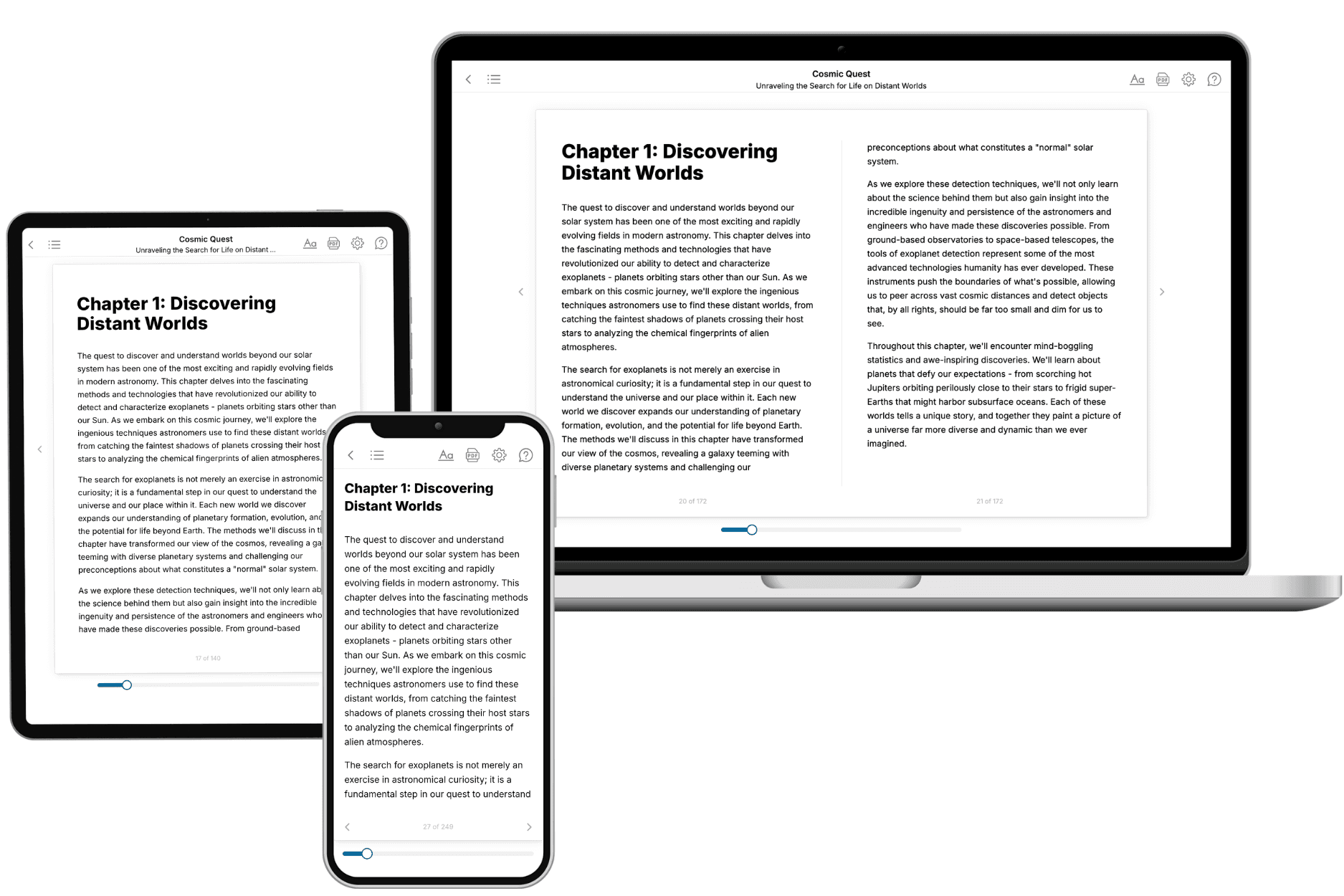
TailoredRead creates complete, full-length nonfiction ebooks, written specifically for you. Tell us what you want to learn and why, and TailoredRead writes you a complete ebook on it, with charts, tables, and diagrams throughout. Read it online, on Kindle, or on any e-reader, or download it as a PDF or EPUB. Every book is written fresh the day you order it.
- How is the book tailored to me?
Before anything is written, you answer a few short questions about your goals, your background, and the topics you care about. Your book is then planned around your answers: written at your level, focused on your goals, and covering the topics you chose, instead of the one-size-fits-all book a store sells everyone.
- Will it read like generic AI content?
No. Your book isn't a chat transcript: it's planned chapter by chapter before a single word is written, told in a clear book voice, and explains ideas visually with charts, tables, and diagrams. After writing, every book goes through an editorial pass that polishes chapters so the book reads consistent from start to finish. Judge for yourself: browse thousands of sample books on our Explore Books page.
- How accurate is the content?
Our AI first checks whether your subject needs live research. Niche and fast-moving subjects are researched before writing, and the book plan and chapters are grounded in what it finds. After writing, every book goes through a quality pass that checks its facts and consistency, and researched books list their sources in a Notes section at the back.
- How long is the book?
You choose the length: Comprehensive (250-300 pages), Detailed (150-200 pages), Essential (70-100 pages), or Short (30-50 pages).
- Does the book include visuals?
Yes. Every book includes visual elements such as timelines, checklists, step-by-step guides, decision trees, comparison tables, and matrices, and many include bar charts. A typical book includes dozens of these visual elements.
- Can I read it on Kindle? What formats can I download?
Yes. Every book can be read in our online reader or downloaded as a PDF or EPUB. The EPUB can be opened with Kindle, Apple Books, Kobo, and any e-reader. The Commercial and Author licenses also include an editable Word (DOCX) and Markdown download.
- How much does it cost?
About the price of a regular ebook. The exact price depends on your book's length and complexity, from $2 for the shortest books to $35 for the most comprehensive, and it's shown when you review your book, before you commit to anything. Each book is a one-time purchase, yours to keep, no subscription. Licenses that let you share, teach, or publish your book range from $35.99 to $49.99.
- Can I preview the book before purchasing?
Before you pay, you'll see what your book will cover: the title, a detailed description, the estimated length, and the complete chapter-by-chapter table of contents, so you know what you're getting before you decide. The full text itself is written after you purchase.
- How long does it take to create a book?
About 10 minutes. You can start reading the opening chapters while the rest is still being written.