The Complete Guide to Roasting Goose
Master the Art of Perfectly Golden, Juicy Poultry Every Time
What if the secret to restaurant-quality roasted goose has been hiding in your kitchen all along?
222 pages10 chaptersApr 4, 2026Poultry Cooking
About this book
Roasting goose intimidates many home cooks, yet this magnificent bird deserves a place on your table. This guide demystifies the process with clear, actionable techniques grounded in cooking science. You'll learn how to select the perfect bird, prepare it properly, and roast it to golden perfection with crispy skin and succulent meat. Discover why goose requires different approaches than chicken or turkey, master temperature control and timing, and understand the critical importance of rendering fat and proper resting. Whether you're preparing a holiday centerpiece or impressing guests at a special dinner, this book equips you with the knowledge and confidence to execute flawlessly. Includes troubleshooting strategies for common challenges, flavor pairing suggestions, and recipes that showcase your roasted goose beautifully.
Table of contents
- IntroductionWhy Goose Deserves Your Attention, How Goose Differs from Other Poultry, What You'll Learn in This BookRead below
- Chapter 1: Understanding GooseAnatomy and Meat Structure, Common Goose Breeds and Their Characteristics, The Role of Fat in Flavor and Texture, Nutritional Benefits of Goose
- Chapter 2: Selecting and Sourcing Your GooseWhere to Find Quality Goose, Choosing the Right Size for Your Needs, Evaluating Freshness and Quality, Building Relationships with Suppliers
- Chapter 3: Preparation and ThawingSafe Thawing Techniques, Cleaning and Inspecting the Bird, Trimming Excess Fat and Skin, Timing Your Preparation
- Chapter 4: Seasoning and Flavoring StrategiesDry Brining and Salt Curing, Herb and Spice Pairings, Stuffing and Cavity Flavoring, Rubs, Pastes, and Marinades
- Chapter 5: Roasting Techniques and Temperature ControlPreparing Your Oven and Equipment, Temperature Targets and Doneness, High-Heat, Low-and-Slow, and Hybrid Approaches, Monitoring and Adjusting During Roasting
- Chapter 6: Rendering Fat and Achieving Crispy SkinThe Science of Fat Rendering, Techniques for Crispy, Golden Skin, Basting and Moisture Management, Final Crisping Methods
- Chapter 7: Resting and CarvingWhy Resting is Non-Negotiable, Optimal Resting Times and Temperatures, Carving Methods for Maximum Presentation, Plating and Serving Your Roasted Goose
- Chapter 8: Sauces and AccompanimentsCreating Rich Gravies from Pan Drippings, Classic and Modern Sauce Pairings, Complementary Side Dishes, Wine and Beverage Pairings
- Chapter 9: Troubleshooting Common IssuesAddressing Dry or Tough Meat, Solving Undercooked or Soggy Skin, Managing Uneven Cooking, Adjusting for Timing Problems
- Chapter 10: Using Leftovers and Maximizing Your BirdProper Storage and Food Safety, Creative Recipes for Leftover Goose, Making Flavorful Stock from Bones
- ConclusionYour Journey to Goose Mastery, Final Thoughts and Encouragement
- Glossary of Terms
- Further Reading and Resources
Introduction
There is a moment at the table that every cook secretly hopes for. It happens when a dish arrives and the room goes quiet for just a second before the compliments start. Roasted goose creates that moment. With its deep mahogany skin, rich aroma, and layers of flavor that no chicken or turkey can match, a properly roasted goose is one of the most impressive things you can bring to a dinner table. Yet for most home cooks, it remains an untried ambition, something admired in cookbooks but never actually attempted.
That hesitation is understandable. Goose has a reputation for being difficult, expensive, and unforgiving. Ask around and you will hear stories of greasy results, tough meat, or skin that refused to crisp up properly. These outcomes are real, but they are almost always the result of applying chicken or turkey techniques to a bird that operates by entirely different rules. Once you understand those rules, the intimidation fades quickly. Goose is not harder to cook than other poultry. It is just different, and different is something you can learn.
This book exists to close the gap between the goose you have imagined cooking and the one you will actually pull from your oven. Every chapter is built around practical, tested techniques grounded in the science of how this bird behaves under heat. You will not find vague instructions here. Instead, you will find specific temperatures, clear timelines, and honest explanations of why each step matters. Whether you are preparing a holiday centerpiece for twelve guests or a special weekend dinner for four, the knowledge in these pages will give you the confidence to execute with precision and serve with pride.
Before diving into the details of selection, preparation, and roasting, it helps to understand the bigger picture. The three sections of this introduction cover why goose deserves a permanent place in your cooking repertoire, how it fundamentally differs from the poultry you already know, and what this book will teach you from start to finish. Think of this as your orientation before the real work begins.
Why Goose Deserves Your Attention
Goose has been a centerpiece of celebratory meals for centuries. Long before turkey became the default holiday bird in North America, goose held that position across much of Europe. In Victorian England, a roasted goose was the traditional Christmas dinner for working-class families, a tradition immortalized in Charles Dickens' A Christmas Carol when the Cratchit family sits down to their prized bird. In Germany, Martinsgans (St. Martin's Goose) is still served on November 11th as a beloved seasonal tradition. The bird's long culinary history is not nostalgia. It reflects a genuine appreciation for its exceptional flavor.
The taste of goose is unlike anything else in the poultry category. The meat is darker and richer than chicken, with a depth of flavor that sits somewhere between duck and beef. This richness comes from the bird's fat distribution and muscle composition, both of which we will explore in detail later. The point here is simple: goose delivers a dining experience that feels genuinely special. It signals effort, care, and occasion in a way that a roast chicken, however well executed, simply cannot.
Beyond flavor, goose offers a remarkable practical bonus that most cooks overlook entirely. As the bird roasts, it releases an extraordinary amount of fat, often a full cup or more from a single bird. This rendered goose fat is one of the most prized cooking fats in the culinary world. Chefs pay premium prices for it. You will produce it as a natural byproduct of your roast. Potatoes cooked in goose fat develop a crust that is genuinely difficult to achieve any other way, and the fat keeps refrigerated for months, giving you a flavor dividend long after the meal is finished.[1]
Goose also holds up beautifully as a centerpiece for large gatherings. A whole roasted goose, presented at the table with golden skin and a fragrant stuffing, creates a visual impact that is hard to match. It photographs well, it carves dramatically, and it gives guests something to talk about. In an era when many dinner parties default to the familiar, serving goose is a genuine statement of culinary ambition.
There is also a seasonal dimension worth appreciating. Goose is at its best in the fall and winter months, when the birds are fully mature and their fat reserves are at their peak. This natural seasonality makes goose feel appropriate for the holidays in a way that goes beyond tradition. The timing aligns with when the bird is genuinely at its finest, which means cooking it in season gives you a natural advantage before you even turn on the oven.
Finally, mastering goose expands your overall cooking skill set in meaningful ways. The techniques required, including proper fat rendering, precise temperature management, and understanding how dense dark meat behaves differently from lean white meat, are transferable skills. Once you understand how to roast a goose well, you will find that your approach to duck, pork belly, and other rich, fatty proteins improves noticeably. Goose is not just a dish. It is a cooking education.
How Goose Differs from Other Poultry
The single biggest mistake home cooks make with goose is treating it like a large chicken. The two birds look similar on the outside, both whole, both with two legs and two wings, both roasted in an oven. But the similarities end there. Understanding the key differences between goose and other poultry is not just useful background knowledge. It is the foundation of every technique in this book.
The most significant difference is fat content. A typical chicken has a thin layer of fat beneath the skin, concentrated mainly around the cavity. A goose, by contrast, carries a thick, substantial fat layer across its entire body. This fat does not simply melt away during cooking. It needs to be actively rendered, meaning it must be coaxed out of the skin through a combination of preparation techniques and controlled heat. If you skip this step or rush it, the result is greasy, flabby skin rather than the crispy, golden exterior that makes roasted goose so appealing.
Here is a direct comparison of the key differences between goose and the two most common roasting birds:
- Fat content: Goose carries significantly more subcutaneous fat than chicken or turkey, requiring active rendering techniques before and during roasting.
- Meat color: All goose meat is dark meat. Unlike chicken or turkey, there is no white breast meat. The entire bird has the dense, rich character of dark poultry.
- Muscle density: Goose is a migratory bird and uses its muscles extensively, resulting in denser, firmer meat that benefits from lower internal temperatures than most cooks expect.
- Skin thickness: Goose skin is thicker and tougher than chicken skin, which is why specific preparation steps like scoring and air-drying are necessary to achieve crispiness.
- Yield ratio: A goose yields less edible meat relative to its total weight than a chicken or turkey. A 10-pound goose feeds roughly 4 to 6 people, while a 10-pound turkey would feed considerably more.
- Cooking time behavior: Goose does not follow the same time-per-pound rules as chicken or turkey. Its fat content and density mean it requires a different approach to timing and temperature management.
The all-dark-meat structure of goose is worth dwelling on for a moment. Dark meat contains more myoglobin, the protein that gives muscle tissue its color, and more intramuscular fat than white meat. This is why dark meat is more flavorful and stays juicier under heat. It is also why goose can tolerate slightly higher internal temperatures without drying out the way a chicken breast would. However, it still has limits, and overcooking goose produces a result that is dry and livery-tasting rather than rich and succulent.[2]
The fat rendering challenge is the central technical problem of roasting goose, and it shapes almost every decision you will make. Before the bird goes into the oven, you need to help the fat begin its journey out of the skin. This typically involves scoring the skin in a crosshatch pattern, blanching the bird briefly in boiling water, and air-drying it uncovered in the refrigerator for at least 24 hours. None of these steps are complicated, but all of them are necessary. Skipping any one of them makes the final result noticeably worse.
Temperature management for goose also differs from other poultry in important ways. Many cooks roast chicken at a single high temperature throughout. Goose benefits from a two-stage approach: starting at a higher temperature to begin rendering the fat and crisping the skin, then reducing the heat to allow the dense meat to cook through gently without drying out. Some recipes add a third stage, a final blast of high heat at the end to finish the skin. Understanding why this works, not just that it works, will help you adapt when your specific oven or bird size requires adjustments.
One more difference worth noting is the cavity. Goose has a large, deep cavity that holds stuffing or aromatics well. However, because the bird takes longer to cook than chicken, any stuffing placed inside must be monitored carefully to ensure it reaches a safe internal temperature. Many experienced goose cooks prefer to use the cavity for aromatics only, such as halved oranges, fresh herbs, and garlic, rather than a traditional bread stuffing. This approach flavors the meat from the inside while avoiding the timing complications that come with a fully stuffed bird.
What You'll Learn in This Book
This book is organized to follow the natural sequence of preparing and serving a roasted goose, from the moment you decide to cook one through to the last use of the leftovers. Each chapter builds on the previous one, so reading straight through before your first attempt is genuinely worthwhile. That said, the chapters are also designed to stand alone as references once you are familiar with the overall process.
Here is a clear map of what each chapter covers and what you will be able to do after reading it:
- Chapter 1: Understanding Goose covers the bird's anatomy, common breeds, fat structure, and nutritional profile. After reading this, you will understand why goose behaves the way it does and what makes different breeds suitable for different purposes.
- Chapter 2: Selecting and Sourcing Your Goose guides you through finding a quality bird, choosing the right size for your gathering, evaluating freshness, and building relationships with suppliers who can provide consistently excellent birds.
- Chapter 3: Preparation and Thawing covers safe thawing methods, cleaning and inspecting the bird, trimming excess fat, and planning your preparation timeline so nothing is rushed on the day of cooking.
- Chapter 4: Seasoning and Flavoring Strategies explores dry brining, herb and spice combinations that complement goose's rich flavor, cavity stuffing options, and the use of rubs, pastes, and marinades.
- Chapter 5: Roasting Techniques and Temperature Control is the technical core of the book, covering oven setup, temperature targets, high-heat versus low-and-slow approaches, and how to monitor and adjust during roasting.
- Chapter 6: Rendering Fat and Achieving Crispy Skin dives deep into the science and practice of fat rendering, skin preparation techniques, basting strategies, and finishing methods for maximum crispiness.
- Chapter 7: Resting and Carving explains why resting is non-negotiable, how long to rest the bird, and how to carve it for maximum presentation and yield.
- Chapter 8: Sauces and Accompaniments covers gravy making from pan drippings, classic and modern sauce pairings, complementary side dishes, and wine and beverage pairings.
- Chapter 9: Troubleshooting Common Issues addresses the most frequent problems, including dry meat, soggy skin, uneven cooking, and timing challenges, with specific solutions for each.
- Chapter 10: Using Leftovers and Maximizing Your Bird covers proper storage, creative leftover recipes, and how to make a rich, flavorful stock from the carcass and bones.
Throughout the book, you will find specific techniques presented as step-by-step processes rather than vague guidelines. When a temperature matters, the exact number is given. When timing depends on the size of the bird, a clear formula is provided. When a technique has a scientific reason behind it, that reason is explained in plain language so you understand the principle, not just the instruction. This approach means you can adapt intelligently when your situation differs slightly from the standard scenario.
You will also find troubleshooting guidance woven throughout the chapters, not just in Chapter 9. Each major technique section includes notes on what can go wrong and how to recognize and correct it. This reflects a realistic view of cooking: even experienced cooks encounter unexpected variables, and knowing how to respond in the moment is just as important as knowing the ideal procedure.
The goal of this book is not to make you follow a single recipe perfectly once. It is to give you a deep enough understanding of goose cookery that you can cook it confidently, adapt it creatively, and improve with every attempt.
One practical note before you begin: the recipes and techniques in this book assume you are working with a whole goose in the 8 to 12 pound range, which is the most common size available and the most practical for home cooking. Where size significantly affects timing or technique, adjustments are clearly noted. If you are working with a smaller or larger bird, the principles remain the same, but the specific numbers will need to be scaled accordingly.
A word about equipment: you do not need a professional kitchen to execute everything in this book. A large roasting pan with a rack, a reliable instant-read thermometer, and a standard home oven are the core requirements. A few additional tools, such as a bulb baster, kitchen twine, and a sharp carving knife, will make the process smoother. Specific equipment recommendations appear in Chapter 5, where the roasting setup is covered in detail.
Finally, approach your first goose with curiosity rather than anxiety. Every cook who has ever produced a magnificent roasted goose started exactly where you are now: with a bird, a kitchen, and a willingness to learn. The techniques in this book have been refined through both culinary tradition and modern cooking science. They work. Your job is simply to follow them carefully the first time, pay attention to what you observe, and build from there. By the time you have roasted your second goose, you will wonder why you waited so long to start.
This is the end of the free sample. The full book has 10 chapters.
Want this book written for you?
Tell us your goals and background, and get your own version of this book, tailored by AI to you.


Benefits of AI-tailored books
- Read one book, not ten:
- all the Poultry Cooking knowledge you need, gathered into a single book.
- Save days of learning:
- tell us your goals, choose your topics, and the whole book is built around them.
- Learn effortlessly:
- Poultry Cooking book written for your specific background and expertise.
- Understand at a glance:
- includes charts, tables, timelines, checklists, decision trees, and more.
- Stay current:
- written the day you order it, not years ago.
- Trust what you read:
- every book is checked for accuracy, with real research when your subject needs it.
Create your unique book in 3 steps
- 1. Select your focus
Select the focus of your Poultry Cooking book and share your background
- 2. Personalize your book
Specify your goals and choose sub-topics to include
- 3. Get your tailored book
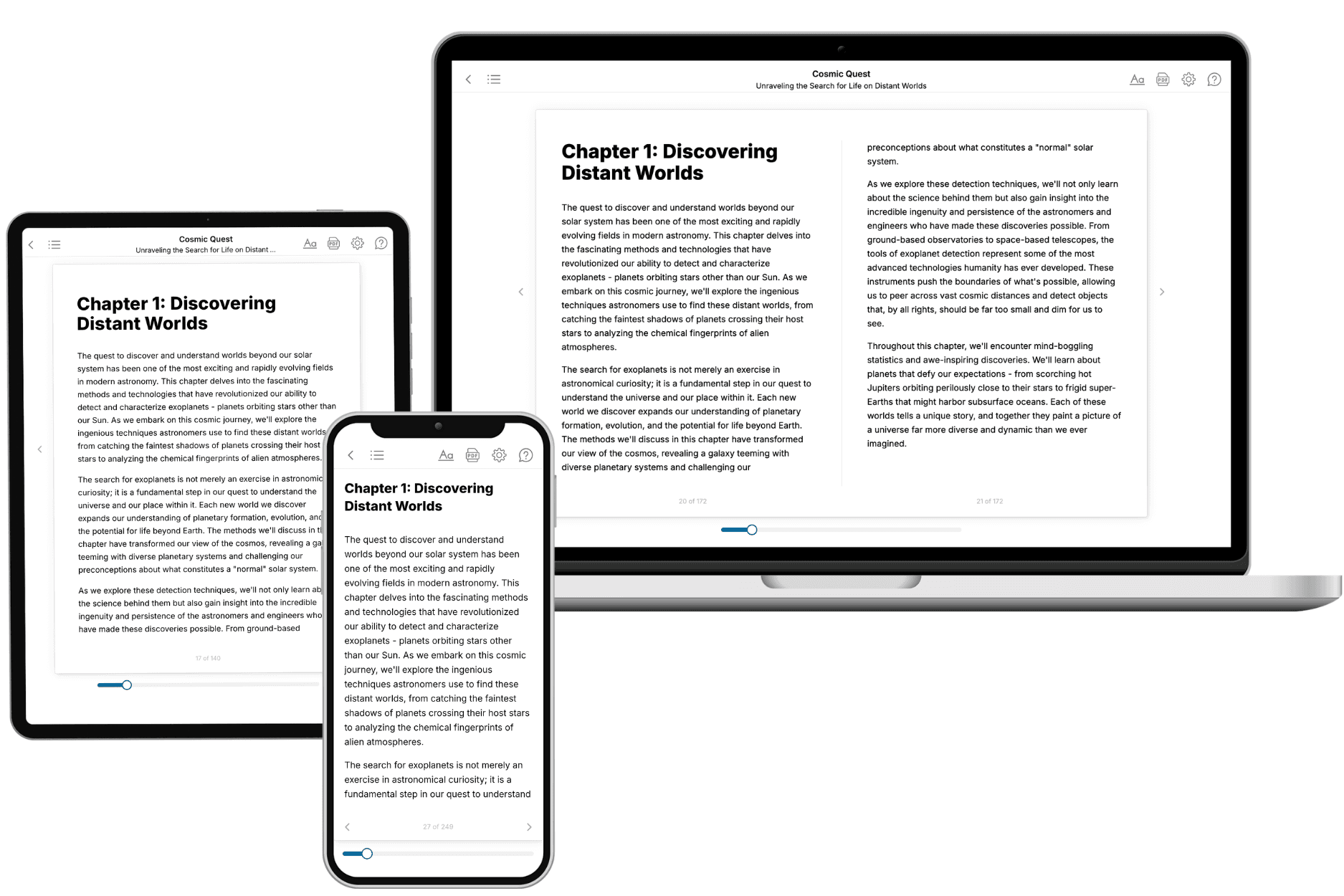
Your book is ready in 10 minutes. Read it online, download as EPUB or PDF, or send to Kindle.
Frequently asked questions
- What is TailoredRead?
TailoredRead creates complete, full-length nonfiction ebooks, written specifically for you. Tell us what you want to learn and why, and TailoredRead writes you a complete ebook on it, with charts, tables, and diagrams throughout. Read it online, on Kindle, or on any e-reader, or download it as a PDF or EPUB. Every book is written fresh the day you order it.
- How is the book tailored to me?
Before anything is written, you answer a few short questions about your goals, your background, and the topics you care about. Your book is then planned around your answers: written at your level, focused on your goals, and covering the topics you chose, instead of the one-size-fits-all book a store sells everyone.
- Will it read like generic AI content?
No. Your book isn't a chat transcript: it's planned chapter by chapter before a single word is written, told in a clear book voice, and explains ideas visually with charts, tables, and diagrams. After writing, every book goes through an editorial pass that polishes chapters so the book reads consistent from start to finish. Judge for yourself: browse thousands of sample books on our Explore Books page.
- How accurate is the content?
Our AI first checks whether your subject needs live research. Niche and fast-moving subjects are researched before writing, and the book plan and chapters are grounded in what it finds. After writing, every book goes through a quality pass that checks its facts and consistency, and researched books list their sources in a Notes section at the back.
- How long is the book?
You choose the length: Comprehensive (250-300 pages), Detailed (150-200 pages), Essential (70-100 pages), or Short (30-50 pages).
- Does the book include visuals?
Yes. Every book includes charts, tables, and diagrams: timelines, checklists, step-by-step guides, decision trees, comparison tables, matrices, and bar charts. A typical book includes dozens of these visual elements.
- Can I read it on Kindle? What formats can I download?
Yes. Every book can be read in our online reader or downloaded as a PDF or EPUB. The EPUB can be opened with Kindle, Apple Books, Kobo, and any e-reader. The Commercial and Author licenses also include an editable Word (DOCX) and Markdown download.
- How much does it cost?
About the price of a regular ebook. The exact price depends on your book's length and complexity, from $2 for the shortest books to $35 for the most comprehensive, and it's shown when you review your book, before you commit to anything. Each book is a one-time purchase, yours to keep, no subscription. Licenses that let you share, teach, or publish your book range from $35.99 to $49.99.
- Can I preview the book before purchasing?
Before you pay, you'll see what your book will cover: the title, a detailed description, the estimated length, and the complete chapter-by-chapter table of contents, so you know what you're getting before you decide. The full text itself is written after you purchase.
- How long does it take to create a book?
About 10 minutes. You can start reading the opening chapters while the rest is still being written.