The Complete Guide to Tennessee Music Festivals
Discover the Rhythms, Culture, and Soul of the Volunteer State
Planning a Tennessee music festival trip can feel overwhelming—with dozens of festivals scattered across the state, conflicting schedules, unclear logistics, and uncertainty about which events match your interests.
176 pages8 chaptersJun 15, 2026Tennessee Travel Guide
About this book
This guide cuts through the confusion and gives you everything needed to discover and experience Tennessee's most vibrant music festivals like a seasoned traveler. You'll learn the history and character of major festivals from Nashville's CMA Fest to Memphis's blues celebrations, understand what makes each event unique, and get practical strategies for planning your visit. Discover insider tips for navigating crowds, finding affordable tickets, securing accommodations, and experiencing the full cultural richness beyond the main stage. Whether you're a country music devotee, blues enthusiast, or curious explorer, this guide helps you choose the right festivals, plan strategically, and create memories that capture the true spirit of Tennessee's musical soul.
Table of contents
- IntroductionWhy Tennessee Festivals Matter, How to Use This Guide, Understanding Tennessee's Festival Landscape, What You'll Discover in These PagesRead below
- Chapter 1: The Soul of Tennessee MusicTennessee's Musical Heritage and Influence, From Country to Blues: Understanding Tennessee's Musical Genres, How Festivals Preserve and Celebrate Musical Traditions
- Chapter 2: Nashville's Premier Music FestivalsCMA Fest: Country Music's Biggest Celebration, Beyond CMA: Other Nashville Festival Gems, Planning Your Nashville Festival Experience
- Chapter 3: Memphis Blues and Soul FestivalsMemphis's Blues and Soul Music Legacy, Essential Memphis Festivals to Experience, Navigating Memphis's Festival Scene
- Chapter 4: Regional Festivals Across TennesseeEast Tennessee: Bluegrass, Folk, and Mountain Music, Middle Tennessee: Diverse Sounds and Hidden Venues, West Tennessee: Soul, Gospel, and Local Traditions
- Chapter 5: Planning Your Festival CalendarUnderstanding Festival Seasons and Timing, Matching Festivals to Your Musical Preferences, Creating Your Multi-Festival Adventure Plan
- Chapter 6: Logistics and Practical PlanningSecuring Tickets and Managing Your Budget, Finding Accommodations and Getting Around, What to Pack and How to Prepare
- Chapter 7: Insider Tips and Festival CultureNavigating Crowds and Finding Hidden Gems, Festival Etiquette and Community Respect, Maximizing Your Festival Experience
- Chapter 8: Beyond the Main StageExploring Local Food and Culinary Traditions, Discovering Local Crafts and Artisans, Connecting with Local Communities and History
- ConclusionBeginning Your Tennessee Festival Journey, The Lasting Impact of Festival Experiences
- Appendix: Festival Quick ReferenceComplete Festival Directory and Contact Information, Useful Resources and Planning Tools
Introduction
There is a moment that happens at nearly every Tennessee music festival. The sun is dropping low, the air smells like barbecue smoke and cut grass, and a musician steps up to a microphone somewhere between the crowd and the horizon. The first notes ring out, and something shifts. Strangers start nodding at each other. Feet start moving. A feeling settles in that is hard to name but impossible to miss. It is the feeling of being exactly where you are supposed to be. Tennessee has been producing that feeling for a very long time, and its music festivals are among the most reliable places in America to find it.
Tennessee is not simply a state with a music scene. It is a place where music is woven into the landscape itself. The Mississippi Delta blues traveled north and found a home in Memphis. The Appalachian mountains shaped the sound of bluegrass and old-time folk in the east. Nashville became the capital of country music and, over time, a hub for rock, Americana, and roots music of every kind. These traditions did not stay locked in recording studios or concert halls. They spilled out into the streets, the parks, the fairgrounds, and the open fields where festivals have been gathering people together for generations.
Planning a trip around Tennessee's festival calendar, though, can feel genuinely overwhelming at first. There are dozens of events spread across the state, running from early spring through late fall. Some draw hundreds of thousands of visitors. Others are intimate community gatherings that barely make it onto a regional map. Ticket prices, accommodation options, travel logistics, and scheduling conflicts all pile up quickly. Without a clear framework for thinking about what you want and how to get it, the sheer volume of choices can turn excitement into paralysis. That is exactly the problem this guide is designed to solve.
What follows is a practical, honest, and enthusiastic companion for anyone who wants to experience Tennessee's music festivals with confidence and depth. Whether you are planning your first trip to CMA Fest in Nashville, looking to explore the blues heritage of Memphis, or searching for a smaller bluegrass gathering tucked into the hills of East Tennessee, this guide gives you the context, the tools, and the insider knowledge to make the most of every experience. The goal is not just to help you attend a festival. The goal is to help you truly understand what you are walking into and why it matters.
Why Tennessee Festivals Matter
Music festivals are not a new invention. Communities have been gathering around shared music for as long as there have been communities. But Tennessee's festivals carry a particular weight because they are rooted in musical traditions that shaped the entire American sound. When you attend a blues festival in Memphis, you are standing in the direct lineage of artists like B.B. King, Muddy Waters, and Howlin' Wolf, musicians whose influence stretched from Chicago to London and back again. That lineage is not just historical trivia. It is alive in every performance, every note, every crowd reaction.
Country music tells a similar story. The Grand Ole Opry, which began broadcasting from Nashville in 1927, helped define what country music sounded like for the entire twentieth century.[1] The festivals that grew up around Nashville's music industry carry that legacy forward, connecting contemporary artists to a tradition that stretches back nearly a hundred years. Attending CMA Fest, for example, is not just about seeing your favorite artists perform. It is about participating in a living cultural institution that has shaped American popular music in ways most people never fully appreciate.
Beyond the big names and the famous cities, Tennessee's regional festivals matter because they preserve musical traditions that might otherwise fade. The old-time fiddle music of the Appalachian highlands, the gospel traditions of rural West Tennessee, the rockabilly sounds that first emerged in Memphis in the 1950s: these are not museum pieces. They are living practices kept alive by communities that genuinely love them. Festivals give those communities a reason to gather, a platform to perform, and an audience to welcome into something real and meaningful.
There is also a straightforward economic argument for why these festivals matter. Tennessee's music festivals collectively generate hundreds of millions of dollars in economic activity each year, supporting local restaurants, hotels, vendors, and small businesses across the state.[2] When you buy a festival ticket, eat at a local food truck, or stay at a family-run bed and breakfast near a festival site, you are contributing directly to the communities that make these events possible. That connection between visitor and community is one of the things that makes festival travel feel different from ordinary tourism.
Finally, Tennessee festivals matter because they are genuinely fun. That might sound obvious, but it is worth saying plainly. These events are designed to create joy. They bring together great music, great food, interesting people, and beautiful settings in ways that are hard to replicate anywhere else. The cultural and historical significance is real, but so is the simple pleasure of spending a weekend outdoors with good music playing and good company around you. Both things can be true at once, and in Tennessee, they usually are.
Tennessee is the only state in the nation that can claim three distinct music capitals: Nashville for country, Memphis for blues and soul, and Bristol for the roots of country music itself. That concentration of musical heritage in a single state is extraordinary by any measure.
Understanding why these festivals matter changes how you experience them. When you know the history behind a performance, when you understand what a particular musical tradition means to the community hosting it, the experience becomes richer and more resonant. This guide is built on the belief that informed travelers have better experiences, not because knowledge replaces feeling, but because it deepens it.
How to Use This Guide
This guide is organized to serve you at every stage of your festival planning process, from the earliest moment of curiosity through the final hours of your last festival day. You do not need to read it cover to cover before it becomes useful. It is designed so that you can move through it in whatever order matches your current needs, returning to specific sections as your planning evolves.
If you are completely new to Tennessee's festival scene and want to understand the big picture before diving into specifics, start with Chapter 1. It covers the musical heritage that underlies everything else in this guide. Understanding where Tennessee's music comes from makes every subsequent chapter more meaningful. From there, Chapters 2, 3, and 4 take you through the major festivals by region, giving you a clear picture of what each event offers and what makes it distinctive.
If you already have a specific festival in mind and want to jump straight to planning, the guide supports that approach too. Here is a quick navigation map based on your immediate needs:
- Choosing which festivals to attend: Chapter 5 covers how to match festivals to your musical preferences and build a multi-festival itinerary.
- Handling tickets, budgets, and accommodations: Chapter 6 covers all the practical logistics in detail.
- Understanding festival culture and etiquette: Chapter 7 gives you the insider knowledge that separates first-timers from seasoned festival-goers.
- Exploring food, crafts, and local culture: Chapter 8 covers everything beyond the main stage.
- Quick reference information: The Appendix contains a festival directory with contact information and planning resources.
Throughout the guide, you will find practical tips, specific examples, and concrete recommendations. These are not vague suggestions. They are specific, actionable pieces of advice drawn from the realities of attending festivals in Tennessee across different seasons, budgets, and experience levels. Pay particular attention to the sections on timing and logistics. Tennessee's festival season has patterns and rhythms that, once you understand them, make planning significantly easier.
One important note about how to read the festival descriptions in Chapters 2 through 4: every festival covered here has its own character, and that character is described honestly. Some festivals are massive, loud, and exhilarating in ways that can also be exhausting. Others are quiet, intimate, and deeply local in ways that reward patience and curiosity. Neither type is better than the other. The goal is to help you find the festivals that match what you are actually looking for, not to rank them against each other.
Dates, ticket prices, and specific lineup details change from year to year, so this guide focuses on the enduring character of each festival rather than information that will be outdated by the time you read it. Always verify current details directly with festival organizers before finalizing your plans. The Appendix provides contact information and official websites for every major festival covered in these pages.
Finally, use this guide as a starting point, not a final word. Tennessee's festival scene is alive and evolving. New events emerge, beloved festivals occasionally take breaks or change formats, and the best experiences often come from following a tip you heard from someone at the last festival you attended. This guide gives you a strong foundation. What you build on it is entirely your own.
Understanding Tennessee's Festival Landscape
Tennessee stretches roughly 440 miles from its eastern border with North Carolina to its western border with Arkansas and Mississippi. That geographic span matters enormously when it comes to festivals, because the state's three distinct regions each have their own musical identity, their own festival culture, and their own logistical considerations for visitors. Thinking of Tennessee as a single, uniform destination is one of the most common mistakes first-time festival travelers make.
East Tennessee is defined by the Appalachian Mountains and the Great Smoky Mountains National Park. The musical traditions here lean toward bluegrass, old-time fiddle music, and Appalachian folk. Festivals in this region tend to be smaller and more community-oriented, often set against stunning mountain backdrops. Cities like Knoxville and Johnson City anchor the regional festival scene, and the town of Bristol holds a special place in American music history as the site of the famous 1927 Bristol Sessions, often called the "Big Bang of Country Music."[3]
Middle Tennessee is Nashville's territory, and Nashville's gravitational pull on the state's festival calendar is enormous. But Middle Tennessee is more than just the capital city. The rolling hills and small towns surrounding Nashville host their own festivals, many of which offer a more relaxed alternative to the massive downtown events. The region's musical range is also broader than its country music reputation suggests, with strong roots, Americana, and indie music scenes that surface in festivals throughout the year.
West Tennessee is the Mississippi Delta's neighbor, and that proximity shapes everything. Memphis sits at the western edge of the state, and its blues and soul heritage is among the most significant in American music. The festivals here tend to reflect that heritage directly, with events celebrating blues, soul, gospel, and the rockabilly tradition that emerged from Sun Studio in the 1950s. The landscape is flatter and the summers are hotter than in the east, which affects both the festival experience and the practical planning considerations.
Beyond the three-region framework, it helps to understand the scale differences between Tennessee's festivals. At the largest end, events like CMA Fest in Nashville draw upward of 80,000 attendees per day across multiple venues.[4] At the smallest end, community festivals in rural counties might draw a few hundred locals and a handful of curious visitors. Both extremes offer genuine value, but they require completely different planning approaches. A large festival demands advance ticket purchases, early accommodation bookings, and crowd navigation strategies. A small community festival rewards spontaneity and a willingness to simply show up and see what happens.
The festival calendar also has a clear seasonal shape. Spring brings a wave of smaller, genre-specific events as the weather warms. Summer is peak festival season, with the biggest events concentrated between May and August. Fall offers some of the most pleasant weather for outdoor events, and several excellent festivals take advantage of it. Winter festivals exist but are rare, and they tend to be indoor events focused on specific musical traditions rather than the outdoor gatherings that define the Tennessee festival experience at its most iconic.
Understanding this landscape before you start planning saves you from common frustrations. Knowing that Nashville in June during CMA Fest requires hotel bookings months in advance, or that an East Tennessee bluegrass festival in October might have limited nearby accommodation options, lets you plan around those realities rather than being surprised by them. The landscape is rich and varied. The more clearly you see it, the better your experience will be.
What You'll Discover in These Pages
This guide covers a lot of ground, and it is worth taking a moment to preview what is ahead. Each chapter is built around a specific aspect of the Tennessee festival experience, and together they form a complete picture of what it means to travel through this state with music as your compass. Here is what you can expect to find as you move through the book.
Chapter 1 lays the cultural and historical foundation. It traces the origins of Tennessee's major musical traditions, explains how they developed and influenced each other, and makes the case for why festivals are the ideal way to experience that heritage in a living, breathing form. If you have ever wondered why Memphis blues sounds the way it does, or how Nashville became the center of the country music industry, this chapter answers those questions in a way that is engaging rather than academic.
Chapters 2, 3, and 4 are the heart of the guide. They cover the major festivals across all three regions of the state in detail, including:
- The history and character of each festival
- What makes each event unique and worth attending
- Practical information about scale, format, and typical programming
- Specific tips for getting the most out of each event
- What to watch out for and how to avoid common pitfalls
Chapter 5 shifts from describing festivals to helping you choose among them. It covers the seasonal calendar in detail, offers a framework for matching festivals to your specific musical interests, and walks through the process of building a multi-festival itinerary that is ambitious without being exhausting. This chapter is particularly useful if you are planning a longer trip and want to combine two or three festivals into a single journey through the state.
Chapter 6 is the practical planning chapter, and it is one of the most important in the book. It covers ticket purchasing strategies, budget planning across different price points, accommodation options from camping to boutique hotels, and transportation considerations for getting between festival sites. This chapter also addresses the specific challenges of planning around Tennessee's summer heat, which is a real factor that affects everything from what you pack to when you schedule your outdoor time.
Chapter 7 is where the insider knowledge lives. It covers crowd navigation, the unwritten rules of festival etiquette, strategies for discovering smaller stages and hidden performances, and the social dynamics of festival communities. This chapter draws on the kind of practical wisdom that experienced festival-goers accumulate over years of attendance, and it is designed to compress that learning curve significantly for anyone who is newer to the festival world.
Chapter 8 expands the frame beyond music to cover everything else that makes Tennessee festivals worth attending. Local food traditions, artisan craft markets, historical connections, and community storytelling are all part of the festival experience, and this chapter gives them the attention they deserve. Some of the most memorable moments at Tennessee festivals happen not on the main stage but at a food vendor's booth, in a conversation with a local craftsperson, or at a historical marker that puts the music you just heard into a completely new context.
The Conclusion and Appendix round out the guide with reflections on the lasting value of festival experiences and a practical reference section that includes festival contact information, useful planning websites, and a quick-reference calendar overview. These sections are designed to be used both before your trip and during it, as a resource you can return to whenever you need a specific piece of information quickly.
What you will not find in this guide is empty enthusiasm or uncritical promotion. Every festival covered here is described honestly, including its challenges and limitations alongside its strengths. The goal is to give you a realistic picture of what each experience involves so that you can make informed choices and arrive with appropriate expectations. Tennessee's festivals are genuinely wonderful, but they are also real events with real logistical demands, and treating them as such is the most respectful thing this guide can do for both the festivals and the people attending them.
Tennessee has been making music that matters for well over a century. Its festivals are the most direct, most joyful, and most human way to experience that legacy. Turn the page, and let's get started.
Notes
Introduction
- 1. Charles K. Wolfe, A Good-Natured Riot, Vanderbilt University Press, 1999
- 2. Tennessee Department of Tourist Development, Tennessee Tourism Annual Report, State of Tennessee, 2022
- 3. Mark Zwonitzer and Charles Hirshberg, Will You Miss Me When I'm Gone?, The Carter Family and Their Legacy in American Music. Simon & Schuster, 2002
- 4. Country Music Association, CMA Fest Economic Impact Report, CMA, 2023
This is the end of the free sample. The full book has 8 chapters.
Want this book written for you?
Tell us your goals and background, and get your own version of this book, tailored by AI to you.


Benefits of AI-tailored books
- Read one book, not ten:
- all the Tennessee Travel Guide knowledge you need, gathered into a single book.
- Save days of learning:
- tell us your goals, choose your topics, and the whole book is built around them.
- Learn effortlessly:
- Tennessee Travel Guide book written for your specific background and expertise.
- Understand at a glance:
- includes charts, tables, timelines, checklists, decision trees, and more.
- Stay current:
- written the day you order it, not years ago.
- Trust what you read:
- every book is checked for accuracy, with real research when your subject needs it.
Create your unique book in 3 steps
- 1. Select your focus
Select the focus of your Tennessee Travel Guide book and share your background
- 2. Personalize your book
Specify your goals and choose sub-topics to include
- 3. Get your tailored book
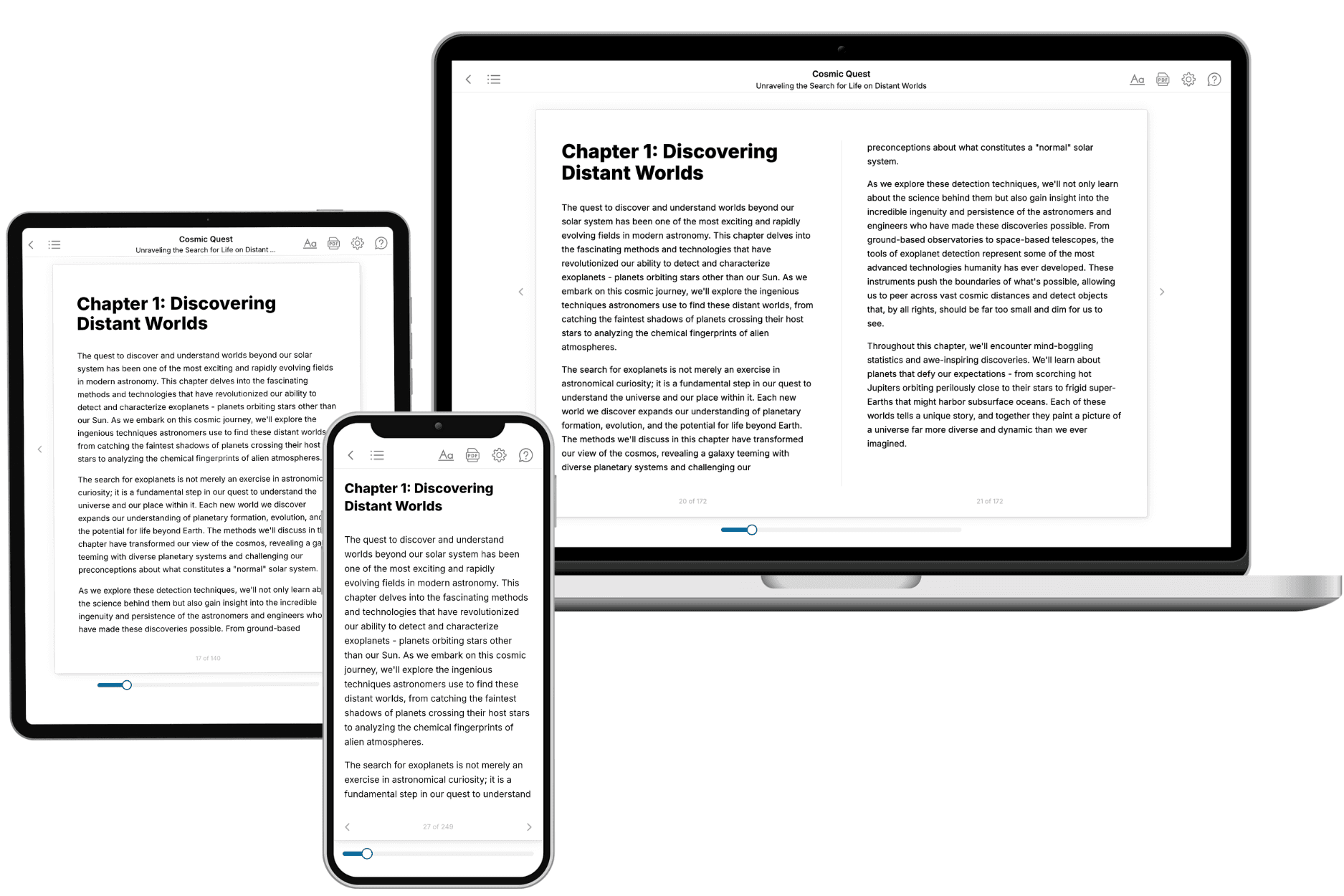
Your book is ready in 10 minutes. Read it online, download as EPUB or PDF, or send to Kindle.

Frequently asked questions
- What is TailoredRead?
TailoredRead creates complete, full-length nonfiction ebooks, written specifically for you. Tell us what you want to learn and why, and TailoredRead writes you a complete ebook on it, with charts, tables, and diagrams throughout. Read it online, on Kindle, or on any e-reader, or download it as a PDF or EPUB. Every book is written fresh the day you order it.
- How is the book tailored to me?
Before anything is written, you answer a few short questions about your goals, your background, and the topics you care about. Your book is then planned around your answers: written at your level, focused on your goals, and covering the topics you chose, instead of the one-size-fits-all book a store sells everyone.
- Will it read like generic AI content?
No. Your book isn't a chat transcript: it's planned chapter by chapter before a single word is written, told in a clear book voice, and explains ideas visually with charts, tables, and diagrams. After writing, every book goes through an editorial pass that polishes chapters so the book reads consistent from start to finish. Judge for yourself: browse thousands of sample books on our Explore Books page.
- How accurate is the content?
Our AI first checks whether your subject needs live research. Niche and fast-moving subjects are researched before writing, and the book plan and chapters are grounded in what it finds. After writing, every book goes through a quality pass that checks its facts and consistency, and researched books list their sources in a Notes section at the back.
- How long is the book?
You choose the length: Comprehensive (250-300 pages), Detailed (150-200 pages), Essential (70-100 pages), or Short (30-50 pages).
- Does the book include visuals?
Yes. Every book includes charts, tables, and diagrams: timelines, checklists, step-by-step guides, decision trees, comparison tables, matrices, and bar charts. A typical book includes dozens of these visual elements.
- Can I read it on Kindle? What formats can I download?
Yes. Every book can be read in our online reader or downloaded as a PDF or EPUB. The EPUB can be opened with Kindle, Apple Books, Kobo, and any e-reader. The Commercial and Author licenses also include an editable Word (DOCX) and Markdown download.
- How much does it cost?
About the price of a regular ebook. The exact price depends on your book's length and complexity, from $2 for the shortest books to $35 for the most comprehensive, and it's shown when you review your book, before you commit to anything. Each book is a one-time purchase, yours to keep, no subscription. Licenses that let you share, teach, or publish your book range from $35.99 to $49.99.
- Can I preview the book before purchasing?
Before you pay, you'll see what your book will cover: the title, a detailed description, the estimated length, and the complete chapter-by-chapter table of contents, so you know what you're getting before you decide. The full text itself is written after you purchase.
- How long does it take to create a book?
About 10 minutes. You can start reading the opening chapters while the rest is still being written.