Herpetology: Reptiles and Amphibians Explained
Physiology, behavior, ecology and conservation in 17 sections
Elevate your understanding of one of Earth's most fascinating animal groups.
222 pages10 chaptersDec 1, 2025Zoology
About this book
This comprehensive guide takes you beyond basic reptile and amphibian facts to explore the cutting-edge science, ecological significance, and conservation challenges shaping modern herpetology. You'll discover how these cold-blooded creatures have evolved extraordinary adaptations, why their populations matter to ecosystem health, and what role you can play in their protection. From the molecular mechanisms of thermoregulation to the global amphibian crisis, from species identification techniques to emerging research methodologies, this book equips you with the knowledge and perspective needed to engage meaningfully with herpetological science. Whether you're a student, educator, wildlife enthusiast, or aspiring professional, you'll gain practical insights into field methods, conservation strategies, and the latest discoveries reshaping our understanding of reptiles and amphibians in a rapidly changing world.
Table of contents
- IntroductionWhy Herpetology Matters Today, What This Guide Covers, How to Use This BookRead below
- Chapter 1: Foundations of HerpetologyDefining Herpetology and Its Scope, Evolutionary History of Reptiles and Amphibians, Classification and Diversity Overview, Modern Herpetology: Interdisciplinary Approaches
- Chapter 2: Reptile Biology and PhysiologyKey Characteristics of Reptiles, Thermoregulation and Metabolic Strategies, Skeletal and Muscular Systems, Sensory Systems and Perception
- Chapter 3: Amphibian Biology and PhysiologyDefining Characteristics of Amphibians, Complex Life Cycles and Metamorphosis, Skin Structure and Respiration, Water Dependence and Osmoregulation
- Chapter 4: Behavior and EcologyFeeding Strategies and Predator-Prey Dynamics, Reproduction and Mating Systems, Habitat Selection and Microhabitat Use, Social Behavior and Communication
- Chapter 5: Ecological Roles and Ecosystem ServicesTrophic Roles in Food Webs, Nutrient Cycling and Energy Flow, Herpetofauna as Environmental Indicators, Ecosystem Services and Human Benefits
- Chapter 6: Global Diversity and BiogeographyPatterns of Herpetofaunal Diversity, Major Biogeographic Regions, Endemism and Biodiversity Hotspots, Factors Influencing Geographic Distribution
- Chapter 7: Conservation Challenges and ThreatsHabitat Loss and Fragmentation, The Amphibian Decline Crisis, Emerging Diseases and Parasites, Climate Change and Environmental Pollution
- Chapter 8: Research Methods and Field TechniquesSurvey and Sampling Methods, Species Identification and Morphological Analysis, Molecular and Genetic Techniques, Ethical Handling and Welfare Standards
- Chapter 9: Conservation Strategies and SolutionsProtected Areas and Habitat Restoration, Captive Breeding and Reintroduction Programs, Policy, Legislation, and International Cooperation, Community Engagement and Citizen Science
- Chapter 10: Emerging Frontiers in HerpetologyGenomics and Evolutionary Biology, Climate Adaptation and Resilience Research, Urban Herpetology and Human-Wildlife Coexistence, Technological Innovation in Herpetological Research
- ConclusionSynthesizing Herpetological Knowledge, The Future of Herpetology and Conservation, Your Role in Herpetological Science
- Glossary of Herpetological Terms
- Further Reading and Resources
Introduction
Reptiles and amphibians have captivated human imagination for millennia, appearing in mythology, medicine, and scientific inquiry across cultures. Yet despite this long history of fascination, these remarkable creatures remain among the most misunderstood and underappreciated animals on Earth. Today, as we face unprecedented environmental challenges, understanding herpetofauna—the collective term for reptiles and amphibians—has never been more critical. These ectothermic vertebrates serve as sensitive barometers of ecosystem health, their populations reflecting environmental changes that often precede broader ecological disruptions. From the smallest poison dart frog measuring less than a centimeter to the massive saltwater crocodile exceeding six meters in length, herpetofauna exhibit extraordinary diversity in form, function, and ecological strategy.
The field of herpetology has undergone a dramatic transformation in recent decades. What was once primarily a descriptive science focused on taxonomy and natural history has evolved into a sophisticated, interdisciplinary endeavor integrating molecular genetics, conservation biology, climate science, and cutting-edge technology. Modern herpetologists employ DNA sequencing to uncover cryptic species, use radio telemetry to track animal movements, and apply sophisticated statistical models to predict population responses to environmental change. This evolution reflects both technological advancement and urgent necessity—with amphibian populations experiencing catastrophic declines globally and reptile habitats disappearing at alarming rates, the stakes for herpetological research have never been higher. The knowledge you'll gain from this guide positions you at the intersection of classical natural history and contemporary conservation science.
This book is designed specifically for those who have moved beyond basic familiarity with reptiles and amphibians and seek deeper understanding. Whether you're a university student pursuing wildlife biology, an educator developing curriculum, a field naturalist expanding your expertise, or a conservation professional working to protect vulnerable species, you'll find practical knowledge and theoretical frameworks that bridge intermediate understanding with advanced concepts. The chapters ahead will challenge you to think critically about herpetological science, question assumptions, and develop the analytical skills necessary to engage meaningfully with current research and conservation challenges. You'll discover not just what we know about reptiles and amphibians, but how we know it—and what critical questions remain unanswered.
The global herpetofauna comprises over 20,000 described species, with new species discovered regularly as researchers explore remote regions and apply molecular techniques to reveal hidden diversity. These species occupy nearly every terrestrial and freshwater habitat on Earth, from Arctic tundra to tropical rainforests, from desert dunes to mountain peaks. Their evolutionary success stems from remarkable adaptations: the ability to extract oxygen through skin, the capacity to survive months without food, the development of chemical defenses that rival any pharmaceutical laboratory, and reproductive strategies ranging from live birth to complex parental care. Understanding these adaptations requires knowledge spanning physiology, ecology, behavior, and evolution—disciplines that this guide integrates to provide comprehensive perspective on herpetological science.
As you progress through this book, you'll encounter both the wonder of herpetological diversity and the sobering reality of conservation challenges. The amphibian decline crisis represents one of the most severe extinction events in recent history, with nearly one-third of amphibian species threatened with extinction[1]. Reptiles face similar pressures from habitat destruction, climate change, and illegal wildlife trade. Yet alongside these challenges, you'll discover innovative conservation solutions, from community-based protection programs to high-tech monitoring systems, from captive breeding successes to policy victories. This balanced perspective—acknowledging both crisis and hope—reflects the reality of contemporary herpetology and prepares you to contribute meaningfully to conservation efforts.
The journey ahead will transform how you perceive these animals and their role in the natural world. You'll learn to see beyond common misconceptions and appreciate the sophisticated biology underlying seemingly simple behaviors. You'll understand why a frog's permeable skin makes it vulnerable to environmental contaminants, how a snake's infrared vision allows it to hunt in complete darkness, and why turtle nesting beaches thousands of kilometers apart matter for global population persistence. Most importantly, you'll gain the knowledge and tools necessary to participate in herpetological science—whether through formal research, citizen science initiatives, conservation advocacy, or informed stewardship of local habitats. The future of herpetofauna depends on people who understand their biology, recognize their value, and commit to their protection.
Why Herpetology Matters Today
Herpetology occupies a unique position in contemporary biological science, addressing questions that extend far beyond the animals themselves. Reptiles and amphibians serve as model organisms for understanding fundamental biological processes, from limb regeneration in salamanders to temperature-dependent sex determination in turtles. These phenomena have implications for developmental biology, evolutionary theory, and even human medicine. For instance, research on antimicrobial peptides in frog skin has led to the development of new antibiotic compounds, while studies of reptilian longevity and disease resistance offer insights into aging and cancer biology[2]. Understanding herpetofauna thus contributes to broader scientific knowledge with practical applications across multiple disciplines.
The ecological significance of reptiles and amphibians cannot be overstated. These animals occupy critical positions in food webs, functioning as both predators and prey across terrestrial and aquatic ecosystems. A single toad may consume thousands of insects annually, providing natural pest control that benefits agriculture and reduces disease transmission. Snakes regulate rodent populations, preventing crop damage and limiting reservoirs for zoonotic diseases. Aquatic turtles serve as scavengers, removing carrion and maintaining water quality. When herpetofauna populations decline or disappear, ecosystems experience cascading effects that can fundamentally alter community structure and function. The trophic cascade following amphibian declines in Central American streams, for example, resulted in increased algal growth and altered nutrient cycling, demonstrating how these seemingly small animals exert disproportionate ecological influence[3].
Herpetofauna function as environmental indicators, their population health reflecting ecosystem conditions with remarkable sensitivity. Amphibians, with their permeable skin and biphasic life cycles, respond rapidly to environmental stressors including pollution, habitat degradation, and climate change. Monitoring amphibian populations provides early warning of environmental problems that may eventually affect other species, including humans. This indicator function has practical applications for environmental management and public health. For example, declining frog populations in agricultural regions may signal pesticide contamination levels that pose risks to human communities. Similarly, changes in reptile community composition can indicate habitat fragmentation or invasive species impacts before these problems become irreversible. Understanding how to interpret these biological signals requires solid grounding in herpetological science.
The current biodiversity crisis makes herpetology particularly urgent and relevant. Amphibians are experiencing extinction rates estimated at over 200 times the background rate, with entire families of frogs disappearing within decades[4]. Reptiles face similar threats, though their conservation status has received less attention until recently. The drivers of these declines—habitat loss, emerging infectious diseases, climate change, pollution, and overexploitation—represent some of the most pressing environmental challenges of our time. Addressing herpetofaunal conservation therefore requires tackling broader sustainability issues. Success in protecting reptiles and amphibians often benefits entire ecosystems and the human communities that depend on them. This interconnection between herpetological conservation and broader environmental health makes the field essential for anyone concerned with planetary sustainability.
Climate change has elevated herpetology's importance in contemporary science and policy. Ectothermic animals depend on environmental temperatures for physiological function, making them particularly vulnerable to thermal regime shifts. Research on how reptiles and amphibians respond to changing temperatures, altered precipitation patterns, and extreme weather events provides crucial data for climate impact predictions. Some species demonstrate remarkable adaptive capacity, shifting ranges or adjusting breeding phenology in response to warming. Others face physiological limits that constrain their ability to cope with rapid environmental change. Understanding these differential responses helps predict which species and ecosystems face greatest risk and where conservation interventions will prove most effective. The knowledge generated through herpetological climate research thus informs broader conservation planning and climate adaptation strategies.
Beyond scientific and conservation importance, herpetology offers profound opportunities for public engagement with nature and science. Reptiles and amphibians are accessible to observation and study in ways that many other animal groups are not. A suburban backyard may host multiple amphibian species, while local parks often support diverse reptile communities. This accessibility makes herpetofauna ideal subjects for citizen science initiatives that engage non-professionals in meaningful scientific research. Programs like FrogWatch USA and the North American Amphibian Monitoring Program have generated valuable long-term datasets while fostering environmental awareness and scientific literacy. Similarly, reptile and amphibian surveys provide entry points for people to develop field biology skills and contribute to conservation knowledge. The democratization of herpetological research through citizen science represents one of the field's most exciting contemporary developments.
Economic considerations also underscore herpetology's relevance. The pet trade in reptiles and amphibians represents a multi-billion dollar global industry, with implications for both conservation and animal welfare. Understanding species biology is essential for developing sustainable trade practices and appropriate husbandry standards. Ecotourism focused on herpetofauna generates significant revenue in many regions, from sea turtle nesting beaches to crocodile viewing areas, providing economic incentives for habitat protection. Conversely, human-wildlife conflict involving venomous snakes or large crocodilians requires herpetological expertise to develop solutions that protect both people and animals. The economic dimensions of herpetology extend to agriculture, where understanding reptile and amphibian roles in pest control can reduce reliance on chemical pesticides. These practical applications demonstrate how herpetological knowledge translates into tangible benefits for human communities.
Finally, herpetology matters because these animals possess intrinsic value independent of their utility to humans. The evolutionary history of reptiles and amphibians spans hundreds of millions of years, representing irreplaceable branches on the tree of life. Each species embodies unique genetic information, ecological relationships, and evolutionary potential that, once lost, can never be recovered. The ethical dimension of herpetology recognizes that humans have responsibilities toward other species, particularly when our activities threaten their existence. This perspective, grounded in both scientific understanding and moral consideration, motivates much contemporary herpetological work. Whether your interest in reptiles and amphibians stems from scientific curiosity, conservation concern, or simple fascination with the natural world, engaging with herpetology means participating in efforts to understand and protect Earth's biological heritage.
What This Guide Covers
This comprehensive guide is structured to build your understanding systematically, moving from foundational concepts through specialized topics to contemporary research frontiers. The opening chapters establish essential background in herpetological science, covering evolutionary history, classification systems, and the interdisciplinary approaches that characterize modern research. You'll explore how reptiles and amphibians evolved from aquatic ancestors, how taxonomists organize herpetofaunal diversity, and how molecular techniques have revolutionized our understanding of evolutionary relationships. These foundational chapters provide the conceptual framework necessary for engaging with more specialized topics in subsequent sections. Rather than simply cataloging facts, this material emphasizes the process of scientific inquiry—how we know what we know about reptiles and amphibians, and what uncertainties remain.
The middle chapters delve deeply into the biology and physiology of reptiles and amphibians, treating each group separately to highlight their distinctive characteristics. You'll examine the anatomical, physiological, and behavioral adaptations that enable these animals to thrive in diverse environments. For reptiles, coverage includes thermoregulation strategies, skeletal adaptations for different locomotor modes, and sensory systems ranging from infrared detection to chemoreception. The amphibian chapters explore their complex life cycles, the remarkable properties of amphibian skin, and the physiological challenges of maintaining water balance across terrestrial and aquatic environments. These chapters incorporate specific examples throughout:
- How desert tortoises survive months without water through specialized bladder function and metabolic suppression
- The biomechanics of snake locomotion across different substrates, from sidewinding on sand to concertina movement in burrows
- The endocrine control of metamorphosis in frogs, including the role of thyroid hormones in tissue remodeling
- The function of cutaneous respiration in lungless salamanders and its implications for habitat requirements
Behavioral ecology receives extensive treatment, examining how reptiles and amphibians interact with their environments and each other. You'll explore feeding strategies ranging from ambush predation to active foraging, reproductive systems from simple amplexus to complex courtship rituals, and the factors influencing habitat selection at multiple spatial scales. The coverage extends beyond description to analysis, examining the evolutionary and ecological factors shaping behavioral diversity. For instance, you'll learn not just that some frogs exhibit parental care, but why this behavior evolves under certain ecological conditions and what costs and benefits it entails. Similarly, discussions of predator-prey dynamics explore both the adaptations predators use to capture prey and the defensive strategies prey employ to avoid capture, illustrating the coevolutionary processes that generate biological diversity.
The ecological roles of herpetofauna receive dedicated attention, moving beyond individual species to examine population and community-level processes. You'll discover how reptiles and amphibians contribute to nutrient cycling, energy flow, and ecosystem stability. The concept of ecosystem services—the benefits humans derive from functioning ecosystems—is explored through herpetological examples, from pest control to seed dispersal. This section also examines how herpetofauna serve as indicator species, with practical guidance on interpreting population trends and community composition changes. The material includes quantitative approaches to assessing ecological roles, preparing you to evaluate scientific literature and understand how researchers measure herpetofaunal contributions to ecosystem function.
Global diversity and biogeography chapters provide geographic context for understanding herpetofaunal distribution patterns. You'll examine why tropical regions harbor exceptional species richness, how historical events like continental drift have shaped current distributions, and what factors limit species ranges. The coverage includes detailed exploration of major biogeographic regions and their characteristic herpetofauna:
- The Neotropics, with unparalleled amphibian diversity and unique reptile radiations
- The Indo-Malayan region, featuring ancient lineages and high endemism
- The Afrotropics, home to distinctive reptile families and specialized desert adaptations
- The Australasian region, with its isolated evolutionary history and unique assemblages
- The Nearctic and Palearctic, showing effects of recent glaciation on current distributions
Conservation challenges receive thorough, evidence-based treatment that acknowledges both the severity of threats and the potential for effective intervention. Dedicated chapters examine habitat loss and fragmentation, the amphibian decline crisis, emerging infectious diseases, and the impacts of climate change and pollution. Rather than presenting these as abstract problems, the material includes specific case studies illustrating how these threats operate in real ecosystems. For example, you'll examine how chytridiomycosis has driven amphibian extinctions in Central America, how road networks fragment salamander populations in eastern North America, and how agricultural pesticides affect amphibian development and survival. Each threat discussion includes current scientific understanding of mechanisms, geographic scope, and species-specific vulnerabilities, providing the knowledge necessary to evaluate conservation priorities and strategies.
Research methods and field techniques chapters provide practical knowledge for conducting herpetological studies. You'll learn survey methods appropriate for different species and habitats, from visual encounter surveys to automated acoustic monitoring. Species identification techniques are covered in detail, including morphological characters, dichotomous keys, and the use of molecular methods for confirming identifications. The material addresses both traditional approaches and emerging technologies, such as environmental DNA sampling and photographic identification using pattern recognition software. Ethical considerations receive particular emphasis, with detailed coverage of handling techniques that minimize stress and injury, permitting requirements, and welfare standards for captive animals. This practical knowledge prepares you to participate in field research or citizen science projects while adhering to professional standards.
Conservation strategies and solutions are explored with attention to both successes and ongoing challenges. You'll examine how protected areas are designed and managed for herpetofauna, the role of habitat restoration in recovering degraded ecosystems, and the application of captive breeding and reintroduction programs for critically endangered species. Policy and legislation coverage includes international agreements like CITES, national endangered species laws, and local ordinances affecting herpetofaunal conservation. The material emphasizes evidence-based conservation, examining how researchers evaluate intervention effectiveness and adapt strategies based on monitoring results. Community engagement and citizen science receive special attention as increasingly important conservation tools, with examples of successful programs and guidance on effective public participation in herpetological research and conservation.
The final chapters explore emerging frontiers in herpetology, introducing you to cutting-edge research areas that are reshaping the field. Genomics and evolutionary biology sections examine how whole-genome sequencing is revealing the genetic basis of adaptation and speciation. Climate adaptation research is covered in depth, including studies of thermal tolerance, phenological shifts, and range dynamics under changing environmental conditions. Urban herpetology—the study of reptiles and amphibians in human-dominated landscapes—receives attention as an increasingly important research area with direct relevance to conservation planning. Technological innovations, from drone surveys to artificial intelligence applications in species identification, illustrate how new tools are expanding research possibilities. These chapters prepare you to engage with current scientific literature and understand the trajectory of herpetological research in coming decades.
How to Use This Book
This guide is designed for flexible use depending on your background, interests, and goals. If you're approaching herpetology systematically for the first time at an intermediate level, reading chapters sequentially will provide the most coherent learning experience. Each chapter builds on concepts introduced previously, with cross-references guiding you to related material elsewhere in the book. However, the chapters are also written to stand independently, allowing you to focus on specific topics of immediate interest or relevance to your work. For example, if you're primarily interested in conservation, you might begin with the chapters on conservation challenges and strategies, referring back to earlier chapters on biology and ecology as needed for background. Similarly, if your focus is field research, the methods chapters can serve as your starting point, with other sections providing context for interpreting your observations and data.
Throughout the book, you'll encounter different types of content designed to support learning and application. Conceptual explanations provide theoretical frameworks for understanding herpetological phenomena, from physiological principles to ecological theories. These sections emphasize not just what happens, but why—the underlying mechanisms and evolutionary logic. Specific examples illustrate concepts with real species and situations, helping you connect abstract principles to concrete cases. These examples are drawn from diverse geographic regions and taxonomic groups, exposing you to the breadth of herpetofaunal diversity. Practical guidance offers actionable advice for applying knowledge, whether in field research, conservation planning, or educational contexts. This includes step-by-step procedures, decision frameworks, and troubleshooting tips based on professional experience.
The book employs several features to enhance usability and learning. Key terms are highlighted when first introduced and defined in context, with a comprehensive glossary at the end providing quick reference. Footnotes provide citations for specific claims and direct you to primary literature for deeper exploration of particular topics. The further reading section at the book's end includes annotated recommendations organized by chapter, guiding you to authoritative sources for continued learning. Lists and structured formats break down complex information into digestible components, making it easier to identify key points and relationships. Code blocks and formulas, where relevant, provide precise specifications for calculations or procedures, ensuring you can replicate methods accurately.
To maximize learning, consider adopting an active reading approach. As you encounter new concepts, pause to consider how they relate to your existing knowledge and experience. When examples are provided, think about analogous situations you might observe in your local area or study system. The book includes implicit questions throughout—statements that invite you to consider implications or make predictions. Engaging with these mentally, or better yet in writing, will deepen your understanding and retention. For instance, when reading about thermoregulation strategies, consider what predictions you might make about activity patterns for reptiles in different climates, then check whether subsequent material confirms or challenges your reasoning. This active engagement transforms passive reading into genuine learning.
If you're using this book to support formal coursework, pay particular attention to the conceptual frameworks and theoretical perspectives presented. These provide the analytical tools necessary for evaluating scientific literature, designing research projects, and developing evidence-based arguments. The examples and case studies can serve as models for understanding how general principles apply in specific contexts—a skill essential for exams and assignments that require application of knowledge to novel situations. The methods chapters offer practical knowledge that will prove valuable in laboratory or field components of herpetology courses. Consider creating your own summary notes that synthesize information across chapters, as this integration mirrors the interdisciplinary nature of contemporary herpetological research.
For professionals working in wildlife biology, conservation, or environmental management, this book serves as both a reference and a tool for professional development. The conservation chapters provide current best practices and evidence-based strategies you can adapt to your specific context. The research methods sections offer techniques you might incorporate into monitoring programs or assessment protocols. When facing specific challenges—such as designing surveys for cryptic species or evaluating habitat quality for amphibians—use the index and table of contents to locate relevant sections quickly. The footnotes and further reading recommendations will direct you to specialized literature when you need greater depth on particular topics. Consider how the principles and approaches described might apply to your work, adapting them as appropriate for your species, region, and organizational context.
Educators will find this book useful for curriculum development and as a supplementary text for advanced courses. The structured progression from foundational concepts through specialized topics models effective pedagogical sequencing. The examples and case studies can be extracted for use in lectures, discussions, or assignments. The practical methods sections provide content for laboratory or field exercises that give students hands-on experience with herpetological techniques. When developing assessments, consider using the conceptual frameworks presented as the basis for analytical questions that require students to apply principles to novel situations. The conservation chapters offer rich material for discussions of science-policy interfaces and the role of values in conservation decision-making—topics that help students understand science as a social enterprise with real-world implications.
For those engaged in citizen science or amateur naturalist pursuits, this book offers knowledge that will enhance your observations and contributions to herpetological understanding. The identification and survey method chapters provide practical skills for documenting species in your area. The ecology and behavior sections will help you interpret what you observe, moving beyond simple species lists to understanding the ecological processes and relationships you're witnessing. The conservation chapters contextualize your observations within broader patterns and challenges, helping you understand how local populations connect to regional and global trends. When participating in organized citizen science programs, the research methods and ethical handling sections ensure your work meets professional standards and contributes meaningfully to scientific knowledge while minimizing impacts on the animals you study.
Regardless of how you use this book, approach it with curiosity and critical thinking. Herpetology is a dynamic field where new discoveries regularly challenge existing understanding. The knowledge presented here represents current scientific consensus, but science is inherently provisional—subject to revision as new evidence emerges. When you encounter statements that surprise you or conflict with other sources, investigate further. Check the citations, examine the primary literature, and consider what evidence would be needed to resolve uncertainties. This critical engagement with scientific knowledge is essential for anyone seeking to contribute meaningfully to herpetological science or conservation. The goal is not to memorize facts, but to develop the understanding and analytical skills necessary to engage with herpetology as a living, evolving field of inquiry. Your journey through this book is just the beginning of a deeper relationship with these remarkable animals and the science that seeks to understand and protect them.
Notes
Introduction
- 1. S. N. Stuart and others, "Status and Trends of Amphibian Declines and Extinctions Worldwide," Science, 2004
- 2. J. M. Conlon, "The contribution of skin antimicrobial peptides to the system of innate immunity in anurans," Cell and Tissue Research, 2011
- 3. M. R. Whiles and others, "Disease-driven amphibian declines alter ecosystem processes in a tropical stream," Ecosystems, 2006
- 4. M. L. McCallum, "Amphibian Decline or Extinction?," Current Declines Dwarf Background Extinction Rate. Journal of Herpetology, 2007
This is the end of the free sample. The full book has 10 chapters.
Want this book written for you?
Tell us your goals and background, and get your own version of this book, tailored by AI to you.


Benefits of AI-tailored books
- Read one book, not ten:
- all the Zoology knowledge you need, gathered into a single book.
- Save days of learning:
- tell us your goals, choose your topics, and the whole book is built around them.
- Learn effortlessly:
- Zoology book written for your specific background and expertise.
- Understand at a glance:
- includes charts, tables, timelines, checklists, decision trees, and more.
- Stay current:
- written the day you order it, not years ago.
- Trust what you read:
- every book is checked for accuracy, with real research when your subject needs it.
Create your unique book in 3 steps
- 1. Select your focus
Select the focus of your Zoology book and share your background
- 2. Personalize your book
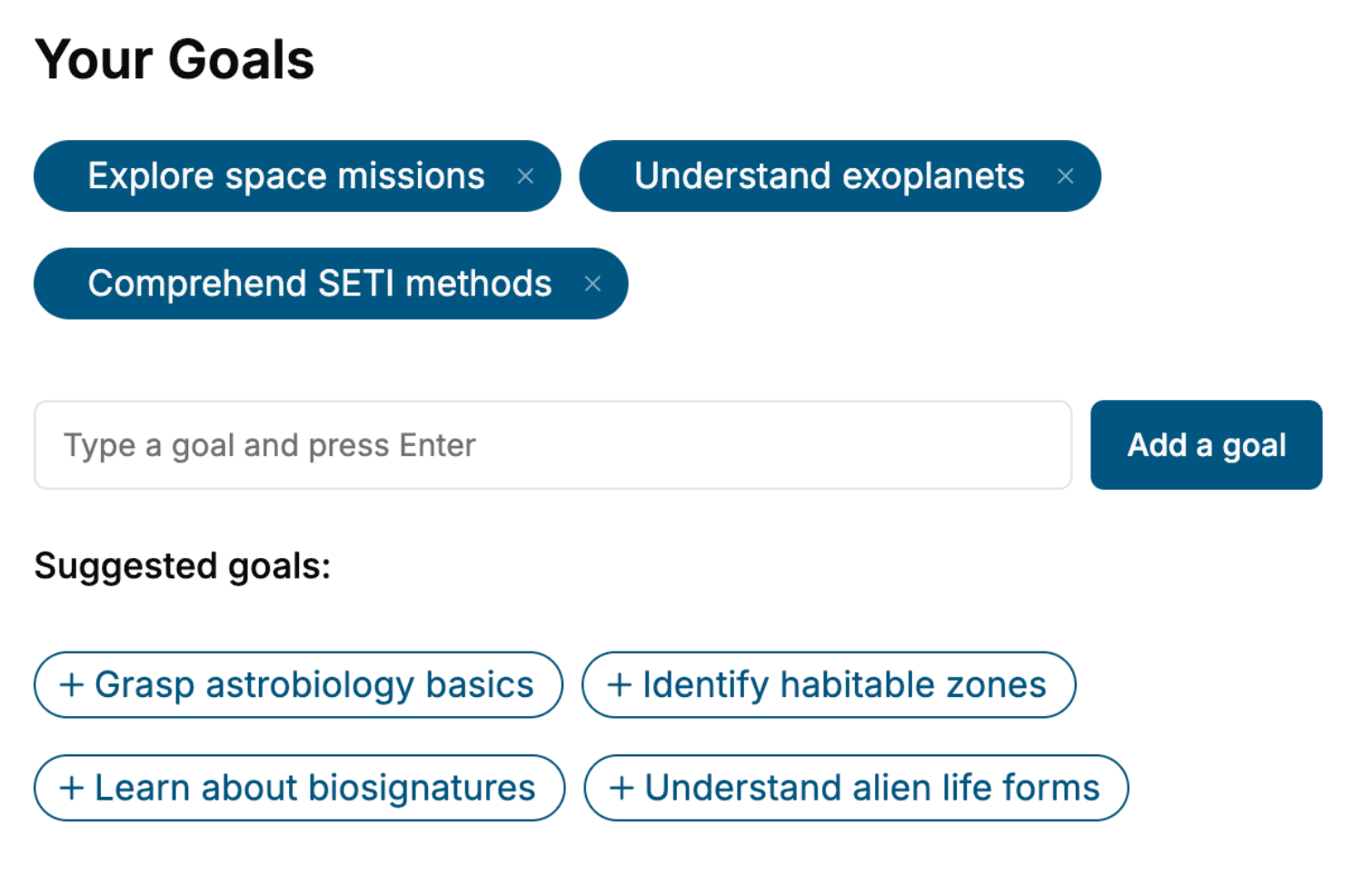
Specify your goals and choose sub-topics to include
- 3. Get your tailored book
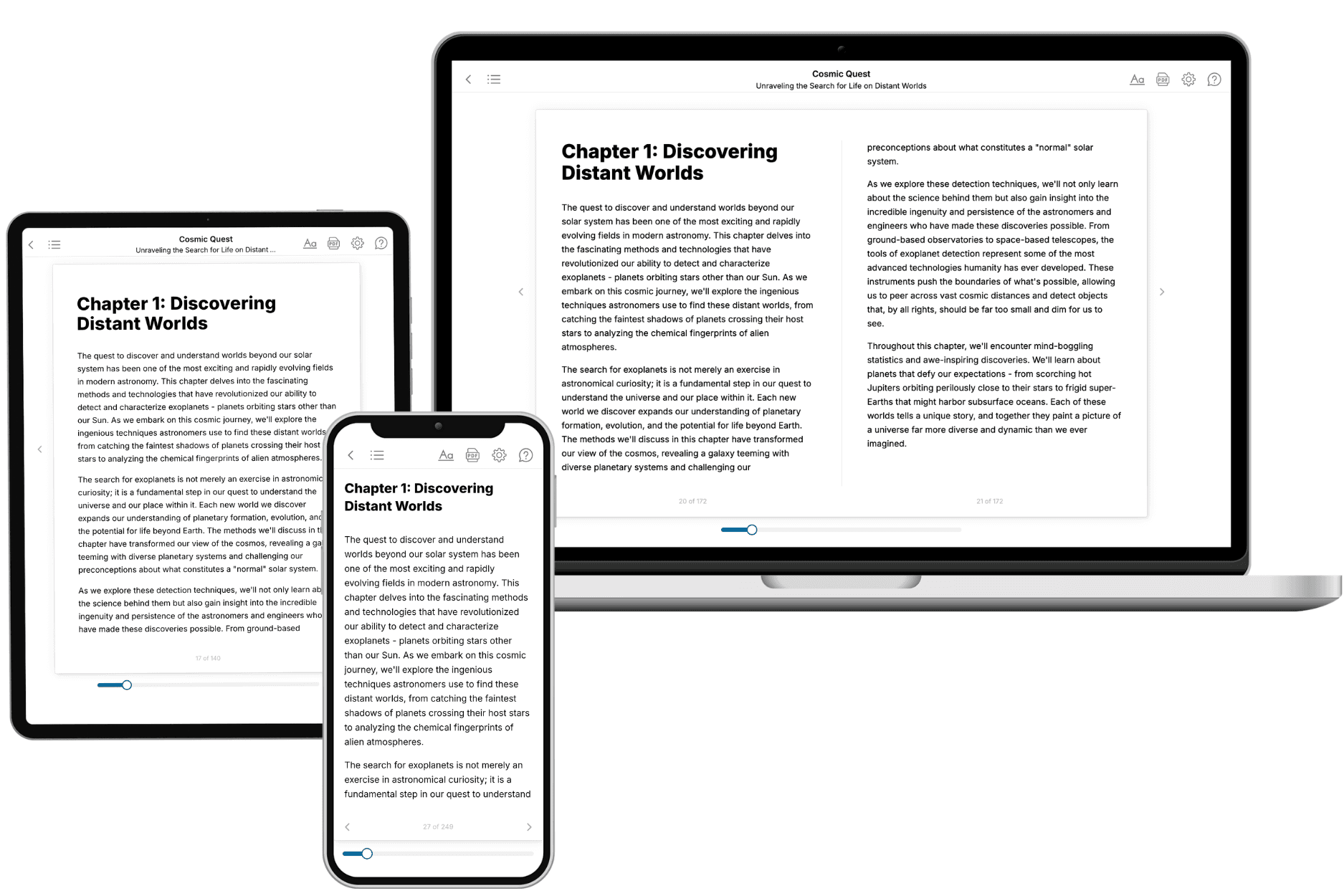
Your book is ready in 10 minutes. Read it online, download as EPUB or PDF, or send to Kindle.

Frequently asked questions
- What is TailoredRead?
TailoredRead creates complete, full-length nonfiction ebooks, written specifically for you. Tell us what you want to learn and why, and TailoredRead writes you a complete ebook on it, with charts, tables, and diagrams throughout. Read it online, on Kindle, or on any e-reader, or download it as a PDF or EPUB. Every book is written fresh the day you order it.
- How is the book tailored to me?
Before anything is written, you answer a few short questions about your goals, your background, and the topics you care about. Your book is then planned around your answers: written at your level, focused on your goals, and covering the topics you chose, instead of the one-size-fits-all book a store sells everyone.
- Will it read like generic AI content?
No. Your book isn't a chat transcript: it's planned chapter by chapter before a single word is written, told in a clear book voice, and explains ideas visually with charts, tables, and diagrams. After writing, every book goes through an editorial pass that polishes chapters so the book reads consistent from start to finish. Judge for yourself: browse thousands of sample books on our Explore Books page.
- How accurate is the content?
Our AI first checks whether your subject needs live research. Niche and fast-moving subjects are researched before writing, and the book plan and chapters are grounded in what it finds. After writing, every book goes through a quality pass that checks its facts and consistency, and researched books list their sources in a Notes section at the back.
- How long is the book?
You choose the length: Comprehensive (250-300 pages), Detailed (150-200 pages), Essential (70-100 pages), or Short (30-50 pages).
- Does the book include visuals?
Yes. Every book includes visual elements such as timelines, checklists, step-by-step guides, decision trees, comparison tables, and matrices, and many include bar charts. A typical book includes dozens of these visual elements.
- Can I read it on Kindle? What formats can I download?
Yes. Every book can be read in our online reader or downloaded as a PDF or EPUB. The EPUB can be opened with Kindle, Apple Books, Kobo, and any e-reader. The Commercial and Author licenses also include an editable Word (DOCX) and Markdown download.
- How much does it cost?
About the price of a regular ebook. The exact price depends on your book's length and complexity, from $2 for the shortest books to $35 for the most comprehensive, and it's shown when you review your book, before you commit to anything. Each book is a one-time purchase, yours to keep, no subscription. Licenses that let you share, teach, or publish your book range from $35.99 to $49.99.
- Can I preview the book before purchasing?
Before you pay, you'll see what your book will cover: the title, a detailed description, the estimated length, and the complete chapter-by-chapter table of contents, so you know what you're getting before you decide. The full text itself is written after you purchase.
- How long does it take to create a book?
About 10 minutes. You can start reading the opening chapters while the rest is still being written.