The Complete History of Golf
From Ancient Origins to Modern Mastery—How the World's Greatest Game Evolved
Many people assume golf is simply a modern recreational sport, but the truth is far more fascinating.
253 pages12 chaptersNov 8, 2025Golf
About this book
Golf has a complex, centuries-long history shaped by cultural exchange, technological breakthroughs, and remarkable individuals who transformed it from a Scottish pastime into a global phenomenon. This book traces golf's complete evolution—from its mysterious ancient origins through the standardization that made it a legitimate sport, the technological revolutions that changed how it's played, and the legendary figures who captured the world's imagination. You'll discover how golf became professionalized, how it spread across continents, and how it navigated social barriers to become more inclusive. Whether you're a casual player, a devoted fan, or simply curious about sports history, this comprehensive narrative reveals the forces, innovations, and personalities that shaped the game we know today. Understand not just what happened in golf's history, but why it matters and how it continues to evolve.
Table of contents
- IntroductionWhy Golf's History Matters, What You'll Discover in This Book, How to Get the Most from This JourneyRead below
- Chapter 1: The Ancient Roots of GolfGames That Came Before Golf, Stick-and-Ball Games Across Civilizations, Connecting the Threads to Modern Golf
- Chapter 2: Golf's Birth in Medieval ScotlandThe Scottish Landscape and Culture, The Earliest Records of Golf in Scotland, Why Golf Took Root in Scotland, Royal Patronage and Early Growth
- Chapter 3: Standardization and the Birth of RulesEarly Variations and Local Rules, St. Andrews and the Establishment of Standards, The First Official Rulebooks, How Rules Evolved to Shape Modern Golf
- Chapter 4: The Technology RevolutionFrom Wooden Clubs to Featherie Balls, The Gutta-Percha Revolution, Modern Equipment and Technological Advances, How Technology Changed the Game
- Chapter 5: Golf Spreads Across Britain and BeyondGolf's Adoption in England, The Building of Great Courses, British Dominance in Early Professional Golf
- Chapter 6: Golf Comes to AmericaThe First American Golf Courses, American Enthusiasm and Rapid Growth, The U.S. Open and American Dominance, Developing an American Style of Golf
- Chapter 7: The Rise of Professional GolfFrom Amateurs to Professionals, Prize Money and Tournament Structure, The Development of Professional Tours, How Professionalization Changed Golf
- Chapter 8: Legendary Champions and Their ImpactOld Tom Morris and the Early Era, Harry Vardon and the Grip Revolution, Bobby Jones and Amateur Excellence, How Champions Shaped Public Perception
- Chapter 9: The Major ChampionshipsThe Open Championship: Golf's First Major, The U.S. Open and American Prestige, The Masters and PGA Championship, Why the Majors Define Excellence
- Chapter 10: Women's Golf: Breaking BarriersThe First Women Golfers, Women's Championships and Organizations, Pioneering Women Champions, Women's Golf in the Modern Era
- Chapter 11: Golf Goes GlobalGolf's Expansion to Asia, Golf in Europe and Beyond, International Competitions and the Ryder Cup, Golf as a Truly Global Game
- Chapter 12: The Modern Era and Contemporary ChallengesTelevision and Media Transformation, Tiger Woods and the Modern Superstar, Accessibility, Diversity, and Inclusion, Sustainability and the Future of Golf
- ConclusionGolf's Enduring Legacy, The Future of Golf
- Glossary of Golf Terms
- Further Reading and Resources
Introduction
Golf is more than a game played on manicured greens with clubs and balls. It represents centuries of cultural evolution, technological innovation, and human ambition. When you watch a professional tournament or step onto a course yourself, you're participating in a tradition that stretches back through time, connecting you to medieval Scottish shepherds, Victorian gentlemen, pioneering women athletes, and legendary champions who transformed the sport. Understanding this history doesn't just satisfy curiosity—it fundamentally changes how you experience golf, revealing layers of meaning in every swing, every rule, and every course design choice that might otherwise go unnoticed.
Many people assume golf simply appeared in its current form, perhaps invented by wealthy aristocrats looking for leisurely entertainment. The reality is far more complex and fascinating. Golf emerged from a confluence of ancient stick-and-ball games, geographical accidents, cultural circumstances, and deliberate innovations by individuals who saw potential in a seemingly simple pastime. The game evolved through conflicts between tradition and progress, exclusivity and accessibility, amateurism and professionalism. Each era brought new challenges that threatened golf's existence or identity, yet the sport adapted, survived, and ultimately thrived in ways its earliest players could never have imagined.
This book takes you on a comprehensive journey through golf's complete history, from its mysterious ancient origins to the contemporary challenges facing the sport today. You'll discover not just what happened, but why it matters. You'll learn how a regional Scottish game became a global phenomenon, how technological breakthroughs changed what's possible on the course, and how remarkable individuals—both famous champions and forgotten pioneers—shaped the game's trajectory. Whether you're a weekend golfer, a devoted fan who never misses a major championship, or simply someone fascinated by how sports evolve, this narrative will deepen your appreciation for golf's rich heritage and help you understand the forces still shaping its future.
Golf's history is ultimately a human story. It's about innovation and resistance to change, about breaking barriers and preserving traditions, about individual excellence and collective culture. The game has reflected broader social movements—industrialization, globalization, women's rights, racial integration, environmental consciousness—while maintaining a distinctive identity that transcends any single era or location. By understanding where golf came from, you'll better appreciate where it's going and your own place within this continuing story.
Why Golf's History Matters
You might wonder why golf's past deserves attention when the modern game seems so different from its origins. The answer lies in how deeply history shapes your current experience of golf, often in ways you don't consciously recognize. Every time you play eighteen holes, you're following a standard established at St. Andrews in the 18th century. When you grip your club, you might be using a technique refined by Harry Vardon over a century ago. The rules you follow, the equipment you use, and even the etiquette you observe all emerged from specific historical moments when individuals and institutions made consequential decisions. Understanding these origins transforms golf from a collection of arbitrary conventions into a coherent tradition with purpose and meaning.
Golf's history also reveals how the sport has consistently grappled with fundamental tensions that remain relevant today. The conflict between tradition and innovation appears throughout golf's evolution—from resistance to the gutta-percha ball in the 1840s to debates about modern equipment technology. The struggle between exclusivity and accessibility shaped who could play golf and where, with consequences still visible in the sport's demographics and public perception. The balance between amateurism and professionalism defined golf's identity for generations and continues to influence how we value different aspects of the game. By examining how previous generations navigated these tensions, you gain perspective on contemporary debates and can participate more thoughtfully in discussions about golf's future direction.
The historical perspective also helps you appreciate the remarkable achievements of golf's greatest players in proper context. When you learn that Old Tom Morris won the Open Championship at age 46 using primitive equipment on poorly maintained courses, his victories take on new significance. Understanding that Bobby Jones competed as an amateur against professionals while earning no prize money makes his Grand Slam even more impressive. Recognizing the barriers that early women golfers faced—from restrictive clothing to outright bans from many courses—adds depth to their accomplishments. Context transforms statistics into stories and helps you recognize excellence across different eras, even when direct comparisons are impossible.
Golf's history matters because it explains the sport's unique culture and unwritten codes. Why does golf emphasize self-policing and honesty more than most sports? The answer lies in its origins as a game played across vast landscapes without referees, where integrity became essential to fair competition. Why do certain courses command such reverence? Because they represent pivotal moments in golf's development or hosted legendary performances that shaped the sport's narrative. Why does golf maintain traditions that might seem outdated? Because these traditions connect current players to centuries of predecessors and create continuity across generations. Understanding these cultural elements helps you participate more fully in golf's community and appreciate aspects of the game that transcend mere athletic competition.
The history also reveals golf's broader social significance beyond the sport itself. Golf courses became spaces where business deals were negotiated, social networks were formed, and cultural values were transmitted. The sport's expansion followed patterns of colonialism, immigration, and globalization, making golf's geography a map of historical power dynamics. Battles over who could join golf clubs or compete in tournaments reflected larger struggles over class, gender, and race in society. Environmental debates about course maintenance and water usage connect golf to contemporary ecological concerns. By understanding these connections, you see golf not as isolated entertainment but as a lens through which to examine broader historical forces and social changes.
Perhaps most importantly, golf's history demonstrates the sport's remarkable adaptability and resilience. Golf survived wars, economic depressions, and dramatic social changes. It adapted to new technologies without losing its essential character. It expanded across cultures while maintaining recognizable core elements. It evolved from a game for Scottish shepherds to a global industry worth billions of dollars. This adaptability offers lessons for how golf might navigate current challenges—from declining participation among younger generations to questions about environmental sustainability. History doesn't provide simple answers, but it does reveal patterns and principles that can guide thoughtful decision-making about golf's future.
Understanding golf's history also enhances your practical experience of the game. When you play a links course, knowing how these coastal landscapes shaped golf's origins helps you appreciate design features that might otherwise seem arbitrary. When you face a difficult shot, understanding how equipment evolution changed what's possible can inform your club selection and strategy. When you watch professional tournaments, historical knowledge helps you recognize when players are attempting something truly unprecedented versus repeating familiar patterns. The more you know about golf's past, the richer and more meaningful your engagement with the sport becomes, whether you're playing, watching, or simply thinking about the game.
What You'll Discover in This Book
This book provides a comprehensive narrative of golf's evolution, organized chronologically but with thematic connections that help you understand how different aspects of the sport developed in relation to each other. You'll begin with golf's ancient origins, exploring the stick-and-ball games played across multiple civilizations that may have influenced the sport's development. These early chapters examine games like Roman paganica, Dutch kolven, and French jeu de mail, analyzing what they shared with modern golf and what made Scotland's version distinctive. You'll discover why golf took root in medieval Scotland specifically, examining the unique combination of geography, culture, and circumstance that allowed this particular variant to flourish and eventually dominate.
The book then traces golf's transformation from a regional pastime into an organized sport with standardized rules and equipment. You'll learn how the establishment of golf clubs in the 18th century created institutions that could codify rules and maintain standards. The chapters on standardization reveal how St. Andrews became golf's spiritual home and how the Rules of Golf evolved from simple local agreements into the complex regulatory framework that governs modern play. You'll discover the debates and controversies that accompanied this standardization, including resistance from players who preferred local variations and conflicts over what rules best served the game's spirit versus practical competition needs.
A significant portion of the book examines technological innovation and its impact on how golf is played. You'll explore the evolution of golf equipment in detail, from early wooden clubs and featherie balls through the revolutionary gutta-percha ball, the Haskell rubber-core ball, steel shafts, and modern materials like titanium and graphite. Each technological advancement changed what was possible on the course, affecting everything from course design to playing strategies to who could compete effectively. The book explains not just what changed, but why these innovations mattered and how they were received by players and institutions at the time. You'll see how technology debates from centuries ago mirror contemporary controversies about equipment regulation and the balance between tradition and progress.
The narrative follows golf's geographical expansion from Scotland across Britain, to America, and eventually around the world. You'll learn how golf adapted to different landscapes and cultures while maintaining its essential identity. The chapters on American golf explain how the sport took root in the United States, developed its own distinctive character, and eventually came to dominate professional golf globally. You'll discover how golf spread to Asia, continental Europe, and other regions, examining both the forces that drove this expansion and the local adaptations that emerged. The book explores how international competitions like the Ryder Cup fostered both rivalry and mutual respect among golfing nations, contributing to the sport's global culture.
The book dedicates substantial attention to golf's professionalization and the development of tournament structures that define modern competitive golf. You'll learn how golf transitioned from a purely amateur pursuit to a professional sport where athletes could earn livelihoods through competition. The chapters on professional golf explain the establishment of major championships—the Open Championship, U.S. Open, Masters, and PGA Championship—and why these tournaments became the ultimate measures of excellence. You'll discover how prize money, sponsorships, and media coverage transformed professional golf into a global industry, and how this commercialization affected the sport's culture and values.
Throughout the book, you'll encounter the legendary figures who shaped golf's history through their achievements and influence. The narrative profiles champions from different eras, including:
- Old Tom Morris, whose long career spanned golf's transition from informal pastime to organized sport
- Harry Vardon, whose grip technique and competitive success influenced generations of players
- Bobby Jones, whose amateur excellence and role in founding Augusta National made him golf's first modern icon
- Ben Hogan, whose dedication to practice and technique set new standards for professional preparation
- Arnold Palmer, whose charisma and aggressive style helped popularize golf through television
- Jack Nicklaus, whose record of major championship victories established him as golf's greatest champion
- Tiger Woods, whose dominance and global appeal transformed golf's commercial landscape and cultural significance
The book also addresses women's golf as a parallel history that deserves recognition beyond token mentions. You'll learn about pioneering women golfers who faced significant barriers but persisted in establishing women's competitions and organizations. The chapters on women's golf profile champions like Joyce Wethered, Babe Didrikson Zaharias, Mickey Wright, Annika Sörenstam, and others who achieved excellence while advancing opportunities for future generations. You'll discover how women's golf developed its own institutions, championships, and professional tours, and how it continues to struggle for equal recognition and resources compared to men's golf. This coverage provides a more complete and honest account of golf's history than narratives that focus exclusively on male achievements.
The final chapters examine golf's modern era and contemporary challenges. You'll learn how television transformed golf from a sport you had to attend in person to one accessible to global audiences, and how this media exposure changed everything from player behavior to course design to tournament scheduling. The book explores current debates about accessibility, diversity, and inclusion in golf, examining both progress made and barriers that remain. You'll discover how environmental concerns about water usage, chemical applications, and habitat disruption have prompted reconsideration of course maintenance practices. The narrative addresses golf's efforts to attract younger participants and remain relevant in an increasingly competitive entertainment landscape.
Throughout these chapters, the book maintains focus on helping you understand not just what happened, but why it matters for your appreciation and experience of golf today. The narrative connects historical developments to current practices, showing how past decisions continue to shape the game you play or watch. By the end, you'll have a comprehensive understanding of how golf evolved from its origins to its current form, and you'll be better equipped to think critically about the sport's future direction and your own place within its continuing story.
How to Get the Most from This Journey
This book is designed to be read chronologically from beginning to end, as each chapter builds on previous ones to create a coherent narrative of golf's evolution. The chronological structure helps you understand how developments in one era created conditions for changes in the next, revealing cause-and-effect relationships that might be missed in a purely thematic organization. However, the book is also structured so that individual chapters can stand alone if you're particularly interested in specific topics. If you're most curious about equipment evolution, you can focus on those chapters. If legendary champions fascinate you, those sections provide detailed profiles. The comprehensive table of contents and index help you navigate to topics of particular interest while maintaining the option to read straight through for the complete story.
As you read, pay attention to the recurring themes that appear across different eras and contexts. Notice how golf repeatedly faced tensions between tradition and innovation, and how different generations resolved these conflicts. Observe patterns in how technological changes were received—initial resistance followed by gradual acceptance and eventual integration into golf's tradition. Watch for how social barriers were challenged and sometimes overcome, and how progress in one area often lagged behind changes in broader society. These recurring patterns provide insight into golf's essential character and suggest how the sport might respond to future challenges. The book highlights these connections explicitly in some places, but you'll discover additional patterns through your own reading and reflection.
The book includes specific examples, case studies, and concrete details throughout to illustrate broader historical trends and make abstract concepts tangible. When you encounter these examples, consider them not just as interesting anecdotes but as windows into larger historical forces. A story about a specific tournament might reveal how media coverage was changing golf's culture. A profile of an individual player might illustrate broader shifts in training methods or competitive strategies. A description of a particular course might demonstrate how golf adapted to different geographical contexts. The specific details make the history engaging and memorable, but they also serve the larger purpose of helping you understand general principles and patterns that transcend individual cases.
Take time to consider the footnotes and citations provided throughout the book. These references serve multiple purposes beyond simply documenting sources. They point you toward additional resources if you want to explore particular topics in greater depth. They reveal the types of evidence historians use to reconstruct golf's past—from tournament records and newspaper accounts to personal correspondence and archaeological findings. They also acknowledge areas where historical evidence is incomplete or where scholars disagree about interpretations. Understanding the basis for historical claims helps you evaluate them critically and recognize the difference between well-documented facts and reasonable but uncertain inferences. The "Further Reading and Resources" section at the book's end provides curated recommendations for continuing your exploration of golf history beyond this volume.
As you read about golf's history, actively connect what you're learning to your own experience of the sport. When you learn about rules standardization, think about how those rules affect your own play and whether they make sense in light of their historical origins. When you read about equipment evolution, consider how modern technology has changed your game compared to what would have been possible in earlier eras. When you encounter stories of legendary players, reflect on what made them successful and whether those same qualities matter in contemporary golf. This active engagement transforms passive reading into a dialogue between past and present, making the history personally relevant rather than merely intellectually interesting.
The book occasionally presents competing interpretations or acknowledges uncertainty about historical questions. Rather than viewing this ambiguity as a weakness, recognize it as an honest representation of how historical knowledge works. Not everything about golf's past can be known with certainty, and reasonable people sometimes interpret the same evidence differently. When you encounter these moments of uncertainty or disagreement, consider the different perspectives and think about what evidence might resolve the question or why definitive resolution might be impossible. This critical engagement with historical interpretation is more valuable than simply memorizing facts, as it develops your ability to think historically and evaluate claims about the past.
Consider reading this book alongside other golf experiences to enrich both. Watch historical footage of legendary players mentioned in the book to see their techniques and styles in action. Visit golf museums or historic courses to experience tangible connections to the past. Play different types of courses—links, parkland, desert—to understand how geography influenced golf's development. Watch contemporary tournaments with historical context in mind, recognizing when players are attempting something unprecedented versus repeating familiar patterns. Discuss what you're learning with other golf enthusiasts, as conversation often reveals insights and connections that solitary reading might miss. The book provides a foundation, but your engagement with golf's living tradition brings that foundation to life.
Finally, approach this history with both appreciation and critical perspective. Golf's past includes remarkable achievements, inspiring individuals, and genuine progress toward making the sport more accessible and inclusive. It also includes exclusion, discrimination, and resistance to necessary changes. The book presents both the admirable and problematic aspects of golf's history honestly, without either celebrating everything uncritically or condemning the past by contemporary standards. This balanced approach helps you understand golf's tradition as something worth preserving in many respects while also recognizing areas where the sport must continue evolving. Your engagement with golf's history should ultimately enhance your love for the game while also sharpening your awareness of how it can better serve future generations of players.
The journey through golf's history that follows is both a story of the past and a resource for understanding the present and future. The game you play or watch today emerged from centuries of evolution, shaped by countless individuals who made consequential decisions about rules, equipment, competition formats, and values. By understanding this history, you become a more informed participant in golf's continuing story, better equipped to appreciate its traditions, evaluate proposed changes, and contribute to discussions about the sport's direction. Whether you finish this book with deeper appreciation for golf as it exists today or with ideas about how it should evolve, you'll have gained perspective that enriches your relationship with this remarkable game that has captivated people across centuries and continents.
This is the end of the free sample. The full book has 12 chapters.
Want this book written for you?
Tell us your goals and background, and get your own version of this book, tailored by AI to you.


Benefits of AI-tailored books
- Read one book, not ten:
- all the Golf knowledge you need, gathered into a single book.
- Save days of learning:
- tell us your goals, choose your topics, and the whole book is built around them.
- Learn effortlessly:
- Golf book written for your specific background and expertise.
- Understand at a glance:
- includes charts, tables, timelines, checklists, decision trees, and more.
- Stay current:
- written the day you order it, not years ago.
- Trust what you read:
- every book is checked for accuracy, with real research when your subject needs it.
Create your unique book in 3 steps
- 1. Select your focus
Select the focus of your Golf book and share your background
- 2. Personalize your book
Specify your goals and choose sub-topics to include
- 3. Get your tailored book
Your book is ready in 10 minutes. Read it online, download as EPUB or PDF, or send to Kindle.


Frequently asked questions
- What is TailoredRead?
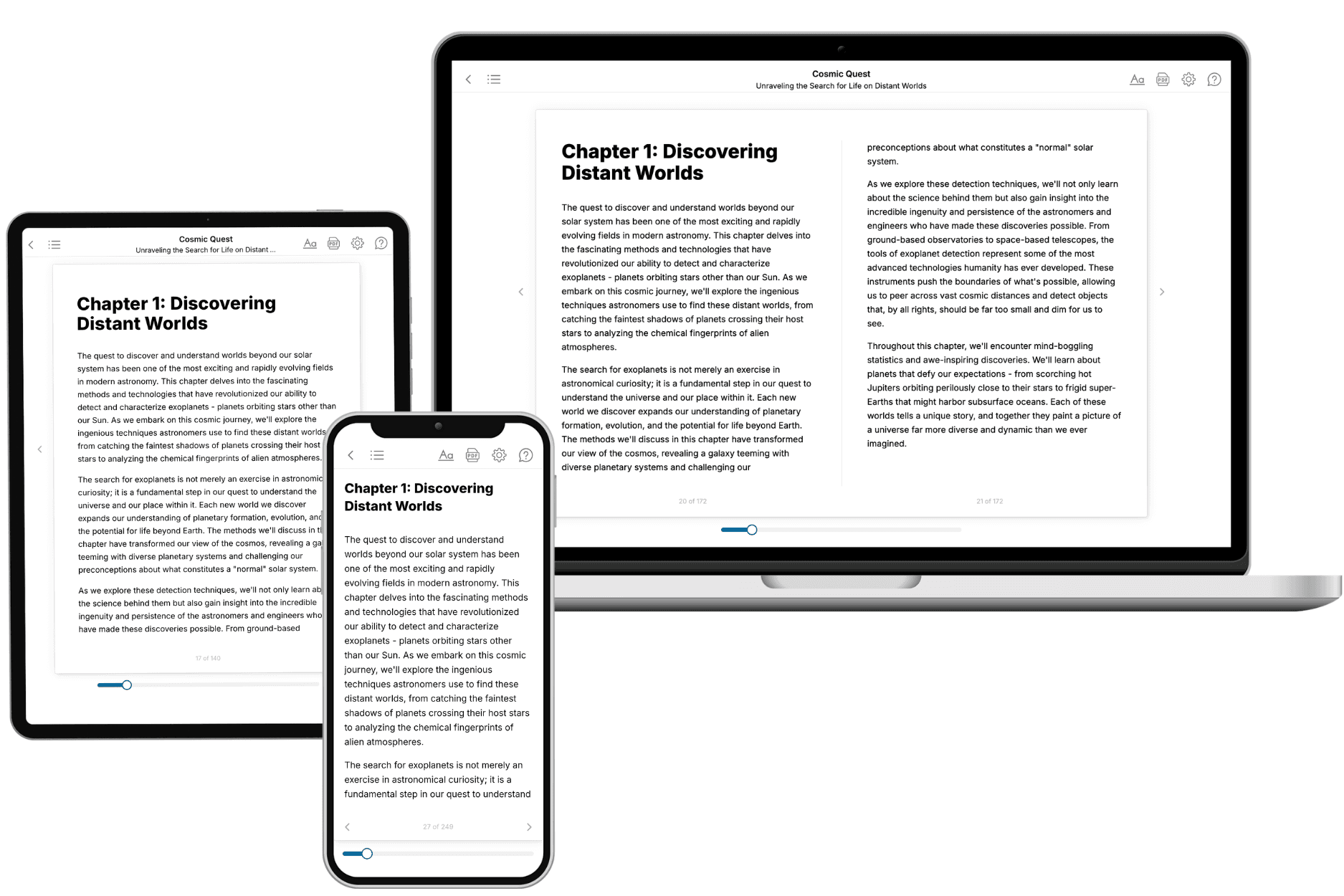
TailoredRead creates complete, full-length nonfiction ebooks, written specifically for you. Tell us what you want to learn and why, and TailoredRead writes you a complete ebook on it, with charts, tables, and diagrams throughout. Read it online, on Kindle, or on any e-reader, or download it as a PDF or EPUB. Every book is written fresh the day you order it.
- How is the book tailored to me?
Before anything is written, you answer a few short questions about your goals, your background, and the topics you care about. Your book is then planned around your answers: written at your level, focused on your goals, and covering the topics you chose, instead of the one-size-fits-all book a store sells everyone.
- Will it read like generic AI content?
No. Your book isn't a chat transcript: it's planned chapter by chapter before a single word is written, told in a clear book voice, and explains ideas visually with charts, tables, and diagrams. After writing, every book goes through an editorial pass that polishes chapters so the book reads consistent from start to finish. Judge for yourself: browse thousands of sample books on our Explore Books page.
- How accurate is the content?
Our AI first checks whether your subject needs live research. Niche and fast-moving subjects are researched before writing, and the book plan and chapters are grounded in what it finds. After writing, every book goes through a quality pass that checks its facts and consistency, and researched books list their sources in a Notes section at the back.
- How long is the book?
You choose the length: Comprehensive (250-300 pages), Detailed (150-200 pages), Essential (70-100 pages), or Short (30-50 pages).
- Does the book include visuals?
Yes. Every book includes visual elements such as timelines, checklists, step-by-step guides, decision trees, comparison tables, and matrices, and many include bar charts. A typical book includes dozens of these visual elements.
- Can I read it on Kindle? What formats can I download?
Yes. Every book can be read in our online reader or downloaded as a PDF or EPUB. The EPUB can be opened with Kindle, Apple Books, Kobo, and any e-reader. The Commercial and Author licenses also include an editable Word (DOCX) and Markdown download.
- How much does it cost?
About the price of a regular ebook. The exact price depends on your book's length and complexity, from $2 for the shortest books to $35 for the most comprehensive, and it's shown when you review your book, before you commit to anything. Each book is a one-time purchase, yours to keep, no subscription. Licenses that let you share, teach, or publish your book range from $35.99 to $49.99.
- Can I preview the book before purchasing?
Before you pay, you'll see what your book will cover: the title, a detailed description, the estimated length, and the complete chapter-by-chapter table of contents, so you know what you're getting before you decide. The full text itself is written after you purchase.
- How long does it take to create a book?
About 10 minutes. You can start reading the opening chapters while the rest is still being written.