Conjunctive Mastery
Elevate Your Writing with Subordinating Conjunctions
Are your sentences falling flat?
284 pages14 chaptersJan 30, 2025Writing
About this book
Discover the power of subordinating conjunctions to breathe life into your writing. "Conjunctive Mastery: Elevate Your Writing with Subordinating Conjunctions" is your comprehensive guide to mastering these essential grammatical tools. You'll learn how to effortlessly connect ideas, add depth to your sentences, and create a more engaging narrative flow. From basic concepts to advanced techniques, this book will equip you with the skills to craft compelling, multi-layered sentences that captivate your readers. Whether you're a student, professional writer, or language enthusiast, you'll find practical examples, exercises, and insights to take your writing to the next level. Don't let your words fall flat – harness the power of subordinating conjunctions and watch your writing soar to new heights.
Table of contents
- IntroductionThe Importance of Conjunctions in Language, Focusing on Subordinating Conjunctions, Overview of the Book's Contents, Learning Objectives and How to Use This BookRead below
- Chapter 1: Foundations of Sentence StructureUnderstanding Simple Sentences, Exploring Compound Sentences, Introduction to Complex Sentences, Compound-Complex Sentences
- Chapter 2: Conjunctions: An OverviewCoordinating Conjunctions, Correlative Conjunctions, Introduction to Subordinating Conjunctions, Comparing Different Types of Conjunctions
- Chapter 3: Subordinating Conjunctions DefinedDefinition and Function, Creating Dependent Clauses, Relationship Between Main and Subordinate Clauses, Impact on Sentence Structure and Meaning
- Chapter 4: Types of Subordinating ConjunctionsTime-related Conjunctions, Cause and Effect Conjunctions, Conditional Conjunctions, Purpose and Reason Conjunctions, Contrast and Concession Conjunctions
- Chapter 5: Time-related Subordinating ConjunctionsUsing 'After' and 'Before', Employing 'When' and 'While', Exploring 'Since' and 'Until', The Nuances of 'As Soon As'
- Chapter 6: Cause and Effect Subordinating ConjunctionsThe Power of 'Because' and 'Since', Utilizing 'As' and 'So That', The Unique Role of 'Now That', Practical Examples and Exercises
- Chapter 7: Conditional Subordinating ConjunctionsThe Versatility of 'If' and 'Unless', Using 'Provided That' and 'As Long As', The Specific Use of 'In Case', Conditional Sentences in Practice
- Chapter 8: Purpose and Reason Subordinating ConjunctionsExpressing Purpose with 'In Order That', The Dual Nature of 'So That', The Formal Use of 'Lest', Applying Purpose and Reason Conjunctions
- Chapter 9: Contrast and Concession Subordinating ConjunctionsThe Subtleties of 'Although' and 'Though', Strengthening Contrast with 'Even Though', Comparing with 'Whereas' and 'While', Contrast and Concession in Context
- Chapter 10: Placement of Subordinating ConjunctionsStarting Sentences with Subordinating Conjunctions, Placing Conjunctions in the Middle of Sentences, Punctuation Rules for Subordinating Conjunctions, How Placement Affects Meaning and Emphasis
- Chapter 11: Common Mistakes and How to Avoid ThemAvoiding Sentence Fragments, Preventing Comma Splices, The Pitfall of Overusing Subordinating Conjunctions, Examples of Misuse and Their Corrections
- Chapter 12: Advanced Techniques with Subordinating ConjunctionsCombining Multiple Subordinate Clauses, Creating Parallel Structure with Subordinate Clauses, Making Stylistic Choices for Emphasis, Advanced Examples from Literature
- Chapter 13: Practical Applications in WritingEnhancing Academic Writing, Elevating Creative Writing, Improving Business Communication, Crafting Engaging Journalistic Pieces
- Chapter 14: Exercises and PracticeIdentifying Subordinating Conjunctions, Constructing Sentences with Given Conjunctions, Error Correction Exercises, Writing Prompts for Practical Application, Self-Assessment and Progress Tracking
- ConclusionKey Takeaways, Suggestions for Further Exploration
- Glossary of Terms
- Further Reading
Introduction
Welcome to "Conjunctive Mastery: Elevate Your Writing with Subordinating Conjunctions." This book is designed to be your comprehensive guide to understanding and mastering the art of using subordinating conjunctions in your writing. Whether you're a student looking to improve your academic essays, a professional aiming to enhance your business communications, or simply a language enthusiast eager to refine your writing skills, this book will provide you with the knowledge and tools to take your sentence construction to the next level.
In the following chapters, you'll embark on a journey through the intricate world of subordinating conjunctions. You'll discover how these powerful grammatical tools can transform your writing, adding depth, complexity, and nuance to your sentences. By the end of this book, you'll not only understand what subordinating conjunctions are and how they function, but you'll also be able to use them confidently and effectively in your own writing.
Before we delve into the specifics of subordinating conjunctions, let's take a moment to explore the broader context of conjunctions in language and why they are so crucial to effective communication. This introduction will set the stage for your learning journey, providing you with a solid foundation upon which to build your knowledge and skills.
The Importance of Conjunctions in Language
Conjunctions are the unsung heroes of language, playing a vital role in connecting words, phrases, and clauses to create coherent and meaningful sentences. These small but mighty words serve as the glue that holds our thoughts together, allowing us to express complex ideas and relationships between concepts. Without conjunctions, our communication would be reduced to a series of short, disconnected statements, lacking the flow and sophistication that characterize effective writing and speech.
At their core, conjunctions are words that join other words, phrases, or clauses together. They come in three main types: coordinating conjunctions, correlative conjunctions, and subordinating conjunctions. Each type serves a unique purpose in sentence construction and contributes to the overall clarity and coherence of our language. Coordinating conjunctions, such as "and," "but," and "or," connect elements of equal grammatical rank. Correlative conjunctions, like "either...or" and "not only...but also," work in pairs to join related ideas. Subordinating conjunctions, which are the focus of this book, introduce dependent clauses and establish relationships between ideas within a sentence.
The importance of conjunctions in language cannot be overstated. They allow us to express relationships between ideas, such as cause and effect, contrast, condition, and time. For example, consider the difference between these two sets of sentences:
The second sentence, using the subordinating conjunction "because," clearly establishes the causal relationship between the rain and the action of taking an umbrella. This simple example demonstrates how conjunctions can significantly enhance the clarity and efficiency of our communication.It was raining. I took an umbrella.
I took an umbrella because it was raining.
Moreover, conjunctions contribute to the rhythm and flow of language. They allow us to vary our sentence structure, creating a more engaging and dynamic writing style. By using a mix of simple, compound, and complex sentences, writers can maintain their readers' interest and effectively emphasize key points. This variety is particularly important in longer pieces of writing, where a monotonous sentence structure could quickly lead to reader fatigue.
In academic and professional writing, the skillful use of conjunctions is often a hallmark of sophisticated expression. It allows writers to construct complex arguments, draw nuanced comparisons, and articulate intricate relationships between ideas. For instance, in a scientific paper, subordinating conjunctions might be used to explain the conditions under which an experiment was conducted or to describe the causal relationships observed in the results.
Furthermore, conjunctions play a crucial role in logical reasoning and argumentation. They allow us to express conditions (if, unless), concessions (although, even though), and contrasts (whereas, while), which are essential in developing and presenting well-structured arguments. In legal writing, for example, the precise use of conjunctions can be critical in defining the terms of a contract or in presenting a case.
In creative writing, conjunctions offer authors a powerful tool for crafting vivid and evocative prose. They can be used to create tension, build suspense, or paint detailed scenes. Consider how a skilled novelist might use subordinating conjunctions to weave together the threads of a complex narrative, connecting events across time and space.
As you progress through this book, you'll gain a deeper appreciation for the role of conjunctions in language. You'll learn to see them not just as functional grammatical elements, but as powerful tools for enhancing your communication. By mastering the use of subordinating conjunctions, you'll be able to express your thoughts with greater precision, create more engaging narratives, and construct more persuasive arguments.
In the next section, we'll narrow our focus to subordinating conjunctions, exploring why they are particularly worthy of in-depth study and how they can elevate your writing to new heights.
Focusing on Subordinating Conjunctions
While all types of conjunctions are important in language, subordinating conjunctions deserve special attention due to their unique role in creating complex sentence structures and expressing sophisticated relationships between ideas. These conjunctions are the key to transforming simple sentences into rich, multi-layered expressions of thought. By focusing on subordinating conjunctions, you'll unlock a powerful tool for enhancing the depth and complexity of your writing.
Subordinating conjunctions, such as "because," "although," "if," and "when," introduce dependent clauses and connect them to independent clauses. This connection creates a hierarchical relationship within the sentence, where one idea is subordinate to another. This hierarchy allows you to express nuanced relationships between ideas, adding layers of meaning to your sentences. For example, consider the following sentence:
Here, the subordinating conjunction "although" introduces a contrast between the heavy rain and Sarah's decision to run, adding depth to the sentence and providing context for Sarah's actions.Although it was raining heavily, Sarah decided to go for a run.
One of the primary reasons for focusing on subordinating conjunctions is their ability to enhance the logical flow of your writing. These conjunctions allow you to express various types of relationships between ideas, including:
- Cause and effect: because, since, as
- Time relationships: when, while, before, after
- Conditions: if, unless, provided that
- Contrasts and concessions: although, even though, whereas
- Purpose: so that, in order that
Subordinating conjunctions also play a crucial role in creating variety in your sentence structure. They allow you to move beyond simple subject-verb-object sentences and create more sophisticated constructions. This variety not only makes your writing more engaging but also helps you control the pacing and emphasis of your ideas. For instance, you can use subordinating conjunctions to:
- Begin sentences with dependent clauses for emphasis: "While the economy has improved, many families still struggle to make ends meet."
- Embed additional information within a sentence: "The project, which had been delayed for months, was finally completed on time."
- Create complex multi-clause sentences: "Although the initial results were disappointing, the team persevered until they achieved success, demonstrating that persistence often leads to breakthroughs."
Furthermore, subordinating conjunctions are essential in academic and professional writing. They allow you to present complex arguments, discuss hypothetical scenarios, and explore cause-and-effect relationships. In scientific writing, for example, subordinating conjunctions are crucial for describing experimental conditions ("If the temperature exceeds 100°C, the compound will decompose") or explaining results ("The reaction accelerated because the catalyst lowered the activation energy"). In legal documents, these conjunctions help articulate precise conditions and exceptions, which are vital for clear and enforceable contracts or laws.
In creative writing, subordinating conjunctions offer a wealth of possibilities for crafting evocative and immersive prose. They allow you to create tension ("As the storm approached, the sailors frantically secured the rigging"), build suspense ("While she crept down the dark hallway, the floorboards creaked ominously"), or paint vivid scenes ("The old house stood silent, as if waiting for its long-lost inhabitants to return"). By mastering these conjunctions, you'll be able to create more dynamic and engaging narratives that captivate your readers.
It's important to note that while subordinating conjunctions are powerful tools, they should be used judiciously. Overuse can lead to overly complex sentences that are difficult to follow. Part of mastering these conjunctions is learning when and how to use them effectively, balancing them with other sentence structures to create prose that is both sophisticated and accessible.
As you progress through this book, you'll gain a deep understanding of how to use subordinating conjunctions effectively in various contexts. You'll learn not just the rules governing their use, but also the nuances that allow you to employ them with skill and precision. By the end of your journey, you'll have transformed your writing, adding depth, complexity, and elegance to your sentences.
In the next section, we'll provide an overview of the book's contents, giving you a roadmap for the learning journey ahead. This will help you understand how each chapter builds upon the last, culminating in a comprehensive mastery of subordinating conjunctions.
Overview of the Book's Contents
"Conjunctive Mastery: Elevate Your Writing with Subordinating Conjunctions" is structured to provide you with a comprehensive understanding of subordinating conjunctions, from the fundamental concepts to advanced applications. Each chapter builds upon the knowledge gained in the previous ones, ensuring a logical progression that will help you develop a deep and nuanced understanding of this important grammatical tool. Let's take a closer look at what you can expect from each section of the book.
The book begins with Chapter 1: Foundations of Sentence Structure. This chapter lays the groundwork for your study of subordinating conjunctions by reviewing the basic types of sentences: simple, compound, complex, and compound-complex. Understanding these fundamental structures is crucial for appreciating how subordinating conjunctions function within sentences. You'll learn how to identify these sentence types and understand their roles in effective communication.
Chapter 2: Conjunctions: An Overview provides a broader context for your study of subordinating conjunctions. Here, you'll explore the three main types of conjunctions: coordinating, correlative, and subordinating. This chapter will help you understand how subordinating conjunctions fit into the larger picture of sentence construction and how they differ from other types of conjunctions. By the end of this chapter, you'll have a clear understanding of what makes subordinating conjunctions unique and why they're so important in sophisticated writing.
In Chapter 3: Subordinating Conjunctions Defined, you'll delve into the specific characteristics and functions of subordinating conjunctions. This chapter will provide you with a comprehensive definition of subordinating conjunctions, explain how they create dependent clauses, and discuss the relationship between main and subordinate clauses. You'll also explore how subordinating conjunctions impact sentence structure and meaning, setting the stage for more detailed study in subsequent chapters.
Chapter 4: Types of Subordinating Conjunctions introduces you to the various categories of subordinating conjunctions, including those related to time, cause and effect, condition, purpose, and contrast. This overview will help you understand the range of relationships that can be expressed using subordinating conjunctions, providing a foundation for the more detailed explorations in the following chapters.
Chapters 5 through 9 each focus on a specific type of subordinating conjunction:
- Chapter 5: Time-related Subordinating Conjunctions
- Chapter 6: Cause and Effect Subordinating Conjunctions
- Chapter 7: Conditional Subordinating Conjunctions
- Chapter 8: Purpose and Reason Subordinating Conjunctions
- Chapter 9: Contrast and Concession Subordinating Conjunctions
Chapter 10: Placement of Subordinating Conjunctions focuses on the syntactical aspects of using these conjunctions. You'll learn about starting sentences with subordinating conjunctions, placing them in the middle of sentences, and how their placement affects meaning and emphasis. This chapter also covers important punctuation rules related to subordinating conjunctions.
In Chapter 11: Common Mistakes and How to Avoid Them, you'll explore typical errors writers make when using subordinating conjunctions. This includes issues like sentence fragments, comma splices, and overuse of subordinating conjunctions. By understanding these common pitfalls, you'll be better equipped to use subordinating conjunctions correctly and effectively in your own writing.
Chapter 12: Advanced Techniques with Subordinating Conjunctions takes your skills to the next level. Here, you'll learn how to combine multiple subordinate clauses, create parallel structure with subordinate clauses, and make stylistic choices for emphasis. This chapter also includes advanced examples from literature, demonstrating how skilled writers use subordinating conjunctions to create powerful prose.
In Chapter 13: Practical Applications in Writing, you'll explore how to apply your knowledge of subordinating conjunctions in various writing contexts. This includes enhancing academic writing, elevating creative writing, improving business communication, and crafting engaging journalistic pieces. By the end of this chapter, you'll understand how to adapt your use of subordinating conjunctions to different writing styles and purposes.
Chapter 14: Exercises and Practice provides a comprehensive set of exercises to reinforce your learning. This includes identification exercises, sentence construction tasks, error correction exercises, and writing prompts for practical application. You'll also find self-assessment tools to track your progress and identify areas for further improvement.
The book concludes with a summary of key takeaways and suggestions for further exploration, ensuring that you have a clear path forward for continuing to develop your skills with subordinating conjunctions.
By working through these chapters, you'll gain a comprehensive understanding of subordinating conjunctions and how to use them effectively in your writing. Each chapter builds upon the last, providing you with a structured learning experience that will transform your ability to construct sophisticated and engaging sentences.
Learning Objectives and How to Use This Book
As you embark on your journey to master subordinating conjunctions, it's important to have a clear understanding of what you'll achieve through this book and how to make the most of your learning experience. This section outlines the key learning objectives and provides guidance on how to effectively use this book to enhance your writing skills.
By the end of this book, you will be able to:
- Identify and understand the function of subordinating conjunctions in sentences
- Distinguish between different types of subordinating conjunctions and their specific uses
- Construct complex sentences using a variety of subordinating conjunctions
- Analyze how subordinating conjunctions affect sentence structure and meaning
- Apply subordinating conjunctions effectively in different types of writing, from academic to creative
- Recognize and correct common errors related to the use of subordinating conjunctions
- Use advanced techniques with subordinating conjunctions to enhance the sophistication and clarity of your writing
To make the most of this book and achieve these learning objectives, consider the following strategies:
- Read actively: As you work through each chapter, engage with the material by taking notes, highlighting key points, and summarizing main ideas in your own words. This active reading approach will help you better retain and understand the information.
- Practice regularly: Each chapter includes exercises and examples. Make sure to complete these as you go along. Regular practice is key to internalizing the concepts and developing your skills with subordinating conjunctions.
- Apply your learning: Look for opportunities to apply what you're learning in your everyday writing. This could be in emails, reports, essays, or personal writing projects. The more you actively use subordinating conjunctions, the more natural and effective your use of them will become.
- Review and reflect: At the end of each chapter, take time to review the main points and reflect on what you've learned. Consider how the new information fits with what you already know and how you can apply it in your writing.
- Use the self-assessment tools: Take advantage of the self-assessment exercises provided in Chapter 14. These will help you track your progress and identify areas where you might need additional practice or review.
- Explore real-world examples: Pay attention to how subordinating conjunctions are used in the books, articles, and other texts you read in your daily life. Analyzing real-world usage can provide valuable insights and inspiration for your own writing.
- Be patient and persistent: Mastering subordinating conjunctions is a process that takes time and practice. Don't get discouraged if you find some concepts challenging at first. With consistent effort and application, you'll see significant improvements in your writing.
Remember that this book is designed to be a comprehensive guide, but it's also flexible. Depending on your current skill level and specific needs, you may find some chapters more relevant than others. Feel free to focus more intensively on the areas that are most beneficial to you. However, even if you're already comfortable with some concepts, reviewing them can often lead to new insights and a deeper understanding.
As you work through the book, keep your ultimate goal in mind: to enhance your writing skills and express your ideas more effectively. Each new concept you master and each exercise you complete brings you closer to this goal. Celebrate your progress along the way, and don't hesitate to revisit earlier chapters if you need to reinforce your understanding of fundamental concepts.
Finally, remember that language is a living, evolving entity, and there's always more to learn. This book provides a solid foundation and advanced techniques for using subordinating conjunctions, but it's also a springboard for further exploration. The "Further Reading" section at the end of the book offers resources for continuing your language learning journey beyond the scope of this text.
By approaching this book with dedication, curiosity, and a willingness to practice and apply what you learn, you'll find that your ability to use subordinating conjunctions will improve dramatically. This, in turn, will elevate your overall writing skills, allowing you to express your thoughts with greater clarity, sophistication, and impact.
Now that you understand the structure of the book and how to use it effectively, you're ready to begin your journey into the world of subordinating conjunctions. The chapters that follow will provide you with the knowledge and tools you need to transform your writing. Let's get started!
This is the end of the free sample. The full book has 14 chapters.
Want this book written for you?
Tell us your goals and background, and get your own version of this book, tailored by AI to you.


Benefits of AI-tailored books
- Read one book, not ten:
- all the Writing knowledge you need, gathered into a single book.
- Save days of learning:
- tell us your goals, choose your topics, and the whole book is built around them.
- Learn effortlessly:
- Writing book written for your specific background and expertise.
- Understand at a glance:
- includes charts, tables, timelines, checklists, decision trees, and more.
- Stay current:
- written the day you order it, not years ago.
- Trust what you read:
- every book is checked for accuracy, with real research when your subject needs it.
Create your unique book in 3 steps
- 1. Select your focus
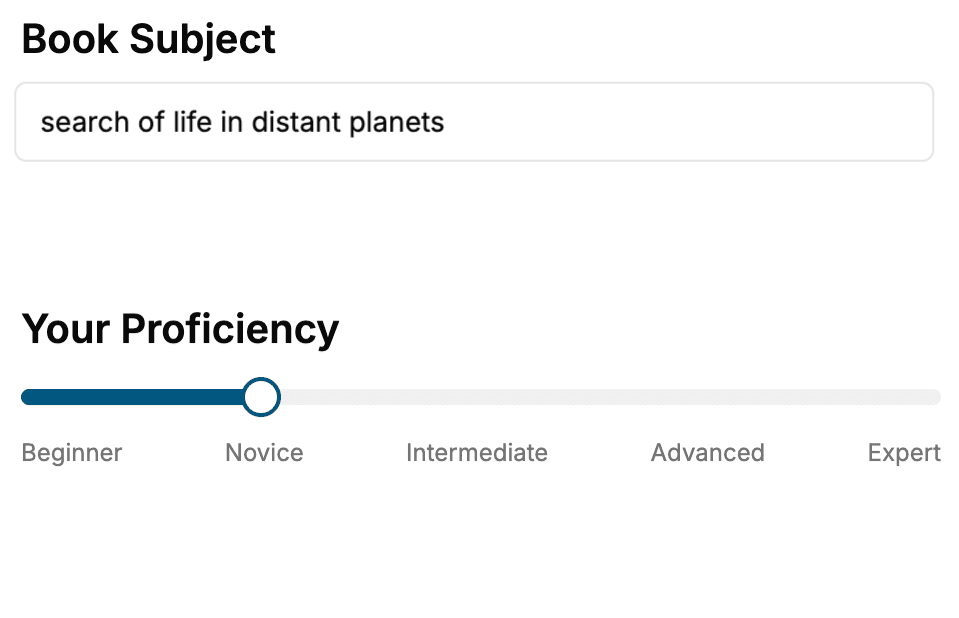
Select the focus of your Writing book and share your background
- 2. Personalize your book
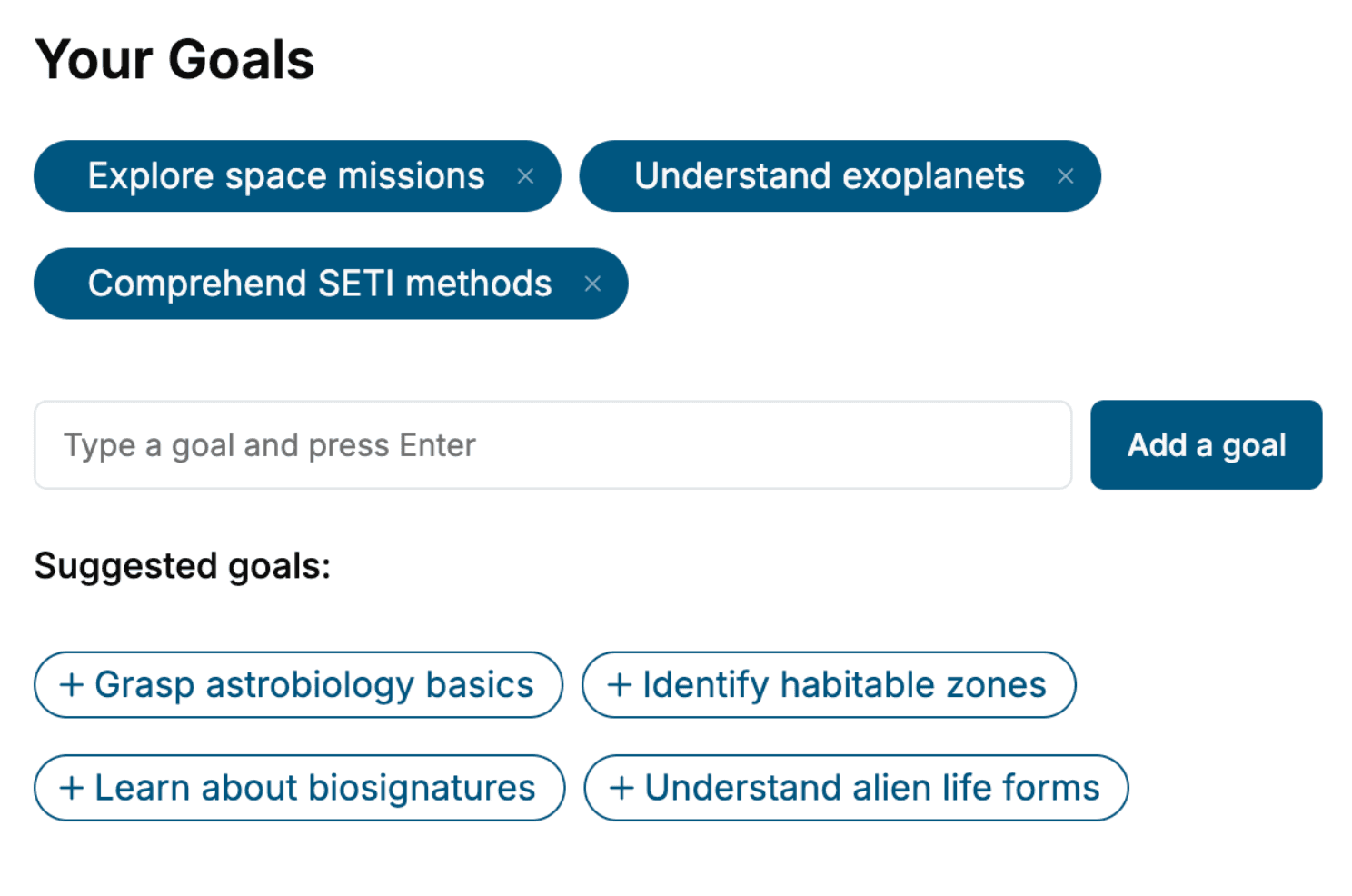
Specify your goals and choose sub-topics to include
- 3. Get your tailored book
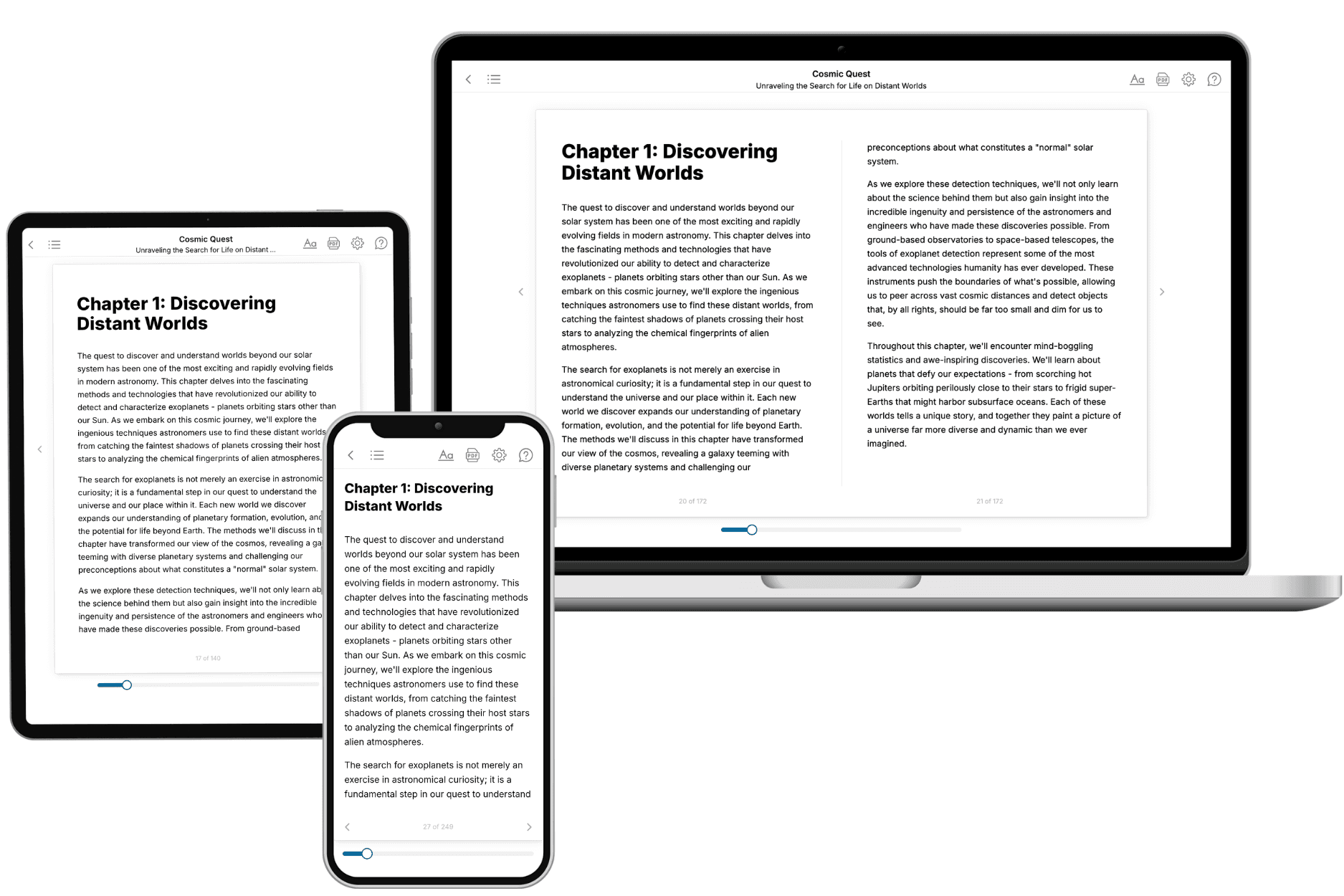
Your book is ready in 10 minutes. Read it online, download as EPUB or PDF, or send to Kindle.
Frequently asked questions
- What is TailoredRead?
TailoredRead creates complete, full-length nonfiction ebooks, written specifically for you. Tell us what you want to learn and why, and TailoredRead writes you a complete ebook on it, with charts, tables, and diagrams throughout. Read it online, on Kindle, or on any e-reader, or download it as a PDF or EPUB. Every book is written fresh the day you order it.
- How is the book tailored to me?
Before anything is written, you answer a few short questions about your goals, your background, and the topics you care about. Your book is then planned around your answers: written at your level, focused on your goals, and covering the topics you chose, instead of the one-size-fits-all book a store sells everyone.
- Will it read like generic AI content?
No. Your book isn't a chat transcript: it's planned chapter by chapter before a single word is written, told in a clear book voice, and explains ideas visually with charts, tables, and diagrams. After writing, every book goes through an editorial pass that polishes chapters so the book reads consistent from start to finish. Judge for yourself: browse thousands of sample books on our Explore Books page.
- How accurate is the content?
Our AI first checks whether your subject needs live research. Niche and fast-moving subjects are researched before writing, and the book plan and chapters are grounded in what it finds. After writing, every book goes through a quality pass that checks its facts and consistency, and researched books list their sources in a Notes section at the back.
- How long is the book?
You choose the length: Comprehensive (250-300 pages), Detailed (150-200 pages), Essential (70-100 pages), or Short (30-50 pages).
- Does the book include visuals?
Yes. Every book includes charts, tables, and diagrams: timelines, checklists, step-by-step guides, decision trees, comparison tables, matrices, and bar charts. A typical book includes dozens of these visual elements.
- Can I read it on Kindle? What formats can I download?
Yes. Every book can be read in our online reader or downloaded as a PDF or EPUB. The EPUB can be opened with Kindle, Apple Books, Kobo, and any e-reader. The Commercial and Author licenses also include an editable Word (DOCX) and Markdown download.
- How much does it cost?
About the price of a regular ebook. The exact price depends on your book's length and complexity, from $2 for the shortest books to $35 for the most comprehensive, and it's shown when you review your book, before you commit to anything. Each book is a one-time purchase, yours to keep, no subscription. Licenses that let you share, teach, or publish your book range from $35.99 to $49.99.
- Can I preview the book before purchasing?
Before you pay, you'll see what your book will cover: the title, a detailed description, the estimated length, and the complete chapter-by-chapter table of contents, so you know what you're getting before you decide. The full text itself is written after you purchase.
- How long does it take to create a book?
About 10 minutes. You can start reading the opening chapters while the rest is still being written.