From Contamination to Clarity
The Engineering Evolution of Water Purification Technologies
Access to clean water remains one of humanity's greatest engineering challenges.
222 pages10 chaptersAug 16, 2026Environmental Engineering
About this book
Many people understand that water treatment is necessary, but few grasp how the technologies we rely on today emerged from centuries of trial, error, and scientific discovery. This book traces the fascinating engineering history of water purification—from ancient sand filtration methods to cutting-edge membrane technologies—revealing how each innovation solved real problems faced by growing communities. You'll discover why certain purification techniques were invented when they were, how engineers overcame technical obstacles, and which methods work best for different contamination scenarios. Whether you're an engineering student, environmental professional, or simply curious about the infrastructure that delivers safe water to your home, this comprehensive guide connects historical developments to modern practice, showing how understanding the past illuminates the future of water treatment.
Table of contents
- IntroductionWhy Water Purification Matters, What This Book Covers, How to Use This BookRead below
- Chapter 1: Ancient Foundations: Early Water Treatment MethodsWater Treatment in Ancient Civilizations, Sand Filtration: The First Engineered Solution, Boiling and Settling Techniques
- Chapter 2: The Industrial Revolution: Scaling Water TreatmentUrban Growth and Water Contamination Crises, Mechanical Filtration Systems, The Chlorination Breakthrough
- Chapter 3: Coagulation and Flocculation: Removing Suspended ParticlesThe Science of Particle Removal, Selecting and Applying Coagulants, Flocculation and Settling Basins
- Chapter 4: Filtration Technologies: From Sand to MembranesRapid Sand Filtration Systems, Granular Media and Multi-Layer Filters, Membrane Filtration: Microfiltration to Reverse Osmosis
- Chapter 5: Disinfection Methods: Eliminating PathogensChlorine and Chlorine Compounds, Ozonation and Ultraviolet Light, Advanced Oxidation Processes
- Chapter 6: Chemical Removal: Addressing Dissolved ContaminantsWater Softening and Hardness Removal, Iron and Manganese Oxidation, Adsorption and Activated Carbon
- Chapter 7: Modern Integrated Treatment SystemsThe Multi-Barrier Treatment Approach, Conventional Water Treatment Plants, Treating Emerging Contaminants
- Chapter 8: Smart Monitoring and AutomationReal-Time Water Quality Monitoring, Automated Treatment Control Systems, Data Analytics and Predictive Maintenance
- Chapter 9: Sustainable and Nature-Based SolutionsConstructed Wetlands and Natural Filtration, Energy-Efficient Treatment Methods, Decentralized and Point-of-Use Treatment
- Chapter 10: Global Challenges and Future DirectionsWater Scarcity and Reuse Technologies, Purification Solutions for Developing Regions, Climate Change and Adaptive Treatment Strategies
- ConclusionKey Takeaways from Engineering History, The Future of Water Purification
- Glossary
- Further Reading and Resources
Introduction
A single glass of tap water, poured in almost any modern city, represents one of engineering's quietest achievements. Behind that glass sits a chain of physical, chemical, and biological processes built up over more than a century, each one added to solve a problem the previous generation of engineers had not yet faced. Few people who turn on a faucet think about coagulation basins, filter galleries, or disinfection contact tanks. Yet those systems are the reason a drink of water rarely makes anyone sick today, a guarantee that did not exist for most of human history.
This book exists to make that hidden chain visible. It follows water purification as an engineering discipline that grew step by step, driven less by abstract science and more by urgent, practical pressure: cities that outgrew their rivers, epidemics that outran explanation, and industries that produced contaminants no one had previously needed to remove. Each technology described in the chapters ahead, from Slow Sand Filtration to Reverse Osmosis, was a response to a specific failure of the systems that came before it.
Understanding this progression matters for anyone working in or studying environmental and civil engineering today, because modern treatment plants are not single inventions. They are layered assemblies of solutions developed decades or centuries apart, still working together in the same physical footprint. A plant built in the 1950s might have added Ozonation in the 1990s and real-time sensors in the 2020s, all operating on the same intake water. Knowing why each layer exists, and what specific problem it was built to solve, changes how you troubleshoot, design, and upgrade these systems.
The chapters that follow move roughly in chronological order, starting with ancient empirical methods and ending with the pressures now reshaping the field: scarcity, climate change, and contaminants that did not exist when earlier treatment trains were designed. Along the way, the book pauses on the underlying science, the engineering trade-offs, and the real-world decisions that determined which technologies survived and which faded into historical footnotes.
This introduction sets up that journey. It explains why water purification deserves close attention, outlines the ground the book will cover, and offers a practical guide for getting the most out of the chapters ahead.
Why Water Purification Matters
Contaminated water remains one of the largest preventable causes of illness worldwide, even though the engineering solutions to prevent it have existed for over a century. The World Health Organization estimates that unsafe drinking water, combined with inadequate sanitation and hygiene, contributes to well over a million deaths each year, most of them from preventable diarrheal disease[1]. That statistic is not a relic of the distant past. It reflects gaps in treatment infrastructure that persist today, often in the same regions experiencing the fastest population growth.
The gap between available technology and available infrastructure is the central tension running through this entire book. Effective purification methods for removing pathogens, sediment, and dissolved chemicals have existed in some form since the nineteenth century. What has not kept pace everywhere is the funding, maintenance capacity, and institutional support needed to build and operate treatment systems reliably. A Municipal Water Supply in a well-funded city might run continuous monitoring and multiple redundant disinfection barriers. A community a few hundred miles away might rely on a single, aging filtration unit.
Consider a scenario common in rapidly growing cities. A water utility built for a population of 500,000 finds itself serving 2 million people two decades later, drawing from a river that now carries industrial runoff and agricultural fertilizer it did not carry before. The original treatment train, designed for a simpler contaminant profile, cannot remove the new pollutants. This is not a hypothetical. It is the recurring pattern behind nearly every major upgrade in the history of water treatment, and it explains why purification technology has never stopped evolving.
Waterborne disease outbreaks illustrate the stakes in stark terms. Pathogens such as Vibrio cholerae, Cryptosporidium, and various strains of E. coli can spread through a water supply in days, overwhelming hospitals before the contamination source is even identified. Modern treatment trains are designed specifically to prevent this by combining multiple independent barriers, so that if one step fails, another still catches the threat. This layered logic, known as Multi-Barrier Treatment, is one of the most important engineering principles covered later in this book.
Beyond disease prevention, water purification also protects long-term public health from slower, less visible harms. Dissolved metals, industrial solvents, and byproducts of agricultural runoff can accumulate in the body over years, contributing to organ damage or developmental problems in children. These contaminants rarely cause the sudden, dramatic outbreaks associated with pathogens, which makes them easy to underestimate. Yet the engineering response to them, including Activated Carbon Adsorption and targeted chemical removal, represents some of the most technically demanding work in the entire field.
Economic considerations reinforce the public health argument. A single outbreak traced to contaminated water can cost a city far more in emergency response, healthcare, and lost trust than the ongoing cost of maintaining proper treatment infrastructure. Insurance data and public health studies consistently show that investment in preventive water treatment produces returns many times higher than the cost of treating illness after the fact. This is why water utilities, even those operating on tight budgets, treat purification infrastructure as a priority rather than an optional expense.
There is also an environmental dimension to why purification matters, one that extends beyond the water leaving the treatment plant. Poorly treated water discharged back into rivers and aquifers damages ecosystems, threatens fisheries, and can contaminate the very water sources a downstream community depends on. Treatment is not just about protecting the people drinking the water directly. It is about protecting the broader water cycle that every community, urban and rural, ultimately shares.
Finally, water purification matters because it is never a finished project. New contaminants continue to appear, from pharmaceutical residues to microplastics, categories broadly described as Emerging Contaminants. Climate change is altering rainfall patterns, source water quality, and the reliability of supply in ways earlier generations of engineers never had to plan for. Every method described in this book, no matter how old or how advanced, exists within a field that is still actively responding to new pressures.
What This Book Covers
This book traces water purification as a continuous engineering story, not a collection of disconnected facts. It begins with the earliest known methods of treating water, developed by ancient civilizations relying on observation rather than formal chemistry, and follows the field forward through the technological leaps that followed rapid urban growth, epidemic disease, and industrial contamination. Each historical stage receives enough context to explain not just what engineers built, but why they built it at that particular moment.
The middle chapters shift from history toward the core mechanics of modern treatment. You will encounter the science behind Coagulation and Flocculation, the processes that destabilize and clump suspended particles so they can be removed before filtration even begins. From there, the book moves into the mechanical evolution of filtration itself, tracing the path from early sand beds through multi-layer granular systems to pressure-driven Membrane Filtration technologies capable of removing particles far smaller than the human eye could ever detect.
Disinfection receives its own extended treatment, covering the chemical and energy-based methods engineers use to eliminate pathogens once physical removal has done its part. This includes the trade-offs between Chlorination, Ultraviolet Disinfection, and Advanced Oxidation Processes, along with the practical realities of managing Disinfection Byproducts and calculating the CT Value needed to guarantee a specific Log Reduction of pathogens. These calculations are not abstract exercises. They determine, in concrete terms, whether a treatment plant is legally and practically meeting its safety obligations.
A dedicated section addresses contaminants that filtration and disinfection alone cannot solve, such as dissolved hardness minerals, iron, manganese, and organic chemicals that require targeted chemical or adsorptive treatment. This is where processes like Water Softening and Granular Activated Carbon adsorption come into focus, each selected based on the specific chemistry of the source water rather than a one-size-fits-all approach.
From there, the book explains how individual treatment steps are combined into complete systems. Rather than treating coagulation, filtration, and disinfection as isolated topics, later chapters show how real treatment plants sequence these processes into a working Conventional Treatment Train, designed to address the full range of contaminants found in a given water source. This section also covers how engineers are adapting these trains to handle newly identified emerging contaminants that older designs never anticipated.
Modern operations depend increasingly on technology that monitors and adjusts treatment in real time. The book covers how SCADA systems, Real-Time Water Quality Monitoring, and data-driven Predictive Maintenance are shifting water treatment from a reactive process, responding to problems after they occur, toward a predictive one that catches issues before they affect water quality.
Sustainability and decentralization form another major thread. You will find coverage of nature-based approaches such as Constructed Wetlands, energy-minimizing treatment strategies, and small-scale solutions like the Biosand Filter that bring Point-of-Use Treatment and Decentralized Water Treatment to communities without access to large centralized infrastructure.
The final chapters turn toward the pressures shaping the future of the field: Water Scarcity, inequity in access to clean water across different regions, and Climate-Adaptive Treatment strategies designed to keep pace with changing source water conditions. These closing sections connect the historical arc of the book to the decisions engineers are making right now, as water systems adapt to demands their original designers never anticipated.
Throughout all of this, the book maintains a consistent focus on the reasoning behind each technology rather than treating any method as inherently superior. A membrane system is not automatically better than a sand filter, and advanced oxidation is not automatically better than chlorination. Each method has a role defined by source water quality, contaminant profile, scale, and cost, a theme that recurs in nearly every chapter.
How to Use This Book
This book is organized to be read in sequence, since later chapters build on concepts introduced earlier. Someone new to water treatment engineering will get the most value by starting from the ancient foundations and moving forward chapter by chapter, allowing the historical logic of each innovation to build naturally into the technical detail that follows. The chronological structure is not just a storytelling device. It reflects how the actual technologies layered on top of one another in real treatment systems.
That said, the book is also designed to work as a reference for readers who already have some background in environmental or civil engineering and want to focus on specific processes. If your interest is primarily in disinfection chemistry, membrane technology, or smart monitoring systems, you can move directly to those chapters without losing the thread. Each chapter introduces its key terms clearly enough to stand largely on its own, while still connecting back to the broader historical arc described in this introduction.
Technical terms are introduced deliberately and consistently throughout the book, using the same name for the same concept every time it appears. This consistency matters in a field where terminology can otherwise get muddled. For example, when the text refers to the Jar Test, it always means the same standardized laboratory procedure engineers use to determine optimal coagulant dosing, not a general description of any small-scale water experiment.
A glossary near the end of the book collects these key terms in one place, offering short, precise definitions for quick reference. If a chapter introduces a term you have encountered before but want to double-check, the glossary is built for exactly that purpose. Treat it as a companion resource to consult whenever a technical term feels unfamiliar or when you want a quick refresher before returning to the main text.
Each chapter includes concrete examples, from historical case studies to the mechanics of specific treatment processes, intended to ground abstract engineering principles in situations you can picture clearly. When a chapter explains a chemical process, look for the accompanying example or scenario that shows how that process plays out in an actual plant or community setting. These examples are chosen to make the underlying engineering logic memorable, not just technically accurate.
Footnotes throughout the book point to specific studies, historical records, or data sources behind particular claims, especially statistics and named findings. These are worth checking if you want to explore a topic in more depth or verify a figure for academic or professional work. They are not required reading to follow the main argument of each chapter, but they provide a path for readers who want to go further.
If you are approaching this book as an engineering student, consider using it alongside laboratory coursework or technical design projects, since the practical explanations of coagulant selection, filtration design, and disinfection calculations translate directly into applied problem-solving. If you are an environmental professional, the historical framing may be most useful for understanding why existing infrastructure in your own community was built the way it was, and where it might need to evolve next.
Finally, treat the progression from ancient sand beds to advanced membrane systems not as a finished timeline but as an open one. The chapters ahead describe technologies that are still changing, in some cases faster than at any point in the history of the field. Reading this book with that in mind sets up the final chapters on global challenges and future directions as less of a conclusion and more of a starting point for whatever comes next in water purification engineering.
Notes
Introduction
- 1. World Health Organization, "Drinking-water," World Health Organization, 2023
This is the end of the free sample. The full book has 10 chapters.
Want this book written for you?
Tell us your goals and background, and get your own version of this book, tailored by AI to you.


Benefits of AI-tailored books
- Read one book, not ten:
- all the Environmental Engineering knowledge you need, gathered into a single book.
- Save days of learning:
- tell us your goals, choose your topics, and the whole book is built around them.
- Learn effortlessly:
- Environmental Engineering book written for your specific background and expertise.
- Understand at a glance:
- includes charts, tables, timelines, checklists, decision trees, and more.
- Stay current:
- written the day you order it, not years ago.
- Trust what you read:
- every book is checked for accuracy, with real research when your subject needs it.
Create your unique book in 3 steps
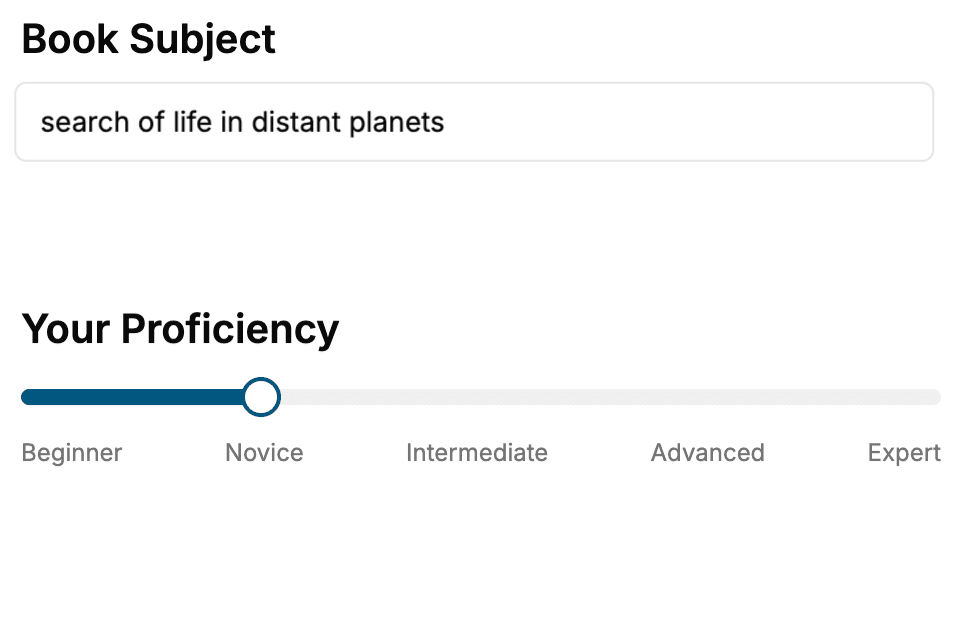
- 1. Select your focus
Select the focus of your Environmental Engineering book and share your background
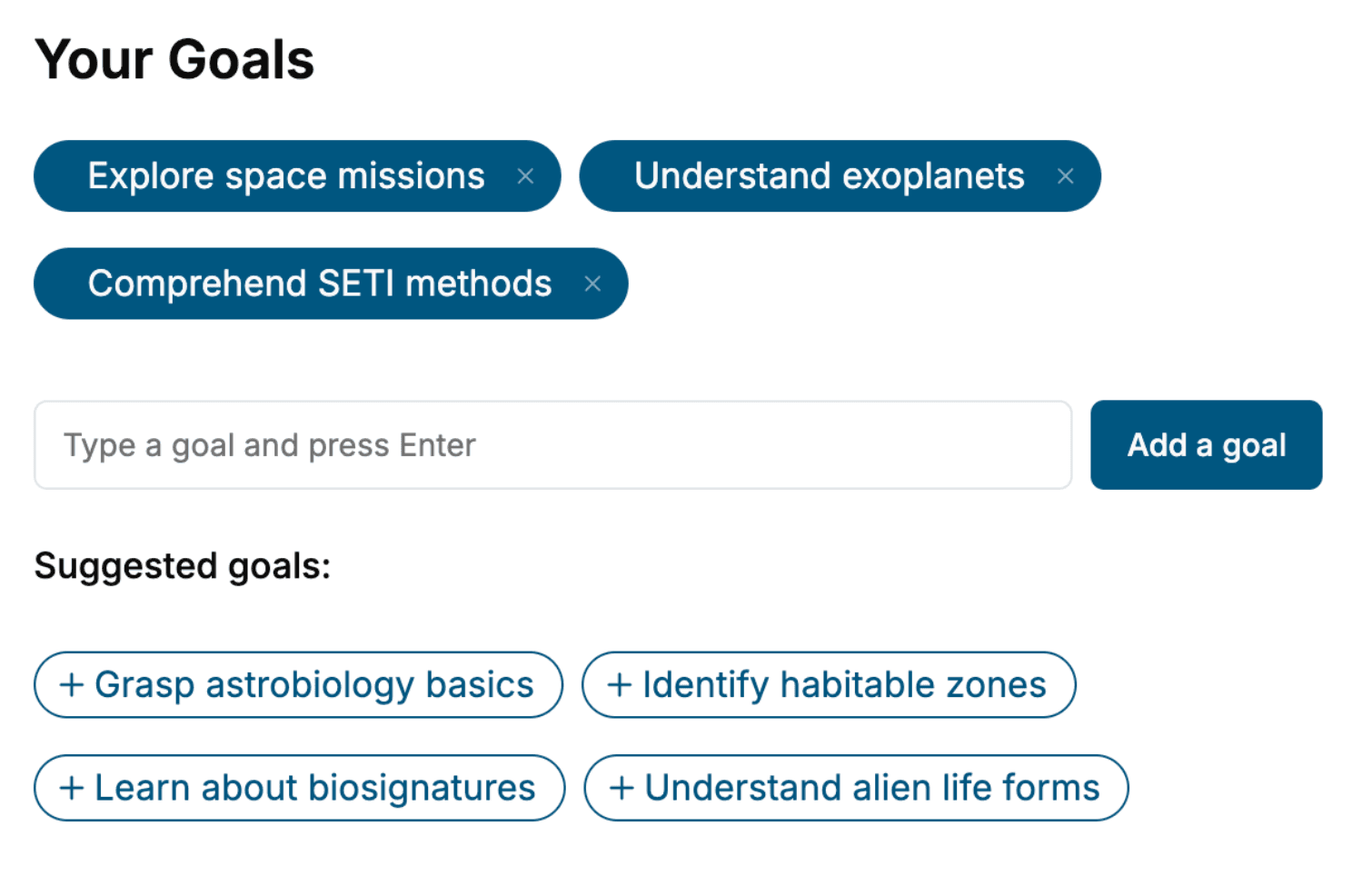
- 2. Personalize your book
Specify your goals and choose sub-topics to include
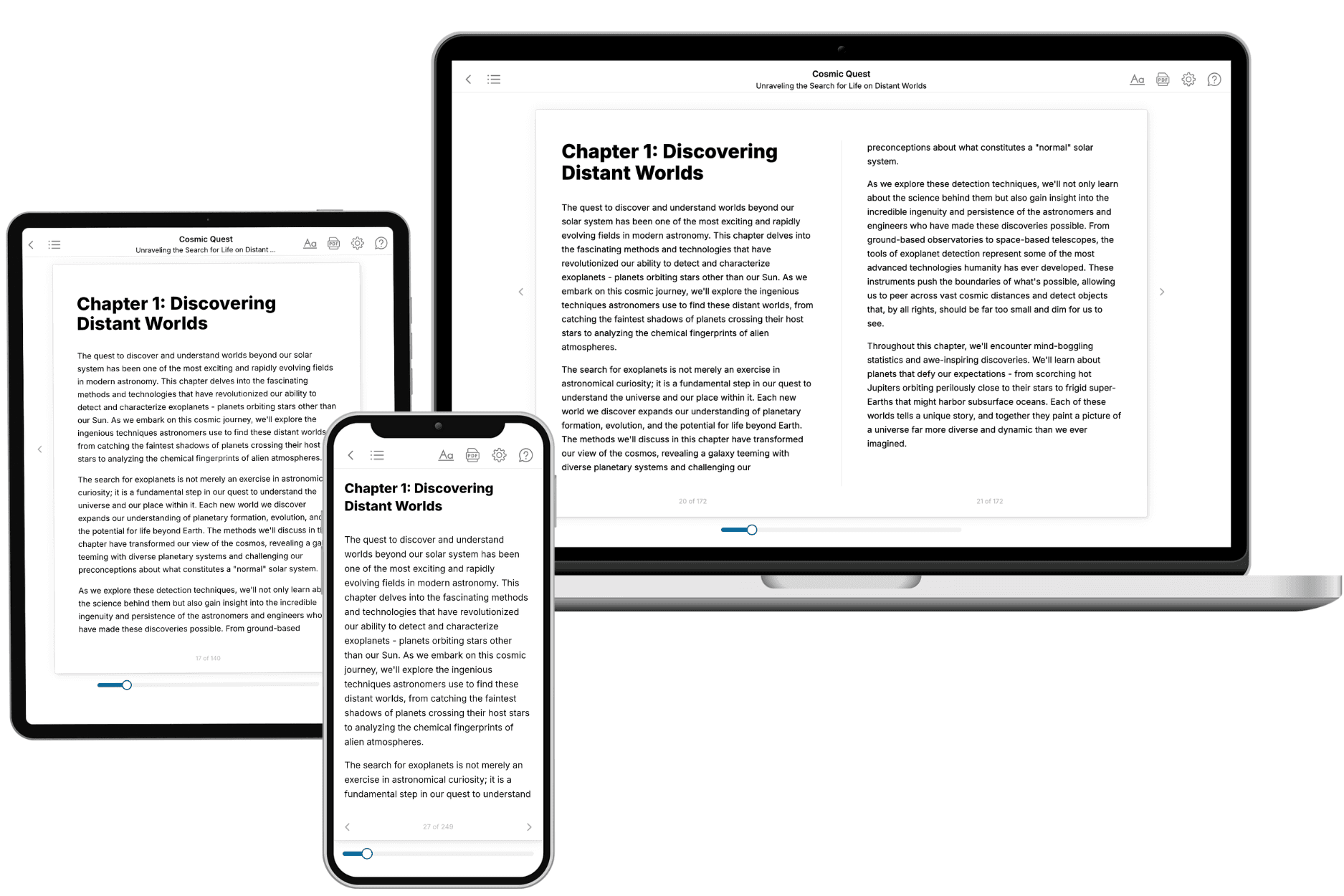
- 3. Get your tailored book
Your book is ready in 10 minutes. Read it online, download as EPUB or PDF, or send to Kindle.
Frequently asked questions
- What is TailoredRead?
TailoredRead creates complete, full-length nonfiction ebooks, written specifically for you. Tell us what you want to learn and why, and TailoredRead writes you a complete ebook on it, with charts, tables, and diagrams throughout. Read it online, on Kindle, or on any e-reader, or download it as a PDF or EPUB. Every book is written fresh the day you order it.
- How is the book tailored to me?
Before anything is written, you answer a few short questions about your goals, your background, and the topics you care about. Your book is then planned around your answers: written at your level, focused on your goals, and covering the topics you chose, instead of the one-size-fits-all book a store sells everyone.
- Will it read like generic AI content?
No. Your book isn't a chat transcript: it's planned chapter by chapter before a single word is written, told in a clear book voice, and explains ideas visually with charts, tables, and diagrams. After writing, every book goes through an editorial pass that polishes chapters so the book reads consistent from start to finish. Judge for yourself: browse thousands of sample books on our Explore Books page.
- How accurate is the content?
Our AI first checks whether your subject needs live research. Niche and fast-moving subjects are researched before writing, and the book plan and chapters are grounded in what it finds. After writing, every book goes through a quality pass that checks its facts and consistency, and researched books list their sources in a Notes section at the back.
- How long is the book?
You choose the length: Comprehensive (250-300 pages), Detailed (150-200 pages), Essential (70-100 pages), or Short (30-50 pages).
- Does the book include visuals?
Yes. Every book includes charts, tables, and diagrams: timelines, checklists, step-by-step guides, decision trees, comparison tables, matrices, and bar charts. A typical book includes dozens of these visual elements.
- Can I read it on Kindle? What formats can I download?
Yes. Every book can be read in our online reader or downloaded as a PDF or EPUB. The EPUB can be opened with Kindle, Apple Books, Kobo, and any e-reader. The Commercial and Author licenses also include an editable Word (DOCX) and Markdown download.
- How much does it cost?
About the price of a regular ebook. The exact price depends on your book's length and complexity, from $2 for the shortest books to $35 for the most comprehensive, and it's shown when you review your book, before you commit to anything. Each book is a one-time purchase, yours to keep, no subscription. Licenses that let you share, teach, or publish your book range from $35.99 to $49.99.
- Can I preview the book before purchasing?
Before you pay, you'll see what your book will cover: the title, a detailed description, the estimated length, and the complete chapter-by-chapter table of contents, so you know what you're getting before you decide. The full text itself is written after you purchase.
- How long does it take to create a book?
About 10 minutes. You can start reading the opening chapters while the rest is still being written.