Correlation Versus Causation
How to Think Clearly About Cause and Effect in the Social World
Imagine confidently evaluating claims you encounter every day—from news headlines to workplace decisions to personal health advice—knowing exactly which ones rest on solid evidence and which ones are built on faulty reasoning.
222 pages10 chaptersJul 31, 2026Critical Thinking
About this book
This book teaches you to see through one of the most common and consequential mistakes in thinking: confusing correlation with causation. You'll discover why two things can move together without one causing the other, how hidden variables trick us into false conclusions, and what kinds of evidence actually prove that one thing causes another. Through real-world examples drawn from medicine, economics, psychology, and social policy, you'll learn to ask the right questions when someone claims causation. You'll understand why randomized experiments work, why observational studies mislead, and how to spot the telltale signs of flawed reasoning. Whether you're reading research, making decisions, or simply trying to understand the world more clearly, this book gives you the intellectual framework to separate genuine causal insights from compelling but baseless claims.
Table of contents
- IntroductionWhy This Distinction Matters More Than You Think, How We All Fall Into the Correlation Trap, What You'll Learn in This BookRead below
- Chapter 1: Understanding CorrelationWhat Correlation Actually Means, How We Measure and Describe Correlations, Real-World Examples of Correlation
- Chapter 2: The Nature of CausationWhat Makes Something a Cause, Understanding Causal Mechanisms and Pathways, Different Types of Causes: Necessary, Sufficient, and Contributory
- Chapter 3: The Fundamental Problem: Why Correlation Isn't CausationThe Three Possible Explanations for Any Correlation, When the Arrow Points Backward: Reverse Causality, The Hidden Third Variable Problem
- Chapter 4: Confounding Variables and Hidden CausesWhat Confounding Variables Are and How They Work, How to Identify Potential Confounders, Classic Examples of Confounding in Social Science
- Chapter 5: Selection Bias and Self-Selection EffectsUnderstanding Selection Bias, How Self-Selection Creates False Causal Patterns, Selection Bias in Real Research and Policy
- Chapter 6: The Gold Standard: Randomized ExperimentsWhy Randomization Establishes Causation, How to Design a Rigorous Experiment, When Experiments Aren't Possible or Ethical
- Chapter 7: Observational Studies and Quasi-ExperimentsWhat Observational Studies Can and Cannot Tell Us, Quasi-Experimental Approaches: Getting Closer to Causation, Using Statistical Controls to Account for Confounders
- Chapter 8: Temporal Sequence and Causal OrderWhy Causes Must Come Before Effects, How to Establish Proper Temporal Sequence, Challenges in Determining Causal Order in Social Science
- Chapter 9: Critical Thinking Tools for Evaluating Causal ClaimsKey Questions to Ask When You Encounter a Causal Claim, Red Flags That Signal Weak Causal Reasoning, How to Assess the Strength of Evidence Presented
- Chapter 10: Correlation and Causation in PracticeEvaluating Causal Claims in News and Media, How Causal Confusion Leads to Bad Policy, Making Better Personal Decisions with Causal Clarity
- ConclusionKey Takeaways and Core Principles, Becoming a More Critical Thinker
- Glossary of Key Terms
- Further Reading and Resources
Introduction
A headline announces that children who eat breakfast perform better in school. A wellness blog claims that people who meditate live longer. A business report concludes that companies with more diverse leadership teams generate higher profits. Each of these statements sounds reasonable, even compelling. Each one is also built on a logical gap that most people never notice. The gap is not about the data being wrong. The data might be perfectly accurate. The problem is the leap from "these two things move together" to "one of them causes the other." That leap is one of the most common and consequential errors in human reasoning.
The distinction between correlation and causation sits at the heart of how we understand the social world. It shapes which medical treatments get adopted, which social programs receive funding, which business strategies get pursued, and which personal habits people take up or abandon. When that distinction gets blurred, the consequences range from wasted resources to genuine harm. Policies built on faulty causal reasoning can fail to help the people they target, or actively make things worse. Decisions made on the basis of spurious correlations can lead individuals down paths that cost them time, money, and health.
This book is about developing the mental tools to see that gap clearly. Not just to know that correlation does not equal causation as a slogan, but to understand why that is true, what the alternative explanations for any observed correlation actually are, and what kinds of evidence genuinely support a causal claim. The goal is not to make you skeptical of everything. It is to make you a more precise and confident thinker, someone who can engage with evidence on its own terms and reach better conclusions as a result.
The chapters ahead move through the full landscape of this problem, from the basic mechanics of correlation and causation, through the specific traps that distort our reasoning, to the methods researchers use to get closer to causal truth, and finally to practical frameworks for applying these ideas in everyday life. Each step builds on the last. By the end, the concepts will feel less like abstract rules and more like a natural way of looking at claims and evidence.
Why This Distinction Matters More Than You Think
Consider a real pattern that researchers have documented: neighborhoods with more ice cream shops tend to have higher rates of violent crime. The correlation is genuine. The data holds up. But no serious analyst concludes that ice cream causes violence, or that shutting down ice cream shops would reduce crime. The obvious explanation is a third factor: hot weather. Heat increases both ice cream consumption and the likelihood of people being outdoors in situations where conflict can escalate. This is a harmless example, easy to see through. The dangerous cases are the ones that are not so obvious.
In medicine, the failure to distinguish correlation from causation has led to treatments that did not work and, in some cases, caused harm. For decades, observational studies suggested that hormone replacement therapy reduced the risk of heart disease in postmenopausal women. Women who chose hormone therapy tended to be healthier and more health-conscious overall, a classic case of self-selection. When randomized controlled trials were eventually conducted, they found the opposite: hormone therapy increased cardiovascular risk in certain populations.[1] The observational correlation had pointed in the wrong direction entirely.
In education policy, the stakes are similarly high. Schools that show strong test score gains are sometimes held up as models to be replicated. But if those gains reflect the fact that high-performing students were enrolled, or that struggling students left, the school's methods may have nothing to do with the outcome. Copying the model produces nothing, because the model was never the cause. Resources get spent, teachers get trained in new approaches, and students see no benefit, all because the original causal claim was never properly examined.
In personal life, the same logic applies at a smaller scale. Someone starts a new supplement and feels better within two weeks. They attribute the improvement to the supplement. But they also changed their sleep schedule around the same time, reduced work stress, and started walking more. Any one of those factors, or their combination, could explain the improvement. The supplement might be doing nothing at all. Without a way to isolate the cause, the conclusion is a guess dressed up as experience.
The reason this matters so much is that human beings are pattern-recognition machines. We are extraordinarily good at noticing when two things tend to occur together. We are much less naturally equipped to ask whether that co-occurrence reflects a genuine causal link or one of several other possible explanations. That asymmetry is not a character flaw. It is a feature of how cognition works under conditions of limited time and information. But in a world where we are constantly bombarded with data, studies, and claims, that natural tendency needs to be supplemented with deliberate analytical habits.
The good news is that those habits are learnable. The distinction between correlation and causation is not a matter of advanced mathematics or specialized expertise. It is a matter of asking the right questions in the right order, and knowing what kinds of answers actually count as evidence. That is precisely what this book is designed to teach.
Understanding this distinction also changes how you read the news, evaluate research, and assess advice from experts. Headlines routinely present correlational findings as causal conclusions. Studies get summarized in ways that strip out the caveats researchers carefully included. Experts sometimes overstate what their data can support. Developing causal literacy means being able to engage with all of that material more accurately, not dismissing it, but reading it at the right level of confidence.
How We All Fall Into the Correlation Trap
The correlation-causation fallacy is not a mistake made only by the uninformed. Researchers with advanced degrees make it. Journalists with years of experience make it. Policymakers with access to expert advisors make it. The reason is not ignorance of the basic rule. Most educated people have heard the phrase "correlation does not imply causation." The problem is that knowing the rule and applying it consistently under real conditions are two very different things.
One reason the trap is so easy to fall into is that causal stories feel satisfying in a way that mere correlations do not. When two things move together, the mind naturally reaches for an explanation. And the most available explanation is usually the most obvious one: that one thing caused the other. This tendency is sometimes called the narrative fallacy, the human preference for coherent stories over ambiguous data. A correlation without a story feels incomplete. A correlation with a plausible causal story feels like understanding.
Another reason is that many genuine causal relationships do show up as correlations first. Smoking and lung cancer were correlated long before the causal mechanism was fully understood. Exercise and cardiovascular health are correlated, and the causal link is real. So correlation is not meaningless. It is often the first signal that a causal relationship might exist. The mistake is treating that first signal as the final answer, rather than as the beginning of a more careful investigation.
Consider how this plays out in a workplace setting. A manager notices that the highest-performing sales team also happens to be the one that uses a particular CRM software most consistently. The conclusion seems obvious: the software is driving performance. But the team that uses the software most might also be the most disciplined and organized team overall. Their discipline might explain both the software usage and the sales results. The software could be irrelevant. Rolling it out to other teams might produce no improvement at all, while the real driver, team culture and work habits, goes unaddressed.
Social media amplifies the problem significantly. Platforms reward content that is surprising, emotionally resonant, and easy to share. A study finding that people who drink coffee live longer is far more shareable than a careful explanation of why that finding might reflect confounding by socioeconomic status or health-conscious behavior. The nuanced version rarely travels as far as the simple causal claim. By the time a research finding reaches most people, the caveats have often been stripped away entirely.
There is also a confirmation bias dimension to this. When a correlation supports something we already believe, we are much less likely to scrutinize the causal claim. If you already believe that social media harms teenagers, a study showing a correlation between social media use and depression will feel like confirmation. If you are skeptical of that claim, you will immediately start asking about reverse causality (do depressed teenagers use social media more?) and confounding variables (do teenagers with fewer social connections both use social media more and experience more depression?). The same data gets evaluated very differently depending on whether it confirms or challenges prior beliefs.
The trap also has a structural dimension in how research gets funded and published. Studies that find significant correlations are more likely to be published than studies that find nothing. This creates a literature that is systematically skewed toward positive findings, many of which may not replicate. When researchers later attempt to reproduce high-profile correlational findings, a substantial portion fail to hold up.[2] The original correlation was real in the sample studied, but it did not reflect a stable underlying relationship in the broader population.
Recognizing these patterns in yourself is the first step toward correcting them. The goal is not to become cynical about all research or to dismiss every causal claim as unproven. It is to develop a calibrated skepticism, one that asks the right questions, weighs the right kinds of evidence, and arrives at conclusions that are proportionate to what the data actually supports.
What You'll Learn in This Book
The book is organized to build understanding progressively. Each chapter addresses a distinct piece of the puzzle, and the pieces fit together into a coherent framework for evaluating causal claims. Here is a map of what each part of the journey covers.
The first two chapters establish the foundations. The chapter on understanding correlation explains precisely what a correlation is, how it is measured, and what different patterns of correlation actually look like in data. The chapter on causation then examines what it actually means for one thing to cause another, a question that turns out to be more philosophically rich than it first appears. These two chapters give you the vocabulary and conceptual grounding for everything that follows.
The third chapter addresses the core logical problem directly. When two variables are correlated, there are exactly three possible explanations:
- Variable A causes Variable B.
- Variable B causes Variable A (reverse causality).
- Some third factor causes both A and B, creating a spurious correlation.
Chapters four and five go deep on two of the most common sources of false causal conclusions. The chapter on confounding variables explains how hidden third factors create the appearance of causal relationships that do not exist, and how researchers try to identify and account for them. The chapter on selection bias and self-selection examines how the way data gets collected can systematically distort the patterns we observe, leading to conclusions that would evaporate if we could see the full picture.
Chapters six and seven address the methods researchers use to actually establish causation. The chapter on randomized controlled trials explains why randomization is so powerful, how it works mechanically, and what its limitations are. The chapter on observational studies and quasi-experiments covers the approaches researchers use when true experiments are impossible or unethical, including methods like difference-in-differences, regression discontinuity, and instrumental variables. These chapters give you a working understanding of the evidence hierarchy and what different study designs can and cannot tell us.
Chapter eight focuses on a requirement that often gets overlooked: temporal precedence. A cause must come before its effect. This sounds obvious, but in social science, where many variables evolve slowly and influence each other over time, establishing the right causal order is genuinely difficult. This chapter examines why timing matters and how researchers try to establish it.
The final two chapters shift from understanding to application. Chapter nine provides a practical toolkit of questions and red flags for evaluating any causal claim you encounter. It is designed to be immediately usable, whether you are reading a news article, reviewing a research report, or listening to a policy argument. Chapter ten applies the full framework to three domains where causal confusion is especially consequential: media consumption, public policy, and personal decision-making.
Throughout the book, the emphasis is on concrete examples drawn from real research and real-world situations. Abstract principles are only useful if you can recognize them in practice. Every major concept is illustrated with cases from medicine, economics, psychology, education, and social policy, domains where the stakes of getting causation right are genuinely high.
A few things this book does not do. It does not require any background in statistics or mathematics beyond basic numeracy. The concepts are explained in plain language, with technical terms introduced only when they are genuinely necessary and always defined clearly. It also does not pretend that establishing causation is easy or that there are simple formulas for getting it right. The honest message is that causal inference is hard, that uncertainty is normal, and that the goal is not certainty but rather well-calibrated confidence based on the best available evidence.
What you will come away with is a set of habits of mind. The habit of asking what else could explain this pattern. The habit of looking for the mechanism that would connect a cause to its effect. The habit of checking whether the people or cases being studied are representative of the broader population. The habit of asking whether the cause came before the effect. These habits do not guarantee correct conclusions, but they dramatically reduce the rate of confident wrong ones. In a world full of data, claims, and decisions, that is an enormously valuable capability to develop.
The question is never simply "are these two things correlated?" The question is always "what does that correlation actually tell us, and what would we need to know before acting on it?"
That question, asked consistently and answered carefully, is what separates clear thinking about cause and effect from the kind of reasoning that leads smart people to wrong conclusions. The chapters ahead are designed to make that question second nature.
This is the end of the free sample. The full book has 10 chapters.
Want this book written for you?
Tell us your goals and background, and get your own version of this book, tailored by AI to you.


Benefits of AI-tailored books
- Read one book, not ten:
- all the Critical Thinking knowledge you need, gathered into a single book.
- Save days of learning:
- tell us your goals, choose your topics, and the whole book is built around them.
- Learn effortlessly:
- Critical Thinking book written for your specific background and expertise.
- Understand at a glance:
- includes charts, tables, timelines, checklists, decision trees, and more.
- Stay current:
- written the day you order it, not years ago.
- Trust what you read:
- every book is checked for accuracy, with real research when your subject needs it.
Create your unique book in 3 steps
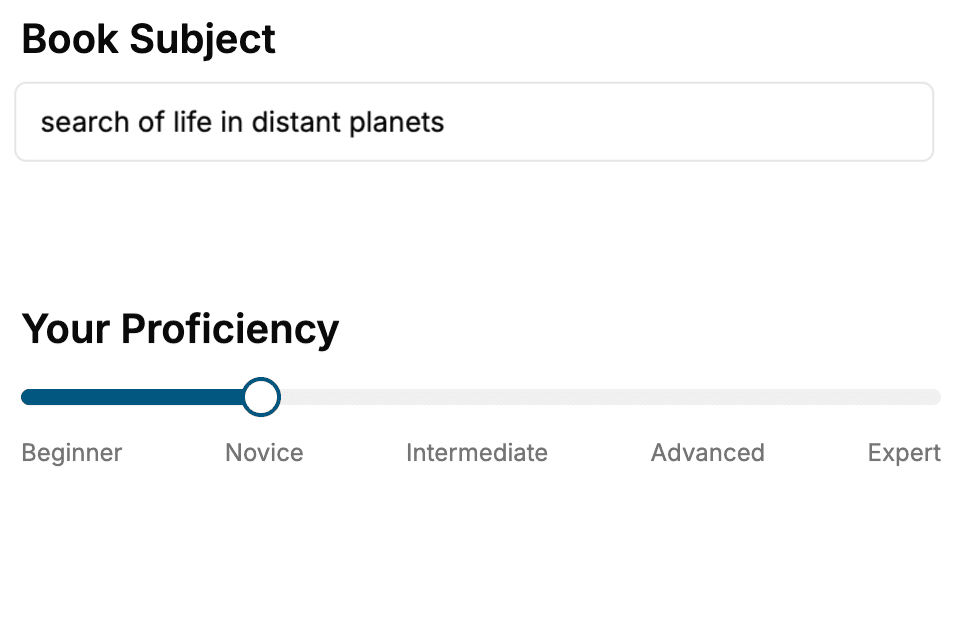
- 1. Select your focus
Select the focus of your Critical Thinking book and share your background
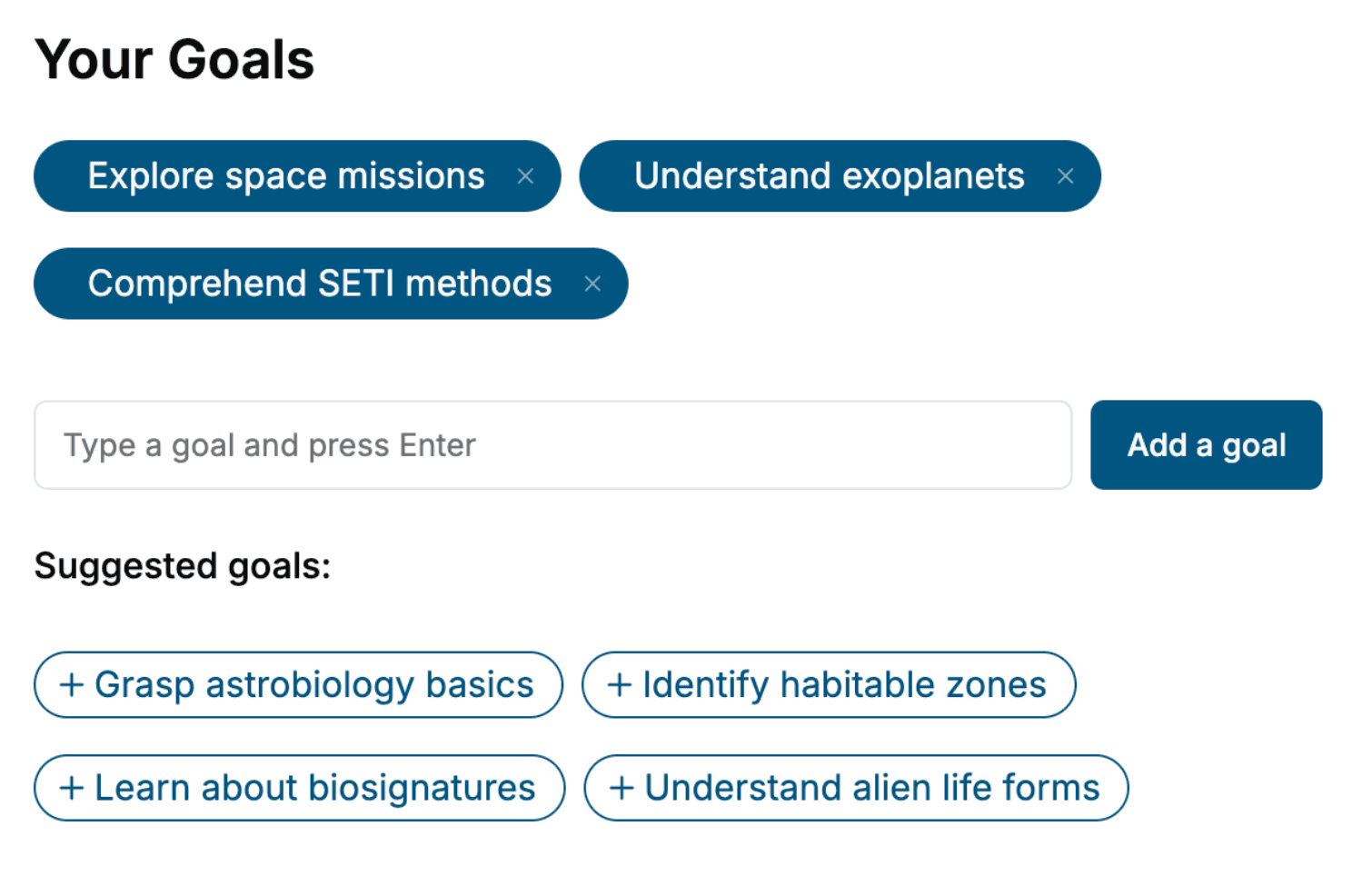
- 2. Personalize your book
Specify your goals and choose sub-topics to include
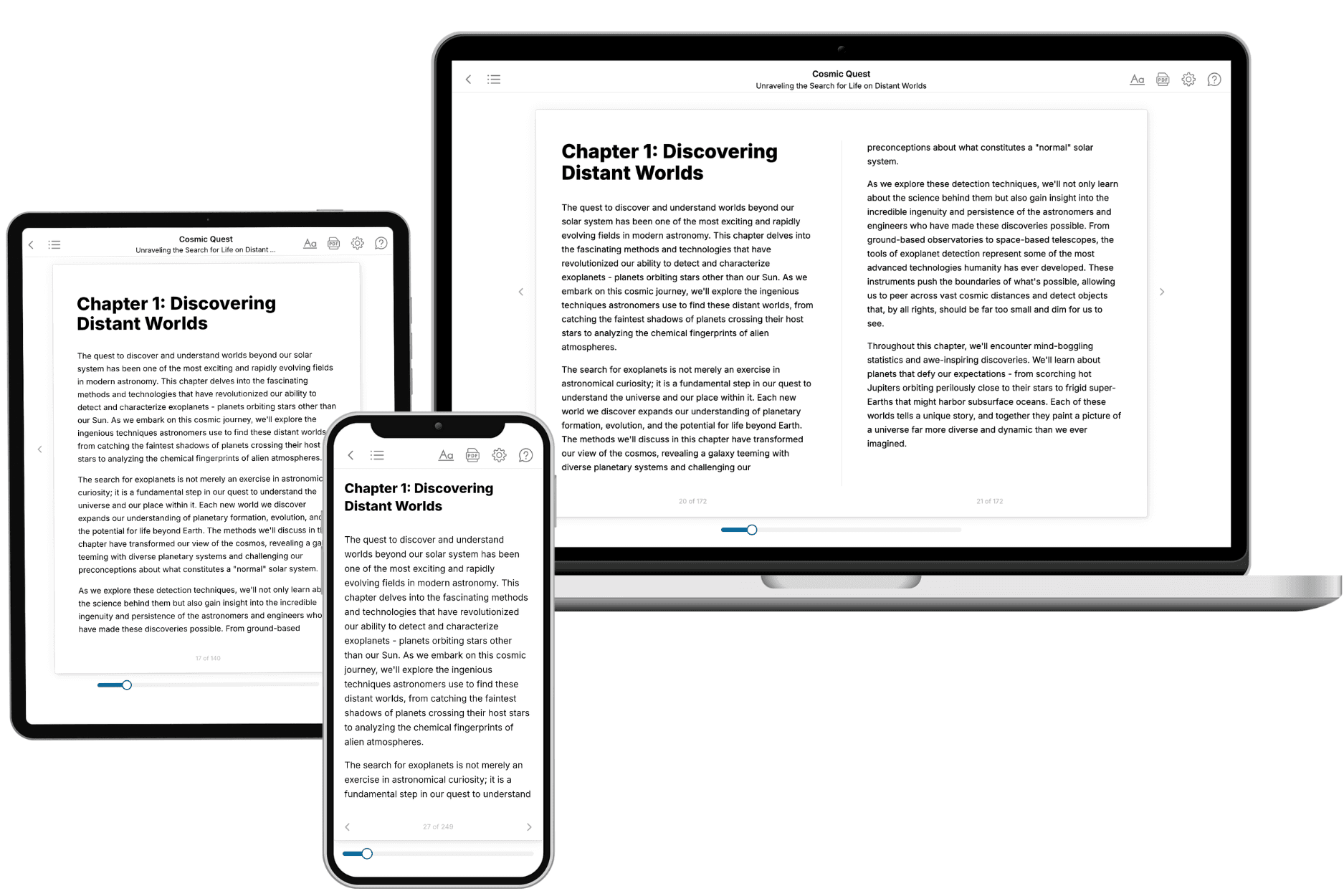
- 3. Get your tailored book
Your book is ready in 10 minutes. Read it online, download as EPUB or PDF, or send to Kindle.
Frequently asked questions
- What is TailoredRead?
TailoredRead creates complete, full-length nonfiction ebooks, written specifically for you. Tell us what you want to learn and why, and TailoredRead writes you a complete ebook on it, with charts, tables, and diagrams throughout. Read it online, on Kindle, or on any e-reader, or download it as a PDF or EPUB. Every book is written fresh the day you order it.
- How is the book tailored to me?
Before anything is written, you answer a few short questions about your goals, your background, and the topics you care about. Your book is then planned around your answers: written at your level, focused on your goals, and covering the topics you chose, instead of the one-size-fits-all book a store sells everyone.
- Will it read like generic AI content?
No. Your book isn't a chat transcript: it's planned chapter by chapter before a single word is written, told in a clear book voice, and explains ideas visually with charts, tables, and diagrams. After writing, every book goes through an editorial pass that polishes chapters so the book reads consistent from start to finish. Judge for yourself: browse thousands of sample books on our Explore Books page.
- How accurate is the content?
Our AI first checks whether your subject needs live research. Niche and fast-moving subjects are researched before writing, and the book plan and chapters are grounded in what it finds. After writing, every book goes through a quality pass that checks its facts and consistency, and researched books list their sources in a Notes section at the back.
- How long is the book?
You choose the length: Comprehensive (250-300 pages), Detailed (150-200 pages), Essential (70-100 pages), or Short (30-50 pages).
- Does the book include visuals?
Yes. Every book includes charts, tables, and diagrams: timelines, checklists, step-by-step guides, decision trees, comparison tables, matrices, and bar charts. A typical book includes dozens of these visual elements.
- Can I read it on Kindle? What formats can I download?
Yes. Every book can be read in our online reader or downloaded as a PDF or EPUB. The EPUB can be opened with Kindle, Apple Books, Kobo, and any e-reader. The Commercial and Author licenses also include an editable Word (DOCX) and Markdown download.
- How much does it cost?
About the price of a regular ebook. The exact price depends on your book's length and complexity, from $2 for the shortest books to $35 for the most comprehensive, and it's shown when you review your book, before you commit to anything. Each book is a one-time purchase, yours to keep, no subscription. Licenses that let you share, teach, or publish your book range from $35.99 to $49.99.
- Can I preview the book before purchasing?
Before you pay, you'll see what your book will cover: the title, a detailed description, the estimated length, and the complete chapter-by-chapter table of contents, so you know what you're getting before you decide. The full text itself is written after you purchase.
- How long does it take to create a book?
About 10 minutes. You can start reading the opening chapters while the rest is still being written.