The Cradle of Civilization: A Comprehensive Guide to Ancient Mesopotamia
From Sumerian Origins to Persian Integration—Understanding the Empires, Languages, and Legacies That Shaped the Ancient World
Discover how ancient Mesopotamia became humanity's first complex civilization, establishing the intellectual, political, and cultural foundations that shaped the ancient world.
222 pages10 chaptersJun 17, 2026Ancient HistoryCreated by David
About this book
This comprehensive guide traces the rise and transformation of Sumerian city-states, the imperial ambitions of Babylon and Assyria, and the Persian integration of Mesopotamian territories. You'll explore how cuneiform writing emerged as the world's first written language, examine the legendary reign of Nebuchadnezzar II and his architectural marvels, and understand the sophisticated administrative systems that governed vast empires. Delve into Mesopotamian mythology to uncover the religious and philosophical worldviews of ancient peoples, investigate the remarkable Library of Ashurbanipal that preserved thousands of texts, and analyze how Persian rulers adapted Mesopotamian governance while respecting local traditions. This book synthesizes archaeological evidence, historical records, and scholarly analysis to provide you with a nuanced understanding of how these civilizations developed writing, law, diplomacy, and knowledge systems that continue to influence our world today.
Table of contents
- IntroductionWhy Mesopotamia Matters: The Foundation of Civilization, Scope and Approach: What This Book Covers, Sources and Evidence: How We Know What We KnowRead below
- Chapter 1: The Sumerian Foundation: Birth of CivilizationGeography and Early Settlement Patterns, The Rise of City-States and Urban Centers, Social Hierarchy and Governance Structures
- Chapter 2: Cuneiform: The World's First Writing SystemFrom Pictographs to Cuneiform: Origins and Development, How Cuneiform Worked: Structure and Symbols, The Revolutionary Impact of Written Language
- Chapter 3: The Akkadian Integration: Language and CultureAkkadian Language Origins and Spread, Cultural and Linguistic Synthesis with Sumerian Traditions, The Akkadian Legacy in Mesopotamian Culture
- Chapter 4: The Babylonian Empire: Power and ProsperityThe Rise of Babylon: From City-State to Empire, Nebuchadnezzar II: The Empire's Greatest Ruler, Administration, Law, and Governance Under Babylonian Rule
- Chapter 5: Babylonian Scribal Traditions and Knowledge SystemsScribal Training: Education and Professional Development, Literature, Mathematics, and Scientific Knowledge, Systems of Knowledge Preservation and Transmission
- Chapter 6: The Assyrian Empire: Military Innovation and DominanceMilitary Organization and Technological Innovation, Imperial Expansion and Territorial Control, Administrative Systems and Diplomatic Relations
- Chapter 7: The Library of Ashurbanipal: Preserving CivilizationThe Creation and Organization of the Library, Collections, Texts, and Knowledge Categories, The Library's Legacy for Modern Scholarship
- Chapter 8: Mesopotamian Mythology and Religious WorldviewsSumerian Religious Practices and Cosmology, Epic Traditions: The Enuma Elish and Gilgamesh, Gods, Temples, and the Mesopotamian Universe
- Chapter 9: The Persian Empire: Integration and InfluencePersian Conquest and Administrative Integration, Cultural Pluralism and Respect for Local Traditions, Persian Influence on Mesopotamian Governance and Society
- Chapter 10: Legacy and Influence: Mesopotamia's Enduring ImpactHow Mesopotamian Knowledge Spread to Other Civilizations, Mesopotamian Contributions to Modern Law, Science, and Literature, Ongoing Archaeological Discovery and Scholarly Understanding
- ConclusionSynthesizing Mesopotamian Civilization: Key Takeaways, Continuing Your Exploration of Ancient Mesopotamia
- Glossary of Terms and Concepts
- Further Reading and Research Resources
Introduction
Somewhere between the Tigris and Euphrates rivers, in a region that is now modern-day Iraq, something extraordinary happened roughly five thousand years ago. People began organizing themselves into cities, writing down their thoughts, debating laws, and telling stories about the nature of the universe. This was not a gradual, barely perceptible drift toward complexity. It was, by any historical measure, a revolution in how human beings lived, governed themselves, and understood the world. That region was Mesopotamia, and what emerged there became the template for civilization itself.
The word Mesopotamia comes from the ancient Greek, meaning roughly "the land between the rivers." It is a fitting name for a place defined by its geography. The rivers flooded unpredictably, depositing rich silt that made agriculture possible in an otherwise arid landscape. That agricultural surplus fed growing populations, which in turn demanded organization, record-keeping, and governance. From those practical pressures, the Sumerians built the world's first cities, invented writing, and developed legal codes that would echo through millennia of human history. Every civilization that followed, from ancient Egypt to classical Greece to the modern nation-state, owes something to what was first worked out in Mesopotamia.
This book is designed to serve as a comprehensive scholarly resource on Mesopotamian civilization, tracing its development from the earliest Sumerian settlements through the Akkadian, Babylonian, and Assyrian empires, and finally into the Persian integration that brought this ancient world into contact with the broader sweep of classical antiquity. Each chapter builds on the last, moving from geography and social organization to writing systems, imperial governance, religious thought, and the long legacy of Mesopotamian knowledge. Whether you are approaching this material for professional reference, academic research, or intellectual enrichment, the goal is the same: to give you a rigorous, nuanced, and genuinely engaging account of one of history's most consequential civilizations.
What makes Mesopotamia particularly compelling for a scholarly audience is the sheer density of evidence available. Tens of thousands of cuneiform tablets have been excavated, translated, and analyzed over the past two centuries. These tablets contain everything from grain inventories and legal contracts to epic poetry and astronomical observations. They allow historians to reconstruct Mesopotamian life with a level of detail that is simply not possible for many other ancient cultures. At the same time, significant gaps remain, and honest scholarship requires acknowledging where the evidence is thin, contested, or subject to ongoing reinterpretation. This book tries to do exactly that.
Why Mesopotamia Matters: The Foundation of Civilization
It is easy to treat ancient history as a collection of interesting but ultimately distant facts. Mesopotamia resists that treatment. The systems developed in the Tigris-Euphrates valley were not merely precursors to modern institutions; they were the direct ancestors of many practices still in use today. The concept of codified law, for instance, did not spring fully formed from the minds of Enlightenment philosophers. It has roots in the legal traditions of Babylon, where Hammurabi's famous law code established the principle that rules should be written down, publicly displayed, and applied consistently across a population.[1]
Writing itself is perhaps the most consequential Mesopotamian invention. The Sumerians developed cuneiform script around 3200 BCE, initially to track agricultural surpluses and trade transactions. Within a few centuries, that same system was being used to record hymns, legal decisions, mathematical tables, and literary epics. The ability to store and transmit information across time and space transformed how human societies could organize themselves. Without writing, there are no archives, no legal precedents, no scientific traditions, and no literature. Mesopotamia gave the world all of these things simultaneously.
The political innovations of Mesopotamia are equally significant. The Sumerian city-states developed early models of urban governance, including councils of elders, appointed administrators, and temple-based economic management. The Akkadian Empire under Sargon of Akkad demonstrated that a single ruler could govern a vast, multi-ethnic territory through standardized administration and a professional military. The Babylonians refined these systems further, creating bureaucracies staffed by trained scribes who managed taxation, land records, and judicial proceedings with remarkable sophistication. These are not primitive experiments; they are recognizable governance structures.
Mesopotamia also matters because of its role in shaping religious and philosophical thought. The Sumerian and Babylonian mythological traditions addressed questions that every human culture eventually confronts: How was the world created? What is the relationship between humans and divine powers? What happens after death? What does it mean to live a good life? The Epic of Gilgamesh, composed in Mesopotamia over several centuries, is the world's oldest surviving literary epic and grapples with mortality, friendship, and the search for meaning in ways that remain deeply resonant.[2] These are not merely historical curiosities; they are foundational texts in the history of human thought.
The influence of Mesopotamian civilization extended far beyond its geographic boundaries. Akkadian became the diplomatic language of the ancient Near East, used in correspondence between Egypt, the Hittites, and the kingdoms of the Levant. Babylonian astronomical knowledge was transmitted to Greek scholars and eventually formed part of the foundation for Western astronomy. Mesopotamian legal concepts influenced Hebrew law, which in turn shaped the legal traditions of Christianity and Islam. The reach of this civilization is genuinely global, even if its origins were local.
Understanding Mesopotamia also provides essential context for interpreting the broader ancient world. Many of the civilizations that historians study alongside or after Mesopotamia, including ancient Egypt, the Indus Valley culture, and the early Aegean societies, developed in dialogue with Mesopotamian ideas, trade networks, and political models. Treating Mesopotamia as an isolated subject misses the point. It was the hub of an ancient world system, and understanding it changes how you read everything else from that era.
Finally, Mesopotamia matters because it is still being discovered. Archaeological excavations in Iraq, Syria, and Turkey continue to yield new tablets, new sites, and new interpretations. Digital humanities projects are making cuneiform texts accessible to scholars worldwide for the first time. The picture of Mesopotamian civilization is not fixed; it is actively evolving, and that makes it one of the most intellectually dynamic fields in ancient history. Engaging with this material means engaging with a living scholarly conversation, not a closed archive.
Scope and Approach: What This Book Covers
This book covers Mesopotamian civilization from its earliest identifiable roots in the Ubaid and Uruk periods, roughly 6500 to 3100 BCE, through the Persian Achaemenid integration of the region in the sixth and fifth centuries BCE. That is a span of more than six thousand years, encompassing multiple distinct cultures, languages, and political systems. The organizing principle is not simply chronological, though the chapters do follow a broadly historical sequence. The deeper goal is thematic: to trace how Mesopotamian civilization developed its core institutions and how those institutions evolved, adapted, and influenced the wider world.
The book is organized into ten substantive chapters, each focused on a major dimension of Mesopotamian civilization. The early chapters address the Sumerian foundation, including geography, city-state formation, and social organization. Subsequent chapters examine the development of cuneiform writing, the Akkadian cultural synthesis, and the rise of the Babylonian Empire. The middle section of the book focuses on knowledge systems, including scribal education, literary and scientific traditions, and the remarkable Library of Ashurbanipal. Later chapters address Mesopotamian religious thought, the Assyrian military empire, and the Persian integration. A final chapter synthesizes the long-term legacy of Mesopotamian civilization for subsequent cultures and for the modern world.
Each chapter is designed to stand on its own as a reference resource while also contributing to the book's cumulative argument. If you need a focused account of Babylonian administrative systems, you can read that chapter independently. If you want to understand how scribal training connected to the broader knowledge preservation systems of the ancient Near East, reading the relevant chapters in sequence will give you that context. The structure is intended to serve both deep reading and targeted reference use.
The approach throughout is analytical rather than merely descriptive. The goal is not simply to recount what happened in Mesopotamia but to explain why it happened, what it meant to the people who lived through it, and why it matters to scholars today. This means engaging with historiographical debates, acknowledging competing interpretations, and being transparent about the limits of the evidence. Where scholars disagree, the book presents the major positions and explains the reasoning behind each, rather than artificially resolving disputes that remain genuinely open.
Several key themes run through the entire book and are worth identifying at the outset:
- The relationship between geography and civilization: The physical environment of Mesopotamia shaped its political structures, agricultural systems, and even its religious worldview in ways that are traceable and analytically significant.
- The role of writing in governance and culture: Cuneiform was not just a communication tool; it was an instrument of power, a vehicle for literature, and a mechanism for preserving knowledge across generations.
- Cultural synthesis as a source of strength: The Akkadian absorption of Sumerian traditions, the Babylonian refinement of earlier legal and administrative models, and the Persian respect for local customs all demonstrate that Mesopotamian civilization thrived through integration rather than erasure.
- The tension between imperial ambition and administrative reality: Every Mesopotamian empire faced the challenge of governing vast, diverse territories with limited communication technology. The solutions they developed were creative, durable, and historically instructive.
- Knowledge as a political and cultural resource: From the earliest temple archives to the Library of Ashurbanipal, Mesopotamian rulers understood that controlling and preserving knowledge was a form of power.
The book does not attempt to cover every aspect of Mesopotamian civilization in equal depth. Some topics, such as the detailed archaeology of specific sites or the technical linguistics of cuneiform script, are treated at a level appropriate for an informed general scholarly audience rather than at the level of a specialist monograph. Where deeper engagement with a specific topic is warranted, the further reading section at the end of the book provides curated guidance to the primary scholarly literature. The goal is comprehensiveness in scope and rigor in analysis, not exhaustiveness in every technical detail.
One deliberate choice in this book's approach deserves explicit mention. Mesopotamian civilization is sometimes presented as a single, unified entity, when in reality it was a succession of distinct cultures that shared a geographic region and certain institutional traditions but differed significantly in language, religion, political organization, and cultural emphasis. This book tries to honor that complexity. The Sumerians, Akkadians, Babylonians, Assyrians, and Persians are treated as distinct historical actors with their own identities, not as interchangeable chapters in a single story. The continuities between them are real and important, but so are the differences.
Finally, this book is written with the assumption that you bring some background in ancient history and are comfortable with scholarly analysis. Technical terms are explained when they first appear, but the writing does not slow down to define concepts that any informed reader of ancient history would already know. The tone aims to be rigorous without being inaccessible, and analytical without being dry. Mesopotamia is a genuinely fascinating subject, and the writing tries to reflect that.
Sources and Evidence: How We Know What We Know
The study of ancient Mesopotamia rests on an unusually rich evidentiary foundation, but that richness comes with its own complications. The primary sources are overwhelmingly textual: cuneiform tablets numbering in the hundreds of thousands, recovered from sites across modern Iraq, Syria, Turkey, and Iran. These tablets cover an extraordinary range of subjects, from administrative records and legal contracts to hymns, omens, medical texts, and mathematical problems. The sheer volume of surviving written material makes Mesopotamia one of the best-documented ancient civilizations, but the distribution of that material is uneven and the process of interpretation is far from straightforward.[3]
Archaeological evidence provides the physical context for the textual record. Excavations at sites such as Ur, Uruk, Nippur, Nineveh, and Babylon have uncovered city layouts, temple complexes, palace structures, and everyday objects that allow historians to reconstruct the material conditions of Mesopotamian life. Stratigraphy, the analysis of soil layers and their contents, helps establish chronologies and trace patterns of occupation, destruction, and rebuilding over time. Artifacts ranging from cylinder seals and pottery to monumental sculpture and architectural remains fill in details that written sources often omit.
The history of Mesopotamian scholarship itself is worth understanding, because it shapes what evidence is available and how it has been interpreted. Systematic excavation of Mesopotamian sites began in the mid-nineteenth century, driven largely by European colonial powers with interests in both antiquities and geopolitics. Early excavations were often conducted with methods that would be considered destructive by modern standards, and significant quantities of material were removed to museums in London, Paris, Berlin, and elsewhere. This history has ongoing implications for questions of cultural heritage, repatriation, and scholarly access to primary materials.[4]
Decipherment of cuneiform script was itself a major scholarly achievement of the nineteenth century. The key breakthrough came through the analysis of the Behistun Inscription, a trilingual text carved into a cliff face in western Iran by the Persian king Darius I around 520 BCE. The inscription recorded the same text in Old Persian, Elamite, and Babylonian cuneiform. Scholars including Henry Rawlinson used the Old Persian version, which could be partially decoded through comparison with known languages, to crack the cuneiform script.[5] This opened the entire archive of Mesopotamian written culture to modern scholarship.
Working with cuneiform sources requires awareness of several interpretive challenges. Many tablets are fragmentary, damaged by fire, water, or simple age. Some texts exist in multiple versions that differ in significant ways, raising questions about which version represents an authoritative tradition. The scribes who copied texts sometimes introduced errors or deliberate modifications. Dating tablets can be difficult when they lack explicit date formulas, and the same text may have been copied centuries after its original composition. Scholars must navigate all of these complications when drawing conclusions from the written record.
Beyond the textual and archaeological evidence, comparative analysis plays an important role in Mesopotamian scholarship. Comparing Mesopotamian legal codes with those of neighboring cultures, or tracing mythological motifs across the ancient Near East, helps identify what was distinctive about Mesopotamian civilization and what was shared across a broader cultural zone. The Hebrew Bible, for instance, contains passages that show clear parallels with Mesopotamian flood narratives and legal traditions, and analyzing those parallels illuminates both traditions. This comparative approach requires care, since superficial similarities can be misleading, but when done rigorously it is genuinely illuminating.
Modern technology has transformed the study of Mesopotamian sources in significant ways. Digital imaging techniques, including multispectral photography and three-dimensional scanning, allow scholars to read damaged or previously illegible tablets without physical handling. Online databases such as the Cuneiform Digital Library Initiative (CDLI) and the Electronic Text Corpus of Sumerian Literature (ETCSL) have made thousands of texts freely accessible to researchers worldwide, democratizing access to primary sources in ways that were unimaginable a generation ago.[6] Machine learning tools are beginning to assist with the identification and classification of tablet fragments, potentially accelerating the pace of discovery.
It is also important to acknowledge what the evidence does not tell us. The surviving textual record is heavily weighted toward administrative, legal, and religious contexts, because those were the domains in which writing was most systematically used. The daily lives of ordinary Mesopotamians, particularly women, agricultural workers, and the urban poor, are much harder to reconstruct from the available sources. Oral traditions, which surely played a major role in Mesopotamian cultural life, are largely invisible to us except where they were eventually committed to writing. Any honest account of Mesopotamian civilization must acknowledge these silences alongside the rich evidence that does survive.
This book draws on the full range of available evidence, including primary textual sources in translation, archaeological reports, and the secondary scholarly literature. Citations and footnotes throughout the text allow you to trace claims back to their sources and pursue further reading in areas of particular interest. Where interpretations are contested, the text says so explicitly. The goal is to give you not just conclusions but the reasoning and evidence behind them, so that you can engage critically with the material rather than simply accepting it at face value. That kind of critical engagement is, after all, what serious scholarship demands.
Notes
Introduction
- 1. G. R. Driver and J. C. Miles, The Babylonian Laws, Oxford: Clarendon Press, 1952
- 2. A. R. George, The Babylonian Gilgamesh Epic, Oxford: Oxford University Press, 2003
- 3. H. J. Nissen and others, Archaic Bookkeeping, Chicago: University of Chicago Press, 1993
- 4. M. T. Larsen, The Conquest of Assyria, New York: Routledge, 1996
- 5. H. C. Rawlinson, "The Persian Cuneiform Inscription at Behistun," Journal of the Royal Asiatic Society, 1847
- 6. Cuneiform Digital Library Initiative (CDLI). cdli.ucla.edu. University of California, Los Angeles.
This is the end of the free sample. The full book has 10 chapters.
Want this book written for you?
Tell us your goals and background, and get your own version of this book, tailored by AI to you.


Benefits of AI-tailored books
- Read one book, not ten:
- all the Ancient History knowledge you need, gathered into a single book.
- Save days of learning:
- tell us your goals, choose your topics, and the whole book is built around them.
- Learn effortlessly:
- Ancient History book written for your specific background and expertise.
- Understand at a glance:
- includes charts, tables, timelines, checklists, decision trees, and more.
- Stay current:
- written the day you order it, not years ago.
- Trust what you read:
- every book is checked for accuracy, with real research when your subject needs it.
Create your unique book in 3 steps
- 1. Select your focus
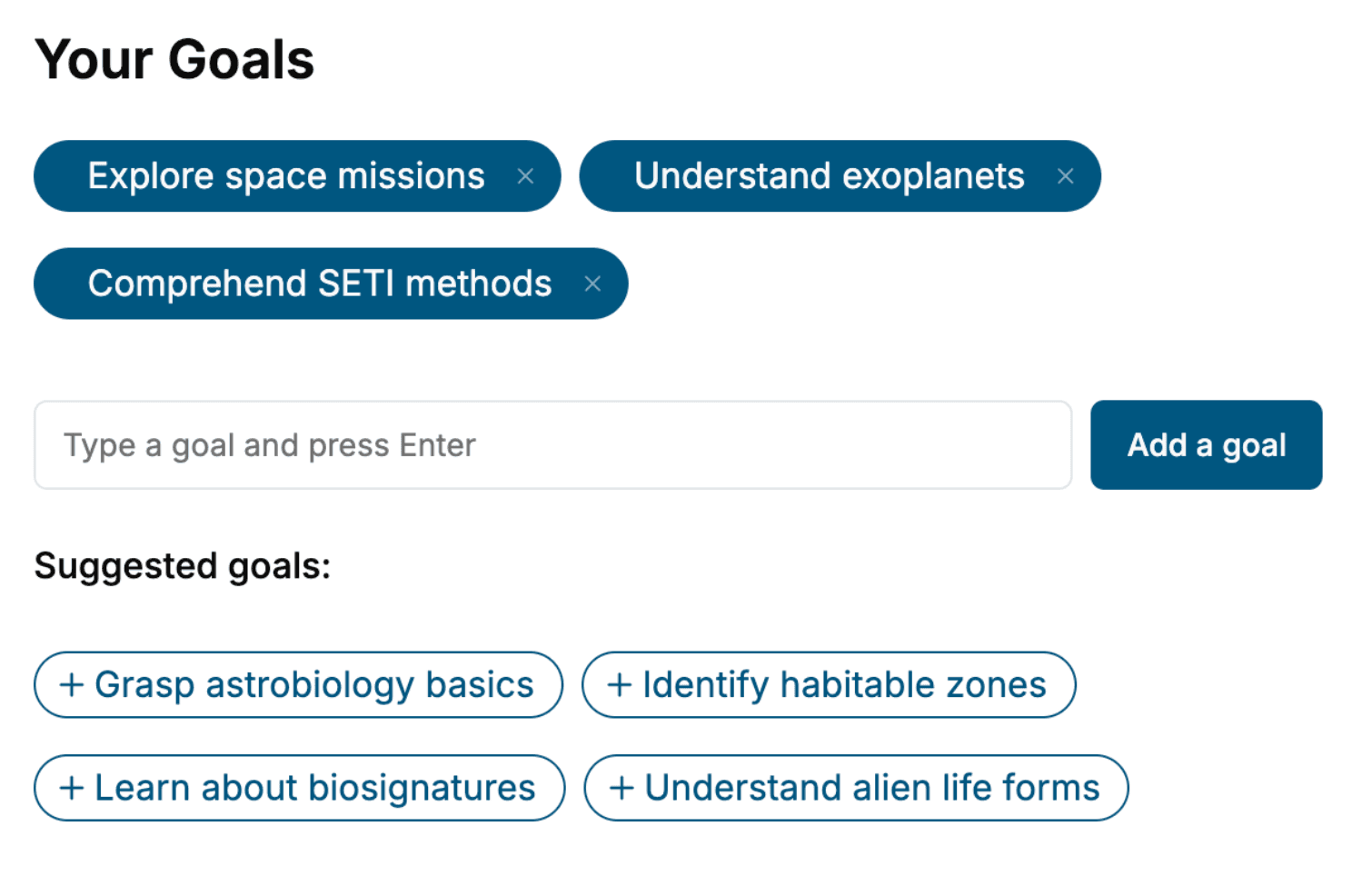
Select the focus of your Ancient History book and share your background
- 2. Personalize your book
Specify your goals and choose sub-topics to include
- 3. Get your tailored book
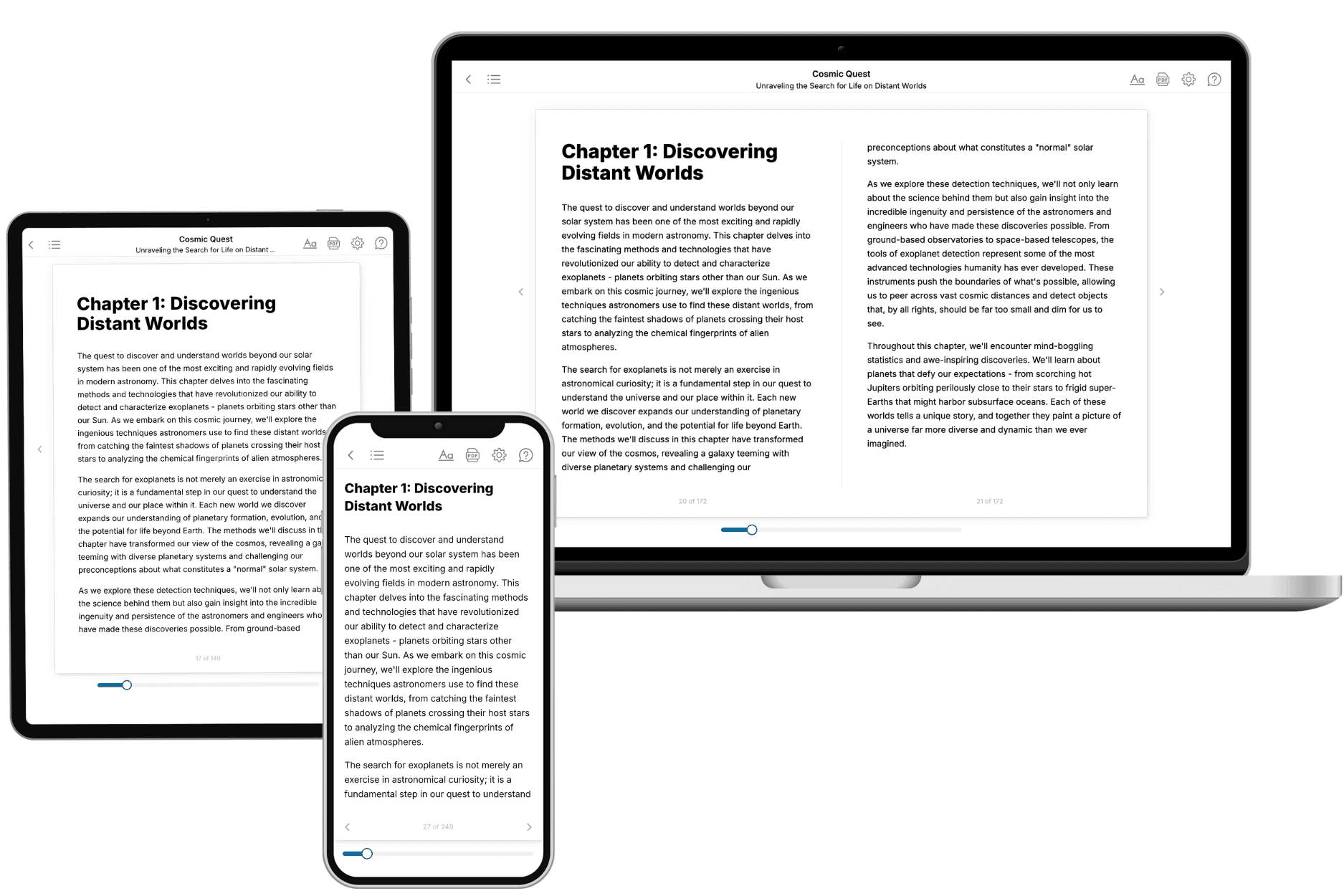
Your book is ready in 10 minutes. Read it online, download as EPUB or PDF, or send to Kindle.

Frequently asked questions
- What is TailoredRead?
TailoredRead creates complete, full-length nonfiction ebooks, written specifically for you. Tell us what you want to learn and why, and TailoredRead writes you a complete ebook on it, with charts, tables, and diagrams throughout. Read it online, on Kindle, or on any e-reader, or download it as a PDF or EPUB. Every book is written fresh the day you order it.
- How is the book tailored to me?
Before anything is written, you answer a few short questions about your goals, your background, and the topics you care about. Your book is then planned around your answers: written at your level, focused on your goals, and covering the topics you chose, instead of the one-size-fits-all book a store sells everyone.
- Will it read like generic AI content?
No. Your book isn't a chat transcript: it's planned chapter by chapter before a single word is written, told in a clear book voice, and explains ideas visually with charts, tables, and diagrams. After writing, every book goes through an editorial pass that polishes chapters so the book reads consistent from start to finish. Judge for yourself: browse thousands of sample books on our Explore Books page.
- How accurate is the content?
Our AI first checks whether your subject needs live research. Niche and fast-moving subjects are researched before writing, and the book plan and chapters are grounded in what it finds. After writing, every book goes through a quality pass that checks its facts and consistency, and researched books list their sources in a Notes section at the back.
- How long is the book?
You choose the length: Comprehensive (250-300 pages), Detailed (150-200 pages), Essential (70-100 pages), or Short (30-50 pages).
- Does the book include visuals?
Yes. Every book includes charts, tables, and diagrams: timelines, checklists, step-by-step guides, decision trees, comparison tables, matrices, and bar charts. A typical book includes dozens of these visual elements.
- Can I read it on Kindle? What formats can I download?
Yes. Every book can be read in our online reader or downloaded as a PDF or EPUB. The EPUB can be opened with Kindle, Apple Books, Kobo, and any e-reader. The Commercial and Author licenses also include an editable Word (DOCX) and Markdown download.
- How much does it cost?
About the price of a regular ebook. The exact price depends on your book's length and complexity, from $2 for the shortest books to $35 for the most comprehensive, and it's shown when you review your book, before you commit to anything. Each book is a one-time purchase, yours to keep, no subscription. Licenses that let you share, teach, or publish your book range from $35.99 to $49.99.
- Can I preview the book before purchasing?
Before you pay, you'll see what your book will cover: the title, a detailed description, the estimated length, and the complete chapter-by-chapter table of contents, so you know what you're getting before you decide. The full text itself is written after you purchase.
- How long does it take to create a book?
About 10 minutes. You can start reading the opening chapters while the rest is still being written.