Crafting Clarity
A Retired Writer's Guide to Mastering Sentence Structure and Flow
Picture yourself confidently crafting prose that flows effortlessly, captivating readers with its clarity and style.
253 pages13 chaptersJul 17, 2025WritingCreated by L
About this book
In "Crafting Clarity," you'll discover the tools to elevate your writing from good to exceptional. This comprehensive guide is tailored for retired professionals who are passionate about honing their writing skills. You'll delve into the intricacies of English grammar, mastering everything from verb conjugation to the nuanced use of punctuation. Learn to construct sentences that are not just grammatically correct, but also engaging and impactful. Develop your unique voice while navigating the balance between active and passive voice, and discover how to use transitional phrases to create seamless paragraphs. Whether you're working on a memoir, crafting business communications, or simply aiming to express yourself more effectively, "Crafting Clarity" provides the roadmap to elevate your writing. By the end of this journey, you'll approach your writing with renewed confidence, armed with strategies to edit, proofread, and refine your work to professional standards.
Table of contents
- IntroductionWhy Writing Matters in Retirement, Overview of the Book, How to Use This GuideRead below
- Chapter 1: Foundations of Effective WritingGrammar Basics Refresher, Understanding Parts of Speech, Key Components of a Sentence, Common Grammatical Mistakes to Avoid
- Chapter 2: Mastering Sentence StructureTypes of Sentences, Subject-Verb Agreement, Independent and Dependent Clauses, Phrases and Their Functions
- Chapter 3: Punctuation MasteryComma Usage and Common Errors, Semicolons and Colons: When and How, Quotation Marks and Dialogue, Apostrophes: Possession and Contraction, Dashes and Hyphens: Clarifying Meaning
- Chapter 4: Harnessing the Power of VerbsMastering Verb Tenses, Active vs. Passive Voice, Choosing Strong, Precise Verbs, Maintaining Verb Tense Consistency
- Chapter 5: Creating Sentence VarietyVarying Sentence Length, Diverse Sentence Openers, Techniques for Combining Sentences, Creating Rhythm and Flow
- Chapter 6: Achieving Clarity and ConcisenessEliminating Wordiness, Using Precise Language, Parallel Structure for Clarity, Proper Placement of Modifiers
- Chapter 7: Enhancing Coherence and CohesionEffective Use of Transitional Phrases, Structuring Paragraphs for Flow, Cohesive Devices in Writing, Ensuring Logical Progression of Ideas
- Chapter 8: Developing Your Writing StyleFinding Your Voice and Tone, Techniques for Descriptive Writing, Using Figurative Language Effectively, Writing with Audience Awareness
- Chapter 9: Overcoming Common Writing ChallengesDealing with Writer's Block, Fixing Run-on Sentences, Identifying and Correcting Sentence Fragments, Ensuring Pronoun Agreement
- Chapter 10: The Art of Editing and ProofreadingSelf-Editing Techniques, Effective Proofreading Strategies, Incorporating Feedback, The Revision Process: From Draft to Final Copy
- Chapter 11: Leveraging Digital Tools for Better WritingGrammar and Style Checkers, Writing Software and Apps, Online Writing Resources and Communities, Digital Organization for Writers
- Chapter 12: Applying Skills to Specialized WritingCreative Writing Techniques, Effective Business Writing, Crafting Compelling Memoirs, Writing for Blogs and Social Media
- Chapter 13: Continuous Improvement in WritingThe Connection Between Reading and Writing, Daily Writing Exercises and Prompts, Seeking and Utilizing Constructive Feedback, Embracing Lifelong Learning in Writing
- ConclusionKey Takeaways, Next Steps in Your Writing Journey
- AppendixGrammar and Writing Terms Glossary, Recommended Reading for Writers
Introduction
Welcome to "Crafting Clarity: A Retired Writer's Guide to Mastering Sentence Structure and Flow." This book is designed to be your companion on a journey of linguistic discovery and writing improvement. As you embark on this adventure, you'll find that the world of writing is not just about putting words on paper; it's about crafting messages that resonate, inform, and inspire. Whether you're revisiting your passion for writing in retirement or seeking to refine your skills for personal projects, this guide will provide you with the tools and insights needed to elevate your writing to new heights.
In the pages that follow, you'll explore the intricacies of English grammar, delve into the art of sentence construction, and uncover the secrets of creating prose that flows effortlessly. This introduction will set the stage for your learning journey, explaining why writing remains a vital skill in retirement, providing an overview of what you can expect from this book, and guiding you on how to make the most of the resources and exercises within these pages.
As you progress through this guide, remember that writing is both an art and a craft. It requires creativity and technical skill, intuition and learned techniques. The goal of this book is to help you blend these elements seamlessly, allowing you to express your thoughts with clarity, precision, and style. Whether you're working on a memoir, crafting business communications, or simply aiming to express yourself more effectively in your day-to-day life, the principles and practices outlined here will serve as invaluable tools in your writer's toolkit.
So, sharpen your pencils, open your mind, and prepare to embark on a transformative writing journey. By the time you reach the final page of this book, you'll approach your writing with renewed confidence, armed with strategies to edit, proofread, and refine your work to professional standards. Let's begin this exciting exploration of the written word together.
Why Writing Matters in Retirement
Retirement often brings with it a wealth of opportunities to explore new horizons, revisit old passions, and engage in activities that bring fulfillment and joy. Among these pursuits, writing stands out as a particularly valuable and enriching endeavor. Far from being a skill relegated to the professional world, writing takes on new significance in retirement, offering a myriad of benefits that contribute to personal growth, cognitive health, and social connection.
First and foremost, writing serves as a powerful tool for self-expression and reflection. As you enter this new chapter of life, you carry with you a lifetime of experiences, wisdom, and stories. Writing provides a medium through which you can explore these treasures, giving voice to your thoughts, memories, and insights. Whether you're penning a memoir, crafting fiction inspired by your life experiences, or simply journaling your daily reflections, the act of writing allows you to process your experiences and leave a lasting legacy for future generations.
Moreover, engaging in regular writing activities can have significant cognitive benefits. Research has shown that writing exercises various parts of the brain, promoting neural plasticity and potentially helping to maintain cognitive function as we age[1]. The process of organizing thoughts, crafting sentences, and revising your work engages multiple cognitive processes, including memory, language processing, and executive function. This mental workout can contribute to keeping your mind sharp and agile throughout your retirement years.
Writing also offers a unique opportunity for continued learning and personal development. As you hone your writing skills, you'll find yourself delving into new subjects, researching topics of interest, and expanding your vocabulary. This pursuit of knowledge and skill development can be incredibly rewarding, providing a sense of accomplishment and growth that is vital for maintaining a positive outlook in retirement. Furthermore, the discipline required for regular writing practice can help structure your days, providing a sense of purpose and routine that many find beneficial in retirement.
In today's digital age, writing skills remain crucial for effective communication. Whether you're staying in touch with family and friends via email, participating in online forums, or managing your personal affairs, clear and concise writing is essential. Strong writing skills can enhance your ability to express your needs, share your thoughts, and engage with the world around you. This is particularly important as more aspects of daily life move online, making written communication an increasingly prevalent part of social interaction and personal management.
Writing can also open doors to new social connections and communities. Joining writing groups, participating in workshops, or sharing your work online can lead to meaningful interactions with like-minded individuals. These connections can combat feelings of isolation that sometimes accompany retirement, providing a sense of belonging and shared purpose. Whether you're giving and receiving feedback on writing projects or simply discussing your literary interests, these interactions can enrich your social life and broaden your perspectives.
For those looking to supplement their retirement income or engage in volunteer work, writing skills can be a valuable asset. Freelance writing opportunities, from content creation to editing services, are abundant in the digital marketplace. Your years of experience and unique perspective as a retiree can be particularly valuable in certain niches. Additionally, many non-profit organizations and community groups are in constant need of volunteers with strong writing skills for grant applications, newsletters, and other communications.
Writing also serves as a powerful tool for advocacy and change. As a retiree, you may find yourself with more time to engage with issues that matter to you. Whether it's writing letters to local representatives, crafting op-eds for newspapers, or creating content for community organizations, your writing can amplify your voice and contribute to meaningful discussions on important topics.
Lastly, writing can be a source of immense personal satisfaction and joy. The act of creating, of bringing ideas to life on the page, can be deeply fulfilling. Whether you're crafting a novel that's been brewing in your mind for years, documenting family histories for future generations, or simply enjoying the process of putting pen to paper, writing can bring a sense of accomplishment and pleasure that enriches your retirement years.
In conclusion, writing matters in retirement because it offers a unique combination of cognitive stimulation, personal expression, continued learning, social connection, and potential for both personal and community impact. As you embark on this writing journey, remember that the skills you develop and refine will serve you in countless ways, enhancing not just your ability to communicate, but also your overall quality of life in retirement. Embrace the power of the written word, and discover the myriad ways in which writing can enrich this exciting chapter of your life.
Overview of the Book
"Crafting Clarity: A Retired Writer's Guide to Mastering Sentence Structure and Flow" is designed to be a comprehensive resource for retirees looking to enhance their writing skills. This book is structured to take you on a journey from the fundamental building blocks of writing to advanced techniques that will help you develop your unique style and voice. Each chapter builds upon the previous ones, creating a logical progression that allows you to gradually deepen your understanding and mastery of writing techniques.
The book begins with Chapter 1, "Foundations of Effective Writing," which serves as a refresher course on grammar basics. This chapter covers essential topics such as parts of speech, key components of a sentence, and common grammatical mistakes to avoid. Even if you consider yourself well-versed in grammar, this chapter provides a valuable opportunity to brush up on these fundamental concepts, ensuring a solid foundation for the more advanced topics to come.
Chapter 2, "Mastering Sentence Structure," delves deeper into the mechanics of constructing effective sentences. You'll explore different types of sentences, learn about subject-verb agreement, and understand the roles of independent and dependent clauses. This chapter aims to give you the tools to create varied and grammatically sound sentences that will engage your readers and convey your ideas clearly.
In Chapter 3, "Punctuation Mastery," you'll discover how to use punctuation marks effectively to enhance the clarity and impact of your writing. From the nuances of comma usage to the strategic deployment of semicolons and colons, this chapter will help you master the art of punctuation. You'll also learn about quotation marks, apostrophes, and the often-misunderstood dashes and hyphens, all of which play crucial roles in conveying precise meaning in your writing.
Chapter 4, "Harnessing the Power of Verbs," focuses on one of the most dynamic elements of writing. You'll explore verb tenses, the distinction between active and passive voice, and techniques for choosing strong, precise verbs that energize your prose. This chapter will help you maintain consistency in your verb usage while adding vigor and clarity to your writing.
Moving on to Chapter 5, "Creating Sentence Variety," you'll learn how to keep your readers engaged by varying your sentence structure. This chapter covers techniques for altering sentence length, diversifying sentence openers, and combining sentences effectively. You'll also discover how to create rhythm and flow in your writing, making your prose more engaging and enjoyable to read.
Chapter 6, "Achieving Clarity and Conciseness," addresses one of the most critical aspects of effective writing. You'll learn strategies for eliminating wordiness, using precise language, and employing parallel structure to enhance clarity. This chapter also covers the proper placement of modifiers, a common source of confusion in writing that, when mastered, can significantly improve the clarity of your prose.
In Chapter 7, "Enhancing Coherence and Cohesion," you'll explore techniques for creating smooth transitions between ideas and ensuring logical progression in your writing. This chapter covers the effective use of transitional phrases, strategies for structuring paragraphs to enhance flow, and the deployment of cohesive devices to create a seamless reading experience.
Chapter 8, "Developing Your Writing Style," is where you'll begin to refine your unique voice as a writer. This chapter covers techniques for finding your tone, enhancing descriptive writing, using figurative language effectively, and writing with audience awareness. By the end of this chapter, you'll have the tools to craft prose that is not only clear and effective but also distinctly your own.
Chapter 9, "Overcoming Common Writing Challenges," addresses specific issues that many writers face, such as writer's block, run-on sentences, sentence fragments, and pronoun agreement problems. This practical chapter provides strategies for identifying and overcoming these common hurdles, helping you to produce more polished and professional writing.
Chapter 10, "The Art of Editing and Proofreading," is crucial for taking your writing from good to great. You'll learn self-editing techniques, effective proofreading strategies, and how to incorporate feedback into your revision process. This chapter will guide you through the stages of refining your work, from first draft to final copy.
In Chapter 11, "Leveraging Digital Tools for Better Writing," you'll explore how technology can aid your writing process. From grammar and style checkers to specialized writing software and online resources, this chapter will help you navigate the digital landscape of writing tools, enhancing your efficiency and effectiveness as a writer.
Chapter 12, "Applying Skills to Specialized Writing," shows you how to adapt the skills you've learned to specific types of writing. Whether you're interested in creative writing, business communication, memoir writing, or blogging, this chapter provides targeted advice for excelling in these areas.
The final chapter, "Continuous Improvement in Writing," emphasizes the ongoing nature of developing as a writer. You'll explore the connection between reading and writing, discover daily writing exercises and prompts to keep your skills sharp, and learn strategies for seeking and utilizing constructive feedback. This chapter underscores the importance of embracing lifelong learning in your writing journey.
Throughout the book, you'll find practical exercises, real-world examples, and tips from experienced writers to help you apply the concepts you're learning. By the time you reach the conclusion, you'll have a comprehensive toolkit of writing strategies and techniques at your disposal, ready to be applied to any writing project you undertake.
Remember, this book is designed to be more than just a one-time read. It's a resource you can return to again and again as you continue to develop your writing skills. Whether you're looking to brush up on a specific aspect of writing or seeking inspiration for your next project, "Crafting Clarity" will be your trusted companion on your writing journey.
How to Use This Guide
To get the most out of "Crafting Clarity: A Retired Writer's Guide to Mastering Sentence Structure and Flow," it's important to approach the book with a strategy that aligns with your learning style and writing goals. This guide is designed to be flexible, allowing you to tailor your learning experience to your specific needs. Here are some suggestions on how to effectively use this book to enhance your writing skills.
First and foremost, consider reading the book from cover to cover. While it may be tempting to jump directly to chapters that address your perceived weaknesses, the book is structured to build your skills progressively. Each chapter builds upon the concepts introduced in previous sections, creating a comprehensive understanding of writing techniques. By following the book's sequence, you'll ensure that you have a solid foundation in the basics before moving on to more advanced concepts.
As you read, engage actively with the material. Don't just passively consume the information; instead, take notes, highlight key points, and jot down questions or insights that arise as you read. This active engagement will help you internalize the concepts more effectively and make it easier to review important points later. Consider keeping a dedicated notebook or digital document for this purpose, creating your own personalized summary of the book's key teachings.
Take advantage of the exercises and practical applications provided throughout the book. These are not mere filler; they are carefully designed to help you apply the concepts you're learning in real-world writing scenarios. Set aside time to complete these exercises thoroughly. Remember, writing is a skill that improves with practice, so the more you engage with these hands-on activities, the more you'll benefit from the book's teachings.
Don't rush through the material. While it may be tempting to quickly read through the entire book, taking your time with each chapter will yield better results. Consider setting a realistic schedule for yourself, perhaps dedicating a week or two to each chapter. This approach allows you to fully absorb the information, complete the exercises, and reflect on how you can apply the concepts to your own writing projects.
As you work through the book, start applying the techniques you learn to your current writing projects. Whether you're working on a memoir, crafting emails, or writing for a blog, consciously incorporate the new skills you're acquiring. This immediate application will reinforce your learning and help you see the practical benefits of the techniques you're studying.
Consider forming a study group or finding a writing partner to work through the book together. Discussing the concepts with others can provide new perspectives and insights. You can share your writing exercises, offer feedback to each other, and discuss how you're applying the book's teachings in your writing. This collaborative approach can make the learning process more engaging and help you stay motivated.
Don't hesitate to revisit chapters or sections that you find particularly challenging or relevant to your writing needs. The book is designed to be a resource that you can return to repeatedly. As you progress in your writing journey, you may find that certain concepts take on new meaning or relevance. Rereading sections with your evolving perspective can deepen your understanding and reveal new insights.
Make use of the additional resources mentioned in the book. These may include recommended readings, online tools, or writing communities. Exploring these supplementary materials can broaden your understanding and provide additional contexts for applying the book's teachings.
Keep a writing journal alongside your study of the book. Use this journal to track your progress, note areas where you see improvement, and identify aspects of your writing that still need work. This reflective practice can help you stay aware of your growth as a writer and guide your focus as you continue to learn.
Finally, be patient with yourself. Improving your writing skills is a gradual process that requires consistent effort and practice. Celebrate your progress, no matter how small, and don't be discouraged by setbacks. Every writer, no matter how experienced, is on a continuous journey of improvement.
Remember, "Crafting Clarity" is more than just a book; it's a companion on your writing journey. By actively engaging with its content, practicing regularly, and applying its teachings to your writing, you'll find yourself crafting clearer, more engaging prose. Whether you're writing for personal enjoyment, professional purposes, or to leave a legacy for future generations, the skills you develop through this guide will serve you well in all your writing endeavors.
As you embark on this journey to enhance your writing skills, keep in mind that the ultimate goal is not perfection, but progress. Each step you take in improving your writing is a step towards more effective communication, greater self-expression, and the joy of crafting words that truly resonate with your readers. So, open the book, pick up your pen (or open your laptop), and let's begin this exciting journey into the world of clear, engaging, and impactful writing.
Notes
Introduction
- 1. E. A. Maguire and others, "London taxi drivers and bus drivers," Hippocampus, 2006
This is the end of the free sample. The full book has 13 chapters.
Want this book written for you?
Tell us your goals and background, and get your own version of this book, tailored by AI to you.


Benefits of AI-tailored books
- Read one book, not ten:
- all the Writing knowledge you need, gathered into a single book.
- Save days of learning:
- tell us your goals, choose your topics, and the whole book is built around them.
- Learn effortlessly:
- Writing book written for your specific background and expertise.
- Understand at a glance:
- includes charts, tables, timelines, checklists, decision trees, and more.
- Stay current:
- written the day you order it, not years ago.
- Trust what you read:
- every book is checked for accuracy, with real research when your subject needs it.
Create your unique book in 3 steps
- 1. Select your focus
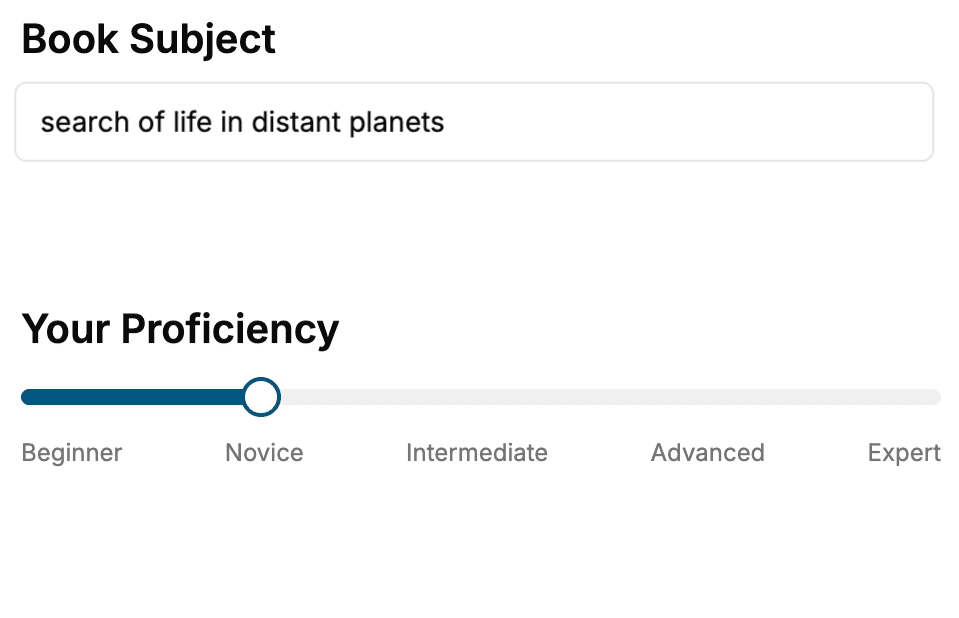
Select the focus of your Writing book and share your background
- 2. Personalize your book
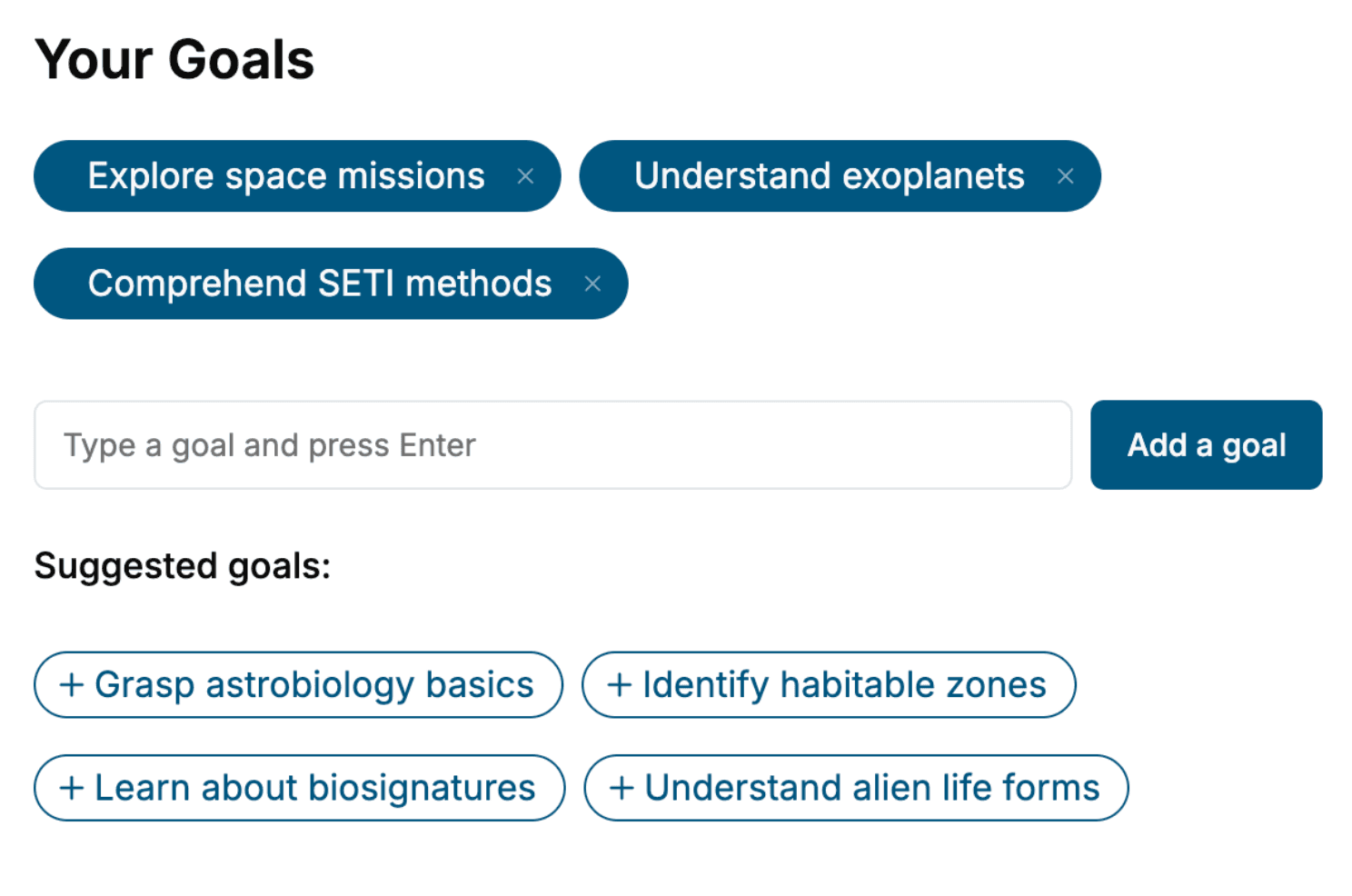
Specify your goals and choose sub-topics to include
- 3. Get your tailored book
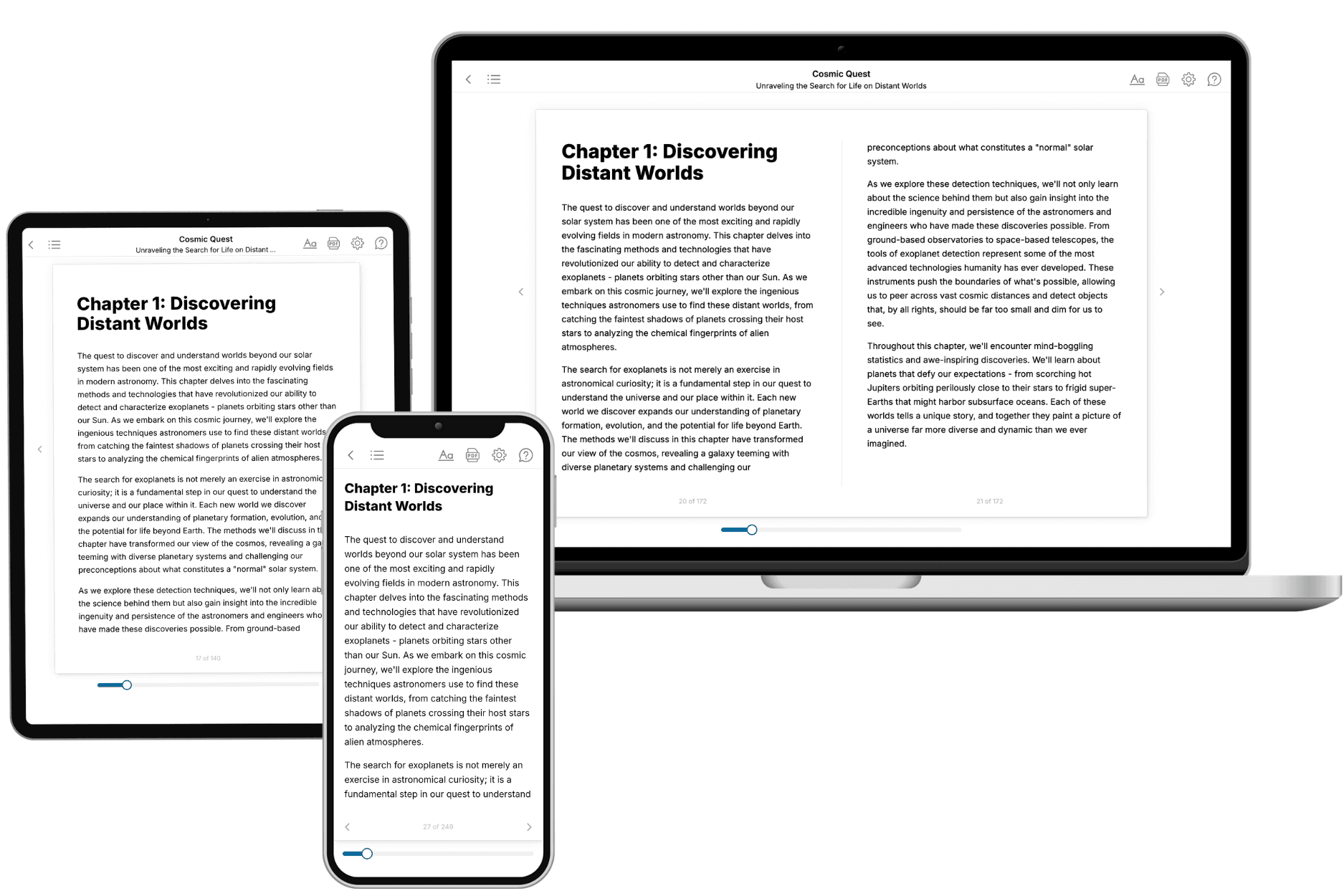
Your book is ready in 10 minutes. Read it online, download as EPUB or PDF, or send to Kindle.
Frequently asked questions
- What is TailoredRead?
TailoredRead creates complete, full-length nonfiction ebooks, written specifically for you. Tell us what you want to learn and why, and TailoredRead writes you a complete ebook on it, with charts, tables, and diagrams throughout. Read it online, on Kindle, or on any e-reader, or download it as a PDF or EPUB. Every book is written fresh the day you order it.
- How is the book tailored to me?
Before anything is written, you answer a few short questions about your goals, your background, and the topics you care about. Your book is then planned around your answers: written at your level, focused on your goals, and covering the topics you chose, instead of the one-size-fits-all book a store sells everyone.
- Will it read like generic AI content?
No. Your book isn't a chat transcript: it's planned chapter by chapter before a single word is written, told in a clear book voice, and explains ideas visually with charts, tables, and diagrams. After writing, every book goes through an editorial pass that polishes chapters so the book reads consistent from start to finish. Judge for yourself: browse thousands of sample books on our Explore Books page.
- How accurate is the content?
Our AI first checks whether your subject needs live research. Niche and fast-moving subjects are researched before writing, and the book plan and chapters are grounded in what it finds. After writing, every book goes through a quality pass that checks its facts and consistency, and researched books list their sources in a Notes section at the back.
- How long is the book?
You choose the length: Comprehensive (250-300 pages), Detailed (150-200 pages), Essential (70-100 pages), or Short (30-50 pages).
- Does the book include visuals?
Yes. Every book includes charts, tables, and diagrams: timelines, checklists, step-by-step guides, decision trees, comparison tables, matrices, and bar charts. A typical book includes dozens of these visual elements.
- Can I read it on Kindle? What formats can I download?
Yes. Every book can be read in our online reader or downloaded as a PDF or EPUB. The EPUB can be opened with Kindle, Apple Books, Kobo, and any e-reader. The Commercial and Author licenses also include an editable Word (DOCX) and Markdown download.
- How much does it cost?
About the price of a regular ebook. The exact price depends on your book's length and complexity, from $2 for the shortest books to $35 for the most comprehensive, and it's shown when you review your book, before you commit to anything. Each book is a one-time purchase, yours to keep, no subscription. Licenses that let you share, teach, or publish your book range from $35.99 to $49.99.
- Can I preview the book before purchasing?
Before you pay, you'll see what your book will cover: the title, a detailed description, the estimated length, and the complete chapter-by-chapter table of contents, so you know what you're getting before you decide. The full text itself is written after you purchase.
- How long does it take to create a book?
About 10 minutes. You can start reading the opening chapters while the rest is still being written.