CUDA Mastery
From GPU Fundamentals to High-Performance Parallel Computing
You're about to transform your understanding of parallel computing by mastering NVIDIA CUDA, the industry-standard platform powering everything from AI training to scientific simulations.
222 pages10 chaptersAug 7, 2026CUDA
About this book
This book guides you through the complete journey of GPU-accelerated development, starting with the fundamental concepts of parallel computing and GPU architecture, then progressing through practical kernel implementation, memory optimization, and real-world performance tuning. You'll learn how to think in parallel, understand the intricate relationship between your code and GPU hardware, and apply proven optimization techniques that separate amateur implementations from production-grade systems. Whether you're accelerating machine learning pipelines, scientific computations, or data processing workflows, you'll gain the knowledge to make informed architectural decisions, leverage CUDA's rich ecosystem of libraries, and write code that truly harnesses the computational power of modern GPUs. By the end, you'll have the skills to profile, debug, and optimize GPU applications while understanding the trade-offs between performance, portability, and development complexity.
Table of contents
- IntroductionWhy GPU Computing Matters Today, CUDA in the Modern Computing Landscape, What You'll Learn and How to Use This BookRead below
- Chapter 1: GPU Architecture and Parallel Computing FundamentalsCPU vs. GPU: Design Philosophy and Trade-offs, Inside the GPU: Streaming Multiprocessors and Memory Hierarchy, Thinking in Parallel: From Sequential to Concurrent Execution
- Chapter 2: The CUDA Ecosystem and Development EnvironmentCUDA Toolkit Components and Installation, NVCC: Compiling CUDA Code for Different Architectures, Compute Capability: Understanding GPU Architecture Versions, Setting Up Your Development Workflow
- Chapter 3: Thread Hierarchy and Kernel Execution ModelThreads, Blocks, and Grids: The Execution Hierarchy, Warps and SIMT Execution: How GPUs Really Run Code, Launching Kernels: Configuration and Synchronization
- Chapter 4: Memory Hierarchy and Data ManagementLocal, Shared, Global, and Texture Memory: Choosing the Right Storage, Coalesced Memory Access: The Key to Bandwidth Efficiency, Host-Device Data Transfer and Minimizing Overhead, Memory Optimization Strategies and Patterns
- Chapter 5: Writing and Optimizing KernelsKernel Function Fundamentals and C/C++ Extensions, Block Synchronization and Thread Communication, Occupancy, Register Usage, and Performance Tuning
- Chapter 6: Heterogeneous Programming: CPU-GPU CollaborationThe Host-Device Programming Model, Asynchronous Kernel Execution and Streams, Unified Memory: Simplifying Data Management
- Chapter 7: Leveraging CUDA Accelerated LibrariescuDNN: Accelerating Deep Learning Workloads, TensorRT: Optimizing Inference Performance, NCCL: Multi-GPU Communication and Collective Operations, Integrating Libraries into Your Applications
- Chapter 8: Profiling, Debugging, and Performance AnalysisNVIDIA Nsight and Profiling Tools, Understanding Performance Metrics and Bottlenecks, Debugging CUDA Applications Effectively
- Chapter 9: Advanced Optimization TechniquesWarp-Level Primitives and Shuffle Operations, PTX Assembly and Low-Level Optimization, Algorithm Design for GPU Execution
- Chapter 10: Modern CUDA: Python, DSLs, and Future DirectionsPython Bindings and High-Level Interfaces, cuTile: Python DSL for Productive GPU Programming, Emerging Trends and the Future of CUDA Development
- ConclusionYour Path to CUDA Mastery, Next Steps and Continued Learning
- Glossary
- Further Reading and Resources
Introduction
A single modern GPU contains thousands of small processing cores, all capable of running code simultaneously. That fact alone changes what software can do. Problems that once took hours on a CPU cluster can finish in minutes on a single GPU-equipped workstation. Scientific simulations, neural network training, image processing pipelines, financial modeling — all of these have been fundamentally reshaped by the availability of affordable, programmable GPU hardware. CUDA is the platform that makes that hardware accessible to developers who want to go beyond graphics and use those thousands of cores for general-purpose computation.
CUDA has been around long enough to mature into a stable, well-documented platform with a rich ecosystem of tools, libraries, and community knowledge. At the same time, it keeps evolving. Recent toolkit releases have dropped support for older GPU architectures, introduced new Python-friendly programming interfaces, and expanded library support for the latest hardware features. That combination of stability and forward momentum makes now a genuinely good time to invest in learning CUDA deeply, not just well enough to run someone else's code.
This book is written for developers who already know how to program and want to understand GPU computing from the ground up. The goal is not to give a surface-level tour of CUDA's API. The goal is to build the mental models that let you write efficient parallel code, diagnose performance problems, and make sound architectural decisions. That means covering hardware concepts, memory management, kernel design, profiling, and the growing ecosystem of libraries and high-level tools — all in a way that connects theory to practice at every step.
The chapters ahead move from fundamentals to advanced techniques in a deliberate sequence. Each concept builds on the previous one, so the order matters. That said, if you already have experience with specific topics, the structure makes it easy to skip ahead and return to earlier sections when you need to fill a gap. Concrete examples, annotated code, and practical frameworks appear throughout, because understanding CUDA without writing and reading real code is like learning to swim by reading about water.
Why GPU Computing Matters Today
The case for GPU computing is not abstract. Consider matrix multiplication, one of the most common operations in machine learning. Multiplying two large matrices on a CPU means executing millions of multiply-and-add operations sequentially, or at best across a handful of CPU cores. A GPU can distribute those same operations across thousands of cores running in parallel, completing the work in a fraction of the time. That difference in throughput is not incremental — it is often measured in orders of magnitude for the right class of problem.
The reason GPUs are so effective at this kind of work comes down to design philosophy. CPUs are built to handle a wide variety of tasks quickly, with sophisticated branch prediction, large caches, and out-of-order execution logic. GPUs are built differently. They trade that general-purpose flexibility for raw throughput, packing in far more arithmetic units and optimizing for workloads where the same operation runs on many data points at once. The chapter on GPU architecture and parallel computing fundamentals covers this contrast in detail, including how Streaming Multiprocessors organize the actual execution of parallel work.
The practical impact of this design difference shows up across a wide range of fields. Deep learning is the most visible example. Training large neural networks requires enormous numbers of floating-point operations, and the GPU's parallel architecture maps almost perfectly onto that workload. But GPU computing also accelerates molecular dynamics simulations, computational fluid dynamics, genomics pipelines, real-time video processing, and financial risk modeling. The common thread is data parallelism: problems where the same computation needs to run on many independent data elements simultaneously.
It is also worth being clear about what GPUs are not good at. Workloads with complex branching logic, heavy sequential dependencies, or irregular memory access patterns do not benefit as much from GPU acceleration. A GPU running code that constantly diverges between different execution paths wastes much of its parallel capacity. Understanding when to use a GPU and when to stick with a CPU is itself a valuable skill, and one that this book addresses directly rather than assuming GPU acceleration is always the right answer.
The economic dimension matters too. GPU hardware has become widely accessible. Cloud providers offer GPU instances by the hour, and consumer-grade GPUs capable of serious parallel computation are available at reasonable prices. That accessibility has lowered the barrier to entry for GPU-accelerated development significantly. A developer who understands CUDA can now run production-grade parallel workloads without access to a supercomputer or a large infrastructure budget.
The demand for GPU computing skills has grown alongside that accessibility. Organizations building AI systems, scientific computing pipelines, and data-intensive applications consistently need developers who understand how to write efficient GPU code. Learning CUDA is not just technically interesting — it opens doors to some of the most challenging and well-compensated work in software engineering today.
CUDA in the Modern Computing Landscape
CUDA stands for Compute Unified Device Architecture. NVIDIA introduced it as a way to expose the GPU's parallel processing capabilities to general-purpose programs, not just graphics rendering. Before CUDA, developers who wanted to use GPU hardware for non-graphics computation had to express their algorithms in terms of graphics primitives, which was awkward and limiting. CUDA changed that by providing a C-based programming model that treats the GPU as a general-purpose parallel processor.
Today, CUDA is the dominant platform for GPU-accelerated computing. That dominance comes with real advantages. The ecosystem is mature, with extensive documentation, a large community, and a rich set of pre-built libraries covering deep learning, linear algebra, signal processing, and more. When you write CUDA code, you are working within a platform that has been refined over many years and tested against some of the most demanding computational workloads in existence.
The platform does have a significant constraint worth naming directly: vendor lock-in. CUDA runs only on NVIDIA GPUs. Code written for CUDA will not run on AMD or Intel GPUs without substantial rewriting. Alternative frameworks like OpenCL and HIP exist to address portability, but they come with trade-offs in tooling maturity and performance optimization depth. For many production environments, the performance and ecosystem advantages of CUDA outweigh the portability concern. For others, portability is a hard requirement. Understanding that trade-off clearly is part of making good architectural decisions.
The CUDA platform is more than just a programming language extension. The CUDA Toolkit includes the NVCC compiler, runtime libraries, debugging tools, profiling tools, and a growing collection of domain-specific libraries. The chapter on the CUDA ecosystem and development environment covers these components in detail, including how to set up a working development environment and understand the relationship between toolkit versions and GPU hardware capabilities.
One concept that comes up repeatedly in CUDA development is compute capability. This is a version number assigned to GPU architectures that indicates which hardware features are available. Different compute capability levels support different instruction sets, memory features, and concurrency mechanisms. Recent CUDA toolkit releases have dropped support for older architectures, which means that code targeting the latest toolkit features may not run on older hardware. The chapter on the CUDA ecosystem explains compute capability in depth and helps you understand how to target the right hardware for your use case.
The modern CUDA landscape also includes a growing set of high-level interfaces that make GPU programming more accessible. Python bindings, domain-specific languages like cuTile, and frameworks that abstract away low-level kernel management have expanded the audience for GPU computing well beyond C++ specialists. These tools do not replace the need to understand the underlying platform — in fact, they work best when the developer using them understands what is happening underneath. But they do change the day-to-day experience of GPU development for many practitioners. The final chapter on modern CUDA covers these tools and the direction the platform is heading.
CUDA's relationship with the broader AI and machine learning ecosystem deserves specific mention. Libraries like cuDNN and TensorRT are built on top of CUDA and provide highly optimized implementations of the operations that deep learning frameworks depend on. When you train a neural network using PyTorch or TensorFlow on an NVIDIA GPU, CUDA and these libraries are doing the heavy lifting underneath. Understanding CUDA gives you insight into why those frameworks behave the way they do, and it gives you the tools to optimize workloads that go beyond what the frameworks expose directly.
CUDA is not just a programming interface. It is the connective tissue between the software that researchers and engineers write and the hardware that makes large-scale parallel computation practical. Understanding it deeply means understanding how modern AI and scientific computing actually work at the execution level.
The platform continues to evolve. Recent toolkit versions have introduced new features, deprecated old ones, and expanded support for the latest GPU architectures. Staying current with CUDA development means paying attention to these changes, particularly around architecture support and new library capabilities. This book focuses on concepts and patterns that remain stable across versions while pointing out where specific version considerations matter.
What You'll Learn and How to Use This Book
This book is organized as a progressive journey through CUDA development. Each chapter builds on the previous one, starting with hardware fundamentals and moving through the full stack of GPU programming concepts. The sequence is intentional. Trying to write efficient kernels without understanding the thread hierarchy is frustrating. Trying to optimize memory access without understanding the memory hierarchy is guesswork. The structure is designed to give you the right foundation before introducing each new layer of complexity.
Here is a map of what each part of the book covers and why it matters:
- GPU Architecture and Parallel Computing Fundamentals — Covers the hardware design philosophy that makes GPUs different from CPUs, how Streaming Multiprocessors work, and how to start thinking about problems in parallel terms. This is the conceptual foundation everything else builds on.
- The CUDA Ecosystem and Development Environment — Walks through the CUDA Toolkit, the NVCC compiler, compute capability, and how to set up a productive development workflow. Practical setup before any code is written.
- Thread Hierarchy and Kernel Execution Model — Explains threads, blocks, grids, warps, and SIMT execution in detail. This is the core mental model for writing parallel kernels.
- Memory Hierarchy and Data Management — Covers local memory, shared memory, global memory, texture memory, coalesced memory access, and host-device data transfer. Memory management is where most performance is won or lost.
- Writing and Optimizing Kernels — Covers kernel function syntax, block synchronization, occupancy, register usage, and practical performance tuning techniques.
- Heterogeneous Programming: CPU-GPU Collaboration — Explains the host-device programming model, asynchronous execution with CUDA streams, and Unified Memory for simplified data management.
- Leveraging CUDA Accelerated Libraries — Covers cuDNN, TensorRT, and NCCL, explaining when and how to use pre-built optimized libraries instead of writing custom kernels.
- Profiling, Debugging, and Performance Analysis — Introduces NVIDIA Nsight and other profiling tools, explains how to read performance metrics, and covers practical debugging techniques for GPU code.
- Advanced Optimization Techniques — Covers warp-level primitives, PTX assembly, and algorithm design patterns that push GPU performance to its limits.
- Modern CUDA: Python, DSLs, and Future Directions — Covers Python CUDA bindings, the cuTile DSL, and the emerging trends shaping the future of GPU programming.
The book assumes you are comfortable with C or C++ at an intermediate level. You do not need to be an expert, but you should be able to read and write functions, work with pointers, and understand basic memory concepts like stack versus heap allocation. If you have Python experience but limited C++ background, the later chapters on Python interfaces will be immediately accessible, but the core chapters on kernel programming will require some patience with C++ syntax. The investment is worth it — understanding the C++ layer is what makes the Python abstractions meaningful rather than magical.
Each chapter includes concrete code examples and practical frameworks. The examples are designed to illustrate specific concepts clearly, not to be production-ready applications. Real GPU code involves many trade-offs and context-specific decisions that no single example can capture. The goal of each example is to make one concept concrete and memorable, so you can apply the underlying principle to your own problems.
A few practical suggestions for getting the most out of this material:
- Run the examples yourself. Reading code is useful. Running it, modifying it, and observing what changes is far more useful. Set up a CUDA development environment early and use it throughout.
- Profile before optimizing. The chapter on profiling and debugging makes this point in depth, but it bears stating here: assumptions about where performance bottlenecks live are frequently wrong. Measure first, then optimize.
- Understand the hardware model. CUDA's programming model is a direct reflection of the underlying hardware. The more clearly you understand how Streaming Multiprocessors, warps, and memory hierarchies work physically, the more intuitive the programming model becomes.
- Use the libraries. The chapter on accelerated libraries covers cuDNN, TensorRT, and NCCL. These libraries represent enormous amounts of optimization work. Use them for standard workloads and write custom kernels only when the libraries cannot meet your needs.
- Revisit earlier chapters as you progress. Concepts like warp execution and memory coalescing become much clearer after you have written a few kernels and seen their effects in a profiler. A second reading of the foundational chapters after working through the optimization chapters often produces significant new insight.
One thing this book does not do is pretend that GPU programming is simple. It is not. Writing correct parallel code requires careful attention to synchronization, memory access patterns, and the interaction between software structure and hardware behavior. Writing efficient parallel code adds another layer of complexity on top of correctness. The good news is that these challenges are learnable, and the mental models that make GPU programming tractable are not mysterious once they are explained clearly. That is what this book is designed to do.
The path from writing your first kernel to optimizing a production GPU application is a real journey with genuine milestones. The first milestone is understanding the thread hierarchy well enough to write a kernel that produces correct results. The second is understanding the memory hierarchy well enough to write a kernel that performs well. The third is understanding the profiling tools well enough to diagnose and fix performance problems systematically. Each of those milestones represents a qualitative shift in what you can build and how confidently you can build it.
By the time you reach the advanced optimization and modern CUDA chapters, you will have the foundation to engage with warp-level primitives, PTX assembly, and high-level Python interfaces from a position of genuine understanding rather than cargo-culting patterns from documentation. That depth of understanding is what separates developers who can use CUDA from developers who can master it. The distinction matters enormously in practice, because GPU performance problems are rarely solved by trying random optimizations. They are solved by understanding the hardware, measuring carefully, and applying the right technique to the right bottleneck.
The computing landscape will keep changing. New GPU architectures will arrive, toolkit versions will evolve, and new high-level interfaces will emerge. But the fundamental concepts covered in this book — parallel execution models, memory hierarchy management, the host-device programming model, and the principles of GPU algorithm design — are durable. They have remained relevant across many generations of GPU hardware and will continue to be relevant as the platform evolves. Building that durable foundation is the real purpose of everything that follows.
This is the end of the free sample. The full book has 10 chapters.
Want this book written for you?
Tell us your goals and background, and get your own version of this book, tailored by AI to you.


Benefits of AI-tailored books
- Read one book, not ten:
- all the CUDA knowledge you need, gathered into a single book.
- Save days of learning:
- tell us your goals, choose your topics, and the whole book is built around them.
- Learn effortlessly:
- CUDA book written for your specific background and expertise.
- Understand at a glance:
- includes charts, tables, timelines, checklists, decision trees, and more.
- Stay current:
- written the day you order it, not years ago.
- Trust what you read:
- every book is checked for accuracy, with real research when your subject needs it.
Create your unique book in 3 steps
- 1. Select your focus
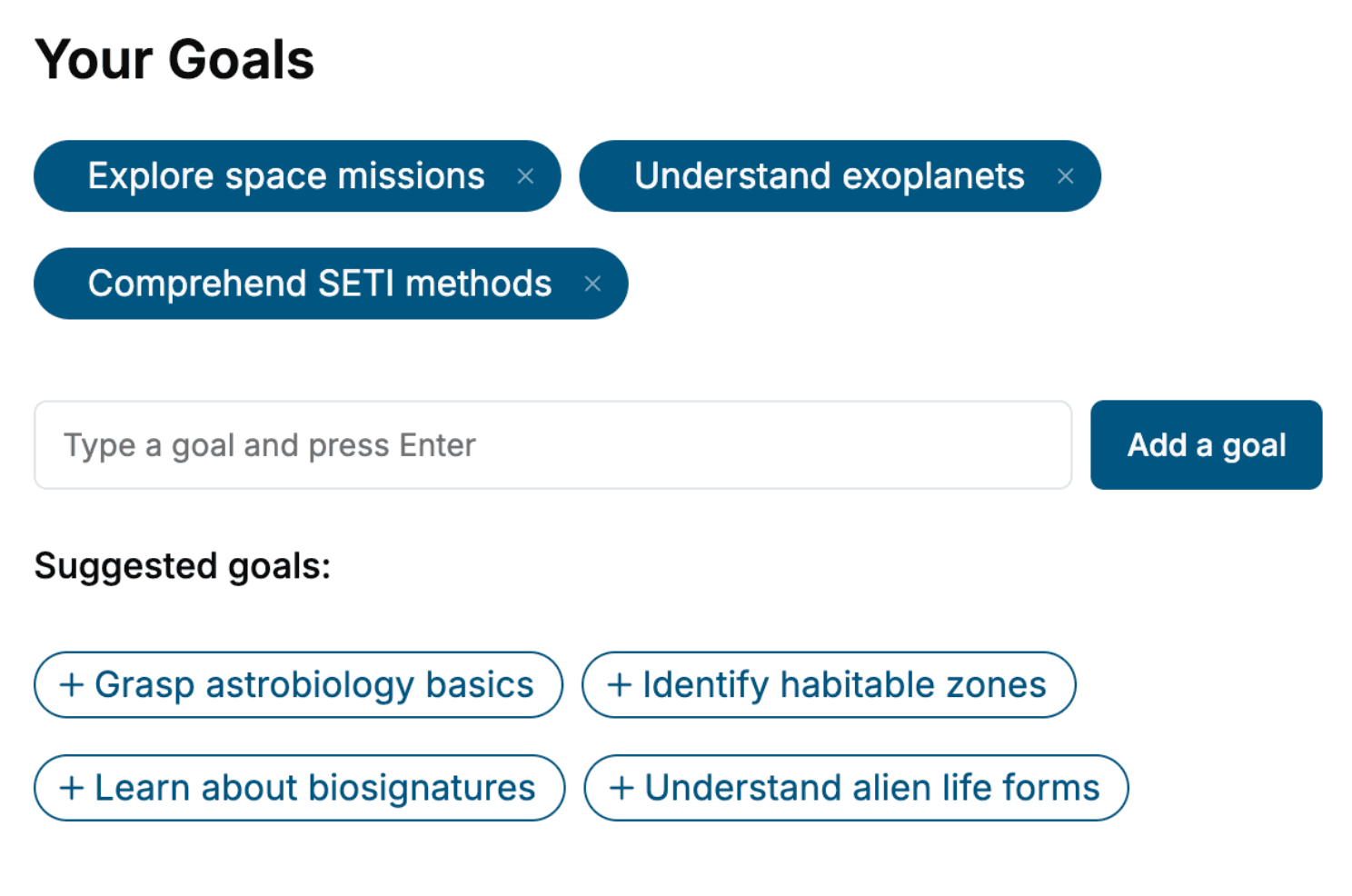
Select the focus of your CUDA book and share your background
- 2. Personalize your book
Specify your goals and choose sub-topics to include
- 3. Get your tailored book
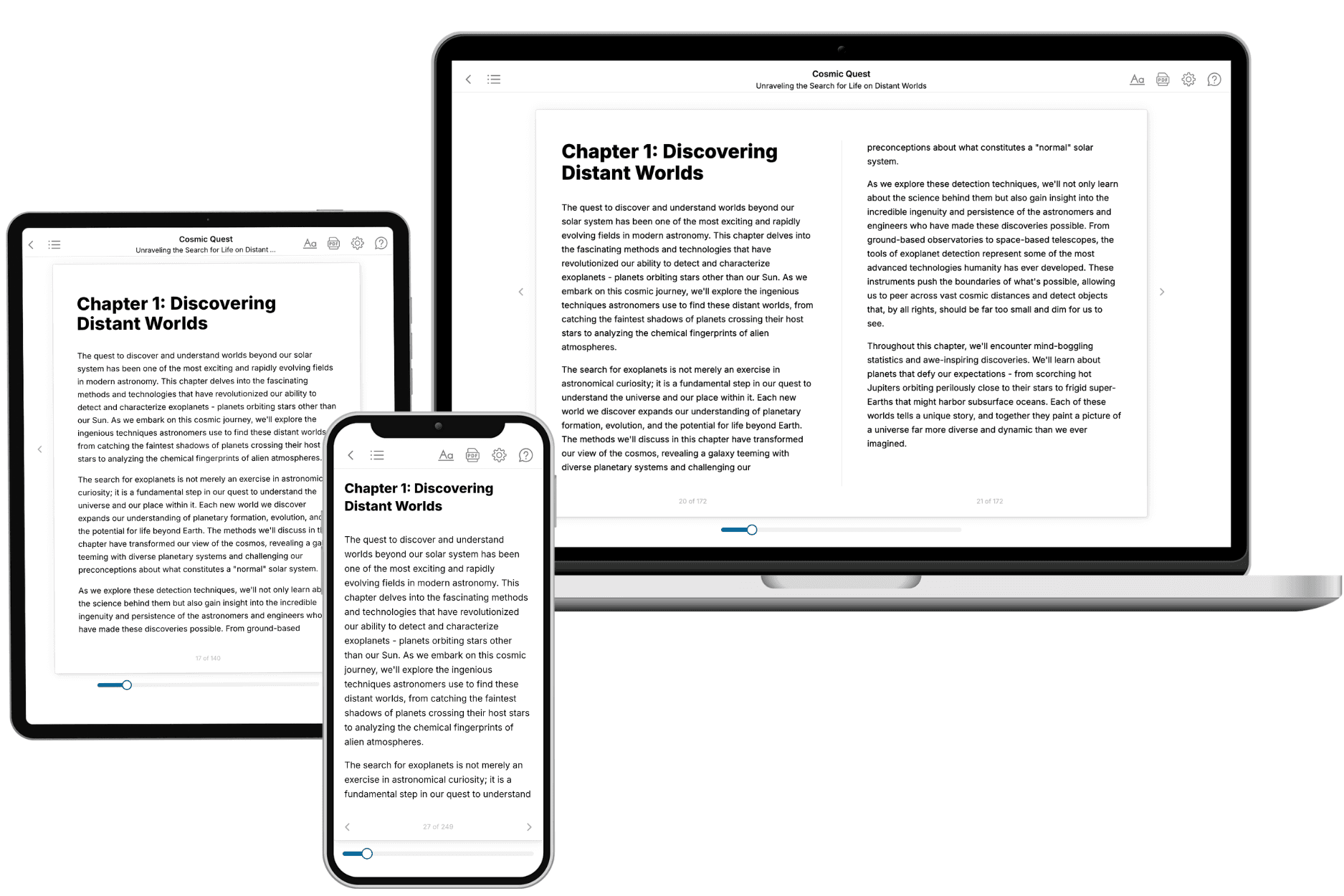
Your book is ready in 10 minutes. Read it online, download as EPUB or PDF, or send to Kindle.

Frequently asked questions
- What is TailoredRead?
TailoredRead creates complete, full-length nonfiction ebooks, written specifically for you. Tell us what you want to learn and why, and TailoredRead writes you a complete ebook on it, with charts, tables, and diagrams throughout. Read it online, on Kindle, or on any e-reader, or download it as a PDF or EPUB. Every book is written fresh the day you order it.
- How is the book tailored to me?
Before anything is written, you answer a few short questions about your goals, your background, and the topics you care about. Your book is then planned around your answers: written at your level, focused on your goals, and covering the topics you chose, instead of the one-size-fits-all book a store sells everyone.
- Will it read like generic AI content?
No. Your book isn't a chat transcript: it's planned chapter by chapter before a single word is written, told in a clear book voice, and explains ideas visually with charts, tables, and diagrams. After writing, every book goes through an editorial pass that polishes chapters so the book reads consistent from start to finish. Judge for yourself: browse thousands of sample books on our Explore Books page.
- How accurate is the content?
Our AI first checks whether your subject needs live research. Niche and fast-moving subjects are researched before writing, and the book plan and chapters are grounded in what it finds. After writing, every book goes through a quality pass that checks its facts and consistency, and researched books list their sources in a Notes section at the back.
- How long is the book?
You choose the length: Comprehensive (250-300 pages), Detailed (150-200 pages), Essential (70-100 pages), or Short (30-50 pages).
- Does the book include visuals?
Yes. Every book includes charts, tables, and diagrams: timelines, checklists, step-by-step guides, decision trees, comparison tables, matrices, and bar charts. A typical book includes dozens of these visual elements.
- Can I read it on Kindle? What formats can I download?
Yes. Every book can be read in our online reader or downloaded as a PDF or EPUB. The EPUB can be opened with Kindle, Apple Books, Kobo, and any e-reader. The Commercial and Author licenses also include an editable Word (DOCX) and Markdown download.
- How much does it cost?
About the price of a regular ebook. The exact price depends on your book's length and complexity, from $2 for the shortest books to $35 for the most comprehensive, and it's shown when you review your book, before you commit to anything. Each book is a one-time purchase, yours to keep, no subscription. Licenses that let you share, teach, or publish your book range from $35.99 to $49.99.
- Can I preview the book before purchasing?
Before you pay, you'll see what your book will cover: the title, a detailed description, the estimated length, and the complete chapter-by-chapter table of contents, so you know what you're getting before you decide. The full text itself is written after you purchase.
- How long does it take to create a book?
About 10 minutes. You can start reading the opening chapters while the rest is still being written.