DBA Mastery Blueprint
Core Principles and Advanced Skills for Database Administration
Many backend developers assume that database knowledge from application development translates directly to database administration—but DBA work requires a fundamentally different skill set.
238 pages11 chaptersNov 12, 2025Databases
About this book
You might be managing databases effectively within your application context, yet lack the operational expertise needed for production database management, disaster recovery, and enterprise-scale optimization. This book bridges that gap by providing a comprehensive roadmap for mastering database administration. You'll learn how to optimize query performance, implement robust backup and recovery strategies, configure high availability systems, and secure databases against threats. Whether you're managing on-premises databases or navigating cloud platforms like AWS or Azure, you'll discover practical strategies for automation, monitoring, and incident response that reduce downtime and operational costs. By the end, you'll have the knowledge and confidence to handle complex DBA responsibilities, troubleshoot critical issues, and design resilient database architectures that support business growth.
Table of contents
- IntroductionFrom Developer to DBA: Why Your Perspective Needs to Shift, What This Book Covers and How to Use It, Your DBA Journey: Building Operational ExcellenceRead below
- Chapter 1: Database Administration FundamentalsCore DBA Responsibilities and Scope, DBA Mindset: Reliability Over Features, Pillars of Operational Excellence
- Chapter 2: SQL Optimization and Query PerformanceAnalyzing Query Execution Plans, Indexing Strategies for Performance, Query Tuning Techniques and Best Practices, Continuous Performance Monitoring
- Chapter 3: Backup and Recovery StrategiesBackup Types and Recovery Models, Designing Recovery Plans and RTO/RPO, Testing and Validating Backups, Disaster Recovery Procedures
- Chapter 4: Database Security PracticesAuthentication and Authorization Models, Encryption at Rest and in Transit, Audit Logging and Compliance Requirements, Threat Mitigation and Vulnerability Management
- Chapter 5: High Availability ArchitectureHigh Availability Concepts and Patterns, Replication and Failover Mechanisms, Clustering Solutions and Load Balancing, Testing and Validating HA Configurations
- Chapter 6: Monitoring and AlertingBuilding a Comprehensive Monitoring Framework, Key Metrics and Health Indicators, Configuring Automated Alerts and Thresholds, Monitoring Tools and Dashboards
- Chapter 7: Automation and ScriptingBenefits and Risks of Automation, Scripting Languages for DBA Tasks, Automating Routine Maintenance Tasks, Governance and Change Control for Automation
- Chapter 8: Schema Change ManagementPlanning and Documenting Schema Changes, Migration Strategies and Zero-Downtime Deployments, Rollback Procedures and Risk Mitigation, Coordinating Changes Across Environments
- Chapter 9: Incident Response and TroubleshootingIncident Response Procedures and Escalation, Systematic Troubleshooting Methodology, Diagnosing Common Database Issues, Post-Incident Analysis and Prevention
- Chapter 10: Cloud Database AdministrationShifting to Cloud-Native Database Operations, Working with Managed Database Services, Performance and Cost Optimization in the Cloud, Security and Compliance in Cloud Environments
- Chapter 11: Performance Tuning at ScaleCapacity Planning and Resource Allocation, Advanced Performance Tuning Techniques, Optimizing Mixed Workloads
- ConclusionYour Path to DBA Mastery, Embracing Continuous Learning
- Glossary
- Further Reading and Resources
Introduction
You've been working with databases for years. You write efficient queries, design normalized schemas, and understand how to integrate databases into your C# applications. You might even handle database deployments and troubleshoot performance issues when they arise. But there's a nagging feeling that something is missing—a gap between what you know as a developer and what production database environments actually demand. That gap is database administration, and it's wider than most developers realize.
Database administration isn't simply an extension of database development. It requires a fundamental shift in perspective, priorities, and skills. As a developer, your primary focus is building features, implementing business logic, and delivering functionality. As a DBA, your mission is entirely different: ensuring databases remain available, performant, secure, and recoverable under all circumstances. This means thinking about failure scenarios before they happen, optimizing for long-term stability rather than short-term delivery, and accepting responsibility for systems that must run flawlessly even when you're not watching them. The stakes are higher, the consequences of mistakes more severe, and the operational demands more relentless.
This book exists to bridge that gap systematically. It's designed specifically for backend developers like you who already understand database fundamentals but need to develop the operational expertise that separates competent developers from effective DBAs. You'll learn not just what DBAs do, but why they do it, how to implement best practices in real-world environments, and how to develop the mindset that makes database administration successful. Whether you're transitioning into a formal DBA role, taking on more database responsibilities in your current position, or simply want to understand production database operations more deeply, this book provides the practical knowledge and strategic thinking you need.
The journey from developer to DBA isn't about memorizing commands or learning new tools—though you'll certainly do both. It's about understanding that databases are living systems that require constant attention, proactive management, and defensive planning. It's about recognizing that the query that runs perfectly in development might bring production to its knees under load. It's about accepting that backups are worthless until you've tested recovery, that high availability configurations fail unless you've validated failover procedures, and that security vulnerabilities exist in layers you haven't considered. This book will challenge assumptions you didn't know you had and introduce you to problems you didn't know existed.
From Developer to DBA: Why Your Perspective Needs to Shift
The transition from database development to database administration requires more than acquiring new technical skills—it demands a complete reorientation of priorities, risk assessment, and operational thinking. As a developer, you're trained to build, innovate, and deliver features that create business value. Your success is measured by functionality shipped, bugs fixed, and features completed. Database administrators operate under entirely different constraints. Your success as a DBA is measured by what doesn't happen: systems that don't fail, data that doesn't get lost, performance that doesn't degrade, and security breaches that never occur. This shift from creation to preservation, from innovation to stability, represents the fundamental difference between these roles.
Consider how developers and DBAs approach the same database differently. When you write application code, you focus on correctness, efficiency, and maintainability within the scope of your application. You optimize queries to return results quickly, design schemas that support your business logic, and handle database connections appropriately. These are important skills, but they represent only a fraction of what production databases require. A DBA must think about that same database under extreme load conditions, during hardware failures, when malicious actors attempt unauthorized access, and during the chaos of a 3 AM outage when every minute of downtime costs the business thousands of dollars. The DBA's perspective encompasses scenarios that developers rarely encounter during normal development work.
The risk tolerance between these roles differs dramatically. Developers work in environments where mistakes can be caught, fixed, and redeployed relatively quickly. If a bug makes it to production, you roll back the deployment, fix the code, and redeploy. The impact is usually contained and reversible. Database administration operates under much stricter constraints. A poorly planned schema change can lock tables for hours, bringing down production systems. A misconfigured backup can mean permanent data loss when disaster strikes. A security misconfiguration can expose sensitive customer data to unauthorized access. The consequences of DBA mistakes are often irreversible, expensive, and potentially business-threatening. This reality demands a level of caution, planning, and validation that exceeds typical development practices.
Your mental model of database operations must expand significantly. As a developer, you think about databases primarily during active development—when you're writing queries, testing features, or debugging issues. DBAs must maintain constant awareness of database health, even when everything appears to be working correctly. This means understanding baseline performance metrics, recognizing subtle degradation patterns before they become critical, monitoring resource utilization trends, and anticipating capacity constraints months before they impact production. It means developing intuition about what "normal" looks like so you can detect "abnormal" before it becomes "catastrophic." This continuous operational awareness represents a fundamentally different relationship with database systems.
The scope of responsibility expands dramatically as well. Developers typically interact with databases through well-defined interfaces—connection strings, ORMs, query builders—and rarely need to understand the underlying infrastructure. DBAs must understand the entire stack: operating system configuration, storage subsystems, network topology, memory management, CPU scheduling, and how all these components interact to deliver database performance. You'll need to diagnose whether a performance problem stems from poorly written queries, inadequate indexing, insufficient memory, slow storage, network latency, or configuration issues. This holistic understanding of the technology stack is essential for effective troubleshooting and optimization.
Perhaps most importantly, the time horizon for decision-making changes. Developers often work in sprint cycles, focusing on deliverables measured in weeks or months. DBAs must think in terms of years. The decisions you make about database architecture, backup retention, capacity planning, and security policies have long-term consequences that outlast any single project or feature. A database design that works perfectly for current data volumes might become unmanageable as the business grows. A backup strategy that seems adequate today might prove insufficient when you actually need to recover from disaster. This long-term thinking requires patience, foresight, and willingness to invest in infrastructure that may not show immediate returns but proves invaluable when crisis strikes.
The shift also involves accepting that you're now responsible for other people's code and decisions. As a developer, you control your own codebase and can refactor, optimize, or redesign as needed. As a DBA, you inherit queries written by dozens of developers, schema designs made years ago, and architectural decisions you might not agree with. You can't simply rewrite everything—you must work within existing constraints while gradually improving the system. This requires diplomacy, patience, and the ability to prioritize improvements based on actual impact rather than personal preferences. You'll spend significant time optimizing queries you didn't write, fixing performance problems caused by design decisions you didn't make, and cleaning up technical debt accumulated over years.
Finally, understand that database administration is fundamentally about managing risk and uncertainty. Developers work to create deterministic systems that behave predictably. DBAs must prepare for non-deterministic failures: hardware that fails unexpectedly, network partitions that occur without warning, load spikes that exceed all projections, and security threats that evolve constantly. You can't prevent all failures, but you can build systems that fail gracefully, recover quickly, and preserve data integrity even during chaos. This defensive mindset—always asking "what could go wrong?" and "how would we recover?"—becomes second nature to experienced DBAs but feels foreign to developers accustomed to focusing on what should go right.
What This Book Covers and How to Use It
This book is structured to take you systematically from foundational DBA concepts through advanced operational practices, with each chapter building on previous knowledge while remaining practical and immediately applicable. The content is organized around the core competencies that define effective database administration: performance optimization, reliability engineering, security hardening, and operational excellence. Rather than attempting to cover every possible database platform or scenario, this book focuses on principles and practices that apply broadly across relational database systems, with specific examples drawn primarily from SQL Server and PostgreSQL—two platforms commonly encountered by C# backend developers.
The first chapter establishes the foundational mindset and responsibilities of database administration. You'll learn what DBAs actually do on a daily basis, how their priorities differ from development work, and what operational excellence means in database contexts. This chapter sets the stage for everything that follows by helping you understand not just the technical skills you'll need, but the thinking patterns and decision-making frameworks that guide effective database administration. If you're transitioning from pure development work, this chapter will challenge some assumptions and introduce you to concerns you may not have previously considered.
Chapters two through four cover the core technical competencies that every DBA must master. Chapter two dives deep into SQL optimization and query performance, teaching you how to analyze execution plans, design effective indexing strategies, and systematically tune queries for production workloads. This goes far beyond the query optimization you might do during development, addressing how to identify performance problems proactively, optimize for mixed workloads, and maintain performance as data volumes grow. Chapter three tackles backup and recovery strategies—arguably the most critical DBA responsibility. You'll learn about different backup types, how to design recovery plans that meet business requirements, and most importantly, how to test and validate that your backups actually work when disaster strikes. Chapter four addresses database security comprehensively, covering authentication models, encryption strategies, audit logging, and threat mitigation techniques that protect sensitive data from unauthorized access.
Chapters five and six focus on availability and observability—ensuring databases remain accessible and that you know what's happening inside them. Chapter five explores high availability architectures, including replication strategies, failover mechanisms, and clustering solutions that minimize downtime. You'll learn not just how to configure these systems, but how to test them properly and understand their limitations. Chapter six covers monitoring and alerting, teaching you how to build comprehensive monitoring frameworks that detect problems before they impact users. You'll learn which metrics matter most, how to configure meaningful alerts that don't create noise, and how to use monitoring data to understand system behavior and predict future problems.
Chapters seven and eight address operational practices that separate mature database operations from ad-hoc administration. Chapter seven explores automation and scripting, showing you how to automate routine maintenance tasks, reduce human error, and free up time for strategic work. You'll learn which tasks are good candidates for automation, how to implement automation safely, and how to maintain governance over automated processes. Chapter eight covers schema change management—one of the most challenging aspects of database administration. You'll learn how to plan and execute schema changes safely, implement zero-downtime deployment strategies, and coordinate changes across multiple environments without causing outages or data corruption.
The final chapters address advanced topics and modern operational contexts. Chapter nine teaches systematic incident response and troubleshooting methodologies that help you diagnose and resolve database issues quickly under pressure. You'll learn how to approach complex problems methodically, use diagnostic tools effectively, and conduct post-incident analysis that prevents recurrence. Chapter ten addresses cloud database administration, covering how DBA practices adapt to cloud environments, how to work effectively with managed database services, and how to optimize both performance and costs in cloud contexts. Chapter eleven explores performance tuning at scale, addressing capacity planning, advanced optimization techniques, and how to manage mixed workloads in large production environments.
Each chapter follows a consistent structure designed to maximize practical learning. Concepts are introduced with clear explanations of why they matter and what problems they solve. Technical details are presented with concrete examples drawn from real-world scenarios. Where appropriate, you'll see specific commands, configuration examples, and code snippets that demonstrate implementation. Importantly, each chapter includes guidance on what can go wrong, common mistakes to avoid, and how to validate that your implementations actually work. This book doesn't just tell you what to do—it explains why, shows you how, and warns you about pitfalls.
You can approach this book in two ways depending on your needs and current situation. If you're systematically building DBA skills, read it sequentially from beginning to end. Each chapter assumes knowledge from previous chapters and builds progressively more advanced concepts. This approach works well if you're transitioning into a DBA role or taking on comprehensive database responsibilities for the first time. Alternatively, if you're facing specific challenges or need to develop particular skills quickly, you can jump directly to relevant chapters. Each chapter is relatively self-contained with cross-references to related content elsewhere in the book. This approach works well if you're already performing some DBA tasks and need to deepen specific competencies.
Throughout the book, you'll encounter several types of highlighted content designed to emphasize important points. Key concepts are marked in bold to help you identify fundamental principles and terminology. Technical terms are italicized when first introduced to signal new vocabulary. Code examples and configuration snippets appear in monospace formatting to distinguish them from surrounding text. Longer examples, scripts, and templates are presented in dedicated code blocks for clarity. Blockquotes highlight important warnings, real-world examples, or notable insights that deserve special attention. Footnotes provide references to external resources, research, or additional context without interrupting the main narrative flow.
As you work through this book, resist the temptation to simply read passively. Database administration is a practical discipline that requires hands-on experience to truly master. Set up test environments where you can experiment with concepts safely. Try the examples, break things intentionally to see what happens, and practice recovery procedures before you need them in production. Build scripts and automation gradually, testing thoroughly before deploying to production systems. Most importantly, develop the habit of documentation—record your procedures, document your configurations, and maintain runbooks that you or others can follow during incidents. The knowledge in this book becomes valuable only when you apply it systematically to real database systems.
Your DBA Journey: Building Operational Excellence
Your path to DBA mastery is not a destination but a continuous journey of learning, practice, and refinement. Unlike development skills that can be learned relatively quickly through tutorials and practice projects, database administration expertise develops gradually through exposure to real operational challenges, learning from mistakes, and accumulating experience across diverse scenarios. This journey requires patience, humility, and recognition that even experienced DBAs continue learning throughout their careers as technologies evolve and new challenges emerge. The goal isn't to know everything—it's to develop sound judgment, systematic approaches, and the ability to learn quickly when facing unfamiliar situations.
Your current position as a backend developer with intermediate database knowledge provides an excellent foundation for this journey. You already understand SQL fundamentals, database design principles, and how applications interact with databases. This knowledge is valuable and will serve you well. However, recognize that you're now expanding into territory where your existing knowledge represents perhaps thirty percent of what you'll eventually need. The remaining seventy percent involves operational concerns, failure scenarios, performance optimization at scale, and the accumulated wisdom that comes from managing production systems under real-world constraints. Embrace this learning curve rather than feeling intimidated by it.
The early stages of your DBA journey will focus on building foundational operational skills and developing the defensive mindset that characterizes effective database administration. You'll learn to think proactively about failure scenarios, to validate assumptions through testing rather than trusting that things work as expected, and to document procedures before you need them urgently. This phase involves significant hands-on practice in safe environments where mistakes don't have production consequences. Set up test databases, practice backup and recovery procedures, intentionally cause failures to understand how systems behave under stress, and experiment with monitoring and alerting configurations. This experimentation builds intuition that proves invaluable when facing real production issues.
As you progress, you'll develop pattern recognition that accelerates troubleshooting and decision-making. You'll start recognizing common performance problems from their symptoms, understanding which diagnostic queries provide the most useful information, and knowing which configuration changes are likely to help in specific situations. This pattern recognition doesn't come from reading—it develops through repeated exposure to problems and their solutions. Keep a journal of issues you encounter, how you diagnosed them, what solutions worked, and what you learned. Over time, this personal knowledge base becomes one of your most valuable resources, capturing lessons that no book or documentation can provide.
The intermediate phase of your journey involves deepening expertise in specific areas while maintaining breadth across all DBA competencies. You might develop particular strength in performance tuning, security hardening, or high availability architecture based on your interests and organizational needs. This specialization is natural and valuable, but avoid becoming so narrowly focused that you neglect other critical areas. A DBA who excels at performance tuning but neglects backup validation is a liability, not an asset. Strive for T-shaped skills: deep expertise in one or two areas combined with solid competence across all core DBA responsibilities. This balance makes you effective in daily operations while providing depth for complex challenges.
Throughout your journey, you'll face situations that test your knowledge, judgment, and composure. Production outages at inconvenient times, performance problems with unclear causes, security incidents requiring immediate response, and data corruption scenarios demanding careful recovery procedures. These high-pressure situations are where theoretical knowledge transforms into practical expertise. How you handle them—your systematic approach, your ability to remain calm under pressure, your communication with stakeholders, and your thoroughness in post-incident analysis—defines your effectiveness as a DBA more than any certification or credential. Embrace these challenges as learning opportunities rather than dreading them as failures.
Building operational excellence requires developing several key habits that distinguish mature DBAs from those still learning the craft. First, cultivate obsessive attention to detail. Small configuration errors, overlooked warnings, or incomplete documentation can have catastrophic consequences in database administration. Double-check critical operations, validate assumptions through testing, and maintain meticulous records of changes and procedures. Second, develop systematic approaches to problem-solving rather than relying on intuition or guesswork. Use diagnostic tools methodically, gather data before making changes, and document your reasoning so you can learn from both successes and failures. Third, prioritize prevention over reaction. Invest time in monitoring, automation, and proactive maintenance even when everything seems fine. The problems you prevent are invisible but far more valuable than the fires you fight.
Your relationship with risk will evolve significantly as you gain experience. Early in your DBA journey, you'll likely feel anxious about making changes to production systems, worried about causing outages or data loss. This caution is healthy and appropriate—overconfidence causes more problems than excessive caution. As you gain experience and develop robust testing and validation procedures, you'll become more comfortable with necessary changes while maintaining appropriate respect for the risks involved. The goal is calibrated confidence: understanding what can go wrong, having procedures to prevent or mitigate problems, and knowing how to recover when things don't go as planned. This balanced perspective allows you to make necessary changes confidently while avoiding reckless decisions.
Continuous learning is not optional in database administration—it's a fundamental requirement. Database technologies evolve constantly, with new features, optimization techniques, security threats, and operational practices emerging regularly. Cloud platforms introduce new operational models and managed services that change how databases are administered. Performance optimization techniques that worked well five years ago may be superseded by better approaches today. Commit to ongoing education through multiple channels: reading documentation and technical blogs, participating in database communities, attending conferences or webinars, experimenting with new features in test environments, and learning from colleagues and mentors. Allocate regular time for learning rather than treating it as something you'll do when you have spare time—you never will.
Finally, recognize that becoming an effective DBA involves more than technical skills. You'll need to communicate clearly with developers, managers, and other stakeholders who may not understand database internals. You'll need to advocate for necessary infrastructure investments, explain technical trade-offs in business terms, and sometimes say no to requests that would compromise database reliability or security. You'll need to balance competing priorities: performance versus security, availability versus cost, innovation versus stability. These soft skills—communication, negotiation, business acumen, and judgment—are as important as technical expertise in determining your effectiveness and career success. Develop them intentionally alongside your technical capabilities.
This book provides the roadmap for your journey, but you must walk the path yourself. The knowledge presented here is valuable only when applied systematically to real database systems, tested through hands-on practice, and refined through experience. Approach this journey with patience, recognizing that expertise develops gradually. Embrace challenges as learning opportunities rather than threats. Build habits of documentation, testing, and continuous improvement that will serve you throughout your career. Most importantly, remember that database administration is ultimately about serving the business by ensuring that data remains available, performant, secure, and recoverable under all circumstances. Keep this purpose in mind as you develop your skills, and you'll find that the technical details fall into place naturally in service of this larger mission.
This is the end of the free sample. The full book has 11 chapters.
Want this book written for you?
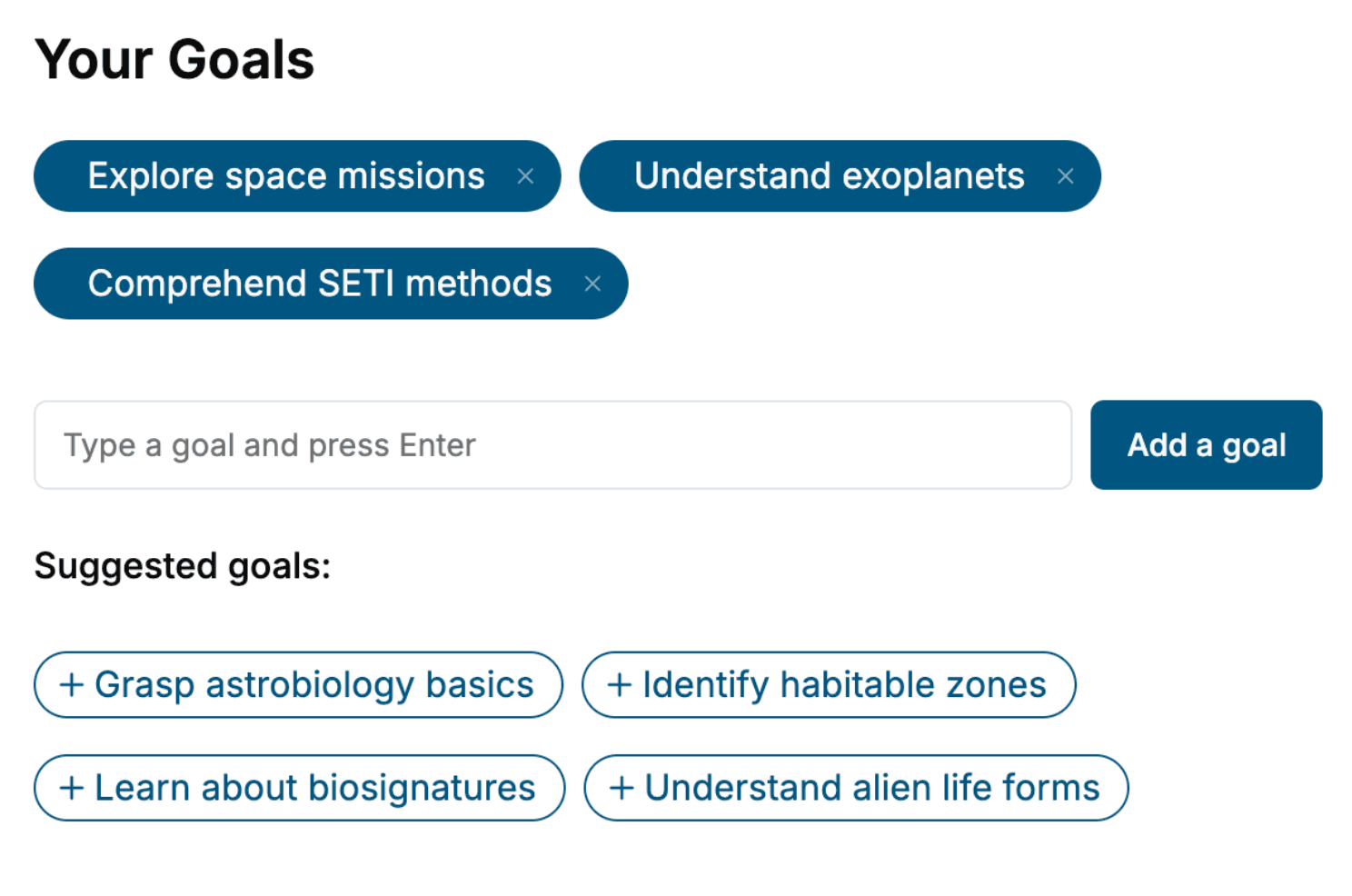
Tell us your goals and background, and get your own version of this book, tailored by AI to you.


Benefits of AI-tailored books
- Read one book, not ten:
- all the Databases knowledge you need, gathered into a single book.
- Save days of learning:
- tell us your goals, choose your topics, and the whole book is built around them.
- Learn effortlessly:
- Databases book written for your specific background and expertise.
- Understand at a glance:
- includes charts, tables, timelines, checklists, decision trees, and more.
- Stay current:
- written the day you order it, not years ago.
- Trust what you read:
- every book is checked for accuracy, with real research when your subject needs it.
Create your unique book in 3 steps
- 1. Select your focus
Select the focus of your Databases book and share your background
- 2. Personalize your book
Specify your goals and choose sub-topics to include
- 3. Get your tailored book
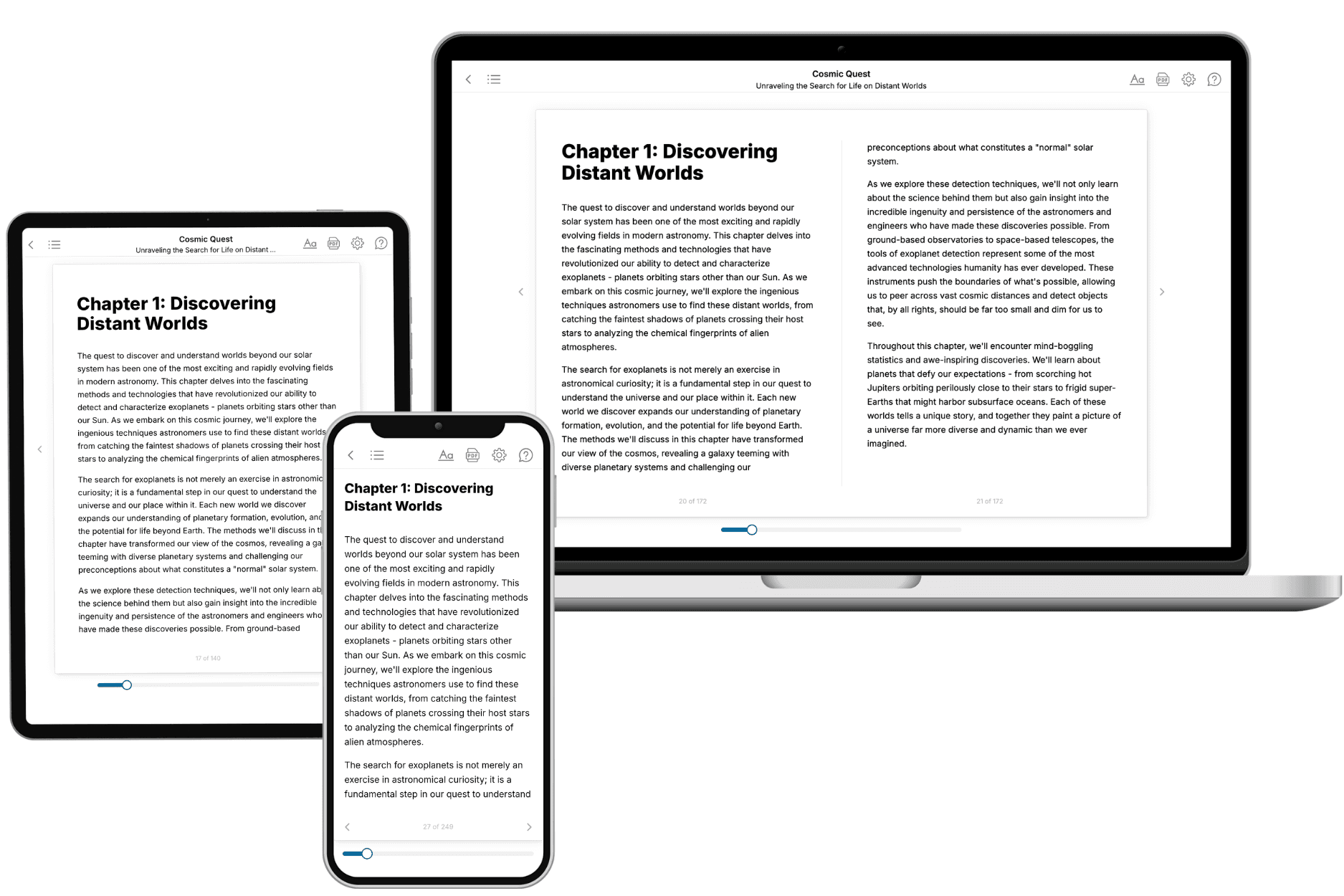
Your book is ready in 10 minutes. Read it online, download as EPUB or PDF, or send to Kindle.

Frequently asked questions
- What is TailoredRead?
TailoredRead creates complete, full-length nonfiction ebooks, written specifically for you. Tell us what you want to learn and why, and TailoredRead writes you a complete ebook on it, with charts, tables, and diagrams throughout. Read it online, on Kindle, or on any e-reader, or download it as a PDF or EPUB. Every book is written fresh the day you order it.
- How is the book tailored to me?
Before anything is written, you answer a few short questions about your goals, your background, and the topics you care about. Your book is then planned around your answers: written at your level, focused on your goals, and covering the topics you chose, instead of the one-size-fits-all book a store sells everyone.
- Will it read like generic AI content?
No. Your book isn't a chat transcript: it's planned chapter by chapter before a single word is written, told in a clear book voice, and explains ideas visually with charts, tables, and diagrams. After writing, every book goes through an editorial pass that polishes chapters so the book reads consistent from start to finish. Judge for yourself: browse thousands of sample books on our Explore Books page.
- How accurate is the content?
Our AI first checks whether your subject needs live research. Niche and fast-moving subjects are researched before writing, and the book plan and chapters are grounded in what it finds. After writing, every book goes through a quality pass that checks its facts and consistency, and researched books list their sources in a Notes section at the back.
- How long is the book?
You choose the length: Comprehensive (250-300 pages), Detailed (150-200 pages), Essential (70-100 pages), or Short (30-50 pages).
- Does the book include visuals?
Yes. Every book includes visual elements such as timelines, checklists, step-by-step guides, decision trees, comparison tables, and matrices, and many include bar charts. A typical book includes dozens of these visual elements.
- Can I read it on Kindle? What formats can I download?
Yes. Every book can be read in our online reader or downloaded as a PDF or EPUB. The EPUB can be opened with Kindle, Apple Books, Kobo, and any e-reader. The Commercial and Author licenses also include an editable Word (DOCX) and Markdown download.
- How much does it cost?
About the price of a regular ebook. The exact price depends on your book's length and complexity, from $2 for the shortest books to $35 for the most comprehensive, and it's shown when you review your book, before you commit to anything. Each book is a one-time purchase, yours to keep, no subscription. Licenses that let you share, teach, or publish your book range from $35.99 to $49.99.
- Can I preview the book before purchasing?
Before you pay, you'll see what your book will cover: the title, a detailed description, the estimated length, and the complete chapter-by-chapter table of contents, so you know what you're getting before you decide. The full text itself is written after you purchase.
- How long does it take to create a book?
About 10 minutes. You can start reading the opening chapters while the rest is still being written.