Declarative Programming Essentials
Master the Art of Writing Code That Describes What, Not How
Write code that's easier to understand, maintain, and debug by mastering declarative programming principles.
191 pages9 chaptersApr 17, 2026Declarative ProgrammingCreated by Da
About this book
This guide takes you from foundational concepts to practical implementation, showing you how to shift from telling computers how to solve problems to describing what solutions should look like. You'll explore the fundamental differences between declarative and imperative approaches, learn powerful state management patterns that reduce bugs, and discover how constraint logic programming can elegantly solve complex problems. Through practical examples and progressive lessons, you'll master higher-order functions, memoization techniques, and functional programming best practices. Whether you're working with F# or applying these principles to other languages, you'll gain the skills to write cleaner, more concise code that your team will appreciate and future you will thank you for maintaining.
Table of contents
- IntroductionWhy Declarative Programming Matters, How to Use This Book, What You'll Learn and AccomplishRead below
- Module 1: Foundations of Declarative ProgrammingUnderstanding Declarative Programming, Comparing Imperative and Declarative Approaches, Key Benefits of Declarative Code, Real-World Examples Across Languages
- Module 2: Core Declarative ConceptsBuilding with Pure Functions, Embracing Immutability, Composing Functions for Clarity
- Module 3: Higher-Order Functions and AbstractionMastering Higher-Order Functions, Implementing Map, Filter, and Reduce, Applying Currying for Flexible Code, Practical Higher-Order Function Patterns
- Module 4: Memoization and Performance OptimizationUnderstanding Memoization Fundamentals, Implementing Memoization Techniques, Measuring and Maximizing Performance Gains
- Module 5: State Management PatternsUnderstanding State Management Challenges, Declarative Approaches to State, Implementing Common State Patterns, Testing State Management Logic
- Module 6: Functional Programming with F#Getting Started with F# Syntax, Writing Declarative Functions in F#, Pattern Matching and Declarative Logic
- Module 7: Constraint Logic ProgrammingIntroducing Constraint Logic Programming, Declaring Constraints Instead of Algorithms, Solving Complex Problems with Constraints, Real-World Constraint Logic Applications
- Module 8: Declarative Best PracticesPrioritizing Code Readability, Building Maintainable Declarative Systems, Avoiding Common Declarative Pitfalls
- Module 9: Integrating Declarative Patterns into Your WorkflowAdopting Declarative Patterns Gradually, Refactoring Imperative Code to Declarative, Collaborating with Declarative Code
- ConclusionYour Declarative Programming Journey, Next Steps and Continued Learning
- Appendix: Quick Reference GuideDeclarative Syntax Quick Reference, Common Patterns Cheatsheet
Introduction
There's a moment most programmers recognize: you're staring at a block of code you wrote six months ago, and you have absolutely no idea what it's doing or why. The logic is buried under loops, conditionals, and temporary variables. You have to mentally simulate the computer's execution step by step just to figure out the intent. This experience is frustrating, but it's also a signal. It's a sign that the code was written in a way that describes how to do something rather than what needs to be done. Declarative programming offers a different path.
Declarative programming is a style of writing code that focuses on expressing the desired outcome rather than spelling out every step to get there. Instead of writing a loop that manually filters a list, you declare that you want only the items matching a condition. Instead of managing every state transition by hand, you describe what the state should look like at any given point. This shift in thinking might sound subtle, but its impact on code quality, readability, and maintainability is profound. Developers who embrace declarative principles consistently write code that is easier to understand, easier to test, and far less prone to subtle bugs.
This book is designed to take you from the foundational ideas of declarative programming all the way through to practical, real-world application. You don't need to be an expert programmer to benefit from it. If you're comfortable writing basic code in any language and you want to level up the quality and clarity of what you produce, this book is for you. Along the way, you'll encounter concrete examples, hands-on exercises, and frameworks you can apply immediately. The goal isn't just to understand declarative programming in theory. The goal is to change how you think about writing code every single day.
Module Outcomes: By the end of this introduction, you will have a clear foundation for everything that follows in this book.
- Understand why declarative programming is a valuable skill for modern developers
- Know how to navigate and get the most out of this book's structure and lessons
- Have a clear picture of the specific skills and knowledge you'll gain across all chapters
- Feel motivated and oriented to begin your declarative programming journey with confidence
When to use this module: This introduction is your starting point. Read it before diving into any chapter, especially if declarative programming is a new concept for you. It gives you the mental map you need to connect the dots as you progress. If you're returning to the book after a break, revisiting this introduction is a great way to re-orient yourself and remember the bigger picture before picking up where you left off.
Why Declarative Programming Matters
Lesson Outcomes: After reading this lesson, you will be able to:
- Explain the core problem that declarative programming solves
- Describe at least two real-world scenarios where declarative code outperforms imperative code
- Articulate why readability and maintainability are critical concerns in modern software development
Software development has a complexity problem. As applications grow, the code that powers them tends to become harder to read, harder to change, and harder to trust. A significant part of this complexity comes from imperative code: code that tells the computer exactly what to do, step by step, in precise order. Imperative code isn't inherently bad. It's often necessary. But when it becomes the default approach for every problem, it creates codebases that are difficult to reason about and even harder to maintain over time.
Consider a simple example. Suppose you have a list of customer orders and you want to find the total value of all orders over $100. In an imperative style, you might write a loop, initialize a counter variable, check each order inside the loop, and add to the counter when the condition is met. That's five or six lines of code, and a reader has to trace through all of them to understand the intent. In a declarative style, you filter the list for orders over $100 and then sum the results. Two operations, clearly named, that communicate intent immediately. The difference in readability is significant, and it compounds across an entire codebase.
Declarative code reads like a description of the problem. Imperative code reads like a recipe for solving it. When you want to understand what a program does, a description is almost always clearer than a recipe.
Readability isn't just a nice-to-have quality. Research consistently shows that developers spend far more time reading code than writing it. One widely cited estimate suggests that the ratio of reading to writing code is around 10 to 1.[1] That means the clarity of your code has a direct impact on how productive your team is, how quickly bugs get fixed, and how confidently new developers can contribute. Declarative programming directly addresses this by making code's intent visible at a glance.
Maintainability is the other major reason declarative programming matters. When requirements change (and they always do), imperative code often requires you to trace through logic carefully to understand what needs to change and what might break. Declarative code, because it separates the what from the how, tends to be more modular and easier to update. You can change one piece without worrying that it will silently affect another. This is especially valuable in larger teams where multiple developers are working on the same codebase simultaneously.
Declarative programming also aligns naturally with modern development practices. Frameworks like React, tools like SQL, and languages like F# are built on declarative principles. When you understand those principles deeply, you become more effective with these tools. You stop fighting the framework and start working with it. You write SQL queries that are expressive and efficient. You build React components that are predictable and easy to test. The skills you develop by studying declarative programming transfer broadly across languages and ecosystems.
There's also a bug-reduction benefit that's hard to overstate. Many of the most common bugs in software come from mutable state: variables that change unexpectedly, side effects that ripple through a system, and shared data that gets modified in ways that are hard to track. Declarative programming encourages immutability and pure functions, both of which dramatically reduce the surface area for these kinds of bugs. When a function always returns the same output for the same input and never modifies anything outside itself, it becomes trivially easy to test and reason about.
Finally, declarative programming makes you a better programmer in a general sense. It forces you to think more carefully about what you actually want to achieve before you start writing code. It encourages abstraction and composition. It builds habits of clarity and precision that improve every kind of code you write, even when you're working in an imperative style. Learning declarative programming isn't just about adding a new tool to your toolkit. It's about sharpening the way you think about problems.
Practice Tasks:
- Find a piece of code you've written recently that uses a loop. Try rewriting it using a filter, map, or reduce operation instead. Compare the two versions for readability.
- Think of a real project you've worked on. Identify one place where mutable state caused a bug or made debugging harder. Write a short description of how a declarative approach might have prevented it.
- Look at a SQL query you've written or encountered. Notice how it describes what data you want rather than how to retrieve it. Write a few sentences explaining why this is a declarative approach.
Key Takeaways:
- Declarative programming focuses on describing desired outcomes rather than step-by-step instructions
- Developers spend far more time reading code than writing it, making readability a critical concern
- Declarative code is generally easier to maintain because it separates intent from implementation
- Immutability and pure functions, core to declarative programming, significantly reduce common bugs
- Declarative principles are foundational to many modern tools and frameworks, including SQL, React, and F#
- Studying declarative programming improves your overall thinking and problem-solving approach
How to Use This Book
Lesson Outcomes: After reading this lesson, you will be able to:
- Navigate the book's structure effectively to match your learning goals
- Identify the best reading strategy based on your current experience level
- Know how to use the practice tasks and examples to reinforce your learning
- Understand how the chapters build on each other and when it's safe to skip ahead
This book is structured to take you on a progressive journey. Each chapter builds on the concepts introduced before it, so reading from start to finish is the most effective approach if you're new to declarative programming. That said, the book is also designed to be a useful reference. If you already have some experience with functional programming and want to jump straight to state management patterns or constraint logic programming, each chapter is self-contained enough to be read independently. The key is knowing where you are and what you need.
The book is divided into nine core chapters, plus this introduction, a conclusion, and an appendix. Here's a quick map of how the content is organized:
- Chapters 1 and 2 cover the foundations: what declarative programming is, how it differs from imperative programming, and the core concepts of pure functions, immutability, and composition.
- Chapters 3 and 4 go deeper into higher-order functions, map/filter/reduce, currying, and memoization. These are the practical tools you'll use most often.
- Chapter 5 tackles state management, one of the most challenging and important topics in modern application development.
- Chapter 6 introduces F# as a language that elegantly embodies declarative and functional principles.
- Chapter 7 explores constraint logic programming, a powerful approach for solving complex problems declaratively.
- Chapters 8 and 9 focus on best practices, common pitfalls, and how to integrate declarative patterns into your existing workflow and team.
Each lesson within a chapter follows a consistent structure. It begins with clear learning outcomes so you know exactly what you'll gain. The main content uses explanations, examples, and comparisons to build understanding. Each lesson ends with practice tasks and key takeaways. The practice tasks are not optional extras. They are a core part of the learning experience. Reading about declarative programming without practicing it is like reading about swimming without getting in the water. The concepts only truly click when you apply them.
The code examples in this book are written to be clear and instructive rather than production-ready. They prioritize readability over optimization. Most examples are written in JavaScript or pseudocode for accessibility, with dedicated F# examples in Chapter 6. If you're working in a different language, the concepts translate directly. Python, Haskell, Scala, Kotlin, and many other languages support declarative and functional patterns. The goal is to understand the principles, not to memorize syntax.
A few practical tips for getting the most out of this book:
- Don't rush. Declarative thinking is a genuine shift in perspective. Give yourself time to sit with each concept before moving on.
- Do the practice tasks. Even if they feel simple, they build the muscle memory that makes declarative patterns feel natural.
- Use the appendix. The quick reference guide and patterns cheatsheet at the back of the book are designed for ongoing use, not just one-time reading.
- Apply as you go. Try to find opportunities to use each concept in your real work as soon as you learn it. Real application accelerates learning dramatically.
- Revisit chapters. Some concepts, especially around state management and constraint logic, benefit from a second read after you've seen how they connect to later material.
If you're a beginner programmer, start at Chapter 1 and work through the book in order. If you're an intermediate developer who already understands functions and basic data structures, you might move through Chapters 1 and 2 quickly and spend more time on Chapters 3 through 5. If you're an experienced developer looking to add F# or constraint logic programming to your skills, you can jump directly to Chapters 6 and 7 after skimming the earlier chapters for context. There's no single right way to use this book. The right way is the one that matches your goals and keeps you engaged.
One more thing worth mentioning: this book assumes you're learning because you want to write better code, not just to pass a test or check a box. That motivation matters. Declarative programming rewards curiosity and experimentation. The more you play with the ideas, question the examples, and try things in your own projects, the more you'll get out of every page. Approach this material with genuine curiosity, and it will pay dividends far beyond what any single book can teach.
Practice Tasks:
- Flip through the table of contents and identify the two or three chapters that feel most relevant to your current work or learning goals. Write down why those chapters matter to you specifically.
- Set a realistic reading schedule. Decide how many chapters or lessons you'll aim to complete per week, and block time in your calendar for the practice tasks.
- Open the appendix now and scan the quick reference guide. Bookmark it or keep it accessible so you can refer to it as you work through the chapters.
Key Takeaways:
- The book is structured progressively, but each chapter is also self-contained enough for reference use
- Chapters 1 and 2 cover foundations; Chapters 3 through 5 cover practical tools; Chapters 6 through 9 cover advanced topics and integration
- Practice tasks are a core part of learning, not optional extras
- Code examples prioritize clarity over production-readiness and are designed to be language-agnostic in principle
- Your reading strategy should match your current experience level and specific learning goals
- The appendix is a valuable ongoing reference, not just a one-time read
What You'll Learn and Accomplish
Lesson Outcomes: After reading this lesson, you will be able to:
- Describe the full scope of skills covered in this book
- Connect each major topic to a concrete benefit in your day-to-day programming work
- Set specific, realistic learning goals for your journey through the material
By the time you finish this book, you'll have a genuinely different relationship with code. Not just a new set of syntax patterns, but a new way of thinking about problems. That shift is the most valuable thing this book offers. To make that concrete, here's a clear picture of what you'll know and be able to do after working through each major section.
In Chapters 1 and 2, you'll build a solid conceptual foundation. You'll be able to clearly explain what declarative programming is and how it differs from imperative programming. You'll understand why that difference matters in practice, not just in theory. You'll also master three core concepts that underpin almost everything else in the book: pure functions, immutability, and function composition. These aren't abstract ideas. They're practical tools that you'll use in every chapter that follows, and in your real code from the moment you understand them.
In Chapters 3 and 4, you'll gain hands-on mastery of higher-order functions. You'll understand what makes a function "higher-order" and why that property is so powerful. You'll be comfortable using map, filter, and reduce to transform data without writing a single loop. You'll learn currying, a technique that lets you create flexible, reusable functions from more general ones. And you'll understand memoization: how it works, when to use it, and how to implement it to make your code significantly faster without changing its logic.
Higher-order functions are one of the most immediately practical skills in this book. Once you're comfortable with map, filter, and reduce, you'll find yourself reaching for them constantly. They make data transformation code dramatically shorter and clearer.
In Chapter 5, you'll tackle state management, which is one of the most challenging aspects of building real applications. You'll understand why unmanaged state is such a common source of bugs. You'll learn declarative patterns for managing state in a predictable, testable way. You'll also learn how to test state management logic effectively, which is a skill that pays off every time you need to refactor or extend a feature. State management is where many developers struggle most, and this chapter gives you a clear, structured approach to it.
In Chapter 6, you'll get a practical introduction to F#, a language that brings declarative and functional programming principles to the .NET ecosystem. You'll learn the basic syntax, write declarative functions, and explore pattern matching, one of F#'s most powerful features. Even if you never use F# professionally, studying it deepens your understanding of declarative principles in a way that transfers to every other language you work in. F# makes the abstract concrete in a uniquely clear way.
In Chapter 7, you'll explore constraint logic programming, a paradigm that might be new to you even if you've been programming for years. You'll learn how to solve complex problems by declaring what constraints a solution must satisfy, rather than writing an algorithm to find the solution. This approach is especially powerful for scheduling problems, configuration problems, and any situation where you're searching for a solution that satisfies multiple conditions simultaneously. It's a genuinely different way of thinking about problem-solving, and it's one of the most elegant demonstrations of declarative programming's power.
In Chapters 8 and 9, you'll bring everything together with a focus on best practices and real-world integration. You'll learn how to prioritize readability, build maintainable systems, and avoid the most common pitfalls that developers encounter when adopting declarative patterns. You'll also get a practical guide to refactoring existing imperative code into a more declarative style, and strategies for introducing these patterns to a team that may not be familiar with them. These chapters are about making declarative programming work in the real world, not just in exercises.
Across all of these topics, the through-line is the same: writing code that communicates clearly, behaves predictably, and is easy to change. These qualities aren't luxuries. In professional software development, they're the difference between a codebase that a team can work in confidently and one that slows everyone down. The skills in this book are directly applicable to your work, starting from the very first chapter. Every concept you learn here is something you can use the next time you open your editor.
Here's a summary of the concrete skills you'll walk away with:
- The ability to identify when a declarative approach is more appropriate than an imperative one
- Fluency with pure functions, immutability, and function composition
- Practical skill with higher-order functions including map, filter, reduce, and currying
- The ability to implement and apply memoization for performance optimization
- A structured approach to state management that reduces bugs and improves testability
- Working knowledge of F# syntax and declarative patterns in a functional language
- An understanding of constraint logic programming and how to apply it to complex problems
- Strategies for refactoring imperative code and introducing declarative patterns to a team
Practice Tasks:
- Write down three specific problems or pain points in your current or recent coding work. For each one, make a note of which chapter in this book seems most likely to address it. This gives you a personal motivation for each section.
- Rate your current confidence with each of the eight skills listed above on a scale of 1 to 5. Save this list and revisit it after you finish the book to measure your growth.
- Identify one project, even a small personal one, where you could apply declarative principles as you learn them. Having a real target makes the learning much more concrete and effective.
Key Takeaways:
- This book covers a full progression from foundational concepts to advanced topics and real-world integration
- Pure functions, immutability, and composition are the core building blocks that everything else depends on
- Higher-order functions and memoization are immediately practical skills with direct applications in daily coding
- State management is one of the most impactful areas where declarative thinking reduces bugs and improves code quality
- F# and constraint logic programming offer powerful, concrete demonstrations of declarative principles in action
- The ultimate goal is a shift in how you think about problems, not just a new set of syntax patterns
- Every skill in this book is directly applicable to real professional development work
Notes
Introduction
- 1. Robert C. Martin, Clean Code: A Handbook of Agile Software Craftsmanship, Prentice Hall, 2008
This is the end of the free sample. The full book has 9 chapters.
Want this book written for you?
Tell us your goals and background, and get your own version of this book, tailored by AI to you.


Benefits of AI-tailored books
- Read one book, not ten:
- all the Declarative Programming knowledge you need, gathered into a single book.
- Save days of learning:
- tell us your goals, choose your topics, and the whole book is built around them.
- Learn effortlessly:
- Declarative Programming book written for your specific background and expertise.
- Understand at a glance:
- includes charts, tables, timelines, checklists, decision trees, and more.
- Stay current:
- written the day you order it, not years ago.
- Trust what you read:
- every book is checked for accuracy, with real research when your subject needs it.
Create your unique book in 3 steps
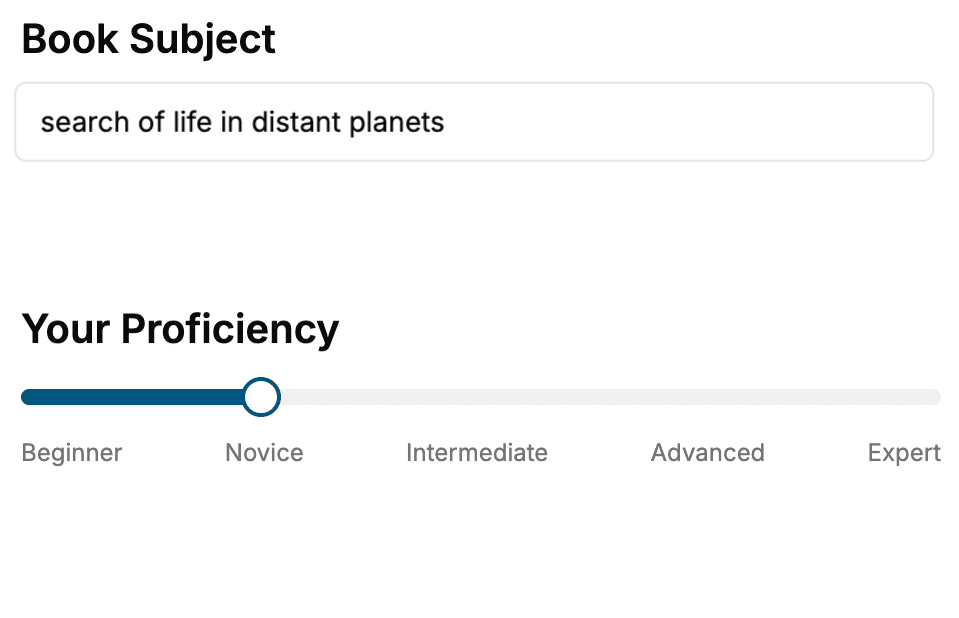
- 1. Select your focus
Select the focus of your Declarative Programming book and share your background
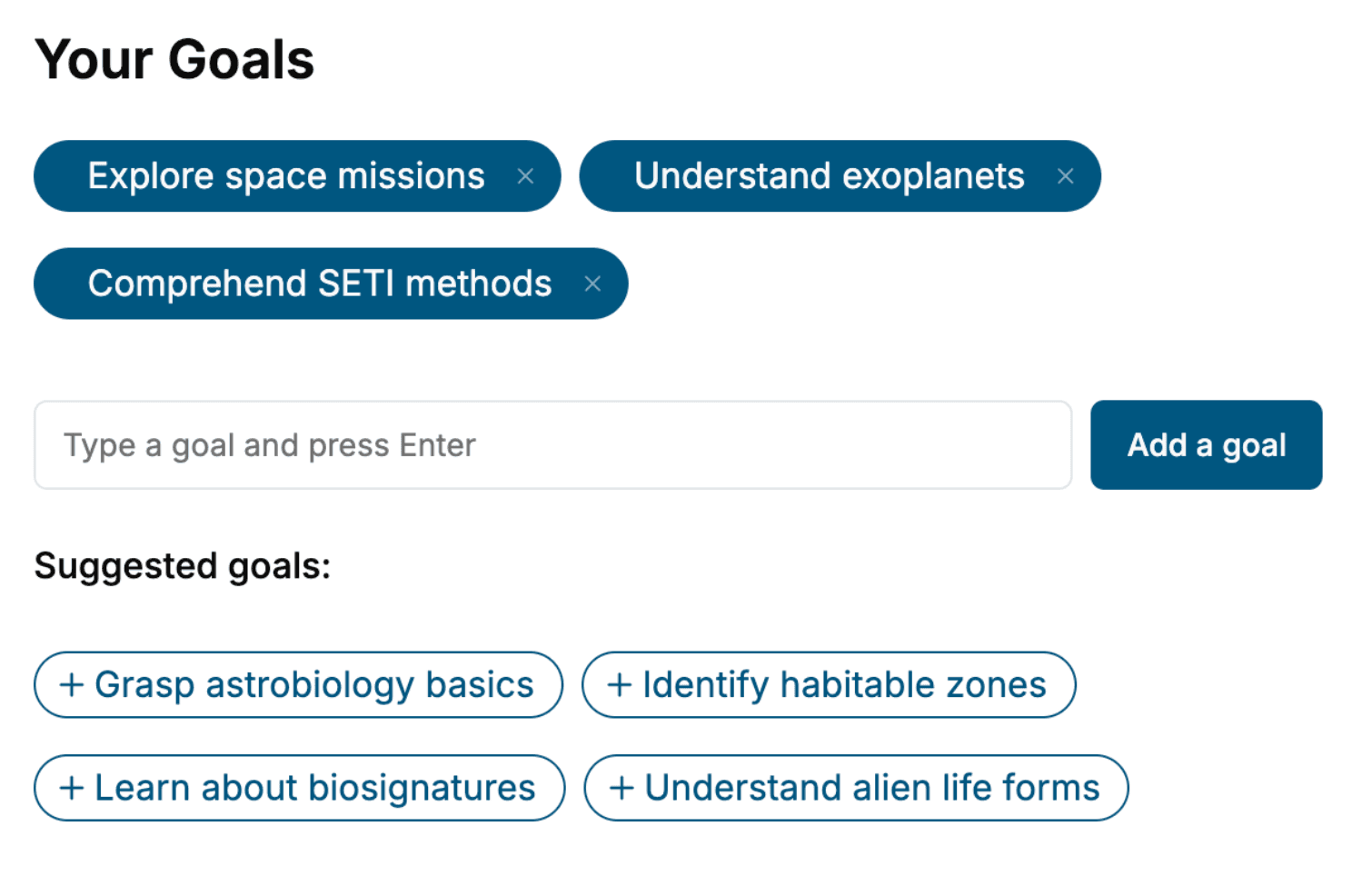
- 2. Personalize your book
Specify your goals and choose sub-topics to include
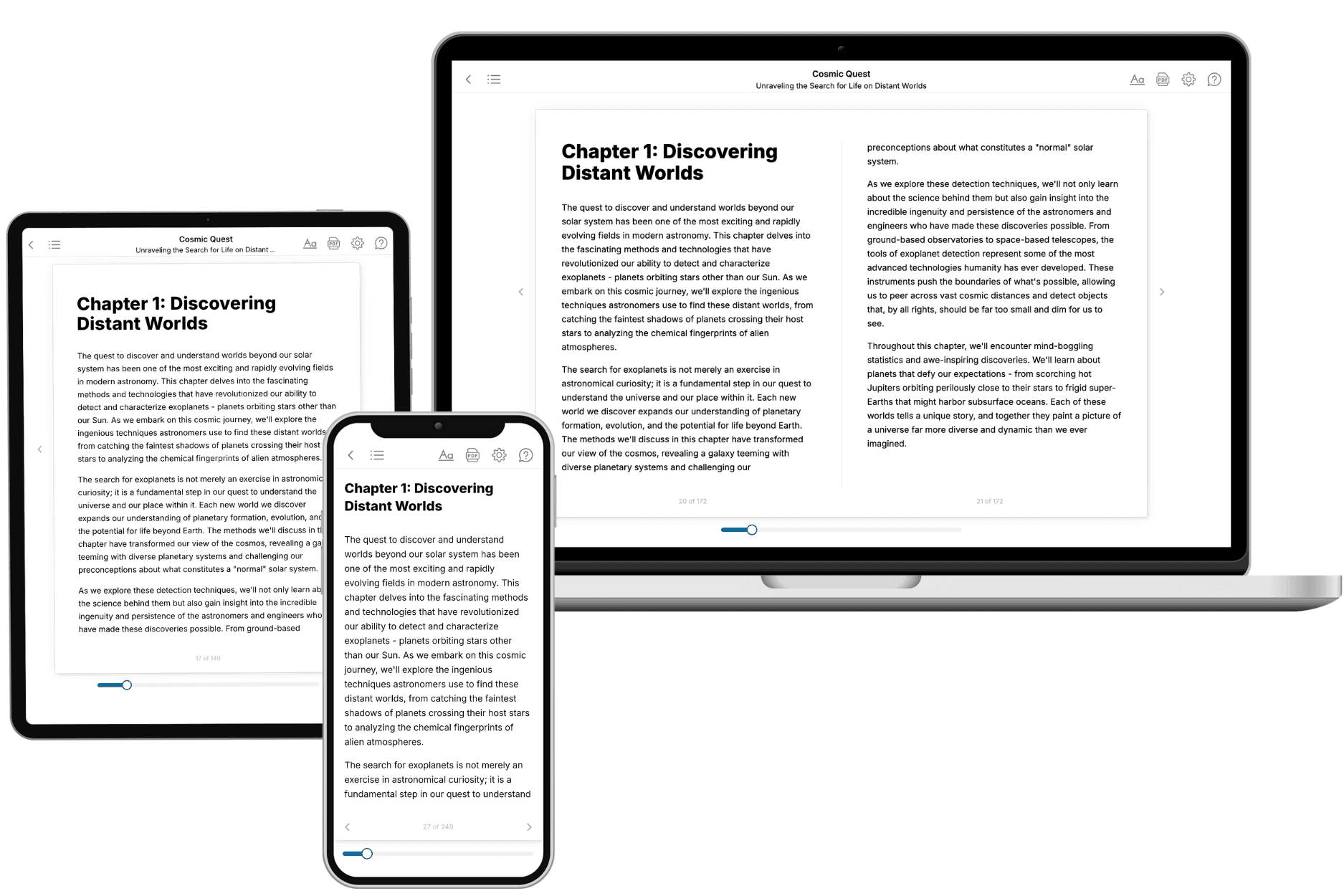
- 3. Get your tailored book
Your book is ready in 10 minutes. Read it online, download as EPUB or PDF, or send to Kindle.
Frequently asked questions
- What is TailoredRead?
TailoredRead creates complete, full-length nonfiction ebooks, written specifically for you. Tell us what you want to learn and why, and TailoredRead writes you a complete ebook on it, with charts, tables, and diagrams throughout. Read it online, on Kindle, or on any e-reader, or download it as a PDF or EPUB. Every book is written fresh the day you order it.
- How is the book tailored to me?
Before anything is written, you answer a few short questions about your goals, your background, and the topics you care about. Your book is then planned around your answers: written at your level, focused on your goals, and covering the topics you chose, instead of the one-size-fits-all book a store sells everyone.
- Will it read like generic AI content?
No. Your book isn't a chat transcript: it's planned chapter by chapter before a single word is written, told in a clear book voice, and explains ideas visually with charts, tables, and diagrams. After writing, every book goes through an editorial pass that polishes chapters so the book reads consistent from start to finish. Judge for yourself: browse thousands of sample books on our Explore Books page.
- How accurate is the content?
Our AI first checks whether your subject needs live research. Niche and fast-moving subjects are researched before writing, and the book plan and chapters are grounded in what it finds. After writing, every book goes through a quality pass that checks its facts and consistency, and researched books list their sources in a Notes section at the back.
- How long is the book?
You choose the length: Comprehensive (250-300 pages), Detailed (150-200 pages), Essential (70-100 pages), or Short (30-50 pages).
- Does the book include visuals?
Yes. Every book includes charts, tables, and diagrams: timelines, checklists, step-by-step guides, decision trees, comparison tables, matrices, and bar charts. A typical book includes dozens of these visual elements.
- Can I read it on Kindle? What formats can I download?
Yes. Every book can be read in our online reader or downloaded as a PDF or EPUB. The EPUB can be opened with Kindle, Apple Books, Kobo, and any e-reader. The Commercial and Author licenses also include an editable Word (DOCX) and Markdown download.
- How much does it cost?
About the price of a regular ebook. The exact price depends on your book's length and complexity, from $2 for the shortest books to $35 for the most comprehensive, and it's shown when you review your book, before you commit to anything. Each book is a one-time purchase, yours to keep, no subscription. Licenses that let you share, teach, or publish your book range from $35.99 to $49.99.
- Can I preview the book before purchasing?
Before you pay, you'll see what your book will cover: the title, a detailed description, the estimated length, and the complete chapter-by-chapter table of contents, so you know what you're getting before you decide. The full text itself is written after you purchase.
- How long does it take to create a book?
About 10 minutes. You can start reading the opening chapters while the rest is still being written.