Earth's Magnetic Secrets
Understanding Geomagnetism and Its Impact on Our Planet
Discover how Earth's invisible magnetic field shapes our world and protects all life on the planet.
238 pages11 chaptersApr 17, 2026Geophysics
About this book
This comprehensive guide takes you from the fundamental physics of magnetism to the cutting-edge applications transforming geology, navigation, and space science. You'll learn why Earth's magnetic field exists, how it's generated deep within our planet, and why it matters for everything from smartphone compasses to mineral exploration. Explore the dramatic story of magnetic reversals, understand how scientists use magnetism to unlock Earth's geological secrets, and discover how solar storms threaten our technology. Whether you're a student, educator, or curious learner, this book demystifies one of Earth's most powerful yet often overlooked phenomena. Gain practical knowledge about magnetic declination, paleomagnetic dating, and how magnetic anomalies reveal hidden resources beneath your feet. Perfect for anyone wanting to understand the invisible forces that make our planet habitable and drive modern scientific discovery.
Table of contents
- IntroductionWhy Magnetism Matters to Our World, What You'll Learn in This Book, How to Use This GuideRead below
- Chapter 1: Fundamentals of MagnetismThe Basics of Magnetic Fields and Forces, Earth as a Giant Magnet, Magnetic Properties of Rocks and Minerals
- Chapter 2: The Origin of Earth's Magnetic FieldThe Molten Core and Dynamo Theory, How the Magnetic Field Is Generated, Understanding the Field's Structure and Geometry
- Chapter 3: Variations and Changes in Earth's Magnetic FieldMagnetic Declination and Inclination, Secular Variation and Long-Term Changes, Magnetic Reversals: When North Becomes South
- Chapter 4: The Magnetosphere: Earth's Protective ShieldHow the Magnetosphere Shields Us from Solar Wind, Protection from Cosmic Radiation and Solar Particles, Auroras, Geomagnetic Storms, and Space Weather
- Chapter 5: Reading Earth's Magnetic HistoryPrinciples of Paleomagnetism, Using Magnetism to Date Rocks and Sediments, Magnetic Evidence for Plate Tectonics and Continental Drift
- Chapter 6: Magnetic Anomalies and Subsurface GeologyDetecting and Measuring Magnetic Anomalies, Using Magnetism for Mineral and Resource Exploration, Mapping Geological Structures and Hidden Features
- Chapter 7: Practical Applications: Navigation and SurveyingHow Compasses Work and Magnetic Navigation, Magnetic Methods in Surveying and Mapping, Integrating Magnetism with Modern Positioning Systems
- Chapter 8: Geomagnetism in Archaeology and Cultural HeritageMagnetic Prospecting for Archaeological Sites, Analyzing Artifacts and Structures with Magnetism, Non-Invasive Methods for Preserving Cultural Sites
- Chapter 9: Modern Monitoring and TechnologyInstruments for Measuring Earth's Magnetic Field, Satellite Missions and Global Magnetic Mapping, Analyzing and Interpreting Magnetic Data
- Chapter 10: Space Weather and Technological ImpactsUnderstanding Geomagnetic Storms and Solar Flares, How Space Weather Disrupts Modern Technology, Monitoring and Preparing for Space Weather Events
- Chapter 11: The Future of Geomagnetism ResearchUnanswered Questions in Geomagnetism, Emerging Technologies and Research Methods, Geomagnetism and Its Connection to Climate and Evolution
- ConclusionKey Takeaways and Insights, Your Journey in Understanding Geomagnetism
- Glossary of Terms
- Further Reading and Resources
Introduction
Right now, without any effort on your part, an invisible force field surrounds the entire planet. It stretches tens of thousands of kilometers into space, deflects a constant stream of charged particles from the Sun, and guides everything from migrating birds to the compass app on your phone. This is Earth's magnetic field, and most people go through their entire lives without giving it a second thought. That's a remarkable oversight, because this field is one of the primary reasons life exists on Earth at all. Without it, the planet's atmosphere would slowly be stripped away by solar wind, and the surface would be bathed in radiation levels hostile to complex life.
Geomagnetism, the study of Earth's magnetic field, sits at a fascinating crossroads of physics, geology, planetary science, and engineering. It explains why a compass needle points north, why ancient lava flows preserve a record of Earth's past, and why a solar storm in 1989 knocked out power for six million people in Quebec within 90 seconds.[1] It connects the deep interior of our planet to the farthest reaches of near-Earth space. Understanding geomagnetism means understanding Earth as a dynamic, living system rather than a static rock floating in space.
This book is designed to take you on a structured journey through that system. Whether you're a geology student looking to deepen your understanding, an educator building curriculum around Earth sciences, or simply a curious learner who wants to understand the invisible forces shaping the world, this guide is built for you. The chapters move from foundational physics to cutting-edge research, always keeping the focus on clarity, practical relevance, and genuine scientific insight. No prior expertise in electromagnetism or geophysics is required, though a basic familiarity with Earth science concepts will help you get the most out of the material.
One of the most striking things about geomagnetism is how often it shows up in unexpected places. Archaeologists use magnetic measurements to find buried hearths and ancient kilns without digging a single hole. Mining companies use airborne magnetic surveys to locate iron ore deposits kilometers below the surface. Climate scientists study ancient magnetic records locked in seafloor sediments to understand how Earth's environment has changed over millions of years. Smartphone manufacturers build tiny magnetometers into every device so that navigation apps can function indoors where GPS signals are weak. The field of geomagnetism is not a narrow academic specialty. It is woven into the fabric of modern science and technology in ways that are both surprising and deeply practical.
Why Magnetism Matters to Our World
To appreciate why geomagnetism deserves serious attention, it helps to start with the big picture. Earth's magnetic field is generated by the movement of liquid iron in the outer core, roughly 2,900 kilometers beneath your feet. This churning, electrically conductive fluid acts like a self-sustaining generator, producing a magnetic field that extends far beyond the planet's surface. That field, called the magnetosphere, acts as a planetary shield. It deflects the solar wind, a continuous stream of charged particles flowing outward from the Sun at speeds of 400 to 800 kilometers per second.[2] Without this protection, Earth would likely resemble Mars, a planet that lost its magnetic field billions of years ago and now has an atmosphere too thin to support liquid water on its surface.
The practical consequences of this protection are enormous. The magnetosphere doesn't just keep the atmosphere intact. It also channels high-energy particles into the polar regions, where they produce the spectacular light displays known as auroras. It creates radiation belts that trap energetic particles, protecting satellites and astronauts from dangerous exposure. And it interacts with the Sun's own magnetic field in complex ways that drive space weather events capable of disrupting power grids, GPS systems, and radio communications across entire continents. Understanding how this shield works is not just an academic exercise. It has direct implications for infrastructure planning, satellite operations, and even the safety of long-haul airline passengers flying polar routes.
Closer to the surface, Earth's magnetic field shapes the geological record in ways that have transformed our understanding of the planet's history. When molten rock cools and solidifies, magnetic minerals within it align with the ambient magnetic field, essentially freezing a snapshot of the field's direction and intensity at that moment in time. This process, called thermoremanent magnetization, turns rocks into natural archives. By reading these archives, scientists have reconstructed the history of Earth's magnetic field going back hundreds of millions of years, including the dramatic episodes when the field reversed direction entirely, with magnetic north becoming magnetic south and vice versa.
These magnetic reversals, which have occurred hundreds of times in Earth's history, are recorded in the seafloor in a pattern of alternating magnetic stripes. In the 1960s, recognizing this pattern provided some of the most compelling evidence for the theory of plate tectonics, fundamentally changing how geologists understand the planet.[3] That connection between geomagnetism and plate tectonics is a perfect example of how understanding one aspect of Earth's magnetic field can unlock insights into entirely different areas of Earth science.
On a more everyday level, magnetism matters because navigation depends on it. Compasses have guided sailors, explorers, and travelers for over a thousand years. Today, even with GPS satellites orbiting overhead, magnetic sensors remain essential components of navigation systems in aircraft, ships, and smartphones. But magnetic navigation is more complicated than it might seem. The magnetic north pole is not the same as the geographic north pole, and the difference between them, called magnetic declination, varies by location and changes over time. Failing to account for this difference can lead to significant navigational errors, a fact that has practical consequences for surveyors, pilots, and anyone relying on a compass in the field.
Finally, magnetism matters because it connects Earth to the broader universe. Every planet with a significant magnetic field generates it through some version of the same dynamo process operating in Earth's core. By studying Earth's field in detail, scientists gain tools and frameworks for understanding the magnetic environments of other planets, moons, and even distant exoplanets. Mars, Venus, Mercury, Jupiter, and Saturn all have magnetic stories to tell, and Earth's field is the baseline against which those stories are measured. Geomagnetism, in this sense, is not just the study of one planet. It is a window into how rocky worlds work across the solar system and beyond.
What You'll Learn in This Book
This book covers geomagnetism from the ground up, building knowledge systematically so that each chapter prepares you for the next. The journey begins with the physics of magnetism itself, establishing the foundational concepts you need to understand everything that follows. From there, it moves into the origin and structure of Earth's magnetic field, the ways that field changes over time, and the dramatic phenomenon of magnetic reversals. Later chapters explore practical applications in navigation, mineral exploration, archaeology, and space weather monitoring. By the end, you'll have a comprehensive picture of geomagnetism as both a scientific discipline and a practical toolkit.
Here is a summary of what each major section covers:
- Fundamentals of Magnetism (Chapter 1): The basic physics of magnetic fields and forces, how Earth behaves as a giant magnet, and the magnetic properties of rocks and minerals that make geological applications possible.
- The Origin of Earth's Magnetic Field (Chapter 2): The structure of Earth's core, the dynamo theory that explains how the field is generated, and the geometry of the field as it extends from the core to space.
- Variations and Changes (Chapter 3): Magnetic declination and inclination, the slow drift of the magnetic poles over time, and the science of magnetic reversals.
- The Magnetosphere (Chapter 4): How Earth's magnetic field interacts with the solar wind, protects life from radiation, and produces auroras and geomagnetic storms.
- Paleomagnetic Records (Chapter 5): How rocks preserve magnetic history, how scientists use that history to date geological formations, and how paleomagnetism provided key evidence for plate tectonics.
- Magnetic Anomalies (Chapter 6): How variations in the magnetic field reveal subsurface geology, and how this knowledge is applied in mineral and resource exploration.
- Navigation and Surveying (Chapter 7): The mechanics of compass navigation, magnetic surveying methods, and how magnetism integrates with modern GPS and positioning systems.
- Archaeological Applications (Chapter 8): How magnetic methods help archaeologists find and analyze buried sites and artifacts without invasive excavation.
- Modern Monitoring and Technology (Chapter 9): The instruments and satellite missions used to measure and map Earth's magnetic field today.
- Space Weather Impacts (Chapter 10): How solar activity drives geomagnetic storms, how those storms affect technology, and how scientists monitor and prepare for space weather events.
- Future Research (Chapter 11): Open questions in geomagnetism, emerging research technologies, and the connections between Earth's magnetic field, climate, and biological evolution.
Throughout the book, you'll encounter concrete examples drawn from real scientific research and real-world applications. These aren't abstract thought experiments. They are cases where understanding geomagnetism made a measurable difference, whether that means a mining company locating a billion-dollar ore deposit, a scientist reconstructing the position of continents 200 million years ago, or an engineer designing a power grid that can survive a major geomagnetic storm. The goal is always to connect the science to something tangible and meaningful.
You'll also encounter the tools and methods that geomagnetic scientists actually use. This includes magnetometers of various types, aeromagnetic survey techniques, satellite missions like the European Space Agency's Swarm constellation, and the computational models used to interpret magnetic data. Understanding these tools gives you a realistic picture of how geomagnetic science is actually practiced, not just how it is described in textbooks.
One theme that runs through every chapter is the dynamic nature of Earth's magnetic field. This is not a static, permanent feature of the planet. It fluctuates daily due to solar activity, drifts over decades as the magnetic poles migrate, and undergoes dramatic reversals over geological timescales. Appreciating this dynamism is essential for understanding both the science and the practical challenges it creates. A magnetic field that changes over time means that maps, navigation systems, and geological models all need regular updating. It also means that the field we observe today is just one snapshot in a long and eventful history.
By the time you finish this book, you should be able to explain how Earth's magnetic field is generated, why it changes, how scientists measure and interpret it, and why it matters for life, technology, and our understanding of the planet. You'll have a working vocabulary of geomagnetic concepts and a clear sense of how they connect to each other. Most importantly, you'll have a deeper appreciation for one of Earth's most fundamental and fascinating features, one that operates invisibly all around you, every moment of every day.
How to Use This Guide
This book is designed to be read sequentially, from Chapter 1 through Chapter 11, because each chapter builds on concepts introduced in earlier ones. If you try to jump directly to, say, the chapter on magnetic anomalies without reading the foundational chapters first, you may find some of the terminology and concepts harder to follow. That said, if you already have a solid background in a particular area, such as basic magnetism or plate tectonics, you can move through those sections more quickly and spend more time on the chapters that cover newer ground for you.
Each chapter is structured to move from concept to application. The opening sections of each chapter establish the core ideas, while later sections show how those ideas are used in practice. This structure reflects the way geomagnetic science actually works: you need to understand the physics before you can interpret a magnetic survey, and you need to understand magnetic surveys before you can appreciate how they're used to find mineral deposits or map archaeological sites. Following this structure will give you the most coherent and complete understanding of the subject.
As you read, pay particular attention to the key terms highlighted in bold. These terms form the technical vocabulary of geomagnetism, and being comfortable with them will help you read scientific papers, follow news stories about space weather or magnetic pole migration, and engage with the subject at a deeper level. A full glossary at the back of the book provides concise definitions for all key terms, so you can quickly look up any term you encounter and need to clarify.
The footnotes throughout the book point to specific scientific papers, books, and reports that support the claims being made. These are not just formalities. They are invitations to go deeper. If a particular topic captures your interest, following the footnotes will lead you to primary sources where you can explore the science in much greater detail. The "Further Reading and Resources" section at the back of the book also provides a curated list of books, journals, and online resources for continued learning.
Here are a few practical suggestions for getting the most out of this guide:
- Take notes on key concepts as you read, especially definitions and the relationships between ideas. Geomagnetism involves a web of interconnected concepts, and keeping track of how they relate will help you build a coherent mental model.
- Look up the places and events mentioned in the examples. When the text discusses the 1989 Quebec blackout, the magnetic stripes of the Mid-Atlantic Ridge, or the Swarm satellite mission, a quick search will give you images and additional context that make the science more vivid and memorable.
- Revisit earlier chapters when later chapters introduce new applications of concepts you've already studied. Seeing the same idea applied in multiple contexts is one of the most effective ways to solidify understanding.
- Use the glossary actively, not just when you're confused, but also as a review tool after finishing each chapter. Testing yourself on key terms is a simple and effective way to reinforce what you've learned.
- Connect the material to your own field or interests. If you work in geology, think about how magnetic anomaly surveys might apply to projects you've encountered. If you're interested in history, consider how paleomagnetic dating has changed our understanding of ancient civilizations and geological events.
It's also worth noting what this book is not. It is not a mathematical textbook. While some equations appear where they are genuinely necessary to explain a concept, the focus throughout is on physical intuition and conceptual understanding rather than mathematical derivation. If you want to go deeper into the mathematics of electromagnetic theory or geodynamo modeling, the further reading section will point you toward appropriate resources. This book is designed to give you the conceptual foundation that makes those more technical resources accessible.
Similarly, this book does not attempt to cover every subfield of geomagnetism in exhaustive detail. The field is vast, and entire careers are built around topics that receive only a chapter or two here. The goal is breadth with sufficient depth to be genuinely useful, not an encyclopedic treatment of every research question in the discipline. Think of this book as a well-drawn map of the territory. It shows you the major features, the key routes between them, and the most important landmarks. Exploring any particular region in greater depth is something you can do with the resources provided, once you have the map in hand.
One final note: geomagnetism is an active field of research, and our understanding of it continues to evolve. New satellite data, improved computational models, and ongoing monitoring of the magnetic field are constantly refining the picture. Some of the specific numbers cited in this book, such as the current rate of magnetic pole migration or the strength of the field in particular regions, will change as new measurements are made. The core concepts, however, are well established and will remain valid guides to understanding the field for years to come. Where the science is still developing or genuinely uncertain, the text says so clearly, because intellectual honesty about what we don't yet know is just as important as conveying what we do.
Earth's magnetic field is one of the planet's most ancient and enduring features, yet it remains one of the least understood by the general public. This book aims to change that, one concept at a time.
The invisible force field surrounding this planet has shaped the history of life, guided the movements of civilizations, and continues to protect everything you know. It deserves to be understood. Turn the page, and let's begin.
Notes
Introduction
- 1. L. Bolduc, "GIC observations and studies in the Hydro-Québec power system," Journal of Atmospheric and Solar-Terrestrial Physics, 2002
- 2. M. G. Kivelson and others, Introduction to Space Physics, Cambridge University Press, 1995
- 3. F. J. Vine and D. H. Matthews, "Magnetic anomalies over oceanic ridges," Nature, 1963
This is the end of the free sample. The full book has 11 chapters.
Want this book written for you?
Tell us your goals and background, and get your own version of this book, tailored by AI to you.


Benefits of AI-tailored books
- Read one book, not ten:
- all the Geophysics knowledge you need, gathered into a single book.
- Save days of learning:
- tell us your goals, choose your topics, and the whole book is built around them.
- Learn effortlessly:
- Geophysics book written for your specific background and expertise.
- Understand at a glance:
- includes charts, tables, timelines, checklists, decision trees, and more.
- Stay current:
- written the day you order it, not years ago.
- Trust what you read:
- every book is checked for accuracy, with real research when your subject needs it.
Create your unique book in 3 steps
- 1. Select your focus
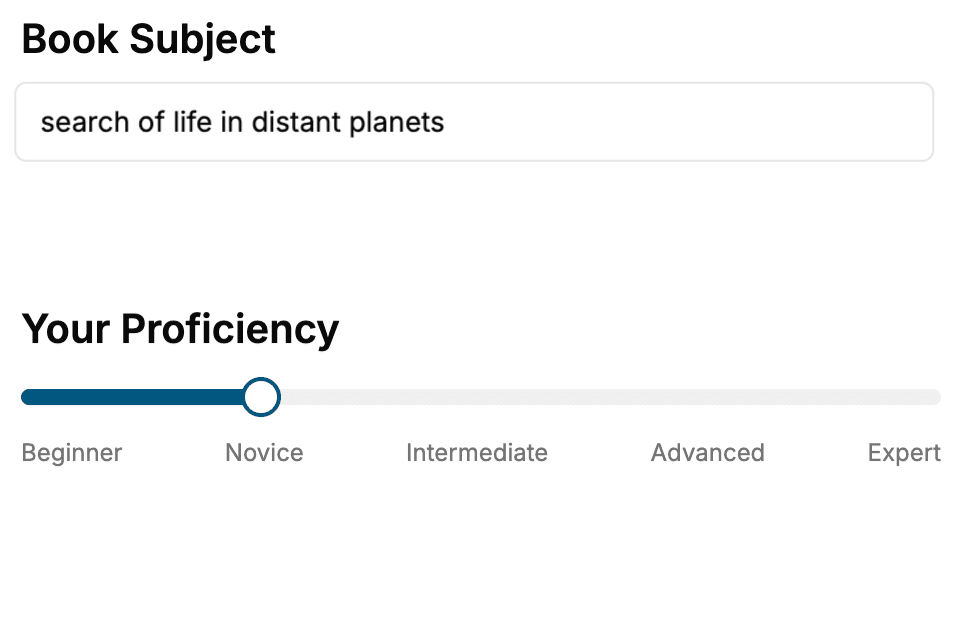
Select the focus of your Geophysics book and share your background
- 2. Personalize your book
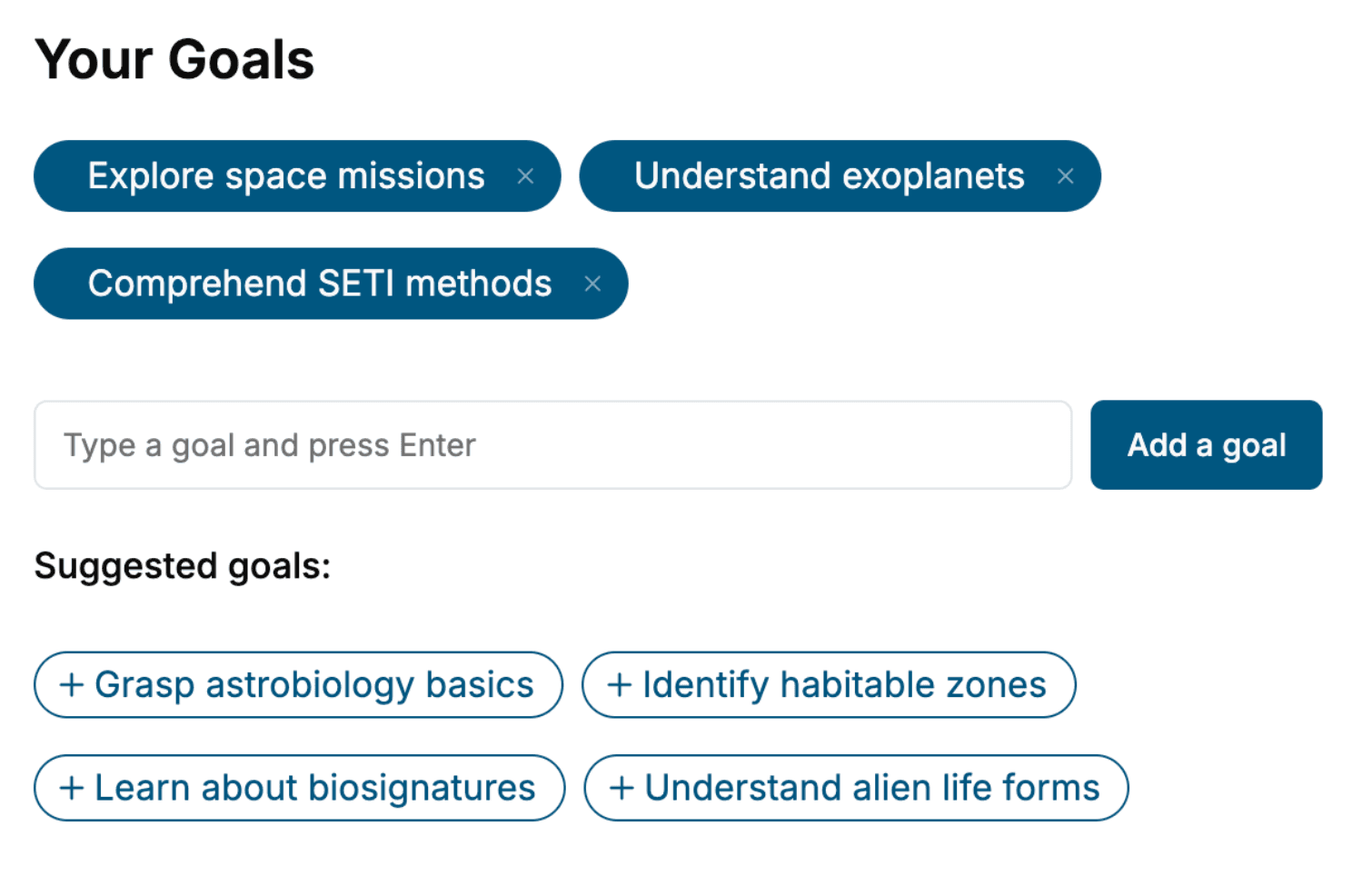
Specify your goals and choose sub-topics to include
- 3. Get your tailored book
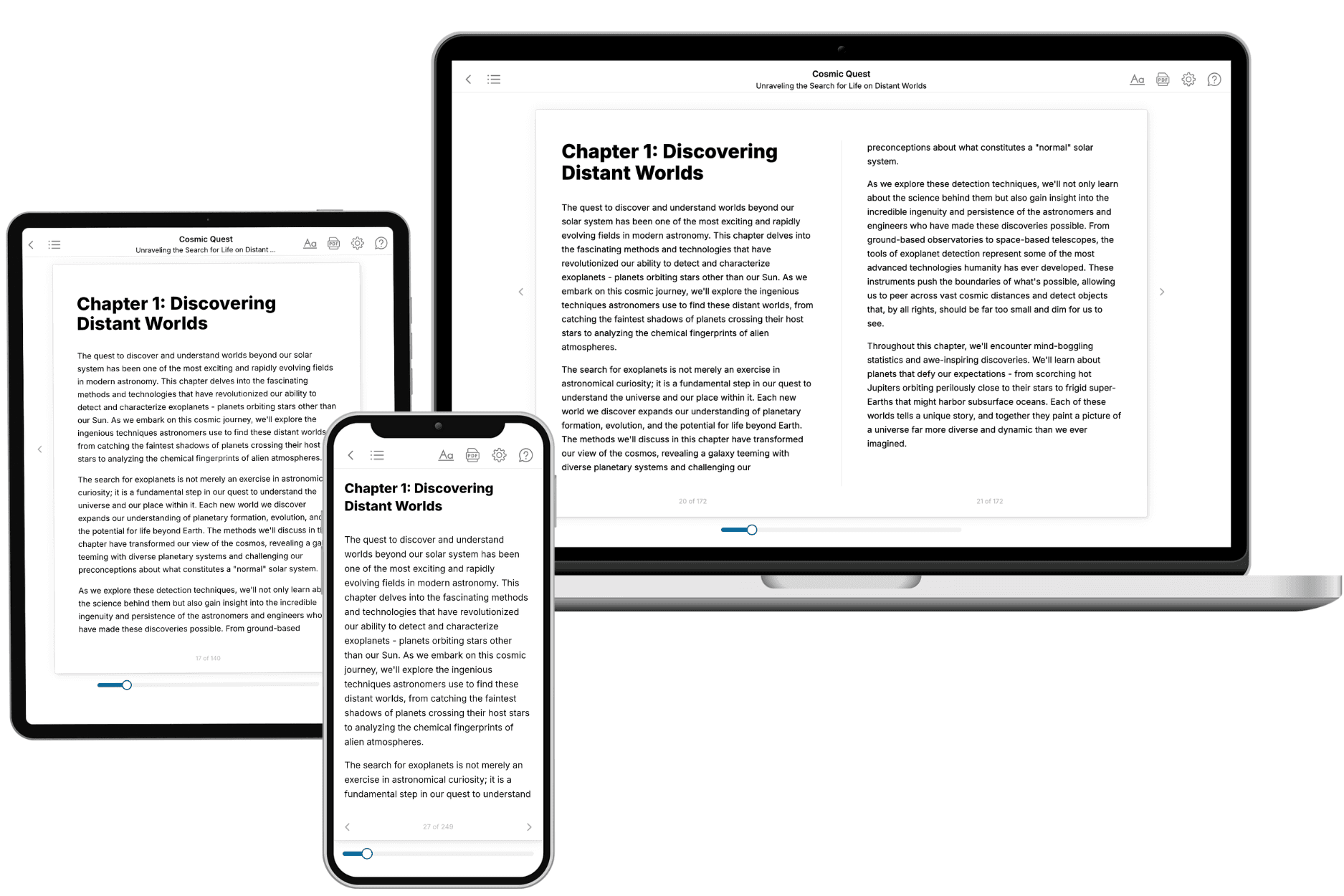
Your book is ready in 10 minutes. Read it online, download as EPUB or PDF, or send to Kindle.
Frequently asked questions
- What is TailoredRead?
TailoredRead creates complete, full-length nonfiction ebooks, written specifically for you. Tell us what you want to learn and why, and TailoredRead writes you a complete ebook on it, with charts, tables, and diagrams throughout. Read it online, on Kindle, or on any e-reader, or download it as a PDF or EPUB. Every book is written fresh the day you order it.
- How is the book tailored to me?
Before anything is written, you answer a few short questions about your goals, your background, and the topics you care about. Your book is then planned around your answers: written at your level, focused on your goals, and covering the topics you chose, instead of the one-size-fits-all book a store sells everyone.
- Will it read like generic AI content?
No. Your book isn't a chat transcript: it's planned chapter by chapter before a single word is written, told in a clear book voice, and explains ideas visually with charts, tables, and diagrams. After writing, every book goes through an editorial pass that polishes chapters so the book reads consistent from start to finish. Judge for yourself: browse thousands of sample books on our Explore Books page.
- How accurate is the content?
Our AI first checks whether your subject needs live research. Niche and fast-moving subjects are researched before writing, and the book plan and chapters are grounded in what it finds. After writing, every book goes through a quality pass that checks its facts and consistency, and researched books list their sources in a Notes section at the back.
- How long is the book?
You choose the length: Comprehensive (250-300 pages), Detailed (150-200 pages), Essential (70-100 pages), or Short (30-50 pages).
- Does the book include visuals?
Yes. Every book includes charts, tables, and diagrams: timelines, checklists, step-by-step guides, decision trees, comparison tables, matrices, and bar charts. A typical book includes dozens of these visual elements.
- Can I read it on Kindle? What formats can I download?
Yes. Every book can be read in our online reader or downloaded as a PDF or EPUB. The EPUB can be opened with Kindle, Apple Books, Kobo, and any e-reader. The Commercial and Author licenses also include an editable Word (DOCX) and Markdown download.
- How much does it cost?
About the price of a regular ebook. The exact price depends on your book's length and complexity, from $2 for the shortest books to $35 for the most comprehensive, and it's shown when you review your book, before you commit to anything. Each book is a one-time purchase, yours to keep, no subscription. Licenses that let you share, teach, or publish your book range from $35.99 to $49.99.
- Can I preview the book before purchasing?
Before you pay, you'll see what your book will cover: the title, a detailed description, the estimated length, and the complete chapter-by-chapter table of contents, so you know what you're getting before you decide. The full text itself is written after you purchase.
- How long does it take to create a book?
About 10 minutes. You can start reading the opening chapters while the rest is still being written.