Echoes of Rebellion
Unraveling the Complexities of the Sepoy Mutiny in India
Many believe the Sepoy Mutiny was a simple soldiers' revolt, but the truth is far more intricate.
269 pages13 chaptersDec 19, 2024Indian History
About this book
The uprising that shook British India in 1857 was a complex tapestry of social, cultural, and political factors that forever changed the course of history. In "Echoes of Rebellion," you'll discover the multifaceted nature of this pivotal event. From the whispers of discontent in the barracks to the roar of cannons on the battlefields, this book takes you on a journey through time, exploring the tensions that led to the outbreak and the far-reaching consequences that followed. Delve into the minds of key figures on both sides of the conflict, understand the cultural misunderstandings that fueled the fire, and examine how this uprising shaped the future of India and the British Empire. With meticulous research and compelling storytelling, this book brings to life the human stories behind the historical facts, offering a fresh perspective on a defining moment in world history.
Table of contents
- IntroductionThe Importance of Understanding the Sepoy Mutiny, Overview of the Book's Structure, Setting the Historical ContextRead below
- Chapter 1: Prelude to RebellionThe East India Company's Rise to Power, Indian Society on the Eve of the Mutiny, British Policies and Their Impact, Growing Tensions and Discontent
- Chapter 2: The Spark That Ignited the FlameThe Greased Cartridge Controversy, Religious Sensitivities and Cultural Misunderstandings, The Meerut Uprising, The Rapid Spread of Rebellion
- Chapter 3: Key Figures of the MutinyIndian Leaders and Their Motivations, British Commanders and Their Strategies, Unsung Heroes on Both Sides, The Role of Women in the Rebellion
- Chapter 4: Major Events and BattlesThe Siege of Delhi, The Lucknow Residency, The Kanpur Massacre, The Gwalior Campaign
- Chapter 5: Regional Variations in the MutinyThe Heart of the Rebellion: North India, Central India: A Complex Landscape, South India: Relative Calm, The Punjab: Loyalty and Strategy
- Chapter 6: The British ResponseInitial Shock and Disbelief, Military Strategies and Reinforcements, Propaganda and Information Control, The 'Divide and Rule' Policy
- Chapter 7: The Indian PerspectiveGrievances and Motivations, Unity and Divisions Among Rebels, Civilian Experiences During the Mutiny, The Role of Princely States
- Chapter 8: Technology and CommunicationWeapons and Military Technology, The Telegraph: A Game-Changer, Transportation and Logistics, The Press and Propaganda
- Chapter 9: The Mutiny in Global ContextEuropean Reactions to the Mutiny, Impact on the British Empire, Comparisons with Other Colonial Rebellions, The Mutiny in the International Press
- Chapter 10: The Suppression of the MutinyKey Turning Points in the Conflict, British Tactics and Strategies, Weaknesses in the Rebel Movement, The Final Battles and Surrender
- Chapter 11: The Immediate AftermathBritish Retribution and 'Pacification', Reorganization of the British Indian Army, Social and Economic Changes, The End of the East India Company's Rule
- Chapter 12: Long-Term Impact and LegacyChanges in British Policies in India, The Rise of Indian Nationalism, The Mutiny in Cultural Memory, Historiography of the Sepoy Mutiny
- Chapter 13: Lessons from the Sepoy MutinyThe Importance of Cultural Sensitivity, Understanding Power Dynamics in Colonial Settings, The Role of Communication in Conflict, Appreciating Historical Complexity
- ConclusionSummary of Key Points, The Sepoy Mutiny's Relevance Today
- Glossary
- Further Reading
Introduction
The Sepoy Mutiny of 1857, also known as the Indian Rebellion or the First War of Indian Independence, stands as a watershed moment in the history of the Indian subcontinent and the British Empire. This pivotal event, which began as a military uprising and quickly escalated into a widespread rebellion, has left an indelible mark on the collective consciousness of both India and Britain. Its echoes continue to reverberate through time, shaping our understanding of colonial history, cultural interactions, and the complex dynamics of power and resistance. As you embark on this journey through the pages of "Echoes of Rebellion," you will uncover the multifaceted nature of this historical event, gaining insights that go far beyond the surface-level narratives often presented in textbooks.
The Sepoy Mutiny was not merely a spontaneous outbreak of violence or a simple clash of arms. It was, in fact, the culmination of decades of simmering tensions, cultural misunderstandings, and political missteps. To truly grasp the significance of this event, one must delve into the intricate web of social, economic, and cultural factors that set the stage for this momentous uprising. From the corridors of power in London to the bustling streets of Delhi, from the opulent palaces of Indian princes to the humble barracks of sepoys, the story of the mutiny unfolds across a vast and varied landscape, both geographical and metaphorical.
As you progress through this book, you will encounter a cast of characters that spans the spectrum of 19th-century Indian society and British colonial administration. You will meet the proud sepoys who felt their traditions were under threat, the ambitious British officers who sought to reshape an ancient civilization, the Indian rulers who saw their power slipping away, and the ordinary citizens caught in the crossfire of a conflict that would reshape the subcontinent. Through their stories, you will gain a nuanced understanding of the motivations, fears, and aspirations that drove both the rebels and those who sought to quell the uprising.
The Sepoy Mutiny serves as a powerful lens through which to examine broader themes of colonialism, cultural conflict, and the struggle for self-determination. As you explore the events of 1857 and their aftermath, you will be challenged to consider questions that resonate far beyond the specific time and place of the rebellion. How do societies navigate the clash between tradition and modernity? What are the consequences of cultural insensitivity in governance? How do narratives of resistance and suppression shape national identities? These questions, among others, will guide your exploration of this complex historical event.
In the following chapters, you will embark on a journey that will take you from the roots of discontent in pre-1857 India to the long-term consequences of the mutiny that continue to shape the Indian subcontinent and its relationship with the world. You will examine the spark that ignited the flame of rebellion, follow the course of major battles and sieges, and analyze the strategies employed by both the rebels and the British forces. Along the way, you will gain insights into the technological, communication, and logistical aspects of the conflict, as well as its representation in the global media of the time.
As you delve deeper into the complexities of the Sepoy Mutiny, you will discover that this historical event defies simple categorization or easy moral judgments. It is a story of courage and cruelty, of loyalty and betrayal, of cultural pride and cultural blindness. By examining the mutiny from multiple perspectives – Indian and British, military and civilian, elite and common – you will develop a more comprehensive and nuanced understanding of this pivotal moment in history.
The Importance of Understanding the Sepoy Mutiny
The Sepoy Mutiny of 1857 stands as a critical juncture in the history of the Indian subcontinent and the British Empire, its significance reverberating through time to shape our understanding of colonial dynamics, cultural interactions, and the struggle for independence. To fully appreciate the importance of this event, it is essential to recognize its multifaceted nature and far-reaching consequences. The mutiny was not merely a military uprising but a complex interplay of social, cultural, and political factors that had been brewing for decades under the surface of British colonial rule. Understanding this event is crucial for several reasons, each of which contributes to a more comprehensive view of history and its impact on the present.
Firstly, the Sepoy Mutiny serves as a pivotal moment in the narrative of India's journey towards independence. While it would be nearly a century before India achieved formal independence in 1947, the events of 1857 marked a significant shift in the relationship between India and Britain. The uprising shattered the illusion of stable British control and exposed the deep-seated resentments and grievances harbored by various sections of Indian society. In the aftermath of the mutiny, the British government was forced to reevaluate its approach to governing India, leading to the dissolution of the East India Company and the establishment of direct Crown rule. This shift in governance had profound implications for the future of India, setting the stage for the nationalist movements that would eventually lead to independence[1].
Secondly, studying the Sepoy Mutiny provides valuable insights into the complexities of cultural interactions and misunderstandings in a colonial context. The spark that ignited the rebellion – the introduction of greased cartridges that were rumored to be coated with beef and pork fat, offending both Hindu and Muslim sepoys – highlights the potential for seemingly minor cultural insensitivities to have major consequences. This incident serves as a stark reminder of the importance of cultural awareness and respect in governance and international relations. By examining the cultural dimensions of the mutiny, you can gain a deeper understanding of how perceptions, beliefs, and traditions can shape historical events and influence the course of nations.
Furthermore, the Sepoy Mutiny offers a case study in the dynamics of power, resistance, and change within colonial systems. The uprising revealed the fragility of colonial rule and the limits of military might in maintaining control over a vast and diverse population. It demonstrated the potential for disparate groups to unite, albeit temporarily, against a common perceived threat. At the same time, the British response to the mutiny and its aftermath provide insights into the strategies employed by colonial powers to reassert control and reshape their governance structures. Analyzing these dynamics can shed light on broader patterns of colonial rule and anti-colonial resistance across different historical contexts.
The mutiny also plays a crucial role in shaping national identities and historical narratives. In India, the events of 1857 have been interpreted and reinterpreted over time, often serving as a touchstone for nationalist sentiments and a symbol of resistance against foreign domination. The way the mutiny is remembered and commemorated reflects changing perspectives on India's colonial past and its journey towards nationhood. Similarly, in Britain, the mutiny left an indelible mark on the national psyche, influencing perceptions of empire and shaping policies towards colonial possessions. By examining these varying interpretations and their evolution over time, you can gain insights into the complex relationship between historical events and national identity formation.
Moreover, understanding the Sepoy Mutiny is essential for comprehending the subsequent development of modern India. The aftermath of the rebellion saw significant changes in British policies towards India, including reforms in administration, education, and land ownership. These changes had long-lasting effects on Indian society, economy, and politics. For instance, the British policy of 'divide and rule,' which was intensified after the mutiny, contributed to the deepening of communal divisions that continue to influence Indian politics to this day. By tracing these long-term impacts, you can better understand the historical roots of contemporary issues in the Indian subcontinent.
The Sepoy Mutiny also provides valuable lessons in the importance of effective communication and information management during times of crisis. The role of the telegraph in the British response to the uprising, as well as the spread of rumors and misinformation among both rebels and loyalists, highlights the critical nature of communication in shaping the course of events. In an era of rapid technological change and global interconnectedness, these lessons remain relevant, offering insights into the challenges of managing information and perceptions during conflicts and crises.
Additionally, studying the Sepoy Mutiny encourages a more nuanced understanding of historical figures and their motivations. By examining the actions and decisions of key players on both sides of the conflict, you can move beyond simplistic categorizations of heroes and villains. This approach fosters a more empathetic and critical engagement with history, recognizing the complex factors that influence human behavior in times of upheaval and conflict.
Lastly, the Sepoy Mutiny serves as a reminder of the importance of considering multiple perspectives when studying historical events. The uprising has been variously described as a mutiny, a rebellion, and a war of independence, depending on the perspective and agenda of the narrator. By engaging with these different interpretations and the evidence supporting them, you can develop critical thinking skills and a more sophisticated understanding of how history is constructed and contested.
In conclusion, understanding the Sepoy Mutiny is crucial not only for its historical significance but also for the insights it offers into broader themes of colonialism, cultural interaction, resistance, and nation-building. As you delve deeper into the complexities of this pivotal event, you will gain a richer appreciation of the forces that have shaped the modern world and the enduring relevance of historical study in navigating contemporary challenges.
Overview of the Book's Structure
"Echoes of Rebellion: Unraveling the Complexities of the Sepoy Mutiny in India" is structured to provide you with a comprehensive and engaging exploration of this pivotal historical event. The book is organized into thirteen chapters, each focusing on a specific aspect of the Sepoy Mutiny, its causes, and its consequences. This carefully crafted structure allows for a logical progression through the complex narrative of the uprising, ensuring that you gain a thorough understanding of the event's multifaceted nature. As you journey through the pages, you will find that each chapter builds upon the knowledge gained in previous sections, creating a rich and nuanced picture of the Sepoy Mutiny and its lasting impact on both India and the British Empire.
The book begins by setting the stage for the rebellion in Chapter 1, "Prelude to Rebellion." This chapter delves into the historical context that led to the uprising, examining the rise of the East India Company, the state of Indian society on the eve of the mutiny, and the British policies that contributed to growing tensions. By understanding these foundational elements, you will be better equipped to grasp the complex interplay of factors that ultimately sparked the rebellion. The chapter also explores the growing discontent among various sections of Indian society, providing insight into the powder keg of emotions and grievances that was waiting to explode.
Chapter 2, "The Spark That Ignited the Flame," focuses on the immediate triggers of the mutiny. Here, you will learn about the infamous greased cartridge controversy and how it intersected with religious sensitivities and cultural misunderstandings. The chapter traces the outbreak of the rebellion in Meerut and its rapid spread across northern India, offering a vivid account of the initial chaos and confusion that characterized the early days of the uprising. Through detailed narratives and analysis, you will gain an appreciation for how seemingly minor incidents can escalate into major historical events when set against a backdrop of long-standing grievances and tensions.
The following chapters delve deeper into various aspects of the mutiny itself. Chapter 3, "Key Figures of the Mutiny," introduces you to the prominent personalities on both sides of the conflict. From Indian leaders like Nana Sahib and the Rani of Jhansi to British commanders such as Sir Hugh Rose and Sir Colin Campbell, you will encounter the individuals who shaped the course of the rebellion. This chapter also sheds light on unsung heroes and the often-overlooked role of women in the conflict, providing a more inclusive and nuanced understanding of the event's human dimension.
Chapters 4 and 5 focus on the military aspects of the mutiny. "Major Events and Battles" offers detailed accounts of key engagements such as the Siege of Delhi and the defense of the Lucknow Residency, while "Regional Variations in the Mutiny" examines how the rebellion played out differently across various parts of India. These chapters combine strategic analysis with vivid descriptions of battlefield action, giving you a comprehensive view of the military dimensions of the conflict.
The book then shifts focus to examine the responses to the mutiny from different perspectives. Chapter 6, "The British Response," analyzes the initial shock felt by the British, their military strategies, and the propaganda efforts employed to maintain control. Chapter 7, "The Indian Perspective," offers a counterpoint, exploring the grievances and motivations of the rebels, as well as the experiences of civilians caught in the crossfire. These chapters work in tandem to provide a balanced view of the conflict, highlighting the complexities and contradictions on both sides.
Chapter 8, "Technology and Communication," takes a unique approach by examining the role of technological advancements in shaping the course of the mutiny. From the impact of the telegraph on British command and control to the importance of transportation and logistics, this chapter offers insights into the often-overlooked technical aspects of 19th-century warfare. It also explores how the press and propaganda efforts influenced public opinion both in India and abroad.
The global context of the mutiny is addressed in Chapter 9, which examines European reactions to the uprising and its impact on the broader British Empire. This chapter also draws comparisons with other colonial rebellions, placing the Sepoy Mutiny within the larger narrative of anti-colonial resistance in the 19th century. By exploring how the mutiny was perceived and reported internationally, you will gain a broader perspective on its significance beyond the borders of India.
The suppression of the mutiny and its immediate aftermath are covered in Chapters 10 and 11. These sections detail the military campaigns that ultimately quelled the rebellion, the weaknesses in the rebel movement, and the brutal retribution exacted by the British in the wake of their victory. The chapters also explore the social, economic, and political changes that followed, including the reorganization of the British Indian Army and the end of East India Company rule.
Chapter 12, "Long-Term Impact and Legacy," examines the enduring consequences of the Sepoy Mutiny. From changes in British policies in India to the rise of Indian nationalism, this chapter traces the mutiny's influence on the subsequent history of the subcontinent. It also explores how the event has been remembered and interpreted over time, both in India and Britain, offering insights into the mutiny's place in cultural memory and historical scholarship.
The final chapter, "Lessons from the Sepoy Mutiny," draws together the threads of the preceding narrative to offer reflections on the broader significance of the event. It emphasizes the importance of cultural sensitivity, the complexities of power dynamics in colonial settings, and the role of communication in conflict. This chapter encourages you to apply the insights gained from studying the Sepoy Mutiny to contemporary issues, demonstrating the continued relevance of this historical event.
Throughout the book, you will find that each chapter is enriched with primary source quotations, maps, and illustrations that bring the events and personalities of the Sepoy Mutiny to life. Sidebars and text boxes provide additional context and interesting anecdotes, while end-of-chapter summaries and discussion questions encourage reflection and critical thinking. The book also includes a comprehensive glossary of terms and a suggested reading list for those who wish to delve deeper into specific aspects of the mutiny.
By structuring the book in this way, "Echoes of Rebellion" aims to provide you with a thorough, engaging, and thought-provoking exploration of the Sepoy Mutiny. As you progress through the chapters, you will develop a nuanced understanding of this complex historical event, its causes, its course, and its far-reaching consequences. This knowledge will not only enrich your understanding of Indian and British history but also provide valuable insights into the broader themes of colonialism, resistance, and cultural interaction that continue to shape our world today.
Setting the Historical Context
To fully grasp the significance and complexity of the Sepoy Mutiny of 1857, it is crucial to understand the historical context in which it occurred. The events that unfolded during this tumultuous period were the result of a long and intricate interplay of political, economic, social, and cultural factors that had been developing for over a century. This section aims to provide you with a comprehensive overview of the historical backdrop against which the mutiny erupted, setting the stage for the detailed exploration of the rebellion that follows in subsequent chapters.
The story of the Sepoy Mutiny begins with the gradual expansion of British influence in India, a process that started in the early 18th century. The British East India Company, originally established as a trading enterprise in 1600, had by the mid-18th century begun to assume political and military control over large parts of the Indian subcontinent. This transformation from a commercial venture to a quasi-governmental entity was neither smooth nor predetermined. It was marked by a series of conflicts, alliances, and political maneuvers that gradually shifted the balance of power away from the Mughal Empire and various Indian princely states towards the Company[2].
The pivotal Battle of Plassey in 1757, where Company forces under Robert Clive defeated the Nawab of Bengal, is often cited as the beginning of British rule in India. This victory gave the Company control over Bengal, the richest province of the Mughal Empire, and set the stage for further expansion. Over the next century, through a combination of military conquests, treaties, and the doctrine of lapse (which allowed the Company to annex princely states whose rulers died without a natural heir), British control extended across much of the subcontinent. By 1857, the Company directly administered or held significant influence over territories stretching from the Himalayas to the southern tip of India.
This rapid expansion of British power brought with it profound changes to the social, economic, and political landscape of India. The traditional power structures that had existed for centuries were disrupted. Mughal authority, already in decline, was reduced to a mere shadow of its former glory, with the Emperor becoming a pensioner of the Company. Many Indian rulers found themselves either displaced or forced to accept British suzerainty. The Company introduced new systems of land revenue collection, justice, and administration that often clashed with existing practices and customs.
Economically, the period leading up to 1857 saw significant transformations. The Company's policies often favored British manufacturing interests at the expense of traditional Indian industries. For instance, the imposition of high tariffs on Indian textiles exported to Britain, coupled with the flooding of the Indian market with cheaper British machine-made cloth, led to the decline of India's once-thriving textile industry. This economic disruption had far-reaching social consequences, displacing skilled artisans and altering traditional economic relationships[3].
In the realm of education and culture, the early 19th century witnessed debates among British officials and intellectuals about the best approach to governing India. Some advocated for the introduction of Western education and values, believing this would create a class of Indians who would support British rule. Others argued for a more conservative approach, fearing that rapid social change could lead to instability. The result was a series of educational and social reforms that, while limited in scope, began to introduce Western ideas and practices to certain segments of Indian society.
Religious and social reform movements within Indian society also played a significant role in shaping the pre-1857 landscape. Movements such as the Brahmo Samaj in Bengal sought to reform Hinduism, often incorporating elements of Western thought. These movements, while limited to a small educated elite, began to challenge traditional social and religious practices, creating tensions within Indian society. At the same time, Christian missionary activity, though officially discouraged by the Company, was increasing, leading to fears among some Indians about forced conversions and the erosion of traditional beliefs.
The composition and structure of the Company's army in India is another crucial element of the historical context. The army was primarily composed of Indian soldiers, known as sepoys, led by British officers. By 1857, the Bengal Army, one of the three armies of the Company (the others being the Madras and Bombay armies), had a strength of about 150,000 men, with only about 23,000 British troops. This reliance on Indian soldiers, while economically necessary, created potential vulnerabilities that would become apparent during the mutiny.
In the years immediately preceding 1857, a series of actions and policies by the British further heightened tensions. The annexation of Awadh (Oudh) in 1856, a territory in north India, on grounds of misgovernance, was seen by many as an unjust act of aggression. The doctrine of lapse, used to annex states like Jhansi, was viewed with suspicion and resentment by Indian rulers. These actions contributed to a growing sense of insecurity among various sections of Indian society, from dispossessed rulers to ordinary soldiers and civilians.
Moreover, there were growing concerns among Indians about the potential erosion of their religious and cultural practices. Reforms such as the abolition of sati (widow immolation) in 1829 and the passing of the Hindu Widows' Remarriage Act in 1856, while progressive in intent, were seen by some as unwarranted interference in religious matters. The increasing presence of Christian missionaries and rumors of forced conversions added to these anxieties.
It's important to note that the historical context of the Sepoy Mutiny was not one of uniform discontent or a coordinated plan for rebellion. Different groups had different grievances and aspirations. Some sought the restoration of past glories, others were motivated by more immediate concerns about their livelihoods or religious practices. The complex tapestry of Indian society, with its diverse religious, caste, and regional identities, meant that there was no single, unified perspective on British rule or the need for change.
The British themselves were not a monolithic entity. There were debates and disagreements among officials about the best ways to govern India. Some advocated for more direct rule and rapid modernization, while others favored a more cautious approach that respected Indian traditions. These differing viewpoints sometimes led to inconsistent policies that added to the general atmosphere of uncertainty and tension.
In conclusion, the historical context of the Sepoy Mutiny was characterized by rapid political, economic, and social changes brought about by the expansion of British power in India. These changes disrupted traditional power structures, economic relationships, and social norms, creating a complex web of grievances and anxieties among various sections of Indian society. At the same time, the British administration, while powerful, was reliant on Indian soldiers and faced its own internal debates about governance. This volatile mix of factors created the conditions in which a spark – in this case, the controversy over greased cartridges – could ignite a widespread rebellion. Understanding this context is essential for appreciating the complexities of the Sepoy Mutiny and its far-reaching consequences for both India and the British Empire.
This is the end of the free sample. The full book has 13 chapters.
Want this book written for you?
Tell us your goals and background, and get your own version of this book, tailored by AI to you.


Benefits of AI-tailored books
- Read one book, not ten:
- all the Indian History knowledge you need, gathered into a single book.
- Save days of learning:
- tell us your goals, choose your topics, and the whole book is built around them.
- Learn effortlessly:
- Indian History book written for your specific background and expertise.
- Understand at a glance:
- includes charts, tables, timelines, checklists, decision trees, and more.
- Stay current:
- written the day you order it, not years ago.
- Trust what you read:
- every book is checked for accuracy, with real research when your subject needs it.
Create your unique book in 3 steps
- 1. Select your focus
Select the focus of your Indian History book and share your background
- 2. Personalize your book
Specify your goals and choose sub-topics to include
- 3. Get your tailored book
Your book is ready in 10 minutes. Read it online, download as EPUB or PDF, or send to Kindle.


Frequently asked questions
- What is TailoredRead?
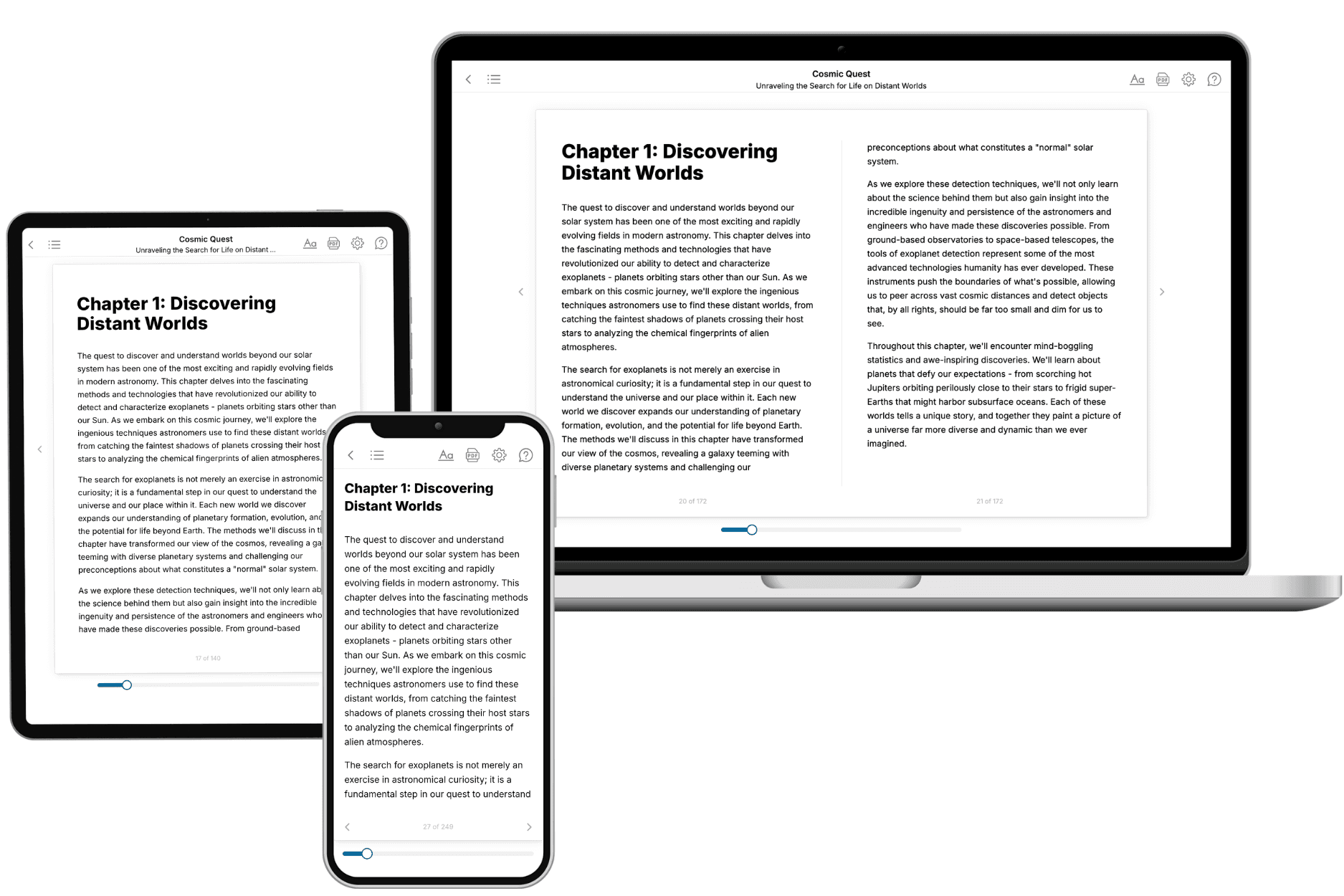
TailoredRead creates complete, full-length nonfiction ebooks, written specifically for you. Tell us what you want to learn and why, and TailoredRead writes you a complete ebook on it, with charts, tables, and diagrams throughout. Read it online, on Kindle, or on any e-reader, or download it as a PDF or EPUB. Every book is written fresh the day you order it.
- How is the book tailored to me?
Before anything is written, you answer a few short questions about your goals, your background, and the topics you care about. Your book is then planned around your answers: written at your level, focused on your goals, and covering the topics you chose, instead of the one-size-fits-all book a store sells everyone.
- Will it read like generic AI content?
No. Your book isn't a chat transcript: it's planned chapter by chapter before a single word is written, told in a clear book voice, and explains ideas visually with charts, tables, and diagrams. After writing, every book goes through an editorial pass that polishes chapters so the book reads consistent from start to finish. Judge for yourself: browse thousands of sample books on our Explore Books page.
- How accurate is the content?
Our AI first checks whether your subject needs live research. Niche and fast-moving subjects are researched before writing, and the book plan and chapters are grounded in what it finds. After writing, every book goes through a quality pass that checks its facts and consistency, and researched books list their sources in a Notes section at the back.
- How long is the book?
You choose the length: Comprehensive (250-300 pages), Detailed (150-200 pages), Essential (70-100 pages), or Short (30-50 pages).
- Does the book include visuals?
Yes. Every book includes visual elements such as timelines, checklists, step-by-step guides, decision trees, comparison tables, and matrices, and many include bar charts. A typical book includes dozens of these visual elements.
- Can I read it on Kindle? What formats can I download?
Yes. Every book can be read in our online reader or downloaded as a PDF or EPUB. The EPUB can be opened with Kindle, Apple Books, Kobo, and any e-reader. The Commercial and Author licenses also include an editable Word (DOCX) and Markdown download.
- How much does it cost?
About the price of a regular ebook. The exact price depends on your book's length and complexity, from $2 for the shortest books to $35 for the most comprehensive, and it's shown when you review your book, before you commit to anything. Each book is a one-time purchase, yours to keep, no subscription. Licenses that let you share, teach, or publish your book range from $35.99 to $49.99.
- Can I preview the book before purchasing?
Before you pay, you'll see what your book will cover: the title, a detailed description, the estimated length, and the complete chapter-by-chapter table of contents, so you know what you're getting before you decide. The full text itself is written after you purchase.
- How long does it take to create a book?
About 10 minutes. You can start reading the opening chapters while the rest is still being written.