Email Mastery Blueprint
Personalized Tactics for Building Engaged Subscribers and Driving Revenue
What if your email campaigns could feel like personalized conversations rather than broadcast messages?
191 pages10 chaptersJun 15, 2026Email MarketingCreated by Jenna
About this book
With your background in psychology and content design, you understand that connection drives engagement—but email marketing often feels like a numbers game. This blueprint bridges that gap by combining behavioral psychology with practical email strategy, showing you how to build subscriber lists that actually want to hear from you, craft subject lines that trigger opens, and create automated sequences that nurture relationships at scale. You'll discover how to segment audiences with precision, optimize send times using predictive models, and measure what truly matters: revenue attribution. Whether you're refining your current approach or building an email program from scratch, this guide provides the frameworks, templates, and tactical insights to transform email from a channel you tolerate into a revenue engine you control.
Table of contents
- IntroductionWhy Email Remains Your Most Valuable Channel, The Psychology Behind Email Engagement, How to Use This Blueprint for Maximum ImpactRead below
- Chapter 1: Building Engaged Subscriber Lists from the Ground UpStrategic List Building: Quality Over Vanity Metrics, Creating Lead Magnets That Attract Your Ideal Subscriber, Optimizing Signup Forms and Landing Pages for Conversion
- Chapter 2: Segmentation and Personalization: The Foundation of EngagementUnderstanding Segmentation: Beyond Basic Demographics, Advanced List Segmentation Strategies and Implementation, Personalization Techniques That Drive Open and Click Rates, Leveraging Behavioral Data for Smarter Segments
- Chapter 3: Subject Line Mastery: The Psychology of the OpenThe Psychology Behind What Makes Subscribers Click, Proven Subject Line Formulas and Frameworks, A/B Testing Subject Lines for Continuous Improvement
- Chapter 4: Crafting Compelling Email Content That ConvertsEmail Copywriting Techniques That Drive Action, Conversion-Focused Email Templates for Every Campaign Type, Mobile-First Design and Optimization Strategies, Visual Hierarchy and Design Principles for Email
- Chapter 5: Timing and Deliverability: Reaching Subscribers When They're ReadyThe Psychology of Send Time and Subscriber Behavior, Building Predictive Send Time Models for Your Audience, Email Deliverability: Technical Foundations and Best Practices
- Chapter 6: Automation and Behavioral Triggers: Scaling PersonalizationSelecting and Implementing Email Automation Tools, Creating Behavioral Trigger Campaigns That Feel Personal, Building Automated Nurture Sequences That Convert, Optimizing Workflows for Maximum Engagement and Revenue
- Chapter 7: Customer Retention and Lifecycle ManagementUnderstanding Subscriber Lifecycle Metrics and Stages, Retention Strategies That Reduce Churn and Increase LTV, Building Re-engagement Sequences for Inactive Subscribers
- Chapter 8: Testing and Optimization: Data-Driven Decision MakingA/B Testing Framework and Best Practices, Multivariate Testing for Complex Campaign Elements, Understanding Statistical Significance and Sample Size
- Chapter 9: Analytics and Revenue Attribution: Measuring What MattersKey Performance Metrics Beyond Open and Click Rates, Building Revenue Attribution Models for Email Campaigns, Analyzing Campaign Results and Extracting Insights, Analyzing Competitor Email Strategies and Benchmarking
- Chapter 10: Advanced Strategies: Funnels, Journeys, and Feedback LoopsEmail Funnel Optimization: From Awareness to Advocacy, Designing Personalized Customer Journeys Across Touchpoints, Integrating Subscriber Feedback to Improve Campaigns
- ConclusionYour Implementation Roadmap: From Strategy to Execution, Next Steps and Continuous Improvement
Introduction
There is a quiet irony at the heart of modern email marketing. Marketers have access to more data, more tools, and more automation than ever before, yet most email programs still feel like shouting into a crowd. Open rates hover around 20 to 25 percent across industries, click-through rates often sit below 3 percent, and unsubscribe buttons get clicked every single day by people who once raised their hand and said yes.[1] Something is clearly broken, and it is not the technology. The problem is the approach.
Most email programs are built around the sender's needs, not the subscriber's experience. Campaigns go out on a fixed schedule because that is what the content calendar says. Subject lines get written in five minutes because the deadline is looming. Segments are defined by job title or zip code because that is what the CRM exports easily. The result is a stream of messages that feel generic, impersonal, and easy to ignore. Subscribers do not unsubscribe because they hate email. They unsubscribe because the email they are receiving does not feel like it was written for them.
This blueprint takes a different starting point. It treats email marketing as a discipline rooted in human psychology, behavioral science, and strategic design, not just a channel for pushing promotions. With a background in clinical psychology and UX content design, you already understand that people make decisions based on emotion, context, and perceived relevance. This book applies those same principles to every layer of email strategy, from the moment someone discovers your signup form to the automated sequence that turns a first-time buyer into a loyal customer. The goal is not just better open rates. The goal is a program that builds real relationships and drives measurable revenue.
The chapters ahead are organized as a complete system. Each one builds on the last, moving from foundational list-building strategy through segmentation, copywriting, automation, testing, and analytics. You will find frameworks you can implement immediately, templates you can adapt to your own voice, and psychological principles that explain why certain tactics work when others fall flat. Whether you are refining an existing program or building one from scratch, this guide is designed to meet you where you are and move you forward with clarity and confidence.
Why Email Remains Your Most Valuable Channel
Every few years, a new platform arrives and someone declares that email is dead. Social media was supposed to replace it. Then messaging apps. Then push notifications. Yet email has outlasted every challenger, and the numbers explain why. There are currently over 4.3 billion email users worldwide, a figure projected to reach 4.8 billion by 2027.[2] No social platform comes close to that reach, and unlike social media, email is a channel you own. Your subscriber list is an asset that no algorithm change can take away from you overnight.
The return on investment for email marketing is consistently among the highest of any digital channel. Industry research regularly places email ROI at around $36 to $42 for every dollar spent, a figure that reflects both the low cost of delivery and the high intent of subscribers who have actively opted in.[3] Compare that to paid social advertising, where costs per acquisition have risen sharply in recent years while targeting precision has declined due to privacy changes. Email, by contrast, becomes more valuable as your list grows and your data matures.
What makes email uniquely powerful is the nature of the relationship it creates. When someone gives you their email address, they are granting you access to a personal space. The inbox is not a public feed. It is a private environment where people manage their finances, communicate with family, and receive information they have specifically requested. That context creates a different kind of attention than a social media scroll. A well-crafted email, sent to the right person at the right moment, can feel like a message from a trusted advisor rather than an advertisement.
Email also provides a level of data richness that other channels struggle to match. You can see exactly who opened a message, which links they clicked, how long they spent reading, and what they did afterward on your website. That behavioral data becomes the raw material for smarter segmentation, more relevant content, and more precisely timed follow-up. Over time, a well-managed email program builds a detailed picture of each subscriber's interests, preferences, and purchase patterns, giving you the intelligence to serve them better with every campaign.
There is also a stability argument worth making. Social platforms change their algorithms, reduce organic reach, and occasionally disappear entirely. Paid advertising costs fluctuate with market conditions and competitor spending. Email, by contrast, operates on a relatively stable infrastructure. The rules of deliverability evolve, but the fundamental mechanics of sending a message to an inbox have remained consistent for decades. Building a strong email program is building on solid ground.
Finally, email integrates with every other part of your marketing ecosystem. It amplifies content, drives traffic to new products, supports customer service, and closes sales. It works at every stage of the customer lifecycle, from the first welcome message to the re-engagement campaign sent to someone who has not purchased in six months. No other single channel offers that kind of versatility, which is why email belongs at the center of any serious growth strategy.
The Psychology Behind Email Engagement
Understanding why people open, read, and act on emails requires looking beyond marketing tactics and into the underlying psychology of human decision-making. People do not process email rationally, weighing each message on its objective merits. They make fast, intuitive judgments based on pattern recognition, emotional cues, and perceived relevance. A subject line gets evaluated in milliseconds. A sender name triggers an immediate trust response. The first sentence of an email either earns continued attention or loses it. Knowing how these micro-decisions work gives you a significant strategic advantage.
One of the most important psychological principles in email engagement is relevance signaling. The human brain is wired to filter out noise and pay attention to information that feels personally meaningful. When a subscriber sees their name in a subject line, or receives a message that references a product they recently browsed, their brain registers that signal as relevant and allocates more attention to it. This is not a trick. It is a reflection of how human cognition works. Personalization works because it mimics the experience of being known, and being known feels safe and valuable.
The principle of reciprocity, well-documented in social psychology research by Robert Cialdini, plays a significant role in email engagement as well.[4] When you consistently deliver value through your emails, whether that is useful information, exclusive access, or practical tools, subscribers develop a sense of obligation to engage in return. This is why content-first email programs, where the primary goal is to help rather than sell, tend to generate stronger long-term revenue than purely promotional approaches. The relationship is built on a foundation of value exchange.
Scarcity and urgency are two more psychological levers that directly influence email behavior. When a subscriber perceives that an opportunity is limited in time or quantity, their motivation to act increases. This is rooted in loss aversion, the well-established finding that people are more motivated by the prospect of losing something than by the prospect of gaining something of equal value.[5] A subject line that reads "Last chance: offer ends tonight" activates a different cognitive response than one that reads "Check out our sale." Used honestly and sparingly, these triggers are powerful. Used manipulatively or too frequently, they erode trust and train subscribers to ignore them.
The concept of cognitive load is particularly relevant for email design and copywriting. Every decision a reader has to make while reading your email costs mental energy. When an email contains multiple competing calls to action, dense paragraphs of text, or unclear visual hierarchy, subscribers experience friction. That friction reduces engagement and increases the likelihood of deletion. The most effective emails are designed to minimize cognitive load by making the desired action obvious, the content scannable, and the value proposition immediately clear.
Social proof is another psychological mechanism that shapes email behavior. When subscribers see that other people like them have taken a specific action, purchased a product, joined a community, or achieved a result, their confidence in doing the same increases. Incorporating testimonials, user counts, or case study references into email content activates this mechanism. It reduces the perceived risk of action by demonstrating that others have already made the same choice successfully.
Finally, the psychology of habit formation matters enormously for long-term email program success. When subscribers receive consistent, high-quality emails at predictable intervals, they begin to anticipate and look forward to them. This is the same mechanism that makes people loyal to a favorite podcast or newsletter. Consistency builds familiarity, and familiarity builds trust. The goal of a mature email program is not just to send good individual campaigns. It is to become a regular, welcome presence in the subscriber's inbox, a source they return to because they know it reliably delivers value.
The most effective email programs are not built on clever tactics. They are built on a genuine understanding of what subscribers need, when they need it, and how to communicate it in a way that feels human. Psychology is not a manipulation toolkit. It is a framework for empathy at scale.
Throughout this book, these psychological principles will appear again and again in practical contexts. You will see how they inform subject line construction, segmentation logic, automation trigger design, and re-engagement strategy. The goal is not to apply psychology as a set of tricks, but to use it as a lens for understanding your subscribers more deeply and serving them more effectively.
How to Use This Blueprint for Maximum Impact
This book is designed to function as both a strategic guide and a practical reference. You can read it cover to cover to build a comprehensive understanding of email marketing as a system, or you can navigate directly to the chapters most relevant to your current priorities. Both approaches work, though reading sequentially will give you the clearest picture of how each element connects to the others. Email marketing is not a collection of isolated tactics. It is an integrated system where list quality affects deliverability, segmentation affects relevance, and relevance affects revenue.
Each chapter follows a consistent structure. It opens with the core concept and the psychological or strategic rationale behind it, then moves into specific frameworks, examples, and implementation steps. You will find templates and checklists embedded throughout, designed to be adapted rather than copied verbatim. Your voice, your audience, and your business context are unique, and the most effective email programs reflect that specificity. Use the frameworks as starting points, then customize them to fit your reality.
Here is a practical way to approach the material based on where you are right now:
- If you are building from scratch: Start with Chapters 1 and 2, which cover list building and segmentation. These are the foundations everything else depends on. A small, well-segmented list will outperform a large, undifferentiated one every time.
- If you have a list but low engagement: Jump to Chapters 3 and 4, which address subject lines and email content. Then move to Chapter 7 on re-engagement sequences. Low engagement is usually a relevance problem, and these chapters address it directly.
- If you are sending consistently but not seeing revenue: Focus on Chapters 6, 9, and 10, which cover automation, analytics, and funnel optimization. The issue is likely in the conversion architecture, not the content itself.
- If you want to optimize an already-performing program: Chapters 5, 8, and 9 will give you the most leverage. Predictive send time, A/B testing frameworks, and revenue attribution models are where advanced programs find their next level of performance.
One of the most common mistakes in email marketing is treating optimization as a one-time project rather than an ongoing practice. The chapters on testing and analytics are not meant to be read once and set aside. They describe a continuous process of learning, adjusting, and improving. The email programs that generate the most revenue over time are the ones that treat every campaign as a data point and every data point as an opportunity to get smarter. Build that mindset from the beginning, and it will compound in your favor.
You will also notice that this book does not treat email in isolation. Effective email marketing connects to your broader content strategy, your customer service approach, your product development feedback loops, and your overall brand voice. Where those connections are relevant, they are called out explicitly. Email is most powerful when it is integrated into a coherent customer experience, not siloed as a separate marketing function.
A note on tools and platforms: this book is deliberately platform-agnostic. The principles and frameworks here apply whether you are using Klaviyo, ActiveCampaign, Mailchimp, HubSpot, or any other email service provider. Where specific platform features are referenced, they are used as examples of a broader capability, not as endorsements. The strategic thinking matters far more than the specific software. Good strategy executed on a basic platform will outperform poor strategy executed on the most sophisticated one.
Throughout the chapters, you will encounter specific metrics, benchmarks, and research findings. These are provided as reference points, not as universal targets. Industry averages vary significantly by sector, audience type, and business model. A 25 percent open rate might be excellent in one industry and mediocre in another. The most meaningful benchmarks are the ones you establish for your own program over time, comparing your current performance to your own historical baseline rather than to a generic industry average.
Finally, approach this material with a spirit of experimentation. Email marketing rewards curiosity. The tactics that work brilliantly for one audience may fall flat for another, and the only way to know what works for your specific subscribers is to test, measure, and iterate. This book will give you the frameworks to do that systematically, but the insights you generate from your own data will ultimately be your most valuable asset. The goal is not to follow a formula. The goal is to build a program that is genuinely yours, grounded in a deep understanding of your subscribers and continuously refined by evidence.
What follows is a complete blueprint for doing exactly that. Each chapter is a building block. Together, they form a system capable of transforming email from a channel you manage into a revenue engine you trust. The work starts now, and it starts with understanding who your subscribers are and why they chose to hear from you in the first place.
Notes
Introduction
- 1. Mailchimp Email Marketing Benchmarks, Average open and click rates by industry. mailchimp.com/resources/email-marketing-benchmarks/, 2023
- 2. Statista, Number of email users worldwide from 2017 to 2027. statista.com, 2023
- 3. Litmus, The ROI of Email Marketing. litmus.com/blog/the-roi-of-email-marketing/, 2023
- 4. Robert B. Cialdini, Influence: The Psychology of Persuasion, Harper Business, 1984
- 5. Daniel Kahneman and Amos Tversky, "Prospect Theory," Econometrica, 1979
This is the end of the free sample. The full book has 10 chapters.
Want this book written for you?
Tell us your goals and background, and get your own version of this book, tailored by AI to you.


Benefits of AI-tailored books
- Read one book, not ten:
- all the Email Marketing knowledge you need, gathered into a single book.
- Save days of learning:
- tell us your goals, choose your topics, and the whole book is built around them.
- Learn effortlessly:
- Email Marketing book written for your specific background and expertise.
- Understand at a glance:
- includes charts, tables, timelines, checklists, decision trees, and more.
- Stay current:
- written the day you order it, not years ago.
- Trust what you read:
- every book is checked for accuracy, with real research when your subject needs it.
Create your unique book in 3 steps
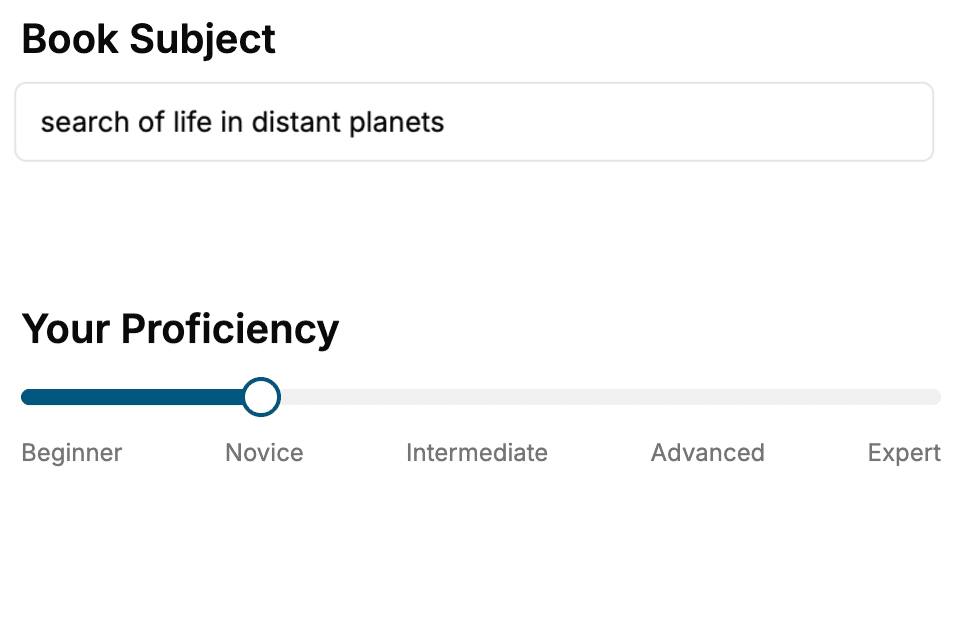
- 1. Select your focus
Select the focus of your Email Marketing book and share your background
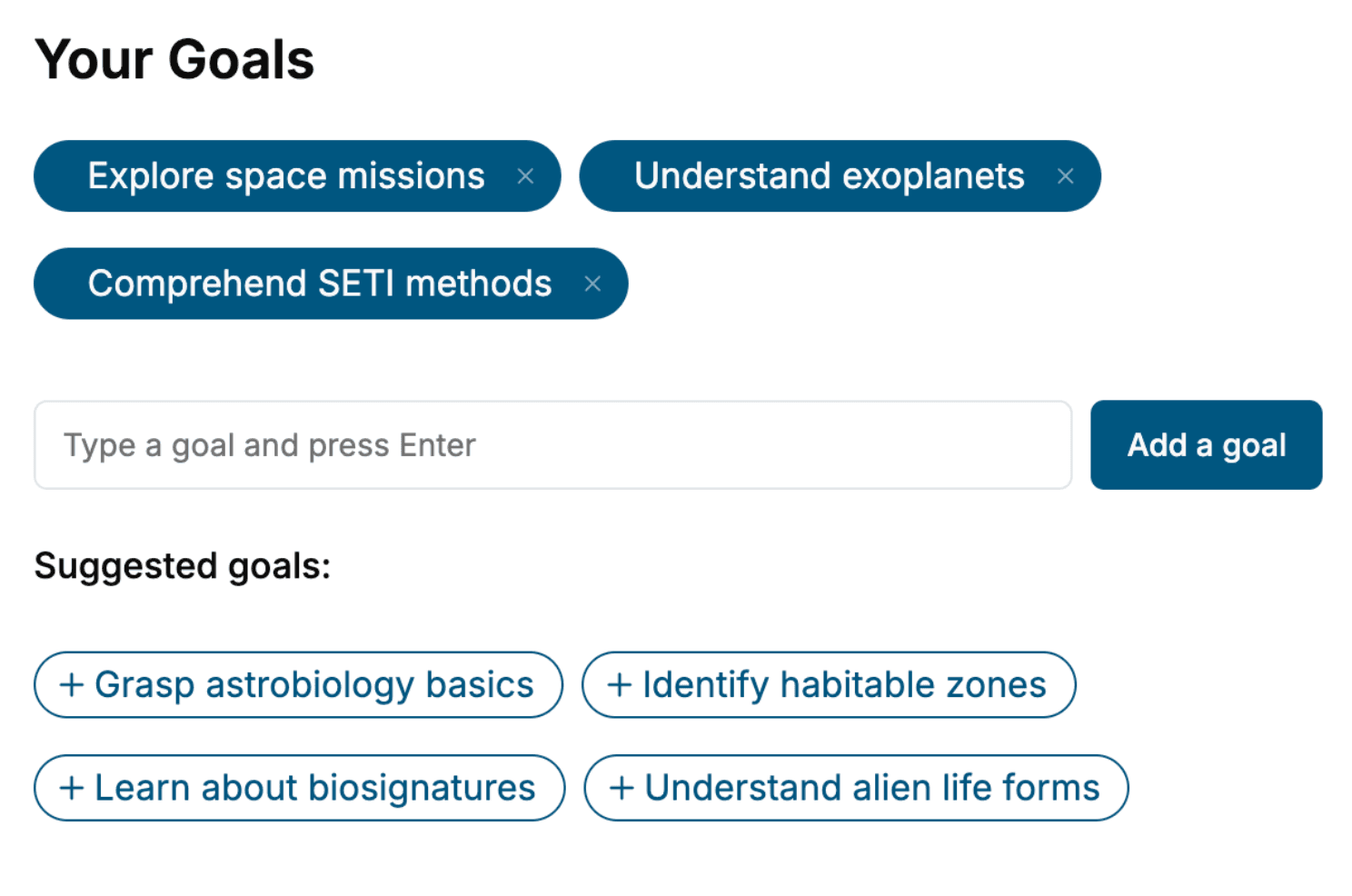
- 2. Personalize your book
Specify your goals and choose sub-topics to include
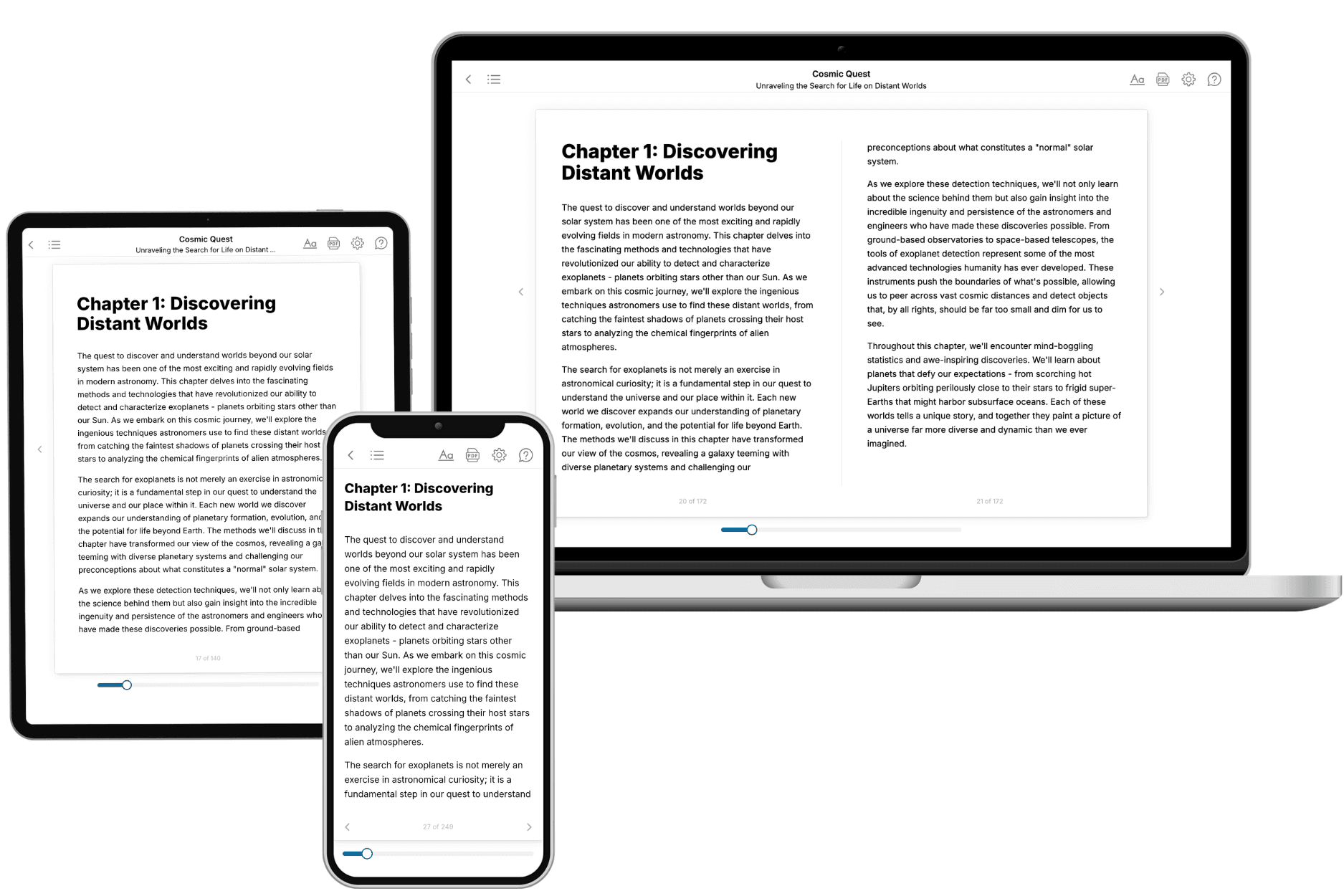
- 3. Get your tailored book
Your book is ready in 10 minutes. Read it online, download as EPUB or PDF, or send to Kindle.
Frequently asked questions
- What is TailoredRead?
TailoredRead creates complete, full-length nonfiction ebooks, written specifically for you. Tell us what you want to learn and why, and TailoredRead writes you a complete ebook on it, with charts, tables, and diagrams throughout. Read it online, on Kindle, or on any e-reader, or download it as a PDF or EPUB. Every book is written fresh the day you order it.
- How is the book tailored to me?
Before anything is written, you answer a few short questions about your goals, your background, and the topics you care about. Your book is then planned around your answers: written at your level, focused on your goals, and covering the topics you chose, instead of the one-size-fits-all book a store sells everyone.
- Will it read like generic AI content?
No. Your book isn't a chat transcript: it's planned chapter by chapter before a single word is written, told in a clear book voice, and explains ideas visually with charts, tables, and diagrams. After writing, every book goes through an editorial pass that polishes chapters so the book reads consistent from start to finish. Judge for yourself: browse thousands of sample books on our Explore Books page.
- How accurate is the content?
Our AI first checks whether your subject needs live research. Niche and fast-moving subjects are researched before writing, and the book plan and chapters are grounded in what it finds. After writing, every book goes through a quality pass that checks its facts and consistency, and researched books list their sources in a Notes section at the back.
- How long is the book?
You choose the length: Comprehensive (250-300 pages), Detailed (150-200 pages), Essential (70-100 pages), or Short (30-50 pages).
- Does the book include visuals?
Yes. Every book includes charts, tables, and diagrams: timelines, checklists, step-by-step guides, decision trees, comparison tables, matrices, and bar charts. A typical book includes dozens of these visual elements.
- Can I read it on Kindle? What formats can I download?
Yes. Every book can be read in our online reader or downloaded as a PDF or EPUB. The EPUB can be opened with Kindle, Apple Books, Kobo, and any e-reader. The Commercial and Author licenses also include an editable Word (DOCX) and Markdown download.
- How much does it cost?
About the price of a regular ebook. The exact price depends on your book's length and complexity, from $2 for the shortest books to $35 for the most comprehensive, and it's shown when you review your book, before you commit to anything. Each book is a one-time purchase, yours to keep, no subscription. Licenses that let you share, teach, or publish your book range from $35.99 to $49.99.
- Can I preview the book before purchasing?
Before you pay, you'll see what your book will cover: the title, a detailed description, the estimated length, and the complete chapter-by-chapter table of contents, so you know what you're getting before you decide. The full text itself is written after you purchase.
- How long does it take to create a book?
About 10 minutes. You can start reading the opening chapters while the rest is still being written.