The Emotionally Mature Mind
A Practical Guide to Understanding Your Emotions, Building Resilience, and Creating Meaningful Connections
The biggest obstacle most people face isn't a lack of intelligence or talent—it's the inability to navigate their emotional landscape with wisdom and grace.
269 pages14 chaptersOct 14, 2025Psychology
About this book
You react instead of respond, let past hurts dictate present choices, and struggle to maintain healthy boundaries in your relationships. This comprehensive guide provides you with the tools and insights needed to develop true emotional maturity. You'll discover how to recognize and understand your emotional patterns, develop healthy coping mechanisms, and build the resilience needed to thrive in an increasingly complex world. Through practical exercises and real-world applications, you'll learn to transform emotional reactivity into thoughtful responses. Whether you're dealing with difficult relationships, career transitions, or personal setbacks, this book offers a roadmap for developing the emotional intelligence that leads to deeper connections, better decision-making, and lasting happiness. You'll gain the confidence to handle life's challenges with grace while maintaining your authentic self. The strategies presented here aren't just theoretical concepts—they're proven approaches that you can implement immediately to start seeing positive changes in your emotional well-being and relationships. Your journey toward emotional maturity begins with understanding that growth is possible at any stage of life.
Table of contents
- IntroductionWhat Is Emotional Maturity?, Why It Matters More Than Ever, Assessing Your Starting Point, How to Use This BookRead below
- Chapter 1: The Foundations of Emotional AwarenessUnderstanding Your Emotional Landscape, Identifying Your Emotional Triggers, The Body-Mind Connection, Expanding Your Emotional Vocabulary
- Chapter 2: The Self-Awareness JourneyThe Practice of Honest Self-Reflection, Recognizing Your Patterns and Habits, Embracing Both Strengths and Weaknesses, Discovering Your Blind Spots
- Chapter 3: Emotional Regulation MasteryThe Power of the Pause, Breathing Techniques for Emotional Balance, Cognitive Reframing Strategies, Creating Healthy Emotional Outlets
- Chapter 4: Building Unshakeable ResilienceCultivating a Growth Mindset, Learning from Setbacks and Failures, Effective Stress Management Techniques, Developing Adaptability Skills
- Chapter 5: Creating Healthy BoundariesUnderstanding What Boundaries Really Are, Identifying Your Boundary Needs, Communicating Boundaries Effectively, Maintaining Boundaries Under Pressure
- Chapter 6: Developing Empathy and CompassionStarting with Self-Compassion, Understanding Others' Perspectives, The Art of Active Listening, Responding with Compassion
- Chapter 7: Mastering Effective CommunicationExpressing Yourself Authentically, Principles of Nonviolent Communication, Navigating Difficult Conversations, Validating Emotions in Others
- Chapter 8: Understanding Relationship DynamicsCharacteristics of Healthy Relationships, Constructive Conflict Resolution, Interdependence vs. Codependence, Maintaining Long-term Relationships
- Chapter 9: Living by Your Values and PrinciplesIdentifying Your Core Values, Making Values-Based Decisions, Maintaining Integrity in Daily Life, Resolving Values Conflicts
- Chapter 10: The Art of Forgiveness and Letting GoUnderstanding What Forgiveness Really Means, The Challenge of Self-Forgiveness, Forgiving Others Without Condoning, Releasing Resentment and Grudges
- Chapter 11: Embracing Continuous Personal GrowthAdopting a Lifelong Learning Approach, Accepting and Using Feedback Constructively, Adapting to Life Changes and Transitions, Finding Growth Opportunities in Challenges
- Chapter 12: Emotional Intelligence in ActionManaging Emotions in Professional Settings, Navigating Family Emotional Dynamics, Emotional Maturity in Social Situations, Maintaining Composure During Crises
- Chapter 13: Building Meaningful ConnectionsCreating Authentic Relationships, Developing Emotional Intimacy, Building and Maintaining Trust, Contributing to Your Community
- Chapter 14: Sustaining Your Emotional MaturityDaily Practices for Emotional Health, Tracking Your Emotional Growth, Recovering from Emotional Setbacks, Long-term Maintenance Strategies
- ConclusionKey Takeaways for Your Journey, Your Next Steps Forward
- Further Reading
Introduction
You've likely experienced moments when your emotions seemed to hijack your better judgment. Perhaps you snapped at a loved one during a stressful day, made an impulsive decision you later regretted, or found yourself stuck in patterns of behavior that don't serve your best interests. These experiences aren't signs of personal failure—they're indicators that your emotional maturity could use some development. The good news is that emotional maturity isn't a fixed trait you're born with or without. It's a set of skills that can be learned, practiced, and refined throughout your entire life.
Emotional maturity represents the ability to understand, manage, and express your emotions in ways that enhance rather than hinder your relationships and personal growth. It involves recognizing the difference between feeling an emotion and being controlled by it. When you develop emotional maturity, you gain the capacity to pause between stimulus and response, choosing thoughtful actions over reactive behaviors. This doesn't mean suppressing your emotions or becoming emotionally distant. Instead, it means developing a healthy relationship with your emotional life that allows you to experience feelings fully while maintaining your ability to think clearly and act wisely.
The journey toward emotional maturity is deeply personal yet universally relevant. Whether you're navigating career challenges, relationship difficulties, family dynamics, or personal transitions, your emotional maturity level significantly impacts your ability to handle these situations effectively. Research consistently shows that people with higher emotional intelligence and maturity experience greater life satisfaction, stronger relationships, better physical health, and more career success[1]. More importantly, they report feeling more authentic and aligned with their values, leading to a deeper sense of purpose and fulfillment.
What Is Emotional Maturity?
Emotional maturity encompasses several interconnected capabilities that work together to create a stable, resilient, and authentic way of being in the world. At its core, emotional maturity involves self-awareness—the ability to recognize and understand your emotions as they arise, along with the thoughts and circumstances that trigger them. This awareness extends beyond simply naming emotions to understanding their deeper messages and the needs they represent. For example, recognizing that your anger might actually be masking hurt or fear, or understanding that your anxiety often signals that something important to you feels threatened.
The second fundamental component is emotional regulation—the capacity to manage your emotional responses in ways that are appropriate to the situation and aligned with your values. This doesn't mean controlling or suppressing emotions, but rather developing the ability to experience them without being overwhelmed or driven to immediate action. Emotional regulation involves techniques like pausing before reacting, using breathing exercises to calm your nervous system, and reframing situations to see them from multiple perspectives. When you've developed this skill, you can feel angry without lashing out, experience sadness without falling into despair, or feel excited without making impulsive decisions.
A third crucial element is empathy and social awareness—the ability to understand and respond appropriately to others' emotions and perspectives. This involves reading emotional cues, understanding how your behavior affects others, and responding with compassion and understanding even when you disagree. Emotionally mature individuals can separate their own emotional reactions from others' experiences, allowing them to provide support without becoming overwhelmed by others' distress or defensive about others' anger.
Healthy boundary setting represents another key aspect of emotional maturity. This involves knowing where you end and others begin, understanding your limits and needs, and communicating these clearly and consistently. Mature boundaries aren't walls that keep others out, but rather flexible membranes that allow for healthy connection while protecting your emotional well-being. This includes saying no when necessary, asking for what you need, and taking responsibility for your own emotions while not taking responsibility for others' emotional reactions.
Emotional maturity also involves resilience and adaptability—the ability to bounce back from setbacks, learn from difficult experiences, and adapt to changing circumstances without losing your sense of self. This includes developing a growth mindset that views challenges as opportunities for learning rather than threats to your identity. Resilient individuals can face uncertainty, disappointment, and even failure while maintaining their emotional equilibrium and continuing to move toward their goals.
Finally, emotional maturity includes authenticity and integrity—living in alignment with your values and being genuine in your relationships. This means being honest about your feelings and needs while also being considerate of others. It involves taking responsibility for your mistakes, following through on commitments, and treating others with respect even when it's difficult. Authentic individuals don't pretend to be perfect, but they strive to be real and to grow from their experiences.
Consider the difference between two people facing the same stressful situation—perhaps a conflict with a colleague at work. The emotionally immature response might involve immediate defensiveness, blame, gossip, or avoidance. The person might take the conflict personally, assume negative intentions, and react from a place of hurt or anger without considering the broader context. In contrast, an emotionally mature response would involve taking time to understand both perspectives, managing the initial emotional reaction, communicating directly and respectfully with the colleague, and looking for solutions that address the underlying issues rather than just the surface conflict.
Emotional maturity isn't about being emotionally flat or always calm. Emotionally mature people experience the full range of human emotions, including anger, sadness, fear, and joy. The difference lies in how they relate to these emotions and what they do with them. They understand that emotions are information rather than commands, and they use this information to make thoughtful decisions about how to respond to life's challenges and opportunities.
Why It Matters More Than Ever
The modern world presents unique challenges to emotional well-being that make developing emotional maturity more crucial than ever before. We live in an era of constant connectivity, information overload, and rapid change that can overwhelm our emotional processing systems. Social media creates unprecedented opportunities for comparison, validation-seeking, and emotional reactivity. The 24-hour news cycle exposes us to a constant stream of crisis and conflict, triggering stress responses that our ancestors never had to manage. Meanwhile, traditional support systems like extended families and stable communities have weakened, leaving many people without the emotional scaffolding that previous generations took for granted.
The pace of change in careers, relationships, and society means that the emotional skills that served you well in the past may not be adequate for current challenges. Technology has transformed how we communicate, often removing the nonverbal cues and immediate feedback that help us navigate emotional interactions. Text messages and emails can be misinterpreted, social media interactions can feel hollow, and the constant availability of digital distractions can prevent us from developing the quiet self-reflection that emotional growth requires. Research shows that rates of anxiety, depression, and emotional dysregulation have increased significantly over the past two decades, particularly among younger adults[2].
In professional settings, emotional maturity has become increasingly valuable as workplaces become more collaborative and diverse. The ability to work effectively with people from different backgrounds, manage conflict constructively, and maintain composure under pressure are now essential career skills. Leaders are expected to inspire and motivate others, which requires high levels of emotional intelligence and maturity. Even in technical fields, the ability to communicate complex ideas, handle criticism, and work as part of a team often determines success more than technical expertise alone.
Relationships, too, face new pressures that require greater emotional sophistication to navigate successfully. Dating apps and social media have changed how people meet and connect, often emphasizing superficial qualities over deeper compatibility. The expectation that romantic partners should be best friends, lovers, co-parents, and emotional support systems places enormous pressure on relationships. Without emotional maturity, these pressures can lead to unrealistic expectations, poor communication, and relationship breakdown. The skills of emotional maturity—clear communication, healthy boundaries, empathy, and conflict resolution—are essential for building and maintaining satisfying long-term relationships.
Parenting in the modern era also demands higher levels of emotional maturity than previous generations required. Parents today are expected to be emotionally available and responsive while also managing their own stress from work, finances, and social pressures. Children are exposed to more information and stimulation than ever before, requiring parents who can help them process complex emotions and navigate social challenges. The old parenting models of strict authority or permissive friendship are being replaced by approaches that require emotional sophistication, clear boundaries, and the ability to model healthy emotional regulation.
The global challenges we face—from climate change to political polarization to economic uncertainty—require collective responses that depend on emotional maturity. The ability to have difficult conversations across differences, manage anxiety about uncertain futures, and work together toward common goals all require the skills of emotional maturity. Without these skills, people retreat into tribal thinking, blame and scapegoating, and emotional reactivity that makes solving complex problems nearly impossible.
Perhaps most importantly, the increased awareness of mental health and emotional well-being means that people are no longer willing to accept emotional dysfunction as normal or inevitable. There's growing recognition that emotional health is as important as physical health, and that the skills of emotional maturity can be learned and developed. This creates both an opportunity and a responsibility to develop these skills, not just for personal benefit but for the benefit of families, communities, and society as a whole.
The cost of emotional immaturity has never been higher. Poor emotional regulation contributes to everything from road rage and workplace conflicts to domestic violence and political extremism. On a personal level, emotional immaturity leads to damaged relationships, missed opportunities, poor decision-making, and chronic stress that affects both mental and physical health. The good news is that the tools and knowledge for developing emotional maturity are more accessible than ever before, making this an ideal time to invest in your emotional development.
Assessing Your Starting Point
Before embarking on any journey of personal development, it's essential to understand where you're starting from. Emotional maturity exists on a continuum, and everyone has areas of strength as well as areas that need development. Taking an honest inventory of your current emotional patterns, reactions, and skills provides the foundation for targeted growth. This assessment isn't about judging yourself harshly or comparing yourself to others, but rather about developing the self-awareness that makes change possible.
Begin by examining your emotional awareness patterns. Notice how quickly you can identify what you're feeling in the moment. Do you have a rich vocabulary for describing your emotions, or do you tend to use general terms like "good," "bad," "fine," or "stressed"? Pay attention to whether you notice emotions as they're building or only after they've reached peak intensity. Consider keeping an emotion log for a week, noting what you feel throughout the day and what triggers these emotions. This simple practice often reveals patterns you weren't previously aware of:
- Times of day when you're more emotionally reactive
- Specific situations or people that consistently trigger strong reactions
- Emotions you tend to avoid or suppress
- Physical sensations that accompany different emotional states
Next, evaluate your emotional regulation skills by reflecting on recent challenging situations. Think about times when you felt angry, frustrated, anxious, or overwhelmed. How did you handle these emotions? Did you react immediately, or were you able to pause and choose your response? Consider both your internal regulation strategies (like self-talk or breathing techniques) and your external behaviors (how you communicated or acted). Look for patterns in your responses:
- Do you tend to explode or implode when overwhelmed?
- Are there certain emotions you handle better than others?
- Do you use healthy coping strategies or rely on avoidance, substances, or other potentially harmful methods?
- How long does it typically take you to recover from emotional upset?
Assess your relationship patterns by examining how you interact with others during both calm and stressful times. Consider your communication style, your ability to set and maintain boundaries, and how you handle conflict. Reflect on feedback you've received from friends, family members, or colleagues about your emotional responses or communication style. Sometimes others can see patterns that we're blind to ourselves:
- Do people describe you as emotionally stable or volatile?
- Are you able to have difficult conversations without becoming defensive or attacking?
- Do you take responsibility for your mistakes and emotions, or do you tend to blame others?
- Are your relationships characterized by drama and conflict, or by mutual respect and support?
Examine your stress responses and resilience by thinking about how you handle life's inevitable challenges and setbacks. Consider recent difficult experiences—perhaps a work deadline, relationship conflict, health issue, or financial stress. How did you cope with these challenges? Did you maintain perspective, or did you catastrophize? Were you able to learn and grow from the experience, or did it leave you feeling defeated or bitter? Your resilience patterns reveal important information about your emotional maturity level.
Consider creating a simple self-assessment using the following questions, rating yourself on a scale of 1-5 (1 being never, 5 being always):
- I can identify and name my emotions as they occur
- I pause before reacting when I'm upset or angry
- I can disagree with others without becoming defensive or attacking
- I take responsibility for my mistakes without excessive shame or blame
- I can comfort myself when I'm distressed without relying on others or unhealthy habits
- I maintain my values and boundaries even when it's difficult
- I can empathize with others' perspectives even when I disagree
- I bounce back from setbacks without losing confidence in myself
- I communicate my needs and feelings clearly and respectfully
- I can tolerate uncertainty and change without becoming overwhelmed
It's also valuable to consider your emotional triggers and patterns that may stem from past experiences. Many emotional reactions that seem disproportionate to current situations are actually responses to unresolved issues from the past. Notice if certain types of situations, people, or comments consistently provoke strong reactions. These triggers often point to areas where healing and growth are needed. For example, if criticism always makes you feel devastated rather than simply disappointed, this might indicate underlying issues with self-worth that affect your emotional maturity.
Remember that this assessment is a starting point, not a final judgment. Everyone has areas where they're emotionally mature and others where they need development. The goal is to identify your specific growth edges so you can focus your efforts where they'll have the most impact. Be honest but also compassionate with yourself. Emotional maturity is a lifelong journey, and recognizing areas for growth is actually a sign of maturity in itself.
How to Use This Book
This book is designed as both a comprehensive guide and a practical workbook for developing emotional maturity. While you can certainly read it straight through, you'll get the most benefit by actively engaging with the concepts and exercises rather than passively consuming the information. Each chapter builds on previous ones, but you can also focus on specific areas where you most need development. The key is to approach this material with curiosity, patience, and a commitment to practice rather than expecting immediate transformation.
Each chapter follows a consistent structure designed to maximize your learning and application. You'll find foundational concepts that explain the theory behind emotional maturity skills, followed by practical strategies you can implement immediately. Real-world examples and case studies illustrate how these concepts apply in various life situations. Most importantly, each chapter includes specific exercises and reflection questions that help you personalize the material and track your progress. Consider keeping a journal dedicated to your emotional development journey where you can record insights, track patterns, and note your growth over time.
The chapters are organized in a logical progression that mirrors the natural development of emotional maturity:
- Chapters 1-3 focus on building self-awareness and understanding your emotional landscape
- Chapters 4-6 develop core regulation and resilience skills
- Chapters 7-9 address interpersonal skills and relationship dynamics
- Chapters 10-12 explore advanced concepts like forgiveness, values-based living, and practical application
- Chapters 13-14 focus on building meaningful connections and sustaining your growth
To get the most from this book, consider adopting a practice-based approach rather than trying to absorb everything intellectually. Emotional maturity is developed through experience and repetition, not just understanding. When you encounter a new concept or technique, try it out in low-stakes situations before applying it to major challenges. For example, practice the pause technique during minor annoyances before using it during serious conflicts. This gradual approach builds confidence and competence while reducing the risk of becoming overwhelmed.
Create a supportive learning environment by setting aside regular time for reading and reflection. Many people find that morning reading helps them apply concepts throughout the day, while evening reflection helps them process their experiences and plan for tomorrow. Consider finding an accountability partner—perhaps a friend or family member who's also interested in emotional growth—with whom you can share insights and challenges. Having someone to discuss these concepts with can deepen your understanding and provide motivation during difficult periods.
Pay special attention to the exercises and reflection questions throughout each chapter. These aren't optional add-ons but essential components of the learning process. Some exercises are designed for immediate application, while others are meant to be repeated over time to build new habits and patterns. Don't worry if certain exercises feel awkward or difficult at first—this is normal and indicates that you're working on areas that need development. The discomfort of growth is different from the pain of staying stuck.
Be prepared for the nonlinear nature of emotional growth. Unlike learning a technical skill, developing emotional maturity involves setbacks, plateaus, and sudden breakthroughs. You might master a concept intellectually but find yourself reverting to old patterns under stress. This is normal and expected. The key is to treat these setbacks as learning opportunities rather than failures. Each time you notice yourself falling back into old patterns, you're actually demonstrating increased self-awareness, which is itself progress.
Consider how you'll measure your progress throughout this journey. While emotional growth can be subtle and gradual, there are concrete ways to track your development. You might notice that conflicts with family members become less frequent or intense, that you recover more quickly from disappointments, or that you feel more confident expressing your needs and boundaries. Keep track of these changes, no matter how small they seem. Progress in emotional maturity often happens in small increments that add up to significant transformation over time.
Finally, remember that developing emotional maturity is not about becoming perfect or never experiencing difficult emotions. The goal is to develop a healthier, more conscious relationship with your emotional life that allows you to navigate challenges with greater wisdom, maintain stronger relationships, and live more authentically. This book provides the roadmap, but you must take the journey. Your commitment to growth, combined with consistent practice and self-compassion, will determine how much you benefit from the concepts and strategies presented in the following chapters.
This is the end of the free sample. The full book has 14 chapters.
Want this book written for you?
Tell us your goals and background, and get your own version of this book, tailored by AI to you.


Benefits of AI-tailored books
- Read one book, not ten:
- all the Psychology knowledge you need, gathered into a single book.
- Save days of learning:
- tell us your goals, choose your topics, and the whole book is built around them.
- Learn effortlessly:
- Psychology book written for your specific background and expertise.
- Understand at a glance:
- includes charts, tables, timelines, checklists, decision trees, and more.
- Stay current:
- written the day you order it, not years ago.
- Trust what you read:
- every book is checked for accuracy, with real research when your subject needs it.
Create your unique book in 3 steps
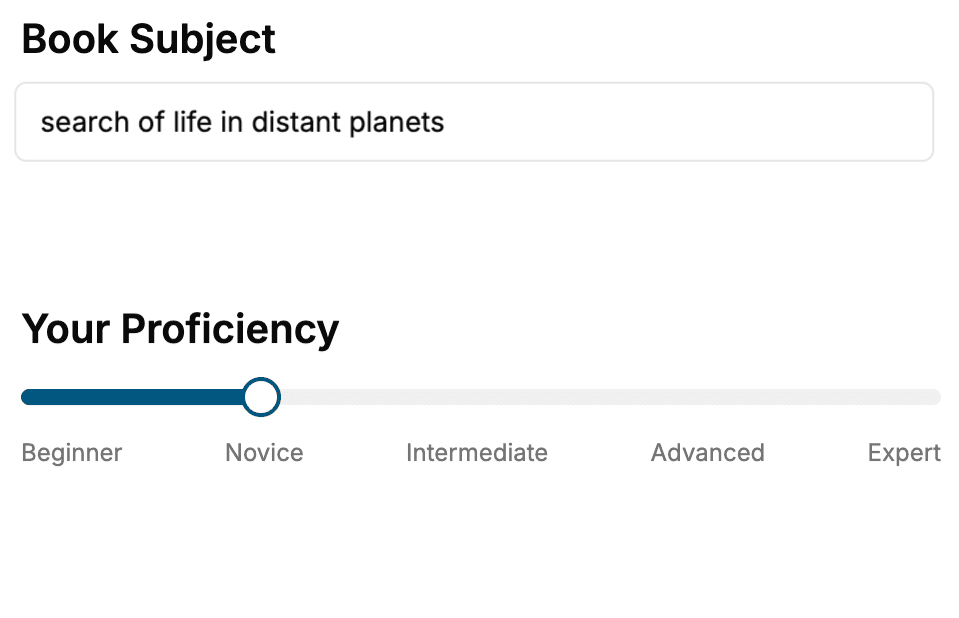
- 1. Select your focus
Select the focus of your Psychology book and share your background
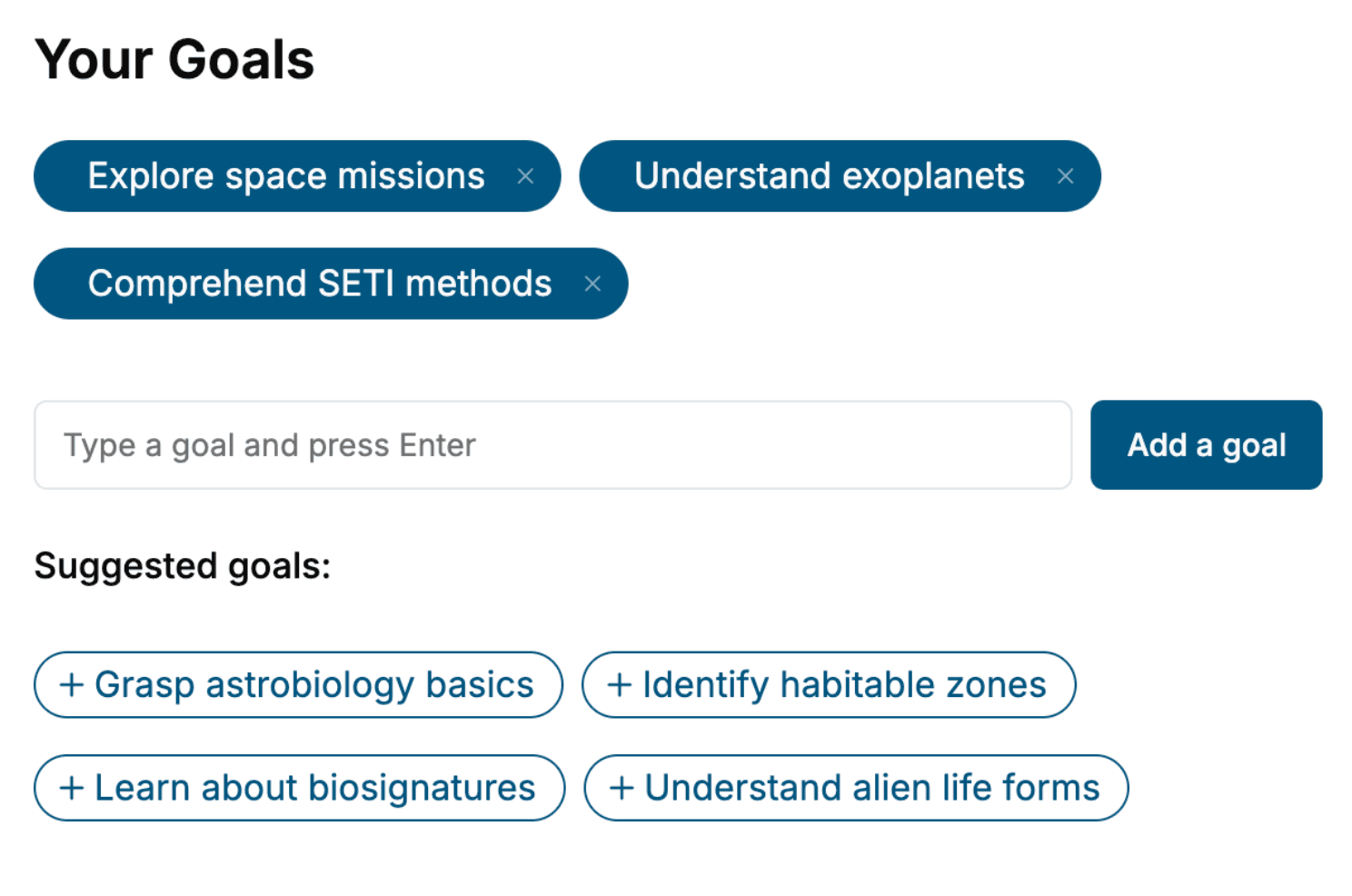
- 2. Personalize your book
Specify your goals and choose sub-topics to include
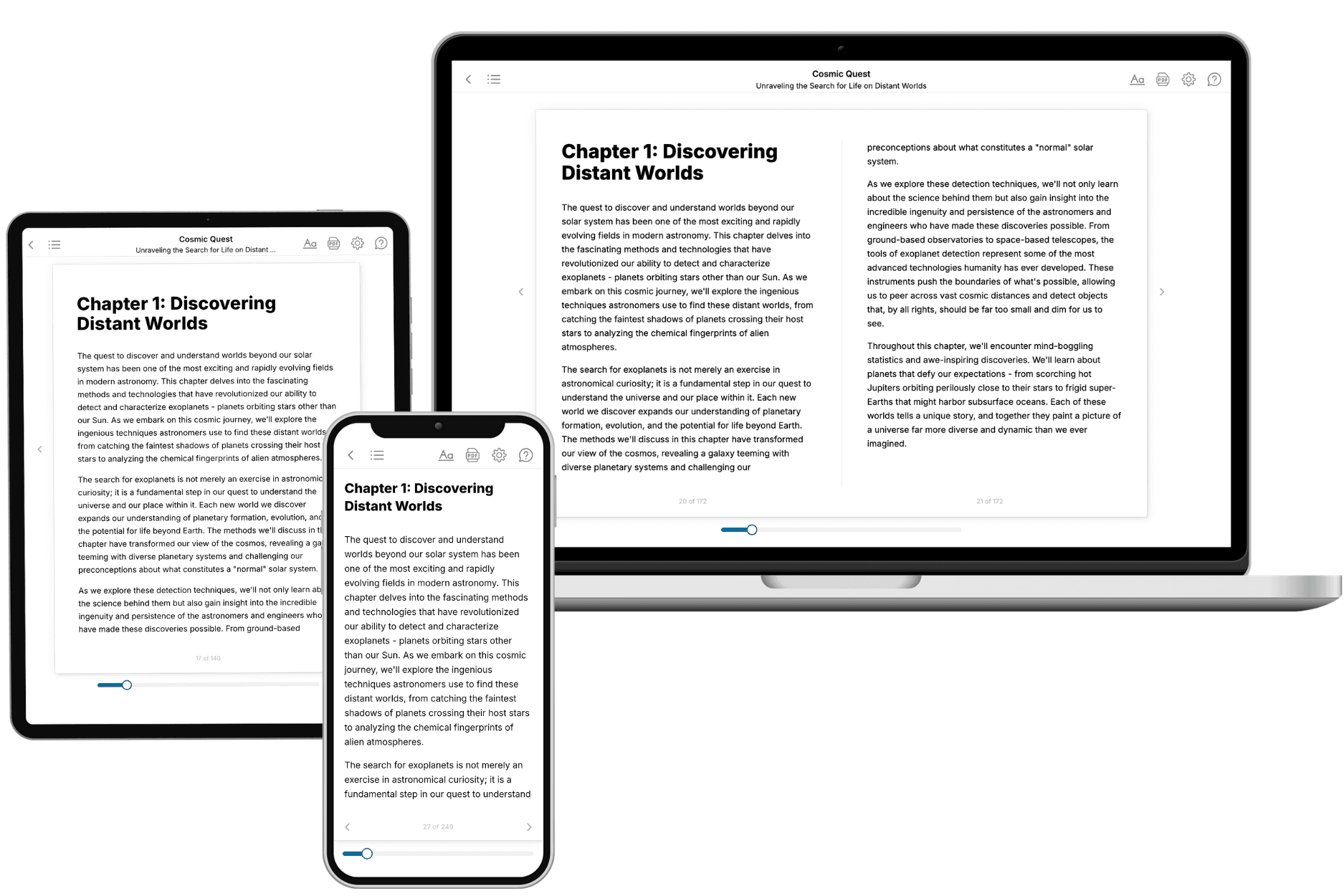
- 3. Get your tailored book
Your book is ready in 10 minutes. Read it online, download as EPUB or PDF, or send to Kindle.
Frequently asked questions
- What is TailoredRead?
TailoredRead creates complete, full-length nonfiction ebooks, written specifically for you. Tell us what you want to learn and why, and TailoredRead writes you a complete ebook on it, with charts, tables, and diagrams throughout. Read it online, on Kindle, or on any e-reader, or download it as a PDF or EPUB. Every book is written fresh the day you order it.
- How is the book tailored to me?
Before anything is written, you answer a few short questions about your goals, your background, and the topics you care about. Your book is then planned around your answers: written at your level, focused on your goals, and covering the topics you chose, instead of the one-size-fits-all book a store sells everyone.
- Will it read like generic AI content?
No. Your book isn't a chat transcript: it's planned chapter by chapter before a single word is written, told in a clear book voice, and explains ideas visually with charts, tables, and diagrams. After writing, every book goes through an editorial pass that polishes chapters so the book reads consistent from start to finish. Judge for yourself: browse thousands of sample books on our Explore Books page.
- How accurate is the content?
Our AI first checks whether your subject needs live research. Niche and fast-moving subjects are researched before writing, and the book plan and chapters are grounded in what it finds. After writing, every book goes through a quality pass that checks its facts and consistency, and researched books list their sources in a Notes section at the back.
- How long is the book?
You choose the length: Comprehensive (250-300 pages), Detailed (150-200 pages), Essential (70-100 pages), or Short (30-50 pages).
- Does the book include visuals?
Yes. Every book includes charts, tables, and diagrams: timelines, checklists, step-by-step guides, decision trees, comparison tables, matrices, and bar charts. A typical book includes dozens of these visual elements.
- Can I read it on Kindle? What formats can I download?
Yes. Every book can be read in our online reader or downloaded as a PDF or EPUB. The EPUB can be opened with Kindle, Apple Books, Kobo, and any e-reader. The Commercial and Author licenses also include an editable Word (DOCX) and Markdown download.
- How much does it cost?
About the price of a regular ebook. The exact price depends on your book's length and complexity, from $2 for the shortest books to $35 for the most comprehensive, and it's shown when you review your book, before you commit to anything. Each book is a one-time purchase, yours to keep, no subscription. Licenses that let you share, teach, or publish your book range from $35.99 to $49.99.
- Can I preview the book before purchasing?
Before you pay, you'll see what your book will cover: the title, a detailed description, the estimated length, and the complete chapter-by-chapter table of contents, so you know what you're getting before you decide. The full text itself is written after you purchase.
- How long does it take to create a book?
About 10 minutes. You can start reading the opening chapters while the rest is still being written.