Epigenetic Modifications
How Chemical Changes Control Gene Expression Without Altering DNA
Imagine understanding the hidden switches that control which genes turn on and off in your cells—without any change to your DNA itself.
207 pages9 chaptersMay 14, 2026Genetics
About this book
Epigenetic modifications are the chemical mechanisms that regulate gene expression, determining whether genes are active or silenced. This book explores the fascinating world of epigenetics at the molecular level, revealing how DNA methylation, histone modifications, and chromatin remodeling work together to control cellular behavior. You'll discover how these chemical changes respond to your environment, diet, and lifestyle, and why they matter for health and disease. From understanding how cells differentiate during development to exploring how cancer cells silence tumor suppressors, you'll gain insight into one of biology's most important regulatory systems. Whether you're a student, researcher, or curious learner, this guide demystifies the chemistry behind epigenetic control and shows why these reversible modifications represent a frontier in medicine and personalized health.
Table of contents
- IntroductionWhat Is Epigenetics?, Beyond the DNA Sequence: The Regulatory Layer, Why Epigenetics Matters for Health and Disease, Your Roadmap Through This BookRead below
- Chapter 1: Foundations of Molecular Biology and ChemistryDNA Structure and the Central Dogma, Proteins as Macromolecules: Structure and Function, Chemical Bonds and Molecular Interactions
- Chapter 2: The Three Pillars of Epigenetic RegulationDNA Methylation: The Chemical Mark, Histone Modifications: Rewriting the Code, Chromatin Remodeling: Accessibility and Control
- Chapter 3: DNA Methylation: Mechanisms and FunctionsThe Chemistry of DNA Methylation, DNA Methyltransferases: The Enzymes Behind the Mark, Methylation Patterns and Gene Silencing, Demethylation and Reversibility
- Chapter 4: Histone Modifications and Chromatin StructureHistone Proteins: Structure and Organization, Acetylation, Methylation, and Other Modifications, The Histone Code: Reading Molecular Signals, Euchromatin and Heterochromatin: Active and Silent States
- Chapter 5: Chromatin Remodeling and Gene AccessibilityNucleosome Positioning and DNA Accessibility, ATP-Dependent Chromatin Remodeling Complexes, How Chromatin Remodeling Controls Transcription
- Chapter 6: Environmental Influences on Epigenetic ModificationsDiet, Nutrients, and Epigenetic Changes, Stress, Hormones, and Epigenetic Responses, Environmental Toxins and Epigenetic Alterations, Exercise, Sleep, and Other Lifestyle Factors
- Chapter 7: Epigenetics in Development and DifferentiationHow Cells Differentiate Using Epigenetic Mechanisms, Epigenetic Programming During Development, Cellular Memory and Epigenetic Inheritance
- Chapter 8: Epigenetics and DiseaseCancer: Aberrant Epigenetic Modifications, Metabolic Diseases and Epigenetic Dysregulation, Neurological Conditions and Epigenetic Changes, Aging and the Epigenetic Clock
- Chapter 9: Therapeutic Applications and Future DirectionsEpigenetic Drugs: HDAC Inhibitors and DNA Methyltransferase Inhibitors, Epigenetics and Personalized Medicine, Emerging Technologies and Research Frontiers
- ConclusionKey Takeaways and Synthesis, The Future of Epigenetics
- Glossary of Key Terms
- Further Reading and Resources
Introduction
Every cell in your body carries the same DNA. A neuron in your brain and a cell lining your stomach share an identical genetic sequence, yet they look completely different, behave completely differently, and perform completely different jobs. For decades, this fact puzzled biologists. If the instructions are the same, why are the outcomes so different? The answer lies not in the DNA sequence itself, but in a sophisticated layer of chemical control that sits on top of it. That layer is epigenetics, and understanding it changes how you think about genes, health, and what it means to be a living organism.
The word "epigenetics" comes from the Greek prefix epi, meaning "above" or "upon." Epigenetic mechanisms are, quite literally, controls that operate above the level of the genetic code. They do not rewrite the letters of DNA. Instead, they attach chemical tags to DNA and to the proteins that package it, and those tags act like switches and dimmers, turning genes on or off, or adjusting how loudly they are expressed. The result is that the same genetic text can produce radically different outcomes depending on which parts are being read at any given moment.
This book is about those chemical switches. It explores the molecular machinery behind epigenetic regulation, from the enzymes that add and remove chemical marks to the large protein complexes that physically rearrange how DNA is packaged inside the cell. Along the way, you will see how these mechanisms shape development, respond to the environment, contribute to disease, and are now being targeted by a new generation of medicines. Whether you are a student encountering epigenetics for the first time in a formal context, a researcher looking to deepen your mechanistic understanding, or a professional in a biology-adjacent field, this book is designed to give you a clear, rigorous, and genuinely engaging account of one of the most important regulatory systems in all of biology.
Before diving into the molecular details, this introduction sets the stage. It defines what epigenetics actually means, explains why a regulatory layer beyond the DNA sequence is necessary, and makes the case for why this field matters so much for understanding health and disease. It also gives you a clear map of what lies ahead in the chapters that follow, so you can navigate the material with confidence and purpose.
What Is Epigenetics?
The term "epigenetics" has been defined in several ways over the years, and the definitions have evolved as the science has matured. The developmental biologist Conrad Waddington first used the word in the 1940s to describe how genes interact with their environment to produce a physical form, or phenotype.[1] At the time, the molecular details were unknown. Today, a more precise definition has taken hold: epigenetics refers to heritable changes in gene expression that do not involve changes to the underlying DNA sequence. The key word here is heritable. These changes can be passed from one cell to its daughter cells during division, and in some cases, they can even be transmitted across generations.
At the molecular level, epigenetic regulation works through three main types of mechanisms. Each one operates differently, but all three ultimately influence whether a gene is accessible and active or locked away and silent.
- DNA methylation: The addition of a methyl group (CH₃) to a cytosine base in DNA, most commonly at sites where cytosine is followed by guanine (called CpG sites). This modification typically silences gene expression.
- Histone modifications: Chemical changes to the tail regions of histone proteins, including acetylation, methylation, phosphorylation, and ubiquitination. These modifications alter how tightly DNA is wrapped around histones, affecting gene accessibility.
- Chromatin remodeling: The physical repositioning or restructuring of nucleosomes (the units of DNA wrapped around histones) by large protein complexes, which opens or closes regions of the genome to transcription machinery.
A useful analogy is to think of the genome as a massive library. The DNA sequence is the text of every book in that library. Epigenetic marks are like a combination of bookmarks, highlighters, and locks on certain shelves. They do not change the words on the page, but they determine which books are easy to find and read, which are tucked away in storage, and which are locked behind glass. The librarian (the cell) uses these tools to make sure only the right books are available at the right time.
It is worth being clear about what epigenetics is not. It is not a mechanism for changing the DNA sequence itself. Mutations, insertions, deletions, and other sequence-level changes fall under genetics, not epigenetics. Epigenetic changes are also distinct from the regulation of gene expression by transcription factors alone, though transcription factors and epigenetic mechanisms often work together. The defining feature of epigenetic regulation is the chemical modification of chromatin components in a way that can be maintained through cell division.
One of the most striking features of epigenetic modifications is that they are reversible. Unlike a mutation, which permanently alters the DNA sequence, an epigenetic mark can be added and removed by specific enzymes. This reversibility is what makes epigenetics so biologically flexible and, from a medical standpoint, so therapeutically promising. A gene that has been silenced by methylation can, in principle, be reactivated. A chromatin state that promotes disease can, in principle, be reprogrammed. This is not just theoretical. Several drugs that work by targeting epigenetic enzymes are already approved for clinical use, and many more are in development.
Understanding epigenetics also requires appreciating the scale of the problem it solves. The human genome contains roughly 3 billion base pairs of DNA, encoding approximately 20,000 protein-coding genes.[2] If that DNA were stretched out in a single line, it would be about two meters long. Yet it must fit inside a cell nucleus that is only about 6 micrometers in diameter. Packaging that much DNA into such a small space, while still allowing specific genes to be accessed on demand, is an extraordinary engineering challenge. Epigenetic mechanisms are a central part of the solution.
Epigenetics does not rewrite the genetic code. It controls how, when, and where that code is read. The same instructions can produce entirely different outcomes depending on which parts are active and which are silent.
Beyond the DNA Sequence: The Regulatory Layer
For much of the twentieth century, the dominant model in molecular biology was elegantly simple: DNA makes RNA, RNA makes protein, and proteins do the work of the cell. This framework, known as the central dogma, was enormously productive. It explained how genetic information flows and how mutations cause disease. But it left a critical question unanswered: if every cell has the same DNA, what determines which genes are active in which cells? The answer required a new layer of thinking, one that went beyond the sequence itself.
The regulatory layer that epigenetics provides is not a minor footnote to the central dogma. It is a fundamental part of how genomes function. Consider the numbers: the human genome contains around 20,000 protein-coding genes, but a typical cell expresses only a fraction of them at any given time. A liver cell expresses genes for metabolic enzymes that a muscle cell does not need. A neuron expresses genes for ion channels and neurotransmitter receptors that are irrelevant in a skin cell. Epigenetic marks are a primary mechanism for establishing and maintaining these cell-type-specific expression patterns.
The physical structure of chromatin is central to this regulatory layer. DNA in the nucleus is not floating freely. It is wrapped around protein complexes called nucleosomes, each consisting of eight histone proteins around which approximately 147 base pairs of DNA are coiled. These nucleosomes are then organized into higher-order structures, creating a compact but dynamic architecture. The degree of compaction at any given region of the genome directly determines whether the transcription machinery can access the DNA to read a gene.
Think of chromatin compaction as a dial with two extremes. At one end is euchromatin, a loosely packed state where DNA is accessible and genes are generally active. At the other end is heterochromatin, a tightly packed state where DNA is inaccessible and genes are silenced. Epigenetic modifications shift regions of the genome between these states. A histone acetylation mark, for example, loosens chromatin and promotes gene expression. A DNA methylation mark at a gene promoter typically tightens chromatin and silences the gene. The cell uses combinations of these marks to fine-tune expression across the entire genome.
What makes this regulatory layer especially powerful is its combinatorial nature. Histones carry dozens of different modification sites, and each site can carry different types of marks. The combination of marks present at any given location creates a kind of molecular code that is read by specialized proteins. Some proteins recognize specific histone marks and recruit transcription-activating machinery. Others recognize different marks and recruit silencing complexes. This combinatorial logic allows a relatively small number of chemical modifications to generate an enormous diversity of regulatory outcomes.
The regulatory layer also responds to signals from outside the cell. Hormones, nutrients, stress signals, and environmental chemicals can all influence epigenetic enzyme activity, leading to changes in chromatin state and gene expression. This responsiveness is what makes epigenetics a bridge between the genome and the environment. The DNA sequence is fixed at conception (barring mutations), but the epigenetic layer is dynamic throughout life. It is constantly being adjusted in response to developmental cues, physiological demands, and environmental inputs.
A concrete example helps illustrate this point. During early embryonic development, cells undergo a dramatic process of epigenetic reprogramming. The highly methylated genome of the fertilized egg is largely demethylated, and then new methylation patterns are established as cells begin to differentiate into different tissue types.[3] This reprogramming is essential for normal development. When it goes wrong, the consequences can include developmental disorders, infertility, and increased cancer risk. Understanding the regulatory layer means understanding how these reprogramming events are controlled at the molecular level.
It is also worth noting that the regulatory layer is not entirely separate from the DNA sequence. Certain DNA sequences, particularly CpG islands (regions rich in CpG dinucleotides), are preferentially targeted by methylation machinery. Transcription factor binding sites in DNA influence where chromatin remodeling complexes are recruited. The sequence and the epigenetic layer interact constantly, each influencing the other. Epigenetics does not replace sequence-based regulation; it adds a critical dimension to it.
Why Epigenetics Matters for Health and Disease
Epigenetics is not just an academic curiosity. It sits at the center of some of the most important questions in medicine and public health. How do environmental exposures early in life affect health decades later? Why do identical twins, who share the same DNA, sometimes develop different diseases? How do cancer cells silence the genes that would normally suppress tumor growth? Why do some people respond to a drug while others with the same diagnosis do not? Epigenetic mechanisms are part of the answer to all of these questions.
Cancer is perhaps the most studied disease in the context of epigenetics. Tumor cells consistently show abnormal epigenetic patterns. Two of the most common are global hypomethylation (a widespread loss of DNA methylation across the genome, which can activate oncogenes) and focal hypermethylation (the silencing of specific tumor suppressor genes through promoter methylation). For example, the CDKN2A gene, which encodes a key cell cycle regulator, is silenced by promoter methylation in a wide range of cancers.[4] Because these are epigenetic changes rather than mutations, they are potentially reversible, which is why epigenetic drugs have become an important class of cancer therapeutics.
Beyond cancer, epigenetic dysregulation has been implicated in a wide range of conditions, including:
- Type 2 diabetes and obesity: Altered methylation patterns at genes involved in insulin signaling and fat metabolism have been found in patients with metabolic disease.
- Cardiovascular disease: Epigenetic changes in vascular smooth muscle cells and endothelial cells contribute to atherosclerosis and hypertension.
- Neurological and psychiatric disorders: Conditions such as schizophrenia, depression, and Alzheimer's disease are associated with specific epigenetic alterations in brain tissue.
- Autoimmune diseases: Lupus and rheumatoid arthritis involve aberrant DNA methylation in immune cells, contributing to inappropriate immune activation.
The developmental origins of health and disease (DOHaD) hypothesis provides another compelling reason to care about epigenetics. This framework, supported by decades of epidemiological and experimental research, proposes that exposures during critical windows of development, particularly in utero and in early childhood, can program epigenetic patterns that influence health outcomes throughout life.[5] The Dutch Hunger Winter studies, which followed individuals who were in the womb during a severe famine in the Netherlands in 1944–1945, found that these individuals had altered methylation patterns at metabolic genes and higher rates of obesity, diabetes, and cardiovascular disease in adulthood. The famine did not change their DNA sequence. It changed their epigenome.
Aging is another domain where epigenetics has become central. As cells age, their epigenetic patterns drift in predictable ways. DNA methylation levels at certain sites change so consistently with age that researchers have developed "epigenetic clocks," mathematical models that can estimate a person's biological age from their methylation profile with remarkable accuracy.[6] Individuals whose biological age (as measured by the epigenetic clock) is older than their chronological age tend to have higher risks of age-related diseases and earlier mortality. This suggests that epigenetic aging is not just a marker of biological age but may be a driver of it.
From a therapeutic standpoint, the reversibility of epigenetic marks is enormously significant. Two classes of epigenetic drugs have already received regulatory approval. HDAC inhibitors (histone deacetylase inhibitors) block enzymes that remove acetyl groups from histones, promoting a more open chromatin state and reactivating silenced genes. DNMT inhibitors (DNA methyltransferase inhibitors) block the enzymes that add methyl groups to DNA, reversing aberrant gene silencing. Both classes are used in the treatment of certain blood cancers, and research into their application in solid tumors and other diseases is ongoing. The broader promise of epigenetic medicine is that it may be possible to reprogram diseased cells back toward a healthier state without permanently altering their genetic code.
Epigenetics also has profound implications for personalized medicine. Because epigenetic patterns vary between individuals and change over time, they offer a dynamic window into a person's current biological state that the static DNA sequence cannot provide. Epigenetic biomarkers are being developed for early cancer detection, for predicting treatment response, and for monitoring disease progression. As sequencing technologies become cheaper and more accessible, epigenetic profiling is moving from research laboratories into clinical practice.
Your Roadmap Through This Book
This book is organized to take you from foundational concepts to advanced applications in a logical, building-block sequence. Each chapter adds a new layer of understanding, and by the end, you will have a comprehensive picture of how epigenetic regulation works at the molecular level and why it matters in the real world. Here is what to expect from each part of the journey.
Chapter 1: Foundations of Molecular Biology and Chemistry establishes the scientific vocabulary and conceptual framework you will need throughout the book. It covers DNA structure and the central dogma, the structure and function of proteins as macromolecules, and the types of chemical bonds and molecular interactions that drive biological processes. If you already have a strong background in these areas, you can move through this chapter quickly. If some of these concepts are less familiar, this chapter will give you the grounding you need to follow the more detailed mechanistic discussions that come later.
Chapter 2: The Three Pillars of Epigenetic Regulation provides an overview of the three main epigenetic mechanisms: DNA methylation, histone modifications, and chromatin remodeling. This chapter is intentionally broad, giving you a conceptual map of the entire field before the subsequent chapters zoom in on each mechanism in detail. Think of it as the aerial view before you walk through the landscape on the ground.
Chapters 3, 4, and 5 then go deep on each of the three pillars in turn. Chapter 3 covers the chemistry of DNA methylation, the enzymes that write and erase methyl marks, and how methylation patterns control gene silencing. Chapter 4 explores histone proteins in detail, covering the major types of histone modifications, the concept of the histone code, and how different chromatin states are established and maintained. Chapter 5 examines chromatin remodeling complexes, nucleosome positioning, and how physical rearrangement of chromatin architecture controls gene accessibility.
Chapter 6: Environmental Influences on Epigenetic Modifications shifts the focus from molecular mechanisms to real-world inputs. It examines how diet, stress, environmental toxins, exercise, and sleep affect epigenetic marks, drawing on specific research studies to illustrate each type of influence. This chapter is where the molecular machinery connects to everyday life, and it addresses some of the most common questions people have about epigenetics.
Chapter 7: Epigenetics in Development and Differentiation explores how epigenetic mechanisms drive one of biology's most remarkable processes: the transformation of a single fertilized egg into a complex organism with hundreds of distinct cell types. It covers epigenetic reprogramming during early development, the role of epigenetics in cell fate decisions, and the concept of cellular memory, which is how differentiated cells maintain their identity through countless rounds of cell division.
Chapter 8: Epigenetics and Disease applies the mechanistic knowledge from earlier chapters to specific disease contexts. It covers cancer epigenetics in depth, then moves through metabolic diseases, neurological conditions, and the epigenetics of aging. Each section connects specific molecular changes to clinical outcomes, giving you a clear picture of how epigenetic dysregulation contributes to pathology.
Chapter 9: Therapeutic Applications and Future Directions looks at where the field is going. It covers approved epigenetic drugs and their mechanisms of action, the emerging role of epigenetics in personalized medicine, and the cutting-edge technologies, including CRISPR-based epigenome editing, that are opening new research frontiers. This chapter is forward-looking and highlights both the promise and the challenges of translating epigenetic science into clinical benefit.
The book closes with a Conclusion that synthesizes the key themes and reflects on the broader significance of epigenetic regulation. A Glossary of key terms and a Further Reading section are included at the end to support continued learning. Throughout the book, technical terms are introduced carefully and explained in context, and concrete examples are used wherever possible to anchor abstract concepts in biological reality.
A few practical notes before you begin. This book assumes a foundational knowledge of chemistry and cell biology at roughly the level of an undergraduate science course. You should be comfortable with concepts like covalent and hydrogen bonds, the structure of nucleotides, and the basic idea of enzyme catalysis. If any of these feel shaky, Chapter 1 will help. You do not need to be an expert in genetics or biochemistry to follow the material, but a willingness to engage with molecular detail is essential. Epigenetics is a mechanistic science, and the mechanisms are genuinely fascinating once you see how they fit together.
Finally, it is worth saying something about the pace of this field. Epigenetics is one of the fastest-moving areas in all of biology. New mechanisms are being discovered, new disease associations are being established, and new therapeutic strategies are being tested at a remarkable rate. This book reflects the state of the science as it stands today, grounded in well-established findings while also pointing toward emerging discoveries. The goal is not just to give you a snapshot of current knowledge, but to give you the conceptual tools to understand and evaluate new findings as the field continues to evolve. That is the real value of understanding the mechanisms deeply: it lets you think clearly about whatever comes next.
Notes
Introduction
- 1. C. H. Waddington, The epigenotype, Endeavour, 1942
- 2. International Human Genome Sequencing Consortium, "Finishing the euchromatic sequence of the human genome," Nature, 2004
- 3. W. Reik and others, "Epigenetic reprogramming in mammalian development," Science, 2001
- 4. J. G. Herman and S. B. Baylin, "Gene silencing in cancer in association with promoter hypermethylation," New England Journal of Medicine, 2003
- 5. D. J. P. Barker, "The developmental origins of adult disease," Journal of the American College of NutritionS-595S, 2004
- 6. S. Horvath, "DNA methylation age of human tissues and cell types," Genome BiologyR115, 2013
This is the end of the free sample. The full book has 9 chapters.
Want this book written for you?
Tell us your goals and background, and get your own version of this book, tailored by AI to you.


Benefits of AI-tailored books
- Read one book, not ten:
- all the Genetics knowledge you need, gathered into a single book.
- Save days of learning:
- tell us your goals, choose your topics, and the whole book is built around them.
- Learn effortlessly:
- Genetics book written for your specific background and expertise.
- Understand at a glance:
- includes charts, tables, timelines, checklists, decision trees, and more.
- Stay current:
- written the day you order it, not years ago.
- Trust what you read:
- every book is checked for accuracy, with real research when your subject needs it.
Create your unique book in 3 steps
- 1. Select your focus
Select the focus of your Genetics book and share your background
- 2. Personalize your book
Specify your goals and choose sub-topics to include
- 3. Get your tailored book
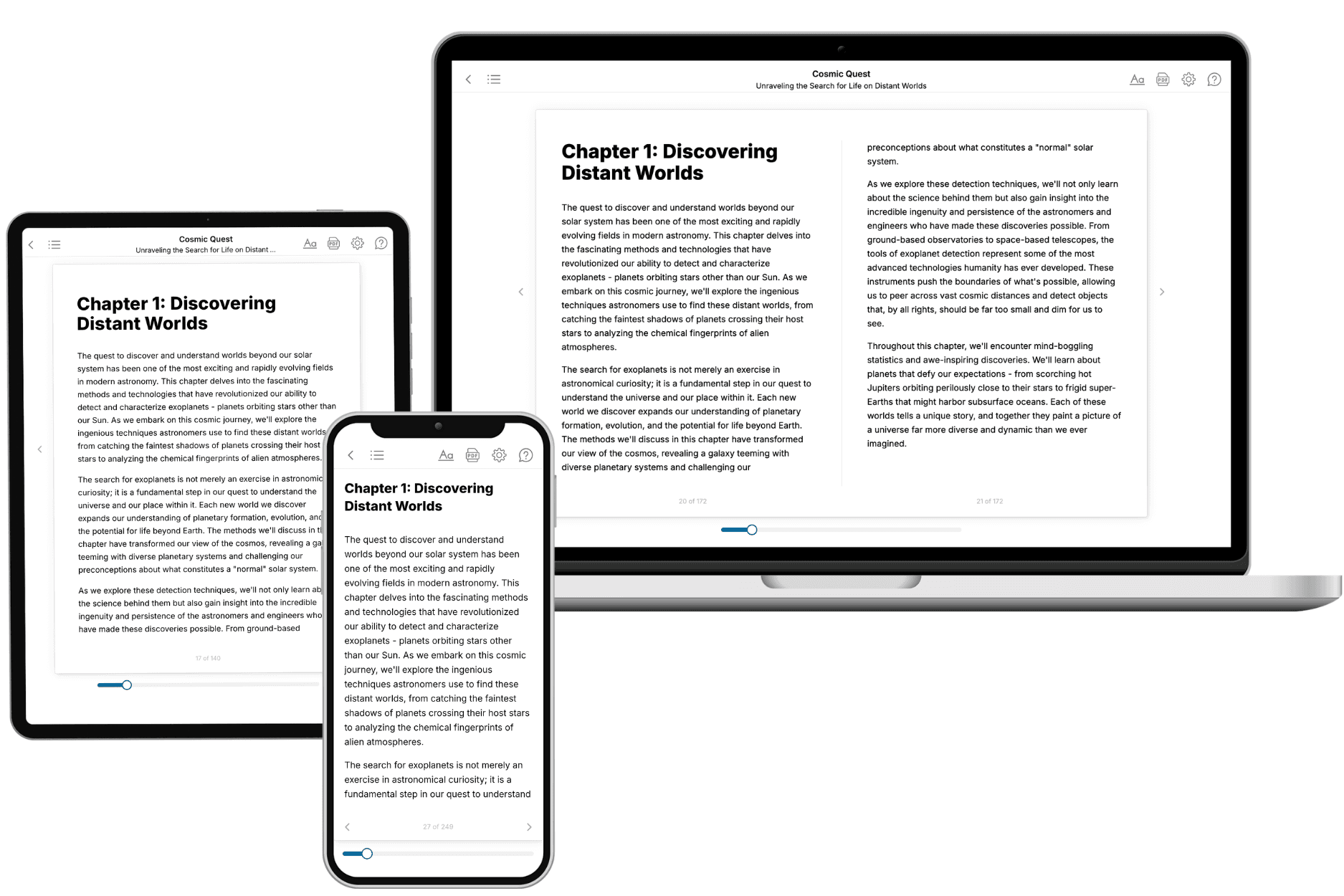
Your book is ready in 10 minutes. Read it online, download as EPUB or PDF, or send to Kindle.

Frequently asked questions
- What is TailoredRead?
TailoredRead creates complete, full-length nonfiction ebooks, written specifically for you. Tell us what you want to learn and why, and TailoredRead writes you a complete ebook on it, with charts, tables, and diagrams throughout. Read it online, on Kindle, or on any e-reader, or download it as a PDF or EPUB. Every book is written fresh the day you order it.
- How is the book tailored to me?
Before anything is written, you answer a few short questions about your goals, your background, and the topics you care about. Your book is then planned around your answers: written at your level, focused on your goals, and covering the topics you chose, instead of the one-size-fits-all book a store sells everyone.
- Will it read like generic AI content?
No. Your book isn't a chat transcript: it's planned chapter by chapter before a single word is written, told in a clear book voice, and explains ideas visually with charts, tables, and diagrams. After writing, every book goes through an editorial pass that polishes chapters so the book reads consistent from start to finish. Judge for yourself: browse thousands of sample books on our Explore Books page.
- How accurate is the content?
Our AI first checks whether your subject needs live research. Niche and fast-moving subjects are researched before writing, and the book plan and chapters are grounded in what it finds. After writing, every book goes through a quality pass that checks its facts and consistency, and researched books list their sources in a Notes section at the back.
- How long is the book?
You choose the length: Comprehensive (250-300 pages), Detailed (150-200 pages), Essential (70-100 pages), or Short (30-50 pages).
- Does the book include visuals?
Yes. Every book includes charts, tables, and diagrams: timelines, checklists, step-by-step guides, decision trees, comparison tables, matrices, and bar charts. A typical book includes dozens of these visual elements.
- Can I read it on Kindle? What formats can I download?
Yes. Every book can be read in our online reader or downloaded as a PDF or EPUB. The EPUB can be opened with Kindle, Apple Books, Kobo, and any e-reader. The Commercial and Author licenses also include an editable Word (DOCX) and Markdown download.
- How much does it cost?
About the price of a regular ebook. The exact price depends on your book's length and complexity, from $2 for the shortest books to $35 for the most comprehensive, and it's shown when you review your book, before you commit to anything. Each book is a one-time purchase, yours to keep, no subscription. Licenses that let you share, teach, or publish your book range from $35.99 to $49.99.
- Can I preview the book before purchasing?
Before you pay, you'll see what your book will cover: the title, a detailed description, the estimated length, and the complete chapter-by-chapter table of contents, so you know what you're getting before you decide. The full text itself is written after you purchase.
- How long does it take to create a book?
About 10 minutes. You can start reading the opening chapters while the rest is still being written.