Exception Handling Mastery
Build Robust, Maintainable Code Through Structured Error Management
Most developers treat exception handling as an afterthought—a necessary evil to satisfy compilers or prevent crashes.
191 pages9 chaptersDec 1, 2025Software Development
About this book
This approach leaves your codebase fragile, difficult to maintain, and prone to mysterious failures in production. The real problem isn't that exceptions happen; it's that most teams lack a structured, intentional approach to handling them. This book teaches you how to design and implement exception handling as a core part of your application architecture. You'll learn proven patterns and methodologies that transform error handling from a source of frustration into a competitive advantage. Whether you're building web applications, APIs, or distributed systems, you'll discover how to create meaningful error messages, propagate exceptions effectively, and build systems that fail gracefully. By mastering structured exception handling, you'll write code that's easier to debug, simpler to maintain, and more reliable in production. Your team will spend less time firefighting and more time building features that matter.
Table of contents
- IntroductionWhy Exception Handling Matters, The Cost of Poor Practices, What You'll Learn in This BookRead below
- Chapter 1: Exception Handling FundamentalsWhat Are Exceptions and Why They Exist, Exception Types and Hierarchies, Try-Catch-Finally: The Core Mechanism, How Exceptions Flow Through Your Code
- Chapter 2: Designing Custom ExceptionsWhen to Create Custom Exceptions, Building a Meaningful Exception Hierarchy, Capturing Context and Metadata, Naming Conventions and Documentation
- Chapter 3: Exception Propagation StrategiesWhen to Catch Versus When to Propagate, Exception Wrapping and Translation, Preserving Stack Traces and Context, Checked Exceptions Versus Unchecked Exceptions
- Chapter 4: Logging and Monitoring ExceptionsStructured Logging Principles, What to Log and What to Skip, Log Levels and Severity Classification, Monitoring and Alerting on Exceptions
- Chapter 5: Common Anti-Patterns and How to Avoid ThemThe Silent Killer: Swallowing Exceptions, Catching Too Broadly (Generic Exception Types), Poor Error Messages and Lost Context, Using Exceptions for Control Flow
- Chapter 6: Exception Handling in Different ContextsWeb Applications and HTTP Error Handling, REST APIs and Structured Error Responses, Microservices and Distributed System Challenges, Background Jobs and Asynchronous Processing
- Chapter 7: Testing Exception ScenariosTesting Happy Paths Versus Error Paths, Unit Testing Exception Handling, Integration Testing Error Scenarios, Chaos Engineering and Resilience Testing
- Chapter 8: Building Resilient SystemsRetry Strategies and Exponential Backoff, Circuit Breakers and Fallback Mechanisms, Graceful Degradation and Partial Failures, Recovery Patterns and Self-Healing Systems
- Chapter 9: Refactoring Legacy Code for Better Exception HandlingIdentifying Exception Handling Technical Debt, Incremental Refactoring Strategies, Establishing Team Standards and Guidelines
- ConclusionKey Takeaways, Your Next Steps
- Appendix: Quick Reference GuideException Handling Checklist, Common Patterns and Code Templates
Introduction
Every developer has experienced that sinking feeling when a production system fails in ways nobody anticipated. The application crashes without explanation. Error messages provide no useful information. Stack traces point to symptoms rather than root causes. Users report problems that seem impossible to reproduce. These scenarios share a common thread: poor exception handling practices that transform manageable errors into catastrophic failures. The difference between applications that fail gracefully and those that collapse under pressure often comes down to how deliberately and systematically teams approach error management.
Exception handling represents one of the most undervalued skills in software development. Most developers learn the basic syntax—try, catch, finally—early in their careers, then never revisit the topic with the depth it deserves. They treat exceptions as annoyances to be suppressed rather than valuable signals about system behavior. This superficial understanding creates codebases where exceptions are caught too broadly, error context disappears, and debugging becomes an exercise in frustration. The technical debt accumulates silently until a critical production incident forces teams to confront the consequences of their shortcuts.
This book takes a different approach. Rather than treating exception handling as a language feature to memorize, it presents structured error management as a core architectural concern that shapes how you design, implement, and maintain software systems. You'll learn to think about exceptions as part of your application's contract with its users and other systems. You'll discover patterns that make errors informative rather than cryptic, and strategies that turn failures into opportunities for systems to recover automatically. Most importantly, you'll develop the judgment to know when to catch exceptions, when to let them propagate, and how to design custom exceptions that communicate intent clearly.
The practices in this book apply across programming languages and technology stacks. While specific syntax varies between Java, C#, Python, JavaScript, and other languages, the underlying principles remain constant. Whether you're building web applications, REST APIs, microservices, or background processing systems, you'll find actionable guidance tailored to your context. The goal isn't to make you memorize rules, but to develop your intuition about what robust error handling looks like in practice. By the end, you'll recognize exception handling anti-patterns instantly and know exactly how to refactor them into maintainable, production-ready code.
Why Exception Handling Matters
Exception handling matters because software systems operate in an unpredictable world where failures are inevitable. Networks become unreachable. Databases run out of connections. External APIs return unexpected responses. Users provide invalid input. Disk space fills up. Memory runs low. These aren't edge cases—they're normal operating conditions that every production system encounters regularly. The question isn't whether your application will face exceptional conditions, but how it will respond when those conditions occur. Systems with thoughtful exception handling continue operating, perhaps with reduced functionality, while systems without it crash spectacularly.
Consider a payment processing system that handles thousands of transactions per hour. When a database connection fails during a transaction, poor exception handling might silently swallow the error, leaving the payment in an unknown state. The customer's account gets charged, but the order never processes. Or perhaps the exception propagates unhandled, crashing the entire service and blocking all subsequent transactions. Proper exception handling, by contrast, would detect the connection failure, roll back the transaction, log detailed context about what went wrong, and return a clear error message to the user. The system might retry the operation automatically or gracefully inform the customer to try again later. This isn't just better engineering—it's the difference between maintaining customer trust and facing chargebacks, support tickets, and reputation damage.
Exception handling directly impacts your ability to maintain and debug software over time. When exceptions include rich context—what operation was being performed, what data was involved, what state the system was in—developers can diagnose and fix problems quickly. A stack trace that shows NullPointerException at line 247 tells you almost nothing. An exception that reports Failed to process order #12345 for customer user@example.com: Product SKU-789 not found in inventory database
tells you exactly what went wrong and gives you a clear starting point for investigation. This difference compounds across hundreds of bugs and incidents over a project's lifetime.
The business impact of exception handling extends beyond individual bugs. Systems that handle errors gracefully provide better user experiences, which translates directly to customer satisfaction and retention. When an e-commerce site encounters an error during checkout, a well-designed exception handler might save the customer's cart, display a helpful error message, and provide alternative payment methods. A poorly designed system might lose the cart entirely and show a generic Something went wrong
message. One approach keeps the customer engaged and likely to complete their purchase; the other drives them to a competitor's site. These small differences in error handling accumulate into significant competitive advantages.
From a team productivity perspective, robust exception handling reduces the time developers spend firefighting production issues. When errors are logged with sufficient context and categorized by severity, teams can prioritize their response appropriately. Critical errors that affect many users get immediate attention. Minor errors that occur rarely can be batched and addressed during regular maintenance cycles. Without this structure, every error feels equally urgent, leading to constant interruptions and context switching. Teams spend their days reacting to alerts rather than building new features. The opportunity cost of poor exception handling isn't just the time spent debugging—it's all the valuable work that never gets done.
Exception handling also serves as documentation for your codebase. Well-designed custom exceptions communicate what can go wrong in different parts of your system. When a method signature declares that it throws InsufficientInventoryException or PaymentAuthorizationFailedException, it tells other developers exactly what failure modes they need to handle. This makes the code self-documenting and reduces the cognitive load of understanding how different components interact. Generic exceptions like Exception or RuntimeException provide no such guidance, forcing developers to read implementation details or discover failure modes through trial and error in production.
Security represents another critical dimension where exception handling matters. Poorly handled exceptions can leak sensitive information to attackers. Stack traces that expose database schema details, file system paths, or internal API structures give adversaries valuable reconnaissance data. Exception messages that reveal whether a username exists in the system enable account enumeration attacks. Conversely, well-designed exception handling can protect sensitive information while still providing useful feedback. It distinguishes between errors that should be logged internally with full details and errors that should be sanitized before being shown to users. This balance between transparency and security requires intentional design that most developers never consider.
The Cost of Poor Practices
Poor exception handling practices create technical debt that compounds exponentially over time. When developers catch exceptions without logging them, errors disappear silently into the void. The application continues running, but in an undefined state that may cause cascading failures later. A service might fail to update a cache, leading to stale data being served to users for hours. A background job might skip processing a batch of records, creating data inconsistencies that take weeks to discover and months to clean up. These silent failures are particularly insidious because they provide no immediate feedback that something went wrong. By the time the problem becomes visible, the root cause is buried under layers of subsequent operations.
The financial costs of poor exception handling can be staggering. Consider a real-world example: a major airline's reservation system that crashed due to unhandled exceptions during a routine database maintenance window. The system remained down for several hours, forcing the cancellation of thousands of flights and stranding passengers worldwide. The direct costs included refunds, hotel accommodations, and rebooking fees. The indirect costs included damaged brand reputation, lost customer loyalty, and regulatory fines. Post-incident analysis revealed that the root cause was a simple exception handling oversight: the system didn't gracefully handle database connection timeouts during maintenance operations. A few hours of proper exception handling design could have prevented millions of dollars in losses.
Development velocity suffers dramatically when exception handling is treated as an afterthought. Teams spend disproportionate time debugging issues that should never have reached production. A developer might spend an entire day tracking down why a feature works in testing but fails in production, only to discover that an exception was being caught and ignored somewhere in the call stack. Code reviews become contentious as reviewers spot exception handling problems that should have been caught by automated tests. Pull requests bounce back and forth with comments like What happens if this API call fails?
or This catch block swallows the exception.
The cumulative effect is that simple features take longer to ship and require more iterations to get right.
Poor exception handling creates a vicious cycle of increasing complexity. When developers don't trust that exceptions will be handled properly at lower layers, they add defensive checks at higher layers. This leads to duplicated error handling logic scattered throughout the codebase. Different parts of the application handle the same error conditions in inconsistent ways. Some components retry failed operations; others don't. Some log errors; others assume someone else will. This inconsistency makes the system harder to reason about and more prone to bugs. New team members struggle to understand which patterns to follow because there are no clear standards.
The maintenance burden of poor exception handling grows as systems scale. A small application with a handful of exception handlers might be manageable even with suboptimal practices. But as the codebase grows to hundreds of thousands of lines across dozens of services, poor exception handling becomes unmanageable. Developers can't remember which exceptions are safe to ignore and which require immediate attention. Logging systems fill with noise from exceptions that don't matter, making it impossible to spot the signals that do. On-call engineers get paged for every exception, leading to alert fatigue where they start ignoring notifications. Eventually, a critical error gets lost in the noise, and a major incident occurs because nobody noticed the warning signs.
Team morale takes a hit when exception handling is done poorly. Developers feel frustrated when they spend more time debugging than building. They become demoralized when production incidents could have been prevented with better practices. The constant firefighting creates stress and burnout. Senior engineers leave for companies with better engineering cultures. Junior engineers learn bad habits that they carry forward in their careers. The organization develops a reputation for unreliable systems, making it harder to recruit top talent. These human costs are harder to quantify than financial losses, but they're equally damaging to long-term success.
Customer trust erodes when applications fail in confusing or frustrating ways. Users who encounter cryptic error messages feel that the company doesn't care about their experience. When the same errors occur repeatedly without being fixed, customers conclude that the engineering team is incompetent or indifferent. In competitive markets, this perception drives users to alternatives. A study by the Ponemon Institute found that 65% of consumers have lost trust in an organization after experiencing a data breach or system failure[1]. While not all failures involve data breaches, the principle holds: reliability and trust are inseparable. Poor exception handling undermines both.
The opportunity cost of poor exception handling extends beyond immediate problems. Time spent debugging production issues is time not spent building new features, improving performance, or paying down other technical debt. Engineering teams have finite capacity, and every hour spent on preventable problems is an hour that could have created value. When you multiply this across an entire team over months or years, the cumulative opportunity cost becomes enormous. Organizations with robust exception handling practices ship features faster, respond to market changes more quickly, and maintain competitive advantages that compound over time. Those without these practices find themselves perpetually behind, always reacting rather than innovating.
What You'll Learn in This Book
This book provides a comprehensive framework for mastering exception handling across the entire software development lifecycle. You'll start with fundamentals—understanding what exceptions are, how they differ from other error handling mechanisms, and how they flow through your code. These foundations are essential because many exception handling problems stem from misconceptions about how exceptions actually work. You'll learn the difference between checked and unchecked exceptions, when to use each type, and how different programming languages approach these concepts. By understanding the mechanics deeply, you'll develop intuition about how to design exception handling strategies that work with the language rather than fighting against it.
The book dedicates substantial attention to designing custom exceptions that communicate intent clearly. You'll learn when creating a custom exception adds value versus when using built-in exceptions is sufficient. The chapter on custom exception design covers how to build meaningful exception hierarchies that make it easy for calling code to handle errors at the appropriate level of granularity. You'll discover techniques for capturing context and metadata in exceptions—information like user IDs, transaction IDs, timestamps, and system state that makes debugging dramatically easier. The naming conventions and documentation practices you'll learn ensure that your custom exceptions are self-explanatory and easy for other developers to use correctly.
Exception propagation strategies form a critical part of the book's content. You'll learn to make informed decisions about when to catch exceptions immediately versus when to let them propagate up the call stack. The chapter covers exception wrapping and translation—techniques for converting low-level exceptions into higher-level abstractions that make sense at different layers of your application. For example, you'll learn how to catch a SQLException in your data access layer and wrap it in a DataAccessException that your business logic layer can handle without knowing database-specific details. You'll also master the art of preserving stack traces and context when wrapping exceptions, ensuring that debugging information isn't lost during translation.
Logging and monitoring receive dedicated coverage because they're essential for maintaining production systems. You'll learn structured logging principles that make exception data queryable and analyzable. The book provides specific guidance on what information to include in exception logs—enough detail to diagnose problems, but not so much that you overwhelm your logging infrastructure or expose sensitive data. You'll discover how to classify exceptions by severity, distinguishing between errors that require immediate human intervention and those that can be handled automatically. The monitoring and alerting section teaches you how to set up systems that notify the right people at the right time, with enough context to respond effectively.
A full chapter addresses common anti-patterns and how to avoid them. You'll learn to recognize the silent killer of swallowing exceptions—catching errors without logging or handling them, which makes debugging nearly impossible. The book explains why catching generic exception types like Exception or Throwable is almost always wrong, and what to do instead. You'll see examples of poor error messages that provide no actionable information, alongside examples of good messages that help users and developers understand what went wrong. The section on using exceptions for control flow explains why this practice leads to unmaintainable code and what alternatives exist for handling expected conditions.
Context-specific guidance helps you apply exception handling principles in different architectural scenarios. The web applications chapter covers how to translate exceptions into appropriate HTTP status codes and error responses. You'll learn patterns for REST API error handling that provide consistent, machine-readable error information to API consumers. The microservices section addresses unique challenges like handling partial failures across service boundaries, implementing timeout and retry logic, and maintaining distributed tracing context through exception propagation. For background jobs and asynchronous processing, you'll learn strategies for handling exceptions in code that doesn't have a user waiting for a response, including dead letter queues and exponential backoff retry mechanisms.
Testing exception scenarios receives thorough treatment because untested error paths are where bugs hide. You'll learn techniques for unit testing exception handling, including how to verify that your code throws the right exceptions under the right conditions and handles exceptions from dependencies correctly. The integration testing section covers how to simulate failure conditions—network timeouts, database connection failures, external API errors—in test environments. You'll discover chaos engineering principles that help you build confidence in your system's resilience by deliberately injecting failures and verifying that recovery mechanisms work as designed. These testing practices ensure that your exception handling code is as robust as your happy path code.
Building resilient systems ties together exception handling with broader reliability patterns. You'll learn retry strategies with exponential backoff that handle transient failures automatically without overwhelming downstream systems. The circuit breaker pattern section teaches you how to prevent cascading failures by detecting when a dependency is unhealthy and failing fast rather than waiting for timeouts. Graceful degradation techniques show you how to maintain partial functionality when components fail, rather than taking the entire system down. The recovery patterns chapter covers self-healing mechanisms that automatically restart failed components, clear corrupted state, and restore normal operation without human intervention.
The final chapters address practical concerns about improving existing codebases. You'll learn how to identify exception handling technical debt in legacy code—patterns like empty catch blocks, overly broad exception handlers, and missing error context. The incremental refactoring strategies provide step-by-step approaches for improving exception handling without requiring a complete rewrite. You'll discover how to establish team standards and guidelines that prevent new exception handling problems from being introduced. The book concludes with a quick reference guide containing checklists, patterns, and code templates you can adapt to your specific needs. These resources make it easy to apply what you've learned immediately in your daily work.
Throughout the book, you'll find concrete examples drawn from real-world scenarios. Rather than abstract toy problems, the examples reflect situations you'll actually encounter: handling payment processing failures, dealing with third-party API rate limits, managing database connection pool exhaustion, and recovering from network partitions. Each example includes both the problematic approach and the improved solution, with explanations of why the improvement matters. Code samples are provided in multiple languages where syntax differences are significant, but the focus remains on principles that transcend any particular technology stack. By the end, you'll have a mental toolkit of patterns and practices that you can apply regardless of what languages or frameworks you work with.
Notes
Introduction
- 1. Ponemon Institute, The Cost of a Data Breach Report, IBM Security, 2019
This is the end of the free sample. The full book has 9 chapters.
Want this book written for you?
Tell us your goals and background, and get your own version of this book, tailored by AI to you.


Benefits of AI-tailored books
- Read one book, not ten:
- all the Software Development knowledge you need, gathered into a single book.
- Save days of learning:
- tell us your goals, choose your topics, and the whole book is built around them.
- Learn effortlessly:
- Software Development book written for your specific background and expertise.
- Understand at a glance:
- includes charts, tables, timelines, checklists, decision trees, and more.
- Stay current:
- written the day you order it, not years ago.
- Trust what you read:
- every book is checked for accuracy, with real research when your subject needs it.
Create your unique book in 3 steps
- 1. Select your focus
Select the focus of your Software Development book and share your background
- 2. Personalize your book
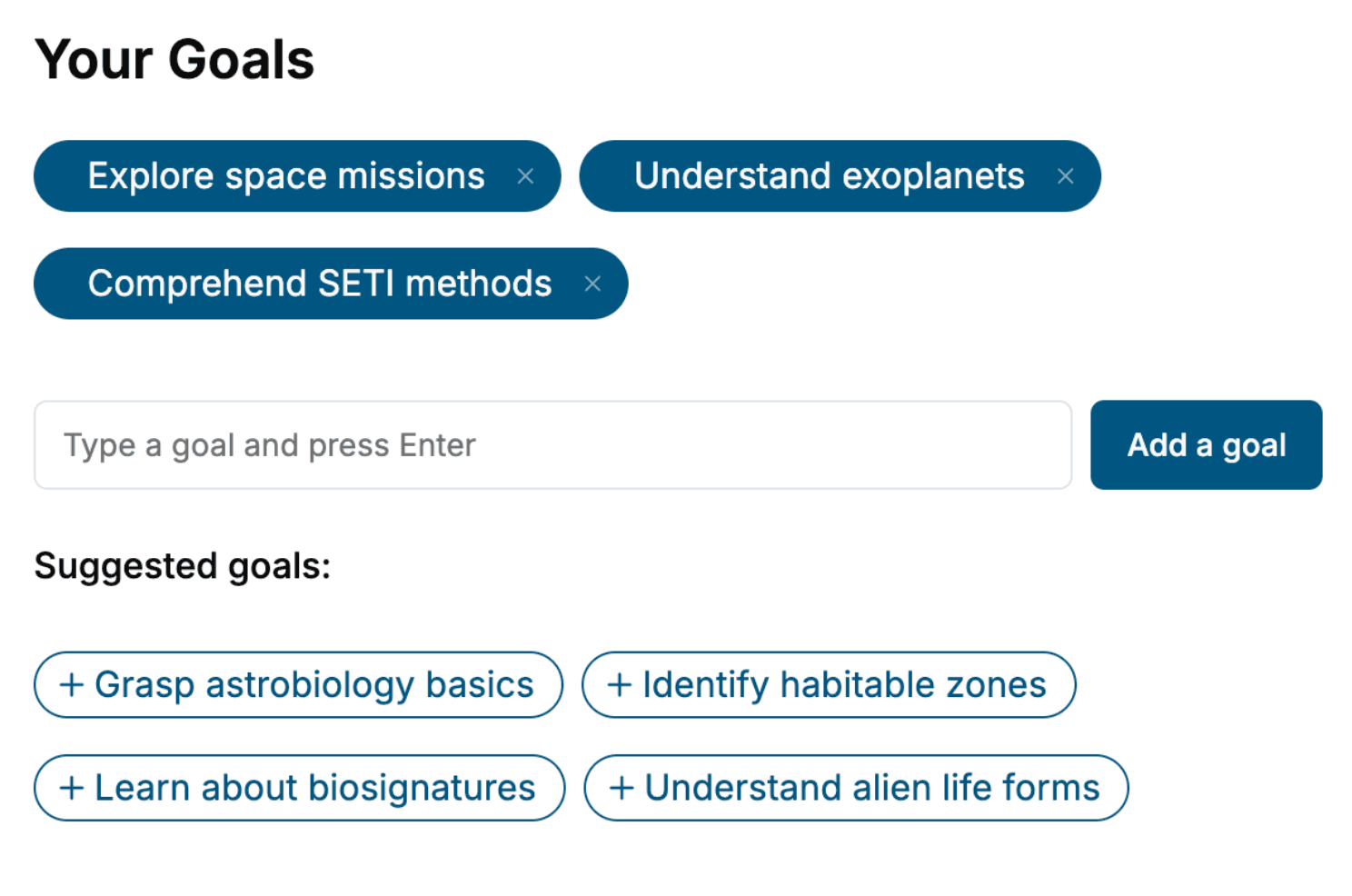
Specify your goals and choose sub-topics to include
- 3. Get your tailored book
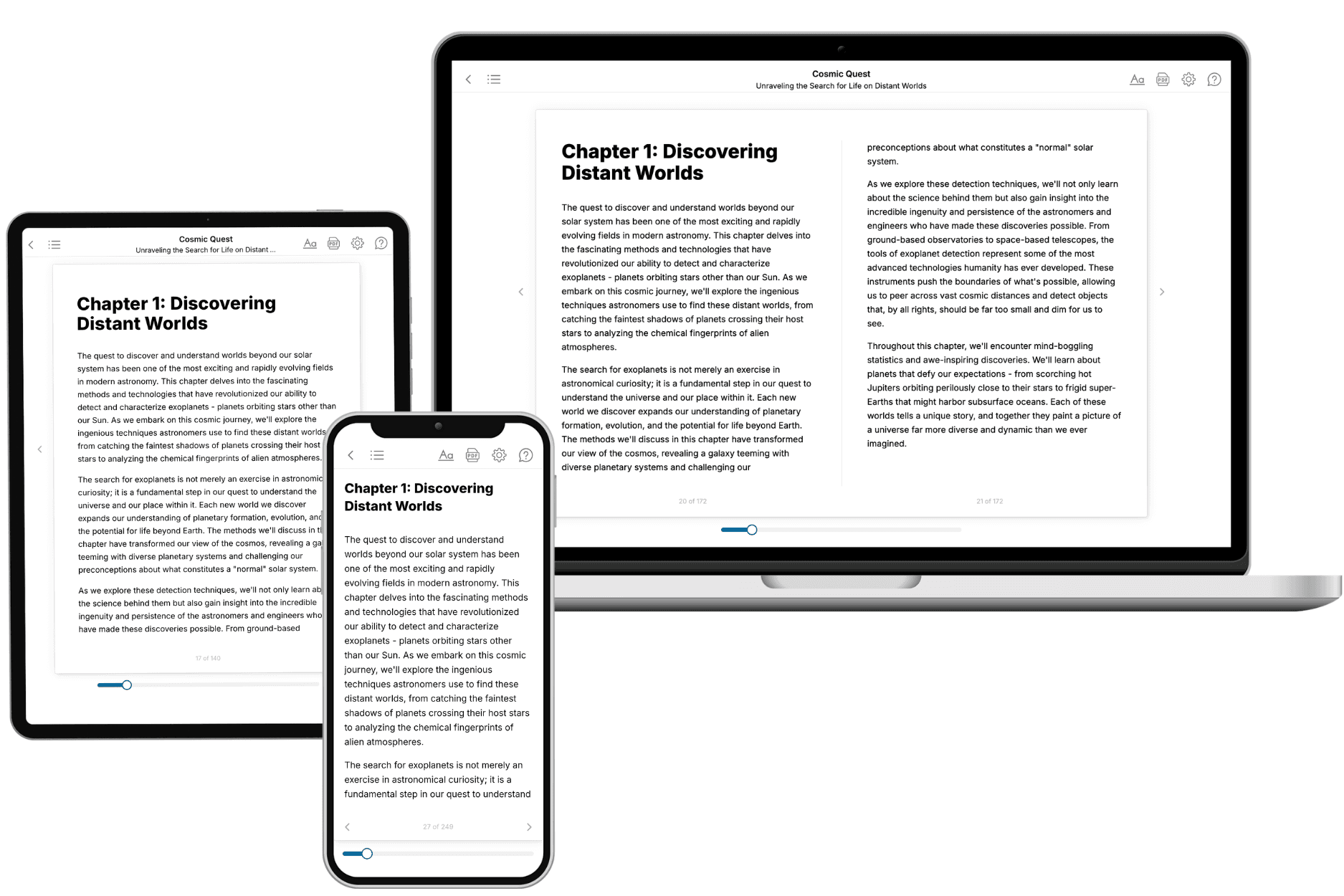
Your book is ready in 10 minutes. Read it online, download as EPUB or PDF, or send to Kindle.

Frequently asked questions
- What is TailoredRead?
TailoredRead creates complete, full-length nonfiction ebooks, written specifically for you. Tell us what you want to learn and why, and TailoredRead writes you a complete ebook on it, with charts, tables, and diagrams throughout. Read it online, on Kindle, or on any e-reader, or download it as a PDF or EPUB. Every book is written fresh the day you order it.
- How is the book tailored to me?
Before anything is written, you answer a few short questions about your goals, your background, and the topics you care about. Your book is then planned around your answers: written at your level, focused on your goals, and covering the topics you chose, instead of the one-size-fits-all book a store sells everyone.
- Will it read like generic AI content?
No. Your book isn't a chat transcript: it's planned chapter by chapter before a single word is written, told in a clear book voice, and explains ideas visually with charts, tables, and diagrams. After writing, every book goes through an editorial pass that polishes chapters so the book reads consistent from start to finish. Judge for yourself: browse thousands of sample books on our Explore Books page.
- How accurate is the content?
Our AI first checks whether your subject needs live research. Niche and fast-moving subjects are researched before writing, and the book plan and chapters are grounded in what it finds. After writing, every book goes through a quality pass that checks its facts and consistency, and researched books list their sources in a Notes section at the back.
- How long is the book?
You choose the length: Comprehensive (250-300 pages), Detailed (150-200 pages), Essential (70-100 pages), or Short (30-50 pages).
- Does the book include visuals?
Yes. Every book includes visual elements such as timelines, checklists, step-by-step guides, decision trees, comparison tables, and matrices, and many include bar charts. A typical book includes dozens of these visual elements.
- Can I read it on Kindle? What formats can I download?
Yes. Every book can be read in our online reader or downloaded as a PDF or EPUB. The EPUB can be opened with Kindle, Apple Books, Kobo, and any e-reader. The Commercial and Author licenses also include an editable Word (DOCX) and Markdown download.
- How much does it cost?
About the price of a regular ebook. The exact price depends on your book's length and complexity, from $2 for the shortest books to $35 for the most comprehensive, and it's shown when you review your book, before you commit to anything. Each book is a one-time purchase, yours to keep, no subscription. Licenses that let you share, teach, or publish your book range from $35.99 to $49.99.
- Can I preview the book before purchasing?
Before you pay, you'll see what your book will cover: the title, a detailed description, the estimated length, and the complete chapter-by-chapter table of contents, so you know what you're getting before you decide. The full text itself is written after you purchase.
- How long does it take to create a book?
About 10 minutes. You can start reading the opening chapters while the rest is still being written.