The Executive's Guide to Deep Work
Master Strategic Thinking, Reclaim Your Time, and Lead with Clarity
As an executive, your time is your most valuable asset—yet most of it disappears into meetings, emails, and reactive firefighting.
160 pages8 chaptersJun 3, 2026Productivity
About this book
This book shows you how to reclaim your focus and lead with greater clarity and impact. You'll discover how to design your work environment and schedule for deep thinking, implement mindfulness practices that sharpen your decision-making, and build strategic thinking frameworks that move you beyond tactical management. Learn proven methods to reduce cognitive overload, establish boundaries around meetings and interruptions, and create sustainable work habits that prevent burnout. More importantly, you'll learn how to cultivate a productivity culture across your organization that multiplies your impact. This isn't about working harder—it's about working smarter by aligning your daily practices with your strategic priorities and personal values.
Table of contents
- IntroductionThe Executive Paradox: Busy Yet Unproductive, Why Deep Work Matters for Leaders, What You'll Learn in This BookRead below
- Chapter 1: Understanding Deep Work in Executive ContextsDefining Deep Work for Leaders, The Shallow Work Trap, The Strategic Value of Focused Thinking
- Chapter 2: Executive Mindfulness and Mental ClarityMindfulness Fundamentals for Executives, How Mindfulness Improves Decision-Making, Building Stress Resilience Through Practice
- Chapter 3: Strategic Thinking FrameworksSystems Thinking for Complex Problems, Scenario Planning and Strategic Foresight, Applying Frameworks to Real Decisions
- Chapter 4: Cognitive Load Reduction StrategiesUnderstanding Cognitive Load, Simplification and Delegation Techniques, Managing Information Flow Effectively
- Chapter 5: Strategic Pause PracticesThe Power of Strategic Pauses, Building Reflection Routines, Recovery Practices for Sustained Performance
- Chapter 6: Mastering Meeting Culture and Time BoundariesAnalyzing Your Meeting Overload, Redesigning Meetings for Impact, Setting and Protecting Time Boundaries
- Chapter 7: Work-Life Integration ModelsIntegration Versus Balance: A New Paradigm, Aligning Work with Personal Values, Creating Sustainable Work Rhythms
- Chapter 8: Building Organizational Productivity CultureFoundations of Productivity Culture, Creating Systemic Change Across Teams, Leading by Example and Influence
- ConclusionYour Integration Journey Ahead, Immediate Next Steps
Introduction
There is a particular kind of exhaustion that only executives understand. It is not the tiredness that comes from physical labor or even from working long hours on a single demanding project. It is the exhaustion of a mind that has been pulled in forty directions before noon, that has answered two hundred emails, sat through six meetings, and made dozens of small decisions, yet somehow feels like it has accomplished almost nothing of real consequence. If that description sounds familiar, you are not alone, and more importantly, you are not broken. The system around you is.
The modern executive environment was not designed for deep thinking. It was designed for responsiveness. Calendars fill up automatically. Notifications arrive in real time. Colleagues, direct reports, and stakeholders all have legitimate claims on your attention, and the culture of most organizations quietly rewards the leader who is always available, always responsive, always in the room. The problem is that this kind of constant availability is the enemy of the strategic thinking that your role actually demands. You cannot think clearly about a five-year market strategy while simultaneously managing a Slack thread about a delayed shipment.
This book is built on a straightforward premise: your ability to think deeply and strategically is your most valuable professional asset, and right now, most organizations are systematically destroying it. The good news is that this is a solvable problem. Not through willpower alone, and not by simply waking up earlier or working on weekends. The solution requires a deliberate redesign of how you work, how you protect your attention, and how you lead your organization toward a culture that values focused effort over performative busyness. That redesign is exactly what this book will walk you through, step by step.
The ideas here draw on research in cognitive science, organizational behavior, and leadership psychology, as well as the practical experience of executives who have successfully reclaimed their focus without sacrificing their effectiveness or their relationships. The goal is not to turn you into a monk who meditates for three hours before dawn. The goal is to give you a practical, realistic toolkit for doing your best thinking, making your best decisions, and leading with the kind of clarity that inspires the people around you.
The Executive Paradox: Busy Yet Unproductive
Consider a typical Tuesday for a senior vice president at a mid-sized technology company. The day begins with a 7:30 AM leadership sync, followed by a product review, two one-on-ones, a budget discussion, a cross-functional strategy session, and a late-afternoon all-hands meeting. Between those meetings, there are roughly forty minutes of unstructured time, most of which disappears into email and Slack. By 6:00 PM, this executive has been "working" for over ten hours. Yet when asked what they actually moved forward that day, the honest answer is often: very little of strategic importance.
This is the executive paradox. The higher you rise in an organization, the more your role demands sophisticated, long-horizon thinking. Yet the higher you rise, the more your calendar fills with obligations that fragment your attention into unusable pieces. Research from Harvard Business School found that CEOs of large companies spend an average of 72 hours per week on work-related activities, yet only about 28% of that time is spent alone, which is when most deep thinking actually happens.[1] The rest is consumed by meetings, communications, and reactive problem-solving.
The paradox runs deeper than just time allocation. Many executives have internalized the belief that busyness equals value. If your calendar is packed, you must be important. If you are always reachable, you must be a good leader. These beliefs are understandable given how most corporate cultures operate, but they are fundamentally mistaken. Busyness is not a proxy for impact. In fact, chronic busyness is often a sign that an executive has not yet built the systems, the team, or the boundaries needed to operate at a truly strategic level.
The cognitive cost of this constant context-switching is significant and well-documented. Neuroscience research shows that the human brain does not actually multitask. Instead, it rapidly switches between tasks, and each switch carries a cognitive cost in the form of lost focus, increased error rates, and mental fatigue.[2] For an executive making high-stakes decisions throughout the day, this cognitive tax compounds quickly. By mid-afternoon, the quality of your thinking is measurably worse than it was at 9 AM, not because you are less intelligent, but because your mental resources have been depleted by a thousand small demands.
There is also an organizational dimension to this paradox that is easy to overlook. When executives model constant busyness, they signal to their teams that this is what good leadership looks like. Meetings multiply because leaders attend every meeting. Emails demand immediate responses because the boss always replies within minutes. The culture of reactive urgency cascades downward through the organization, eventually consuming the focus of everyone, not just the people at the top. Fixing the executive paradox is therefore not just a personal productivity challenge. It is a leadership challenge with organization-wide consequences.
The first step toward resolving this paradox is simply recognizing it clearly. Many executives have been operating in reactive mode for so long that it feels normal, even comfortable. The discomfort of an empty calendar slot can feel worse than the exhaustion of a packed one, because at least a packed calendar feels productive. Breaking this pattern requires honest self-assessment. Ask yourself: in the last two weeks, how many hours did you spend on work that only you could do, work that required your specific expertise, judgment, and strategic perspective? If the answer is fewer than ten hours per week, the paradox has taken hold, and this book is for you.
A useful diagnostic question: At the end of each workday this week, write down the single most strategically important thing you accomplished. If you struggle to identify one, that is your data. It tells you exactly how much of your day was consumed by shallow work versus the deep, high-value thinking your role demands.
The executive paradox is not inevitable. It is a product of habits, systems, and cultural norms that can be changed. The chapters ahead will show you exactly how to change them, starting with your own daily practices and extending outward to the teams and organizations you lead. But the starting point is always the same: seeing the paradox clearly, without defensiveness, and deciding that a different way of working is both possible and worth pursuing.
Why Deep Work Matters for Leaders
Deep work refers to professional activities performed in a state of distraction-free concentration that push your cognitive capabilities to their limit. These are the activities that create new value, improve your skills, and produce results that are difficult to replicate. For executives, deep work looks like developing a new market entry strategy, thinking through the second and third-order consequences of a major organizational change, crafting a vision that will align and inspire hundreds of people, or working through a complex financial model that will shape the company's next three years. These are not tasks you can do well in fifteen-minute fragments between meetings.
The concept of deep work gained significant popular attention through the work of computer science professor Cal Newport, whose research and writing highlighted a growing crisis of attention in knowledge work environments.[3] But the underlying insight is not new. Peter Drucker, writing decades earlier, observed that effective executives are distinguished not by how much they do, but by their ability to concentrate on the few tasks that produce the most significant results. The language has changed, but the core truth remains: focused, uninterrupted thinking is the engine of executive effectiveness.
For leaders specifically, deep work matters for several interconnected reasons. First, the problems that reach an executive's desk are, by definition, the ones that could not be solved at lower levels of the organization. They are complex, ambiguous, and consequential. Solving them well requires sustained cognitive effort, not quick reactive responses. Second, the strategic decisions executives make have long time horizons and wide organizational impact. A decision made hastily in a distracted state can cost an organization months of misdirected effort and millions of dollars. The quality of executive thinking is not just a personal performance issue; it is a business risk.
Third, deep work is increasingly rare, which makes it increasingly valuable. As digital communication tools have made shallow, reactive work the default mode for most knowledge workers, the ability to think deeply and strategically has become a genuine competitive differentiator. Organizations whose leaders can carve out time for serious strategic thinking will consistently outmaneuver those whose leaders are perpetually stuck in reactive mode. This is not a soft claim about personal development. It is a hard claim about competitive advantage.
Consider the contrast between two approaches to strategic planning. In the first approach, a leadership team squeezes strategy discussions into the margins of an already-packed calendar, reviewing slide decks in thirty-minute windows and making decisions based on incomplete analysis. In the second approach, the same team protects two full days per quarter for deep strategic work, with no email, no interruptions, and structured frameworks for thinking through complex scenarios. The quality of strategic output from these two approaches will not be marginally different. It will be categorically different. The second team will identify risks the first team missed, spot opportunities the first team overlooked, and build plans with far greater coherence and resilience.
Deep work also matters for leadership presence and communication. The most compelling executive communications, whether a board presentation, a company-wide address, or a difficult conversation with a key stakeholder, require careful thought and preparation. Leaders who protect time for deep work show up to these moments with clarity, nuance, and conviction. Leaders who are perpetually reactive show up underprepared, relying on improvisation where precision is needed. Over time, this difference in preparation quality shapes how a leader is perceived, both internally and externally.
There is also a personal dimension worth acknowledging. Many executives entered their careers because they were genuinely excited about solving hard problems, building things, and creating impact. The gradual erosion of deep work time does not just reduce professional effectiveness. It reduces professional satisfaction. When your days are consumed by meetings and email, the work stops feeling meaningful, even when the outcomes are objectively important. Reclaiming time for deep work is not just about performance. It is about reconnecting with the parts of your work that made you want to lead in the first place.
Finally, deep work matters because of what it models for your organization. Leaders who visibly protect time for focused thinking send a powerful signal: that serious thinking is valued here, that not every problem requires an immediate response, and that quality of output matters more than speed of reaction. This signal, when reinforced consistently, begins to shift organizational culture in ways that benefit everyone. The chapters on building organizational productivity culture will explore this dynamic in detail, but the foundation is always the leader's own practice.
What You'll Learn in This Book
This book is organized as a practical guide, not a theoretical treatise. Each chapter addresses a specific dimension of executive deep work, moving from individual practices to organizational systems. The progression is intentional: you need to understand and manage your own attention before you can effectively shape the attention culture of your organization. Think of it as building from the inside out, starting with your mindset and daily habits, then expanding to your team, your meetings, and ultimately your organizational culture.
Here is a clear map of what each part of the book covers:
- Chapter 1: Understanding Deep Work in Executive Contexts establishes a precise definition of deep work as it applies to leadership roles, distinguishes it from shallow work, and makes the strategic case for why focused thinking is a competitive advantage worth protecting.
- Chapter 2: Executive Mindfulness and Mental Clarity introduces practical mindfulness techniques designed specifically for busy leaders, explaining how these practices improve decision-making quality, emotional regulation, and stress resilience without requiring hours of daily practice.
- Chapter 3: Strategic Thinking Frameworks provides concrete tools for moving beyond reactive management, including systems thinking approaches and scenario planning methods that help you anticipate complexity rather than just respond to it.
- Chapter 4: Cognitive Load Reduction Strategies tackles the mental overhead that drains executive capacity, offering specific techniques for simplification, delegation, and information management that free up cognitive resources for high-value work.
- Chapter 5: Strategic Pause Practices makes the case for deliberate reflection as a performance tool, not a luxury, and provides frameworks for building reflection routines and recovery practices into your regular schedule.
- Chapter 6: Mastering Meeting Culture and Time Boundaries addresses one of the most common and damaging sources of executive distraction, offering a systematic approach to auditing, redesigning, and protecting your time from meeting overload.
- Chapter 7: Work-Life Integration Models moves beyond the outdated concept of work-life balance to offer a more realistic and sustainable model of integration that aligns your professional commitments with your personal values and energy patterns.
- Chapter 8: Building Organizational Productivity Culture scales the individual practices from earlier chapters into organizational systems, showing you how to lead cultural change that multiplies your impact across your entire team or company.
Each chapter is built around three elements: a clear conceptual framework that explains the "why," specific tools and techniques that address the "how," and practical examples drawn from real executive contexts that show what good implementation looks like. You will not find vague advice to "prioritize better" or "say no more often." You will find specific protocols, decision frameworks, and implementation steps that you can begin applying immediately.
It is worth being clear about what this book is not. It is not a time management system in the traditional sense. There are no color-coded calendar templates or elaborate task management methodologies here. The focus is on the quality of your thinking and the strategic design of your work environment, not on squeezing more tasks into each hour. In fact, one of the central arguments of this book is that the obsession with doing more is itself part of the problem. The goal is not to maximize the number of things you accomplish. The goal is to maximize the impact of the things you choose to focus on.
This book also does not promise overnight transformation. Building the habits and systems described here takes time, experimentation, and a willingness to push back against organizational norms that may be deeply entrenched. Some of the changes will be easy to implement immediately. Others will require sustained effort over weeks or months. The approach recommended throughout is to start small, build evidence of what works in your specific context, and then expand from there. Sustainable change is always preferable to dramatic but short-lived overhauls.
One more thing worth noting before you dive in: the practices in this book are most powerful when they are treated as interconnected rather than isolated. Mindfulness supports better decision-making. Better decision-making reduces cognitive load. Reduced cognitive load creates space for strategic thinking. Strategic thinking improves meeting quality. Better meetings free up time for deep work. Deep work produces better strategic outcomes. These elements reinforce each other in a virtuous cycle, and the more of them you implement, the stronger the overall effect becomes.
How to use this book: Read it sequentially on the first pass to understand how the pieces connect. Then return to individual chapters as reference guides when you are working on a specific challenge. The frameworks and tools are designed to be revisited and refined over time, not consumed once and forgotten.
The executives who will benefit most from this book are those who are willing to be honest about the gap between how they currently work and how they know they could work. That honesty can be uncomfortable. It requires acknowledging that some of your current habits, however well-intentioned, may be undermining your effectiveness. But that discomfort is the starting point for real change. The leaders who have made the most significant transformations in their productivity and clarity are not those who had the most time or the most favorable circumstances. They are those who decided, clearly and deliberately, that a different way of working was worth the effort to build.
That decision is yours to make. The tools, frameworks, and strategies to support it are waiting in the pages ahead. The work of becoming a more focused, more strategic, and more effective leader starts now.
Notes
Introduction
- 1. M. E. Porter and N. Nohria, "How CEOs Manage Time," Harvard Business Review, July-, 2018
- 2. J. S. Rubinstein and others, "Executive Control of Cognitive Processes in Task Switching," Journal of Experimental Psychology: Human Perception and Performance, 2001
- 3. C. Newport, Deep Work, Grand Central Publishing, 2016
This is the end of the free sample. The full book has 8 chapters.
Want this book written for you?
Tell us your goals and background, and get your own version of this book, tailored by AI to you.


Benefits of AI-tailored books
- Read one book, not ten:
- all the Productivity knowledge you need, gathered into a single book.
- Save days of learning:
- tell us your goals, choose your topics, and the whole book is built around them.
- Learn effortlessly:
- Productivity book written for your specific background and expertise.
- Understand at a glance:
- includes charts, tables, timelines, checklists, decision trees, and more.
- Stay current:
- written the day you order it, not years ago.
- Trust what you read:
- every book is checked for accuracy, with real research when your subject needs it.
Create your unique book in 3 steps
- 1. Select your focus
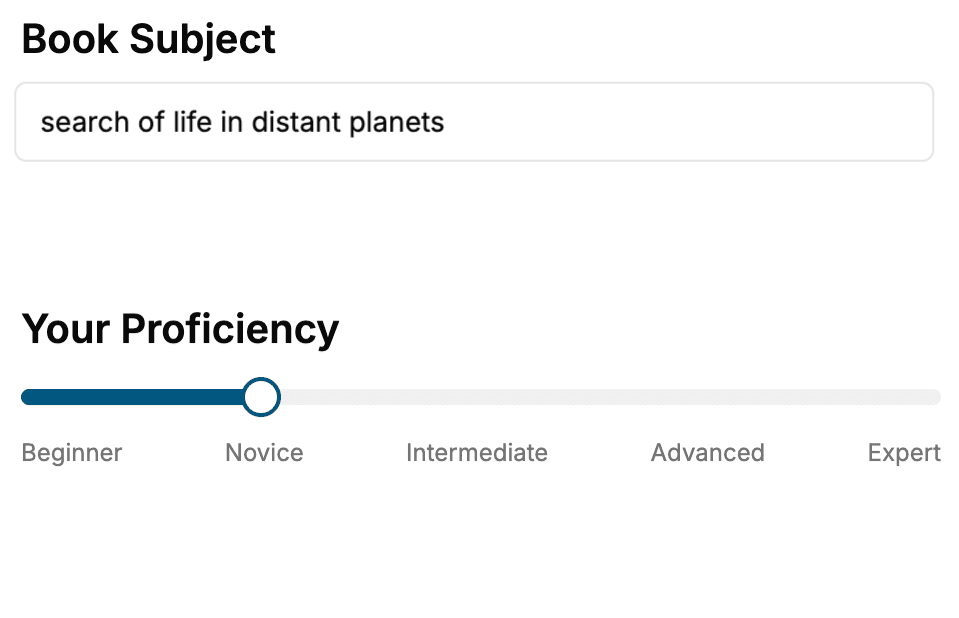
Select the focus of your Productivity book and share your background
- 2. Personalize your book
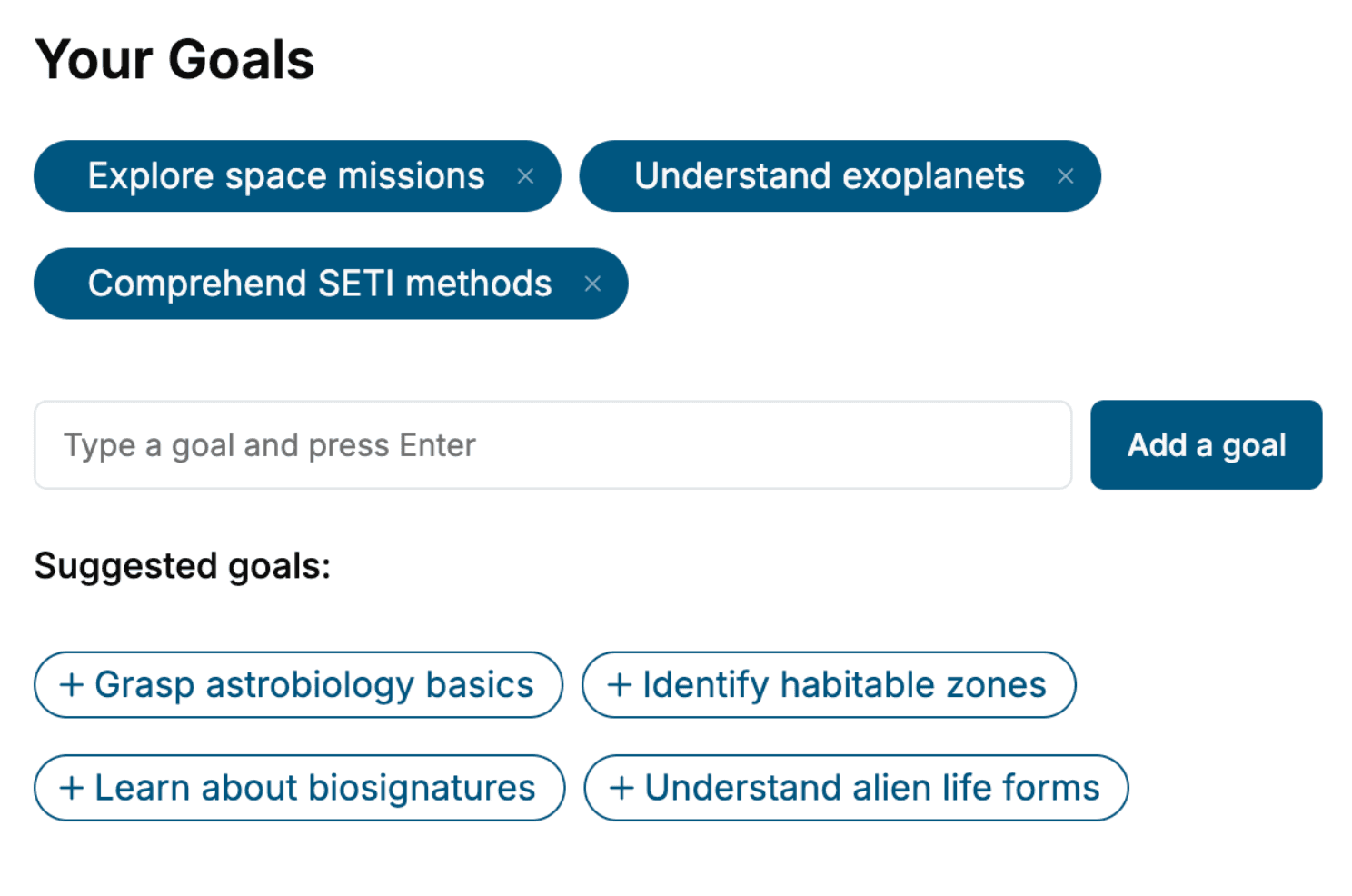
Specify your goals and choose sub-topics to include
- 3. Get your tailored book
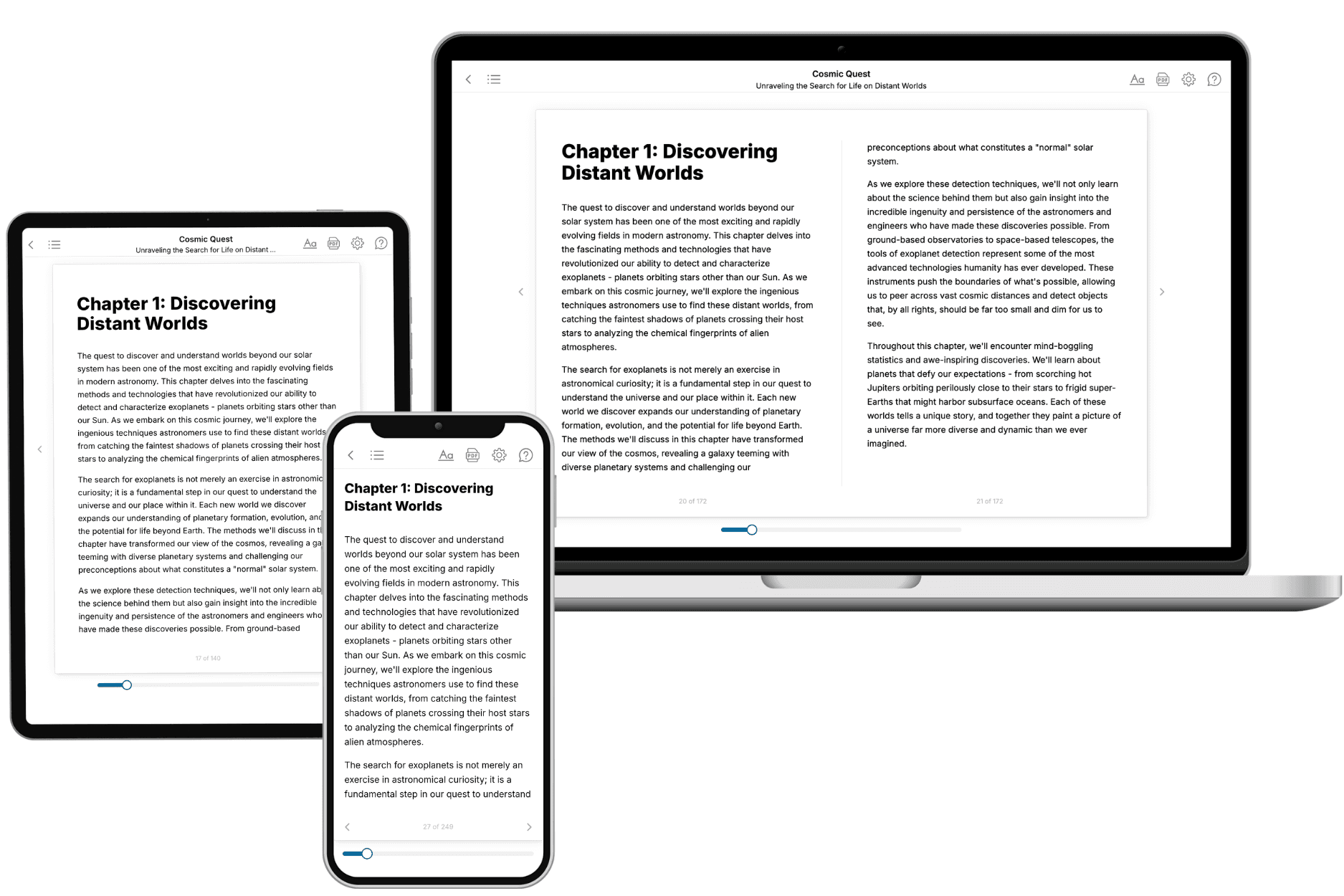
Your book is ready in 10 minutes. Read it online, download as EPUB or PDF, or send to Kindle.
Frequently asked questions
- What is TailoredRead?
TailoredRead creates complete, full-length nonfiction ebooks, written specifically for you. Tell us what you want to learn and why, and TailoredRead writes you a complete ebook on it, with charts, tables, and diagrams throughout. Read it online, on Kindle, or on any e-reader, or download it as a PDF or EPUB. Every book is written fresh the day you order it.
- How is the book tailored to me?
Before anything is written, you answer a few short questions about your goals, your background, and the topics you care about. Your book is then planned around your answers: written at your level, focused on your goals, and covering the topics you chose, instead of the one-size-fits-all book a store sells everyone.
- Will it read like generic AI content?
No. Your book isn't a chat transcript: it's planned chapter by chapter before a single word is written, told in a clear book voice, and explains ideas visually with charts, tables, and diagrams. After writing, every book goes through an editorial pass that polishes chapters so the book reads consistent from start to finish. Judge for yourself: browse thousands of sample books on our Explore Books page.
- How accurate is the content?
Our AI first checks whether your subject needs live research. Niche and fast-moving subjects are researched before writing, and the book plan and chapters are grounded in what it finds. After writing, every book goes through a quality pass that checks its facts and consistency, and researched books list their sources in a Notes section at the back.
- How long is the book?
You choose the length: Comprehensive (250-300 pages), Detailed (150-200 pages), Essential (70-100 pages), or Short (30-50 pages).
- Does the book include visuals?
Yes. Every book includes charts, tables, and diagrams: timelines, checklists, step-by-step guides, decision trees, comparison tables, matrices, and bar charts. A typical book includes dozens of these visual elements.
- Can I read it on Kindle? What formats can I download?
Yes. Every book can be read in our online reader or downloaded as a PDF or EPUB. The EPUB can be opened with Kindle, Apple Books, Kobo, and any e-reader. The Commercial and Author licenses also include an editable Word (DOCX) and Markdown download.
- How much does it cost?
About the price of a regular ebook. The exact price depends on your book's length and complexity, from $2 for the shortest books to $35 for the most comprehensive, and it's shown when you review your book, before you commit to anything. Each book is a one-time purchase, yours to keep, no subscription. Licenses that let you share, teach, or publish your book range from $35.99 to $49.99.
- Can I preview the book before purchasing?
Before you pay, you'll see what your book will cover: the title, a detailed description, the estimated length, and the complete chapter-by-chapter table of contents, so you know what you're getting before you decide. The full text itself is written after you purchase.
- How long does it take to create a book?
About 10 minutes. You can start reading the opening chapters while the rest is still being written.