The Executive's Wealth Playbook
Advanced Strategies for Building, Protecting, and Growing Wealth Beyond the Balance Sheet
What if the wealth management strategies that work for $100,000 portfolios are actually sabotaging your ability to build and protect multi-million-dollar wealth?
238 pages11 chaptersApr 1, 2026Personal FinanceCreated by Kevin
About this book
As a CEO with accounting expertise, you understand financial statements—but personal wealth management operates by different rules. This book bridges that gap by providing the advanced strategies that high-income executives need to move beyond basic investing. You'll discover how to construct diversified portfolios that weather market cycles, implement tax-loss harvesting and bracket optimization techniques that legally reduce your tax burden by thousands annually, and master retirement income distribution strategies that align with your lifestyle and legacy goals. Learn the behavioral finance principles that explain why intelligent people make costly financial mistakes, explore alternative investment options that institutional investors use, and implement wealth preservation structures that protect your accumulated assets. Whether you're managing concentrated positions, optimizing cash flow across multiple income streams, or planning for generational wealth transfer, this book provides the frameworks and tactical strategies you need to move from financial success to lasting wealth.
Table of contents
- IntroductionWhy Wealth Management Differs from Basic Investing, The Executive Advantage: Leveraging Your Expertise, How to Use This Book for Maximum ImpactRead below
- Chapter 1: The Foundation: Understanding Your Wealth ArchitectureThe Five Stages of Wealth and How They Change Your Strategy, Financial Goal Prioritization: Building Your Wealth Hierarchy, Risk Tolerance Assessment Beyond the Questionnaire
- Chapter 2: Portfolio Diversification: Beyond the Traditional 60/40 SplitAsset Allocation Models for High-Net-Worth Portfolios, Portfolio Diversification Strategies Across Asset Classes, Geographic and Currency Diversification Considerations
- Chapter 3: Tax-Efficient Wealth Building: The Hidden AdvantageTax-Loss Harvesting Techniques and Implementation, Tax Bracket Optimization Across Income Sources, Tax-Efficient Investment Vehicles and Account Structures
- Chapter 4: Behavioral Finance: Why Smart People Make Costly MistakesBehavioral Finance Principles and Cognitive Biases, Behavioral Spending Patterns and Wealth Leakage, Building Decision Frameworks to Overcome Behavioral Traps
- Chapter 5: Cash Flow Mastery: Optimizing Every DollarCash Flow Optimization Across Personal and Business Finances, Income Timing and Deferral Strategies, Strategic Expense Management and Deduction Maximization
- Chapter 6: Managing Concentrated Positions: Protecting Your WealthConcentrated Position Management and Risk Assessment, Systematic Diversification Strategies for Large Holdings, Hedging Techniques and Alternative Structures
- Chapter 7: Alternative Investments: Expanding Your Opportunity SetPrivate Equity Investment Basics and Opportunities, Real Estate and Real Assets as Portfolio Components, Hedge Funds and Other Alternative Vehicles
- Chapter 8: Retirement Income Distribution: Reverse Engineering Your LifestyleRetirement Needs Analysis and Lifestyle Planning, Retirement Income Distribution Strategies and Sequencing, Longevity Planning and Sustainable Withdrawal Rates
- Chapter 9: Insurance and Liability Protection: Your Risk Management ArsenalInsurance Planning Essentials for High-Net-Worth Individuals, Liability Protection Strategies and Coverage Gaps, Umbrella Policies and Excess Liability Protection
- Chapter 10: Wealth Preservation Structures: Building Your Legal FrameworkWealth Preservation Structures and Entity Selection, Trust Strategies for Asset Protection and Tax Efficiency, Estate Planning Fundamentals and Succession Planning
- Chapter 11: Risk Management Framework: Protecting Against the UnexpectedRisk Identification and Assessment Across Your Wealth, Risk Mitigation Strategies and Contingency Planning, Sustainable Wealth Growth Through Balanced Strategies
- ConclusionIntegrating Your Wealth Management Strategy, Your Next Steps to Wealth Mastery
- Glossary
- Further Reading and Resources
Introduction
There is a moment that many successful executives experience somewhere between their third and fifth year of serious wealth accumulation. The financial statements make sense. The business metrics are under control. The compensation package is strong. And yet, when it comes to personal wealth, something feels off. The strategies that worked at $500,000 in net worth feel inadequate at $5 million. The advice from a generalist financial advisor sounds generic. The tax bill keeps growing faster than the portfolio. That moment of friction is exactly what this book was written to address.
Wealth management at the executive level is a fundamentally different discipline from basic investing. It is not simply a matter of doing more of the same things that worked earlier in your career. It requires a different mental model, a different set of tools, and a different relationship with risk, time, and complexity. The strategies that institutional investors, family offices, and ultra-high-net-worth individuals use are not secret, but they are rarely explained in plain terms to the people who need them most: high-income professionals who have built real wealth and now need to protect and grow it intelligently.
This book is built around a single core premise: your accounting expertise and financial literacy are genuine advantages, but only if they are applied through frameworks designed for your wealth level. A CPA who manages a $10 million personal portfolio using the same mental models as a retail investor with a $100,000 brokerage account is leaving enormous value on the table. The goal here is to close that gap, chapter by chapter, with specific strategies, concrete examples, and actionable frameworks that match the sophistication you already bring to the table.
The chapters ahead cover the full spectrum of executive wealth management, from portfolio construction and tax optimization to behavioral finance, alternative investments, retirement income distribution, and estate planning. Each topic builds on the last. By the end, you will have a comprehensive, integrated wealth management framework that you can apply immediately and refine over time as your financial situation evolves. Before diving into the technical content, though, it is worth establishing three foundational ideas that shape everything that follows.
Why Wealth Management Differs from Basic Investing
Most personal finance advice is designed for the accumulation phase: save more, invest consistently, diversify broadly, and let compounding do the work. That advice is not wrong. It is just incomplete for someone managing multi-million-dollar wealth across multiple asset classes, income streams, and tax environments. At higher wealth levels, the variables multiply, the stakes increase, and the cost of suboptimal decisions grows proportionally. A 1% drag on a $100,000 portfolio costs $1,000 per year. The same drag on a $10 million portfolio costs $100,000 annually, and that gap compounds dramatically over a decade.
The first major difference is complexity of income. Basic investing assumes a single salary, a 401(k), and a taxable brokerage account. Executive wealth typically involves base salary, bonuses, equity compensation (RSUs, stock options, performance shares), deferred compensation plans, business ownership interests, real estate income, and investment distributions. Each of these income streams has different tax treatment, different timing considerations, and different planning opportunities. Managing them in isolation, rather than as an integrated system, is one of the most common and costly mistakes at this wealth level.
The second difference is concentration risk. Many executives accumulate significant wealth through a single company's equity, whether through stock options, RSUs, or direct ownership. This is how wealth is built, but it is also how wealth is lost. The history of corporate America is filled with executives who watched decades of accumulated equity evaporate because they held too long, diversified too slowly, or failed to hedge appropriately. Managing concentrated positions requires specific strategies that go well beyond standard diversification advice.
The third difference is tax complexity. At higher income levels, the tax code becomes both more punishing and more flexible. The punishing side is obvious: higher marginal rates, net investment income taxes, alternative minimum tax exposure, and phase-outs of deductions. The flexible side is less well understood. Strategic tax-loss harvesting, bracket optimization, Roth conversion ladders, qualified opportunity zone investments, and charitable giving structures can legally reduce tax burdens by meaningful amounts. Research suggests that tax-efficient investing strategies can add between 1% and 3% annually to after-tax returns without taking on additional market risk.[1] Over a 20-year horizon, that difference is transformative.
The fourth difference is the role of preservation alongside growth. Early-stage investors can afford to be aggressive because time is their primary asset. A 30-year-old who loses 40% in a market downturn has decades to recover. A 55-year-old executive with $8 million in net worth and a target retirement date of 62 does not have the same luxury. Wealth management at this level requires a dynamic balance between accumulation and preservation, and that balance shifts as wealth milestones are reached and time horizons shorten.
Finally, there is the matter of legacy and transfer. Basic investing rarely addresses what happens to wealth after it is built. Estate planning, trust structures, charitable giving vehicles, and generational transfer strategies are not afterthoughts for high-net-worth individuals. They are core components of a complete wealth management plan. Without them, a significant portion of accumulated wealth can be lost to estate taxes, probate costs, and inefficient transfers. The IRS estimates that estate and gift taxes affect a small but significant portion of high-net-worth estates, and the planning opportunities available before those events are substantial.[2]
Consider two executives with identical compensation packages and identical investment returns over 20 years. The first manages their wealth reactively, using a generalist advisor and standard investment accounts. The second applies integrated tax planning, strategic asset location, and appropriate preservation structures. Studies consistently show that the second executive ends up with 20–40% more after-tax, after-fee wealth at retirement, not because of better market timing, but because of better system design.[3]
Understanding these differences is not just academic. It changes how you evaluate advice, how you structure your financial team, and how you prioritize the decisions in front of you. The chapters ahead are organized around these distinctions, moving from foundational architecture through tactical execution to long-term preservation.
The Executive Advantage: Leveraging Your Expertise
There is a common assumption that financial expertise in a professional context does not translate well to personal wealth management. The argument goes that even smart, financially sophisticated people make poor personal financial decisions because emotions override analysis when it is your own money. There is real truth in that observation, and the behavioral finance chapter addresses it directly. But the assumption that professional expertise is irrelevant to personal wealth management is simply wrong, and accepting it too readily leads executives to outsource decisions they are fully capable of making themselves.
Your accounting background gives you a genuine edge in several specific areas. First, you understand financial statements at a deep level. When evaluating a private equity investment, a real estate syndication, or a hedge fund's performance report, you can read the underlying numbers rather than relying solely on a manager's narrative. Most retail investors cannot do this. The ability to identify revenue recognition issues, evaluate leverage ratios, and assess cash flow quality is directly applicable to investment due diligence at the individual level.
Second, your CPA training gives you a strong foundation in tax law and structure. You understand the difference between ordinary income and capital gains. You know how depreciation works, what a pass-through entity means for your personal return, and how deferred compensation plans interact with your marginal rate. This knowledge is not just theoretical. It translates directly into better decisions about when to exercise stock options, how to structure real estate investments, and which retirement accounts to prioritize in a given tax year.
Third, your executive experience gives you pattern recognition in business evaluation. When assessing a private company investment or a real estate development project, you can evaluate management quality, market positioning, and operational risk in ways that a purely financial analyst might miss. Business judgment is a legitimate investment skill, and it is one that executives often undervalue when thinking about their personal portfolios.
That said, expertise also creates specific blind spots worth acknowledging. Overconfidence is one of the most well-documented behavioral biases in finance, and it tends to be stronger among high-achieving professionals.[4] The same pattern recognition that helps you evaluate a business can lead you to over-weight your own judgment in market timing decisions where the evidence strongly favors systematic approaches. The goal is not to suppress your expertise but to deploy it selectively, in the areas where it genuinely adds value, while using systematic processes in the areas where human judgment consistently underperforms.
Here is a practical framework for thinking about where your expertise adds the most value:
- High-value application areas: Investment due diligence, tax structure decisions, evaluating advisor recommendations, understanding complex financial instruments, assessing business investment opportunities
- Moderate-value application areas: Portfolio construction principles, risk assessment, cash flow planning, insurance coverage evaluation
- Low-value application areas (use systematic processes instead): Market timing, individual stock selection, short-term trading decisions, rebalancing triggers
This distinction matters because it shapes how you should engage with the material in this book. In the tax chapters, lean into your expertise and push for deeper understanding. In the behavioral finance chapter, approach the content with genuine humility, because the research on cognitive biases applies to everyone, regardless of professional background. The executives who build the most durable wealth are those who know which hat to wear in which situation.
One more advantage worth naming explicitly: your professional network. As a CEO, you have access to advisors, deal flow, and investment opportunities that are simply not available to most individual investors. Private equity co-investments, direct real estate deals, and access to institutional-quality managers often come through professional relationships rather than public channels. Building and maintaining a high-quality financial advisory team, including a tax attorney, estate planning attorney, investment advisor, and insurance specialist, is itself a form of wealth management that your network makes easier to execute.
The executive advantage is real. The key is deploying it strategically rather than assuming it applies uniformly across every financial decision you face.
How to Use This Book for Maximum Impact
This book is designed to be read sequentially on the first pass. Each chapter builds on concepts introduced earlier, and the overall framework is cumulative. The foundational chapters on wealth architecture and portfolio construction establish the mental models that make the later chapters on tax optimization, behavioral finance, and alternative investments more actionable. Jumping directly to the chapter on concentrated positions, for example, without the context of the wealth architecture framework, will produce a narrower and less useful reading experience.
That said, the book is also structured for ongoing reference. Once you have read it through, each chapter stands on its own as a resource for specific decisions. If you are about to exercise a large block of stock options, the chapters on concentrated positions and tax-efficient investing are your immediate reference points. If you are beginning a serious estate planning process, the chapters on wealth preservation structures and risk management provide the framework for those conversations with your attorney. The table of contents and chapter summaries are designed to make this kind of targeted reference easy.
Here is a suggested approach for getting the most out of the material:
- First read: Read sequentially, cover to cover. Take notes on the concepts that feel most immediately relevant to your current situation. Flag the chapters where you identify the largest gaps between your current approach and the strategies described.
- Priority assessment: After the first read, rank your flagged areas by potential impact. Focus on the two or three highest-impact areas first rather than trying to implement everything simultaneously.
- Advisor conversations: Use the frameworks and terminology from each chapter to have more productive conversations with your financial advisors. The goal is not to replace professional advice but to engage with it at a higher level.
- Annual review: Return to the book annually as your financial situation evolves. The strategies that are most relevant at $5 million in net worth will shift as you approach $10 million and beyond.
A few notes on the content itself. Throughout the book, specific strategies are described in enough detail to be actionable, but they are not a substitute for personalized professional advice. Tax laws change, individual circumstances vary, and the right implementation of any strategy depends on factors that a book cannot fully account for. The goal is to give you the knowledge to ask better questions, evaluate recommendations more critically, and make more informed decisions in partnership with qualified advisors.
The book also uses concrete examples and case studies throughout. These are constructed to illustrate specific principles and are not based on any individual's actual financial situation. Where numbers are used, they are chosen to be realistic for the executive wealth context described in the book, typically portfolios in the $3 million to $20 million range, with income levels in the $500,000 to $2 million annual range. If your situation falls outside those parameters, the principles still apply, but the specific numbers and thresholds will need to be adjusted accordingly.
On the topic of financial advisors: this book takes a clear position that high-net-worth individuals benefit from working with specialized advisors rather than generalists. A fee-only fiduciary advisor with specific experience in executive compensation and high-net-worth planning is a different resource than a commission-based generalist. The chapters on specific topics will help you evaluate whether your current advisors have the depth of expertise your situation requires. If they do not, the frameworks here will help you identify what to look for in a more specialized team.
A useful benchmark: if your financial advisor cannot explain the difference between a grantor retained annuity trust and a charitable remainder trust, or cannot walk you through the tax implications of a 10b5-1 trading plan for your company stock, you may have outgrown their expertise. That is not a criticism of generalist advisors. It is simply a recognition that wealth management, like medicine, has specialties, and the right specialist matters enormously at higher wealth levels.
Finally, a word on mindset. The most successful wealth builders share a common characteristic: they treat their personal finances with the same rigor and intentionality they bring to their professional responsibilities. They review their financial position regularly, they hold their advisors accountable, they stay informed about changes in tax law and market conditions, and they make decisions based on frameworks rather than emotions. This book is designed to support that mindset by providing the frameworks, the vocabulary, and the strategic context that make rigorous personal financial management possible.
The gap between financial success and lasting wealth is not primarily a matter of income or investment returns. It is a matter of strategy, structure, and discipline applied consistently over time. The chapters ahead are your roadmap for closing that gap. The work starts now.
Notes
Introduction
- 1. Vanguard Research, "Putting a value on your value: Quantifying Vanguard Advisor's Alpha," Vanguard Group, 2019
- 2. Internal Revenue Service, "Estate and Gift Tax Statistics," IRS Statistics of Income Division, 2023
- 3. Michael Kitces, "The True Value of Financial Planning," Nerd's Eye View, Kitces.com, 2015
- 4. Brad M. Barber and Terrance Odean, "Boys Will Be Boys," The Quarterly Journal of Economics, 2001
This is the end of the free sample. The full book has 11 chapters.
Want this book written for you?
Tell us your goals and background, and get your own version of this book, tailored by AI to you.


Benefits of AI-tailored books
- Read one book, not ten:
- all the Personal Finance knowledge you need, gathered into a single book.
- Save days of learning:
- tell us your goals, choose your topics, and the whole book is built around them.
- Learn effortlessly:
- Personal Finance book written for your specific background and expertise.
- Understand at a glance:
- includes charts, tables, timelines, checklists, decision trees, and more.
- Stay current:
- written the day you order it, not years ago.
- Trust what you read:
- every book is checked for accuracy, with real research when your subject needs it.
Create your unique book in 3 steps
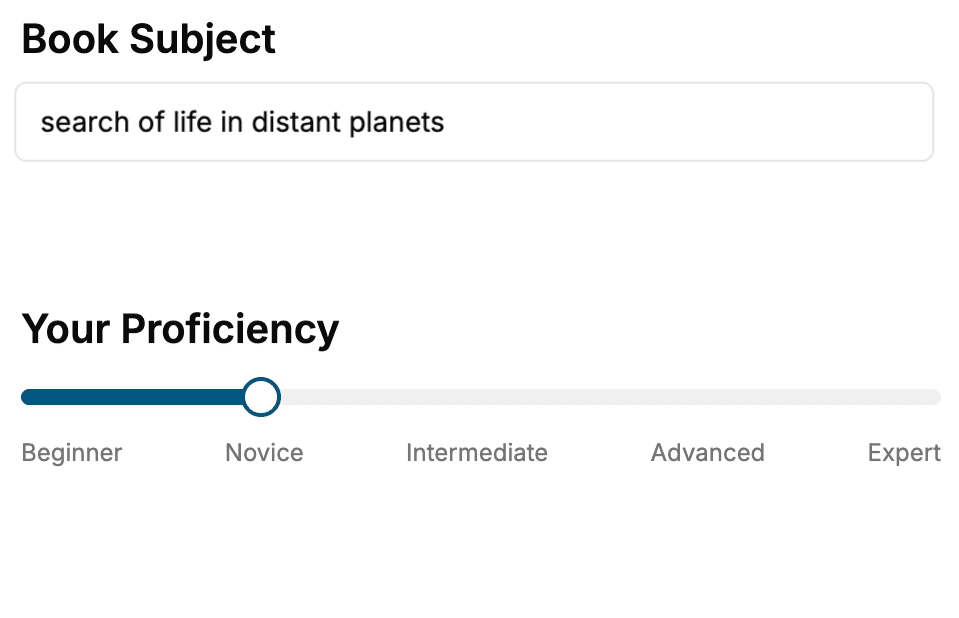
- 1. Select your focus
Select the focus of your Personal Finance book and share your background
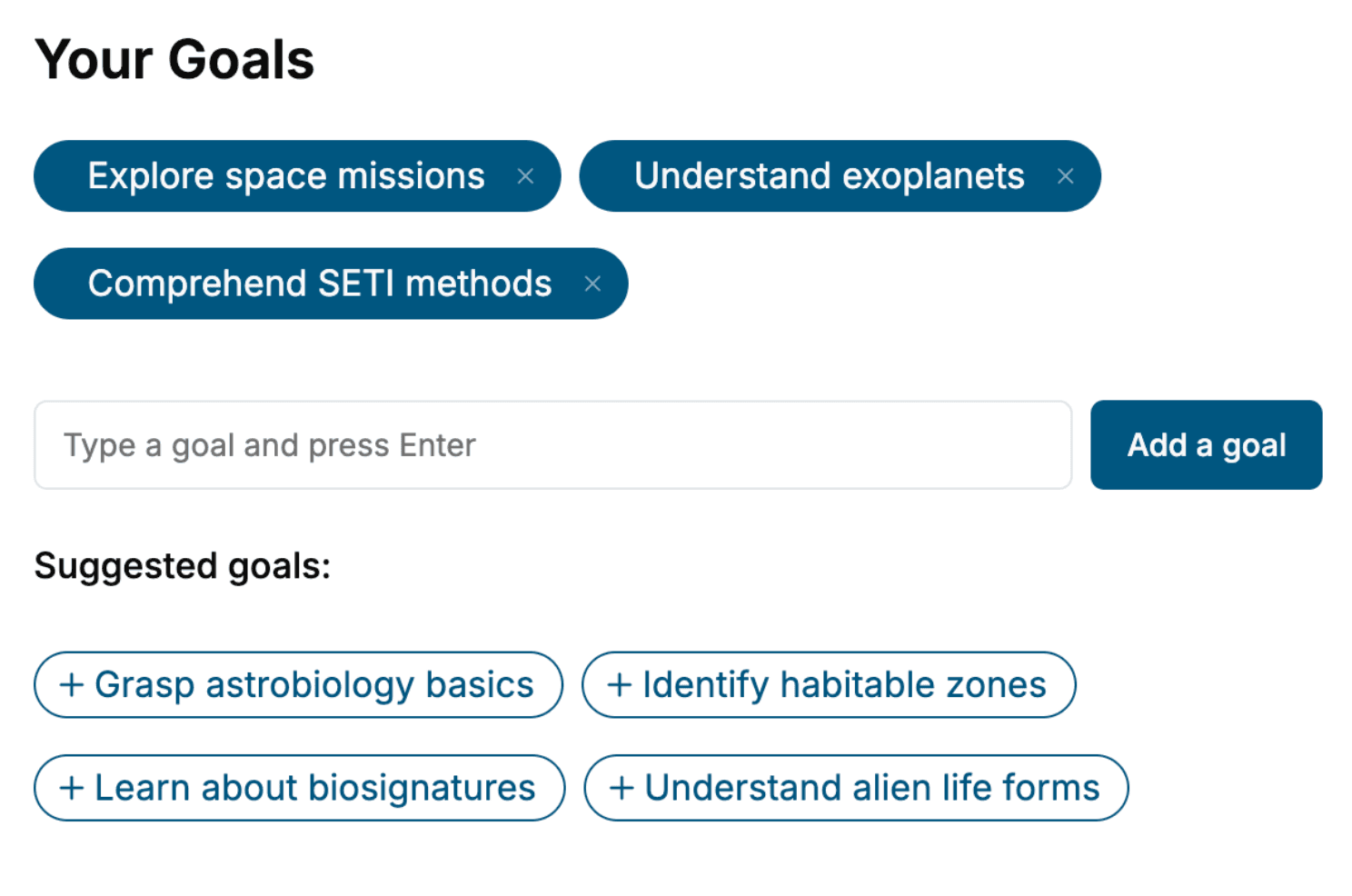
- 2. Personalize your book
Specify your goals and choose sub-topics to include
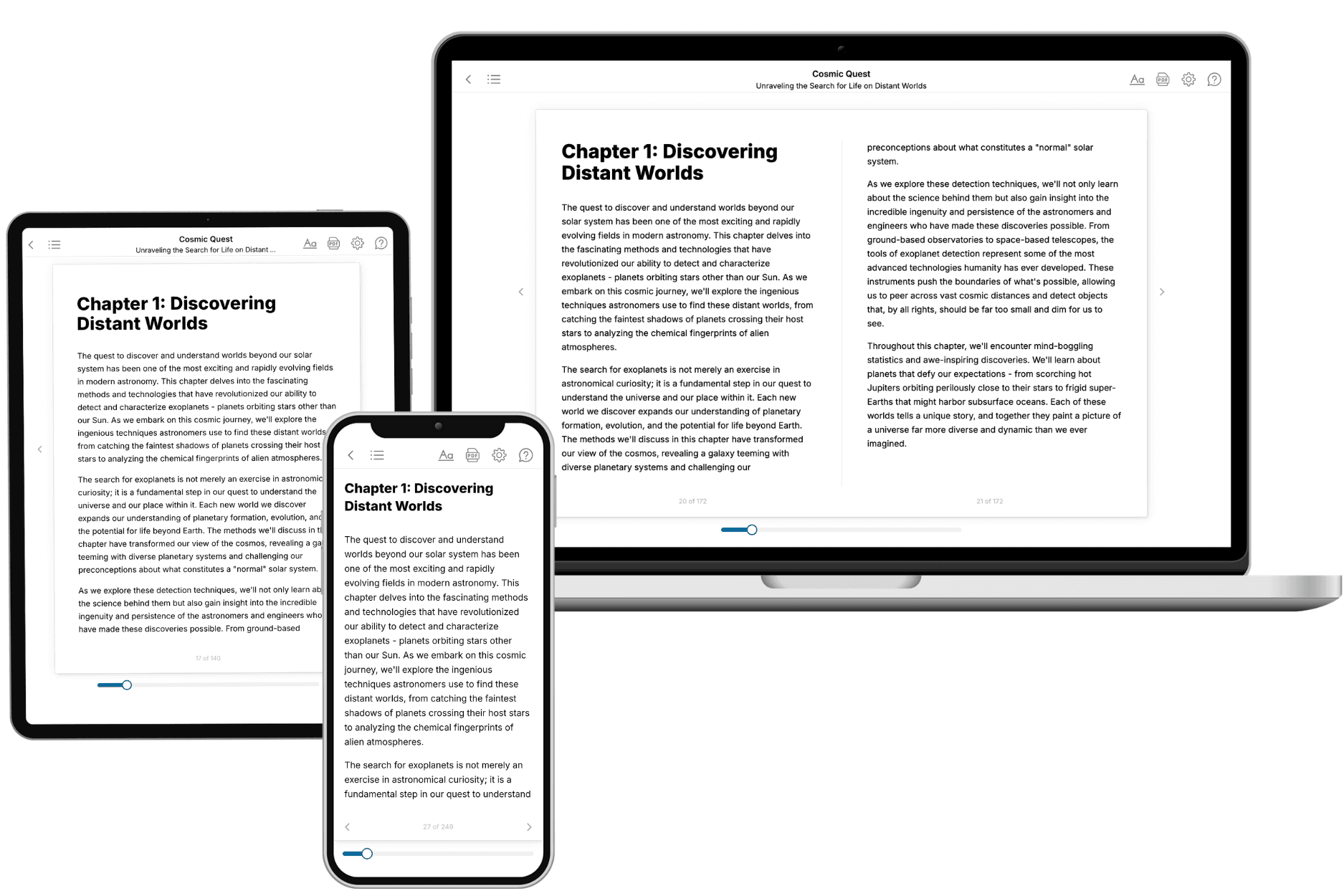
- 3. Get your tailored book
Your book is ready in 10 minutes. Read it online, download as EPUB or PDF, or send to Kindle.
Frequently asked questions
- What is TailoredRead?
TailoredRead creates complete, full-length nonfiction ebooks, written specifically for you. Tell us what you want to learn and why, and TailoredRead writes you a complete ebook on it, with charts, tables, and diagrams throughout. Read it online, on Kindle, or on any e-reader, or download it as a PDF or EPUB. Every book is written fresh the day you order it.
- How is the book tailored to me?
Before anything is written, you answer a few short questions about your goals, your background, and the topics you care about. Your book is then planned around your answers: written at your level, focused on your goals, and covering the topics you chose, instead of the one-size-fits-all book a store sells everyone.
- Will it read like generic AI content?
No. Your book isn't a chat transcript: it's planned chapter by chapter before a single word is written, told in a clear book voice, and explains ideas visually with charts, tables, and diagrams. After writing, every book goes through an editorial pass that polishes chapters so the book reads consistent from start to finish. Judge for yourself: browse thousands of sample books on our Explore Books page.
- How accurate is the content?
Our AI first checks whether your subject needs live research. Niche and fast-moving subjects are researched before writing, and the book plan and chapters are grounded in what it finds. After writing, every book goes through a quality pass that checks its facts and consistency, and researched books list their sources in a Notes section at the back.
- How long is the book?
You choose the length: Comprehensive (250-300 pages), Detailed (150-200 pages), Essential (70-100 pages), or Short (30-50 pages).
- Does the book include visuals?
Yes. Every book includes charts, tables, and diagrams: timelines, checklists, step-by-step guides, decision trees, comparison tables, matrices, and bar charts. A typical book includes dozens of these visual elements.
- Can I read it on Kindle? What formats can I download?
Yes. Every book can be read in our online reader or downloaded as a PDF or EPUB. The EPUB can be opened with Kindle, Apple Books, Kobo, and any e-reader. The Commercial and Author licenses also include an editable Word (DOCX) and Markdown download.
- How much does it cost?
About the price of a regular ebook. The exact price depends on your book's length and complexity, from $2 for the shortest books to $35 for the most comprehensive, and it's shown when you review your book, before you commit to anything. Each book is a one-time purchase, yours to keep, no subscription. Licenses that let you share, teach, or publish your book range from $35.99 to $49.99.
- Can I preview the book before purchasing?
Before you pay, you'll see what your book will cover: the title, a detailed description, the estimated length, and the complete chapter-by-chapter table of contents, so you know what you're getting before you decide. The full text itself is written after you purchase.
- How long does it take to create a book?
About 10 minutes. You can start reading the opening chapters while the rest is still being written.