Failure Mode Analysis
Master Dependency Analysis and Build Resilient Software Systems
You'll gain the ability to predict and prevent system failures before they impact your users.
191 pages8 chaptersMar 13, 2026Software Architecture
About this book
This practical guide walks you through failure mode analysis—a systematic methodology used by engineers across industries to identify vulnerabilities in complex systems. Learn how to map dependencies in your software architecture, recognize hidden failure points, and implement strategies that make your systems more resilient. Whether you're building microservices, managing legacy systems, or designing new platforms, you'll discover concrete techniques for analyzing failure modes, prioritizing risks, and building redundancy into critical paths. The book combines theory with real-world examples, showing you how companies have prevented major outages by catching problems during development rather than in production. By the end, you'll have a practical framework for making failure analysis part of your regular development process.
Table of contents
- IntroductionWhy System Failures Matter More Than Ever, What You'll Learn in This Book, How to Use This Guide, Real-World Context: From Theory to PracticeRead below
- Chapter 1: Foundations of Failure Mode AnalysisWhat Is Failure Mode Analysis?, History and Evolution in Software, Why It Matters Now More Than Ever
- Chapter 2: Understanding Dependencies in Software SystemsTypes of Dependencies: Explicit and Hidden, Mapping Your Architecture and Dependencies, Identifying Critical Paths and Bottlenecks, Visualizing Dependencies for Better Understanding
- Chapter 3: Failure Mode and Effects Analysis (FMEA)FMEA Fundamentals and Methodology, Severity, Occurrence, and Detection Ratings, Calculating Risk Priority Numbers, Conducting FMEA in Your Team
- Chapter 4: Fault Tree Analysis and Root Cause InvestigationFault Tree Analysis Basics, Building Fault Trees for Your Systems, Root Cause Analysis Techniques, Learning From Incidents and Postmortems
- Chapter 5: Cascading Failures and System ResilienceHow Cascading Failures Propagate, Circuit Breakers, Bulkheads, and Isolation Patterns, Designing for Graceful Degradation, Recovery Strategies and Fallback Mechanisms
- Chapter 6: Dependency Analysis Tools and TechniquesStatic Analysis and Dependency Scanning, Runtime Monitoring and Observability, Chaos Engineering and Failure Testing, Selecting the Right Tools for Your Context
- Chapter 7: Building Failure Analysis Into Your Development ProcessDesign Review Practices and Checklists, Testing Strategies for Failure Modes, Continuous Monitoring and Alerting, Building a Culture of Reliability Ownership
- Chapter 8: Case Studies: Learning From Real-World FailuresCase Study 1: Database Dependency Cascade, Case Study 2: Third-Party Service Integration Failure, Case Study 3: Configuration and Deployment Errors
- ConclusionKey Takeaways and Next Steps, Building Your Failure Analysis Program
- Appendix: Templates and ChecklistsFMEA Worksheet Template, Dependency Mapping Checklist, Design Review Checklist for Failure Modes
- Further Reading and Resources
Introduction
Every software system will fail at some point. That's not pessimism — it's engineering reality. The question isn't whether your system will encounter a failure, but whether you'll be ready when it does. Most teams discover their failure points the hard way: through a production outage at 2 a.m., an angry customer support queue, or a post-incident review that reveals a problem that was hiding in plain sight for months. The good news is that most failures are predictable, and predictable failures are preventable.
Failure mode analysis is the discipline of thinking systematically about what can go wrong before it actually does. It's a practice borrowed from aerospace, automotive, and nuclear engineering, where the cost of failure is measured not just in dollars but in lives. Software systems may not carry the same physical stakes, but the consequences of failure are increasingly serious. Hospitals rely on software to manage patient records. Financial systems process trillions of dollars in transactions daily. Logistics platforms coordinate supply chains that feed entire cities. When these systems fail, the impact is real and immediate.
This book is a practical guide to applying failure mode analysis in software development. It covers the core techniques — including Failure Mode and Effects Analysis (FMEA), Fault Tree Analysis (FTA), and dependency mapping — and shows you how to use them in the context of modern software systems. You'll learn how to identify hidden dependencies, trace how failures propagate through a system, and design architectures that degrade gracefully instead of collapsing completely. More importantly, you'll learn how to make this kind of thinking a regular part of how your team works, not just something you do after an incident.
The approach here is practical and grounded. Each concept is paired with concrete examples, real-world scenarios, and actionable steps you can apply to your own systems. Whether you're working on a microservices platform, a monolithic application, or a hybrid architecture, the techniques in this book will help you build more reliable software and respond more effectively when things go wrong.
Why System Failures Matter More Than Ever
Software systems have become the backbone of modern life in a way that wasn't true even a decade ago. Banking, healthcare, transportation, communication, and commerce all depend on software running reliably, around the clock. This shift has raised the stakes for system failures dramatically. A bug that crashes a mobile game is an inconvenience. A bug that takes down a payment processing system during peak hours can cost millions of dollars and damage customer trust in ways that take years to repair.
The scale of modern systems has also grown enormously. A typical enterprise application today might depend on dozens of microservices, hundreds of third-party APIs, multiple cloud providers, and a complex web of databases and message queues. Each of those connections is a potential failure point. The more interconnected a system becomes, the more ways it can fail — and the harder it becomes to predict how a failure in one part will affect everything else.
The financial cost of downtime is well-documented and significant. Research from Gartner estimates that the average cost of IT downtime is around $5,600 per minute, which translates to over $300,000 per hour for many organizations.[1] For large e-commerce platforms or financial institutions, that number can be far higher. Amazon has reported that a one-second delay in page load time can reduce conversions by 7%, which gives a sense of how sensitive modern users are to even minor performance degradation.
Beyond the financial impact, there's a growing regulatory dimension to system reliability. Industries like healthcare, finance, and critical infrastructure are subject to increasingly strict requirements around uptime, data integrity, and incident reporting. Failures in these domains can trigger regulatory investigations, fines, and legal liability. The pressure to build reliable systems is no longer just a technical concern — it's a business and legal one as well.
There's also a competitive angle. Users today have more choices than ever, and their tolerance for unreliable software is low. A single bad experience — a failed transaction, a lost order, an app that crashes at a critical moment — can send a customer to a competitor permanently. Reliability has become a product feature, not just an operational concern. Teams that invest in understanding and preventing failures build better products and retain more users over time.
The good news is that most failures follow recognizable patterns. They tend to originate at dependency boundaries, under unexpected load, or during configuration changes. They propagate through systems in predictable ways. And they leave traces that, with the right monitoring in place, can be detected early. Failure mode analysis gives you the tools to recognize these patterns before they become incidents, and to design systems that handle them gracefully when they do occur.
What You'll Learn in This Book
This book is organized to take you from foundational concepts to practical implementation. It starts with the core ideas behind failure mode analysis and builds toward a complete framework you can integrate into your development process. Each chapter focuses on a specific aspect of the problem, with concrete techniques and examples throughout.
Here's a summary of what each part of the book covers:
- Foundations (Chapter 1): What failure mode analysis is, where it came from, and why it's especially relevant for software systems today. This chapter establishes the vocabulary and mental models you'll use throughout the rest of the book.
- Dependency Analysis (Chapter 2): How to map the dependencies in your system, identify hidden connections, and find the critical paths where failures are most likely to cascade. This is the groundwork for everything else.
- FMEA (Chapter 3): A step-by-step guide to Failure Mode and Effects Analysis, including how to rate severity, occurrence, and detectability, and how to calculate Risk Priority Numbers to focus your efforts where they matter most.
- Fault Tree Analysis (Chapter 4): How to build fault trees that trace failure paths from symptoms back to root causes, and how to use postmortem analysis to learn from incidents systematically.
- Cascading Failures and Resilience (Chapter 5): How failures propagate through interconnected systems, and the design patterns — circuit breakers, bulkheads, graceful degradation — that prevent a single failure from taking down everything.
- Tools and Techniques (Chapter 6): A practical overview of the tools available for dependency analysis, runtime monitoring, and chaos engineering, with guidance on selecting the right tools for your context.
- Process Integration (Chapter 7): How to make failure analysis part of your regular development workflow, from design reviews to testing strategies to continuous monitoring.
- Case Studies (Chapter 8): Real-world examples of how failure mode analysis has been applied to prevent or diagnose major incidents, with lessons you can apply directly to your own systems.
By the end of this book, you'll have a working knowledge of the major failure analysis techniques and a practical framework for applying them. You'll be able to look at a system architecture and identify the most likely failure points. You'll know how to run an FMEA session with your team, build a fault tree for a complex incident, and design fallback mechanisms for critical dependencies. Most importantly, you'll have a process for making this kind of thinking routine rather than reactive.
The book is designed for software developers, architects, and technical leads who have some experience building and operating software systems. You don't need a background in formal reliability engineering to follow along. The concepts are explained from first principles, with software-specific examples throughout. If you've ever dealt with a production incident and thought "we should have caught this earlier," this book is for you.
One thing this book won't do is give you a silver bullet. Failure mode analysis is a discipline, not a checklist. It requires judgment, collaboration, and ongoing practice. What this book will give you is a solid foundation of techniques and a clear sense of how to apply them in the real world. The rest comes with practice.
A note on scope: This book focuses on software systems, but many of the techniques here originated in hardware and systems engineering. Where relevant, those origins are explained to give context. The focus throughout, however, is on applying these ideas to the kinds of systems software teams actually build and operate.
How to Use This Guide
This book is designed to be read sequentially, but it's also structured so you can jump to the sections most relevant to your current situation. If you're new to failure mode analysis, reading from the beginning will give you the strongest foundation. If you're already familiar with the basics and want to go deeper on a specific technique, each chapter is self-contained enough to stand on its own.
Here are a few suggested reading paths depending on your role and goals:
- If you're a developer new to reliability engineering: Read Chapters 1 and 2 first to build your mental model, then work through Chapters 3 and 4 for the core analysis techniques. Chapter 5 will give you the design patterns you need to apply what you've learned.
- If you're an architect or technical lead: Start with Chapter 2 on dependency mapping, then move to Chapters 3 and 5 for FMEA and resilience patterns. Chapter 7 on process integration will be especially relevant for building team-wide practices.
- If you're responding to a recent incident: Chapter 4 on fault tree analysis and root cause investigation is the most immediately useful. Chapter 8's case studies may also provide relevant parallels to your situation.
- If you're building a reliability program from scratch: Read the book end-to-end, then use the appendix templates to start applying the techniques with your team.
Throughout the book, you'll find several recurring elements designed to make the content more actionable. Examples illustrate how concepts apply in real systems. Checklists and frameworks give you structured tools you can use immediately. Common pitfalls highlight the mistakes teams most often make when applying these techniques. And key takeaways at the end of each chapter summarize the most important points.
The appendix contains ready-to-use templates for FMEA worksheets, dependency mapping, and design review checklists. These are designed to be practical starting points, not rigid prescriptions. Adapt them to fit your team's workflow and the specific characteristics of your systems. The goal is to make failure analysis easier to do, not to add bureaucratic overhead.
One practical suggestion: as you read, keep a specific system in mind. It could be a service you're currently building, a legacy system you're responsible for, or a recent incident you're trying to understand. Applying the concepts to a real system as you go will make them much more concrete and memorable. The techniques in this book are most powerful when they're grounded in the actual details of your architecture.
Finally, consider sharing this book with your team. Failure mode analysis is most effective as a collaborative practice. The conversations it generates — about what can go wrong, what matters most, and how to respond — are often as valuable as the formal outputs. A team that thinks together about failure is a team that builds more reliable software.
Real-World Context: From Theory to Practice
Failure mode analysis has a long history in engineering, but its application to software is still maturing. The techniques were developed in industries where failures are catastrophic and irreversible — aerospace, nuclear power, automotive manufacturing. In those domains, a systematic approach to identifying failure modes isn't optional; it's a regulatory requirement and a professional obligation. Software engineering has been slower to adopt these practices, partly because software failures are often seen as recoverable, and partly because the pace of development makes formal analysis feel like a luxury.
That perception is changing. The growth of cloud-native architectures, microservices, and distributed systems has made software failures more complex and more consequential. A single misconfigured load balancer can take down an entire platform. A third-party API that goes offline can cascade through dozens of dependent services. A database connection pool that exhausts under load can make an entire application unresponsive. These are the kinds of failures that formal analysis techniques are designed to catch — and they're happening with increasing frequency as systems grow more interconnected.
Some of the most instructive examples come from well-known incidents in the industry. The 2017 Amazon S3 outage, caused by a typo in a maintenance command, took down a significant portion of the internet for several hours because so many services depended on S3 without adequate fallback mechanisms.[2] The 2021 Facebook outage, triggered by a BGP routing configuration error, made Facebook, Instagram, and WhatsApp unreachable for over six hours globally.[3] In both cases, the root causes were known risk factors — single points of failure, insufficient redundancy, inadequate testing of failure scenarios — that a systematic analysis process might have surfaced earlier.
These examples aren't meant to criticize the teams involved. Both Amazon and Facebook employ some of the best engineers in the world, and both have invested heavily in reliability engineering. The point is that even well-resourced, highly skilled teams encounter failures that systematic analysis could have predicted. The techniques in this book aren't a guarantee against failure — they're a way of reducing the probability and impact of the failures that are most likely to occur.
The practical reality is that most teams don't have unlimited time for formal analysis. You're shipping features, managing technical debt, and responding to incidents all at once. The goal of this book isn't to add a heavy process on top of everything else you're doing. It's to give you lightweight, high-leverage techniques that fit into the work you're already doing. A 30-minute FMEA session during a design review can surface risks that would otherwise take hours to diagnose after a production incident. A dependency map drawn on a whiteboard before a major refactor can prevent a cascade failure that would have taken days to recover from.
The teams that do this well share a common characteristic: they treat failure analysis as a normal part of engineering, not a special activity reserved for post-incident reviews. They ask "what can go wrong?" during design, not just after deployment. They build monitoring and alerting that reflects their understanding of failure modes, not just generic health checks. They run game days and chaos experiments to validate their assumptions about how their systems behave under stress. And they share what they learn openly, so that the whole team gets smarter with every incident.
That's the culture this book is trying to help you build. The techniques are the tools. The mindset is the foundation. And the outcome — more reliable software, faster recovery, fewer 2 a.m. pages — is worth the investment. Let's get started.
Notes
Introduction
- 1. Gartner, "The Cost of Downtime," Gartner Research. Note: Costs vary significantly by industry and organization size, 2014
- 2. Amazon Web Services, "Summary of the Amazon S3 Service Disruption in the Northern Virginia (US-EAST-1) Region," AWS Blog, 2017
- 3. Santosh Janardhan, "More details about the October 4 outage," Facebook Engineering Blog, 2021
This is the end of the free sample. The full book has 8 chapters.
Want this book written for you?
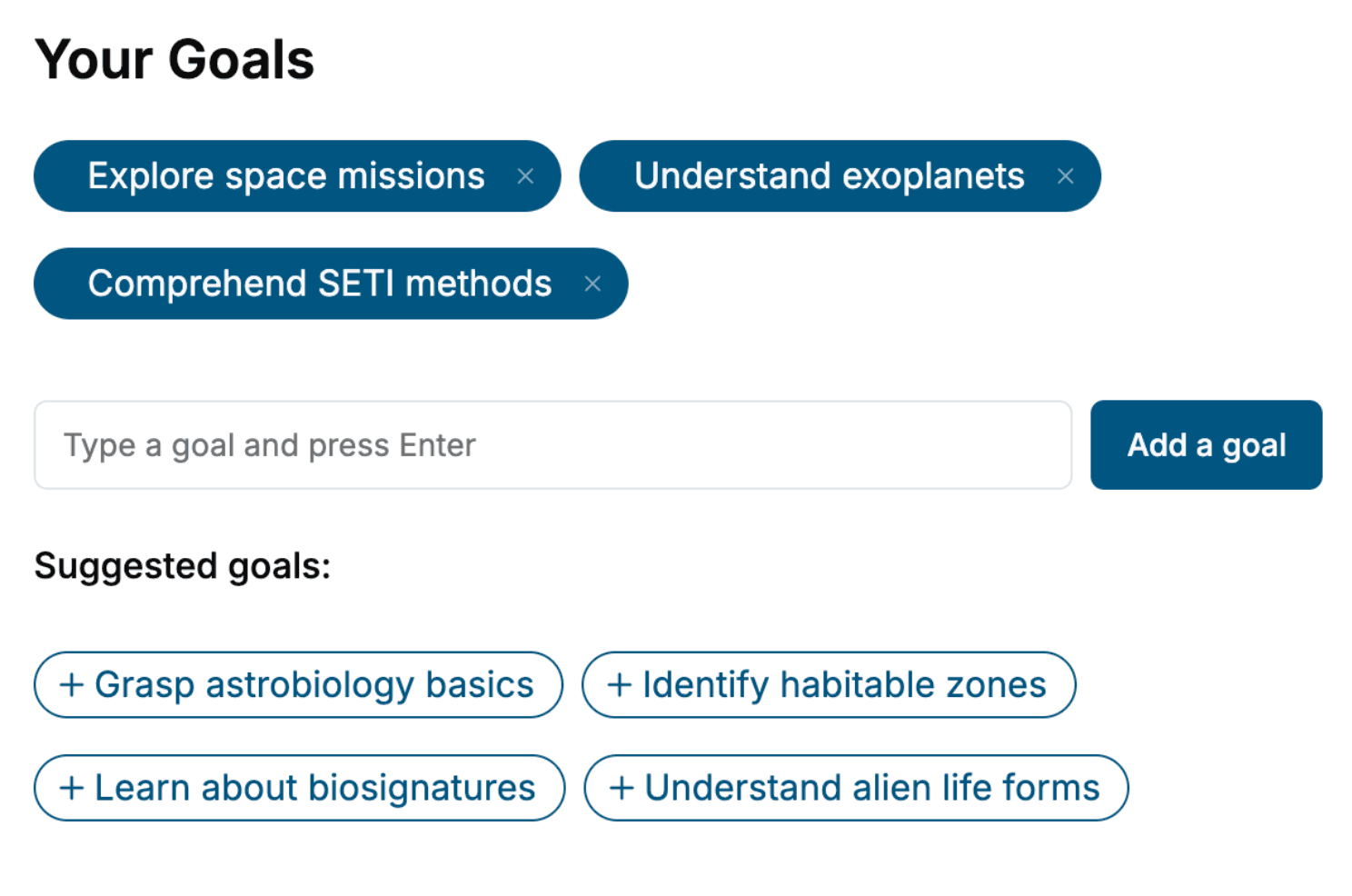
Tell us your goals and background, and get your own version of this book, tailored by AI to you.


Benefits of AI-tailored books
- Read one book, not ten:
- all the Software Architecture knowledge you need, gathered into a single book.
- Save days of learning:
- tell us your goals, choose your topics, and the whole book is built around them.
- Learn effortlessly:
- Software Architecture book written for your specific background and expertise.
- Understand at a glance:
- includes charts, tables, timelines, checklists, decision trees, and more.
- Stay current:
- written the day you order it, not years ago.
- Trust what you read:
- every book is checked for accuracy, with real research when your subject needs it.
Create your unique book in 3 steps
- 1. Select your focus
Select the focus of your Software Architecture book and share your background
- 2. Personalize your book
Specify your goals and choose sub-topics to include
- 3. Get your tailored book
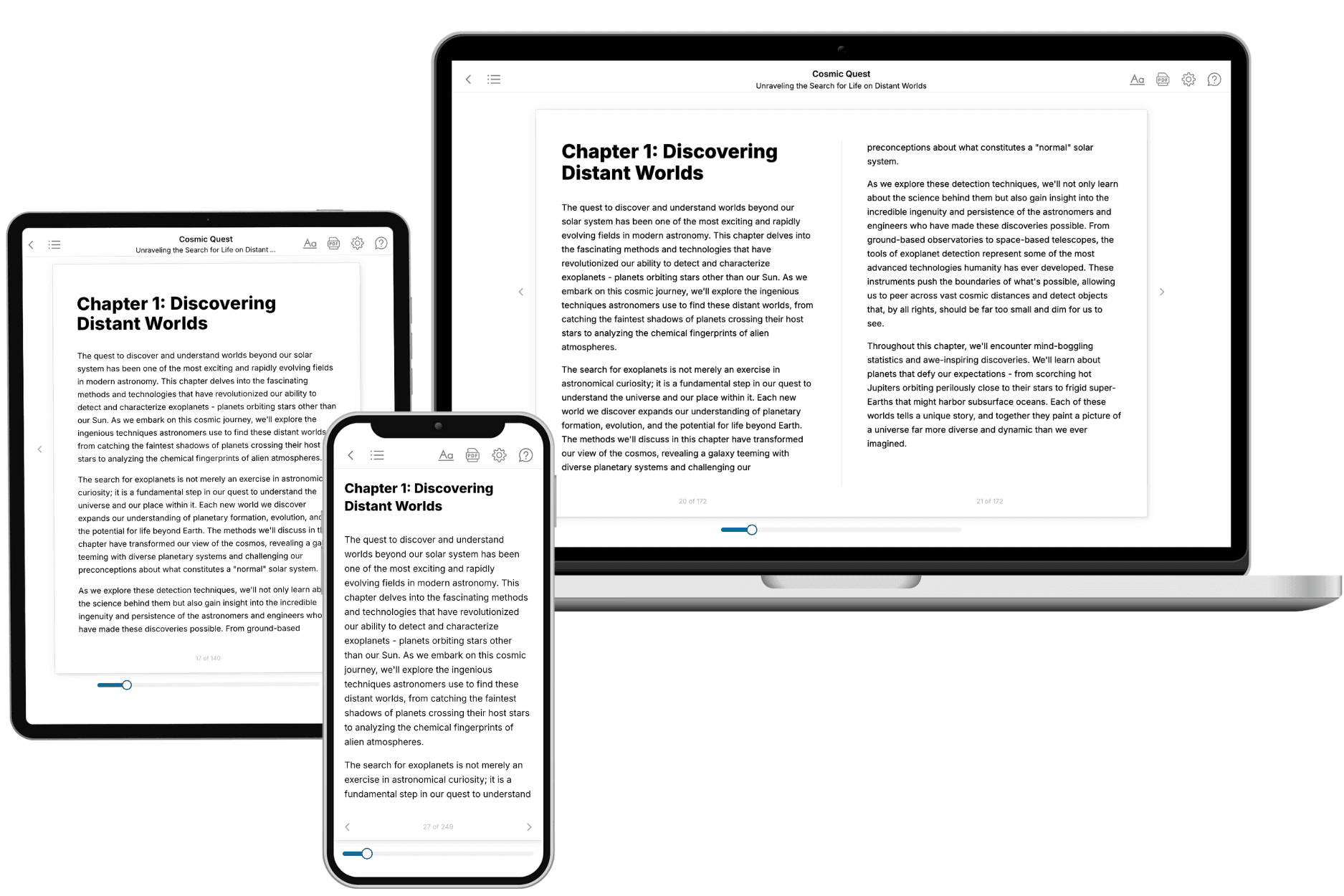
Your book is ready in 10 minutes. Read it online, download as EPUB or PDF, or send to Kindle.

Frequently asked questions
- What is TailoredRead?
TailoredRead creates complete, full-length nonfiction ebooks, written specifically for you. Tell us what you want to learn and why, and TailoredRead writes you a complete ebook on it, with charts, tables, and diagrams throughout. Read it online, on Kindle, or on any e-reader, or download it as a PDF or EPUB. Every book is written fresh the day you order it.
- How is the book tailored to me?
Before anything is written, you answer a few short questions about your goals, your background, and the topics you care about. Your book is then planned around your answers: written at your level, focused on your goals, and covering the topics you chose, instead of the one-size-fits-all book a store sells everyone.
- Will it read like generic AI content?
No. Your book isn't a chat transcript: it's planned chapter by chapter before a single word is written, told in a clear book voice, and explains ideas visually with charts, tables, and diagrams. After writing, every book goes through an editorial pass that polishes chapters so the book reads consistent from start to finish. Judge for yourself: browse thousands of sample books on our Explore Books page.
- How accurate is the content?
Our AI first checks whether your subject needs live research. Niche and fast-moving subjects are researched before writing, and the book plan and chapters are grounded in what it finds. After writing, every book goes through a quality pass that checks its facts and consistency, and researched books list their sources in a Notes section at the back.
- How long is the book?
You choose the length: Comprehensive (250-300 pages), Detailed (150-200 pages), Essential (70-100 pages), or Short (30-50 pages).
- Does the book include visuals?
Yes. Every book includes charts, tables, and diagrams: timelines, checklists, step-by-step guides, decision trees, comparison tables, matrices, and bar charts. A typical book includes dozens of these visual elements.
- Can I read it on Kindle? What formats can I download?
Yes. Every book can be read in our online reader or downloaded as a PDF or EPUB. The EPUB can be opened with Kindle, Apple Books, Kobo, and any e-reader. The Commercial and Author licenses also include an editable Word (DOCX) and Markdown download.
- How much does it cost?
About the price of a regular ebook. The exact price depends on your book's length and complexity, from $2 for the shortest books to $35 for the most comprehensive, and it's shown when you review your book, before you commit to anything. Each book is a one-time purchase, yours to keep, no subscription. Licenses that let you share, teach, or publish your book range from $35.99 to $49.99.
- Can I preview the book before purchasing?
Before you pay, you'll see what your book will cover: the title, a detailed description, the estimated length, and the complete chapter-by-chapter table of contents, so you know what you're getting before you decide. The full text itself is written after you purchase.
- How long does it take to create a book?
About 10 minutes. You can start reading the opening chapters while the rest is still being written.