Fairfield: A Traveler's Guide to Iowa's Spiritual Heart
Discover Maharishi University, Meditation Culture, and the Unique Charm of America's Most Transcendental Town
Imagine stepping into a town where ancient wisdom meets modern education, where meditation centers sit alongside family-owned cafes, and where a world-renowned university has quietly shaped an entire community's character.
191 pages8 chaptersMay 16, 2026Iowa Travel Guide
About this book
Fairfield, Iowa is that place—a hidden gem in America's heartland that offers visitors something truly different. This guide takes you beyond typical tourist attractions to explore Maharishi University of Management and the spiritual culture that defines Fairfield. Whether you're interested in learning about Transcendental Meditation, understanding consciousness-based education, or simply experiencing a town unlike any other, you'll find practical insights and inspiration on every page. Discover the university's fascinating history and philosophy, explore the campus's distinctive architecture, and learn how to respectfully engage with the meditation community. Find recommendations for local dining, shopping, and cultural experiences that reflect Fairfield's unique values. Whether you're planning a weekend getaway or a longer retreat, this guide helps you navigate Fairfield with understanding, respect, and genuine appreciation for what makes this Iowa town extraordinary.
Table of contents
- IntroductionWhy Fairfield Matters: A Town Like No Other, What to Expect from This Guide, How to Use This Book for Your VisitRead below
- Chapter 1: Maharishi University of Management: History and VisionThe Founding Story: From Vision to Reality, Consciousness-Based Education: A Revolutionary Approach, The University Today: Mission and Impact
- Chapter 2: Understanding Transcendental MeditationWhat is Transcendental Meditation?, The Practice and Its Benefits, How Visitors Can Learn and Experience TM
- Chapter 3: Exploring the Campus: Architecture and SpacesNavigating the Campus: Layout and Key Buildings, Distinctive Architecture and Design Philosophy, Meditation Halls and Spiritual Spaces
- Chapter 4: Planning Your Visit: Practical InformationBest Times to Visit and Seasonal Considerations, Campus Access and Visitor Policies, Where to Stay and Getting Around Fairfield
- Chapter 5: Beyond the University: Fairfield's Local AttractionsDowntown Fairfield: Shops, Galleries, and Culture, Dining in Fairfield: From Farm-to-Table to International Cuisine, Parks, Nature, and Outdoor Recreation
- Chapter 6: The Fairfield Community: Culture and ValuesUnderstanding Fairfield's Unique Community, Annual Events, Festivals, and Celebrations, Engaging Respectfully with the Community
- Chapter 7: Exploring the Region: Day Trips and Nearby AttractionsCharming Towns and Communities Nearby, Natural Attractions and Scenic Areas, Historical and Cultural Sites in Southeast Iowa
- Chapter 8: Visitor's Practical Guide: Tips and ResourcesGetting to Fairfield: Transportation Options, Budgeting Your Trip and Cost Considerations, Useful Resources and Contact Information
- Conclusion: Your Fairfield Journey AwaitsKey Takeaways for Your Visit, Final Thoughts and Inspiration
- Glossary of Terms
- Further Reading and Resources
Introduction
There are places in the world that stop you mid-step and make you look twice. Fairfield, Iowa is one of them. From the outside, it looks like dozens of other small Midwestern towns: a courthouse square, grain elevators on the horizon, wide streets lined with modest storefronts. But spend an hour here and something shifts. You notice the meditation domes rising above the rooftops. You hear conversations about consciousness and quantum physics at the coffee shop. You see a community that has quietly built something genuinely rare in America, a place where ancient contemplative practice and modern academic life have grown together into a single, living culture.
Fairfield sits in Jefferson County in southeast Iowa, home to roughly 10,000 residents. What sets it apart is the presence of Maharishi University of Management, an accredited institution founded in 1971 on the principle that education should develop the full potential of the human mind, not just fill it with information. The university brought thousands of practitioners of Transcendental Meditation to this corner of the heartland, and over the decades, those practitioners built businesses, raised families, opened restaurants, and wove themselves into the fabric of a town that was already here. The result is a community unlike anything else in the Midwest, or arguably anywhere in the United States.
This guide exists because Fairfield deserves to be understood, not just visited. Too many travelers pass through without grasping what they are actually seeing. They might notice that the food is unusually good, or that the bookshops carry titles you would not expect in rural Iowa, or that people seem remarkably calm and friendly. But without context, those observations remain curiosities rather than insights. This book gives you that context. It explains the history, the philosophy, the campus, the community, and the practical details of planning a trip that is genuinely rewarding rather than just pleasant.
Whether you are drawn here by curiosity about Transcendental Meditation, by an interest in alternative approaches to education, by a desire to experience something authentically different, or simply by the appeal of a peaceful small-town retreat, you will find Fairfield has more to offer than you might expect. The pages ahead are designed to help you make the most of every hour you spend here, with respect for the community that calls this place home.
Why Fairfield Matters: A Town Like No Other
Most American small towns follow a familiar arc. Industries rise and fall, young people leave for cities, and the downtown slowly hollows out. Fairfield has followed a different path. In the 1970s, when Maharishi International University relocated to the former Parsons College campus, it brought an influx of educated, idealistic people who chose to stay and build. Today, Fairfield has a higher concentration of entrepreneurs per capita than almost any comparable town in the country, a fact that has been noted by publications ranging from The New York Times to Inc. Magazine.[1] That entrepreneurial energy is directly connected to the meditation culture at the university's core.
The town's distinctiveness is not just economic. Fairfield has developed a cultural identity that blends Midwestern practicality with a genuine openness to ideas from around the world. You will find Ayurvedic health clinics operating alongside conventional medical practices. You will find organic farms supplying restaurants that serve both Iowa comfort food and South Indian cuisine. You will find a performing arts center that hosts world-class musicians, and a farmers market where vendors discuss soil health with the same seriousness that others bring to stock portfolios. This is not a theme park version of spiritual living. It is a real community that has made real choices about how to live.
What makes Fairfield particularly interesting for visitors is that it is genuinely accessible. The university welcomes curious outsiders. The community is accustomed to questions and generally happy to answer them. You do not need to be a meditator, a student, or a spiritual seeker to feel welcome here. You simply need to arrive with an open mind and a willingness to engage with something that does not fit neatly into existing categories. That combination of openness and depth is rare, and it is worth traveling for.
It is also worth noting what Fairfield is not. It is not a retreat center where everything is curated for visitor comfort. It is not a museum of alternative living. It is a working town with real challenges, real politics, and real diversity of opinion. The longtime Iowa farming families who have lived here for generations coexist with the meditating community, and that coexistence has its own texture and history. Understanding both sides of that story makes your visit richer and more honest.
Fairfield also matters in a broader sense because it represents a genuine experiment in community building around shared values. Researchers in fields ranging from urban planning to public health have studied the town as a case study in what happens when a significant portion of a community practices stress-reduction techniques together over decades.[2] The results are not always easy to measure, but the town's vitality, its low crime rates, its unusually robust arts scene, and its economic resilience all suggest that something meaningful is happening here. Coming to see it firsthand is the best way to form your own judgment.
Finally, Fairfield matters because it offers something that is increasingly hard to find in modern travel: genuine surprise. In an era when most destinations have been thoroughly documented, filtered, and packaged for social media, Fairfield remains a place that resists easy summary. It will likely give you something you did not know you were looking for. That quality alone makes it worth the trip.
What to Expect from This Guide
This guide is organized to take you from the big picture down to the practical details, in a sequence that mirrors how understanding actually builds. You will start with the history and philosophy of Maharishi University of Management, because that foundation makes everything else in Fairfield more legible. From there, you will move into the practice of Transcendental Meditation itself, exploring what it is, what the research says about its effects, and how you as a visitor can learn more or even begin practicing. Then the guide turns to the physical campus, the town's attractions, the community's culture, and finally the logistics of planning and executing your trip.
Each chapter is designed to stand on its own if you need to jump ahead. If you are already familiar with Transcendental Meditation and just want to know where to eat or how to access the campus, you can go directly to those sections. If you are coming to Fairfield with no prior knowledge of the university or its philosophy, reading from the beginning will give you the richest experience. The guide is structured to serve both approaches without penalizing either.
Throughout the book, you will find specific recommendations rather than vague suggestions. When a restaurant is worth visiting, the guide tells you why and what to order. When a campus building is architecturally significant, it explains what to look for and what the design choices mean. When a community event is worth planning your trip around, it gives you the information you need to actually attend. The goal is to be genuinely useful, not just inspirational.
You will also find context that goes beyond typical travel writing. Understanding why Fairfield's downtown has thrived when so many comparable towns have struggled requires some economic and social history. Understanding why the campus architecture looks the way it does requires some background in the philosophy that shaped it. This guide provides that context without turning into an academic text. The aim is always to deepen your experience as a visitor, not to overwhelm you with information you cannot use.
Practical information is woven throughout rather than relegated to a single appendix. Seasonal considerations appear in the chapter on planning your visit. Cost information appears alongside the attractions it describes. Transportation options are discussed in the context of how they affect your experience, not just as a list of facts. This approach reflects the reality that practical and experiential information are not separate things. Knowing that the meditation domes are only accessible at certain times, for example, is not just a logistical detail. It shapes how you plan your entire day.
One thing this guide does not do is tell you what to believe. Transcendental Meditation is a practice with a substantial body of scientific research behind it, and that research is referenced here accurately and fairly. The university's philosophy is explained on its own terms, with appropriate context. But the guide does not advocate for any particular spiritual or philosophical position. Your job is to visit, observe, ask questions, and draw your own conclusions. This book's job is to make sure you have the information and understanding to do that well.
The best travel guides do not tell you what to think about a place. They give you enough understanding to think for yourself. That is the standard this guide holds itself to throughout.
You will also find a glossary at the back of the book covering terms that come up frequently in Fairfield's community and at the university. Words like Vedic, Ayurveda, Brahmacharya, and Vastu appear in conversations, on signs, and in menus around town. Having a working definition of these terms before you arrive will help you engage more confidently with what you encounter. The glossary is not exhaustive, but it covers the terms most likely to come up during a typical visit.
How to Use This Book for Your Visit
The most effective way to use this guide depends on how much time you have and what you are hoping to get out of your visit. For a weekend trip, the priority chapters are the ones on the university's history, the campus itself, and the practical planning information. Those three sections will give you enough background to navigate the campus intelligently, understand what you are seeing, and make good decisions about where to spend your limited time. Add the dining chapter and the downtown section, and you have a solid two-day itinerary.
For a longer visit of four or more days, the full guide becomes relevant. The chapter on Transcendental Meditation will help you decide whether to pursue an introductory session or simply observe the culture from the outside. The regional exploration chapter opens up day-trip possibilities that can make a longer stay feel varied and full. The community culture chapter helps you time your visit around events and festivals that might otherwise be easy to miss. A longer visit also gives you the breathing room to simply wander, which is one of the best things you can do in Fairfield.
Before you arrive, the most useful preparation is reading the first two chapters and the practical planning chapter. That combination gives you the historical and philosophical foundation, plus the logistical information you need to make concrete decisions about accommodation, timing, and campus access. Everything else can be read during your trip, over breakfast or in the evening, as a way of processing what you have seen during the day and preparing for what comes next.
Consider using the guide actively rather than passively. When you visit a campus building, bring the relevant section with you and read it on-site. When you sit down at a restaurant, check the dining chapter for context about the food philosophy behind what you are eating. When you attend a community event, the culture chapter will help you understand what you are witnessing. Travel guides work best when they are tools for engagement, not just pre-trip reading material that gets left at the hotel.
A few practical notes on how information is presented throughout the book. Hours of operation, admission fees, and contact details for specific businesses and university offices are accurate as of the time of writing, but these details change. Always verify current information directly with the relevant organization before making plans that depend on specific hours or access. The university's visitor policies in particular are subject to change based on academic calendar and campus events. A quick check of the university's official website before your visit will save potential frustration.
The guide also includes suggestions for how to engage respectfully with the community, particularly around meditation practices and campus spaces. These are not rules imposed from outside but reflections of the community's own values and preferences. Following them will make your experience better and your interactions with residents more genuine. Fairfield's community is welcoming, but like any community, it appreciates visitors who take the time to understand local norms before diving in.
Here is a simple framework for structuring your visit, regardless of its length:
- Orient yourself first. Spend your first few hours walking the downtown square and the edges of the campus before going anywhere specific. Get a feel for the physical layout and the general atmosphere.
- Anchor your days around the university. Even if your primary interest is the town rather than the institution, the campus provides a natural organizing center for each day's activities.
- Leave unscheduled time. Some of the best experiences in Fairfield happen by accident: a conversation with a local at a coffee shop, a spontaneous visit to a gallery opening, a walk that takes you somewhere unexpected.
- Engage with people. Fairfield's residents are generally happy to talk about their community, their practices, and their experiences. Asking genuine questions is one of the most rewarding things you can do here.
- Reflect as you go. Fairfield is the kind of place that rewards reflection. Taking a few minutes each evening to write down what surprised you, what moved you, or what confused you will deepen your experience significantly.
One final thought before the main chapters begin. Fairfield will likely challenge some of your assumptions, whatever they are. If you arrive skeptical of meditation and alternative education, you will probably encounter things that complicate that skepticism. If you arrive as an enthusiastic believer in everything the university represents, you will probably encounter the ordinary human complexity that exists in any real community. Both experiences are valuable. The town is not trying to convert you or confirm your existing views. It is simply being itself, and that is more than enough.
What follows is everything you need to visit Fairfield with understanding, curiosity, and genuine appreciation for one of the most unusual and quietly remarkable places in America. The journey starts with the institution that changed everything about this small Iowa town, and it starts, as most good stories do, at the beginning.
Notes
Introduction
This is the end of the free sample. The full book has 8 chapters.
Want this book written for you?
Tell us your goals and background, and get your own version of this book, tailored by AI to you.


Benefits of AI-tailored books
- Read one book, not ten:
- all the Iowa Travel Guide knowledge you need, gathered into a single book.
- Save days of learning:
- tell us your goals, choose your topics, and the whole book is built around them.
- Learn effortlessly:
- Iowa Travel Guide book written for your specific background and expertise.
- Understand at a glance:
- includes charts, tables, timelines, checklists, decision trees, and more.
- Stay current:
- written the day you order it, not years ago.
- Trust what you read:
- every book is checked for accuracy, with real research when your subject needs it.
Create your unique book in 3 steps
- 1. Select your focus
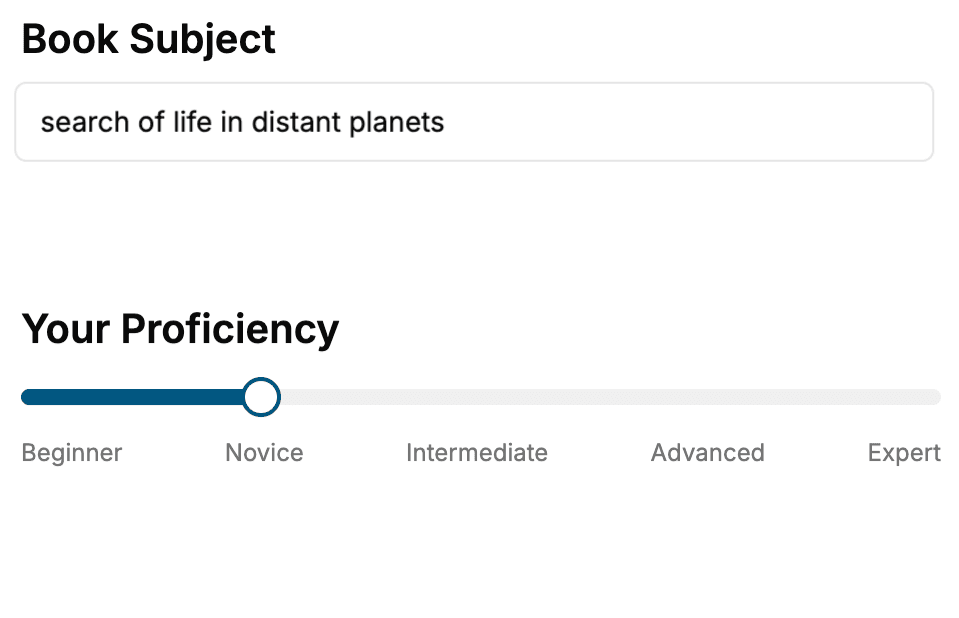
Select the focus of your Iowa Travel Guide book and share your background
- 2. Personalize your book
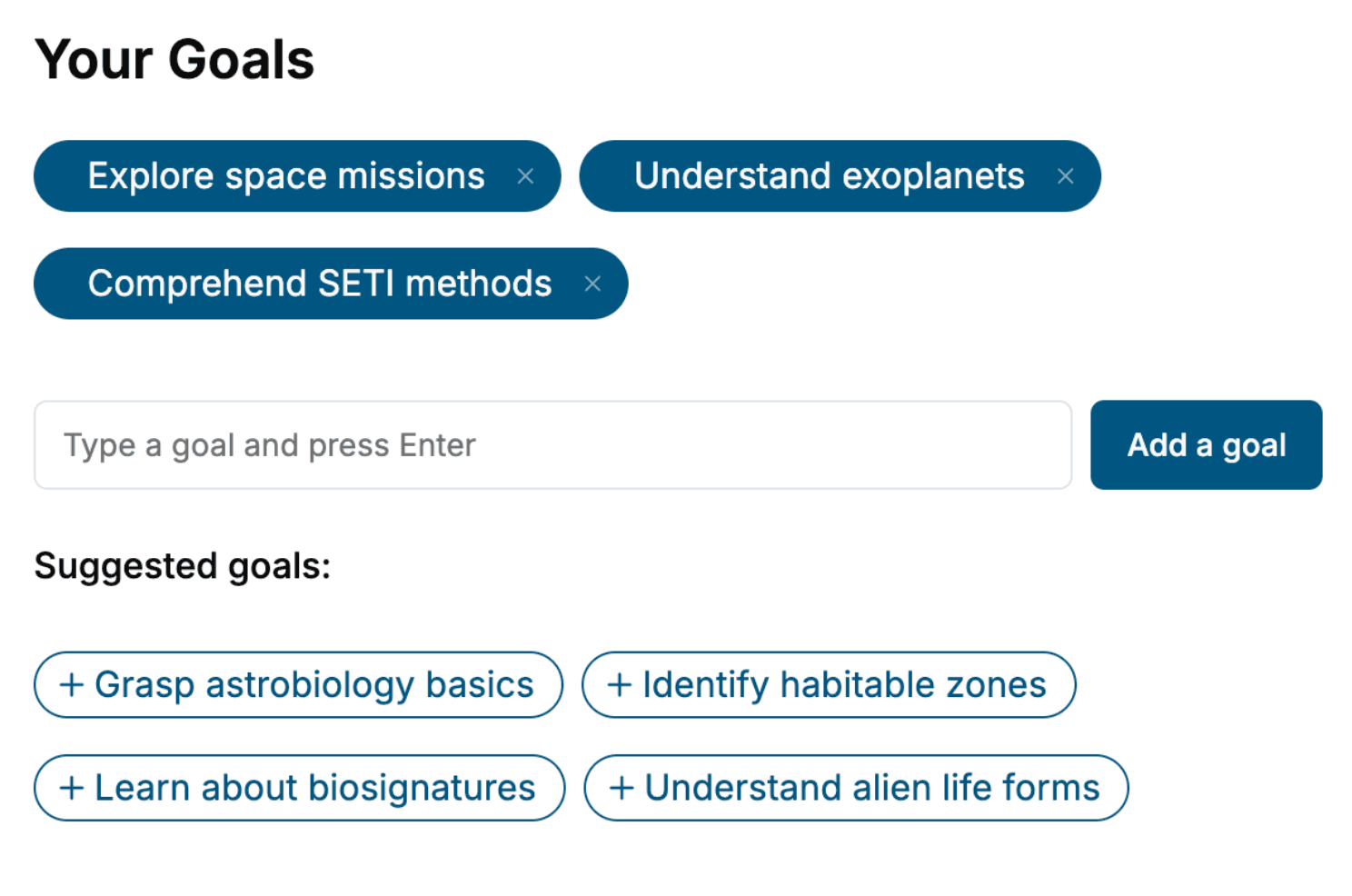
Specify your goals and choose sub-topics to include
- 3. Get your tailored book
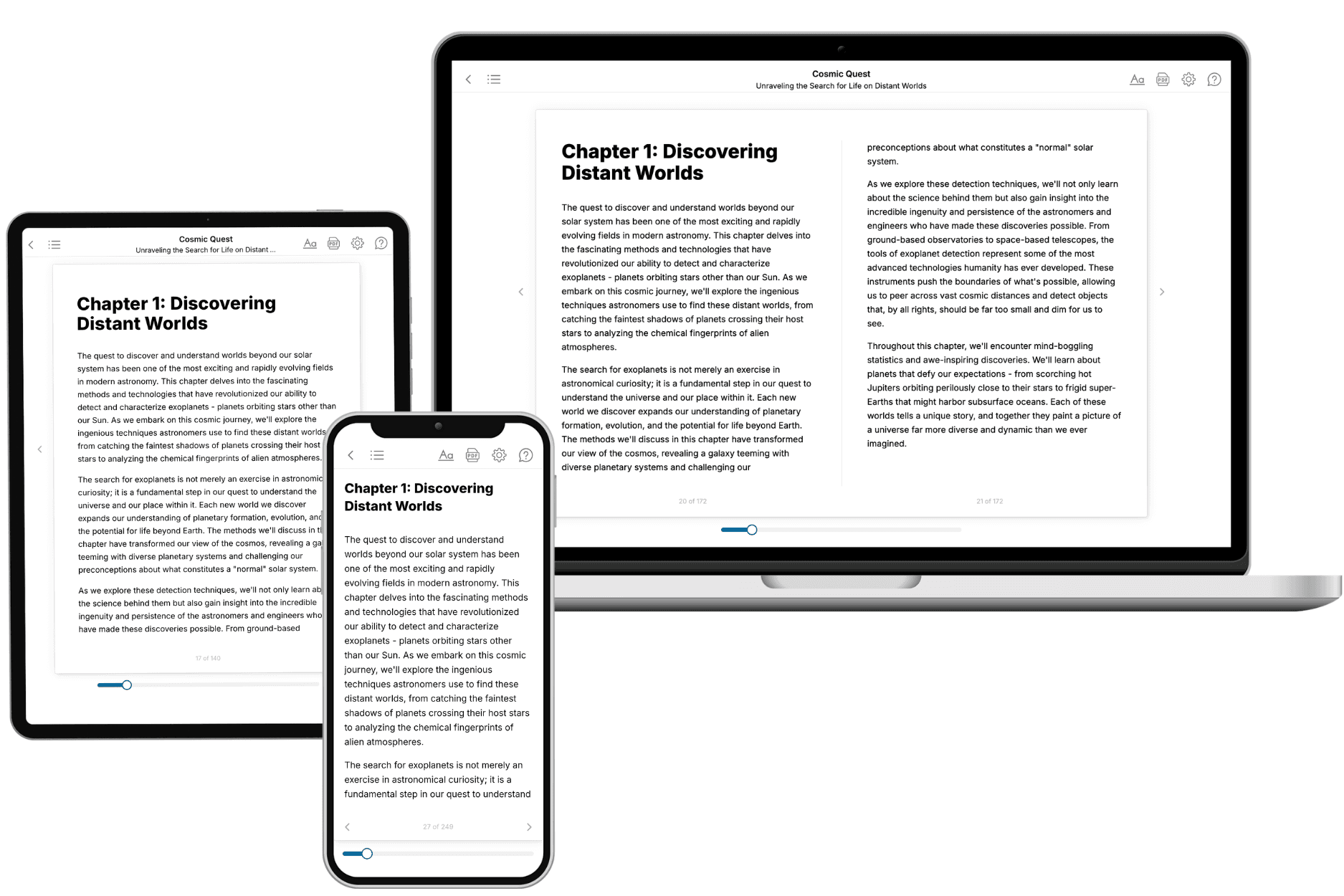
Your book is ready in 10 minutes. Read it online, download as EPUB or PDF, or send to Kindle.
Frequently asked questions
- What is TailoredRead?
TailoredRead creates complete, full-length nonfiction ebooks, written specifically for you. Tell us what you want to learn and why, and TailoredRead writes you a complete ebook on it, with charts, tables, and diagrams throughout. Read it online, on Kindle, or on any e-reader, or download it as a PDF or EPUB. Every book is written fresh the day you order it.
- How is the book tailored to me?
Before anything is written, you answer a few short questions about your goals, your background, and the topics you care about. Your book is then planned around your answers: written at your level, focused on your goals, and covering the topics you chose, instead of the one-size-fits-all book a store sells everyone.
- Will it read like generic AI content?
No. Your book isn't a chat transcript: it's planned chapter by chapter before a single word is written, told in a clear book voice, and explains ideas visually with charts, tables, and diagrams. After writing, every book goes through an editorial pass that polishes chapters so the book reads consistent from start to finish. Judge for yourself: browse thousands of sample books on our Explore Books page.
- How accurate is the content?
Our AI first checks whether your subject needs live research. Niche and fast-moving subjects are researched before writing, and the book plan and chapters are grounded in what it finds. After writing, every book goes through a quality pass that checks its facts and consistency, and researched books list their sources in a Notes section at the back.
- How long is the book?
You choose the length: Comprehensive (250-300 pages), Detailed (150-200 pages), Essential (70-100 pages), or Short (30-50 pages).
- Does the book include visuals?
Yes. Every book includes visual elements such as timelines, checklists, step-by-step guides, decision trees, comparison tables, and matrices, and many include bar charts. A typical book includes dozens of these visual elements.
- Can I read it on Kindle? What formats can I download?
Yes. Every book can be read in our online reader or downloaded as a PDF or EPUB. The EPUB can be opened with Kindle, Apple Books, Kobo, and any e-reader. The Commercial and Author licenses also include an editable Word (DOCX) and Markdown download.
- How much does it cost?
About the price of a regular ebook. The exact price depends on your book's length and complexity, from $2 for the shortest books to $35 for the most comprehensive, and it's shown when you review your book, before you commit to anything. Each book is a one-time purchase, yours to keep, no subscription. Licenses that let you share, teach, or publish your book range from $35.99 to $49.99.
- Can I preview the book before purchasing?
Before you pay, you'll see what your book will cover: the title, a detailed description, the estimated length, and the complete chapter-by-chapter table of contents, so you know what you're getting before you decide. The full text itself is written after you purchase.
- How long does it take to create a book?
About 10 minutes. You can start reading the opening chapters while the rest is still being written.