Faith and Language
Understanding Religion Through French Culture and Conversation
Deepen your French fluency by exploring the intersection of language and faith.
207 pages9 chaptersDec 13, 2025Learning French
About this book
This book guides you through the religious vocabulary, cultural traditions, and historical contexts that shape how French speakers understand and discuss spirituality. You'll discover how centuries of religious history—from medieval cathedrals to modern secularism—are woven into everyday French expressions and social values. Learn authentic religious terminology used in real conversations, understand the uniquely French concept of laïcité, and explore how different Francophone communities practice faith. Through practical dialogues, cultural insights, and historical context, you'll gain the linguistic confidence and cultural awareness to engage meaningfully with French speakers on topics that matter to them. Whether discussing holidays, ethics, or identity, you'll communicate with greater depth and authenticity.
Table of contents
- IntroductionWhy Religion Matters in French Language Learning, How to Use This Book, What You'll Learn and AchieveRead below
- Chapter 1: The Foundations of French Religious VocabularyCore Religious Terms and Their Origins, Pronunciation and Spelling Patterns, Building Word Families: Related Terms and Derivatives
- Chapter 2: Catholicism in French Culture and LanguageCatholic Traditions and Their Linguistic Expressions, Saints, Holidays, and Feast Days, Religious Architecture and Sacred Spaces
- Chapter 3: Laïcité: The French Secular TraditionUnderstanding Laïcité: History and Philosophy, The Separation of Church and State in French Society, Modern Debates and Contemporary Applications
- Chapter 4: Religious Diversity in French-Speaking CommunitiesIslam and Muslim Communities in France, Judaism and Jewish Heritage in French Culture, Other Religions and Spiritual Traditions
- Chapter 5: Religious Expressions and Idioms in Everyday FrenchCommon Religious Expressions and Their Meanings, Idioms, Metaphors, and Cultural References, Religious Exclamations and Mild Oaths
- Chapter 6: Religious Holidays and CelebrationsChristian Holidays: Christmas, Easter, and Beyond, Jewish, Muslim, and Other Religious Celebrations, Secular Commemorations with Religious Roots
- Chapter 7: Conversations About Faith and SpiritualityDiscussing Personal Beliefs and Practices, Respectful Dialogue Across Different Faiths, Practical Dialogues and Real-World Scenarios
- Chapter 8: Religion in French Literature and MediaReligious Themes in Classic and Modern French Literature, Films, Documentaries, and Media Resources, Using Media to Enhance Your Language Skills
- Chapter 9: Francophone Religious Traditions Beyond FranceReligion in Quebec and French-Canadian Culture, Religious Practices in African and Caribbean Francophone Communities, Global Perspectives on Faith in French-Speaking Worlds
- ConclusionIntegrating Religious Language Into Your Daily Practice, Pathways for Continued Learning and Growth
- Glossary of Religious Terms and Expressions
- Further Reading and Resources
Introduction
When you reach intermediate proficiency in French, something remarkable happens. You move beyond ordering coffee and asking for directions, and you begin encountering the deeper layers of French culture—the values, histories, and beliefs that shape how French speakers see the world. Religion sits at the heart of this cultural landscape, not necessarily as active practice, but as a profound influence on language, traditions, social structures, and everyday expressions. Understanding how faith has shaped French-speaking societies unlocks doors to more meaningful conversations and authentic cultural comprehension that textbooks rarely provide.
French religious vocabulary extends far beyond the walls of churches and mosques. It permeates daily conversation through idioms, metaphors, holiday traditions, architectural terminology, historical references, and social debates. When a French speaker says attendre jusqu'à la Saint-Glinglin (to wait until Saint Glinglin's day, meaning forever), they're using religious vocabulary to express impatience. When discussing values like laïcité (secularism), they're engaging with concepts that have no direct English equivalent but are fundamental to French identity. These linguistic patterns reveal how centuries of religious history—from medieval Catholicism to revolutionary secularism to contemporary religious diversity—continue to shape modern French expression.
This book bridges the gap between language learning and cultural understanding by exploring religion as a lens through which to deepen your French fluency. You'll discover vocabulary that native speakers use constantly but that traditional language courses often overlook. You'll gain insights into why certain topics spark passionate debates in France but barely register in other cultures. Most importantly, you'll develop the linguistic confidence and cultural awareness to engage with French speakers on subjects that matter deeply to them—identity, tradition, values, and belief. Whether you're planning to live in a French-speaking country, engage with French literature and media, or simply converse more authentically, understanding the religious dimensions of French language and culture will transform your learning journey.
Why Religion Matters in French Language Learning
Religion shapes French vocabulary in ways that remain invisible until you start looking closely. Consider how many common French expressions derive from Catholic traditions: faire ses Pâques (to do one's Easter duties, meaning to fulfill obligations), un chemin de croix (a way of the cross, meaning a difficult ordeal), or prêcher dans le désert (to preach in the desert, meaning to speak to deaf ears). These phrases appear regularly in newspapers, conversations, and literature, yet their religious origins often go unrecognized by learners. When you understand these connections, you don't just memorize isolated expressions—you grasp entire networks of related vocabulary and cultural meaning that make the language more memorable and comprehensible.
The French relationship with religion is uniquely complex and profoundly influences contemporary society. France experienced both intense Catholic dominance for centuries and a dramatic revolutionary rejection of religious authority. This historical tension created laïcité, a form of secularism that goes beyond simple separation of church and state to become a core national value. Understanding laïcité is essential for comprehending modern French debates about education, immigration, public space, and national identity. Without this context, you'll struggle to follow news coverage, political discussions, or even casual conversations about social issues that French speakers navigate daily.
Religious vocabulary also provides a gateway to understanding French history and cultural heritage. When you visit France or French-speaking regions, you encounter religious architecture everywhere—cathedrals, abbeys, chapels, and monuments that dominate city centers and countryside alike. Being able to discuss these spaces requires specific vocabulary: nef (nave), vitrail (stained glass window), cloître (cloister), crypte (crypt). More importantly, understanding the historical and cultural significance of these places enriches your experience. A cathedral isn't just a building; it's a testament to medieval craftsmanship, religious devotion, political power, and community identity that shaped French civilization for centuries.
France's religious landscape has become increasingly diverse, making religious literacy even more relevant for contemporary language learners. Today's France includes significant Muslim, Jewish, Protestant, Buddhist, and other religious communities, each contributing vocabulary and cultural practices to French society. Conversations about religious diversity, integration, and coexistence appear frequently in French media and daily life. Being able to discuss these topics respectfully and accurately requires understanding not just vocabulary but also the cultural sensitivities and historical contexts that shape how French speakers approach religion in public and private spheres.
Religious holidays structure the French calendar and social rhythm in ways that affect everyone, regardless of personal belief. Schools close for les vacances de la Toussaint (All Saints' holiday), families gather for le réveillon de Noël (Christmas Eve dinner), and cities host les marchés de Noël (Christmas markets) that draw millions of visitors. Understanding these traditions helps you navigate French society practically—knowing when businesses close, when to send greetings, when to expect travel disruptions. More deeply, it helps you participate in cultural conversations and shared experiences that bind French-speaking communities together, even in an increasingly secular age.
Learning religious vocabulary also develops your ability to engage with French literature, film, and media at a sophisticated level. French literary classics from Les Misérables to À la recherche du temps perdu are saturated with religious references, symbolism, and vocabulary. Contemporary French cinema frequently explores themes of faith, doubt, tradition, and secularism. News coverage regularly addresses religious topics, from debates about religious symbols in schools to coverage of religious holidays and communities. Without religious literacy, you miss layers of meaning, cultural references, and nuanced discussions that native speakers recognize immediately.
Perhaps most importantly, religion provides a framework for discussing profound human experiences—meaning, morality, community, tradition, and identity—that lead to the most meaningful conversations. When you can discuss these topics in French, you move beyond tourist interactions and superficial exchanges to genuine connection with French speakers. You demonstrate cultural respect and intellectual curiosity. You show that you're not just learning vocabulary but engaging seriously with French culture in all its complexity. This depth of engagement accelerates your language learning because it motivates you to understand nuance, master sophisticated vocabulary, and communicate with precision about subjects that matter.
The intersection of religion and language also reveals how French differs from English in fundamental ways. French has specific grammatical structures for discussing belief (croire en versus croire à), distinct vocabulary for religious versus secular contexts (fête versus jour férié), and cultural concepts that don't translate directly. These differences aren't just linguistic curiosities—they reflect different ways of thinking about religion, society, and the relationship between public and private life. Understanding these distinctions helps you think in French rather than translating from English, a crucial step toward true fluency.
How to Use This Book
This book is designed for intermediate French learners who already have a solid foundation in grammar and vocabulary but want to deepen their cultural understanding and expand into more sophisticated topics. You should be comfortable with B1-B2 level French, meaning you can handle everyday conversations, read adapted texts, and understand the main points of clear standard speech. If you're still working on basic grammar or building fundamental vocabulary, you might want to strengthen those foundations first before diving into specialized cultural content. However, if you're ready to move beyond textbook French and engage with authentic cultural material, this book will guide you systematically through religious vocabulary and concepts.
The chapters are organized to build progressively from foundational vocabulary to complex cultural concepts and practical applications. You can work through the book sequentially, which allows each chapter to build on previous knowledge, or you can jump to chapters that address your specific interests or needs. For example, if you're planning to visit France during the Christmas season, you might start with Chapter 6 on religious holidays. If you're reading French literature and encountering unfamiliar religious references, Chapter 8 on religion in French media might be most relevant. The glossary at the end provides quick reference for specific terms regardless of which chapter you're reading.
Each chapter includes multiple components designed to support different aspects of your learning:
- Vocabulary sections introduce key terms with pronunciation guidance, definitions, and usage examples
- Cultural context explains the historical and social background necessary for understanding how and why French speakers use religious language
- Practical examples demonstrate how vocabulary appears in real conversations, media, and written texts
- Dialogues and scenarios provide models for using religious vocabulary in authentic situations
- Cultural insights highlight important differences between French and other cultural approaches to religion
To get the most from this book, approach it actively rather than passively. Don't just read the vocabulary lists—practice using the terms in sentences, look for them in French media you consume, and try incorporating them into your speaking and writing. When you encounter cultural concepts like laïcité, don't just memorize a definition—think about how this concept differs from approaches to religion in your own culture, and consider how it might affect conversations you have with French speakers. The goal isn't just to know about French religious culture but to develop the ability to navigate it confidently in real situations.
Consider supplementing this book with authentic French resources that will reinforce and contextualize what you're learning. Watch French news coverage of religious holidays or debates about secularism. Read articles from French newspapers about religious topics. Listen to French podcasts that discuss cultural traditions. Visit virtual tours of French religious architecture. Watch French films that explore themes of faith and identity. These authentic materials will show you how the vocabulary and concepts from this book appear in real French communication, helping you develop intuition for appropriate usage and cultural nuance.
Pay special attention to the practical dialogues and conversation frameworks throughout the book. These aren't just examples to read—they're templates you can adapt for your own conversations. Practice them aloud, modify them to reflect your own beliefs and experiences, and use them as starting points for discussing religion with French-speaking friends or language partners. Remember that discussing religion requires particular sensitivity and respect, especially in French culture where laïcité makes some people uncomfortable with public religious expression. The dialogues model how to navigate these conversations respectfully while still engaging meaningfully with important topics.
Keep a dedicated notebook or digital document for religious vocabulary as you work through this book. Organize it in whatever way makes sense for your learning style—by theme, by word family, by frequency of use, or by personal relevance. Include not just translations but also example sentences, cultural notes, and personal observations about how you've encountered terms in authentic contexts. Review this vocabulary regularly, and challenge yourself to use new terms in your French practice. The act of organizing and reviewing vocabulary actively reinforces learning far more effectively than passive reading.
Don't feel pressured to master everything in one reading. Religious vocabulary is extensive, and cultural concepts like laïcité are genuinely complex even for native French speakers. Treat this book as a resource you'll return to repeatedly as your French proficiency grows and as you encounter religious topics in different contexts. You might read a chapter initially for general understanding, then return to it later when you're reading a specific text or preparing for a particular conversation. Each time you revisit the material, you'll notice new details and make deeper connections as your overall French proficiency and cultural knowledge expand.
Finally, approach this material with intellectual curiosity and cultural humility. You're learning about traditions, beliefs, and values that are deeply meaningful to many people. The goal isn't to adopt any particular religious perspective but to understand how religion shapes French language and culture so you can communicate more effectively and respectfully. Be open to discovering that French speakers think about religion differently than you might expect. Be willing to question your own assumptions about how religion should function in society. This openness will not only improve your French but also broaden your perspective on how different cultures navigate the complex relationship between faith, identity, and public life.
What You'll Learn and Achieve
By working through this book, you'll develop a comprehensive vocabulary for discussing religion in French that extends far beyond basic terms like église (church) or prière (prayer). You'll learn the nuanced vocabulary that French speakers actually use when discussing faith, tradition, and spirituality—terms like recueillement (contemplation), croyant versus pratiquant (believer versus practicing), patrimoine religieux (religious heritage), and fait religieux (religious phenomenon). You'll understand word families and derivatives that allow you to recognize and use related terms confidently. This vocabulary will enable you to read French newspapers, follow cultural discussions, and engage in sophisticated conversations about topics that matter to French speakers.
You'll gain deep insight into laïcité, the uniquely French approach to secularism that shapes everything from education policy to public debates about religious symbols. You'll understand how laïcité differs from American-style separation of church and state or British-style established religion. You'll learn the historical origins of French secularism in the revolutionary period and the 1905 law separating church and state. You'll explore contemporary debates about religious symbols in schools, religious accommodations in public spaces, and the tension between religious freedom and secular values. This understanding is essential for comprehending modern French society and participating in conversations about integration, identity, and national values.
You'll develop cultural literacy about French religious history and how it continues to influence contemporary society. You'll understand how Catholicism shaped French civilization for over a millennium, leaving lasting marks on language, architecture, art, literature, and social structures. You'll learn about the Protestant Reformation in France, the Wars of Religion, the revolutionary rejection of religious authority, and the evolution toward religious diversity. You'll discover how this history explains contemporary French attitudes toward religion—why many French people identify as culturally Catholic while rarely attending church, why religious debates can become so heated, and why certain religious topics remain sensitive.
You'll master the vocabulary and cultural knowledge necessary to discuss and participate in French religious holidays and traditions. You'll learn not just the names of holidays but the customs, foods, greetings, and social practices associated with them. You'll understand the difference between Noël (Christmas) as a religious celebration and as a secular family holiday. You'll learn about la galette des rois (king cake) for Epiphany, les cloches de Pâques (Easter bells), la Toussaint (All Saints' Day), and other traditions that structure the French calendar. This knowledge will help you navigate French society practically and participate in shared cultural experiences that create connection and belonging.
You'll gain the ability to recognize and understand religious expressions, idioms, and metaphors that appear constantly in French conversation and media. You'll learn expressions like:
- C'est pas la mer à boire (It's not the sea to drink, meaning it's not that difficult)—derived from biblical imagery
- Tomber de Charybde en Scylla (To fall from Charybdis to Scylla, meaning out of the frying pan into the fire)—from classical mythology often used in religious contexts
- Être le bon Samaritain (To be the good Samaritan)—directly from biblical parables
- Un ange passe (An angel passes)—said during awkward silences
- Remuer ciel et terre (To move heaven and earth)—meaning to do everything possible
You'll develop the vocabulary and cultural sensitivity necessary to discuss religious diversity in French-speaking communities respectfully and accurately. You'll learn appropriate terminology for discussing Islam, Judaism, Buddhism, and other religious traditions in French contexts. You'll understand how to navigate conversations about religious differences, integration, and coexistence—topics that appear frequently in French media and social discussions. You'll learn the difference between descriptive terms and potentially offensive language, and you'll understand the cultural context that makes certain topics more sensitive in French culture than they might be elsewhere.
You'll acquire the skills to engage with French literature, film, and media that explore religious themes. You'll recognize religious symbolism in classic French literature, understand references to biblical stories and religious figures, and follow contemporary debates about religion in French news coverage. You'll be able to watch French films that explore faith, doubt, and tradition with fuller comprehension. You'll understand the religious dimensions of French art and architecture, enriching your experience of museums, cathedrals, and historical sites. This cultural literacy transforms passive consumption of French media into active engagement with the ideas and traditions that shape French artistic expression.
You'll develop practical conversation skills for discussing personal beliefs, asking respectful questions about others' religious practices, and navigating social situations involving religion. You'll learn how to express your own relationship with religion (or lack thereof) in ways that French speakers will understand and respect. You'll practice dialogues for situations like attending religious ceremonies, discussing holiday plans, asking about religious architecture, or engaging in philosophical conversations about meaning and values. These practical skills will give you confidence to engage authentically with French speakers on topics that often lead to the most meaningful cross-cultural exchanges.
You'll gain awareness of religious diversity across the Francophone world, understanding that French religious culture extends far beyond France itself. You'll learn about the distinct religious traditions of Quebec, where Catholicism shaped society differently than in France. You'll explore how African and Caribbean Francophone communities blend Christianity with indigenous traditions. You'll discover how different French-speaking countries approach secularism, religious freedom, and religious diversity. This global perspective will deepen your understanding of Francophone cultures and prepare you to communicate effectively with French speakers from diverse backgrounds and regions.
Ultimately, this book will transform your relationship with French from functional communication to cultural fluency. You'll move beyond translating words to understanding the historical, social, and cultural contexts that give those words meaning. You'll develop the confidence to engage with French speakers on sophisticated topics that reveal values, identity, and worldview. You'll discover that language learning isn't just about grammar and vocabulary—it's about understanding how people think, what they care about, and how their history shapes their present. This deeper engagement will not only improve your French proficiency but also enrich your perspective on how different cultures navigate fundamental human questions about meaning, community, tradition, and belief.
This is the end of the free sample. The full book has 9 chapters.
Want this book written for you?
Tell us your goals and background, and get your own version of this book, tailored by AI to you.


Benefits of AI-tailored books
- Read one book, not ten:
- all the Learning French knowledge you need, gathered into a single book.
- Save days of learning:
- tell us your goals, choose your topics, and the whole book is built around them.
- Learn effortlessly:
- Learning French book written for your specific background and expertise.
- Understand at a glance:
- includes charts, tables, timelines, checklists, decision trees, and more.
- Stay current:
- written the day you order it, not years ago.
- Trust what you read:
- every book is checked for accuracy, with real research when your subject needs it.
Create your unique book in 3 steps
- 1. Select your focus
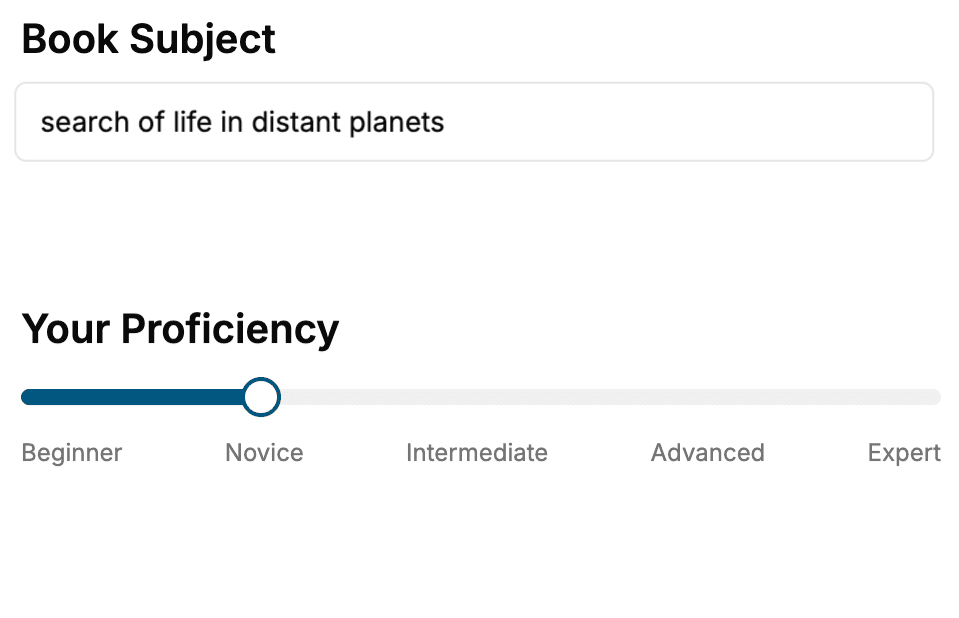
Select the focus of your Learning French book and share your background
- 2. Personalize your book
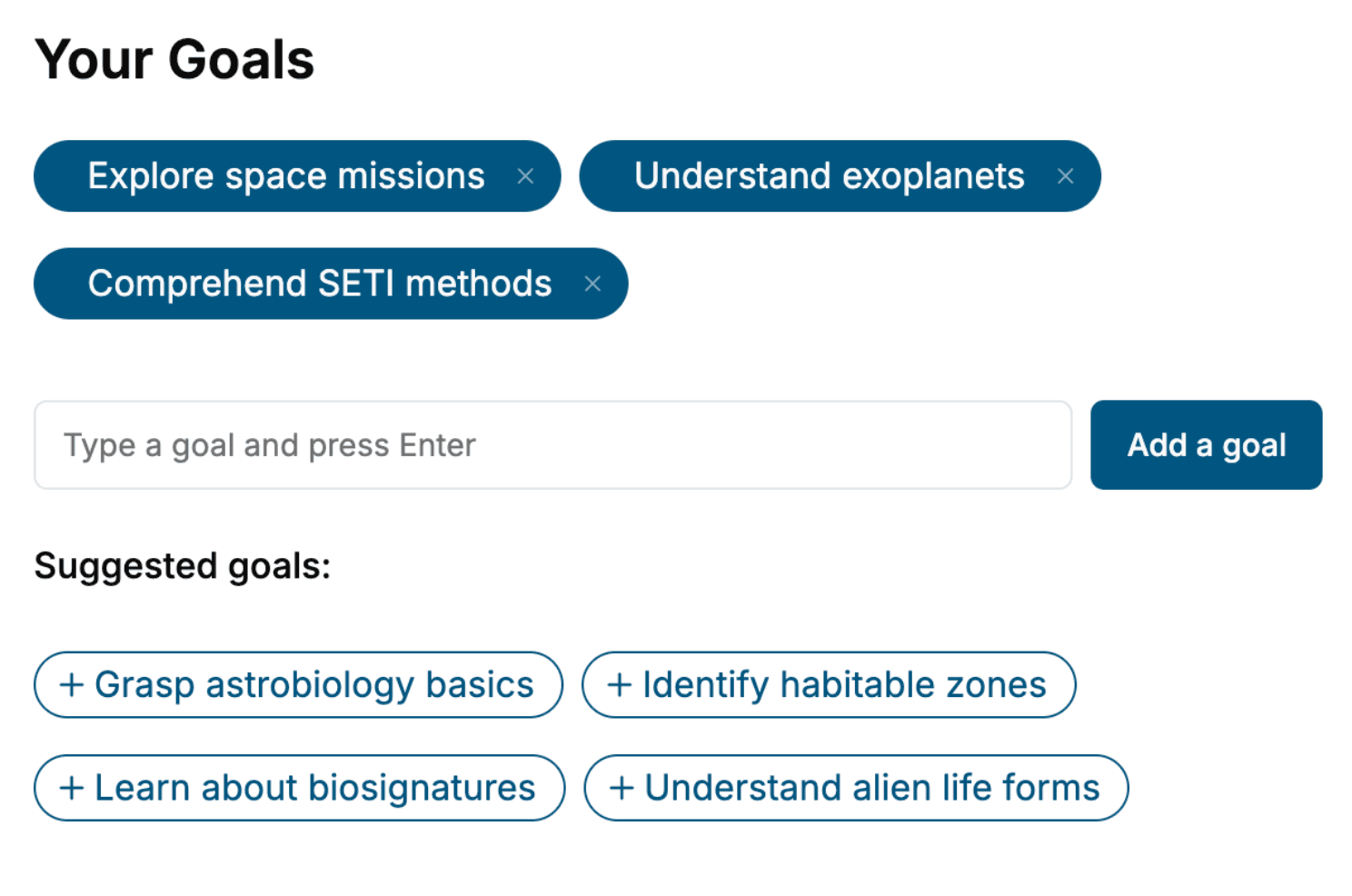
Specify your goals and choose sub-topics to include
- 3. Get your tailored book
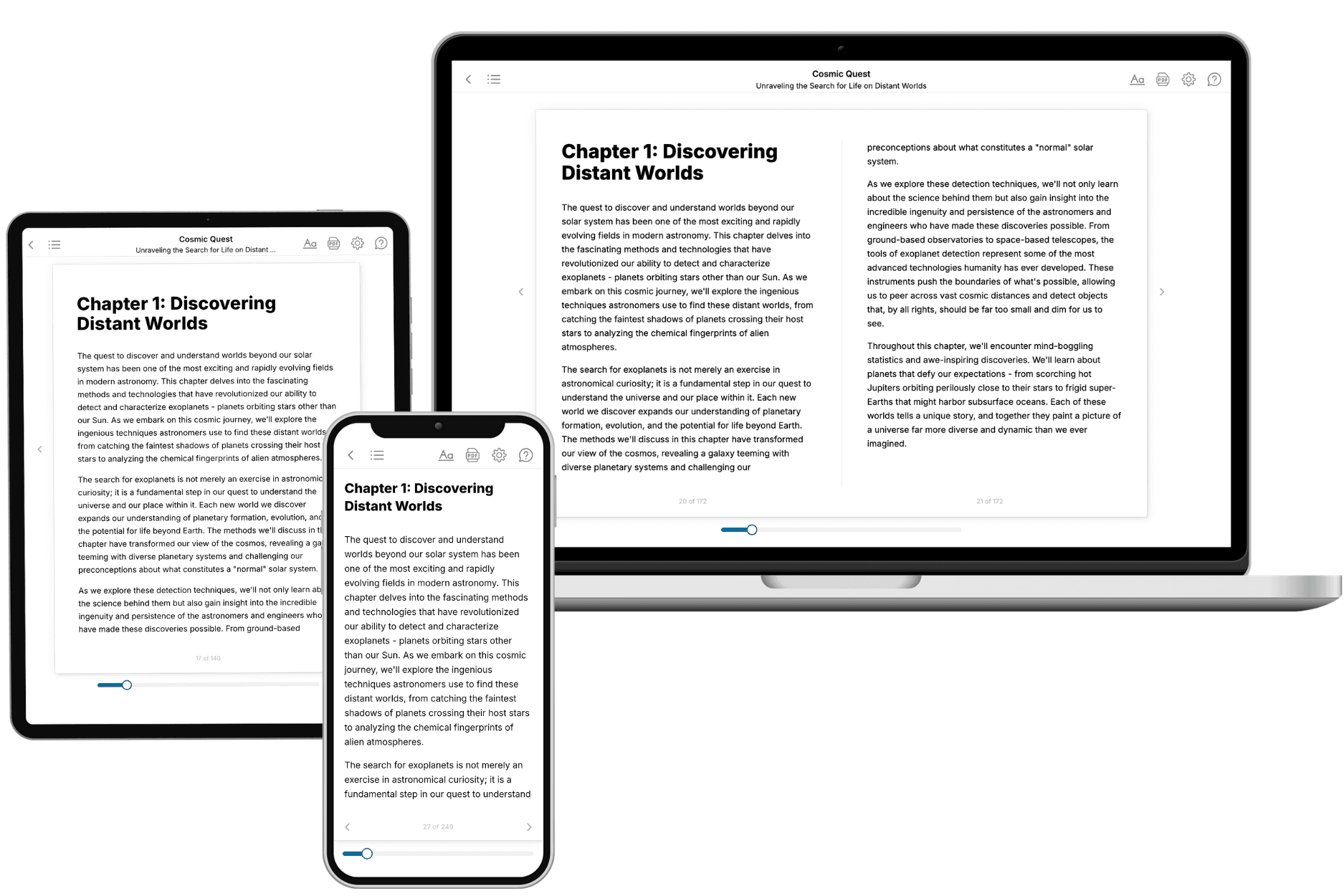
Your book is ready in 10 minutes. Read it online, download as EPUB or PDF, or send to Kindle.
Frequently asked questions
- What is TailoredRead?
TailoredRead creates complete, full-length nonfiction ebooks, written specifically for you. Tell us what you want to learn and why, and TailoredRead writes you a complete ebook on it, with charts, tables, and diagrams throughout. Read it online, on Kindle, or on any e-reader, or download it as a PDF or EPUB. Every book is written fresh the day you order it.
- How is the book tailored to me?
Before anything is written, you answer a few short questions about your goals, your background, and the topics you care about. Your book is then planned around your answers: written at your level, focused on your goals, and covering the topics you chose, instead of the one-size-fits-all book a store sells everyone.
- Will it read like generic AI content?
No. Your book isn't a chat transcript: it's planned chapter by chapter before a single word is written, told in a clear book voice, and explains ideas visually with charts, tables, and diagrams. After writing, every book goes through an editorial pass that polishes chapters so the book reads consistent from start to finish. Judge for yourself: browse thousands of sample books on our Explore Books page.
- How accurate is the content?
Our AI first checks whether your subject needs live research. Niche and fast-moving subjects are researched before writing, and the book plan and chapters are grounded in what it finds. After writing, every book goes through a quality pass that checks its facts and consistency, and researched books list their sources in a Notes section at the back.
- How long is the book?
You choose the length: Comprehensive (250-300 pages), Detailed (150-200 pages), Essential (70-100 pages), or Short (30-50 pages).
- Does the book include visuals?
Yes. Every book includes charts, tables, and diagrams: timelines, checklists, step-by-step guides, decision trees, comparison tables, matrices, and bar charts. A typical book includes dozens of these visual elements.
- Can I read it on Kindle? What formats can I download?
Yes. Every book can be read in our online reader or downloaded as a PDF or EPUB. The EPUB can be opened with Kindle, Apple Books, Kobo, and any e-reader. The Commercial and Author licenses also include an editable Word (DOCX) and Markdown download.
- How much does it cost?
About the price of a regular ebook. The exact price depends on your book's length and complexity, from $2 for the shortest books to $35 for the most comprehensive, and it's shown when you review your book, before you commit to anything. Each book is a one-time purchase, yours to keep, no subscription. Licenses that let you share, teach, or publish your book range from $35.99 to $49.99.
- Can I preview the book before purchasing?
Before you pay, you'll see what your book will cover: the title, a detailed description, the estimated length, and the complete chapter-by-chapter table of contents, so you know what you're getting before you decide. The full text itself is written after you purchase.
- How long does it take to create a book?
About 10 minutes. You can start reading the opening chapters while the rest is still being written.