The Flash Fiction Name Game
Master Character Naming Techniques to Elevate Your Short Stories
Your character names matter more than you think—especially in flash fiction where every word counts.
191 pages8 chaptersAug 23, 2026Flash Fiction
About this book
This guide shows you how to move beyond random selection and use character names as a strategic storytelling tool. You'll discover how phonetic qualities shape reader perception, learn naming techniques that work across genres, and understand how to align names with your story's themes and voice. Whether you're writing contemporary realism, speculative fiction, or experimental pieces, you'll find practical frameworks for choosing names that feel authentic, memorable, and purposeful. Through real examples and actionable exercises, you'll develop the confidence to make naming decisions that strengthen your flash fiction and create characters that linger in readers' minds long after the story ends.
Table of contents
- IntroductionWhy Character Names Matter in Flash Fiction, Constraints as Opportunity: Making Every Word Count, How to Use This BookRead below
- Chapter 1: The Psychology of NamesFirst Impressions: What Names Communicate Instantly, Phonetic Power: How Names Sound Shapes Perception, Cultural Associations and Reader Expectations, Understanding Name Bias and Reader Assumptions
- Chapter 2: Naming Across Genres and TonesContemporary Realism: Grounding Characters in the Present, Speculative Fiction: Creating Believable Invented Names, Historical Settings: Authenticity and Accuracy, Matching Names to Tone: Serious, Comic, and Experimental
- Chapter 3: Strategic Naming TechniquesSymbolic Names: Embedding Meaning and Theme, Archetype Signaling: Using Names to Establish Character Type, Contrast and Irony: Names That Subvert Expectations, Minimalist Naming: When Less Is More
- Chapter 4: Cultural Authenticity and SensitivityResearch and Respect: Getting Names Right, Avoiding Stereotypes Through Thoughtful Naming, Representation Matters: Diverse and Authentic Characters, When to Consult: Sensitivity Readers and Cultural Experts
- Chapter 5: Practical Naming StrategiesBrainstorming Methods: Finding the Right Name, Testing Names: Does This Name Fit Your Story?, Name Databases and Tools: Resources for Writers, Revision and Refinement: When to Change a Name
- Chapter 6: Names and Character DevelopmentNames That Reveal Backstory Without Exposition, Names That Signal Character Change and Growth, Nicknames and Aliases: Layers of Identity, Ensemble Naming: Distinguishing Multiple Characters
- Chapter 7: Common Naming Pitfalls and How to Avoid ThemToo Similar Names: Confusing Your Reader, Overly Trendy Names: Dating Your Story, Unpronounceable Names: When Difficulty Becomes Distraction, Names That Tell Too Much: Losing Subtlety
- Chapter 8: Case Studies: Names in Published Flash FictionAnalyzing Effective Names in Short Stories, Learning from Masters: What Professional Writers Do, Before and After: How Name Changes Transform Stories
- ConclusionNaming as Craft: Bringing It All Together, Your Naming Journey Starts Now
- Practical Exercises and WorksheetsHands-On Naming Exercises, Character Naming Worksheet, Story Revision Checklist for Names
- Further Reading and ResourcesRecommended Books on Character Development, Online Resources and Name Databases, Flash Fiction Collections to Study
Introduction
A flash fiction story titled "Girl" runs three hundred words. A second version of the same story, identical in every sentence except one, replaces "Girl" with "Marguerite Okonkwo-Bell." The plot does not change. The dialogue does not change. But the reader's mental picture, emotional entry point, and sense of what kind of story this is shift completely between those two versions. That single substitution demonstrates something flash fiction writers often discover only after years of practice: a name is never neutral. It is a decision, and in a form built on scarcity, that decision carries disproportionate weight.
Flash fiction typically runs anywhere from a few dozen words to around a thousand, depending on the publication or contest defining it. Inside that space, a writer has no room for the paragraph of backstory that a novel might spend introducing a character's family history, hometown, or social standing. A name has to do some of that work instantly, or the story simply runs out of words before the character becomes real. This is not a stylistic preference. It is a structural fact of the form, and it means naming deserves the same deliberate attention a novelist gives to plotting or a poet gives to line breaks.
Many capable writers still treat naming as an afterthought, something settled in the first draft and rarely revisited. They reach for whatever name pops into their head, often one borrowed from a friend, a baby name website, or the nearest character in a book they recently read. Sometimes this instinct produces a name that works. Just as often it produces a name that quietly undercuts the story: too generic to leave an impression, too trendy to survive past its publication year, or too mismatched with the character's background to feel believable.
This book treats naming as a craft skill that can be studied, practiced, and improved, the same way dialogue or pacing can be improved. It draws on ideas from linguistics, psychology, and literary craft to explain why certain names land and others fall flat. It also draws on the practical experience of working writers who have learned, often through trial and error, which naming choices earn their place in a two-hundred-word story and which ones quietly sabotage it. The goal is not a list of "good names" to copy, but a set of tools for making naming decisions that fit each individual story.
The chapters that follow move from theory toward practice. Early chapters explore the psychology behind names and how naming conventions shift across genres and tones. Middle chapters cover strategic techniques, cultural responsibility, and hands-on methods for generating and testing names. Later chapters examine character development through naming and the common mistakes that undermine otherwise strong stories, closing with case studies drawn from published flash fiction. Before any of that, this introduction lays the groundwork: why names matter so much in short forms, how constraint itself becomes a creative advantage, and how to get the most out of the chapters ahead.
Why Character Names Matter in Flash Fiction
Consider two openings. The first reads: Robert checked his watch again.
The second reads: Duke checked his watch again.
Nothing else in the sentence changed, yet most readers will form a different mental image of the person doing the checking. Robert suggests someone conventional, perhaps a bit formal, possibly middle-aged. Duke suggests confidence, maybe a nickname earned rather than given, perhaps a touch of swagger or self-invention. Neither impression is guaranteed to be accurate to the story that follows, but both impressions form instantly and unconsciously, before a single additional detail arrives. That instant reaction is the raw material every flash fiction writer is working with.
In longer fiction, an author has the luxury of correcting a reader's first impression over many pages. A novel can spend a chapter revealing that a character named Chad is actually thoughtful and shy, subverting the reader's initial assumption in a way that becomes part of the story's texture. Flash fiction rarely has that runway. If the story is four hundred words long, there may not be space to overturn an assumption the name created in its first sentence. This means the name usually needs to align with, rather than fight against, the impression the writer wants to create, unless that friction is itself the point of the story.
Names also function as compression devices, carrying information that would otherwise require explicit description. A character named Consuela Reyes-Whitfield signals, in a handful of syllables, a blended or bicultural family history that might otherwise take a full sentence to establish. A character named Zx-7 in a science fiction flash piece signals immediately that the setting is not contemporary Earth, without a single line of exposition about spaceships or the future. This compression is not a trick or a shortcut in the negative sense. It is simply how language works, and flash fiction writers who understand it can accomplish in one word what might otherwise take a paragraph.
The stakes of getting a name wrong scale with the shortness of the story. A slightly awkward name in a two-hundred-page novel is a minor flaw, diluted across hundreds of scenes and thousands of sentences. The same slightly awkward name in a five-hundred-word flash piece might appear a dozen times, each repetition reinforcing the mismatch between the name and the character it is meant to represent. Readers of flash fiction also tend to read with heightened attention, precisely because they know the form rewards close reading. A name that rings false is far more likely to be noticed and to break the story's spell in a form with so little room to rebuild trust.
None of this means every name must be loaded with meaning or cleverness. Overworking a name, making it so symbolic or unusual that it draws attention to itself, can be just as damaging as underworking it. The point is that naming should never be treated as arbitrary. Even a plain, common name like Tom or Ana is a choice with consequences, signaling ordinariness, relatability, or a deliberate contrast against an extraordinary situation. Recognizing that every name choice sends a signal, whether the writer intends it or not, is the first step toward using names deliberately rather than accidentally[1].
Constraints as Opportunity: Making Every Word Count
Writers new to flash fiction often experience its word limits as a punishment, a set of handcuffs preventing them from developing character the way they would in a short story or novel. This framing misses something important. Constraint in any art form tends to sharpen decision-making rather than merely restrict it. A sonnet's fourteen lines force a poet to choose words with unusual precision. A haiku's seventeen syllables force a similar precision at an even smaller scale. Flash fiction's word limit operates the same way on character naming: it forces the writer to ask what a name needs to accomplish and to select or invent one that accomplishes it efficiently.
Think of the word budget in a flash piece the way a small business owner thinks of a tight marketing budget. Every dollar spent has to justify itself, because there is no slack for wasted spending. A character name is one of the cheapest, highest-leverage purchases available in that budget. It costs one or two words, the same as almost any other word in the story, but it can deliver information that would otherwise cost an entire sentence or more. A writer who recognizes this treats naming decisions with the same rigor as decisions about which scene to include or which line of dialogue to cut.
Here is a concrete comparison. Suppose a four-hundred-word story needs to establish that its protagonist grew up working-class in a mill town, feels embarrassed about her background, and has reinvented herself in the city. One approach spends thirty or forty words on this backstory directly. Another approach names her Brandy Sikorski at the start of the story and later has her introduce herself to new colleagues simply as "Brandy S." The name change alone, without further explanation, implies the reinvention and the embarrassment, freeing up those thirty or forty words for something else, perhaps a scene the story would otherwise have had to cut.
This efficiency is not free of risk, and constraint cuts both ways. A name asked to carry too much informational weight can start to feel less like a person and more like a label, especially if the story leans on stereotype rather than specificity to make its point. The skill lies in choosing names that suggest rather than announce, that give a reader just enough texture to fill in the rest imaginatively. A name should feel like the tip of an iceberg, hinting at a fuller person beneath the surface, not like a sign nailed to the character's forehead. Later chapters on symbolic naming and archetype signaling develop this balance in more detail.
Word constraint also changes how writers should think about revision. In a novel, a writer might rename a character on a whim in draft three without much consequence, since the name appears among thousands of other details. In flash fiction, changing a name mid-revision can shift the entire emotional register of the piece, because the name may appear five or six times in a five-hundred-word story, each appearance a meaningful fraction of the whole. This makes naming decisions worth revisiting deliberately during revision rather than treating them as settled once the first draft is done, a process explored fully in the chapter on revision and refinement.
Approaching constraint as opportunity rather than obstacle changes the entire posture a writer takes toward naming. Instead of asking, What's a name I can use here?
the more productive question becomes, What does this story need this name to do, given that I have no room to do it any other way?
That question turns naming from a minor administrative task into one of the central creative decisions of drafting a flash piece, on par with choosing a point of view or deciding where the story begins and ends.
How to Use This Book
The chapters ahead are sequenced to build from understanding to application. The Psychology of Names chapter establishes the theoretical foundation, covering how phonetic sound, cultural association, and reader bias shape first impressions before any plot begins. Naming Across Genres and Tones then shows how those psychological principles play out differently depending on whether the story sits in contemporary realism, speculative fiction, or historical settings, and how tone shifts the naming register a writer should reach for. These two chapters are worth reading in order even for writers eager to skip to practical techniques, because the later strategic and practical chapters assume this foundation.
Strategic Naming Techniques and Cultural Authenticity and Sensitivity form the ethical and creative core of the book. The first covers deliberate techniques for embedding theme, signaling archetype, and using irony or contrast to subvert expectation. The second addresses the research and respect required when naming characters from cultural backgrounds different from a writer's own, including when and how to bring in outside expertise. These chapters work best read together, since thoughtful technique and cultural responsibility are not separate concerns but two sides of the same craft decision.
Practical Naming Strategies is designed to be used as a working reference rather than read once and set aside. It covers brainstorming methods, ways to test whether a name fits a story, tools and databases for finding names, and guidance on when a name needs to change during revision. Writers who want to jump straight to actionable exercises may find it useful to skim this chapter early, then return to it repeatedly while drafting new stories throughout the rest of the book and beyond it.
Names and Character Development and Common Naming Pitfalls and How to Avoid Them work as a matched pair, one showing what effective naming makes possible and the other showing what ineffective naming ruins. Reading them back to back sharpens the distinction between a name that reveals backstory efficiently and one that reveals too much, or between a name that signals growth and one that simply confuses an ensemble cast. The case studies chapter that follows puts these lessons into direct contact with published work, offering a chance to see the principles operating in stories that have already succeeded in print.
Each chapter includes concrete examples rather than abstract rules alone, and the closing sections of the book offer hands-on exercises and worksheets meant to be used directly, not merely read. A writer working on a current draft may benefit from keeping that draft open alongside the book, testing each new concept against an actual character rather than a hypothetical one. Naming decisions, more than most craft elements, reveal their strengths and weaknesses only when applied to a real, specific story, so treating this book as a workshop rather than a lecture will produce the most durable improvement in practice.
There is no requirement to read every chapter in strict sequence, though the sequence is designed to build logically. A writer working on a historical piece might jump directly to historical settings and cultural authenticity before circling back to psychology and phonetics. A writer struggling specifically with an ensemble cast might head straight for the chapter on character development. Whatever path is taken, the underlying aim stays the same: to replace naming as an unconscious habit with naming as a conscious, repeatable craft skill, one that pays off every time a new character needs a name that will do real work in very little space.
Notes
Introduction
- 1. Frank Delaney, Names in Fiction, Merrion Press, 2011
This is the end of the free sample. The full book has 8 chapters.
Want this book written for you?
Tell us your goals and background, and get your own version of this book, tailored by AI to you.


Benefits of AI-tailored books
- Read one book, not ten:
- all the Flash Fiction knowledge you need, gathered into a single book.
- Save days of learning:
- tell us your goals, choose your topics, and the whole book is built around them.
- Learn effortlessly:
- Flash Fiction book written for your specific background and expertise.
- Understand at a glance:
- includes charts, tables, timelines, checklists, decision trees, and more.
- Stay current:
- written the day you order it, not years ago.
- Trust what you read:
- every book is checked for accuracy, with real research when your subject needs it.
Create your unique book in 3 steps
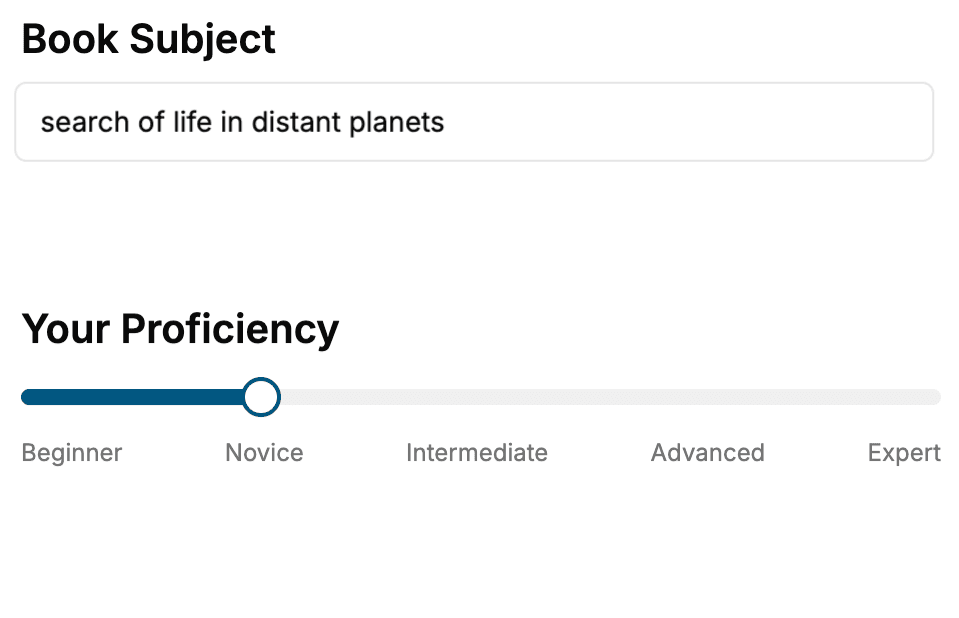
- 1. Select your focus
Select the focus of your Flash Fiction book and share your background
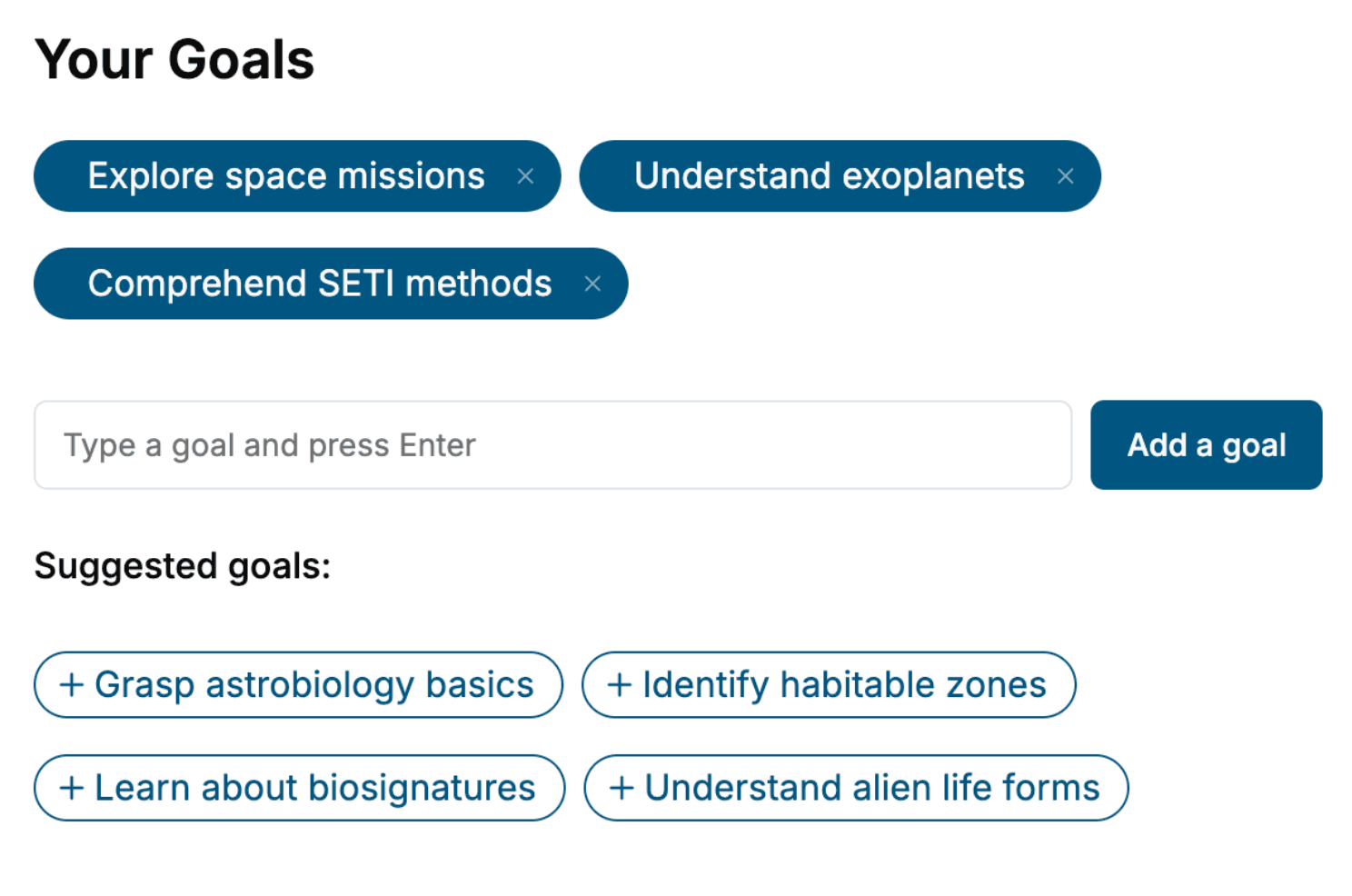
- 2. Personalize your book
Specify your goals and choose sub-topics to include
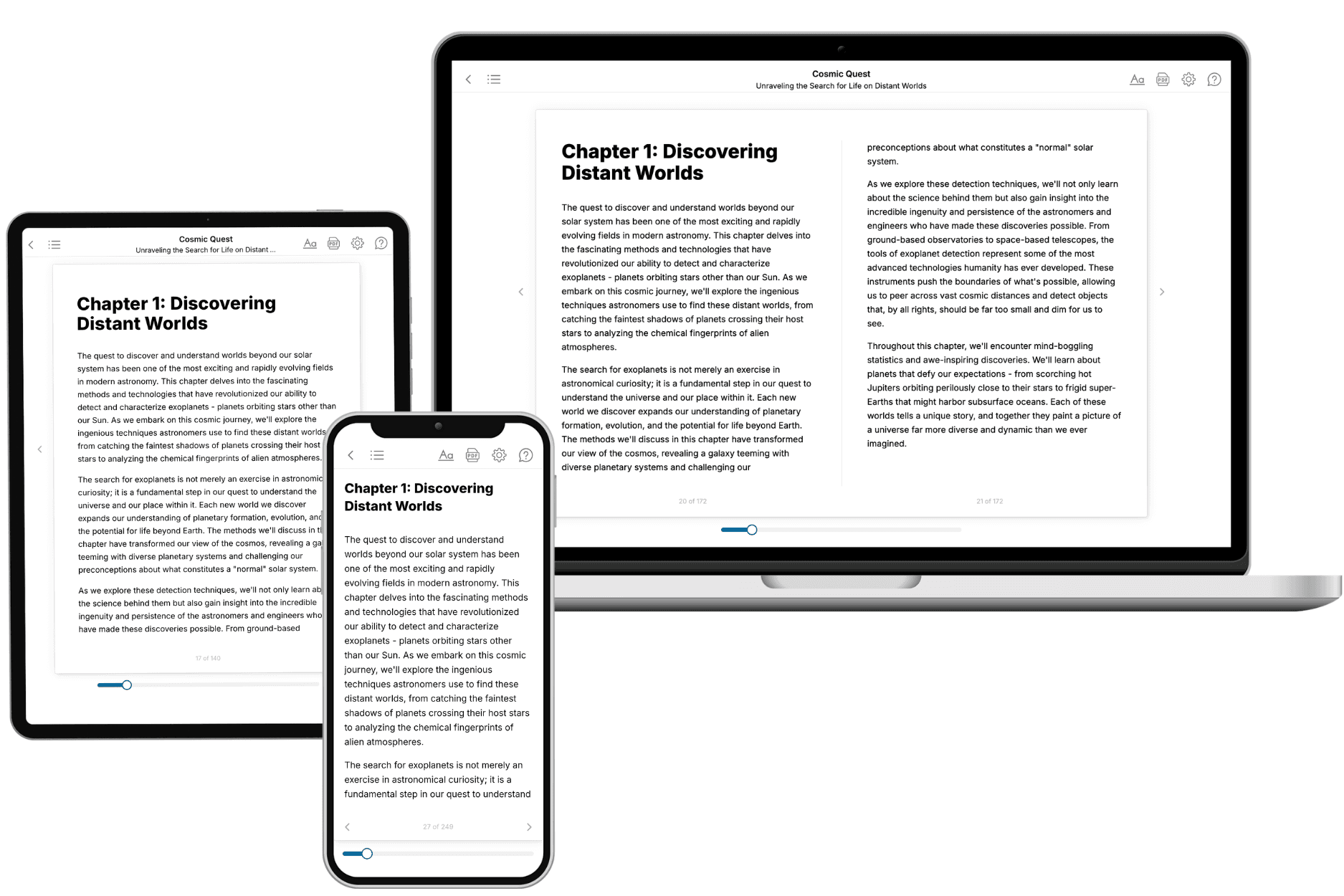
- 3. Get your tailored book
Your book is ready in 10 minutes. Read it online, download as EPUB or PDF, or send to Kindle.
Frequently asked questions
- What is TailoredRead?
TailoredRead creates complete, full-length nonfiction ebooks, written specifically for you. Tell us what you want to learn and why, and TailoredRead writes you a complete ebook on it, with charts, tables, and diagrams throughout. Read it online, on Kindle, or on any e-reader, or download it as a PDF or EPUB. Every book is written fresh the day you order it.
- How is the book tailored to me?
Before anything is written, you answer a few short questions about your goals, your background, and the topics you care about. Your book is then planned around your answers: written at your level, focused on your goals, and covering the topics you chose, instead of the one-size-fits-all book a store sells everyone.
- Will it read like generic AI content?
No. Your book isn't a chat transcript: it's planned chapter by chapter before a single word is written, told in a clear book voice, and explains ideas visually with charts, tables, and diagrams. After writing, every book goes through an editorial pass that polishes chapters so the book reads consistent from start to finish. Judge for yourself: browse thousands of sample books on our Explore Books page.
- How accurate is the content?
Our AI first checks whether your subject needs live research. Niche and fast-moving subjects are researched before writing, and the book plan and chapters are grounded in what it finds. After writing, every book goes through a quality pass that checks its facts and consistency, and researched books list their sources in a Notes section at the back.
- How long is the book?
You choose the length: Comprehensive (250-300 pages), Detailed (150-200 pages), Essential (70-100 pages), or Short (30-50 pages).
- Does the book include visuals?
Yes. Every book includes visual elements such as timelines, checklists, step-by-step guides, decision trees, comparison tables, and matrices, and many include bar charts. A typical book includes dozens of these visual elements.
- Can I read it on Kindle? What formats can I download?
Yes. Every book can be read in our online reader or downloaded as a PDF or EPUB. The EPUB can be opened with Kindle, Apple Books, Kobo, and any e-reader. The Commercial and Author licenses also include an editable Word (DOCX) and Markdown download.
- How much does it cost?
About the price of a regular ebook. The exact price depends on your book's length and complexity, from $2 for the shortest books to $35 for the most comprehensive, and it's shown when you review your book, before you commit to anything. Each book is a one-time purchase, yours to keep, no subscription. Licenses that let you share, teach, or publish your book range from $35.99 to $49.99.
- Can I preview the book before purchasing?
Before you pay, you'll see what your book will cover: the title, a detailed description, the estimated length, and the complete chapter-by-chapter table of contents, so you know what you're getting before you decide. The full text itself is written after you purchase.
- How long does it take to create a book?
About 10 minutes. You can start reading the opening chapters while the rest is still being written.