Flavors of Ancient Rome
A Culinary Journey Through the Empire's Kitchens
Step into the bustling kitchens of ancient Rome and discover a world of flavors that have shaped culinary history.
315 pages16 chaptersEnglishJan 8, 2025Cooking
About this book
"Flavors of Ancient Rome: A Culinary Journey Through the Empire's Kitchens" invites you to explore the rich tapestry of Roman cuisine, from the humble meals of the plebeians to the lavish banquets of the emperors. Uncover the secrets of ancient Roman cooking techniques, learn about the exotic ingredients that fueled an empire, and understand how food played a crucial role in Roman society and culture. This book will guide you through the preparation of authentic Roman dishes, allowing you to taste history in your own home. Whether you're a seasoned chef or an amateur cook with a passion for history, this book offers a unique opportunity to connect with the past through your taste buds. Prepare to be surprised by the sophistication of Roman gastronomy and inspired to bring these ancient flavors to your modern table.
Table of contents
- IntroductionAn Overview of Roman Cuisine, Historical Context of Roman Cooking, Your Culinary Journey Through Ancient RomeRead below
- Chapter 1: The Pantry of Ancient RomeStaple Foods and Grains, Fruits and Vegetables, Meats and Fish, Herbs and Spices
- Chapter 2: Cooking Methods and TechniquesCooking on the Hearth, Baking and Roasting, Boiling and Frying, Preservation Techniques
- Chapter 3: Tools of the Roman KitchenCooking Vessels and Pots, Utensils and Gadgets, Storage Containers, Modern Equivalents for Roman Tools
- Chapter 4: The Structure of Roman MealsIentaculum: The Roman Breakfast, Prandium: The Midday Meal, Cena: The Main Meal of the Day, Courses and Dining Customs
- Chapter 5: Bread and Grains: The Foundation of Roman DietVarieties of Roman Bread, Puls: The Ancient Roman Porridge, Precursors to Pasta, Recipes for Grain-based Dishes
- Chapter 6: Vegetables and Legumes in Roman CuisineCommon Vegetables in Roman Kitchens, The Importance of Legumes, Olera: Roman Salads and Vegetable Dishes, Recipes for Vegetable-based Meals
- Chapter 7: Meats and Poultry in Roman FeastsCommon Meats in Roman Diet, Exotic Meats for the Elite, Poultry and Eggs, Recipes for Meat-based Dishes
- Chapter 8: Fish and Seafood: Treasures from WaterPopular Fish Varieties, Shellfish and Mollusks, Garum: The Famous Fish Sauce, Recipes for Fish and Seafood Dishes
- Chapter 9: Fruits and Nuts in Roman GastronomyLocal Fruits of Italy, Imported Fruits from Across the Empire, Nuts and Seeds in Roman Diet, Recipes for Fruit-based Dishes and Desserts
- Chapter 10: Herbs, Spices, and Flavoring AgentsCommon Herbs in Roman Cooking, Exotic Spices from the East, Unique Flavoring Agents, Recipes for Roman Spice Blends
- Chapter 11: Sauces and CondimentsSavory Sauces and Their Uses, Sweet Sauces and Syrups, Vinegars and Oils, Recipes for Roman Sauces
- Chapter 12: Wine and Other BeveragesWine Production and Varieties, The Art of Mixing Wine, Non-Alcoholic Beverages, Recipes for Roman Drinks
- Chapter 13: Dining Etiquette and CustomsThe Triclinium: Roman Dining Room, Table Manners and Customs, Hosting Roman Dinner Parties, Entertainment During Meals
- Chapter 14: The Social Aspects of Roman CuisineClass Differences in Diet, Food in Roman Politics, Religious Feasts and Offerings, Food in Roman Literature
- Chapter 15: Health and Nutrition in Ancient RomeRoman Beliefs About Diet and Health, Foods Used for Medicinal Purposes, The Roman Concept of a Balanced Diet, Roman Diet from a Modern Nutritional Perspective
- Chapter 16: Recipes and Modern RecreationsAppetizers (Gustatio), Main Courses (Primae Mensae), Desserts (Secundae Mensae), Adapting Roman Recipes for Modern Kitchens
- ConclusionThe Legacy of Roman Cuisine, Roman Cooking in the Modern World
- Glossary of Roman Culinary Terms
- Further Reading
Introduction
Welcome to a culinary journey through time, where the flavors of ancient Rome come alive on your modern table. As you embark on this gastronomic adventure, you'll discover that the cuisine of this mighty empire was far more than just sustenance; it was a reflection of culture, social status, and the vast reach of Roman influence across the known world. This introduction will set the stage for your exploration of Roman cuisine, providing you with a comprehensive overview, historical context, and a roadmap for the culinary journey that lies ahead.
The Roman Empire, at its height, spanned three continents and encompassed a diverse array of cultures, climates, and culinary traditions. This vast expanse not only brought wealth and power to Rome but also an incredible variety of ingredients and cooking techniques that would shape the empire's cuisine for centuries. From the humble porridge of the common soldier to the extravagant feasts of the emperors, Roman food was as diverse as the empire itself.
As you delve deeper into the pages of this book, you'll find that many aspects of Roman cuisine may surprise you. Far from being a primitive or unsophisticated culinary tradition, Roman cooking was complex, innovative, and in many ways, quite modern. The Romans were adept at preserving foods, creating complex sauces, and combining flavors in ways that might seem familiar to the contemporary palate. They understood the importance of presentation, the art of food pairing, and even the concept of umami, long before it was scientifically identified.
Throughout this book, you'll encounter recipes that have been carefully researched and adapted for the modern kitchen. These are not mere historical curiosities but living dishes that can be recreated and enjoyed today. By preparing and tasting these recipes, you'll gain a tangible connection to the past, experiencing flavors that have echoed through the centuries. Whether you're a seasoned chef looking to expand your repertoire or an amateur cook with a passion for history, this book offers something for everyone who has ever wondered what it might have been like to dine in ancient Rome.
An Overview of Roman Cuisine
Roman cuisine was a vibrant tapestry of flavors, textures, and culinary techniques that evolved over centuries. At its core, it was based on the Mediterranean triad of wheat, olive oil, and wine, supplemented by an array of vegetables, fruits, meats, and fish. The Romans were innovative in their approach to food, constantly adapting and incorporating new ingredients and methods as their empire expanded. This culinary adaptability was one of the hallmarks of Roman cuisine, reflecting the empire's ability to assimilate and transform the cultures it encountered.
One of the most striking aspects of Roman cuisine was its emphasis on strong, bold flavors. Unlike modern Italian cuisine, which often celebrates the natural flavors of ingredients, Roman cooks were fond of complex sauces and spice mixtures that could dramatically alter the taste of a dish. The famous fish sauce known as garum, for instance, was used liberally in both savory and sweet dishes, providing a salty, umami flavor that is somewhat analogous to modern Southeast Asian fish sauces. Honey was another ubiquitous ingredient, used not only in desserts but also in savory dishes, creating flavor combinations that might seem unusual to the modern palate.
The structure of Roman meals was quite different from what we're accustomed to today. The main meal, called the cena, was typically eaten in the late afternoon and could last for hours, especially among the wealthy. It usually consisted of three main parts: the gustatio (appetizers), the primae mensae (main courses), and the secundae mensae (desserts). Each of these courses could include multiple dishes, with the most lavish banquets featuring dozens of different foods. Breakfast (ientaculum) and lunch (prandium) were typically lighter affairs, often consisting of bread, cheese, and leftovers from the previous day's cena.
Class distinctions played a significant role in Roman cuisine. While the poor subsisted mainly on a diet of bread, porridge (puls), vegetables, and occasional meat, the wealthy enjoyed a much more varied and luxurious diet. Exotic ingredients from across the empire, such as peacocks from Greece or pepper from India, were status symbols as much as they were food items. The ability to host elaborate dinner parties (convivia) was an important social and political tool for the Roman elite, and the quality and variety of food served at these events were key to their success.
Roman cooking techniques were surprisingly sophisticated. They had a wide array of cooking vessels and utensils, many of which have modern equivalents. Ovens were used for baking bread and roasting meats, while pots and pans over open fires were used for boiling, frying, and sautéing. The Romans were also adept at food preservation, using techniques such as smoking, salting, and pickling to extend the shelf life of various foods. This was particularly important for maintaining food supplies for the military and for transporting goods across the vast expanse of the empire.
One of the most intriguing aspects of Roman cuisine was its medicinal dimension. The Romans, following Greek medical theories, believed strongly in the healing properties of food. Many ingredients were valued not just for their flavor but for their perceived health benefits. For example, cabbage was considered a cure-all, capable of treating everything from hangovers to ulcers. This intersection of cuisine and medicine adds another layer of fascination to the study of Roman food, offering insights into ancient concepts of health and wellness.
As you explore Roman cuisine throughout this book, you'll find that many aspects of it are surprisingly familiar. The Romans' love of bread, their use of olive oil, and their appreciation for wine all resonate with modern Mediterranean cuisine. At the same time, you'll encounter flavors and combinations that may seem exotic or unusual. This blend of the familiar and the foreign is part of what makes Roman cuisine so fascinating to explore. It offers a unique window into a civilization that in many ways laid the foundations for Western culinary traditions, while also challenging our preconceptions about what constitutes "traditional" or "authentic" food.
In the chapters that follow, you'll have the opportunity to delve deeper into each aspect of Roman cuisine. From the staple ingredients that formed the basis of the Roman diet to the exotic spices that were worth their weight in gold, from the humble tools of the Roman kitchen to the elaborate customs of the dining room, each element of Roman food culture will be explored in detail. By the end of this culinary journey, you'll have gained not just knowledge about ancient recipes and ingredients, but a deeper understanding of how food shaped and was shaped by one of the most influential civilizations in human history.
As you read about and recreate these ancient dishes, remember that you're not just cooking – you're participating in a living history. The flavors you'll experience are echoes of a world that existed two thousand years ago, yet they have the power to transport you back in time, offering a tangible connection to the daily lives of people who lived, loved, and dined in ancient Rome. So, prepare your kitchen, sharpen your knives, and get ready to embark on a culinary adventure that spans millennia. The kitchens of ancient Rome await you.
Historical Context of Roman Cooking
To truly appreciate the nuances of Roman cuisine, it's essential to understand the historical context in which it developed. The culinary traditions of Rome evolved over nearly a thousand years, from the founding of the city in 753 BCE to the fall of the Western Roman Empire in 476 CE. During this time, Rome transformed from a small city-state into a vast empire, and its cuisine underwent equally dramatic changes. The history of Roman cooking is, in many ways, a reflection of the history of Rome itself – a story of conquest, adaptation, and the blending of diverse cultures.
In the early days of Rome, during the period of the Roman Kingdom and the early Republic (753 BCE - 264 BCE), Roman cuisine was relatively simple and heavily influenced by the Etruscans, who dominated central Italy before the rise of Rome. The diet of most Romans during this period consisted primarily of porridge made from grains (puls), vegetables, and occasional meat. Wine was consumed, but it was often watered down. This simple fare reflected the agrarian nature of early Roman society and its values of frugality and simplicity.
As Rome began to expand its influence beyond the Italian peninsula during the Middle and Late Republic (264 BCE - 27 BCE), its cuisine began to evolve. Contact with Greek colonies in southern Italy and Sicily introduced new ingredients and cooking techniques. The conquest of Greece in 146 BCE had a particularly profound impact on Roman culture, including its food. Greek cooks became highly prized in wealthy Roman households, bringing with them a more sophisticated approach to cuisine. This period also saw the introduction of many fruits and vegetables that would become staples of Roman cooking, such as apricots, peaches, and cherries[1].
The transition from Republic to Empire, marked by the reign of Augustus beginning in 27 BCE, ushered in a new era of Roman cuisine. As the empire expanded to encompass vast territories in Europe, North Africa, and the Middle East, a flood of new ingredients and culinary traditions poured into Rome. Spices from India, dates from Egypt, and garum (fish sauce) from Hispania became available to those who could afford them. This period saw the development of what we might call "haute cuisine" in Rome, with wealthy citizens hosting elaborate banquets featuring exotic dishes and spectacular presentations.
The cookbook "De Re Coquinaria" (On the Subject of Cooking), attributed to Apicius and likely compiled in the late 4th or early 5th century CE, provides valuable insights into the sophisticated cuisine of the late empire. This collection of recipes showcases the complex flavors and techniques that had developed over centuries of culinary evolution. It includes dishes that combine sweet and savory flavors, make use of expensive spices, and employ complicated cooking methods – all hallmarks of elite Roman cuisine in the imperial period[2].
However, it's important to note that the elaborate dishes described by Apicius were not representative of what most Romans ate. Throughout the history of Rome, there remained a stark contrast between the diets of the wealthy and the poor. While the elite enjoyed lavish meals featuring exotic ingredients, the majority of the population subsisted on a simpler diet of bread, porridge, vegetables, and occasional meat or fish. This disparity in diet reflected and reinforced the social hierarchies of Roman society.
The role of food in Roman society went far beyond mere sustenance. Meals, particularly the elaborate dinner parties (convivia) hosted by the wealthy, were important social and political events. The ability to serve rare and expensive dishes was a way of displaying one's wealth and status. Moreover, the practice of patronage, central to Roman social and political life, often involved the hosting of meals. Clients would attend their patron's morning salutatio (greeting) in hopes of being invited to dinner, where they might make valuable social connections or seek favors.
Religion also played a significant role in shaping Roman attitudes towards food. Many religious festivals involved feasts or the offering of food to the gods. The practice of animal sacrifice, central to Roman religious life, meant that meat consumption was often tied to religious observance. Certain foods were considered sacred to particular gods – for example, figs were associated with Bacchus, the god of wine and revelry.
The expansion of the empire also had profound effects on agriculture and food distribution. The annexation of Egypt in 30 BCE gave Rome control over the richest grain-producing region in the Mediterranean, ensuring a steady supply of wheat to feed the growing population of the capital. Trade routes spanning the empire allowed for the transportation of foods across vast distances, meaning that even perishable items like oysters could be enjoyed far from their point of origin.
As the Western Roman Empire began to decline in the 3rd and 4th centuries CE, changes in the political and economic landscape were reflected in the cuisine. The contraction of trade routes meant that some exotic ingredients became scarcer or disappeared entirely from Roman tables. However, the culinary traditions established during the height of the empire continued to exert influence long after its fall. Many aspects of Roman cuisine were preserved and adapted in the cooking of the Byzantine Empire, and through various paths, continued to influence European cuisine throughout the Middle Ages and beyond.
Understanding this historical context enriches our appreciation of Roman cuisine. Each dish, each ingredient, and each culinary technique tells a story of cultural exchange, social dynamics, and historical change. As you explore the recipes and culinary practices in the following chapters, keep in mind the long and complex history behind them. The flavors you'll encounter are not just tastes, but echoes of a civilization that shaped the course of Western history – and continues to influence how we eat today.
Your Culinary Journey Through Ancient Rome
As you embark on this culinary exploration of ancient Rome, you're not just learning about a historical cuisine – you're preparing to engage in a hands-on journey through time. This book is designed to be more than just a collection of facts and recipes; it's an immersive experience that will allow you to connect with the past in a tangible, sensory way. Through the pages that follow, you'll not only learn about Roman food, but you'll also have the opportunity to smell, taste, and create dishes that have their roots in an empire that flourished two millennia ago.
Your journey will begin with an exploration of the Roman pantry. Chapter 1, "The Pantry of Ancient Rome," will introduce you to the staple ingredients that formed the foundation of Roman cuisine. Here, you'll learn about the grains, vegetables, meats, and spices that were common in Roman kitchens. You'll discover how some ingredients that we take for granted today, like pepper and apricots, were once exotic luxuries in Rome. This chapter will provide you with the knowledge you need to stock your own "Roman pantry," allowing you to recreate authentic flavors in your modern kitchen.
From there, you'll delve into the techniques and tools used by Roman cooks. Chapters 2 and 3 will cover cooking methods and kitchen implements, respectively. You'll learn how Romans cooked without modern conveniences like gas stoves or refrigerators, and how they used tools that might seem strange to us today, like the mortarium (a kind of mortar and pestle) or the clibanus (a portable oven). These chapters will not only increase your historical knowledge but will also provide practical advice on how to adapt Roman cooking techniques for your modern kitchen.
The structure of Roman meals, which differed significantly from our modern eating habits, is covered in Chapter 4. This will give you insight into how Romans organized their daily meals and what types of dishes were typically served at different times of day. Understanding this structure will help you plan your own Roman-inspired meals and dinner parties.
Chapters 5 through 11 form the heart of the book, focusing on specific categories of food: bread and grains, vegetables and legumes, meats, fish and seafood, fruits and nuts, herbs and spices, and sauces and condiments. Each of these chapters will provide in-depth information about how these foods were used in Roman cuisine, along with recipes that you can try at home. These recipes have been carefully researched and adapted for modern kitchens, allowing you to recreate authentic Roman flavors using ingredients available today.
No exploration of Roman cuisine would be complete without a discussion of wine, which played a central role in Roman culture and dining. Chapter 12 covers wine and other beverages, including how wine was produced, stored, and consumed in ancient Rome. You'll even learn how to mix wine in the Roman style – a practice that might surprise those accustomed to drinking wine unaltered.
The social aspects of Roman dining are just as important as the food itself, and these are covered in Chapters 13 and 14. Here, you'll learn about Roman dining etiquette, the layout of a Roman dining room (triclinium), and how food played into social and political life in Rome. These chapters will help you understand the cultural context of Roman cuisine and might even inspire you to host your own Roman-style dinner party.
Chapter 15 explores Roman ideas about health and nutrition, providing insight into how the Romans viewed the relationship between food and wellbeing. This chapter offers an interesting comparison between ancient and modern nutritional theories and highlights the enduring human concern with eating for health.
The book culminates in Chapter 16, which provides a collection of recipes for a complete Roman meal, from appetizers (gustatio) to desserts (secundae mensae). This chapter brings together all the knowledge you've gained throughout the book, allowing you to create a full Roman dining experience in your own home.
Throughout your journey, you'll find that this book does more than just present information – it invites you to actively engage with history. Sidebars provide additional historical context or interesting anecdotes. "Try This" boxes offer suggestions for hands-on activities, like making your own garum or hosting a Roman-style dinner party. "Modern Connection" sections highlight how aspects of Roman cuisine continue to influence modern cooking.
As you cook your way through this book, you'll gain a deeper appreciation for the sophistication of Roman cuisine and its lasting impact on Western culinary traditions. You'll discover flavors that may be surprisingly familiar and others that challenge your palate in new ways. Most importantly, you'll forge a personal connection with history, experiencing firsthand the tastes and smells that were part of daily life in ancient Rome.
Remember, this culinary journey is not just about recreating ancient recipes – it's about understanding a civilization through its food. As you chop vegetables, mix sauces, and savor the results of your cooking, you'll be participating in a tradition that stretches back thousands of years. You'll gain insights into Roman culture, society, and daily life that go far beyond what you might learn from a conventional history book.
So, prepare your kitchen, open your mind (and your taste buds) to new experiences, and get ready to travel back in time through the flavors of ancient Rome. Whether you're a history enthusiast, a culinary adventurer, or simply curious about the roots of Western cuisine, this book offers a unique and engaging way to connect with the past. Your journey through the kitchens of ancient Rome begins now – enjoy every taste, every aroma, and every discovery along the way.
This is the end of the free sample. The full book has 16 chapters.
Want this book written for you?
Tell us your goals and background, and get your own version of this book, tailored by AI to you.


Benefits of AI-tailored books
- Read one book, not ten:
- all the Cooking knowledge you need, gathered into a single book.
- Save days of learning:
- tell us your goals, choose your topics, and the whole book is built around them.
- Learn effortlessly:
- Cooking book written for your specific background and expertise.
- Understand at a glance:
- includes charts, tables, timelines, checklists, decision trees, and more.
- Stay current:
- written the day you order it, not years ago.
- Trust what you read:
- every book is checked for accuracy, with real research when your subject needs it.
Create your unique book in 3 steps
- 1. Select your focus
Select the focus of your Cooking book and share your background
- 2. Personalize your book
Specify your goals and choose sub-topics to include
- 3. Get your tailored book
Your book is ready in 10 minutes. Read it online, download as EPUB or PDF, or send to Kindle.


Frequently asked questions
- What is TailoredRead?
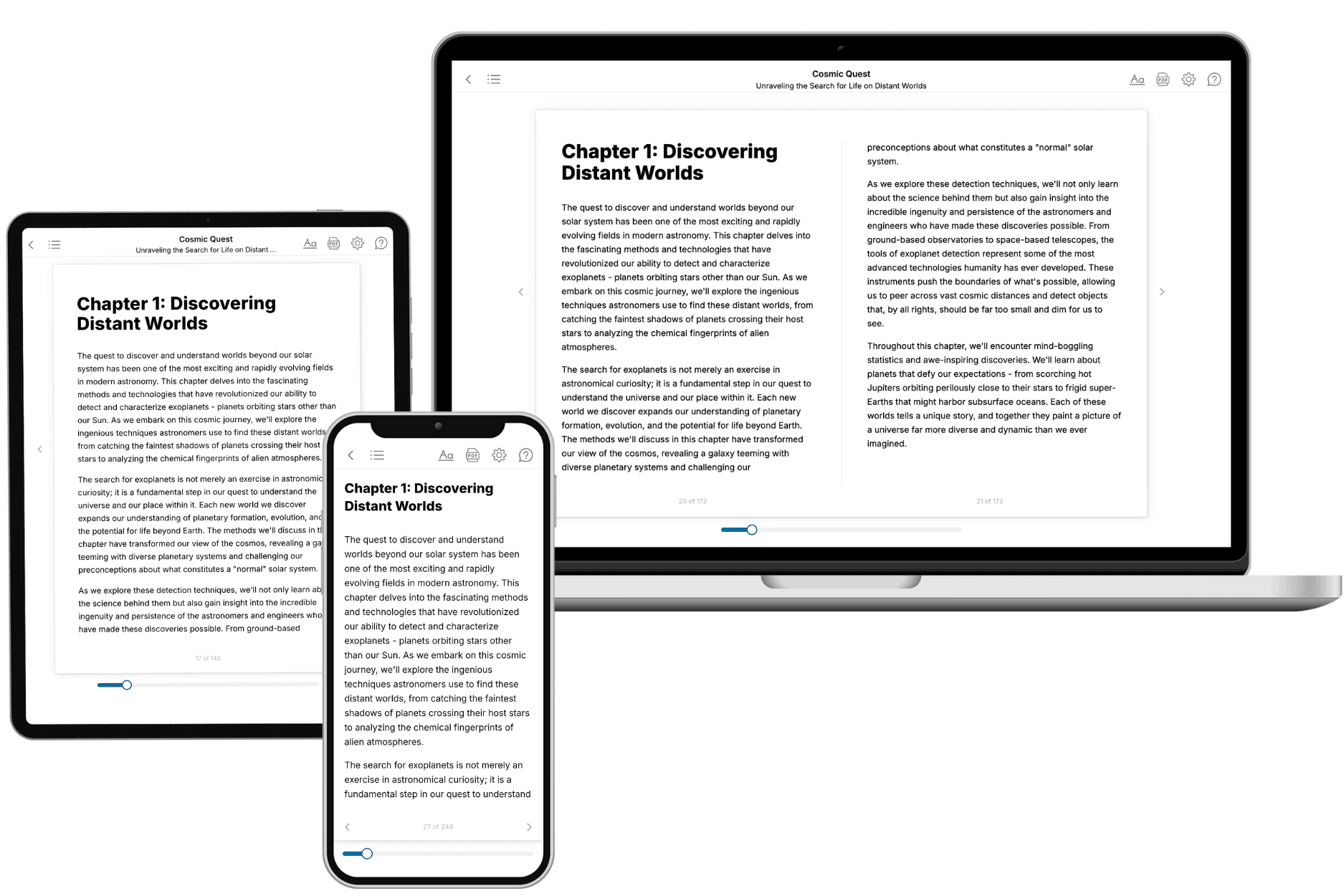
TailoredRead creates complete, full-length nonfiction ebooks, written specifically for you. Tell us what you want to learn and why, and TailoredRead writes you a complete ebook on it, with charts, tables, and diagrams throughout. Read it online, on Kindle, or on any e-reader, or download it as a PDF or EPUB. Every book is written fresh the day you order it.
- How is the book tailored to me?
Before anything is written, you answer a few short questions about your goals, your background, and the topics you care about. Your book is then planned around your answers: written at your level, focused on your goals, and covering the topics you chose, instead of the one-size-fits-all book a store sells everyone.
- Will it read like generic AI content?
No. Your book isn't a chat transcript: it's planned chapter by chapter before a single word is written, told in a clear book voice, and explains ideas visually with charts, tables, and diagrams. After writing, every book goes through an editorial pass that polishes chapters so the book reads consistent from start to finish. Judge for yourself: browse thousands of sample books on our Explore Books page.
- How accurate is the content?
Our AI first checks whether your subject needs live research. Niche and fast-moving subjects are researched before writing, and the book plan and chapters are grounded in what it finds. After writing, every book goes through a quality pass that checks its facts and consistency, and researched books list their sources in a Notes section at the back.
- How long is the book?
You choose the length: Comprehensive (250-300 pages), Detailed (150-200 pages), Essential (70-100 pages), or Short (30-50 pages).
- Does the book include visuals?
Yes. Every book includes charts, tables, and diagrams: timelines, checklists, step-by-step guides, decision trees, comparison tables, matrices, and bar charts. A typical book includes dozens of these visual elements.
- Can I read it on Kindle? What formats can I download?
Yes. Every book can be read in our online reader or downloaded as a PDF or EPUB. The EPUB can be opened with Kindle, Apple Books, Kobo, and any e-reader. The Commercial and Author licenses also include an editable Word (DOCX) and Markdown download.
- How much does it cost?
About the price of a regular ebook. The exact price depends on your book's length and complexity, from $2 for the shortest books to $35 for the most comprehensive, and it's shown when you review your book, before you commit to anything. Each book is a one-time purchase, yours to keep, no subscription. Licenses that let you share, teach, or publish your book range from $35.99 to $49.99.
- Can I preview the book before purchasing?
Before you pay, you'll see what your book will cover: the title, a detailed description, the estimated length, and the complete chapter-by-chapter table of contents, so you know what you're getting before you decide. The full text itself is written after you purchase.
- How long does it take to create a book?
About 10 minutes. You can start reading the opening chapters while the rest is still being written.