Footprints Across India
A Family Journey Through Monuments, Backwaters, and Coastal Stone
Picture a family returning home with a journal full of sketches, pressed notes, and stories that every generation contributed to.
222 pages10 chaptersNov 14, 2026India Travel Guide
About this book
This book offers a route through four very different corners of India, from the marble domes of Delhi and Agra to the palm-lined waterways of Kerala, the granite shore of Mahabalipuram, and the gardens and hills around Bengaluru. Each part explains the history behind the sites you will see, the geography that shaped them, and the culture that keeps them alive, from Mughal architecture and Pallava rock carving to filter coffee rituals and the spice trade that drew traders across centuries. Practical suggestions show how to make each stop memorable for younger travellers, whether that means sketching a dome, spotting a kingfisher at dawn, or learning a Tamil dance step. Shopping tips guide you toward handloom silks and handicrafts at local bazaars, and a simple framework helps you build a family travel journal that becomes a keepsake. Written for curious adults who enjoy understanding what they see, this book aims to make each day both educational and warmly personal.
Table of contents
- IntroductionPlanning a Four City Route Across India, Keeping Granddaughters Engaged on Every Stop, How to Use This Book on the RoadRead below
- Chapter 1: Delhi and the Architecture of EmpireWhere the Qutub Minar Came From, Reading the Design of Humayun's Tomb, Arches, Domes, and Charbagh Gardens Explained
- Chapter 2: Agra and the Symbolism of the Taj MahalWhat the Taj Mahal Was Meant to Represent, Agra Fort and the Mughal Court, Sketching Domes and Inlay With Young Artists
- Chapter 3: Kerala Backwaters and Their Living EcologyHow Lagoons, Rivers, and the Sea Meet, Vembanad Lake and Its Wetland Life, Houseboat Culture and Life on the Water
- Chapter 4: Kumarakom Bird Sanctuary and Seasonal BirdingMigratory Birds and When to Visit, Birdwatching Tools and Simple Techniques, Why Wetland Birds Need Protection
- Chapter 5: Kerala Spices, Cuisine, and the Spice TradePepper, Cardamom, and Ancient Trade Routes, Sadya, Appam, and Everyday Kerala Food, Joining a Home Kitchen or Cooking Class
- Chapter 6: Mahabalipuram and the Rock Carvings of the PallavasThe Pallava Dynasty and Its Stone Temples, Reading the Arjuna's Penance Relief, The Shore Temple and Coastal Erosion
- Chapter 7: Chennai and the Rhythms of South Indian LifeThe Filter Coffee Ritual Step by Step, Bharatanatyam and Tamil Classical Dance, Kanchipuram Silks and Handloom Traditions
- Chapter 8: Bengaluru and the Hills of NandiBengaluru's Gardens, Lakes, and Growth, Sunrise at the Nandi Hills Viewpoint, Markets and Crafts Worth Seeking Out
- Chapter 9: Understanding India's Geography Across RegionsHow Climate Shapes Each Region's Life, Languages, Festivals, and Regional Identity, Plains, Deltas, Coasts, and Plateaus
- Chapter 10: Creating a Family Travel Journal TogetherDesigning Pages for Each City, Pressed Leaves, Tickets, and Sketches, Writing Shared Stories Across Generations
- ConclusionLooking Back on the Journey Together
- Further Reading and Resources
- Glossary
Introduction
Eleven days, four cities, and roughly 2,800 kilometers of flying and driving separate the sandstone ridges of Delhi from the volcanic hills north of Bengaluru. Somewhere between those points sit a Mughal tomb built from white marble, a network of brackish lagoons where fishing families still read the tide by eye, a cluster of granite boulders carved by hand fourteen centuries ago, and a filter coffee ritual performed the same way every morning in millions of South Indian kitchens. None of these places explain themselves at first glance. A dome looks like a dome until you know why its builder chose that shape over another, and a lagoon looks like scenery until you understand that its salt level changes twice a day and decides what can live in it.
This book exists to close that gap between looking and understanding, for a family that includes a retired engineer with a doctorate, an artist, a financial analyst, and two granddaughters aged ten and thirteen. That mix of backgrounds matters. An engineer notices load-bearing arches and drainage systems. An artist notices color, proportion, and the quality of light on marble at different hours. A financial analyst notices how a bazaar prices silk or how a dynasty funded its monuments. Children notice birds, boats, and the texture of things they can touch. The chapters ahead are written to feed all four of those instincts at once, rather than picking one and leaving the rest to improvise.
The route itself is not arbitrary. Delhi and Agra form a pair built around Mughal architectural grammar, the shared design language of arches, domes, and charbagh gardens that both cities express differently. Kerala forms a second pair of chapters built around a single living system, the backwaters, where ecology, birdlife, and cuisine all trace back to the same monsoon and the same tidal rhythm. Mahabalipuram and Chennai form a third pair rooted in Tamil civilization, one carved into granite by the Pallava dynasty, the other lived daily through dance, silk, and coffee. Bengaluru and the geography chapter close the loop by stepping back to ask why these four stops feel so different from each other, a question answered by climate, landform, and language rather than coincidence.
Three practical threads run underneath all of that history and geography. The first is logistics: how to sequence four very different climates and travel styles into one trip without exhausting anyone. The second is engagement: how to keep two children, nine years apart in age, genuinely interested in a tomb, a wetland, and a rock carving rather than just photographed in front of them. The third is method: how to actually use a book like this one once you are standing in front of the thing it describes, rather than reading it only on the plane beforehand. The three subchapters that follow take up each of those threads in turn, with enough specificity to act on rather than just admire.
Planning a Four City Route Across India
India's size is easy to underestimate from a map until you try to move across it. Delhi sits in the northern plains, Agra is a short rail hop southeast of it, and both share a dry, dusty climate that swings from cold winter mornings to brutal summer heat. Kerala, by contrast, sits on the tropical southwest coast and runs on monsoon time, with heavy rain roughly from June through September and a gentler, greener window on either side of it. Chennai and Mahabalipuram sit on the opposite coast, hot and humid most of the year with their own shorter monsoon in the later months. Bengaluru, high on the Deccan plateau, is the outlier: mild, dry, and comfortable for most of the calendar. Sequencing the trip means respecting these differences rather than treating India as one climate zone.
A workable order follows the logic of the chapters themselves: Delhi and Agra first, then a flight south to Kerala, then across to Mahabalipuram and Chennai, then a final leg up to Bengaluru before departure. This order avoids backtracking and lets the family move from dry heat to coastal humidity to mild highland air in a way that feels like a gradual release rather than a shock. It also matches how the sites build on each other conceptually: Mughal architectural grammar learned in Delhi makes the Taj Mahal in Agra easier to read, and the rock-cut temple tradition in Mahabalipuram makes more sense once Chennai's living Tamil culture has supplied some context for the civilization that produced it.
Timing the Kerala leg deserves particular attention, because the backwater chapters and the Kumarakom bird sanctuary chapter both depend on season in ways that the Mughal and Pallava sites do not. Migratory birds arrive at Kumarakom roughly between November and February, drawn south along a flyway that stretches from as far as Siberia and northern Europe. Visiting in July for the scenery and arriving in December for the birds are two different trips wearing the same name. A family that wants both the lush, rain-fed green of the backwaters and a reasonable chance at migratory birdlife should lean toward the tail end of that migratory window, around January or early February, when water levels have settled and the rains have mostly passed.
Travel days themselves need honest budgeting rather than optimistic compression. Moving from Agra to Kerala involves at minimum a flight back through Delhi or a connecting hub, easily consuming a full day once transfers, security, and unpredictable delays are counted. The same is true of the Kerala-to-Chennai leg and the Chennai-to-Bengaluru leg. A common planning mistake is to treat these as free hours and schedule sightseeing immediately on arrival. A more realistic approach blocks each travel day as its own unit, with only a light activity, such as a market walk or an early dinner, attached to the evening once the family has actually landed and settled.
Budgeting roughly how many nights each stop deserves helps keep the whole itinerary honest before diving into details.
Stop Suggested Nights Why Delhi 3 Qutub Minar, Humayun's Tomb, and city orientation take real time Agra 2 Taj Mahal at two times of day, plus Agra Fort Kerala (backwaters and Kumarakom) 3 to 4 Houseboat time plus a dedicated birding morning Mahabalipuram and Chennai 3 Rock carvings, Shore Temple, and a day of Chennai culture Bengaluru 2 Nandi Hills sunrise plus city markets
Booking logistics matter most for two items: the Kerala houseboat and the Kumarakom birding morning. Houseboats, known locally by the term kettuvallam, are a finite resource during the November-to-February high season, and the better-maintained ones with knowledgeable crews are reserved weeks or months ahead rather than found on arrival. The same lead time applies to a guide for Kumarakom, since a guide who already knows which stretch of wetland is active that week saves hours of random searching. Agra's Taj Mahal, by contrast, can usually be booked closer to the date, though entry slots are capped and worth securing a few days ahead to avoid long queues in peak season.
Internal transport choices shape the texture of each leg more than most travelers expect. The Delhi-to-Agra journey is well served by a fast train that covers the distance in under two hours, turning what could be a tiring road trip into a comfortable morning ride with time to talk through what lies ahead. Longer inter-city hops, such as Kerala to Chennai, are better handled by air given the distance involved. Within each city, hiring a car with a driver for the day, rather than piecing together taxis, tends to work better for a five-person family carrying camera gear, sketchbooks, and souvenirs, and it allows spontaneous stops that a fixed-schedule tour group would not.
Weather contingencies deserve a line item of their own, especially around the monsoon-adjacent Kerala and Chennai legs. Heavy rain can delay a houseboat departure or wash out an outdoor Bharatanatyam performance, so building one flexible half-day into both the Kerala and Chennai segments gives the itinerary room to absorb a bad-weather morning without cascading delays into the rest of the trip. A flexible half-day is not wasted time if nothing goes wrong. It simply becomes a slower morning at a local market or an extra hour at a museum, which rarely disappoints anyone in the group.
Altitude and heat together make midday scheduling an important variable at the hot-weather stops. Delhi and Agra in particular can reach temperatures that make outdoor sightseeing uncomfortable between roughly noon and three in the afternoon, especially in the shoulder seasons just before or after the cooler winter months. Scheduling the Taj Mahal visit for early morning light, both for comfort and for the way sunrise changes the marble's color, and reserving midday hours for museums, meals, or hotel rest, keeps energy available for the more demanding parts of each site.
A route this varied also benefits from building in at least one full rest day with no scheduled activity, ideally placed around the midpoint of the trip, after the Kerala leg. Five people with three different travel styles and two children of different ages will accumulate fatigue unevenly, and a day with no agenda gives everyone room to recover at their own pace, write in the shared travel journal, or simply nap. Skipping this day in the name of efficiency is a common planning error that tends to show up later as short tempers rather than saved time.
Documentation and permits are worth confirming well before departure rather than at the airport. A valid visa, any required permits for specific monuments, and photocopies of passports kept separately from the originals are standard precautions, but Kerala's forest and wildlife areas around Kumarakom sometimes require a small entry fee or permit arranged through the sanctuary office, which is far easier to sort out in advance through a local operator than on the day of arrival. The checklist below gathers the planning items that most often get missed until the last minute.
Pre-Departure Route Checklist
- Book Kerala houseboat and Kumarakom guide at least six to eight weeks ahead during peak season
- Confirm Taj Mahal entry slot a few days before the Agra visit
- Reserve one flexible half-day each in the Kerala and Chennai legs for weather
- Block a full rest day after the Kerala leg
- Arrange inter-city flights for the longer hops, train for Delhi to Agra
- Hire a car with driver for each city rather than individual taxis
- Confirm any Kumarakom sanctuary permit through a local operator in advance
- Pack layers for Delhi's cooler mornings and lighter fabrics for Kerala and Chennai humidity
Finally, it helps to think of the route not as four separate vacations stitched together but as one continuous argument about India's diversity, which the geography chapter later in this book makes explicit. Each leg is chosen because it contrasts sharply with the one before it, in climate, in building material, in language, and in rhythm of daily life. Planning the trip with that contrast in mind, rather than simply chasing a list of famous sites, turns the itinerary itself into part of the lesson the family is traveling to learn.
Keeping Granddaughters Engaged on Every Stop
A ten-year-old and a thirteen-year-old process a Mughal tomb or a wetland boat ride through different lenses, and treating them as one undifferentiated unit of "the kids" tends to under-serve both. At ten, attention holds best through sensory and hands-on engagement: textures, sounds, small tasks, short bursts of explanation followed by something to do. At thirteen, there is usually enough abstract reasoning in place to follow a real historical argument, such as why a emperor built a tomb the way he did to make a political point, provided it is delivered in plain language rather than lecture style. The chapters ahead often include specific activities aimed at each of these levels, and this section explains the thinking behind them.
Sketching is one of the most reliable tools in this family's particular toolkit, given that an artist is already traveling with them. Handing both granddaughters a simple sketchbook and asking each to draw one detail per site, rather than the whole building, keeps the task achievable and personal. At Humayun's Tomb, the ten-year-old might sketch a single lattice screen pattern while the thirteen-year-old attempts the dome's proportions against the surrounding garden. The point is not artistic skill. The point is that drawing something forces close observation in a way that a photograph never does, and the resulting sketchbook pages become some of the most valuable material for the shared travel journal built later in the trip.
Short research assignments handed out the night before a site visit work better than long briefings delivered on-site. Asking the thirteen-year-old to find one fact about why the Taj Mahal is built from white marble, or the ten-year-old to find out what a kingfisher looks like before the Kumarakom boat ride, turns each child into a small expert for a few minutes the next day. This costs almost nothing in preparation time and changes the dynamic from adults explaining to children, to children contributing to a shared conversation among equals, which both age groups respond to with visible pride.
Physical engagement matters as much as intellectual framing, especially for the younger granddaughter. A rock-cut temple at Mahabalipuram invites touch in a way a glass museum case does not, since you can run a hand along chisel marks still visible in the granite after fourteen centuries. A houseboat on the backwaters offers a chance to help a crew member coil a rope or watch a fishing net come up. Looking for these small, safe, physical tasks at each stop, and asking local guides in advance whether children can participate in some minor way, converts passive sightseeing into something closer to active fieldwork.
A child who has coiled a rope on a kettuvallam remembers the backwaters differently than a child who only watched the shoreline go by.
Birdwatching at Kumarakom deserves its own pacing strategy, since young attention spans and patient, quiet waiting are natural enemies. Rather than one long still session, breaking the morning into three or four shorter stops of ten to fifteen minutes each, moving between them, keeps restlessness from building. Giving each child a small pair of binoculars sized for their hands, rather than sharing one adult pair, removes a common source of sibling friction and gives both girls genuine ownership over what they spot. A simple checklist of five or six expected species, checked off as they appear, turns the morning into something closer to a scavenger hunt than a stakeout.
Food is an underused engagement tool on a trip this rich in regional cuisine. A Kerala sadya served on a banana leaf, with its many small dishes arranged in a specific order, is as visually interesting to a child as any monument, and asking both granddaughters to guess what each dish contains before being told turns a meal into a game. The same applies to watching appam batter ferment and cook, or to a Chennai filter coffee demonstration, where the theatrical pour between two vessels naturally draws a child's attention even before anyone explains why it is done that way.
Language offers a small, low-stakes way to involve children in a place without overwhelming them. Learning five or six words in Hindi for the Delhi and Agra leg, then a different five or six in Malayalam for Kerala, and again in Tamil for Chennai and Mahabalipuram, gives both girls something concrete to practice with shopkeepers, boat crews, and hotel staff. Children often retain greeting words and numbers faster than adults do, and the pride of using a correctly pronounced local phrase tends to outlast most monument visits in memory.
Expect fatigue and manage it honestly rather than pushing through it. A ten-year-old's genuine attention span for a single historical site, however well explained, rarely exceeds ninety minutes before interest drops off sharply. Building in a planned stopping point, a snack, or a change of activity around that mark, rather than treating restlessness as a discipline problem, keeps the day pleasant for everyone. The Qutub Minar complex, for instance, offers enough separate structures that the visit can be broken into two shorter sessions with a break in between, rather than one long march through every inscription.
Giving each granddaughter a defined role within the family's shared travel journal, discussed at length in a later chapter, gives them a running project to look forward to at every stop rather than something assembled only at the end. The ten-year-old might be responsible for collecting one small object per city, a leaf, a ticket stub, a wrapper, while the thirteen-year-old takes on writing a short paragraph each evening summarizing the day in her own words. Having a defined task waiting at each site changes how a child experiences it, shifting from passive tourist to active collector.
Safety and comfort basics deserve a brief, unglamorous mention, since they quietly determine whether any of the above works at all. Sun protection, water, comfortable closed shoes for uneven rock surfaces at Mahabalipuram, and a light rain layer for Kerala's unpredictable showers all matter more on a ten-day trip with children than most adults initially plan for. A child who is sunburned, dehydrated, or wearing blistered feet will not engage with a sketchbook or a bird checklist no matter how well designed the activity is.
Group dynamics between the two age gaps can be eased by occasionally splitting the family into pairs rather than always moving as one unit of five. Pairing the thirteen-year-old with the financial analyst for a bazaar negotiation at a Chennai silk shop, while the ten-year-old and the artist sketch nearby, lets each pairing move at its own pace and avoids the common trap where the group's speed defaults to whichever member is least engaged. Rotating these pairings across the trip also gives each adult dedicated one-on-one time with each granddaughter, which tends to produce the conversations that end up written into the journal.
Finally, resist the temptation to over-schedule every waking hour in the name of making the most of the trip. Children, and honestly most adults, absorb more from a place when given unstructured time within it, a chance to wander a market stall by stall or sit by the backwater and watch a boat pass without an agenda. The chapters ahead supply plenty of structured activities, but leaving visible gaps in the daily schedule, rather than filling every slot, is itself part of keeping two curious children genuinely engaged rather than quietly worn out.
How to Use This Book on the Road
This book is built to be read twice, once before departure and once in pieces during the trip itself, and it rewards each reading differently. A first pass through the whole text at home gives the adults in particular a sense of how the chapters connect, why Mughal architectural grammar explained in Delhi matters again in Agra, or why the ecology chapter on Vembanad Lake needs to be understood before the birding chapter on Kumarakom makes full sense. That first reading does not need to be exhaustive. Skimming for the overall shape of the argument, then returning to specific chapters in depth closer to each leg of the trip, is a more realistic use of limited pre-trip time than trying to memorize everything at once.
On the road, the most useful pattern is to read a chapter's subsections the evening before visiting that site, rather than on the morning of, since fatigue and logistics tend to crowd out careful reading once a travel day is underway. Reading the Taj Mahal symbolism chapter the night before the visit, for instance, means arriving at sunrise already knowing what to look for in the inlay work and the garden's layout, rather than discovering it only after return home. This also gives the adults material to prompt the granddaughters with during the visit itself, turning passive observation into an active hunt for details the book has already flagged.
Each regional section in this book follows a consistent internal logic worth recognizing early, since it repeats across Delhi, Kerala, Mahabalipuram, and Bengaluru. A typical chapter opens with the history or formation of a site, moves into how to read its design or ecology in detail, and closes with a practical subchapter aimed at hands-on experience, whether sketching, cooking, or shopping. Knowing this pattern in advance means that if time is short on a given evening, the practical closing subchapter is usually the one worth prioritizing just before the visit, since it carries the most immediately actionable guidance.
The canonical terms used throughout the book, charbagh, pietra dura, Dravidian temple grammar, salinity gradient, flyway, and others, are gathered in the glossary at the back, and it is worth flagging that section to the whole family before departure. When a term like kettuvallam or sadya appears again two chapters after its first full explanation, the book assumes familiarity rather than repeating the definition, so a quick glossary check during a dull transit hour keeps everyone on the same page rather than guessing from context.
The book's structured elements, callouts, checklists, tables, and timelines, are placed deliberately at points where a plain paragraph would be harder to act on quickly, and they are meant to be used as field references rather than skimmed past. A checklist for a pre-departure packing list or a Kumarakom morning is designed to be glanced at from a phone screen or a printed page while standing in a hotel lobby, not studied in advance and then forgotten. Treating these elements as quick-reference tools, separate from the narrative prose around them, is the intended way to use them under real travel conditions.
Footnoted sources throughout the book point toward the scholarly and historical material behind specific claims, and they serve two different readers in this family well. The retired engineer with research instincts may want to follow a citation back to its original source for a deeper read on Mughal garden design or Pallava rock-cutting technique, and the footnotes are written to make that possible. The granddaughters, meanwhile, are unlikely to chase footnotes themselves, but the specific facts those notes support, a date, a dynasty, a named structure, are exactly the kind of concrete detail that makes a good answer when a child asks a guide "how old is this, really?"
Shopping guidance appears in several of the regional chapters rather than being gathered into one place, because recognizing a Kanchipuram silk weave or a genuine handicraft technique depends on context specific to that city's market. Reading the relevant shopping subchapter the day before visiting a bazaar, rather than relying on memory from a first read-through weeks earlier, gives the financial analyst in the family sharper tools for evaluating price and authenticity in the moment, which matters more at a crowded Chennai silk shop than it does in the abstract.
The family travel journal chapter near the end of the book is best treated as a companion document to keep running throughout the trip, not as something to read only after returning home. Several of the journal's suggested page structures, one per city, with room for sketches, pressed items, and short written reflections, work best when set up physically before the trip even begins, so that the first entry can be started on the flight to Delhi rather than retrofitted later from memory. Reading that chapter early, even though it appears late in the book's running order, is one of the few places where reading out of sequence makes practical sense.
Each city's chapters are intentionally self-contained enough that skipping ahead causes no real confusion, which matters if the family's actual itinerary departs from the book's running order for logistical reasons. A reader who, for whatever reason, visits Bengaluru before Kerala will find that the Nandi Hills chapter does not assume prior knowledge of the backwaters, even though both ultimately connect through the broader geography chapter. This structure is meant to support real-world flexibility rather than force rigid adherence to the book's table of contents.
Quiet moments during the trip, a long car ride, a delayed flight, an afternoon rest, are good opportunities to read a chapter's subsections aloud as a family rather than silently and separately. The thirteen-year-old in particular may enjoy reading a section out loud herself, which doubles as the kind of practice that builds confidence, while the ten-year-old often absorbs more from a story read aloud than from independent reading of denser historical material. This small practice, costing nothing beyond a few minutes of car time, can turn transit time that would otherwise be lost into some of the most substantive shared learning of the day.
Finally, treat this book as a tool meant to be marked up rather than preserved pristine. Dog-earing a page, underlining a fact worth repeating to a guide, or jotting a question in the margin before a site visit all make the book more useful on the road than treating it as a reference to be kept clean. A secondhand copy returned from a trip covered in notes, pressed leaves tucked between pages, and a child's doodle in a margin is, in a sense, a smaller version of the family travel journal this book eventually helps build, a record of attention paid rather than a shelf object admired from a distance.
This is the end of the free sample. The full book has 10 chapters.
Want this book written for you?
Tell us your goals and background, and get your own version of this book, tailored by AI to you.


Benefits of AI-tailored books
- Read one book, not ten:
- all the India Travel Guide knowledge you need, gathered into a single book.
- Save days of learning:
- tell us your goals, choose your topics, and the whole book is built around them.
- Learn effortlessly:
- India Travel Guide book written for your specific background and expertise.
- Understand at a glance:
- includes charts, tables, timelines, checklists, decision trees, and more.
- Stay current:
- written the day you order it, not years ago.
- Trust what you read:
- every book is checked for accuracy, with real research when your subject needs it.
Create your unique book in 3 steps
- 1. Select your focus
Select the focus of your India Travel Guide book and share your background
- 2. Personalize your book
Specify your goals and choose sub-topics to include
- 3. Get your tailored book
Your book is ready in 10 minutes. Read it online, download as EPUB or PDF, or send to Kindle.


Frequently asked questions
- What is TailoredRead?
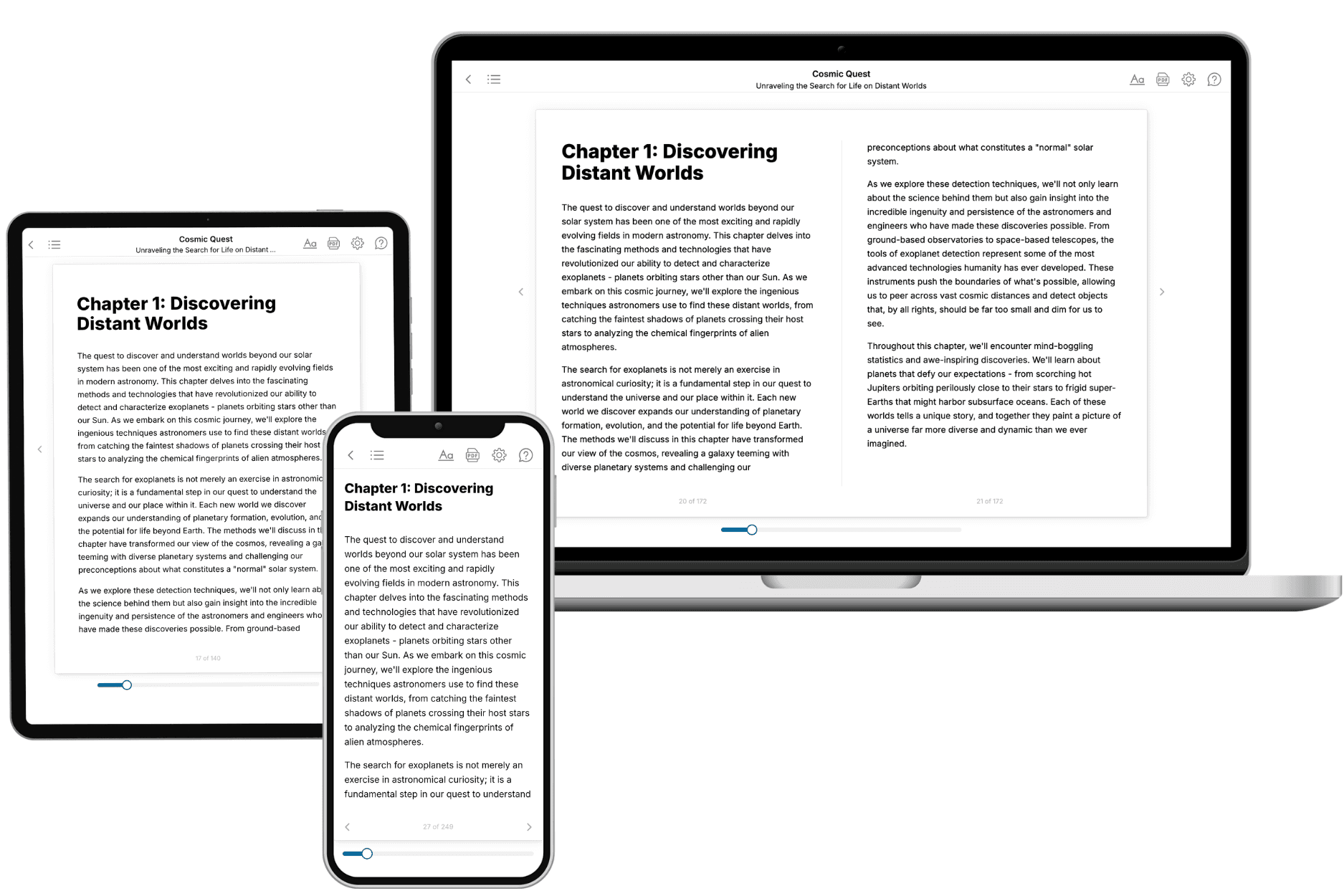
TailoredRead creates complete, full-length nonfiction ebooks, written specifically for you. Tell us what you want to learn and why, and TailoredRead writes you a complete ebook on it, with charts, tables, and diagrams throughout. Read it online, on Kindle, or on any e-reader, or download it as a PDF or EPUB. Every book is written fresh the day you order it.
- How is the book tailored to me?
Before anything is written, you answer a few short questions about your goals, your background, and the topics you care about. Your book is then planned around your answers: written at your level, focused on your goals, and covering the topics you chose, instead of the one-size-fits-all book a store sells everyone.
- Will it read like generic AI content?
No. Your book isn't a chat transcript: it's planned chapter by chapter before a single word is written, told in a clear book voice, and explains ideas visually with charts, tables, and diagrams. After writing, every book goes through an editorial pass that polishes chapters so the book reads consistent from start to finish. Judge for yourself: browse thousands of sample books on our Explore Books page.
- How accurate is the content?
Our AI first checks whether your subject needs live research. Niche and fast-moving subjects are researched before writing, and the book plan and chapters are grounded in what it finds. After writing, every book goes through a quality pass that checks its facts and consistency, and researched books list their sources in a Notes section at the back.
- How long is the book?
You choose the length: Comprehensive (250-300 pages), Detailed (150-200 pages), Essential (70-100 pages), or Short (30-50 pages).
- Does the book include visuals?
Yes. Every book includes visual elements such as timelines, checklists, step-by-step guides, decision trees, comparison tables, and matrices, and many include bar charts. A typical book includes dozens of these visual elements.
- Can I read it on Kindle? What formats can I download?
Yes. Every book can be read in our online reader or downloaded as a PDF or EPUB. The EPUB can be opened with Kindle, Apple Books, Kobo, and any e-reader. The Commercial and Author licenses also include an editable Word (DOCX) and Markdown download.
- How much does it cost?
About the price of a regular ebook. The exact price depends on your book's length and complexity, from $2 for the shortest books to $35 for the most comprehensive, and it's shown when you review your book, before you commit to anything. Each book is a one-time purchase, yours to keep, no subscription. Licenses that let you share, teach, or publish your book range from $35.99 to $49.99.
- Can I preview the book before purchasing?
Before you pay, you'll see what your book will cover: the title, a detailed description, the estimated length, and the complete chapter-by-chapter table of contents, so you know what you're getting before you decide. The full text itself is written after you purchase.
- How long does it take to create a book?
About 10 minutes. You can start reading the opening chapters while the rest is still being written.