French Adverbs Mastery
The Complete Guide to Using Adverbs Naturally and Confidently in French
Why do your French sentences still sound like direct translations from English, even when your grammar is technically correct?
238 pages11 chaptersApr 5, 2026Learning French
About this book
The missing ingredient is often adverbs—those small but mighty words that native speakers use constantly to add nuance, express frequency, describe manner, and convey attitude. This comprehensive guide demystifies French adverbs and shows you how to use them naturally in real conversations and writing. You'll discover the formation patterns that make adverbs predictable, master the placement rules that distinguish fluent speech from textbook French, and learn the colloquial expressions that native speakers actually use. Through clear explanations, practical examples, and targeted exercises, you'll move beyond memorization to genuine understanding. Whether you're preparing for exams, planning to live in a French-speaking country, or simply want to communicate with greater precision and confidence, this book provides the tools and strategies you need to integrate adverbs seamlessly into your French.
Table of contents
- IntroductionWhy Adverbs Matter in French, How to Use This Book Effectively, What You'll Achieve by the EndRead below
- Chapter 1: Understanding Adverb FundamentalsWhat Are Adverbs and Why They're Different, The Seven Main Categories of French Adverbs, Distinguishing Adverbs from Adjectives and Other Parts of Speech
- Chapter 2: Mastering Adverb FormationThe -ment Suffix: Your Primary Formation Tool, Irregular Adverbs and Exceptions, Converting Adjectives to Adverbs: Step-by-Step Process, Building Your Adverb Recognition Skills
- Chapter 3: Placement Rules That Change EverythingWhy Placement Matters: Impact on Meaning and Fluency, Adverb Placement in Simple Tenses, Adverb Placement in Compound Tenses, Common Placement Exceptions and When They Apply
- Chapter 4: Manner Adverbs: Describing How Things HappenIdentifying and Recognizing Manner Adverbs, Essential Manner Adverbs for Daily Communication, Using Manner Adverbs in Real Conversations
- Chapter 5: Frequency Adverbs: Expressing How OftenThe Frequency Spectrum: From Never to Always, Placement Rules Specific to Frequency Adverbs, Beyond Single Words: Frequency Expressions and Phrases
- Chapter 6: Time and Temporal Adverbs: Anchoring Your MessageCategories of Time Adverbs: Past, Present, and Future, Temporal Expressions and Phrases, Coordinating Time Adverbs with Verb Tenses
- Chapter 7: Degree and Intensity Adverbs: Adding EmphasisAdverbs of Degree: Very, Too, Enough, and More, Expressing Subtle Differences in Intensity, Placement and Agreement Considerations for Degree Adverbs
- Chapter 8: Affirmation, Negation, and Doubt AdverbsExpressing Certainty and Affirmation, Negation Beyond Ne...Pas: Advanced Negative Expressions, Expressing Doubt, Possibility, and Uncertainty
- Chapter 9: Colloquial Adverbs and Native Speaker ExpressionsInformal Adverbs You'll Hear in Real Conversations, Regional Variations and Colloquial Differences, Slang Adverbial Expressions and Modern Usage
- Chapter 10: Advanced Integration and Complex StructuresUsing Multiple Adverbs in a Single Sentence, Adverbs in Subjunctive Mood and Complex Clauses, Stylistic Choices: When and How to Use Adverbs Effectively
- Chapter 11: Practical Exercises and Real-World ApplicationFormation and Recognition Exercises, Placement and Sentence Construction Exercises, Conversational Scenarios and Authentic Dialogue Practice
- ConclusionRecognizing Your Progress and Building Confidence, Next Steps in Your French Learning Journey
- Glossary of Key Terms
- Further Reading and Resources
Introduction
Picture this: you're in a café in Lyon, and you want to tell your French friend that you almost missed your train this morning, that the coffee is really good, and that you rarely sleep well when you travel. You know the nouns, you know the verbs, and your grammar is solid enough to get by. But something still feels off. Your sentences come out flat, a little robotic, like you're reading from a phrasebook rather than actually talking. That gap between technically correct French and naturally flowing French is real, and it frustrates a lot of intermediate learners. The culprit, more often than not, is adverbs.
Adverbs are the small words that do enormous work. They tell you how something happened, when it occurred, how often it takes place, and how intensely something is felt. In French, they also carry a lot of cultural weight. Native speakers use adverbs constantly, layering them into sentences to express attitude, soften requests, add emphasis, and signal nuance. When you leave them out or use them incorrectly, your French can sound blunt or unnatural, even when every other word is right. Learning to use adverbs well is one of the fastest ways to close the gap between intermediate and advanced fluency.
This book was built specifically for learners at the A2 to B1 level who already have a working foundation in French grammar. You know how to conjugate verbs, you understand basic sentence structure, and you can hold a conversation. Now it's time to refine that foundation. This guide will walk you through everything from the core formation patterns that make most French adverbs predictable, to the placement rules that trip up even experienced learners, to the colloquial expressions that native speakers use every day. By the time you finish, adverbs won't feel like an afterthought. They'll feel like a natural part of how you think in French.
Why Adverbs Matter in French
French adverbs are not optional decorations. They are functional, load-bearing parts of the language that native speakers rely on to communicate precisely. Consider the difference between Il parle
(he speaks) and Il parle couramment
(he speaks fluently). Or between Elle travaille
(she works) and Elle travaille énormément
(she works enormously hard). The verb carries the basic action, but the adverb carries the meaning that actually matters in context. Without adverbs, you're communicating in outlines. With them, you're communicating in full sentences.
One of the most important things to understand about French adverbs is that they behave differently from their English counterparts in several key ways. In English, adverbs are fairly flexible in terms of placement. You can say "He quickly ran" or "He ran quickly" and both sound natural. In French, placement is much more rule-governed, and putting an adverb in the wrong position can sound awkward or even change the meaning of the sentence entirely. This is one of the main reasons why learners who translate directly from English often produce sentences that feel slightly off to native ears.
Research in second language acquisition consistently shows that learners who develop strong adverb use tend to score higher on fluency assessments, not because adverbs are inherently impressive, but because they signal that the speaker has internalized the rhythm and structure of the target language.[1] When you use pourtant
(however/yet) correctly in a sentence, or drop in a well-placed quand même
(all the same/still), you're not just adding a word. You're demonstrating that you understand how French thought is organized.
Adverbs also play a critical role in politeness and register. French has a rich system of social registers, from formal written language to casual spoken slang, and adverbs shift significantly across those registers. The word vraiment
(really/truly) is appropriate in almost any context. But vachement
(a colloquial intensifier meaning "really" or "very") belongs firmly in informal conversation. Knowing which adverb to use in which context is a mark of genuine fluency, and it's something this book addresses directly.
Think about how often you use adverbs in your native language without even noticing. You say "probably," "quickly," "never," "just," "already," "still," and dozens of others every single day. French speakers do the same. Words like déjà
(already), encore
(still/again), toujours
(always/still), and peut-être
(maybe) appear in virtually every conversation. If you're not using them, you're missing a huge portion of how the language actually works in practice.
The good news is that French adverbs are far more systematic than they might appear at first. The majority of them follow a clear formation pattern using the -ment suffix, which is the French equivalent of the English "-ly" ending. Once you understand that pattern and its exceptions, you can recognize and form hundreds of adverbs with confidence. The chapters ahead will break all of this down step by step, starting with the fundamentals and building toward more complex, nuanced usage.
Beyond grammar, adverbs matter because they make your French more human. Language is not just about conveying information. It's about expressing personality, attitude, and connection. When you say franchement
(frankly) before sharing an opinion, or heureusement
(fortunately) when recounting a near-miss, you're not just adding words. You're adding yourself to the sentence. That's what this book is ultimately about: helping you sound less like a grammar exercise and more like a person.
How to Use This Book Effectively
This book is designed to be read in order, at least for the first pass. The chapters build on each other in a deliberate sequence. You'll start with the fundamentals of what adverbs are and how they're categorized, then move into formation patterns, placement rules, and specific adverb types. Later chapters deal with more advanced integration and real-world application. If you skip ahead to, say, the chapter on colloquial adverbs without understanding placement rules first, some of the examples and explanations won't make as much sense.
That said, this book is also designed to be a reference you return to. Once you've read through it once, you can dip back into specific chapters whenever you need a refresher. The chapter on frequency adverbs, for example, is a useful standalone reference when you're preparing for a conversation or writing task that involves talking about routines and habits. Each chapter is structured to be self-contained enough to work as a reference while still connecting to the broader system.
Here's a practical approach to getting the most out of each chapter:
- Read actively, not passively. When you encounter an example sentence, say it out loud. French is a spoken language, and adverbs have rhythm and stress patterns that you can only internalize by hearing and producing them.
- Write your own examples. After each section, try to write two or three sentences using the adverbs or patterns you just learned. Use situations from your own life to make the examples memorable.
- Notice adverbs in the wild. As you read French articles, watch French films, or listen to French podcasts, actively look for the adverbs you've studied. Recognition in context is one of the fastest ways to move from knowing a rule to using it naturally.
- Do the exercises in Chapter 11. The practical exercises chapter is not optional. It's where the learning gets consolidated. Even if you feel confident after reading a chapter, the exercises will reveal gaps you didn't know you had.
- Review the glossary. The glossary at the back of the book is a quick-reference tool for key terms. Use it when you encounter a grammatical term you're not sure about.
One of the most common mistakes language learners make is treating a grammar book as something to read once and then set aside. The learners who make the fastest progress are the ones who return to their resources repeatedly, each time with more context and experience to make the material click in new ways. Plan to revisit sections of this book as your French develops. What feels abstract now will feel obvious in three months, and what feels obvious now will reveal new layers of nuance later.
The examples in this book are drawn from real French usage, including everyday conversation, written French, and authentic media. Some examples are simplified for clarity, but none are invented purely for grammatical convenience. The goal throughout is to show you French as it is actually used, not as a theoretical system that exists only in textbooks. When you see a sentence like Il a vachement bien joué
(He played really well), that's the kind of thing you'd genuinely hear from a French speaker watching a football match.
You'll also notice that this book frequently contrasts correct and incorrect usage. These contrast examples are marked clearly and are meant to help you understand not just what to do, but why certain constructions feel wrong to native speakers. Understanding the "why" behind a rule makes it much easier to apply correctly in new situations, rather than just memorizing a pattern that you might misapply later.
A note on French spelling and accents: Throughout this book, all French words are written with their correct accents and diacritical marks. These marks are not optional in French. They affect pronunciation and sometimes meaning. For example,
oumeans "or," whileoùmeans "where." Make sure your devices and writing tools support French characters, and practice writing accents correctly from the start.
Finally, be patient with yourself. Adverbs are one of those areas of French where the rules are clear but the application takes time. You might understand the placement rule for compound tenses perfectly and still hesitate when you're mid-sentence in a real conversation. That's completely normal. The goal is not instant perfection. It's gradual, consistent improvement that eventually becomes automatic. Every chapter you work through, every exercise you complete, and every French sentence you produce is moving you in the right direction.
What You'll Achieve by the End
By the time you reach the conclusion of this book, you will have built a comprehensive, practical understanding of French adverbs that goes well beyond memorizing a list of words. You'll understand the system behind adverb formation, the logic behind placement rules, and the contextual judgment required to choose the right adverb for the right moment. More importantly, you'll have practiced applying all of this in realistic scenarios, which means the knowledge won't just sit in your head. It will be available to you when you actually need it.
Here's a concrete picture of what you'll be able to do after working through this book:
- Form adverbs from adjectives using the -ment suffix and handle the most common irregular forms without hesitation
- Place adverbs correctly in both simple and compound tenses, including the tricky cases that trip up most intermediate learners
- Use frequency adverbs like
souvent
,rarement
,parfois
, andtoujours
naturally in conversation and writing - Express time relationships accurately using temporal adverbs and coordinate them with the correct verb tenses
- Add emphasis and nuance with degree adverbs like
très
,trop
,assez
,tellement
, andsi
- Navigate negation beyond the basic
ne...pas
structure, using expressions likene...jamais
,ne...plus
, andne...guère
- Recognize and use colloquial adverbs and expressions that native speakers use in everyday speech
- Combine multiple adverbs in a single sentence without creating awkward or grammatically incorrect constructions
These are not abstract goals. They are specific, measurable skills that will make a real difference in how you communicate in French. If you're preparing for a DELF or DALF exam, strong adverb use will improve your scores on both the written and oral production sections.[2] If you're planning to live or work in a French-speaking environment, the colloquial adverbs and natural placement patterns you'll learn here will help you connect with people more authentically. And if you're simply learning French for the love of the language, mastering adverbs will give you a new level of expressive power that makes the whole experience more rewarding.
It's worth being honest about what this book won't do on its own. Reading about adverbs is not the same as using them. No book can replace the experience of actually speaking French, making mistakes, getting feedback, and trying again. This guide gives you the knowledge and the frameworks, but you have to supply the practice. The more you engage with real French, whether through conversation partners, French media, journaling in French, or language exchange apps, the faster the material in this book will become second nature.
Think of this book as a map. A good map shows you the terrain clearly, marks the important landmarks, and helps you plan your route. But the map doesn't walk the road for you. You do that. What this book promises is that the map is accurate, detailed, and practical enough to actually get you where you want to go. The destination is French that sounds natural, feels confident, and expresses exactly what you mean.
One of the most encouraging things about reaching the intermediate level in French is that you're already past the hardest part. The foundational work is done. You have the structure. Now you're adding the texture, the color, and the precision that turn functional French into fluent French. Adverbs are a huge part of that texture. They're the difference between a sentence that communicates and a sentence that resonates.
The journey through this book will take you from understanding what adverbs are and how they're built, all the way to using them confidently in complex sentences and real conversations. Along the way, you'll encounter plenty of examples, clear explanations, and practical exercises designed to make the learning stick. Some sections will feel immediately useful. Others will challenge you to think about French in new ways. Both kinds of learning are valuable, and both are waiting for you in the chapters ahead.
So let's get started. The first step is understanding what adverbs actually are and why they work the way they do in French. That's exactly where Chapter 1 begins.
This is the end of the free sample. The full book has 11 chapters.
Want this book written for you?
Tell us your goals and background, and get your own version of this book, tailored by AI to you.


Benefits of AI-tailored books
- Read one book, not ten:
- all the Learning French knowledge you need, gathered into a single book.
- Save days of learning:
- tell us your goals, choose your topics, and the whole book is built around them.
- Learn effortlessly:
- Learning French book written for your specific background and expertise.
- Understand at a glance:
- includes charts, tables, timelines, checklists, decision trees, and more.
- Stay current:
- written the day you order it, not years ago.
- Trust what you read:
- every book is checked for accuracy, with real research when your subject needs it.
Create your unique book in 3 steps
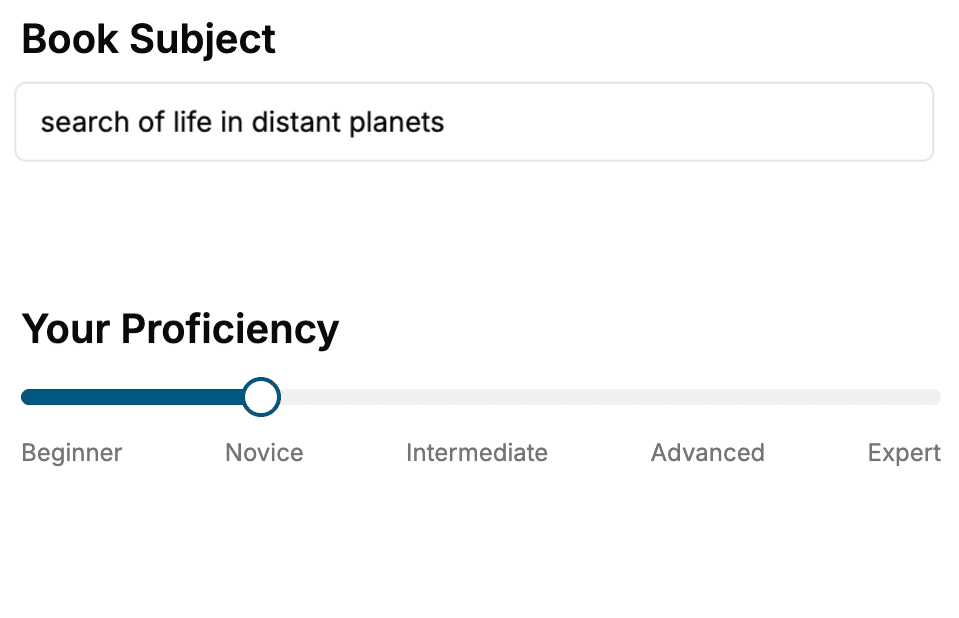
- 1. Select your focus
Select the focus of your Learning French book and share your background
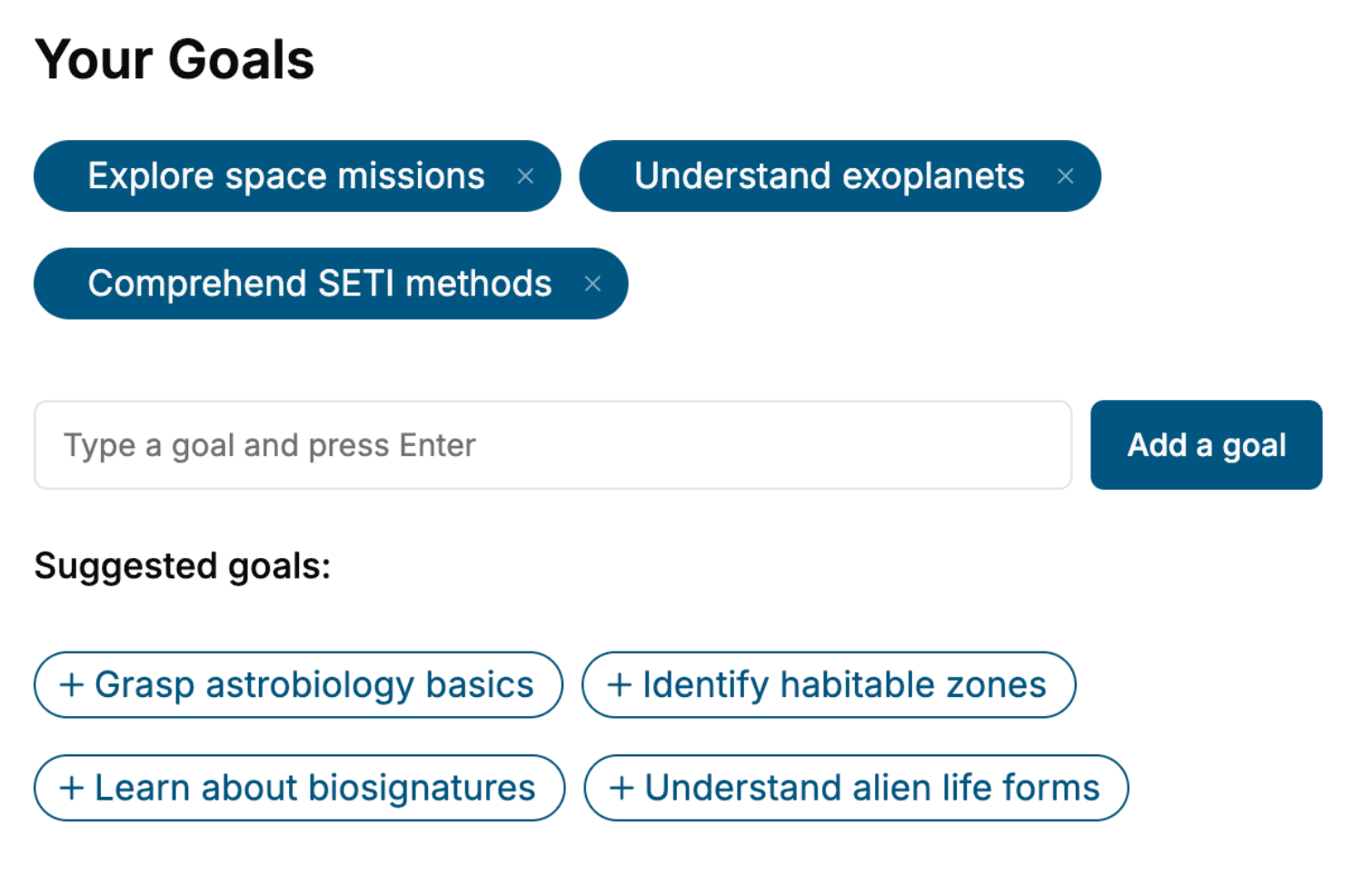
- 2. Personalize your book
Specify your goals and choose sub-topics to include
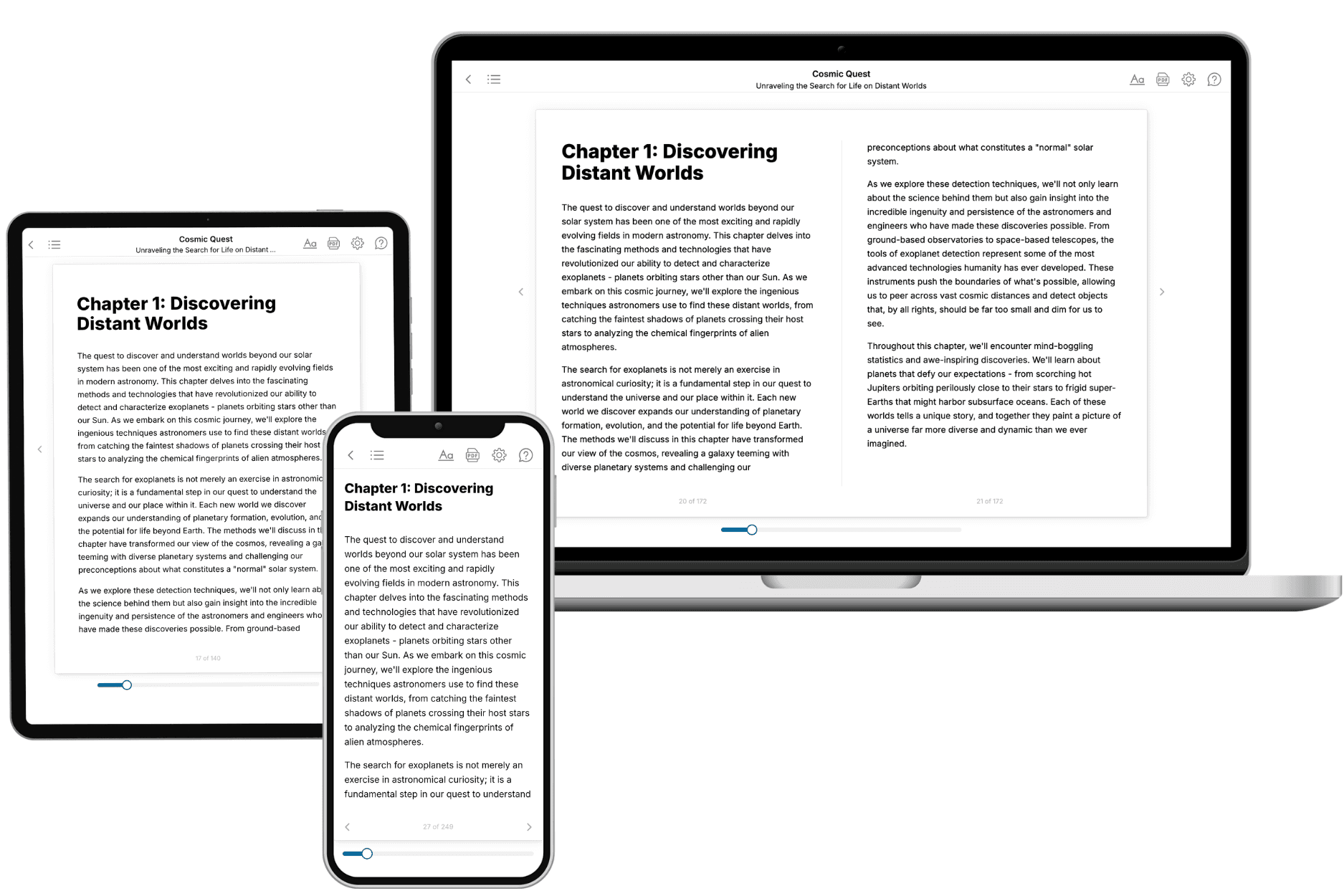
- 3. Get your tailored book
Your book is ready in 10 minutes. Read it online, download as EPUB or PDF, or send to Kindle.
Frequently asked questions
- What is TailoredRead?
TailoredRead creates complete, full-length nonfiction ebooks, written specifically for you. Tell us what you want to learn and why, and TailoredRead writes you a complete ebook on it, with charts, tables, and diagrams throughout. Read it online, on Kindle, or on any e-reader, or download it as a PDF or EPUB. Every book is written fresh the day you order it.
- How is the book tailored to me?
Before anything is written, you answer a few short questions about your goals, your background, and the topics you care about. Your book is then planned around your answers: written at your level, focused on your goals, and covering the topics you chose, instead of the one-size-fits-all book a store sells everyone.
- Will it read like generic AI content?
No. Your book isn't a chat transcript: it's planned chapter by chapter before a single word is written, told in a clear book voice, and explains ideas visually with charts, tables, and diagrams. After writing, every book goes through an editorial pass that polishes chapters so the book reads consistent from start to finish. Judge for yourself: browse thousands of sample books on our Explore Books page.
- How accurate is the content?
Our AI first checks whether your subject needs live research. Niche and fast-moving subjects are researched before writing, and the book plan and chapters are grounded in what it finds. After writing, every book goes through a quality pass that checks its facts and consistency, and researched books list their sources in a Notes section at the back.
- How long is the book?
You choose the length: Comprehensive (250-300 pages), Detailed (150-200 pages), Essential (70-100 pages), or Short (30-50 pages).
- Does the book include visuals?
Yes. Every book includes visual elements such as timelines, checklists, step-by-step guides, decision trees, comparison tables, and matrices, and many include bar charts. A typical book includes dozens of these visual elements.
- Can I read it on Kindle? What formats can I download?
Yes. Every book can be read in our online reader or downloaded as a PDF or EPUB. The EPUB can be opened with Kindle, Apple Books, Kobo, and any e-reader. The Commercial and Author licenses also include an editable Word (DOCX) and Markdown download.
- How much does it cost?
About the price of a regular ebook. The exact price depends on your book's length and complexity, from $2 for the shortest books to $35 for the most comprehensive, and it's shown when you review your book, before you commit to anything. Each book is a one-time purchase, yours to keep, no subscription. Licenses that let you share, teach, or publish your book range from $35.99 to $49.99.
- Can I preview the book before purchasing?
Before you pay, you'll see what your book will cover: the title, a detailed description, the estimated length, and the complete chapter-by-chapter table of contents, so you know what you're getting before you decide. The full text itself is written after you purchase.
- How long does it take to create a book?
About 10 minutes. You can start reading the opening chapters while the rest is still being written.