French Literature: A Gateway to Language and Culture
Master French Through the Masterpieces That Shaped a Nation
Many French learners hit a plateau where textbooks no longer challenge them, yet authentic French literature feels impossibly difficult.
238 pages11 chaptersAug 17, 2026Literature
About this book
This gap between classroom French and real-world reading is where most learners stall. This book bridges that gap by introducing you to French literature as a dynamic language-learning tool, not just a cultural artifact. You'll discover how reading French masterpieces—from medieval poetry to contemporary novels—accelerates your language acquisition while immersing you in the cultural contexts that give French its meaning. Each chapter guides you through specific literary periods and works, building your confidence with strategic reading techniques, historical context, and vocabulary scaffolding. You'll learn why French authors matter, how their ideas shaped modern thought, and how their language choices reflect deeper cultural values. Whether you're preparing for advanced French studies, seeking cultural enrichment, or simply wanting to read French literature with genuine understanding, this book provides the roadmap to transform literature from an intimidating challenge into your most rewarding learning resource.
Table of contents
- IntroductionWhy French Literature Matters for Language Learners, How to Use This Book Effectively, Essential Reading Strategies for French TextsRead below
- Chapter 1: The Foundations: Medieval and Renaissance French LiteratureThe Medieval Period and Language Evolution, Courtly Love Poetry and Early French Expression, The Renaissance: Humanism and Literary Innovation
- Chapter 2: The Classical Age: Order, Reason, and EloquenceClassical Principles and Literary Rules, Molière and the Art of Comedic Language, Racine and the Psychology of Tragic Speech
- Chapter 3: The Enlightenment: Philosophy Meets LiteratureEnlightenment Values and Intellectual Discourse, Voltaire's Wit: Satire as a Language Tool, Rousseau and the Language of Emotion
- Chapter 4: Romanticism: Passion, Nature, and Individual VoiceThe Romantic Revolution in French Literature, Victor Hugo: Epic Narratives and Social Conscience, George Sand and Honoré de Balzac: Realism Emerges
- Chapter 5: Realism and Naturalism: The World as It IsRealist Principles and Detailed Observation, Flaubert's Precision: Perfecting Prose Style, Zola and Naturalism: Science Meets Fiction
- Chapter 6: Symbolism and Decadence: Language as ArtSymbolist Aesthetics and Poetic Language, Baudelaire and Rimbaud: Poetry's Transformation, Mallarmé and the Limits of Language
- Chapter 7: The Twentieth Century: Modernism and ExperimentationBreaking with Tradition: The Modernist Impulse, Proust and the Stream of Consciousness, Gide, Sartre, and Camus: Existential Voices
- Chapter 8: Contemporary French Literature: Voices of TodayPostmodern Perspectives and Narrative Innovation, Women Writers and Diverse Perspectives, Contemporary Themes and Global Influences
- Chapter 9: Practical Techniques: Reading French Literature with ConfidenceSelecting Texts Appropriate to Your Level, Annotation and Note-Taking Strategies, Building Vocabulary Through Literary Reading
- Chapter 10: Literary Analysis: Understanding Deeper MeaningsNarrative Techniques and Point of View, Symbolism, Metaphor, and Thematic Analysis, Connecting Literature to Historical and Cultural Context
- Chapter 11: Building Your French Literary JourneyCreating a Personalized Reading Plan, Essential Resources and Tools for Literary Learners, Engaging with French Literary Communities
- Conclusion: Literature as Your Path ForwardThe Transformation That Awaits
- Glossary of Literary Terms
- Further Reading and Recommended Works
Introduction
Picture a learner who has finished every exercise in a French textbook, mastered the subjunctive, and can order coffee in Lyon without hesitation. That same learner opens Albert Camus's L'Étranger and stalls on the second page. The sentences are shorter than expected, yet something about the rhythm and the flat, detached voice feels foreign in a way that ordering a croissant never did. This moment, hitting a wall despite years of solid classroom preparation, is one of the most common experiences among intermediate French learners.
The gap between textbook French and literary French is not a sign of failure. It exists because textbooks are built to teach grammar efficiently, while literature is built to capture thought, emotion, and cultural memory. Textbooks simplify language so it can be taught in manageable steps. Novels, poems, and plays do the opposite: they compress history, philosophy, and personality into sentences that reward patience rather than speed. Closing that gap is the entire purpose of this book.
This book moves chronologically through the movements that shaped French literary expression, from Old French epic poetry through the Middle French courtly tradition, into the Renaissance, the Classical Age, the Enlightenment, Romanticism, Realism, Symbolism, Modernism, and the diverse Francophone voices writing today. Each period changed not just what French writers said but how French itself could be used: which words carried weight, which sentence shapes felt natural, which ideas were even sayable. Watching that evolution unfold gives a far deeper sense of the language than any single grammar rule.
Later sections of the book turn from history toward practice, offering concrete tools for selecting texts, annotating them, building vocabulary, and analyzing themes and narrative technique. This introduction sets the foundation for all of that work. It explains why literature deserves a central place in a language-learning routine, how the chapters ahead are structured so the material serves you rather than overwhelms you, and which reading strategies will make even a dense nineteenth-century paragraph feel approachable from the very first page.
Why French Literature Matters for Language Learners
Textbooks are designed around frequency and simplicity. They teach the five hundred most common verbs, the tenses you need for daily conversation, and dialogues about renting apartments or asking for directions. This is necessary groundwork, but it produces a narrow, functional French. Literature does something textbooks cannot: it shows French being used at full strength, shaped by writers who chose every word for effect rather than for pedagogical convenience.
Consider the difference between a textbook sentence like Je vais au marché tous les samedis
and a line from Gustave Flaubert, where a single comma placement changes the emotional weight of an entire paragraph. Textbook French teaches you to communicate. Literary French teaches you to notice, and noticing is what eventually lets you understand native speakers who joke, exaggerate, or speak in half-finished thoughts.
Literature also delivers grammar in context rather than in isolation. A student can memorize the rules for the passé simple from a grammar table, yet that tense feels abstract until it appears in a Victor Hugo narration describing a battle or a betrayal. Seeing a structure carry real dramatic weight makes it stick in memory far longer than a fill-in-the-blank worksheet ever could.
Language researcher Stephen Krashen argued that learners advance fastest when exposed to input slightly beyond their current level, material that stretches comprehension without overwhelming it entirely.[1] Carefully chosen literary excerpts sit exactly in that zone for a B1 or B2 reader: challenging enough to teach something new, structured enough to stay comprehensible with the right support.
Beyond language mechanics, literature carries the values and conflicts that shaped French society. Molière's comedies mock hypocrisy among the wealthy. Voltaire's satire attacks religious intolerance and rigid authority. Camus's fiction wrestles with meaning in an indifferent universe. Reading these works is not a detour from language learning, it is a direct route into the assumptions and debates that still shape French conversation, journalism, and humor today.
There is also a retention advantage that comes from emotional engagement. A vocabulary list of fifty random words fades within days. A single word encountered inside a scene that made you feel something, tension in a courtroom drama, heartbreak in a Romantic poem, tends to stay lodged in memory for years. Literature turns vocabulary acquisition from a memorization task into an emotional experience.
The universal themes running through French literature, love, justice, identity, and freedom, also give you an immediate emotional foothold in unfamiliar material. You may never have lived in seventeenth-century Paris, but you have felt jealousy, ambition, or grief. That shared human ground makes it possible to follow a plot and absorb new language simultaneously, even when a text is centuries old.
Finally, literature builds a kind of confidence that textbooks rarely offer. Finishing a chapter of a real French novel, even slowly and with a dictionary nearby, proves that you can engage with authentic material written for native speakers. That proof matters more than another completed workbook page, because it shows you what fluency actually feels like in practice.
None of this requires starting with the hardest, densest classics. The chapters ahead introduce accessible entry points within each literary period, so the benefits described here are available at your current level, not just at some distant future stage of mastery.
How to Use This Book Effectively
This book is organized in three parts. The first spans the chapters covering medieval literature through contemporary Francophone writing, tracing how French literary style evolved across roughly nine centuries. The second part shifts to practical skills: choosing appropriate texts, annotating them, and building vocabulary through reading. The third part covers literary analysis techniques and helps you design a long-term personalized reading plan.
Reading the historical chapters in order is recommended, even if a later period interests you more than an earlier one. French literary style did not appear fully formed. The precise, restrained sentences of the Classical Age exist partly as a reaction against looser medieval storytelling, and Romantic writers later rebelled against exactly that classical restraint. Understanding each reaction requires knowing what came before it.
That said, this structure is a guide, not a locked sequence. If you already feel drawn to Symbolist poetry or twentieth-century existentialist fiction, nothing prevents you from reading that chapter first and circling back to the medieval material afterward. The chronological order simply maximizes context, it does not gatekeep access.
Each historical chapter follows a consistent pattern to keep the material predictable and usable. It opens with the cultural and historical background of the period, then narrows into two or three representative authors, and finally connects their language choices to specific reading skills. A chapter on the Enlightenment, for instance, pairs Voltaire's satirical style with a discussion of how irony functions grammatically in French, then offers an annotated excerpt so you can see the technique in action.
Treat the annotated excerpts as worked examples rather than as tests. When a passage from Marcel Proust or Victor Hugo appears with margin notes explaining a difficult construction, read the note first if needed. The goal is comprehension and pattern recognition, not proving you can decode a sentence unaided on the first attempt.
Pairing each excerpt with a full translation or a parallel-text edition of the source work is strongly recommended, especially in the early chapters. Reading a paragraph in French, then immediately checking it against an English version, builds the kind of mental bridge that makes the next similar paragraph easier to parse without help.
A short checklist can keep each chapter productive:
- Read the historical context section first, even if you are eager to reach the text itself.
- Read the excerpt once for general sense, without stopping for every unfamiliar word.
- Read it a second time slowly, using margin notes and any provided vocabulary support.
- Note two or three phrases or structures you want to remember, rather than trying to retain everything.
Many learners feel intimidated the first time they see a page from a nineteenth-century novel, dense with subordinate clauses and unfamiliar vocabulary. That reaction is normal and does not indicate you are unprepared. The chapter dedicated to selecting texts appropriate to your level offers a graded approach, starting with shorter, more accessible works and building toward denser prose, so difficulty increases gradually rather than all at once.
Progress through this book at whatever pace keeps reading enjoyable rather than exhausting. Some readers move through a chapter in a single sitting, others spend a week with one author before moving forward. Both approaches work, because the measure of success here is sustained engagement with French literature, not speed through the table of contents.
Essential Reading Strategies for French Texts
Before opening any literary excerpt, spend a moment on what could be called pre-reading. Note the author, the approximate date, and the literary movement it belongs to. Knowing that a text comes from the Classical Age signals long, balanced sentences and formal vocabulary. Knowing it comes from twentieth-century Modernism signals the opposite: fragmented syntax and shifting points of view. This context primes your brain for the kind of sentence structures you are about to meet.
Once inside the text, resist the instinct to stop at every unfamiliar word. A far more useful first pass is reading for gist, letting context clues suggest meaning rather than reaching for a dictionary immediately. If a sentence describes someone tremblant de peur, le visage pâle,
the unfamiliar verb nearby is almost certainly connected to fear or distress, even without a dictionary confirming it.
Extensive reading research supports this approach directly. Scholars Richard Day and Julian Bamford found that learners who read large volumes of accessible text, tolerating some ambiguity rather than checking every word, built vocabulary and reading speed faster than those who stopped constantly for lookups.[2] A practical rule of thumb is limiting dictionary use to five or six words per page during a first read.
After that first gist pass, a second, slower pass rewards close attention. This is the moment to look up the words that seemed important to the plot or emotional tone, and to notice sentence structures that felt unfamiliar. Active annotation, underlining, margin notes, and short reactions in the margin, turns this second pass from passive rereading into genuine study, a technique explored in far more depth in the chapter on annotation methods.
Long or unusually shaped sentences deserve a specific technique: chunking. Rather than trying to hold an entire Proustian sentence of eighty words in mind at once, break it into smaller clauses separated by commas or conjunctions, and process each chunk before connecting it to the next. Alexandrine verse from the Classical Age benefits from the same approach, read line by line, respecting the natural pause partway through each twelve-syllable line rather than rushing to the end.
Archaic vocabulary from Old French or Middle French texts calls for a different troubleshooting approach than modern prose does. Rather than treating every unfamiliar medieval word as a vocabulary gap to fill immediately, lean on modern French cognates and the surrounding narrative, since medieval poetry was often composed to be understood by listening audiences without footnotes. A modern glossed edition, common for texts like early chansons de geste, is worth seeking out specifically for this period.
Audio versions of literary texts offer an underused strategy at every level. Listening to a professionally recorded reading of a Baudelaire poem while following the printed text trains your ear to the rhythm of French sentences, something silent reading alone cannot fully teach. Free public-domain recordings exist for many classic works, making this strategy accessible without additional cost.
A short worked example illustrates how these strategies combine in practice. Faced with the opening line of Camus's L'Étranger, Aujourd'hui, maman est morte,
a first pass confirms the basic fact: a mother has died. A second, closer pass raises a question a native reader would also ask: why does the narrator use the childlike maman rather than the more formal ma mère in such a serious sentence? That question, not a vocabulary gap, is the real entry point into the novel's tone.
Keep a running reading log noting difficult passages, recurring vocabulary, and questions that arise during reading, a habit developed further in the chapters on annotation and personalized reading plans. Reviewing that log periodically turns scattered reading sessions into a cumulative record of genuine progress, showing concretely how much easier a Balzac paragraph becomes after several months of consistent practice.
These strategies apply to every chapter that follows, but their value compounds most clearly once you meet the earliest French texts, where language itself was still settling into the form modern readers recognize. The next chapter turns to that formative period, tracing how Old French poetry and courtly storytelling laid the groundwork for everything discussed here.
This is the end of the free sample. The full book has 11 chapters.
Want this book written for you?
Tell us your goals and background, and get your own version of this book, tailored by AI to you.


Benefits of AI-tailored books
- Read one book, not ten:
- all the Literature knowledge you need, gathered into a single book.
- Save days of learning:
- tell us your goals, choose your topics, and the whole book is built around them.
- Learn effortlessly:
- Literature book written for your specific background and expertise.
- Understand at a glance:
- includes charts, tables, timelines, checklists, decision trees, and more.
- Stay current:
- written the day you order it, not years ago.
- Trust what you read:
- every book is checked for accuracy, with real research when your subject needs it.
Create your unique book in 3 steps
- 1. Select your focus
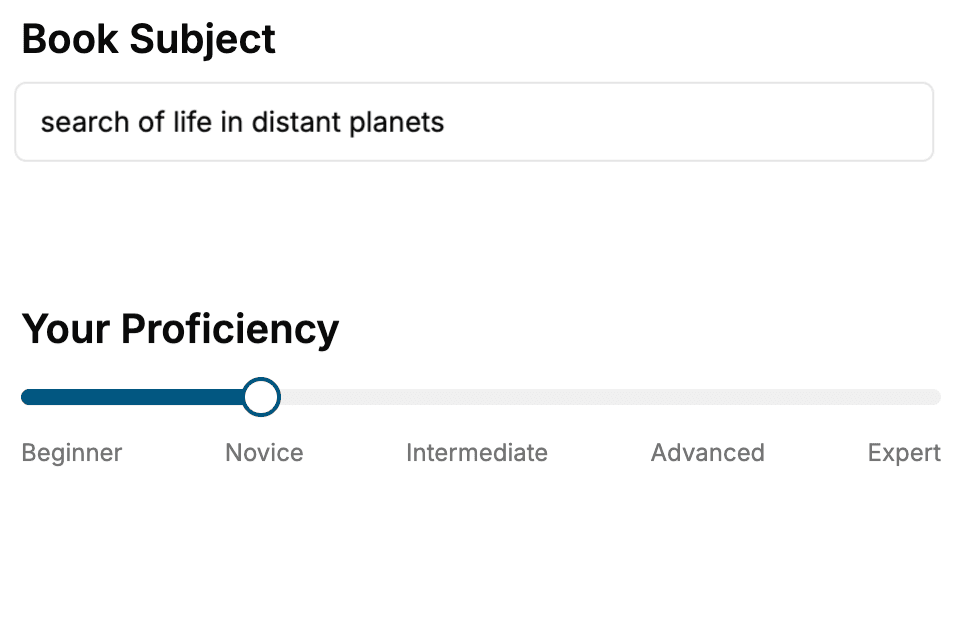
Select the focus of your Literature book and share your background
- 2. Personalize your book
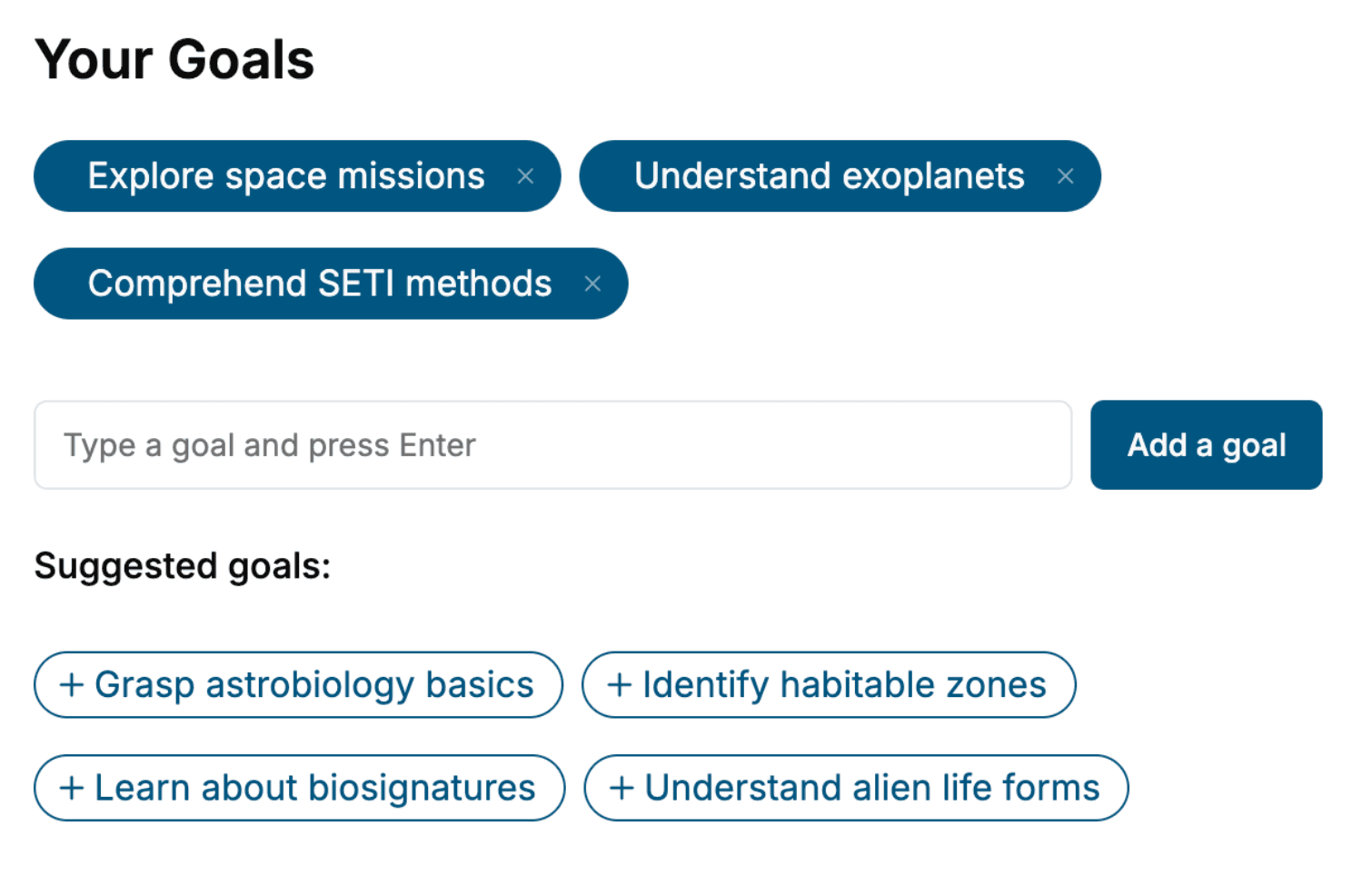
Specify your goals and choose sub-topics to include
- 3. Get your tailored book
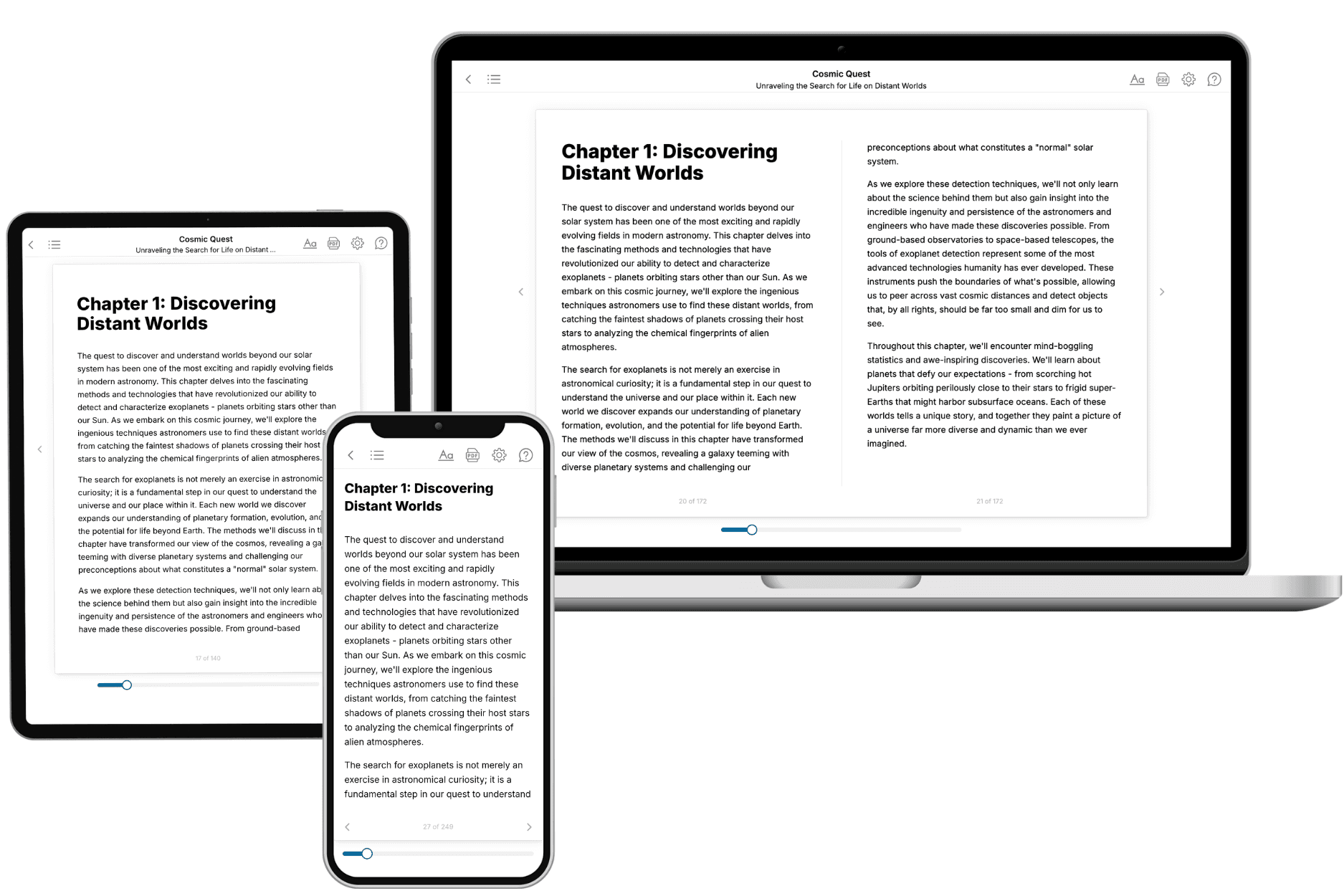
Your book is ready in 10 minutes. Read it online, download as EPUB or PDF, or send to Kindle.
Frequently asked questions
- What is TailoredRead?
TailoredRead creates complete, full-length nonfiction ebooks, written specifically for you. Tell us what you want to learn and why, and TailoredRead writes you a complete ebook on it, with charts, tables, and diagrams throughout. Read it online, on Kindle, or on any e-reader, or download it as a PDF or EPUB. Every book is written fresh the day you order it.
- How is the book tailored to me?
Before anything is written, you answer a few short questions about your goals, your background, and the topics you care about. Your book is then planned around your answers: written at your level, focused on your goals, and covering the topics you chose, instead of the one-size-fits-all book a store sells everyone.
- Will it read like generic AI content?
No. Your book isn't a chat transcript: it's planned chapter by chapter before a single word is written, told in a clear book voice, and explains ideas visually with charts, tables, and diagrams. After writing, every book goes through an editorial pass that polishes chapters so the book reads consistent from start to finish. Judge for yourself: browse thousands of sample books on our Explore Books page.
- How accurate is the content?
Our AI first checks whether your subject needs live research. Niche and fast-moving subjects are researched before writing, and the book plan and chapters are grounded in what it finds. After writing, every book goes through a quality pass that checks its facts and consistency, and researched books list their sources in a Notes section at the back.
- How long is the book?
You choose the length: Comprehensive (250-300 pages), Detailed (150-200 pages), Essential (70-100 pages), or Short (30-50 pages).
- Does the book include visuals?
Yes. Every book includes charts, tables, and diagrams: timelines, checklists, step-by-step guides, decision trees, comparison tables, matrices, and bar charts. A typical book includes dozens of these visual elements.
- Can I read it on Kindle? What formats can I download?
Yes. Every book can be read in our online reader or downloaded as a PDF or EPUB. The EPUB can be opened with Kindle, Apple Books, Kobo, and any e-reader. The Commercial and Author licenses also include an editable Word (DOCX) and Markdown download.
- How much does it cost?
About the price of a regular ebook. The exact price depends on your book's length and complexity, from $2 for the shortest books to $35 for the most comprehensive, and it's shown when you review your book, before you commit to anything. Each book is a one-time purchase, yours to keep, no subscription. Licenses that let you share, teach, or publish your book range from $35.99 to $49.99.
- Can I preview the book before purchasing?
Before you pay, you'll see what your book will cover: the title, a detailed description, the estimated length, and the complete chapter-by-chapter table of contents, so you know what you're getting before you decide. The full text itself is written after you purchase.
- How long does it take to create a book?
About 10 minutes. You can start reading the opening chapters while the rest is still being written.