French Tenses Mastery
A Practical Guide to Speaking and Writing French with Confidence
You're about to discover that French tenses aren't arbitrary rules to memorize—they're a logical system that reflects how French speakers think about time, actions, and possibilities.
207 pages10 chaptersMar 8, 2026Learning French
About this book
This guide walks you through each tense with clear explanations of when and why to use it, supported by authentic examples from everyday conversations, literature, and media. You'll learn the present, past, future, and conditional tenses, plus the subjunctive mood, understanding not just the grammar but the thinking behind each form. Each chapter includes practical exercises, common pitfalls to avoid, and strategies for recognizing tenses in real French. By the end, you'll have the confidence to choose the right tense naturally, understand native speakers more easily, and express yourself with greater precision and authenticity in French.
Table of contents
- IntroductionWhy French Tenses Matter More Than You Think, How to Use This Book for Maximum Learning, A Quick Overview of French Tenses, Common Misconceptions About French TensesRead below
- Chapter 1: The Present Tense: Your FoundationHow to Form the Present Tense, Regular Verbs and Their Patterns, Irregular Verbs You Must Know, When and How to Use the Present Tense
- Chapter 2: The Passé Composé: Completed ActionsBuilding the Passé Composé with Auxiliaries, Using Avoir as Your Auxiliary, Using Être as Your Auxiliary, Recognizing When to Use the Passé Composé
- Chapter 3: The Imparfait: Ongoing and Habitual ActionsForming the Imparfait Consistently, Imparfait vs. Passé Composé: The Critical Difference, Using the Imparfait for Background and Habit, Imparfait in Storytelling and Description
- Chapter 4: The Future Tense: What's to ComeThe Simple Future: Formal and Planned Actions, The Near Future: Aller + Infinitive, Choosing Between Future Forms, Future Tense in Predictions and Plans
- Chapter 5: The Conditional: Hypothetical SituationsForming the Conditional Tense, Using Conditional for Politeness and Requests, Expressing Hypothetical Situations, Conditional in If-Then Statements
- Chapter 6: The Subjunctive Mood: Doubt, Desire, and EmotionUnderstanding the Subjunctive as a Mood, Not a Tense, Forming the Present Subjunctive, Verbs and Expressions That Trigger the Subjunctive, When to Use the Subjunctive in Real Conversations
- Chapter 7: Compound Tenses: Building ComplexityThe Plus-que-parfait: The Past Before the Past, The Future Perfect: Completed Future Actions, The Conditional Perfect: Hypothetical Past Situations, Using Compound Tenses in Complex Narratives
- Chapter 8: Combining Tenses: Telling Complete StoriesHow Native Speakers Mix Tenses in Storytelling, Tense Patterns in Conversations and Dialogue, Tense Differences Between Written and Spoken French, Smooth Transitions Between Tenses
- Chapter 9: Avoiding Common Mistakes and PitfallsMistakes from Direct English-to-French Translation, Agreement Issues with Compound Tenses, The Most Common Subjunctive Errors, How Pronunciation Affects Tense Recognition
- Chapter 10: Mastering Tenses Through PracticeImmersion Techniques for Natural Tense Acquisition, Learning Tenses from French Media and Literature, Building Tense Fluency Through Conversation, Tracking Your Progress and Identifying Weak Areas
- Conclusion: Your Path ForwardDeveloping a Mastery Mindset, Next Steps in Your French Learning Journey
- Appendix: Quick Reference GuidesComplete Tense Formation Chart, Essential Verb Conjugation Tables, Complete List of Subjunctive Triggers
Introduction
There's a moment every French learner knows well. You're in the middle of a conversation, you want to say something about the past, and suddenly your brain freezes. Should you use passé composé or imparfait? Is this a completed action or an ongoing one? The moment passes, the conversation moves on, and you're left with that familiar mix of frustration and determination. If that sounds familiar, you're in exactly the right place.
French tenses have a reputation for being complicated, and honestly, that reputation isn't entirely unfair. There are more of them than in English, they behave differently, and some of them don't have a direct English equivalent at all. But here's the thing: they're not random. Every tense in French exists for a reason, and once you understand the logic behind each one, the whole system starts to make sense. French speakers aren't following arbitrary rules when they choose a tense. They're expressing something specific about time, completion, habit, possibility, or emotion. Learning to think that way is the real goal of this book.
This guide is built for intermediate learners who already have some French under their belt. You know basic vocabulary, you can form simple sentences, and you've probably encountered most of the tenses at least once. What you want now is clarity. You want to understand not just how to form each tense, but when and why to use it. That's exactly what this book delivers. Each chapter focuses on one tense or mood, explains the underlying concept, shows you real examples from everyday French, and gives you practical tools to start using it correctly right away.
By the time you finish this book, choosing the right tense won't feel like solving a puzzle. It will feel natural, because you'll have internalized the way French speakers think about time and action. That's the difference between knowing French grammar and actually speaking French. Let's get started.
Why French Tenses Matter More Than You Think
Tenses do more than just tell you when something happened. In French, the tense you choose changes the meaning of a sentence in ways that go far beyond simple time references. Consider the difference between il était médecin (he was a doctor, implying a past state or habit) and il a été médecin (he was a doctor, implying a completed phase of life). Both sentences translate almost identically into English, but in French they carry different nuances. Getting this wrong doesn't just sound awkward. It can genuinely confuse your listener or change what you're communicating.
The stakes are even higher in writing. French literature, journalism, and formal communication rely on tense distinctions that spoken English simply doesn't make. The passé simple, for example, appears constantly in novels and news articles but almost never in conversation. If you want to read French literature with real comprehension, or write in a formal French context, understanding these distinctions is non-negotiable. Tenses are the backbone of written French style.
Beyond accuracy, using tenses correctly signals fluency. Native speakers notice when a learner uses the wrong tense, even if they're too polite to correct you. More importantly, using the right tense makes your French sound natural and confident. It's one of the clearest markers that separates an intermediate learner from someone who sounds genuinely comfortable in the language. Research in second language acquisition consistently shows that grammatical accuracy in verb forms is one of the strongest predictors of perceived fluency by native speakers.[1]
Tenses also unlock your ability to tell stories. Storytelling in French relies on a specific interplay between the imparfait and the passé composé, where one sets the scene and the other drives the action forward. Without understanding this dynamic, your stories in French will feel flat and disconnected. With it, you can narrate events the way French speakers actually do, with texture, rhythm, and clarity.
Finally, tenses are essential for expressing nuance. The conditional tense lets you make polite requests instead of blunt demands. The subjunctive lets you express doubt, desire, and emotion in ways that feel natural in French. These aren't optional extras for advanced learners. They're tools that make your French more human, more expressive, and more effective in real communication.
Example: Compare Je veux que tu viens (incorrect) with Je veux que tu viennes (correct, using the subjunctive). The first version sounds like a beginner's mistake. The second sounds like someone who actually speaks French. The difference is one verb form, but the impact on how you're perceived is significant.
The bottom line is this: tenses aren't just grammar rules to memorize for a test. They're the tools you use to communicate precisely, naturally, and confidently in French. Every hour you invest in understanding them pays off in every conversation, every email, and every piece of French you read or write.
How to Use This Book for Maximum Learning
This book is designed to be read in order, at least the first time through. Each chapter builds on the previous one, and the tenses are introduced in a sequence that reflects how learners typically progress. The present tense comes first because it's the foundation for almost everything else. The compound tenses come later because they require you to already understand the simpler forms. Jumping ahead is tempting, but you'll get more out of each chapter if you've worked through the ones before it.
That said, this book is also meant to be a reference you return to. Once you've read it through, you can come back to specific chapters whenever you need a refresher. The appendix at the back includes quick-reference charts for all the major tenses, so you don't have to flip through chapters to find a conjugation table. Think of the main chapters as your learning experience and the appendix as your ongoing toolkit.
Each chapter follows a consistent structure to make learning as efficient as possible:
- Formation: How to build the tense, with clear rules and tables
- Usage: When and why to use it, with specific triggers and contexts
- Examples: Real sentences from everyday French, not just textbook constructions
- Common mistakes: The errors learners make most often, and how to avoid them
- Practice tips: Concrete ways to reinforce what you've learned
Active engagement matters far more than passive reading. Don't just read the examples. Say them out loud. Write your own sentences using the patterns. Try to use each new tense in a real context within 24 hours of learning it, even if it's just writing a few sentences in a journal or sending a message to a language partner. Research on memory and language learning consistently shows that active production, not just recognition, is what builds lasting fluency.[2]
Pay special attention to the sections on common mistakes. These aren't just warnings. They're insights into how French grammar actually works, because understanding why a mistake is wrong often teaches you more than simply memorizing the correct form. When you see a mistake explained, try to understand the underlying logic, not just the rule.
If you're using this book alongside a French class or tutor, bring specific questions from each chapter to your sessions. The explanations here will give you a framework, but real conversation practice with feedback is irreplaceable. Use this book to prepare for those conversations, not to replace them.
Finally, be patient with yourself. Tense mastery doesn't happen in a week. It happens gradually, through repeated exposure and use. You'll make mistakes, and that's not just okay, it's necessary. Every error is information about where your understanding needs more work. The goal isn't perfection from the start. The goal is steady, confident progress.
A Quick Overview of French Tenses
Before diving into the details, it helps to have a map of the territory. French has more tenses than English, but they're organized into a logical system based on three main dimensions: time (past, present, future), aspect (completed vs. ongoing), and mood (indicative, subjunctive, conditional, imperative). Understanding these three dimensions is the key to understanding why each tense exists.
Here's a high-level overview of the tenses covered in this book:
- Présent (Present): Actions happening now, habitual actions, and general truths. This is your starting point and the most frequently used tense in everyday French.
- Passé composé: Completed actions in the past, especially those with a clear beginning and end. The most common past tense in spoken French.
- Imparfait (Imperfect): Ongoing or habitual past actions, background descriptions, and states of being in the past. Works alongside the passé composé in storytelling.
- Futur simple (Simple future): Actions that will happen in the future, especially planned or certain ones. More formal than the near future.
- Futur proche (Near future): Actions about to happen or planned in the near term, formed with aller + infinitive. Very common in spoken French.
- Conditionnel présent (Present conditional): Hypothetical situations, polite requests, and the result clause in if-then statements.
- Subjonctif présent (Present subjunctive): A mood (not a tense) used after expressions of doubt, desire, necessity, and emotion.
- Plus-que-parfait (Pluperfect): Actions that happened before another past action. The "past before the past."
- Futur antérieur (Future perfect): Actions that will be completed before a future point in time.
- Conditionnel passé (Conditional perfect): Hypothetical past situations, often used in regret or speculation about what could have happened.
Notice that several of these tenses come in pairs. The passé composé and imparfait work together in past narratives. The simple future and near future both express future actions but with different nuances. The present conditional and conditional perfect mirror each other across time. Seeing these relationships helps you understand the system as a whole, rather than treating each tense as an isolated rule to memorize.
It's also worth noting what this book does not cover in depth. The passé simple (simple past) is a literary tense that appears in written French but almost never in conversation. You'll encounter it when reading novels or formal texts, and Chapter 8 touches on it in the context of written versus spoken French. But since this book focuses on practical communication, it's not given a full chapter of its own. Similarly, the subjonctif passé and other advanced subjunctive forms are mentioned but not the primary focus.
One more important concept to understand upfront is the difference between simple tenses and compound tenses. Simple tenses are formed by changing the ending of the verb itself, like je parle (I speak) or je parlais (I was speaking). Compound tenses are formed using an auxiliary verb (avoir or être) plus a past participle, like j'ai parlé (I spoke/have spoken). Most of the tenses you'll use in everyday French are compound tenses, which is why understanding the auxiliaries is so important.
Quick reference: If you ever feel lost about which tense to use, ask yourself two questions: (1) When does this action happen? (past, present, or future) and (2) What is the nature of the action? (completed, ongoing, habitual, hypothetical, or emotionally charged). The answers will point you toward the right tense almost every time.
This overview is just a starting point. Each tense gets its own full chapter with detailed explanations, examples, and practice strategies. But having this map in mind as you read will help you see how each piece fits into the larger picture of French grammar.
Common Misconceptions About French Tenses
One of the biggest obstacles to learning French tenses isn't the grammar itself. It's the wrong assumptions learners bring to the table. These misconceptions are understandable, often rooted in how English works, but they create confusion that slows progress significantly. Clearing them up now will save you a lot of frustration later.
Misconception 1: French tenses map directly onto English tenses. This is the most common and most damaging assumption. English and French don't carve up time the same way. The English simple past ("I ate") can correspond to either the passé composé or the imparfait in French, depending on context. The English present progressive ("I am eating") doesn't have a direct equivalent in French. Trying to translate tense-by-tense from English to French will lead you astray almost every time. The goal is to learn to think in French time concepts, not to translate from English ones.
Misconception 2: The subjunctive is rare and you don't really need it. Many learners avoid the subjunctive because it seems complicated and optional. In reality, the subjunctive is extremely common in everyday French. Expressions like il faut que (it's necessary that), je veux que (I want that), and bien que (although) all require the subjunctive, and they come up constantly in real conversations. Avoiding the subjunctive means avoiding a huge range of natural French expressions.
Misconception 3: More tenses means more complexity. It's tempting to see French's larger number of tenses as a sign that the language is harder than English. But in many ways, having more tenses means being able to express more with less. Instead of adding adverbs or context clues to clarify whether a past action was completed or ongoing, French does it automatically through tense choice. Once you internalize this, the extra tenses feel like tools, not burdens.
Misconception 4: You need to master every tense before you can speak naturally. This is a perfectionism trap. In practice, you can have fluent, natural conversations in French using just a handful of tenses: the present, passé composé, imparfait, near future, and conditional. The more advanced tenses add nuance and sophistication, but they're not required for basic fluency. Build your foundation first, then layer in complexity.
Misconception 5: Irregular verbs are just exceptions to memorize. Irregular verbs do require memorization, but many of them follow patterns that make them easier to learn in groups. For example, verbs like prendre, apprendre, and comprendre all follow the same irregular pattern. Recognizing these family patterns dramatically reduces the memorization burden. Chapter 1 covers this in detail for the present tense, and the same principle applies throughout the book.
A note on "rules" vs. "patterns": Throughout this book, the word "pattern" is used more often than "rule." Rules imply rigid, universal laws with exceptions. Patterns imply tendencies that hold most of the time and can be understood even when they vary. French grammar has plenty of genuine rules, but thinking in patterns is often more useful for learners because it encourages you to notice how the language actually behaves, rather than just memorizing what you're told.
There's one more misconception worth addressing directly: the idea that making mistakes with tenses is embarrassing or a sign of failure. Every French learner makes tense errors, including advanced speakers. Native French speakers sometimes make them too, especially with the subjunctive. Mistakes are not failures. They're the natural byproduct of learning a complex system, and they're actually essential to the process. The learners who progress fastest are the ones who make mistakes, notice them, understand why they happened, and adjust. That's exactly the approach this book is designed to support.
With these misconceptions cleared away, you're in a much better position to engage with the material ahead. You're not trying to translate English into French. You're learning to think in a new system, one that has its own logic, its own elegance, and its own way of making sense of time and action. That shift in perspective is the most important thing you can bring to this book.
This is the end of the free sample. The full book has 10 chapters.
Want this book written for you?
Tell us your goals and background, and get your own version of this book, tailored by AI to you.


Benefits of AI-tailored books
- Read one book, not ten:
- all the Learning French knowledge you need, gathered into a single book.
- Save days of learning:
- tell us your goals, choose your topics, and the whole book is built around them.
- Learn effortlessly:
- Learning French book written for your specific background and expertise.
- Understand at a glance:
- includes charts, tables, timelines, checklists, decision trees, and more.
- Stay current:
- written the day you order it, not years ago.
- Trust what you read:
- every book is checked for accuracy, with real research when your subject needs it.
Create your unique book in 3 steps
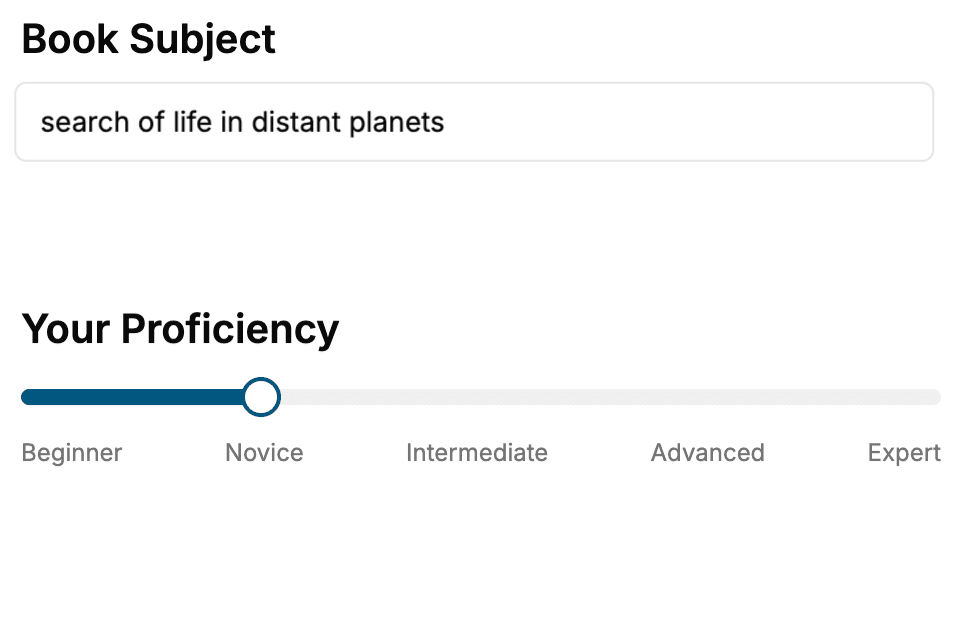
- 1. Select your focus
Select the focus of your Learning French book and share your background
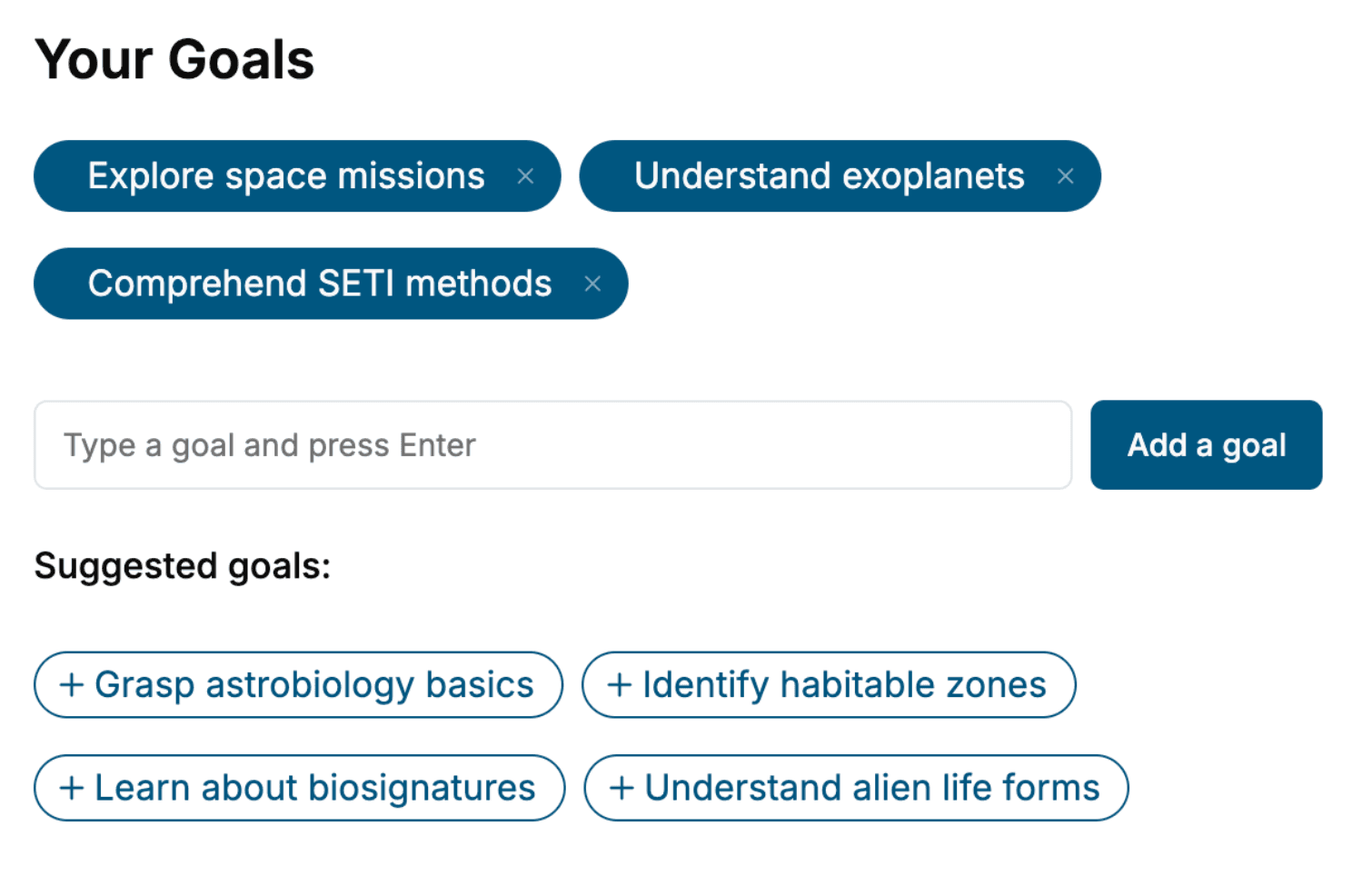
- 2. Personalize your book
Specify your goals and choose sub-topics to include
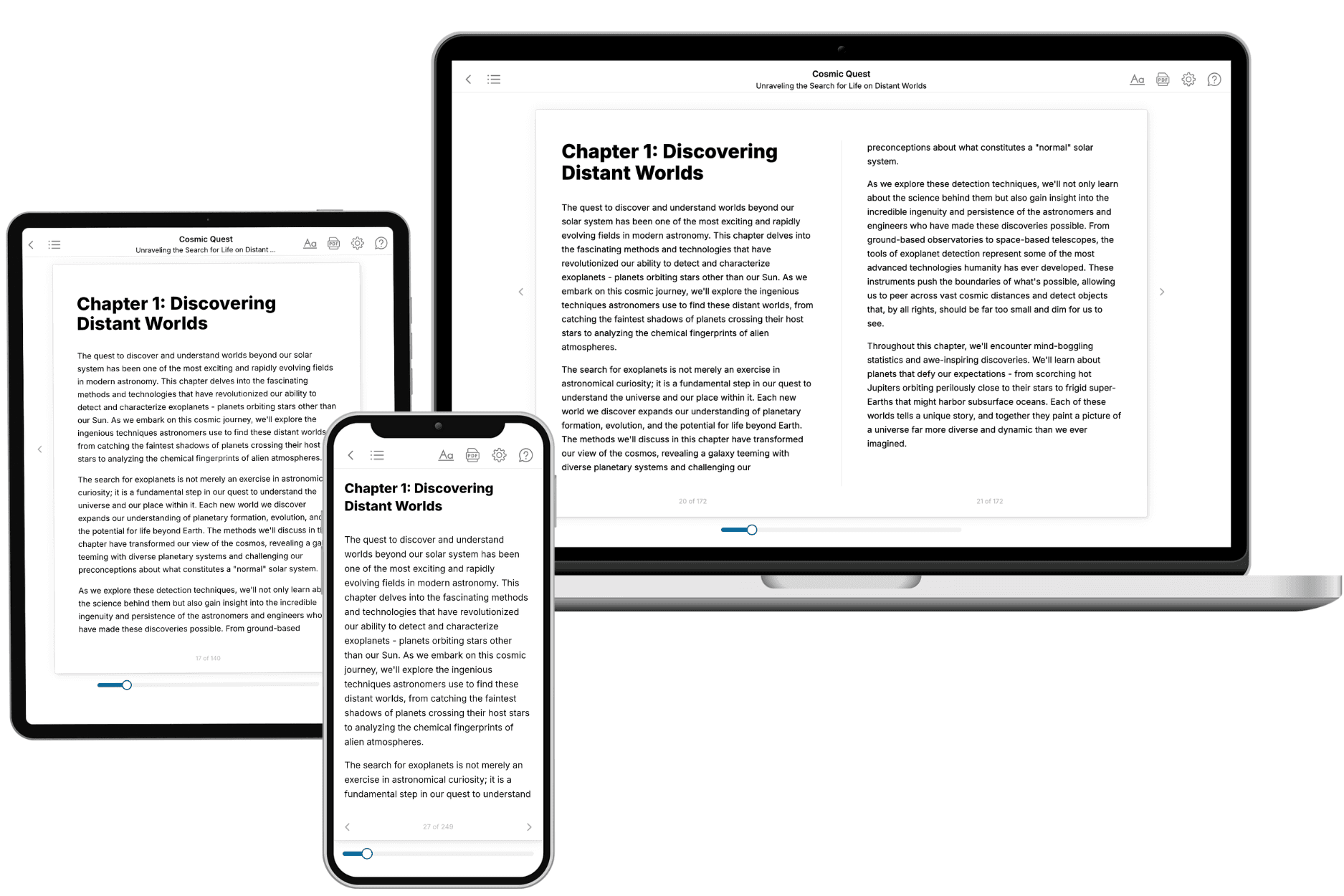
- 3. Get your tailored book
Your book is ready in 10 minutes. Read it online, download as EPUB or PDF, or send to Kindle.
Frequently asked questions
- What is TailoredRead?
TailoredRead creates complete, full-length nonfiction ebooks, written specifically for you. Tell us what you want to learn and why, and TailoredRead writes you a complete ebook on it, with charts, tables, and diagrams throughout. Read it online, on Kindle, or on any e-reader, or download it as a PDF or EPUB. Every book is written fresh the day you order it.
- How is the book tailored to me?
Before anything is written, you answer a few short questions about your goals, your background, and the topics you care about. Your book is then planned around your answers: written at your level, focused on your goals, and covering the topics you chose, instead of the one-size-fits-all book a store sells everyone.
- Will it read like generic AI content?
No. Your book isn't a chat transcript: it's planned chapter by chapter before a single word is written, told in a clear book voice, and explains ideas visually with charts, tables, and diagrams. After writing, every book goes through an editorial pass that polishes chapters so the book reads consistent from start to finish. Judge for yourself: browse thousands of sample books on our Explore Books page.
- How accurate is the content?
Our AI first checks whether your subject needs live research. Niche and fast-moving subjects are researched before writing, and the book plan and chapters are grounded in what it finds. After writing, every book goes through a quality pass that checks its facts and consistency, and researched books list their sources in a Notes section at the back.
- How long is the book?
You choose the length: Comprehensive (250-300 pages), Detailed (150-200 pages), Essential (70-100 pages), or Short (30-50 pages).
- Does the book include visuals?
Yes. Every book includes charts, tables, and diagrams: timelines, checklists, step-by-step guides, decision trees, comparison tables, matrices, and bar charts. A typical book includes dozens of these visual elements.
- Can I read it on Kindle? What formats can I download?
Yes. Every book can be read in our online reader or downloaded as a PDF or EPUB. The EPUB can be opened with Kindle, Apple Books, Kobo, and any e-reader. The Commercial and Author licenses also include an editable Word (DOCX) and Markdown download.
- How much does it cost?
About the price of a regular ebook. The exact price depends on your book's length and complexity, from $2 for the shortest books to $35 for the most comprehensive, and it's shown when you review your book, before you commit to anything. Each book is a one-time purchase, yours to keep, no subscription. Licenses that let you share, teach, or publish your book range from $35.99 to $49.99.
- Can I preview the book before purchasing?
Before you pay, you'll see what your book will cover: the title, a detailed description, the estimated length, and the complete chapter-by-chapter table of contents, so you know what you're getting before you decide. The full text itself is written after you purchase.
- How long does it take to create a book?
About 10 minutes. You can start reading the opening chapters while the rest is still being written.