The Full-Stack ML Engineer
From Data to Production: Master Machine Learning at Every Layer
Build production-grade machine learning systems that scale, perform, and adapt in real-world environments.
222 pages11 chaptersJan 11, 2026Machine LearningCreated by Iraklis
About this book
This comprehensive guide takes you from raw data to deployed models, covering every layer of the full-stack ML engineering process. You'll master data preprocessing pipelines that ensure quality inputs, implement feature engineering methods that unlock predictive power, and design neural network architectures suited to your problems. Learn how to evaluate models rigorously using the right metrics, optimize hyperparameters systematically, and deploy with confidence using containerization and cloud platforms. Discover MLOps best practices that automate workflows, monitor performance in production, and enable continuous improvement through A/B testing. Whether you're building recommendation systems, natural language processing applications, or computer vision solutions, you'll gain the architectural thinking and practical skills to handle scalability, interpretability, and reliability. This book bridges the gap between ML theory and production reality, equipping you with frameworks, tools, and patterns used by leading ML engineers at scale.
Table of contents
- IntroductionWhy Full-Stack ML Engineering Matters, How This Book Is Organized, What You'll Master by the EndRead below
- Chapter 1: Foundations of ML SystemsThe Complete ML Lifecycle, From Notebook to Production: The Gap, System Design Thinking for ML
- Chapter 2: Building Robust Data PipelinesData Collection and Ingestion, Data Preprocessing Fundamentals, Data Quality Assurance and Validation, Automating Data Pipelines
- Chapter 3: Feature Engineering and SelectionFeature Engineering Methods and Techniques, Feature Selection Strategies, Building Feature Store Architecture
- Chapter 4: Deep Learning Fundamentals and ArchitecturesNeural Network Fundamentals, Modern Neural Network Architectures, Transfer Learning and Pre-trained Models
- Chapter 5: Model Evaluation and MetricsComprehensive Model Evaluation Metrics, Statistical Analysis Methods, Cross-Validation and Validation Strategies
- Chapter 6: Hyperparameter Optimization and TuningHyperparameter Tuning Methods, Optimization Frameworks and Tools, Inference Optimization and Efficiency
- Chapter 7: Specialized ML DomainsNatural Language Processing Applications, Computer Vision Applications, Recommendation System Design, Time Series Forecasting and Anomaly Detection
- Chapter 8: Production Deployment and ContainerizationDocker Containerization for ML, Kubernetes Orchestration and Scaling, Model Deployment Strategies
- Chapter 9: MLOps and Production ExcellenceMLOps Best Practices and Principles, Model Versioning and Control, Model Monitoring and Performance Tracking
- Chapter 10: Testing, Validation, and ExperimentationA/B Testing Frameworks and Implementation, Model Interpretability and Explainability, Testing Strategies for ML Systems
- Chapter 11: Scalable ML Architectures and Cloud PlatformsDistributed Training Systems, Cloud ML Platforms and Services, Designing Scalable ML Architectures
- ConclusionIntegrating Full-Stack ML Engineering, Your Path Forward
- Appendix: Tools, Resources, and ReferencesEssential ML Tools and Ecosystem, Further Learning Resources
Introduction
Machine learning has evolved from an academic curiosity into a fundamental technology powering everything from smartphone assistants to autonomous vehicles. Yet a persistent gap exists between understanding ML algorithms and building systems that reliably serve predictions to millions of users. You might excel at training models in Jupyter notebooks, achieving impressive accuracy scores on test datasets, but find yourself struggling when it's time to deploy those models into production environments where they must handle real traffic, scale efficiently, and maintain performance over time. This gap between experimental ML and production ML represents one of the most significant challenges facing the field today.
The term full-stack ML engineer describes professionals who can navigate every layer of the machine learning system—from raw data ingestion through model deployment and monitoring. Unlike traditional software engineering where the stack refers to frontend, backend, and database layers, the ML stack encompasses data pipelines, feature engineering, model development, deployment infrastructure, and operational monitoring. Each layer presents unique challenges and requires distinct skills. A model that achieves 95% accuracy in your notebook becomes worthless if the data pipeline feeding it fails silently, if feature computation takes too long for real-time inference, or if model performance degrades over time without detection.
This book addresses the reality that most ML education focuses heavily on algorithms and model architectures while treating production concerns as afterthoughts. You've likely encountered courses that teach you how to build neural networks but skip over critical questions: How do you version your models? How do you roll back a deployment when something goes wrong? How do you detect when your model's performance degrades in production? How do you scale inference to handle traffic spikes? These aren't minor implementation details—they're fundamental requirements for any ML system that creates real business value. This introduction sets the stage for a comprehensive journey through every layer of production ML systems.
Why Full-Stack ML Engineering Matters
The machine learning landscape has matured significantly over the past decade, and with that maturity comes increased expectations. Organizations no longer want proof-of-concept models that work on historical data—they need production systems that deliver consistent value while adapting to changing conditions. Consider a recommendation system for an e-commerce platform. The model itself might represent only 20% of the total system complexity. The remaining 80% involves data collection from multiple sources, real-time feature computation, A/B testing infrastructure, monitoring dashboards, automated retraining pipelines, and fallback mechanisms when predictions fail. A data scientist who only understands the modeling component cannot build or maintain such a system alone.
Full-stack ML engineering matters because production ML systems fail in ways that notebooks never reveal. Your training data might be clean and well-balanced, but production data arrives messy, with missing values, unexpected formats, and distribution shifts. Your model might train in minutes on a sample dataset but take hours on the full production dataset, making frequent retraining impractical. Your inference might run fast on your laptop but become a bottleneck when serving thousands of requests per second. These challenges don't emerge from algorithmic weaknesses—they stem from system design decisions made (or not made) across the entire stack.
The business impact of full-stack thinking becomes clear when you examine real-world ML failures. A major retailer deployed a demand forecasting model that performed well in testing but failed catastrophically in production because the data pipeline didn't handle holiday periods correctly, leading to massive inventory shortages[1]. A financial services company built a fraud detection model with impressive precision and recall, but the inference latency was too high for real-time transaction processing, rendering the model unusable. A healthcare startup created an accurate diagnostic model but couldn't explain its predictions to physicians, preventing regulatory approval. Each failure occurred not because of poor modeling but because of gaps in the full-stack implementation.
Understanding the complete ML lifecycle also reveals where to invest your optimization efforts most effectively. Many engineers spend weeks tuning hyperparameters to improve model accuracy from 92% to 93%, when the real performance bottleneck lies in data quality issues that could be resolved in days. Others build complex ensemble models when a simpler model with better feature engineering would achieve superior results with lower maintenance costs. Full-stack perspective helps you identify these trade-offs and make informed decisions about where to focus your energy. The goal isn't perfection at every layer—it's building systems that deliver reliable value while remaining maintainable and scalable.
The demand for full-stack ML engineers has grown exponentially as organizations realize that hiring separate data engineers, data scientists, ML engineers, and DevOps engineers creates coordination overhead and communication gaps. While specialization has its place in large teams, the ability to understand and work across the entire stack makes you significantly more effective. You can design data pipelines that anticipate modeling needs, build models that account for deployment constraints, and create monitoring systems that detect the issues that actually matter. This holistic understanding accelerates development cycles and reduces the friction that typically occurs when handing off work between specialized teams.
Consider the competitive advantage this skillset provides. When you can independently take a business problem from initial data exploration through deployed, monitored solution, you become capable of rapid prototyping and iteration. You don't need to wait for the data engineering team to build a pipeline, or the DevOps team to set up infrastructure, or the ML platform team to add monitoring. You can make end-to-end progress, validate ideas quickly, and deliver value faster. This agility is particularly valuable in startups and smaller organizations, but even in large companies, full-stack ML engineers often lead critical projects because they can navigate organizational boundaries and technical layers with equal facility.
The technical landscape itself demands full-stack thinking. Modern ML systems increasingly rely on:
- Real-time feature computation: Features must be computed consistently between training and inference, often requiring feature stores and streaming pipelines
- Continuous training: Models must retrain automatically as new data arrives, requiring robust pipeline orchestration
- Multi-model systems: Production systems often combine multiple models, requiring careful orchestration and fallback logic
- Hybrid cloud deployments: Models might train in the cloud but serve predictions on edge devices, requiring careful optimization
- Regulatory compliance: Models must be explainable, auditable, and fair, requiring instrumentation throughout the stack
None of these requirements can be addressed by focusing solely on model development. They require architectural thinking that spans data infrastructure, model design, deployment platforms, and operational practices. This book equips you with that architectural thinking, providing not just techniques for each layer but frameworks for understanding how the layers interact and influence each other. You'll learn to make design decisions that optimize the system as a whole rather than sub-optimizing individual components.
How This Book Is Organized
This book follows the natural flow of building production ML systems, starting with foundations and progressing through each layer of the stack. The structure mirrors how you would actually approach a real ML project—understanding the system context, building data infrastructure, developing models, and deploying them into production with appropriate monitoring and maintenance. Each chapter builds on previous concepts while remaining relatively self-contained, allowing you to jump to specific topics when needed. However, reading sequentially provides the most comprehensive understanding of how the pieces fit together into cohesive systems.
Chapter 1: Foundations of ML Systems establishes the conceptual framework for everything that follows. You'll explore the complete ML lifecycle from problem definition through deployment and monitoring, understanding why production ML differs fundamentally from experimental ML. This chapter introduces system design thinking for ML, helping you understand the architectural decisions that influence every subsequent layer. You'll learn to identify the gap between notebook development and production deployment, and develop strategies for bridging that gap systematically. The chapter emphasizes that ML systems are software systems with unique characteristics, requiring both software engineering discipline and ML-specific considerations.
Chapter 2: Building Robust Data Pipelines dives into the foundation of all ML systems—data. You'll learn to design data collection and ingestion systems that handle various data sources, formats, and volumes. The chapter covers preprocessing fundamentals including handling missing values, outlier detection, and data transformation techniques. You'll implement data quality assurance and validation systems that catch problems before they corrupt your models. The chapter concludes with pipeline automation strategies using tools like Apache Airflow and Prefect, ensuring your data flows reliably from sources to models. This chapter emphasizes that data quality determines 70% of model success, making robust pipelines non-negotiable.
Chapter 3: Feature Engineering and Selection explores the art and science of creating predictive features from raw data. You'll master feature engineering methods including encoding categorical variables, creating interaction features, and extracting temporal patterns. The chapter covers feature selection strategies that identify the most valuable features while reducing dimensionality and training time. You'll learn to build feature store architectures that ensure consistency between training and inference, solving one of the most common sources of production ML failures. The chapter includes domain-specific feature engineering examples for text, images, and time series data.
Chapter 4: Deep Learning Fundamentals and Architectures provides comprehensive coverage of neural networks and deep learning. You'll understand neural network fundamentals including backpropagation, activation functions, and optimization algorithms. The chapter explores modern architectures including convolutional networks for images, recurrent networks for sequences, and transformers for language tasks. You'll learn when to use deep learning versus simpler models, avoiding the common trap of over-engineering solutions. The chapter emphasizes transfer learning and pre-trained models, showing how to leverage existing models to accelerate development and improve performance, especially when labeled data is limited.
Chapter 5: Model Evaluation and Metrics goes beyond accuracy to explore comprehensive evaluation strategies. You'll master metrics including precision, recall, F1 score, AUC-ROC, and domain-specific measures. The chapter covers statistical analysis methods for comparing models and determining whether performance differences are significant. You'll implement cross-validation and validation strategies that provide reliable performance estimates and detect overfitting. The chapter emphasizes choosing metrics that align with business objectives rather than defaulting to accuracy, and understanding the trade-offs between different metrics in production contexts.
Chapter 6: Hyperparameter Optimization and Tuning covers systematic approaches to finding optimal model configurations. You'll learn hyperparameter tuning methods including grid search, random search, and Bayesian optimization. The chapter explores optimization frameworks like Optuna and Ray Tune that automate the search process efficiently. You'll understand inference optimization techniques including quantization, pruning, and knowledge distillation that reduce model size and latency without sacrificing accuracy. The chapter emphasizes that hyperparameter tuning should be systematic and automated rather than manual and ad-hoc.
Chapter 7: Specialized ML Domains provides deep dives into common application areas. You'll explore natural language processing applications including text classification, named entity recognition, and sentiment analysis. The chapter covers computer vision applications including object detection, image segmentation, and facial recognition. You'll learn recommendation system design patterns including collaborative filtering, content-based filtering, and hybrid approaches. The chapter concludes with time series forecasting and anomaly detection techniques. Each domain includes practical examples and domain-specific considerations for production deployment.
Chapter 8: Production Deployment and Containerization bridges the gap between trained models and production services. You'll master Docker containerization for ML, creating reproducible environments that work consistently across development and production. The chapter covers Kubernetes orchestration and scaling, enabling your models to handle variable traffic loads. You'll implement model deployment strategies including blue-green deployments, canary releases, and shadow mode testing that minimize risk when updating production models. The chapter emphasizes that deployment is not a one-time event but an ongoing process requiring careful planning and automation.
Chapter 9: MLOps and Production Excellence introduces practices that transform ML from experimental to production-grade. You'll learn MLOps best practices including continuous integration and continuous deployment (CI/CD) for ML systems. The chapter covers model versioning and control using tools like MLflow and DVC, ensuring you can track experiments and reproduce results. You'll implement model monitoring and performance tracking systems that detect degradation, data drift, and concept drift before they impact users. The chapter emphasizes that MLOps is not optional—it's essential for maintaining reliable ML systems over time.
Chapter 10: Testing, Validation, and Experimentation covers how to validate that your ML systems work correctly and deliver value. You'll implement A/B testing frameworks that measure the real-world impact of model changes. The chapter explores model interpretability and explainability techniques including SHAP values, LIME, and attention visualization. You'll learn testing strategies for ML systems including unit tests for data pipelines, integration tests for model serving, and regression tests for model performance. The chapter emphasizes that testing ML systems requires different approaches than testing traditional software due to the probabilistic nature of ML.
Chapter 11: Scalable ML Architectures and Cloud Platforms addresses how to build systems that handle growing data volumes and user bases. You'll learn distributed training systems using frameworks like Horovod and PyTorch Distributed. The chapter covers cloud ML platforms including AWS SageMaker, Google Cloud AI Platform, and Azure ML, understanding when to use managed services versus custom infrastructure. You'll design scalable ML architectures that separate concerns, enable horizontal scaling, and maintain performance under load. The chapter emphasizes that scalability must be considered from the beginning rather than retrofitted later.
The book concludes with a Conclusion that synthesizes the concepts into integrated workflows and provides guidance for your continued learning journey. The Appendix offers comprehensive references to tools, frameworks, libraries, and learning resources organized by topic. Throughout the book, you'll find practical examples, code snippets, and real-world case studies that illustrate concepts in action. The goal is not just to teach you techniques but to develop your judgment about when and how to apply them effectively.
What You'll Master by the End
By the time you complete this book, you'll possess a comprehensive skillset that spans the entire ML engineering stack. You'll be able to take a business problem, translate it into an ML problem, design the data infrastructure needed to support it, build and evaluate models, deploy them into production, and maintain them over time. This end-to-end capability distinguishes full-stack ML engineers from specialists who excel in one area but struggle to integrate their work into complete systems. The following sections outline the specific capabilities you'll develop across different dimensions of ML engineering.
Data Engineering Capabilities: You'll master the design and implementation of robust data pipelines that collect, validate, and transform data from diverse sources. You'll be able to implement data quality checks that catch issues before they corrupt models, and build automated pipelines that run reliably without manual intervention. You'll understand how to handle streaming data, batch data, and hybrid scenarios, choosing appropriate tools and architectures for each context. You'll be comfortable working with data at scale, using distributed processing frameworks when needed and optimizing pipeline performance. Most importantly, you'll develop the mindset that treats data infrastructure as a first-class concern rather than an afterthought.
Feature Engineering Expertise: You'll gain systematic approaches to creating predictive features from raw data, moving beyond ad-hoc feature creation to principled methods. You'll understand how to encode categorical variables appropriately for different model types, create interaction features that capture non-linear relationships, and extract temporal patterns from time series data. You'll be able to implement feature selection methods that identify the most valuable features while reducing dimensionality. You'll understand feature stores and how to ensure consistency between training and inference, solving one of the most common sources of production bugs. Your feature engineering will be guided by both domain knowledge and systematic exploration.
Modeling and Algorithm Selection: You'll develop strong judgment about when to use different types of models, from simple linear models to complex deep neural networks. You'll understand the trade-offs between model complexity, interpretability, training time, and inference latency. You'll be proficient with modern deep learning frameworks including PyTorch and TensorFlow, able to implement custom architectures when needed and leverage pre-trained models when appropriate. You'll understand transfer learning and how to adapt models trained on large datasets to your specific problems. Most importantly, you'll resist the temptation to always use the most complex model, starting simple and adding complexity only when justified by performance gains.
Evaluation and Metrics Mastery: You'll move beyond accuracy to understand the full landscape of evaluation metrics and when each is appropriate. You'll be able to choose metrics that align with business objectives, understanding that optimizing the wrong metric leads to models that perform well on paper but fail in practice. You'll implement rigorous evaluation protocols including cross-validation, hold-out sets, and temporal validation for time series problems. You'll understand statistical significance testing and how to determine whether performance differences between models are meaningful. You'll be able to communicate model performance to non-technical stakeholders, translating metrics into business impact.
Production Deployment Skills: You'll be proficient with containerization using Docker, creating reproducible environments that eliminate "works on my machine" problems. You'll understand Kubernetes orchestration and how to deploy models that scale automatically based on traffic. You'll implement deployment strategies including blue-green deployments and canary releases that minimize risk when updating production models. You'll be comfortable with cloud platforms and their ML services, understanding when to use managed services versus custom infrastructure. You'll design APIs for model serving that handle errors gracefully, provide appropriate timeouts, and include health checks for monitoring.
MLOps and Operational Excellence: You'll implement CI/CD pipelines for ML systems that automate testing, training, and deployment. You'll use model versioning tools to track experiments and ensure reproducibility. You'll build monitoring systems that detect performance degradation, data drift, and concept drift before they impact users. You'll understand how to set up alerting that notifies you of real problems without overwhelming you with false alarms. You'll implement automated retraining pipelines that keep models fresh as data distributions change. You'll develop runbooks for common operational issues, enabling quick response when problems occur. These operational practices transform ML from a research activity into a reliable engineering discipline.
System Design and Architecture: You'll develop the ability to design ML systems that are scalable, maintainable, and reliable. You'll understand how to decompose complex ML problems into manageable components with clear interfaces. You'll make informed trade-offs between latency, throughput, cost, and accuracy based on business requirements. You'll design systems that fail gracefully, with appropriate fallbacks when models are unavailable or predictions are uncertain. You'll understand how to separate concerns, making systems easier to test, debug, and evolve. You'll be able to create architecture diagrams and documentation that communicate your designs to other engineers and stakeholders.
Specialized Domain Knowledge: You'll gain practical experience with common ML application domains including natural language processing, computer vision, recommendation systems, and time series forecasting. For each domain, you'll understand the specific challenges, common architectures, and best practices. You'll be able to leverage domain-specific pre-trained models and transfer learning techniques. You'll understand the evaluation metrics and validation strategies appropriate for each domain. This breadth of domain knowledge enables you to tackle diverse ML problems and recognize patterns across different applications.
Testing and Experimentation: You'll implement comprehensive testing strategies for ML systems, including unit tests for data processing, integration tests for model serving, and regression tests for model performance. You'll design and execute A/B tests that measure the real-world impact of model changes, understanding statistical power and sample size requirements. You'll use interpretability techniques to understand model behavior and debug unexpected predictions. You'll develop systematic approaches to experimentation that balance exploration of new ideas with exploitation of known good approaches. Your testing will catch problems before they reach production, and your experimentation will drive continuous improvement.
Beyond these technical capabilities, you'll develop crucial soft skills and mindsets. You'll learn to communicate effectively with stakeholders who don't have ML backgrounds, translating technical concepts into business terms. You'll understand how to scope ML projects realistically, avoiding both over-promising and under-delivering. You'll develop the judgment to know when ML is the right solution and when simpler approaches would be more effective. You'll cultivate a production-first mindset that considers operational concerns from the beginning rather than treating them as afterthoughts. You'll embrace continuous learning, recognizing that the ML field evolves rapidly and staying current requires ongoing effort.
The ultimate goal is not just to teach you techniques but to develop your judgment and intuition about building production ML systems. You'll learn to ask the right questions: What could go wrong with this data pipeline? How will this model behave on data it hasn't seen? What happens if this service becomes unavailable? How will we know if model performance degrades? These questions separate engineers who build systems that work in notebooks from those who build systems that deliver reliable value in production. By the end of this book, you'll have both the technical skills and the engineering judgment to be a full-stack ML engineer who can take projects from conception through production deployment and ongoing maintenance.
Notes
Introduction
- 1. D. Sculley and others, Hidden Technical Debt in Machine Learning Systems, NIPS, 2015
This is the end of the free sample. The full book has 11 chapters.
Want this book written for you?
Tell us your goals and background, and get your own version of this book, tailored by AI to you.


Benefits of AI-tailored books
- Read one book, not ten:
- all the Machine Learning knowledge you need, gathered into a single book.
- Save days of learning:
- tell us your goals, choose your topics, and the whole book is built around them.
- Learn effortlessly:
- Machine Learning book written for your specific background and expertise.
- Understand at a glance:
- includes charts, tables, timelines, checklists, decision trees, and more.
- Stay current:
- written the day you order it, not years ago.
- Trust what you read:
- every book is checked for accuracy, with real research when your subject needs it.
Create your unique book in 3 steps
- 1. Select your focus
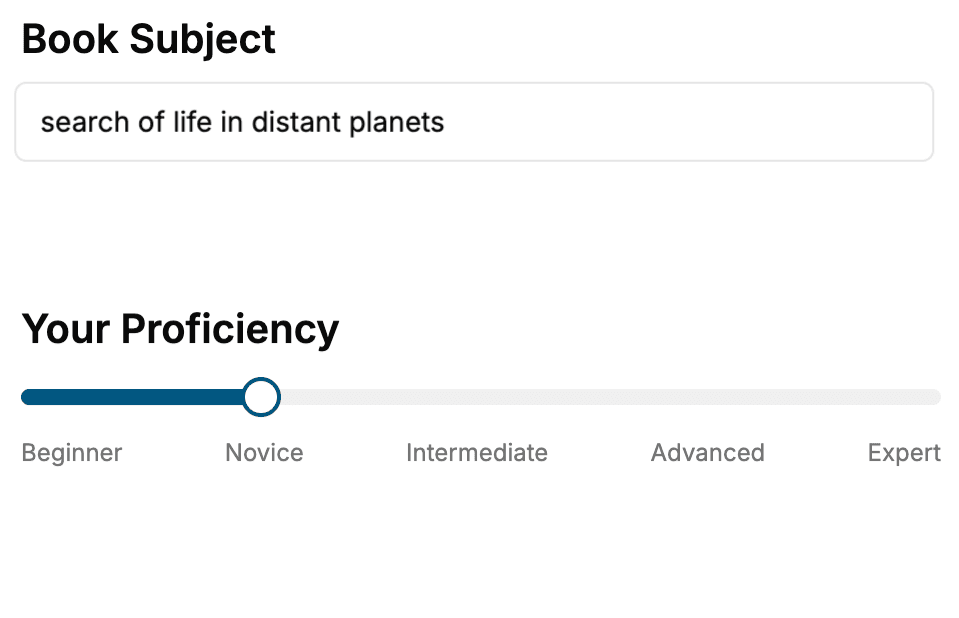
Select the focus of your Machine Learning book and share your background
- 2. Personalize your book
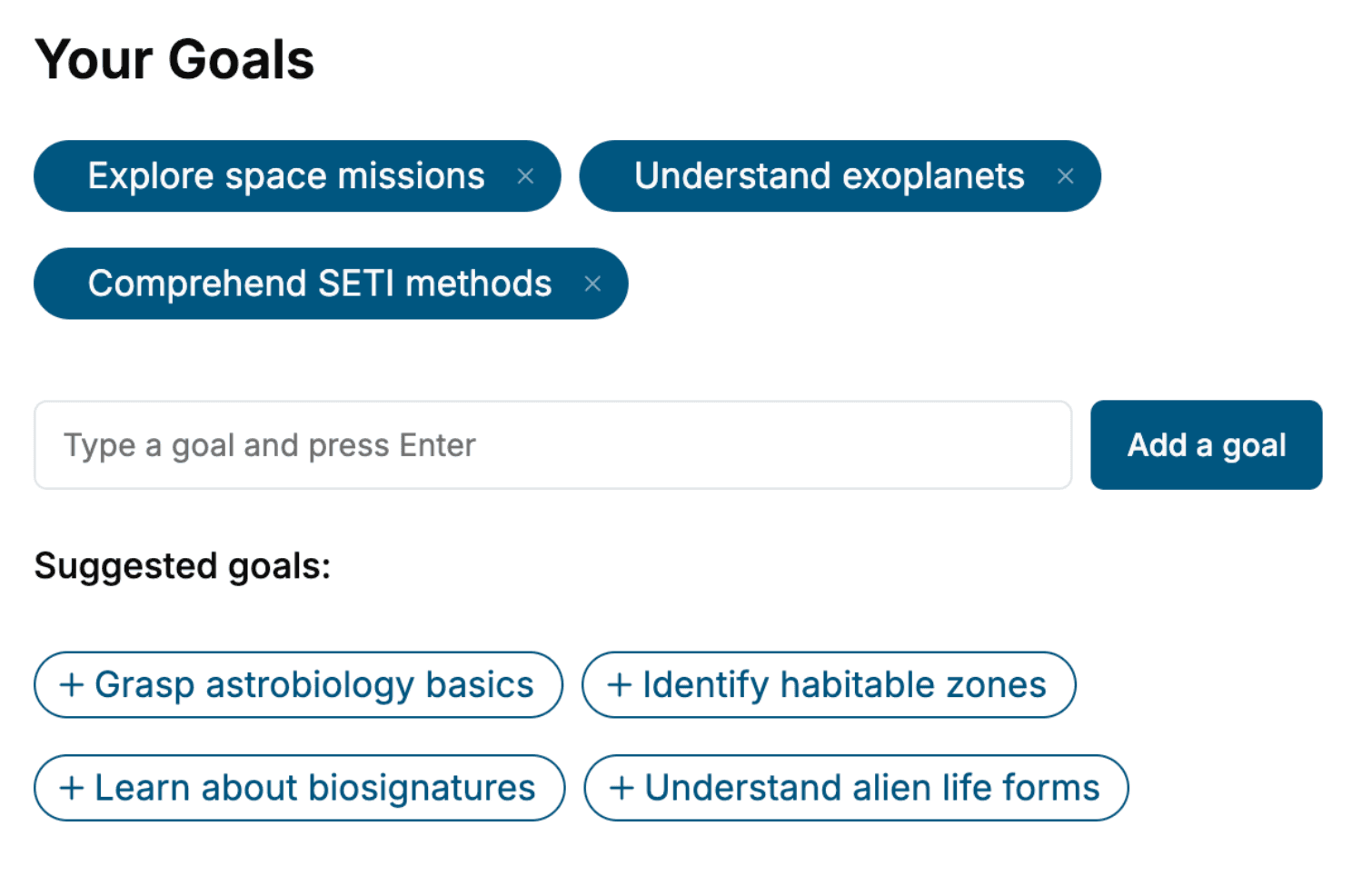
Specify your goals and choose sub-topics to include
- 3. Get your tailored book
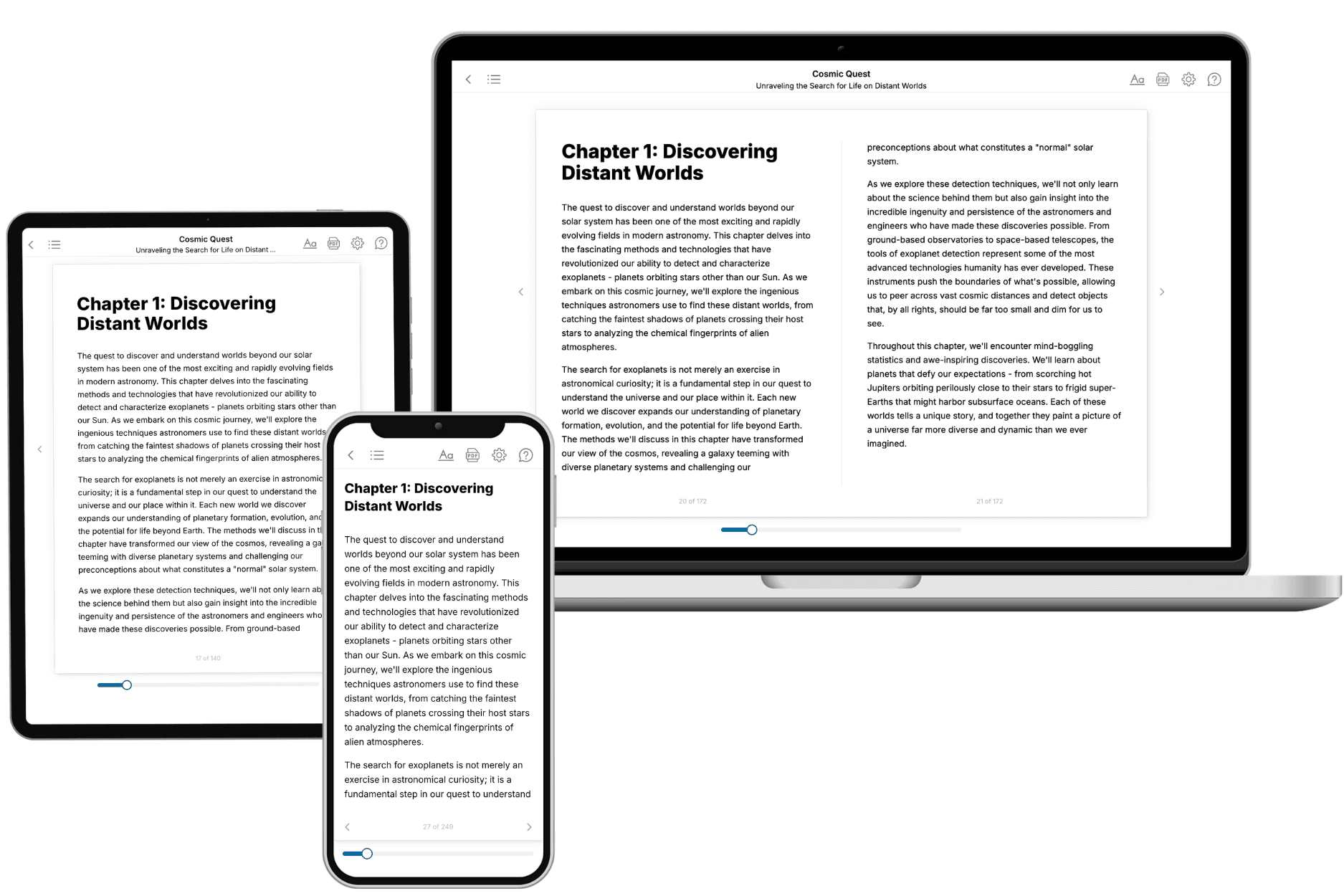
Your book is ready in 10 minutes. Read it online, download as EPUB or PDF, or send to Kindle.
Frequently asked questions
- What is TailoredRead?
TailoredRead creates complete, full-length nonfiction ebooks, written specifically for you. Tell us what you want to learn and why, and TailoredRead writes you a complete ebook on it, with charts, tables, and diagrams throughout. Read it online, on Kindle, or on any e-reader, or download it as a PDF or EPUB. Every book is written fresh the day you order it.
- How is the book tailored to me?
Before anything is written, you answer a few short questions about your goals, your background, and the topics you care about. Your book is then planned around your answers: written at your level, focused on your goals, and covering the topics you chose, instead of the one-size-fits-all book a store sells everyone.
- Will it read like generic AI content?
No. Your book isn't a chat transcript: it's planned chapter by chapter before a single word is written, told in a clear book voice, and explains ideas visually with charts, tables, and diagrams. After writing, every book goes through an editorial pass that polishes chapters so the book reads consistent from start to finish. Judge for yourself: browse thousands of sample books on our Explore Books page.
- How accurate is the content?
Our AI first checks whether your subject needs live research. Niche and fast-moving subjects are researched before writing, and the book plan and chapters are grounded in what it finds. After writing, every book goes through a quality pass that checks its facts and consistency, and researched books list their sources in a Notes section at the back.
- How long is the book?
You choose the length: Comprehensive (250-300 pages), Detailed (150-200 pages), Essential (70-100 pages), or Short (30-50 pages).
- Does the book include visuals?
Yes. Every book includes charts, tables, and diagrams: timelines, checklists, step-by-step guides, decision trees, comparison tables, matrices, and bar charts. A typical book includes dozens of these visual elements.
- Can I read it on Kindle? What formats can I download?
Yes. Every book can be read in our online reader or downloaded as a PDF or EPUB. The EPUB can be opened with Kindle, Apple Books, Kobo, and any e-reader. The Commercial and Author licenses also include an editable Word (DOCX) and Markdown download.
- How much does it cost?
About the price of a regular ebook. The exact price depends on your book's length and complexity, from $2 for the shortest books to $35 for the most comprehensive, and it's shown when you review your book, before you commit to anything. Each book is a one-time purchase, yours to keep, no subscription. Licenses that let you share, teach, or publish your book range from $35.99 to $49.99.
- Can I preview the book before purchasing?
Before you pay, you'll see what your book will cover: the title, a detailed description, the estimated length, and the complete chapter-by-chapter table of contents, so you know what you're getting before you decide. The full text itself is written after you purchase.
- How long does it take to create a book?
About 10 minutes. You can start reading the opening chapters while the rest is still being written.