Generative AI Essentials
A Practical Guide for HR Professionals
Dive into the world of generative AI and discover its transformative potential for HR professionals.
284 pages14 chaptersAug 4, 2025Artificial Intelligence
About this book
This book takes you on an enlightening exploration of AI fundamentals, debunking common myths and unveiling the practical applications that are reshaping the HR landscape. You'll gain a solid foundation in AI concepts, learn to navigate cutting-edge tools, and develop the skills to launch your own AI projects with confidence. From AI-driven talent management to ethical considerations, this guide equips you with the knowledge to harness the power of generative AI in your HR practices. By the end of your reading journey, you'll be well-prepared to leverage AI technologies, create compelling AI-powered content, and lead the charge in implementing innovative HR solutions in your organization.
Table of contents
- IntroductionThe AI Revolution in HR, Book Overview and How to Use It, Your AI Journey BeginsRead below
- Chapter 1: AI FundamentalsWhat is Artificial Intelligence?, Types of AI: Narrow, General, and Super AI, Machine Learning: The Engine of AI, Deep Learning and Neural Networks
- Chapter 2: Understanding Generative AIDefining Generative AI, Generative Models Explained, Applications of Generative AI, Generative AI in HR: An Overview
- Chapter 3: Debunking AI MythsCommon AI Misconceptions, What AI Can and Cannot Do, The Future of AI: Separating Fact from Fiction, AI in HR: Reality Check
- Chapter 4: Ethical Considerations in AIIntroduction to AI Ethics, Bias and Fairness in AI Systems, Privacy and Security Concerns, Building an Ethical Framework for AI in HR
- Chapter 5: AI Applications in HRRecruitment and Selection, Employee Onboarding, Training and Development, Performance Management
- Chapter 6: AI-Driven Talent ManagementAI in Talent Acquisition, AI Strategies for Employee Retention, AI-Powered Succession Planning, AI for Career Development and Pathing
- Chapter 7: AI for Employee EngagementAI-Powered Engagement Analytics, Creating Personalized Employee Experiences, AI-Enhanced Feedback Systems, AI in Employee Wellbeing Initiatives
- Chapter 8: AI-Powered HR AnalyticsThe Rise of Data-Driven HR, Predictive Analytics in HR, AI for Workforce Planning and Optimization, Building AI-Powered HR Dashboards
- Chapter 9: AI Bias Mitigation in HRIdentifying AI Bias in HR Processes, Strategies for Reducing AI Bias, Developing Inclusive AI Systems, Ongoing Monitoring and Adjustment
- Chapter 10: Creating AI-Powered HR ContentAI-Assisted Content Generation, Personalized Employee Communications, Chatbots and Virtual Assistants in HR, Creating Engaging AI-Powered Presentations
- Chapter 11: Launching AI Projects in HRAI Project Planning and Strategy, Gaining Stakeholder Buy-In, Steps for Successful AI Implementation, Measuring AI Project Success
- Chapter 12: Navigating AI Tools for HROverview of AI Tools in HR, Evaluating and Selecting AI Tools, Integration Challenges and Solutions, Future Trends in HR Technology
- Chapter 13: AI in HR: Case StudiesCase Study: AI in Recruitment, Case Study: AI for Employee Engagement, Case Study: AI-Powered HR Analytics, Case Study: AI in Learning and Development
- Chapter 14: The Future of AI in HREmerging AI Technologies in HR, Skills for the AI-Driven HR Future, Ongoing Ethical Considerations, The Future of Human-AI Collaboration in HR
- ConclusionKey Takeaways, Next Steps for HR Professionals
- Glossary
- Further Reading
Introduction
Welcome to "Generative AI Essentials: A Practical Guide for HR Professionals." As you embark on this journey into the world of artificial intelligence, you're taking a crucial step towards transforming your HR practices and staying at the forefront of technological advancements in your field. This book is designed to be your comprehensive guide to understanding, implementing, and leveraging generative AI in your HR role, whether you're a Chief Human Resources Officer, an HR consultant, a content creator, or a university professor specializing in human resources.
The rapid advancement of AI technologies has ushered in a new era of possibilities for HR professionals. From streamlining recruitment processes to enhancing employee engagement, AI is revolutionizing the way we approach human resources management. However, with great power comes great responsibility, and it's essential to approach AI implementation with a solid understanding of its capabilities, limitations, and ethical considerations.
Throughout this book, you'll gain insights into the fundamental concepts of AI, explore the specific applications of generative AI in HR, and learn how to navigate the challenges and opportunities that come with integrating these technologies into your daily operations. By the time you reach the final chapter, you'll be equipped with the knowledge and confidence to lead AI initiatives in your organization, create AI-powered content, and make data-driven decisions that will elevate your HR strategies to new heights.
As we delve into the world of generative AI, it's important to remember that this technology is not meant to replace human expertise but to augment and enhance it. Your skills, experience, and human touch will always be invaluable in the field of HR. AI is a powerful tool that, when used correctly, can free you from repetitive tasks, provide deeper insights, and allow you to focus on the strategic and interpersonal aspects of your role that truly make a difference in people's lives and organizational success.
So, let's begin this exciting journey together, exploring the vast potential of generative AI in HR and discovering how it can transform your professional practice. Whether you're looking to implement your first AI project or seeking to expand your existing AI capabilities, this book will serve as your trusted companion and guide. Let's unlock the power of AI to create more efficient, effective, and human-centric HR practices for the future.
The AI Revolution in HR
The field of Human Resources is undergoing a profound transformation, driven by the rapid advancements in Artificial Intelligence (AI) technology. This AI revolution is not just a fleeting trend; it's a fundamental shift that is reshaping the very core of HR practices. As an HR professional, you are at the forefront of this change, poised to harness the power of AI to drive innovation, efficiency, and strategic value within your organization. The integration of AI into HR processes is opening up new possibilities that were once thought to be the realm of science fiction, and it's crucial to understand the scope and impact of this revolution.
At its heart, the AI revolution in HR is about augmenting human capabilities rather than replacing them. AI technologies, particularly generative AI, are providing HR professionals with tools to automate routine tasks, analyze vast amounts of data, and generate insights that can inform strategic decision-making. This shift allows HR practitioners to focus on more complex, high-value activities that require human judgment, creativity, and emotional intelligence. For instance, while AI can efficiently screen resumes and identify potential candidates, it's the human HR professional who can assess cultural fit, negotiate offers, and build relationships with new hires.
One of the most significant impacts of AI in HR is in the realm of talent acquisition and management. AI-powered tools are revolutionizing the recruitment process by analyzing job descriptions, screening resumes, and even conducting initial interviews. These systems can process thousands of applications in a fraction of the time it would take a human recruiter, significantly reducing time-to-hire and improving the quality of candidate shortlists. Moreover, AI algorithms can identify patterns and predict candidate success, helping organizations make more informed hiring decisions. A study by LinkedIn found that 67% of hiring managers and recruiters say AI is saving them time[1], demonstrating the tangible benefits of this technology in recruitment.
Beyond recruitment, AI is transforming employee engagement and retention strategies. Generative AI systems can analyze employee feedback, performance data, and even social media sentiment to provide insights into workforce morale and identify potential issues before they escalate. This proactive approach allows HR departments to address concerns quickly and create targeted interventions to improve employee satisfaction and retention. For example, IBM's Watson AI has been used to predict which employees are likely to leave their jobs with 95% accuracy, allowing HR teams to take preemptive action to retain valuable talent[2].
Learning and development is another area where AI is making significant strides. Adaptive learning platforms powered by AI can create personalized training programs for employees, tailoring content and pace to individual learning styles and needs. This not only enhances the effectiveness of training but also improves engagement and knowledge retention. According to a report by Deloitte, organizations using AI-driven learning platforms have seen up to a 50% reduction in time spent on training while achieving better outcomes[3].
The AI revolution is also empowering HR professionals to become more strategic partners within their organizations. By automating administrative tasks and providing data-driven insights, AI frees up HR practitioners to focus on strategic initiatives that drive business value. For instance, AI-powered analytics can help HR teams identify skills gaps within the organization, predict future talent needs, and develop targeted strategies for workforce planning. This shift from a transactional to a strategic role elevates the importance of HR within the organizational hierarchy and allows HR professionals to have a more significant impact on business outcomes.
However, the AI revolution in HR also brings challenges that need to be addressed. Issues of data privacy, algorithmic bias, and ethical use of AI are at the forefront of concerns for HR professionals implementing these technologies. It's crucial to approach AI adoption with a clear understanding of these challenges and a commitment to ethical practices. As an HR leader, you'll need to develop frameworks for responsible AI use, ensure transparency in AI-driven decisions, and continuously monitor and mitigate potential biases in AI systems.
The impact of AI on the workforce itself is another critical consideration. As AI automates certain tasks, it's creating new roles and changing the skills required for existing ones. HR professionals must be at the forefront of managing this transition, helping employees upskill and reskill to remain relevant in an AI-augmented workplace. A report by the World Economic Forum predicts that by 2025, 85 million jobs may be displaced by a shift in the division of labor between humans and machines, while 97 million new roles may emerge that are more adapted to the new division of labor between humans, machines and algorithms[4]. HR departments will play a crucial role in navigating this shift, ensuring that their organizations and employees are prepared for the future of work.
As we stand on the cusp of this AI revolution in HR, it's an exciting and challenging time for HR professionals. The potential for AI to transform HR practices is immense, offering opportunities to enhance every aspect of the employee lifecycle from recruitment to retirement. By embracing these technologies and developing the skills to leverage them effectively, you can position yourself and your organization at the forefront of this revolution. The future of HR is here, and it's powered by AI. Your journey to understand and harness this power begins now, and this book will be your guide every step of the way.
Book Overview and How to Use It
"Generative AI Essentials: A Practical Guide for HR Professionals" is designed to be your comprehensive resource for understanding and implementing AI technologies in your HR practice. This book is structured to take you on a journey from the fundamentals of AI to advanced applications in HR, providing you with both theoretical knowledge and practical skills. Whether you're new to AI or looking to expand your existing knowledge, this book offers valuable insights and actionable strategies to help you leverage AI in your professional role.
The book is divided into fourteen chapters, each focusing on a specific aspect of AI in HR. We begin with the basics, ensuring you have a solid foundation in AI concepts before diving into more complex topics. As you progress through the book, you'll find that each chapter builds upon the knowledge from previous ones, creating a cohesive learning experience. Here's a brief overview of what you can expect from each section:
1. AI Fundamentals: This chapter introduces you to the core concepts of Artificial Intelligence, including different types of AI, machine learning, and deep learning. You'll gain a clear understanding of what AI is and how it works, setting the stage for more advanced topics.
2. Understanding Generative AI: Here, we delve into the specific realm of generative AI, explaining its unique capabilities and potential applications in HR. You'll learn about various generative models and how they can be used to create content, analyze data, and solve complex problems.
3. Debunking AI Myths: This chapter addresses common misconceptions about AI, helping you separate fact from fiction. By understanding the true capabilities and limitations of AI, you'll be better equipped to make informed decisions about its implementation in your HR practices.
4. Ethical Considerations in AI: As AI becomes more prevalent in HR, ethical concerns become increasingly important. This chapter explores the ethical implications of AI use in HR, including issues of privacy, bias, and fairness. You'll learn how to develop an ethical framework for AI implementation in your organization.
5-8. AI Applications in HR: These chapters cover specific applications of AI in various HR functions, including recruitment, talent management, employee engagement, and HR analytics. You'll discover how AI can enhance these processes and learn about real-world examples of successful AI implementations in HR.
9. AI Bias Mitigation in HR: This crucial chapter addresses one of the most significant challenges in AI implementation: bias. You'll learn strategies for identifying and mitigating bias in AI systems, ensuring fair and equitable HR practices.
10. Creating AI-Powered HR Content: Here, you'll explore how generative AI can be used to create engaging and personalized content for various HR communications. From employee handbooks to training materials, you'll learn how to leverage AI to enhance your content creation process.
11. Launching AI Projects in HR: This practical chapter guides you through the process of planning and implementing AI projects in your organization. You'll learn about project management strategies, stakeholder engagement, and how to measure the success of your AI initiatives.
12. Navigating AI Tools for HR: With the multitude of AI tools available, choosing the right ones for your needs can be challenging. This chapter provides an overview of popular AI tools for HR and offers guidance on evaluating and selecting the most appropriate solutions for your organization.
13. AI in HR: Case Studies: Learn from real-world examples of successful AI implementations in HR. These case studies offer valuable insights into the challenges and benefits of AI adoption across various HR functions.
14. The Future of AI in HR: In this final chapter, we look ahead to emerging trends and technologies that will shape the future of AI in HR. You'll gain insights into the skills and knowledge you'll need to stay ahead in an AI-driven HR landscape.
To get the most out of this book, it's recommended that you read the chapters in order, as each builds upon the knowledge from previous sections. However, if you're already familiar with certain topics, feel free to skip to the chapters that are most relevant to your current needs and interests. Each chapter includes practical examples, case studies, and actionable advice that you can apply in your HR role.
Throughout the book, you'll find "Key Takeaways" sections that summarize the most important points from each chapter. These are designed to reinforce your learning and provide quick reference points for future use. Additionally, "Practical Application" sections offer hands-on exercises and suggestions for implementing the concepts you've learned in your day-to-day work.
To enhance your learning experience, consider the following strategies as you read through the book:
- Take notes and highlight key concepts that resonate with your specific HR challenges and goals.
- Reflect on how the AI applications discussed in each chapter could be implemented in your organization.
- Discuss the concepts with colleagues and peers to gain different perspectives and insights.
- Explore the additional resources and further reading suggestions provided at the end of each chapter to deepen your understanding of specific topics.
- Try out some of the AI tools and techniques mentioned in the book, starting with small, low-risk projects to gain hands-on experience.
Remember, the field of AI is rapidly evolving, and new developments are constantly emerging. While this book provides a comprehensive foundation, it's important to stay curious and continue learning beyond these pages. Follow industry publications, attend conferences, and engage with AI communities to stay up-to-date with the latest trends and best practices in AI for HR.
By the end of this book, you'll have a solid understanding of generative AI and its applications in HR, as well as the practical skills to implement AI solutions in your organization. You'll be well-equipped to lead AI initiatives, make informed decisions about AI adoption, and leverage these powerful technologies to enhance your HR practices and drive organizational success.
So, are you ready to embark on this exciting journey into the world of AI in HR? Let's turn the page and begin exploring the transformative potential of generative AI in your professional practice.
Your AI Journey Begins
As you stand at the threshold of your AI journey in HR, it's important to recognize that you're about to embark on a transformative experience that will reshape your professional landscape. This journey is not just about learning new technologies; it's about reimagining the very essence of HR practices and your role within them. The path ahead is filled with exciting possibilities, challenges to overcome, and opportunities to innovate. As you take your first steps, let's explore what this journey entails and how you can make the most of it.
First and foremost, approach this journey with an open mind and a willingness to learn. The field of AI is vast and complex, and it's natural to feel overwhelmed at times. Remember that every expert was once a beginner, and every innovation started with a simple question. Your curiosity and willingness to explore will be your greatest assets as you navigate this new terrain. Don't be afraid to ask questions, challenge assumptions, and seek out new information. The AI landscape is constantly evolving, and maintaining a learner's mindset will serve you well throughout your career.
As you begin to delve into the world of AI, you'll likely encounter terms and concepts that are unfamiliar. The technical jargon and complex algorithms can seem daunting at first, but don't let this discourage you. This book is designed to break down these concepts into digestible pieces, providing clear explanations and practical examples. Take your time to absorb the information, and don't hesitate to revisit chapters or sections that you find challenging. Learning about AI is a process, and it's okay to progress at your own pace.
One of the most exciting aspects of your AI journey will be discovering the myriad ways in which AI can enhance and transform HR practices. From automating routine tasks to providing deep insights into employee behavior and organizational dynamics, AI has the potential to revolutionize every aspect of HR. As you learn about these applications, try to envision how they could be implemented in your specific context. Consider the challenges you face in your current role and how AI might help address them. This practical approach will help you connect theoretical knowledge with real-world applications, making your learning more relevant and impactful.
It's important to recognize that your AI journey is not just about technology; it's also about people. As an HR professional, you're uniquely positioned to understand the human implications of AI adoption. Throughout this book, we'll explore the ethical considerations, potential biases, and societal impacts of AI in HR. Your role will be crucial in ensuring that AI is implemented in a way that enhances human potential rather than diminishing it. As you learn about AI technologies, always keep in mind the people who will be affected by them – your employees, colleagues, and stakeholders.
As you progress on your AI journey, you'll likely encounter both successes and setbacks. Celebrate your achievements, no matter how small they may seem. Successfully implementing your first AI-powered HR tool or accurately predicting employee turnover using AI analytics are significant milestones that deserve recognition. At the same time, don't be discouraged by challenges or failures. Every setback is an opportunity to learn and improve. The field of AI is still evolving, and even experts encounter unexpected obstacles. Your resilience and ability to learn from these experiences will be key to your long-term success.
Remember that you're not alone on this journey. The HR community is filled with professionals who are also exploring the potential of AI. Seek out opportunities to connect with peers, join AI-focused HR groups, and participate in relevant conferences or webinars. Sharing experiences, challenges, and insights with others can provide valuable perspectives and support. Consider finding a mentor who has experience with AI in HR, or become a mentor yourself as you gain expertise. Collaborative learning can accelerate your progress and make the journey more enjoyable.
As you dive into the world of AI, it's crucial to maintain a balance between enthusiasm for new technologies and a critical, analytical approach. While AI offers exciting possibilities, it's not a panacea for all HR challenges. Throughout this book, we'll discuss both the potential and the limitations of AI in HR. Develop the skill of critically evaluating AI solutions, understanding their underlying assumptions, and assessing their suitability for your specific needs. This balanced approach will help you make informed decisions about AI adoption and implementation in your organization.
Your AI journey in HR is also an opportunity for professional growth and leadership. As you gain knowledge and experience with AI, you'll be positioned to drive innovation within your organization. Share your insights with colleagues, advocate for responsible AI adoption, and lead by example in implementing AI-driven HR practices. Your journey may inspire others to explore the potential of AI, creating a ripple effect of innovation and improvement across your organization.
As you embark on this journey, set both short-term and long-term goals for yourself. Short-term goals might include understanding key AI concepts, exploring specific AI tools for HR, or implementing a small AI-driven project. Long-term goals could involve developing a comprehensive AI strategy for your HR department, becoming a thought leader in AI and HR, or driving large-scale AI transformation in your organization. Having clear goals will help you stay motivated and track your progress along the way.
Finally, remember that your AI journey is ongoing. The field of AI is rapidly evolving, with new technologies, applications, and best practices emerging regularly. Commit to continuous learning and stay curious about new developments. Subscribe to relevant publications, follow AI thought leaders, and regularly update your knowledge. Your journey doesn't end with the last page of this book; it's a lifelong adventure of discovery and innovation in the exciting intersection of AI and HR.
As you turn the page and begin exploring the fundamentals of AI, know that you're taking a significant step towards the future of HR. Your journey will be challenging at times, but it will also be incredibly rewarding. The knowledge and skills you gain will not only enhance your professional capabilities but also position you as a leader in the evolving landscape of HR. So, take a deep breath, open your mind to new possibilities, and let's begin this exciting journey into the world of AI in HR. The future is waiting, and you're about to play a crucial role in shaping it.
This is the end of the free sample. The full book has 14 chapters.
Want this book written for you?
Tell us your goals and background, and get your own version of this book, tailored by AI to you.


Benefits of AI-tailored books
- Read one book, not ten:
- all the Artificial Intelligence knowledge you need, gathered into a single book.
- Save days of learning:
- tell us your goals, choose your topics, and the whole book is built around them.
- Learn effortlessly:
- Artificial Intelligence book written for your specific background and expertise.
- Understand at a glance:
- includes charts, tables, timelines, checklists, decision trees, and more.
- Stay current:
- written the day you order it, not years ago.
- Trust what you read:
- every book is checked for accuracy, with real research when your subject needs it.
Create your unique book in 3 steps
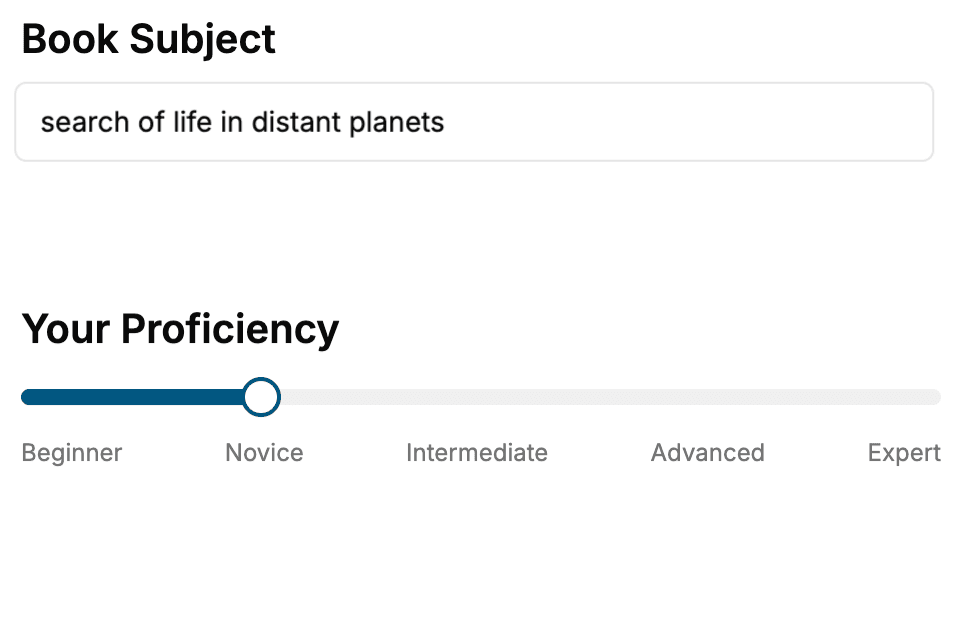
- 1. Select your focus
Select the focus of your Artificial Intelligence book and share your background
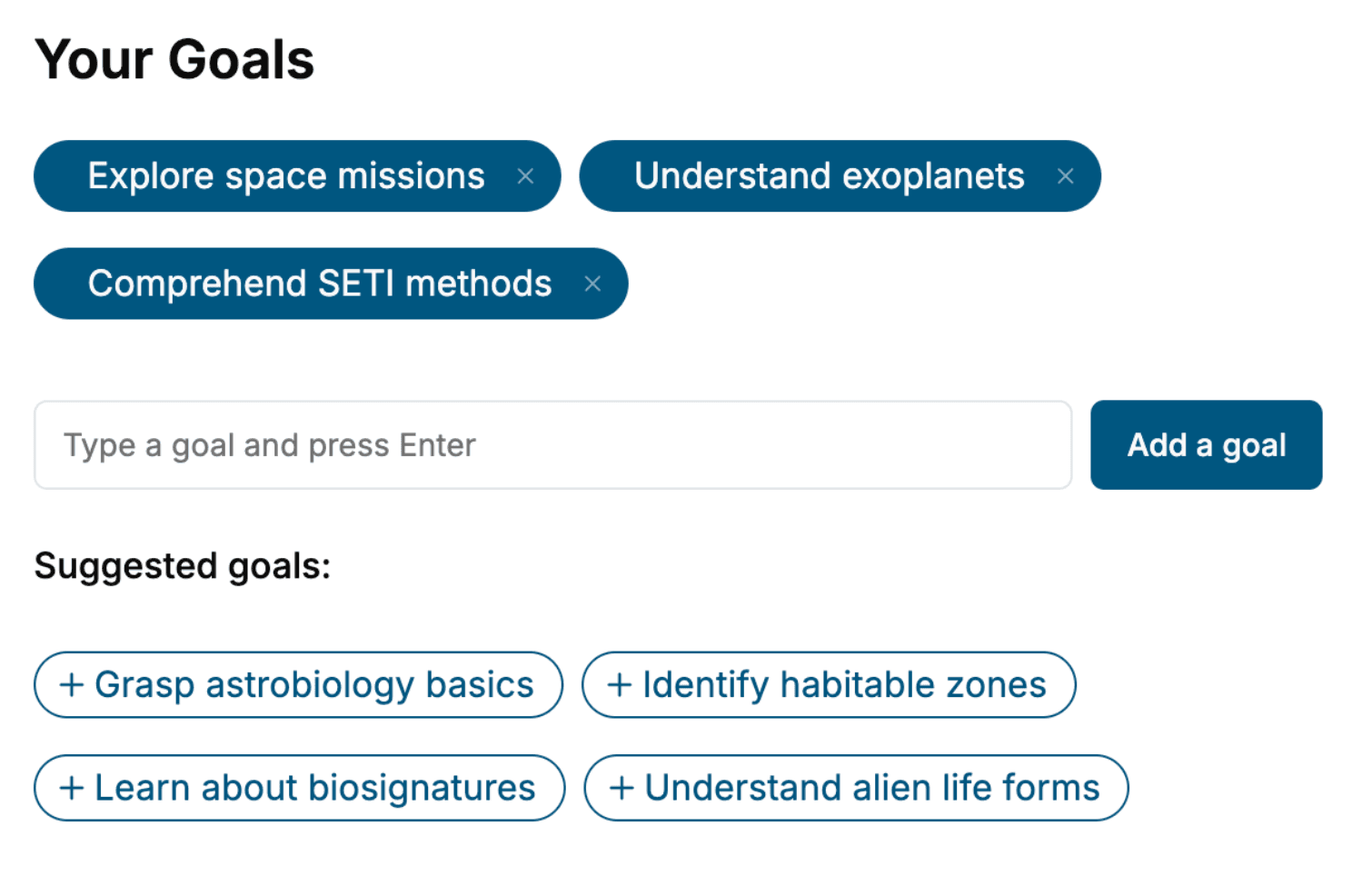
- 2. Personalize your book
Specify your goals and choose sub-topics to include
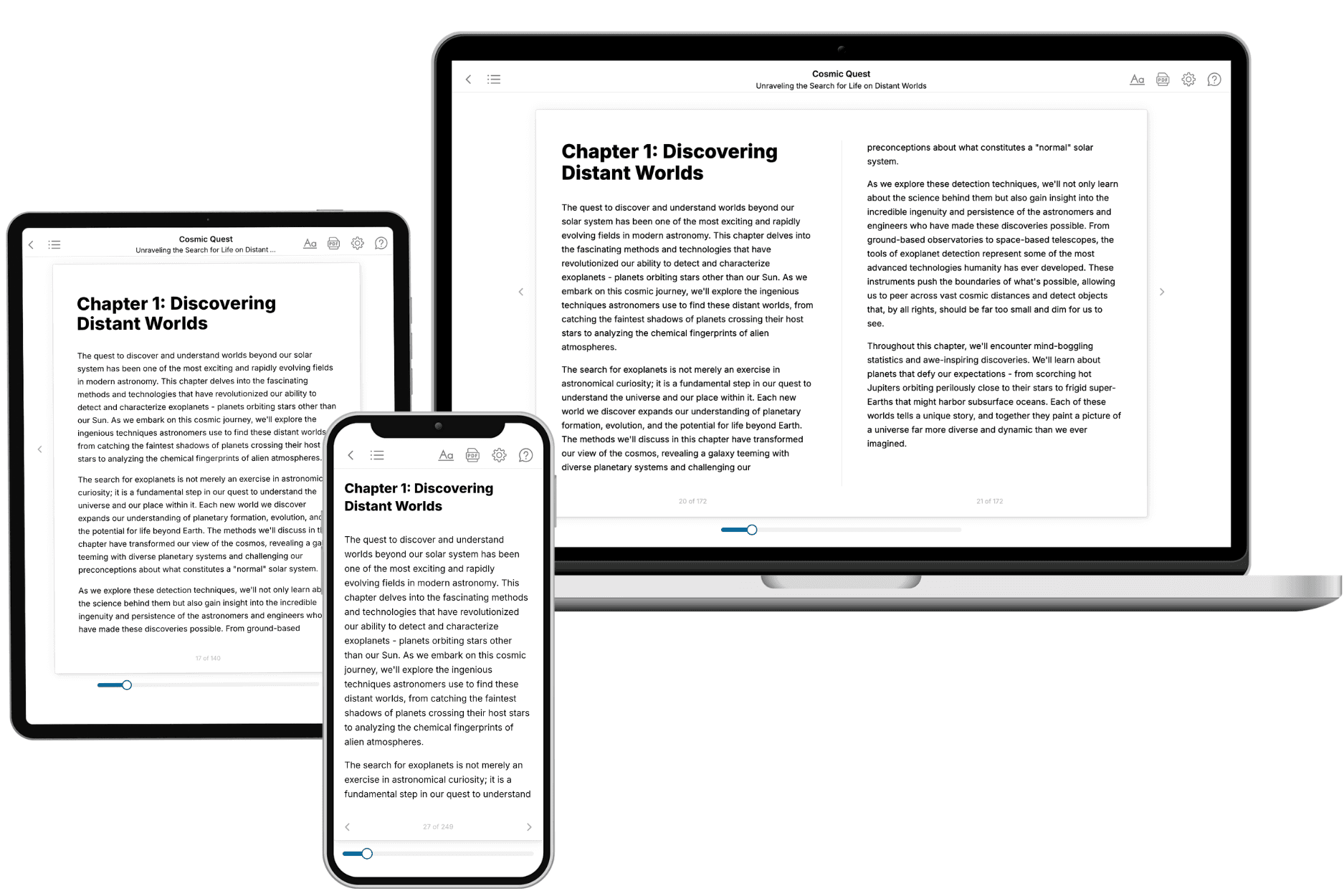
- 3. Get your tailored book
Your book is ready in 10 minutes. Read it online, download as EPUB or PDF, or send to Kindle.
Frequently asked questions
- What is TailoredRead?
TailoredRead creates complete, full-length nonfiction ebooks, written specifically for you. Tell us what you want to learn and why, and TailoredRead writes you a complete ebook on it, with charts, tables, and diagrams throughout. Read it online, on Kindle, or on any e-reader, or download it as a PDF or EPUB. Every book is written fresh the day you order it.
- How is the book tailored to me?
Before anything is written, you answer a few short questions about your goals, your background, and the topics you care about. Your book is then planned around your answers: written at your level, focused on your goals, and covering the topics you chose, instead of the one-size-fits-all book a store sells everyone.
- Will it read like generic AI content?
No. Your book isn't a chat transcript: it's planned chapter by chapter before a single word is written, told in a clear book voice, and explains ideas visually with charts, tables, and diagrams. After writing, every book goes through an editorial pass that polishes chapters so the book reads consistent from start to finish. Judge for yourself: browse thousands of sample books on our Explore Books page.
- How accurate is the content?
Our AI first checks whether your subject needs live research. Niche and fast-moving subjects are researched before writing, and the book plan and chapters are grounded in what it finds. After writing, every book goes through a quality pass that checks its facts and consistency, and researched books list their sources in a Notes section at the back.
- How long is the book?
You choose the length: Comprehensive (250-300 pages), Detailed (150-200 pages), Essential (70-100 pages), or Short (30-50 pages).
- Does the book include visuals?
Yes. Every book includes charts, tables, and diagrams: timelines, checklists, step-by-step guides, decision trees, comparison tables, matrices, and bar charts. A typical book includes dozens of these visual elements.
- Can I read it on Kindle? What formats can I download?
Yes. Every book can be read in our online reader or downloaded as a PDF or EPUB. The EPUB can be opened with Kindle, Apple Books, Kobo, and any e-reader. The Commercial and Author licenses also include an editable Word (DOCX) and Markdown download.
- How much does it cost?
About the price of a regular ebook. The exact price depends on your book's length and complexity, from $2 for the shortest books to $35 for the most comprehensive, and it's shown when you review your book, before you commit to anything. Each book is a one-time purchase, yours to keep, no subscription. Licenses that let you share, teach, or publish your book range from $35.99 to $49.99.
- Can I preview the book before purchasing?
Before you pay, you'll see what your book will cover: the title, a detailed description, the estimated length, and the complete chapter-by-chapter table of contents, so you know what you're getting before you decide. The full text itself is written after you purchase.
- How long does it take to create a book?
About 10 minutes. You can start reading the opening chapters while the rest is still being written.